2011 Nissan Leaf Electric Car Review Pros and Cons You Need to Know

Featured image for 2011 nissan leaf electric car
Image source: images.thecarconnection.com
The 2011 Nissan Leaf was a groundbreaking, all-electric vehicle that delivered zero-emission driving and low operating costs, making it a smart early choice in the EV market. With a 73-mile real-world range and smooth, quiet acceleration, it excelled for daily commutes, though limited fast-charging options and sparse public infrastructure were notable drawbacks. Its affordable price, after incentives, and innovative tech like CarWings remote climate control set it apart—ideal for eco-conscious drivers ready to embrace the electric future.
Key Takeaways
- Zero emissions: Drive clean with 100% electric power and no tailpipe pollutants.
- Limited range: Expect only 73-mile max range—plan short commutes carefully.
- Fast charging: Use DC fast charge for 80% battery in 30 minutes.
- Quiet ride: Near-silent operation enhances comfort but lacks engine feedback.
- Early adopter tech: Pioneering EV with basic features by today’s standards.
- Tax incentives: Buyers may qualify for $7,500 federal tax credit at purchase.
📑 Table of Contents
- The Dawn of the Electric Era: Introducing the 2011 Nissan Leaf
- Performance and Driving Experience: How Does the 2011 Leaf Handle?
- Battery, Range, and Charging: The Heart of the EV Experience
- Interior, Features, and Technology: A Glimpse into the Future
- Ownership Costs, Maintenance, and Long-Term Value
- Pros and Cons: Is the 2011 Nissan Leaf Right for You?
- Data Table: 2011 Nissan Leaf Key Specifications
- Final Verdict: A Pioneer with Lasting Legacy
The Dawn of the Electric Era: Introducing the 2011 Nissan Leaf
The year 2011 marked a pivotal moment in automotive history — the arrival of the 2011 Nissan Leaf, the first mass-produced, all-electric vehicle (EV) from a major automaker to be sold globally. With its futuristic design, whisper-quiet operation, and zero tailpipe emissions, the Leaf wasn’t just a car; it was a statement. Nissan boldly declared that the future of transportation was electric, and the Leaf was its ambassador. For environmentally conscious drivers, early EV adopters, and tech-savvy commuters, this compact hatchback represented a revolutionary shift in how we think about mobility, fuel economy, and sustainability.
Unlike hybrids that still rely on gasoline, the 2011 Leaf was fully electric, powered entirely by a 24 kWh lithium-ion battery pack and an 80 kW electric motor. It promised a driving range of up to 100 miles on a single charge — modest by today’s standards, but groundbreaking for its time. With over 100,000 units sold worldwide in its first five years, the Leaf quickly became the best-selling electric car globally. But was it truly ready for prime time? This comprehensive review dives deep into the 2011 Nissan Leaf, exploring its performance, practicality, technology, ownership experience, and long-term value. Whether you’re a used EV shopper, a nostalgic Nissan fan, or simply curious about the roots of the EV revolution, this guide covers the pros, cons, and everything you need to know before considering this pioneering electric vehicle.
Performance and Driving Experience: How Does the 2011 Leaf Handle?
Acceleration and Power Delivery
The 2011 Nissan Leaf is powered by a single electric motor producing 107 horsepower and 207 lb-ft of torque, which is available instantly — a hallmark of electric vehicles. Unlike internal combustion engines that need to rev up to reach peak torque, the Leaf delivers full power the moment you press the accelerator. This results in a surprisingly peppy and smooth driving experience, especially in city traffic. From a standstill, the Leaf can reach 60 mph in about 10 seconds, which is adequate but not exhilarating. However, its strength lies in low-speed responsiveness and seamless acceleration, making it ideal for stop-and-go urban environments.

Visual guide about 2011 nissan leaf electric car
Image source: images.hgmsites.net
One of the most satisfying aspects of driving the Leaf is its instant torque. When merging onto a highway or navigating through traffic, the car feels agile and responsive. For example, pulling out of a tight parking spot or making a quick left turn at a busy intersection feels effortless. The power delivery is linear and predictable, with no gear shifts or engine noise to distract you.
Handling and Ride Comfort
The Leaf rides on a MacPherson strut front and torsion beam rear suspension setup, which is typical for compact hatchbacks. While not tuned for sporty handling, it offers a comfortable and stable ride. The low center of gravity — thanks to the floor-mounted battery pack — reduces body roll during cornering, giving the Leaf a planted feel on winding roads. However, the steering is light and lacks feedback, which may disappoint driving enthusiasts but suits casual commuters.
On rough pavement or pothole-ridden city streets, the Leaf absorbs bumps reasonably well, though larger potholes can send noticeable jolts through the cabin. The suspension prioritizes comfort over precision, making it a better city cruiser than a backroad burner. Tire noise is minimal, and the overall cabin is remarkably quiet — a major plus for daily commuters.
Regenerative Braking: A Game-Changer
One of the Leaf’s most innovative features is its regenerative braking system. When you lift off the accelerator, the electric motor reverses function to act as a generator, converting kinetic energy back into electricity to recharge the battery. This system significantly extends range, especially in urban driving where frequent stops and starts are common. The Leaf even offers a “B” mode on the gear selector, which increases regenerative braking force, allowing drivers to slow the car using only the accelerator — a technique known as “one-pedal driving.”
Practical tip: Mastering regenerative braking can improve your real-world range by 10–15%. For example, in stop-and-go traffic, coasting and using regenerative braking instead of the physical brakes can save energy and reduce brake wear over time.
Battery, Range, and Charging: The Heart of the EV Experience
24 kWh Lithium-Ion Battery Pack
The 2011 Leaf is equipped with a 24 kWh laminated lithium-ion battery pack, consisting of 48 modules and 192 cells. The battery is mounted under the floor, contributing to the car’s low center of gravity and maximizing interior space. At launch, Nissan claimed a range of up to 100 miles (160 km) on a full charge under ideal conditions (70°F, flat terrain, light traffic, no HVAC use).
However, real-world range varies significantly based on driving habits, climate, and terrain. In cold weather (below 32°F), range can drop by 30–40% due to increased energy use for cabin heating and reduced battery efficiency. Similarly, aggressive driving, high speeds, and hilly routes can cut range by 20–30%. Many owners report an average daily range of 70–85 miles, which is sufficient for most commuters but may require careful planning for longer trips.
Charging Options and Times
The Leaf supports three charging levels:
- Level 1 (120V AC): Standard household outlet. Takes approximately 20–24 hours for a full charge. Ideal for overnight charging at home or work.
- Level 2 (240V AC): Requires a home charging station or public EVSE. Charges the Leaf in about 7–8 hours — perfect for overnight or daytime charging.
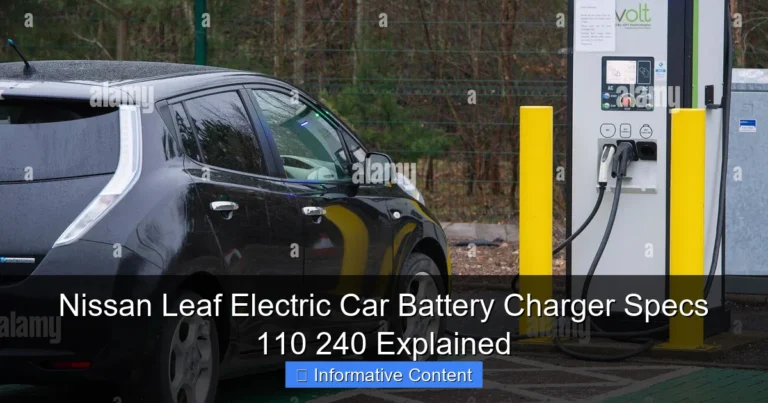
- DC Fast Charging (CHAdeMO): Available only on the Leaf SL trim. Can replenish 80% of the battery in 30 minutes at compatible stations. Crucial for road trips or quick top-ups.
Practical tip: If you’re considering a 2011 Leaf, ensure your home has access to 240V power or budget for a Level 2 charger installation (typically $500–$1,000). Public charging infrastructure was sparse in 2011, so planning is essential for longer drives.
Battery Degradation and Long-Term Concerns
One of the biggest concerns with early EVs like the 2011 Leaf is battery degradation. Without active thermal management (a feature added in later models), the Leaf’s battery is prone to capacity loss, especially in hot climates. Studies show that some 2011–2012 Leafs lost 20–30% of their original capacity after 5–7 years.
For example, a Leaf with 100,000 miles and significant battery degradation might only offer 60–70 miles of range today — a major drawback for buyers seeking reliable daily transportation. However, many owners report better results with proper care: avoiding full charges, minimizing fast charging, and parking in shaded areas.
Nissan introduced a battery warranty in 2013 covering 5 years/60,000 miles for capacity loss below 70%. For 2011 models, this warranty has likely expired, so buyers should inspect battery health using a Nissan LeafSpy app or professional diagnostic tool before purchase.
Interior, Features, and Technology: A Glimpse into the Future
Minimalist Yet Functional Design
The 2011 Leaf’s interior is best described as minimalist with a futuristic touch. The dashboard features a digital instrument cluster with a large speedometer and a central display showing battery level, range estimate, and energy flow. The center console houses a 7-inch touchscreen infotainment system (on SL trim) with navigation, climate controls, and EV-specific data.
Materials are mostly hard plastics, but the overall build quality is decent for a compact car. The cabin is surprisingly spacious, with ample legroom and headroom for front and rear passengers. The hatchback design provides 14.5 cubic feet of cargo space, expandable to 30.5 with rear seats folded — more than adequate for groceries, luggage, or small furniture.
EV-Specific Technology and Connectivity
The Leaf was one of the first cars to offer smartphone integration and remote climate control. Using the Nissan CarWings app (now NissanConnect EV), owners could:
- Pre-heat or pre-cool the cabin while the car is still plugged in
- Check battery status and charging progress
- Locate nearby charging stations
- Set charging schedules to take advantage of off-peak electricity rates
This was revolutionary in 2011. For example, a driver in Chicago could use the app to preheat the cabin on a winter morning, ensuring a warm car without draining the battery — a feature that’s now standard on most EVs.
The Leaf also features a “Eco Mode” button that reduces HVAC power and softens throttle response to extend range. While not as advanced as modern systems, it’s a thoughtful addition for range-conscious drivers.
Safety and Driver Assistance
The 2011 Leaf earned a 5-star overall safety rating from the NHTSA and a Top Safety Pick award from the IIHS. It comes standard with:
- Front, side, and side-curtain airbags
- Anti-lock brakes (ABS) with electronic brake-force distribution (EBD)
- Traction and stability control
- Rearview camera (on SL trim)
However, it lacks modern driver aids like adaptive cruise control, lane departure warning, or automatic emergency braking — features that are now common even in budget EVs. The absence of blind-spot monitoring can be a concern on highways, so extra vigilance is advised.
Ownership Costs, Maintenance, and Long-Term Value
Lower Operating Costs Than Gas Cars
One of the biggest advantages of the 2011 Leaf is its low cost of ownership. Electricity is cheaper than gasoline, and EVs have fewer moving parts, reducing maintenance needs. Key savings include:
- Fuel: Charging a Leaf costs about $2–$3 for 100 miles (at $0.12/kWh), compared to $12–$15 for a gas car.
- Maintenance: No oil changes, spark plugs, or exhaust system repairs. Brake pads last longer due to regenerative braking.
- Tax Incentives: In 2011, U.S. buyers could claim a $7,500 federal tax credit, with additional state rebates in some areas.
For example, a driver covering 12,000 miles annually could save $1,000+ per year in fuel and maintenance compared to a comparable gas-powered hatchback like the Honda Fit.
Maintenance Schedule and Common Issues
The Leaf requires minimal maintenance. Nissan recommends:
- Brake fluid replacement every 2 years
- HVAC filter replacement every 12,000 miles
- Tire rotation every 7,500 miles
- Battery coolant check every 60,000 miles
However, some common issues have been reported:
- 12V auxiliary battery failure: The Leaf uses a traditional 12V lead-acid battery to power accessories. It often fails after 3–4 years, leaving the car inoperative. Replacement costs $150–$250.
- HVAC compressor failure: Some units fail prematurely, leading to poor heating or cooling. Repair costs $500–$1,000.
- Infotainment glitches: The CarWings system can be slow or unresponsive. A factory reset often helps.
Practical tip: Always check the 12V battery when test-driving a used Leaf. A weak battery can mimic EV system errors.
Resale Value and Market Demand
The 2011 Leaf has depreciated significantly, with average prices ranging from $4,000 to $7,000 depending on condition, battery health, and location. While this makes it an affordable entry into EV ownership, buyers should be wary of high-mileage models or those with degraded batteries.
Demand is strongest in states with robust charging infrastructure (California, Washington, Oregon) and among budget-conscious commuters. However, the lack of fast charging on base models (SV and SL) can be a dealbreaker for some.
Pros and Cons: Is the 2011 Nissan Leaf Right for You?
The Pros: Why the 2011 Leaf Shines
- Zero tailpipe emissions — a major win for the environment and air quality.
- Smooth, quiet, and responsive driving — ideal for city and suburban use.
- Low operating costs — saves hundreds per year in fuel and maintenance.
- Early access to EV technology — remote climate control, CarWings app, and regenerative braking were cutting-edge in 2011.
- Compact and practical — hatchback design, good visibility, and roomy interior for its class.
- Affordable used price — great value for budget buyers seeking an EV.
The Cons: Limitations to Consider
- Limited real-world range — 70–85 miles typical, less in cold weather.
- Slow Level 1 charging — 20+ hours on a household outlet.
- Battery degradation concerns — especially in hot climates or with poor charging habits.
- No fast charging on base trims — SL trim only.
- Outdated infotainment — CarWings system is clunky by today’s standards.
- Lack of advanced safety features — no AEB, blind-spot monitoring, or adaptive cruise.
Who Should Buy a 2011 Nissan Leaf?
The 2011 Leaf is best suited for:
- City commuters with short daily drives (under 50 miles)
- Second-car households — perfect for errands, school runs, or local trips
- EV beginners who want to try electric driving without a high upfront cost
- Environmentally conscious drivers seeking to reduce their carbon footprint
It’s not ideal for frequent long-distance travelers, those without home charging, or buyers who need modern safety and tech features.
Data Table: 2011 Nissan Leaf Key Specifications
| Specification | Detail |
|---|---|
| Motor Power | 80 kW (107 hp) |
| Torque | 207 lb-ft |
| Battery Capacity | 24 kWh lithium-ion |
| EPA Range | 73 miles (combined) |
| 0–60 mph | ~10 seconds |
| Level 1 Charging | 20–24 hours |
| Level 2 Charging | 7–8 hours |
| DC Fast Charging | 80% in 30 minutes (SL trim only) |
| Cargo Space | 14.5 cu ft (30.5 with seats folded) |
| Base Price (2011) | $32,780 ($25,280 after $7,500 tax credit) |
| Used Price (2023) | $4,000–$7,000 |
Final Verdict: A Pioneer with Lasting Legacy
The 2011 Nissan Leaf wasn’t perfect, but it was groundbreaking. As the first mass-market EV from a major automaker, it paved the way for today’s electric revolution. Its smooth driving experience, low operating costs, and environmental benefits made it a compelling choice for early adopters. While its range, battery longevity, and tech features fall short by modern standards, it remains a historically significant vehicle — the car that proved electric mobility could be practical, affordable, and desirable.
For today’s buyers, the 2011 Leaf offers an affordable entry into EV ownership, especially for those with short commutes and access to charging. It’s a reminder of how far EVs have come — and how much farther they have to go. Whether you view it as a nostalgic classic, a budget-friendly commuter, or a symbol of sustainable innovation, the 2011 Nissan Leaf deserves recognition as the car that started it all. If you’re considering one, focus on battery health, charging infrastructure, and realistic range needs. With proper care, this pioneering EV can still deliver clean, quiet, and efficient transportation — just as Nissan intended over a decade ago.
Frequently Asked Questions
What is the range of the 2011 Nissan Leaf electric car?
The 2011 Nissan Leaf offers an EPA-estimated range of 73 miles on a full charge, making it ideal for daily commutes. Real-world range may vary depending on driving habits, terrain, and weather conditions.
How long does it take to charge the 2011 Nissan Leaf?
Using a standard 240V Level 2 charger, the 2011 Nissan Leaf takes about 7-8 hours for a full charge. With a 120V household outlet, charging can take over 20 hours, so a home charging station is highly recommended.
Is the 2011 Nissan Leaf reliable as a used electric car?
The 2011 Nissan Leaf is generally reliable, but its battery capacity can degrade over time, especially in hot climates. Prospective buyers should check the battery health using the car’s built-in SOH (State of Health) indicator.
What are the key pros and cons of the 2011 Nissan Leaf electric car?
The 2011 Nissan Leaf electric car excels with zero emissions, low operating costs, and smooth acceleration. However, limited range, slow charging on 120V, and battery degradation are notable drawbacks to consider.
Does the 2011 Nissan Leaf have regenerative braking?
Yes, the 2011 Nissan Leaf features regenerative braking, which helps recharge the battery during deceleration. This system improves efficiency and reduces wear on traditional brake components.
What incentives were available for the 2011 Nissan Leaf?
When new, the 2011 Nissan Leaf qualified for a federal tax credit of up to $7,500 in the U.S., plus state or local incentives. While these incentives no longer apply, the car’s low maintenance costs remain a long-term benefit.