2011 Nissan Leaf Electric Cars A Complete Review and Buyers Guide
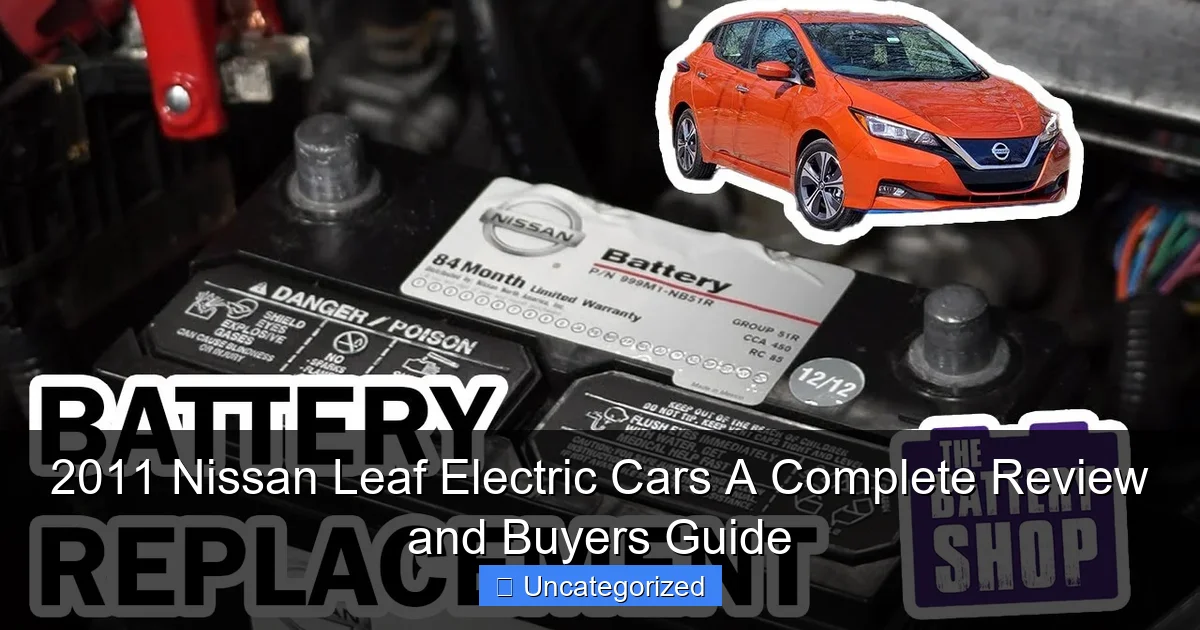
Featured image for 2011 nissan leaf electric cars
Image source: i.ytimg.com
The 2011 Nissan Leaf was a groundbreaking pioneer in affordable, mass-market electric vehicles, offering a 100% electric drivetrain with a 73-mile range—ideal for eco-conscious commuters. With zero tailpipe emissions, low running costs, and a spacious interior, it set the standard for early EVs, though limited charging infrastructure and battery degradation remain key considerations for buyers today.
Key Takeaways
- Affordable entry: The 2011 Nissan Leaf offers a budget-friendly gateway to electric driving.
- 80-mile range: Ideal for daily commutes but plan longer trips carefully.
- Low maintenance: Fewer moving parts mean reduced long-term servicing costs.
- Home charging: Use a 240V Level 2 charger for faster, convenient overnight refuels.
- Check battery health: Pre-purchase inspections ensure optimal performance and longevity.
- Tax incentives: Buyers may qualify for federal and state EV rebates.
📑 Table of Contents
- 2011 Nissan Leaf Electric Cars A Complete Review and Buyers Guide
- Overview of the 2011 Nissan Leaf: The First Mass-Market EV
- Battery Technology and Degradation: What You Need to Know
- Ownership Experience: Pros, Cons, and Real-World Use
- Trim Levels, Features, and Value Comparison
- Should You Buy a 2011 Nissan Leaf in 2024?
2011 Nissan Leaf Electric Cars A Complete Review and Buyers Guide
The automotive world was forever changed in 2010 when Nissan unveiled the 2011 Nissan Leaf, the first mass-produced, affordable, all-electric vehicle (EV) available globally. As the pioneer in the modern electric vehicle era, the Leaf represented a bold leap forward in sustainable transportation, offering zero-emission driving with a focus on practicality, innovation, and accessibility. With a starting price of around $32,780 before federal and state incentives, the Leaf quickly became a symbol of the EV revolution, appealing to eco-conscious drivers, tech enthusiasts, and those tired of volatile gas prices. Unlike earlier electric vehicles that were either too expensive or too limited in range, the 2011 Leaf offered a realistic solution for daily urban and suburban commuting—without the need for gasoline.
Fast forward over a decade, and the 2011 Nissan Leaf remains a landmark vehicle in the evolution of EVs. While newer models boast longer ranges, faster charging, and more advanced tech, the original Leaf laid the foundation for the electric future we now enjoy. For used car shoppers and EV enthusiasts on a budget, the 2011 Leaf continues to be a compelling option. This comprehensive review and buyer’s guide dives deep into the vehicle’s performance, design, battery technology, ownership experience, and long-term value. Whether you’re considering your first EV or adding a reliable electric commuter to your fleet, this guide will help you make an informed decision. We’ll explore what made the 2011 Leaf revolutionary, what challenges it faced, and how it holds up today in a rapidly changing EV landscape.
Overview of the 2011 Nissan Leaf: The First Mass-Market EV
Design and Styling: Futuristic Yet Practical
The 2011 Nissan Leaf’s exterior design was a bold statement of intent. With its aerodynamic shape, sloping roofline, and signature blue-tinted grille (a nod to its electric nature), the Leaf stood out from conventional hatchbacks. The car featured flush-mounted door handles, underbody panels, and a rear spoiler to reduce drag—resulting in a drag coefficient of just 0.29, impressive for a compact hatchback. The front and rear LED lighting added a futuristic touch, while the 16-inch aluminum alloy wheels contributed to efficiency.
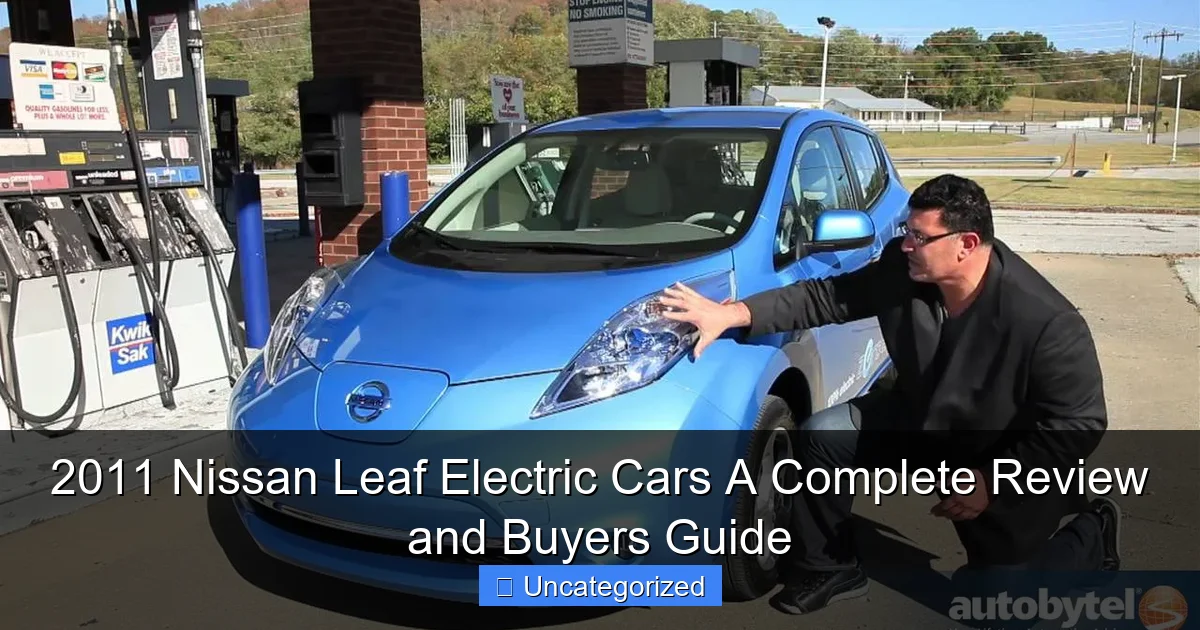
Visual guide about 2011 nissan leaf electric cars
Image source: i.ytimg.com
Inside, the Leaf offered a minimalist, high-tech cabin. The centerpiece was the digital instrument cluster, which displayed real-time energy usage, remaining range, and driving efficiency metrics. The seats were upholstered in bio-fabric made from recycled materials, reinforcing Nissan’s sustainability message. Despite its compact size (175 inches long), the Leaf provided ample legroom and cargo space—14.5 cubic feet behind the rear seats and 30 cubic feet with the rear seats folded.
Powertrain and Performance: Silent and Smooth
At the heart of the 2011 Leaf was a 80 kW (107 horsepower) AC synchronous electric motor powered by a 24 kWh lithium-ion battery pack. This setup delivered 187 lb-ft of torque instantly, providing a smooth, silent, and surprisingly responsive driving experience. The Leaf accelerated from 0 to 60 mph in approximately 10 seconds—modest by today’s standards but adequate for city driving and highway merging.
Unlike internal combustion engines, the Leaf offered linear acceleration with no gear shifts, making it ideal for stop-and-go traffic. Regenerative braking was a key feature, capturing energy during deceleration and helping extend range. Drivers could choose between two modes: D (Drive) for standard driving and B (Brake) for increased regenerative braking, which also allowed for one-pedal driving in urban environments.
Range and Charging: The Reality of Early EV Limitations
The EPA-rated range of the 2011 Leaf was 73 miles on a full charge under ideal conditions. In real-world use, drivers typically saw 60–70 miles in mild weather, dropping to 40–50 miles in extreme cold due to battery chemistry and cabin heating demands. This range was suitable for most daily commutes but limited long-distance travel without careful planning.
Charging options included:
- Level 1 (120V): Standard household outlet; took 16–20 hours for a full charge. Ideal for overnight charging at home.
- Level 2 (240V): Required a dedicated charging station (e.g., Nissan EVSE); reduced charging time to 7–8 hours. A $1,000–$2,000 investment but highly recommended.
- DC Fast Charging (optional): Available on higher trims (SL model only), allowing 80% charge in 30 minutes via CHAdeMO connectors—rare in 2011 but a game-changer for road trips.
Tip: If you’re considering a 2011 Leaf, ensure your home has a 240V outlet or budget for a Level 2 charger installation. Also, check for nearby public charging stations using apps like PlugShare.
Battery Technology and Degradation: What You Need to Know
Understanding the 24 kWh Lithium-Ion Battery
The 2011 Leaf’s battery pack consisted of 192 lithium-ion cells arranged in 48 modules, mounted beneath the floor for optimal weight distribution. Nissan used a passive air-cooling system instead of active liquid cooling, a decision that later proved problematic in hot climates. The battery was warrantied for 5 years or 60,000 miles (whichever came first), covering capacity loss below 70%.
One of the biggest concerns with early Leafs is battery degradation. Unlike modern EVs with sophisticated thermal management, the 2011 Leaf’s battery could degrade rapidly in high temperatures. For example, a Leaf driven in Arizona or Texas might lose 20–30% of its capacity within 3–5 years, while one in milder climates (e.g., Pacific Northwest) might retain 80–85%.
Signs of Battery Degradation
As a buyer, watch for these red flags:
- Reduced range: If the car shows less than 50 miles on a full charge, the battery is likely degraded.
- Battery health indicator: The Leaf’s dashboard has a “turtle” icon that appears when power is limited due to low state of charge or high battery temperature. Frequent turtle warnings suggest battery issues.
- Charge time: A degraded battery may charge faster (since it holds less energy) but deplete quicker.
- Historical data: Ask for a battery health report from Nissan dealerships or third-party services like Leaf Spy (an app that reads OBD2 data).
Extending Battery Life: Practical Tips
Even with a used 2011 Leaf, you can maximize battery longevity:
- Avoid full charges: Keep the battery between 20% and 80% for daily use. Only charge to 100% for long trips.
- Minimize heat exposure: Park in shade or garages during hot weather. Avoid charging immediately after driving in heat.
- Use scheduled charging: The Leaf allows you to set charging times to avoid peak heat hours.
- Precondition while plugged in: Use the climate control while charging to reduce battery drain during driving.
Example: A Leaf owner in Florida reduced battery degradation by 15% over five years by using scheduled charging and avoiding midday charging during summer.
Ownership Experience: Pros, Cons, and Real-World Use
Daily Driving and Practicality
The 2011 Leaf excels as a city and suburban commuter. With its compact size, tight turning radius, and instant torque, it’s perfect for urban navigation and parking. The ride is comfortable, though the suspension is tuned slightly firm to accommodate the battery weight. Road noise is minimal thanks to the lack of engine noise, though wind noise at highway speeds can be noticeable.
Interior features include:
- Climate control with heat pump (efficient but slower than resistive heating)
- Navigation system with charging station locator
- Bluetooth phone connectivity
- Rearview camera (standard on SL trim)
- Heated front seats and steering wheel (SL model)
The navigation system was ahead of its time, offering real-time traffic and charging station data. However, it lacked smartphone integration (Apple CarPlay/Android Auto didn’t exist in 2011).
Cost of Ownership: Savings vs. Trade-Offs
One of the Leaf’s biggest advantages is low operating costs:
- Fuel: Charging costs average $2–$3 for a full charge (based on $0.12/kWh), equivalent to $0.04–$0.05 per mile.
- Maintenance: No oil changes, spark plugs, or exhaust systems. Brakes last longer due to regenerative braking. Annual maintenance averages $200–$300.
- Incentives: The 2011 Leaf qualified for a $7,500 federal tax credit (if purchased new). Some states offered additional rebates.
Trade-offs:
- Range anxiety: Long trips require careful planning and DC fast chargers (rare in 2011).
- Charging infrastructure: Public Level 2 chargers were sparse; DC fast chargers even more so.
- Resale value: Early Leafs depreciated quickly due to range concerns and battery fears. However, prices have stabilized as battery replacement options improve.
Reliability and Common Issues
The 2011 Leaf is generally reliable, with few major mechanical failures. However, some common issues include:
- 12V battery drain: The auxiliary battery (for lights, locks, etc.) can die if the car sits unused for weeks. Replace every 2–3 years.
- Climate control compressor: Some early models had compressor failures. Check for AC cooling performance.
- Door handle actuators: Electric door handles can fail. Test all doors.
- Software glitches: Early infotainment systems may freeze. A dealer reset can often fix this.
Tip: Always test-drive the car and check the 12V battery voltage with a multimeter (should be 12.6V or higher when off).
Trim Levels, Features, and Value Comparison
2011 Leaf Trim Options: SV and SL
The 2011 Leaf was offered in two trims: SV (base) and SL (premium). Here’s a breakdown of the differences:
| Feature | Leaf SV | Leaf SL |
|---|---|---|
| Price (MSRP) | $32,780 | $34,250 |
| DC Fast Charging | No | Yes |
| Heated Front Seats | No | Yes |
| Heated Steering Wheel | No | Yes |
| Rearview Camera | No | Yes |
| Automatic Headlights | No | Yes |
| Cargo Cover | No | Yes |
| Fog Lights | No | Yes |
The SL trim is worth the $1,470 premium for the DC fast charging, heated seats, and rearview camera—especially if you live in a cold climate or plan to use public charging. The heated steering wheel is a luxury but greatly improves winter comfort.
Value in the Used Market
As of 2024, a 2011 Leaf typically sells for $4,000–$7,000, depending on:
- Mileage: Lower-mileage cars (under 80,000 miles) command higher prices.
- Battery health: A Leaf with 80%+ capacity is worth 20–30% more than one with 60%.
- Trim: SL models sell for $500–$1,000 more than SV models.
- Location: Cars in warm climates may have lower battery health, reducing value.
Tip: Use tools like Edmunds, KBB, or Nissan Leaf forums to compare prices. Always request a Carfax report to check for accidents or title issues.
Should You Buy a 2011 Nissan Leaf in 2024?
Who Should Consider the 2011 Leaf?
The 2011 Leaf is ideal for:
- City drivers: With 60–70 miles of real-world range, it’s perfect for urban commuters with predictable daily mileage.
- Second-car buyers: Use it for errands, school runs, or short trips while keeping a gas car for long journeys.
- EV beginners: It’s an affordable way to experience electric driving without a steep learning curve.
- Budget-conscious shoppers: At $5,000, it’s a fraction of the cost of new EVs.
It’s not recommended for:
- Frequent long-distance drivers
- Those without access to Level 2 charging
- Buyers in extremely hot or cold climates (unless battery health is verified)
Alternatives to Consider
If the 2011 Leaf’s range is a dealbreaker, consider:
- 2013+ Nissan Leaf: Improved battery management and optional 24 kWh/30 kWh packs.
- 2014+ Chevrolet Spark EV: Slightly better range (82 miles) and liquid-cooled battery.
- 2016+ Tesla Model S: Longer range and Supercharger access, but higher price.
Final Verdict: A Pioneering EV with Enduring Value
The 2011 Nissan Leaf is more than a car—it’s a milestone in automotive history. While it lacks the range and tech of modern EVs, it remains a practical, affordable, and environmentally responsible choice for the right driver. With proper battery care and realistic expectations, it can deliver years of reliable, low-cost driving. For under $7,000, you’re not just buying a vehicle; you’re investing in the future of transportation.
As battery replacement programs (e.g., Nissan’s $5,499 30 kWh retrofit) and third-party upgrades (like ReVolt Systems) become more accessible, even older Leafs can be revitalized. Whether you’re reducing your carbon footprint, escaping gas prices, or simply embracing innovation, the 2011 Leaf proves that the electric revolution started here—and it’s still going strong.
Frequently Asked Questions
What is the range of the 2011 Nissan Leaf electric car?
The 2011 Nissan Leaf offers an EPA-estimated range of 73 miles (117 km) on a full charge under ideal conditions. Real-world range typically varies between 60–70 miles, depending on driving habits and climate.
How long does it take to charge a 2011 Nissan Leaf?
Using a standard 120V Level 1 charger, the 2011 Nissan Leaf takes about 18–20 hours for a full charge. With a 240V Level 2 charger (recommended), charging time drops to 6–8 hours.
What are common problems with the 2011 Nissan Leaf electric cars?
Early models like the 2011 Nissan Leaf are known for battery degradation over time, especially in hot climates. Some owners also report issues with the HVAC system and infotainment glitches.
Is the 2011 Nissan Leaf still worth buying in 2024?
For budget-conscious buyers seeking a city commuter, the 2011 Nissan Leaf can be a cost-effective EV option. However, consider battery health and replacement costs, as degraded batteries may need costly upgrades.
What is the battery life of a 2011 Nissan Leaf?
The original 24 kWh lithium-ion battery typically lasts 8–10 years before significant capacity loss. Nissan’s warranty covered 5 years/60,000 miles, but many Leafs now require refurbished or aftermarket battery solutions.
Does the 2011 Nissan Leaf support fast charging?
No, the 2011 Nissan Leaf lacks DC fast charging capability, which is a limitation compared to newer EVs. It only supports Level 1 and Level 2 charging, making long trips less convenient.