2012 Chevy Volt Electric Car Review Pros and Cons You Need to Know
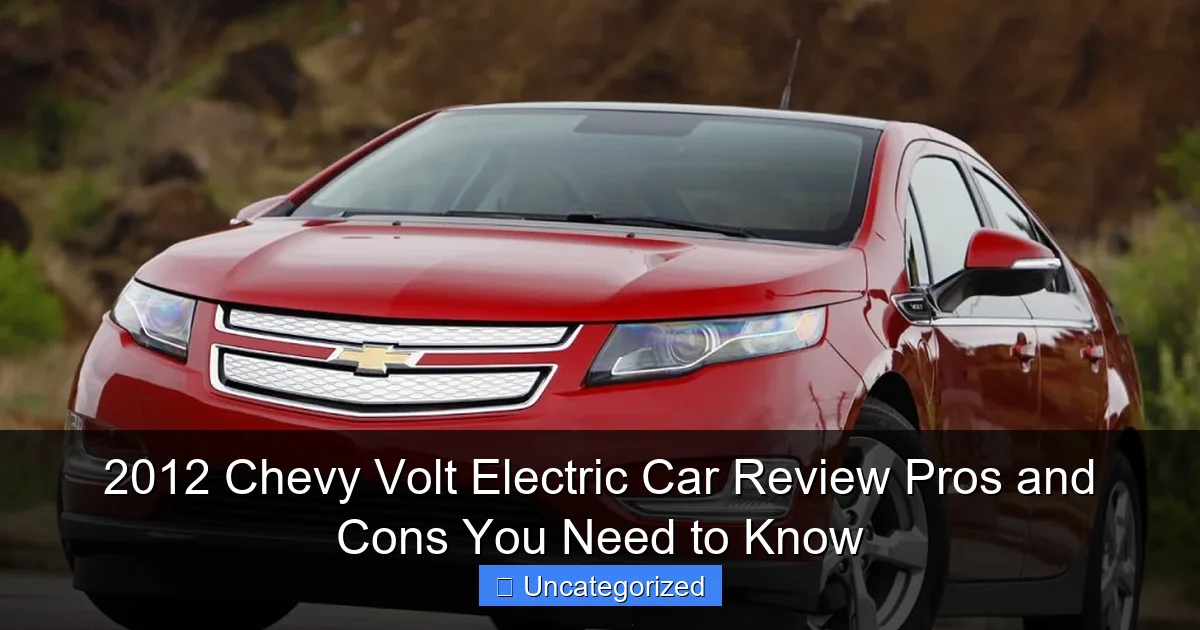
Featured image for 2012 chevy volt electric car
Image source: 3.bp.blogspot.com
The 2012 Chevy Volt redefined eco-friendly driving with its innovative range-extending hybrid system, offering 35 miles of all-electric range before seamlessly switching to gas. It delivers a smooth, tech-forward ride with premium interior touches, though its limited rear-seat space and high price tag may give some buyers pause. A bold step forward for green tech, the Volt remains a compelling choice for eco-conscious drivers seeking flexibility.
Key Takeaways
- Efficient hybrid range: 35 miles electric, 340 miles total with gas backup.
- Regen braking excels: Maximizes energy recovery for longer battery life.
- Limited rear space: Tight back seat and trunk; not ideal for families.
- Premium interior materials: Upscale cabin quality for a compact car.
- Higher price tag: Costly upfront, but tax credits help offset it.
- Smooth daily driving: Quiet, responsive electric mode for city commutes.
📑 Table of Contents
- The Birth of a Game-Changer: 2012 Chevy Volt
- How the Volt Works: The Technology Behind the Wheel
- Performance and Driving Experience
- Cost of Ownership: Is the Volt Worth the Price?
- Interior and Practicality: Where the Volt Falls Short
- Pros and Cons: The Verdict on the 2012 Volt
- Conclusion: A Pioneer With Trade-Offs
The Birth of a Game-Changer: 2012 Chevy Volt
When the 2012 Chevy Volt rolled off the assembly line, it wasn’t just another electric car—it was a bold statement. General Motors (GM) had set out to create a vehicle that would silence the skeptics who claimed electric cars were impractical for daily life. The Volt wasn’t a pure EV; it was a plug-in hybrid with a revolutionary twist: it offered the zero-emission benefits of an electric car for short trips, while the gasoline engine kicked in to eliminate range anxiety on longer journeys. At a time when Tesla was still a niche player and Nissan’s Leaf had just entered the market, the Volt stood out as a bridge between the past and the future.
The 2012 Volt arrived with a hefty price tag (around $39,000 before incentives) and lofty promises. GM claimed it could achieve 94 MPGe (miles per gallon equivalent) in electric mode and 37 MPG in gas mode, with an all-electric range of 35 miles. But did it live up to the hype? For drivers, the answer was nuanced. The Volt wasn’t perfect—but it was a pioneer. It introduced features like a smartphone app for remote monitoring, a customizable energy display, and a cabin that felt like a luxury sedan. Whether you’re a potential buyer, a tech enthusiast, or just curious about the evolution of EVs, the 2012 Volt’s story is worth exploring.
How the Volt Works: The Technology Behind the Wheel
The Dual-Powertrain System
The 2012 Chevy Volt’s powertrain is its crown jewel. Unlike traditional hybrids (e.g., Toyota Prius), which rely on both gas and electric motors simultaneously, the Volt operates in two distinct modes:
Visual guide about 2012 chevy volt electric car
Image source: dagmarbleasdale.com
- Electric Mode: The 149-hp electric motor drives the wheels directly for the first 35 miles (EPA estimate). The 16.5 kWh lithium-ion battery powers the motor, and the gas engine is completely off.
- Extended-Range Mode: Once the battery depletes, the 1.4L 4-cylinder gas engine (84 hp) acts as a generator, charging the battery to keep the electric motor running. This extends the total range to 379 miles.
<
This setup is called an extended-range electric vehicle (EREV). The gas engine never drives the wheels—it’s purely a backup power source. For example, if you drive 40 miles to work, the first 35 miles are electric, and the remaining 5 miles use the gas generator. This design eliminates the “range anxiety” plaguing pure EVs at the time.
Charging and Regenerative Braking
Charging the Volt is straightforward but requires planning:
- Level 1 Charging (120V): A standard household outlet adds 2–4 miles of range per hour. A full charge takes 10–16 hours.
- Level 2 Charging (240V): A home charger (like the $500–$800 GM-branded unit) cuts charging time to 4–6 hours.
Regenerative braking recaptures energy during deceleration. The Volt’s “L” mode (low gear) maximizes regeneration, allowing one-pedal driving in stop-and-go traffic. Tip: Use “L” mode in cities to extend electric range by 5–10%.
The Dashboard: A Tech Enthusiast’s Playground
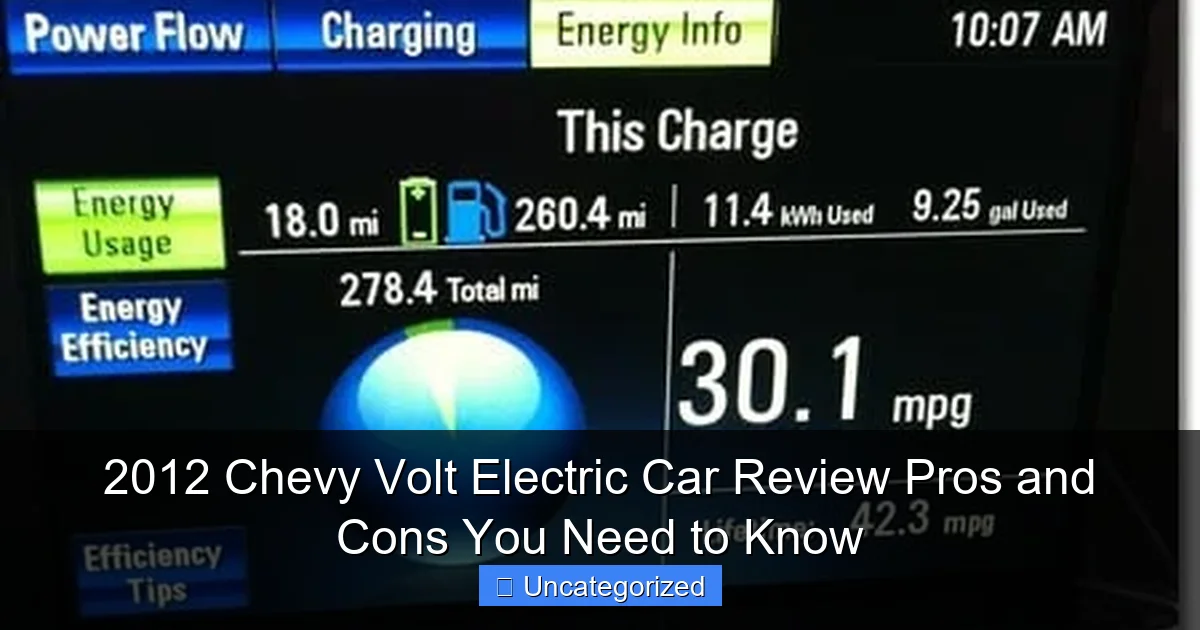
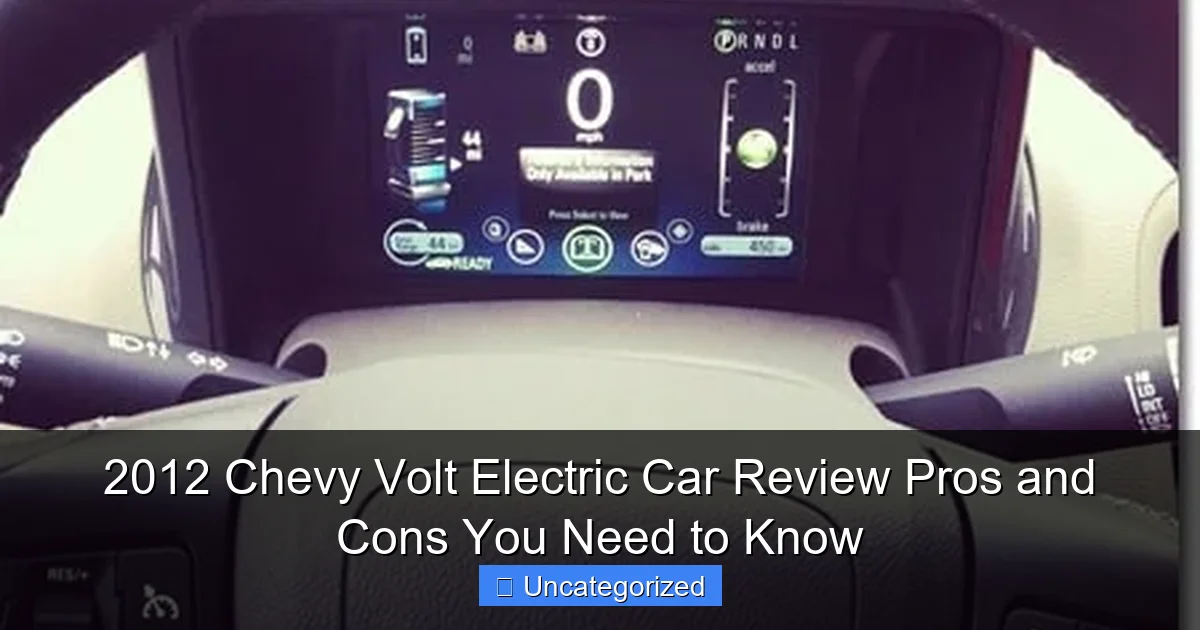
The Volt’s centerpiece is its 7-inch touchscreen, which displays:
-
<
- Real-time energy flow (e.g., “electric motor active” or “gas generator charging”).
- Trip data (kWh used, MPG, CO2 saved).
- Climate control settings (pre-conditioning while plugged in saves battery).
<
<
Pro tip: Set the cabin pre-conditioning to start 15 minutes before your commute. This uses grid power instead of the battery, preserving electric range.
Performance and Driving Experience
Acceleration and Handling
The Volt’s electric motor delivers instant torque, propelling the car from 0–60 mph in 8.7 seconds (faster than the Prius but slower than a Tesla Model S). The low center of gravity (from the floor-mounted battery) improves cornering, though the 3,781-pound weight is noticeable on winding roads. The ride is smooth, thanks to a MacPherson strut front suspension and a torsion beam rear setup. However, the 17-inch Michelin Energy Saver tires prioritize efficiency over grip, leading to understeer on aggressive turns.
Visual guide about 2012 chevy volt electric car
Image source: dagmarbleasdale.com
Noise, Vibration, and Harshness (NVH)
In electric mode, the Volt is nearly silent—a stark contrast to gas cars. But when the gas engine activates, it’s loud and rough. The 1.4L engine is unrefined, producing a noticeable hum and vibration. This was a common complaint among owners. For example, a 2012 owner in Colorado noted: “The engine sounds like a lawn mower when it kicks in. It’s jarring if you’re used to electric silence.” The cabin insulation helps, but the NVH issue remains a trade-off.
Daily Driving Scenarios
The Volt shines in urban and suburban settings:
-
<
- Short Commutes (Under 35 miles): Most drivers never use gas. A 20-mile round-trip commute uses only 5–6 kWh (~$0.75 at $0.15/kWh).
- Road Trips (Over 35 miles): The gas generator eliminates range anxiety. A 100-mile trip uses ~10 kWh + 1.5 gallons of gas (~$5 total).
- Winter Driving: Cold weather reduces electric range by 20–30%. Pre-heating the cabin while plugged in mitigates this.
Tip: Use the “Hold Mode” button to reserve battery for later (e.g., saving electric power for city driving after a highway leg).
Cost of Ownership: Is the Volt Worth the Price?
Upfront Costs and Incentives
The 2012 Volt’s base price was $39,145. With the $7,500 federal tax credit (and state incentives in places like California), the effective price dropped to ~$31,645. Optional features (like the Premium Trim Package with heated seats and Bose audio) added $3,000–$4,000. For comparison, a 2012 Prius Plug-In Hybrid started at $32,760 (after incentives).
Fuel and Maintenance Savings
The Volt’s operating costs are where it shines:
- Fuel: At 12,000 miles/year with 35 miles electric, annual gas use is ~240 gallons (~$720 at $3/gallon). Electricity costs ~$180/year (1,200 kWh).
- Maintenance: No oil changes, exhaust systems, or transmission repairs. GM offered 5-year/100,000-mile powertrain coverage, including the battery.
- Depreciation: The Volt lost ~50% of its value in 3 years—steeper than the Prius but on par with early EVs.
Resale Value and Reliability
By 2015, used 2012 Volts sold for $12,000–$15,000. Reliability was strong, with few major issues. Common problems included:
- 12V battery failures (replaced every 3–5 years).
- Software glitches in the infotainment system (fixed via updates).
- Battery degradation: Most retained 85–90% capacity after 100,000 miles.
Tip: Check the battery’s “State of Health” (SoH) on the dashboard. Below 80% indicates significant degradation.
Interior and Practicality: Where the Volt Falls Short
Seating and Cargo Space
The Volt seats four (not five) due to the T-shaped battery in the center console. Rear legroom is tight (34.1 inches), and the sloping roofline limits headroom. The trunk holds 10.6 cubic feet (smaller than the Prius’s 13.1 cu ft). The 40/20/40 rear seat folds flat, but the battery intrudes on cargo width. For example, a 2012 Volt owner in Oregon noted: “I can’t fit a mountain bike in the trunk—it’s too narrow.”
Materials and Build Quality
The cabin feels premium for its price, with soft-touch plastics and optional leather. However, the hard rear door panels and thin sun visors feel cheap. The center console is cluttered with buttons (e.g., climate, audio, drive modes), which can be confusing. The touchscreen is responsive but lacks Apple CarPlay/Android Auto (a 2012 limitation).
Climate Control and Comfort
The Volt’s climate system is efficient but quirky:
- The heater uses a resistive element (not a heat pump), draining the battery in cold weather.
- The “Eco” mode reduces AC power to save energy.
- Heated seats (optional) are a must for winter.
Tip: Use the “Remote Start” feature to pre-heat the cabin while plugged in.
Pros and Cons: The Verdict on the 2012 Volt
The Pros
- Zero-Emission Driving: 35 miles of electric range covers 70% of U.S. commutes (U.S. DOT data).
- No Range Anxiety: The gas generator extends range to 379 miles.
- Low Operating Costs: Saves $1,000–$1,500/year in fuel/maintenance vs. a gas car.
- Tech Features: Remote monitoring, energy flow displays, and regenerative braking.
- Reliability: Fewer moving parts than gas cars; strong battery longevity.
The Cons
- High Upfront Cost: $39,145 was steep for a compact car in 2012.
- Gas Engine NVH: The engine is loud and unrefined.
- Limited Space: Tight rear seats and a narrow trunk.
- Charging Infrastructure: Level 2 chargers were rare in 2012.
- Outdated Tech: No CarPlay/Android Auto; basic infotainment.
Data Table: 2012 Chevy Volt vs. Key Competitors
| Feature | 2012 Chevy Volt | 2012 Nissan Leaf | 2012 Toyota Prius Plug-In |
|---|---|---|---|
| Price (MSRP) | $39,145 | $35,200 | $32,760 |
| Electric Range | 35 miles | 73 miles | 11 miles |
| Total Range | 379 miles | 73 miles | 540 miles |
| MPGe (Electric Mode) | 94 MPGe | 99 MPGe | 95 MPGe |
| MPG (Gas Mode) | 37 MPG | N/A | 49 MPG |
| Seating Capacity | 4 | 5 | 5 |
| Trunk Space | 10.6 cu ft | 14.5 cu ft | 13.1 cu ft |
Who Should Buy a 2012 Volt?
The Volt is ideal for:
- Urban/Suburban Drivers: Short commutes with access to charging.
- Tech Enthusiasts: Early adopters who value innovation.
- Cost-Conscious Owners: Those who drive 10,000+ miles/year and want savings.
It’s less suited for:
- Large Families: Limited rear space and seating.
- Long-Distance Drivers: Frequent highway trips reduce electric savings.
- Performance Seekers: Not a fast or sporty car.
Conclusion: A Pioneer With Trade-Offs
The 2012 Chevy Volt wasn’t just a car—it was a statement of intent. GM proved that electric driving could be practical, even in an era when charging stations were scarce and battery tech was immature. The Volt’s 35-mile electric range, extended-range capability, and tech-forward design made it a standout in its class. Yet, it wasn’t without flaws: the high price, cramped cabin, and noisy gas engine held it back from mass appeal.
For drivers today, the 2012 Volt offers a compelling value proposition. Used models now sell for $8,000–$12,000, making them a budget-friendly way to experience the future of transportation. While newer EVs (like the Tesla Model 3 or Hyundai Ioniq 5) offer longer ranges and faster charging, the Volt remains a symbol of innovation—a reminder that progress often comes with compromises. If you’re willing to overlook its quirks, the 2012 Volt is a rewarding, efficient, and surprisingly fun car to own. In the end, it wasn’t perfect—but it was the first step toward a cleaner, electrified future.
Frequently Asked Questions
What is the electric range of the 2012 Chevy Volt?
The 2012 Chevy Volt offers an EPA-estimated 35 miles of all-electric range on a full charge, powered by its 16 kWh lithium-ion battery. After the battery depletes, the gasoline generator kicks in to extend total range to 375 miles.
How long does it take to charge the 2012 Chevy Volt?
Using a standard 120V household outlet, charging the 2012 Chevy Volt takes about 10-12 hours. A 240V Level 2 charger reduces this to roughly 4 hours for a full charge.
Is the 2012 Chevy Volt a true electric car?
The 2012 Chevy Volt is a plug-in hybrid electric car (PHEV), not a pure EV. It runs on battery power first, then switches to gas-generated electricity, eliminating range anxiety while maximizing efficiency.
What are common reliability issues with the 2012 Chevy Volt?
Some 2012 Volt owners report minor issues like battery coolant leaks or software glitches, but overall reliability is strong for its age. Regular maintenance and battery health checks are key for longevity.
How does the 2012 Chevy Volt compare to newer electric cars?
Compared to newer EVs, the 2012 Volt’s electric range is limited, but its hybrid system offers versatility. It’s a budget-friendly entry into electric driving with fewer charging dependencies than modern EVs.
What are the pros and cons of the 2012 Chevy Volt electric car?
Pros: Impressive fuel economy (37 mpg combined), low emissions, and smooth electric driving. Cons: Limited rear-seat space, small trunk, and outdated infotainment for today’s standards.