2012 Ford Focus Electric Car Charge Time Explained
Featured image for 2012 ford focus electric car charge time
Image source: ecocostsavings.com
The 2012 Ford Focus Electric delivers a practical charge time of 3 to 4 hours using a 240-volt Level 2 charger, making it ideal for overnight or daily top-ups. With a standard 120-volt Level 1 charger, expect a slower 18–20-hour charge, better suited for occasional use or emergency replenishment.
Key Takeaways
- Level 1 charging (120V) takes 18-20 hours—best for overnight top-ups.
- Level 2 charging (240V) cuts time to 3-4 hours—ideal for home setups.
- No DC fast charging—unlike newer EVs, it lacks rapid-charge capability.
- Charge port location is front-fender-mounted—ensure easy access when parking.
- Smart charging features let you schedule off-peak charging for lower costs.
📑 Table of Contents
- Understanding the 2012 Ford Focus Electric Car Charge Time
- How Charging Works for the 2012 Ford Focus Electric
- Real-World Charge Time Scenarios
- Charging Infrastructure and Compatibility
- Factors Affecting Charge Time and Performance
- Comparative Analysis and Data Table
- Conclusion: Maximizing Your 2012 Focus Electric Experience
Understanding the 2012 Ford Focus Electric Car Charge Time
What Sets the 2012 Ford Focus Electric Apart?
The 2012 Ford Focus Electric was one of the first mass-market electric vehicles (EVs) from a major American automaker, marking a significant milestone in the transition to sustainable transportation. Designed as a direct response to the growing demand for eco-friendly vehicles, the Focus Electric offered a zero-emission alternative without sacrificing practicality. With its sleek design, modern interior, and competitive range for its time, it quickly became a favorite among early EV adopters. However, one of the most critical considerations for any EV owner is charge time, and the 2012 Focus Electric presents a unique case study in early-generation EV charging dynamics.
Understanding the 2012 Ford Focus Electric car charge time is essential for current owners, potential buyers, and anyone curious about the evolution of EV technology. Unlike modern EVs with ultra-fast charging capabilities, the 2012 Focus Electric relies on more conventional charging methods, which can impact daily usability. This article dives deep into the charging infrastructure, timeframes, and real-world performance of this pioneering electric vehicle. Whether you’re evaluating its suitability for your lifestyle or simply interested in EV history, this guide will equip you with the knowledge to make informed decisions.
How Charging Works for the 2012 Ford Focus Electric
Charging Levels and Their Impact on Time
The 2012 Ford Focus Electric supports three standard charging levels, each with distinct implications for charge time:
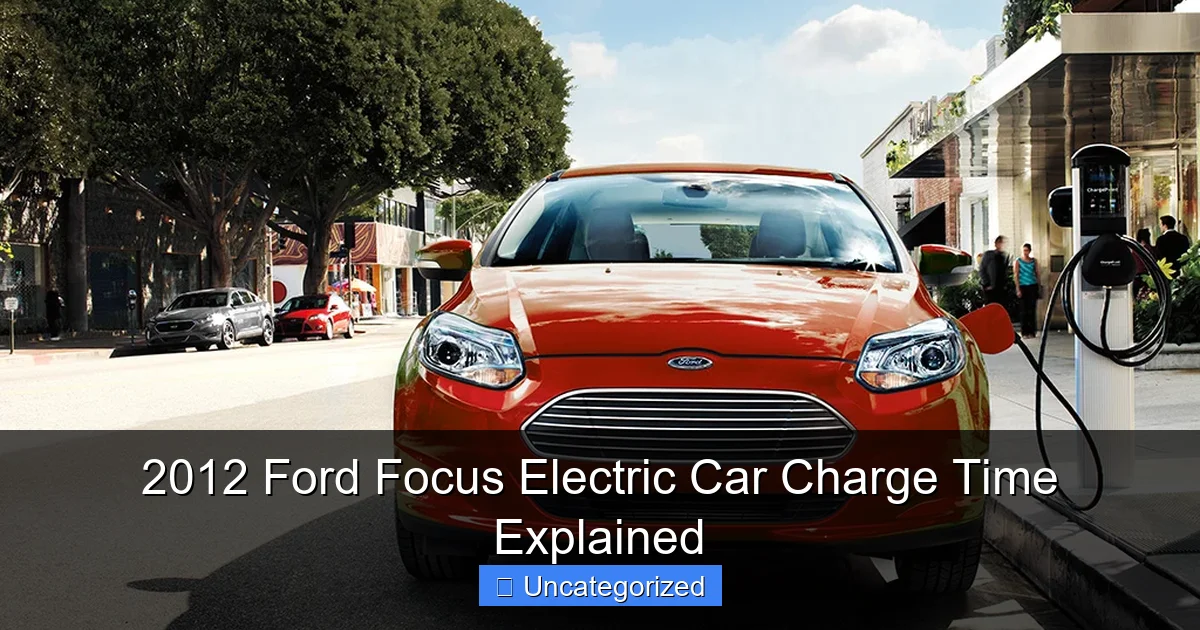
Visual guide about 2012 ford focus electric car charge time
Image source: cleanchargenetwork.com
- Level 1 (120V): Uses a standard household outlet. This is the slowest method, adding approximately 3-5 miles of range per hour of charging.
- Level 2 (240V): Requires a dedicated charging station (e.g., Ford-branded or third-party). Delivers about 10-20 miles of range per hour, depending on amperage.
- DC Fast Charging (480V): Not supported by the 2012 Focus Electric. This limitation places it behind newer EVs but was typical for early models.
For example, a full charge from empty using Level 1 could take up to 20 hours, while Level 2 reduces this to around 3.5–4 hours. The absence of DC fast charging means owners must rely on Level 2 for practical daily use.
Onboard Charger Specifications
The 2012 Focus Electric features a 6.6 kW onboard charger, which is modest compared to today’s 11–22 kW systems. This means:
- Maximum power draw from Level 2 stations is capped at 6.6 kW.
- Even with a 40-amp Level 2 station, the car will not exceed its 6.6 kW limit.
- Higher-capacity stations (e.g., 7.2 kW or 9.6 kW) are compatible but won’t charge faster.
Pro Tip: If installing a home Level 2 station, a 30-amp circuit (7.2 kW) is sufficient. Over-specing the station won’t reduce charge time but may increase costs unnecessarily.
Charging Curve and Efficiency
Like most EVs, the Focus Electric’s charging speed slows as the battery approaches full capacity to prevent overheating. Here’s a typical breakdown:
- 0–80%: Charges at near-maximum speed (6.6 kW).
- 80–100%: Speed drops to ~2 kW (takes 1–1.5 hours).
This “trickle charging” phase is normal but means that topping up from 80% to 100% takes disproportionately longer. For daily use, charging to 80% is often sufficient and more time-efficient.
Real-World Charge Time Scenarios
Daily Commuting: Level 2 at Home
Most 2012 Focus Electric owners rely on Level 2 charging at home. Assuming a 76-mile EPA range and a 20-mile daily commute:
- Overnight charging (8 hours): Adds 80–160 miles of range, easily covering the next day’s needs.
- Example: Starting at 50% charge (38 miles), 4 hours of Level 2 charging restores the battery to 100%.
Tip: Use a timer or smart charging app to start charging during off-peak electricity hours (e.g., midnight–6 AM) to reduce costs.
Weekend Trips: Planning for Longer Drives
For trips exceeding the 76-mile range, strategic charging is essential. The Focus Electric’s lack of DC fast charging means:
- Midpoint charging: Stop at a Level 2 public station (e.g., shopping mall, library) for 2–3 hours to add 20–60 miles.
- Example: A 150-mile round trip requires one 3-hour charge halfway to avoid running out of power.
Apps like PlugShare or ChargePoint help locate public stations, but always verify compatibility with the car’s J1772 connector.
Emergency Charging: Level 1 as a Backup
If stranded without a Level 2 option, Level 1 charging can save the day—but patience is key. For instance:
- Scenario: Battery drops to 10% (7.6 miles remaining).
- Solution: Plug into a 120V outlet for 5 hours to gain 15–25 miles, enough to reach a Level 2 station.
Warning: Avoid relying on Level 1 for regular use. The 20-hour charge time is impractical for most lifestyles.
Charging Infrastructure and Compatibility
Home Charging Setup
Installing a Level 2 station is the best way to optimize 2012 Ford Focus Electric car charge time. Key considerations:
- Electrical panel: Requires a 240V circuit with 30–50 amps (consult an electrician).
- Cost: $500–$1,500 for the station + installation (varies by location).
- Ford-branded stations: Offer integration with the MyFord Mobile app for remote monitoring.
Pro Tip: Use a hardwired station (not plug-in) for higher amperage and reliability. Look for ENERGY STAR®-certified models to reduce energy waste.
Public Charging Networks
The 2012 Focus Electric works with most J1772-compliant stations. Popular networks include:
- ChargePoint: 10,000+ Level 2 stations in the U.S.
- Blink: Pay-per-use or subscription plans.
- EVgo: Limited Level 2 locations (most are DC fast chargers).
Note: Always carry a portable Level 2 charger (e.g., ClipperCreek LCS-20P) for emergencies. These plug into NEMA 14-50 outlets (common at RV parks).
Charging Accessories and Upgrades
While the 2012 Focus Electric cannot use DC fast chargers, these accessories enhance convenience:
- Portable Level 2 charger: Enables charging at work or campsites with 240V outlets.
- Extension cord: A 25-foot J1772-compatible cord (e.g., EVSE Adapters) adds flexibility.
- Timer plug: Automate charging to start/stop at specific times.
Factors Affecting Charge Time and Performance
Battery Health and Age
After 10+ years, the Focus Electric’s lithium-ion battery may degrade, affecting charge time:
- Capacity loss: A 2012 model with 80% battery health holds ~60 miles of range (vs. 76 originally).
- Charge speed: Degraded batteries charge slightly faster to 100% (due to reduced capacity) but offer less range.
Tip: Use the car’s built-in battery health monitor (via the MyFord Mobile app) to track degradation. Replace the battery if range drops below 50%.
Temperature and Weather Conditions
Extreme temperatures impact charging efficiency:
- Cold weather: Below 32°F, the battery management system (BMS) reduces charging speed to protect cells. Charge time may increase by 20–30%.
- Hot weather: Above 95°F, the BMS activates cooling systems, drawing extra power and slowing charging.
Solution: Precondition the battery while plugged in. Use the MyFord Mobile app to start charging 30 minutes before departure.
Driving Habits and Energy Consumption
Aggressive driving (e.g., rapid acceleration, high speeds) depletes the battery faster, requiring more frequent charging. For example:
- City driving: 3.5–4.0 miles/kWh (efficient).
- Highway driving: 2.5–3.0 miles/kWh (less efficient).
Tip: Use regenerative braking to recover energy. Press the “L” mode on the shifter for stronger regeneration.
Comparative Analysis and Data Table
How Does the 2012 Focus Electric Stack Up?
Compared to contemporaries like the 2012 Nissan Leaf or 2012 Tesla Model S, the Focus Electric’s charging capabilities were competitive for its time. Here’s a breakdown:
| Feature | 2012 Ford Focus Electric | 2012 Nissan Leaf | 2012 Tesla Model S |
|---|---|---|---|
| Onboard Charger | 6.6 kW | 3.3 kW (base) / 6.6 kW (SL) | 10 kW (standard) |
| Level 1 Charge Time (0–100%) | 20 hours | 20 hours (base) / 10 hours (SL) | 12 hours |
| Level 2 Charge Time (0–100%) | 3.5–4 hours | 7–8 hours (base) / 4 hours (SL) | 6–7 hours |
| DC Fast Charging | No | Yes (45 minutes to 80%) | Yes (30 minutes to 80%) |
| Range (EPA) | 76 miles | 73 miles | 265 miles (85 kWh) |
This table highlights the Focus Electric’s strengths (e.g., fast Level 2 charging) and weaknesses (e.g., no DC fast charging). While the Leaf offered DC fast charging, it had a slower base Level 2 rate. The Model S, though superior in range and charging, was significantly more expensive.
Lessons for Modern EV Owners
The 2012 Focus Electric’s limitations—like its 6.6 kW charger and lack of DC fast charging—are now standard considerations for new EV buyers. Today’s EVs (e.g., 2023 Ford Mustang Mach-E) feature 11–22 kW onboard chargers and 150+ kW DC fast charging, reducing charge times dramatically. However, the Focus Electric’s charging principles (e.g., Level 2 optimization, battery preconditioning) remain relevant.
Conclusion: Maximizing Your 2012 Focus Electric Experience
The 2012 Ford Focus Electric car charge time is a nuanced topic, shaped by charging methods, infrastructure, and real-world conditions. While it lacks the speed of modern EVs, smart strategies can make it a viable option for short commutes, urban driving, or as a secondary vehicle. Key takeaways include:
- Level 2 charging is essential: Install a home station for overnight charging.
- Plan for battery degradation: Monitor health and budget for replacements if needed.
- Embrace off-peak charging: Use timers to save on electricity costs.
- Carry backup options: A portable Level 2 charger provides peace of mind.
Though the 2012 Focus Electric is no longer cutting-edge, its legacy lives on in today’s EVs. By understanding its charging dynamics, you can unlock its full potential—whether you’re an owner, a collector, or a curious enthusiast. As the EV landscape evolves, the lessons from pioneers like the Focus Electric remind us that every charge cycle is a step toward a cleaner, greener future.
Frequently Asked Questions
How long does it take to fully charge a 2012 Ford Focus Electric?
The 2012 Ford Focus Electric car charge time is approximately 3–4 hours using a 240V Level 2 charger. With a standard 120V Level 1 charger, it can take up to 20 hours for a full charge.
What is the fastest way to reduce 2012 Ford Focus Electric car charge time?
The fastest way to minimize charge time is by installing a 240V Level 2 charging station at home or using public Level 2 chargers. These provide up to 25 miles of range per hour, drastically cutting down charging duration.
Can I use a Level 3 DC fast charger for my 2012 Ford Focus Electric?
No, the 2012 Ford Focus Electric does not support Level 3 DC fast charging. It is only compatible with Level 1 (120V) and Level 2 (240V) charging systems.
How many miles of range does the 2012 Ford Focus Electric gain per hour of charging?
With a Level 2 charger, the 2012 Ford Focus Electric gains about 20–25 miles of range per hour. A Level 1 charger provides roughly 4–5 miles per hour.
Does weather affect the 2012 Ford Focus Electric car charge time?
Extreme temperatures, especially cold weather, can slightly slow down charging efficiency and reduce battery performance. However, the impact on charge time is typically minimal with proper charging equipment.
Is it safe to charge the 2012 Ford Focus Electric overnight?
Yes, charging overnight using a Level 1 or Level 2 charger is safe and common. The car has built-in safeguards to stop charging when the battery is full, preventing overcharging.