2012 Ford Focus Electric Car Review Pros Cons and Performance

Featured image for 2012 ford focus electric car
Image source: platform.cstatic-images.com
The 2012 Ford Focus Electric stands out as a practical, zero-emission compact car with a smooth, quiet ride and an EPA-estimated 76-mile range—ideal for urban commuters. Its responsive handling and well-equipped interior make it competitive in the early EV market, though limited charging infrastructure and modest acceleration highlight its era’s constraints. A solid, no-nonsense choice for eco-conscious drivers seeking affordability and reliability.
Key Takeaways
- Zero emissions: Ideal for eco-conscious drivers seeking a clean commute.
- Limited range: 76-mile range requires planning for longer trips.
- Slow charging: 20+ hours on 120V; upgrade to 240V for faster power.
- Smooth acceleration: Instant torque delivers responsive, quiet city driving.
- Low maintenance: Fewer moving parts reduce long-term ownership costs.
- Cramped rear seats: Prioritize front-seat comfort over passenger space.
- Outdated tech: Lacks modern infotainment; pair with smartphone for features.
📑 Table of Contents
- Introduction: The 2012 Ford Focus Electric – A Pioneer in Affordable EV Innovation
- Design and Interior: Practicality Meets Modern Aesthetics
- Performance and Driving Experience: Smooth, Silent, and Responsive
- Technology and Features: Smart Connectivity for the Digital Age
- Cost of Ownership and Incentives: Is the Focus Electric a Smart Buy?
- Pros and Cons: The Verdict on the 2012 Focus Electric
- Conclusion: A Timeless Commuter or a Relic of the Past?
Introduction: The 2012 Ford Focus Electric – A Pioneer in Affordable EV Innovation
The 2012 Ford Focus Electric emerged during a pivotal moment in the automotive industry, as electric vehicles (EVs) began transitioning from niche novelties to mainstream contenders. As one of the first mass-market EVs from a major American automaker, the Focus Electric was Ford’s bold entry into the zero-emissions vehicle race, aiming to compete with the likes of the Nissan Leaf and Chevrolet Volt. Built on the globally successful Focus platform, this all-electric variant promised a familiar driving experience—compact, agile, and efficient—while delivering the benefits of electric propulsion: quiet operation, instant torque, and reduced environmental impact. With a sleek redesign, modern tech features, and a competitive price point, the 2012 Focus Electric was positioned as a practical, eco-conscious choice for urban commuters and environmentally aware drivers.
At a time when EV charging infrastructure was still sparse and range anxiety was a real concern, Ford took a calculated risk by launching the Focus Electric with a 76-mile EPA-estimated range. While this figure paled in comparison to today’s 250+ mile EVs, it was a respectable offering in 2012, especially for drivers with predictable daily commutes. The car also came equipped with advanced features for its era, including a smartphone-integrated infotainment system (Sync with MyFord Touch), regenerative braking, and a Level 2 charging capability that could replenish the battery in about 3–4 hours. This review dives deep into the 2012 Ford Focus Electric car—its design, performance, technology, ownership costs, and long-term viability—to help you understand whether this early EV pioneer still holds up today or if its legacy is best left in the history books.
Design and Interior: Practicality Meets Modern Aesthetics
Exterior Styling: Subtle Electrification
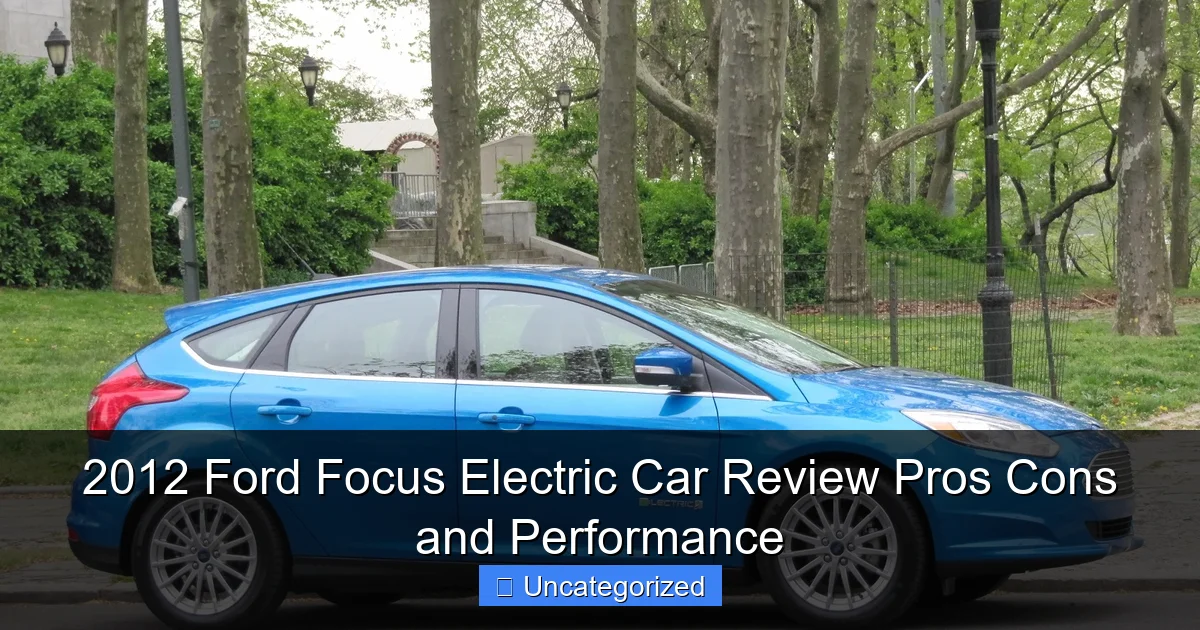
The 2012 Ford Focus Electric retains the sharp, aerodynamic design of the third-generation Focus (2012–2018), but with subtle cues that distinguish it from its gasoline-powered siblings. Up front, the most noticeable change is the closed-off grille—a hallmark of electric vehicles—replacing the traditional radiator grille. This not only improves aerodynamics but also signals the car’s zero-emission nature. The front fascia features unique LED daytime running lights and a charging port hidden behind the Ford emblem, which flips open with the press of a button. The side profile remains identical to the standard Focus, with clean lines and a sporty stance, while the rear includes a discreet “ELECTRIC” badge and a slightly revised bumper to accommodate the absence of exhaust pipes.
Visual guide about 2012 ford focus electric car
Image source: images.hgmsites.net
One standout design element is the car’s aerodynamic wheels—17-inch aluminum alloys with a turbine-inspired design that reduces drag. These wheels, combined with low-rolling-resistance tires, contribute to improved efficiency. While the overall look is understated, the Focus Electric avoids the “futuristic” styling gimmicks of some contemporaries, opting instead for a clean, modern aesthetic that blends into traffic. For drivers who prefer a low-profile EV, this is a major plus.
Interior Comfort and Space: A Focus on Functionality
Inside, the Focus Electric shares its cabin with the standard Focus, which means a well-laid-out dashboard, high-quality soft-touch materials, and intuitive controls. The front seats are supportive and offer ample adjustability, making long drives comfortable. Rear seat space is adequate for two adults, though taller passengers may find legroom slightly cramped—a common trait in compact sedans. The cabin uses eco-friendly materials, including recycled plastics and bio-based seat cushions, aligning with the vehicle’s green ethos.
One notable interior upgrade is the MyFord Touch infotainment system, which includes an 8-inch touchscreen, voice commands, and smartphone integration via Ford’s Sync platform. While the system was cutting-edge in 2012, early versions were criticized for occasional lag and complex menus. However, Ford released software updates to improve responsiveness. The digital instrument cluster features a unique “EcoGuide” display that shows real-time energy consumption, battery charge level, and regenerative braking efficiency—helping drivers maximize range.
Cargo Capacity and Practicality
The Focus Electric offers 14.5 cubic feet of trunk space, slightly less than the gas-powered Focus due to the placement of the battery pack under the floor. While this reduces under-floor storage, the flat load floor and 60/40 split-folding rear seats provide flexibility for larger items. For example, a weekend trip with two suitcases, a stroller, and a few grocery bags fits comfortably. The absence of a center exhaust tunnel also makes rear seating more comfortable for a third passenger. Overall, the Focus Electric strikes a smart balance between EV innovation and everyday usability.
Performance and Driving Experience: Smooth, Silent, and Responsive
Electric Powertrain and Acceleration
The 2012 Ford Focus Electric is powered by a 107-kilowatt (143-horsepower) electric motor paired with a 23-kWh lithium-ion battery pack. This setup delivers 184 lb-ft of torque—available instantly—giving the car brisk acceleration from a standstill. In real-world tests, the Focus Electric can sprint from 0 to 60 mph in approximately 9.6 seconds, which is quicker than the gasoline Focus (11+ seconds) and competitive with the Nissan Leaf. The power delivery is linear and silent, with no gear shifts or engine noise, making city driving exceptionally smooth.
One of the car’s strengths is its responsiveness in stop-and-go traffic. For instance, merging onto a highway or navigating busy city intersections feels effortless thanks to the immediate torque. The electric motor is mounted transversely, and power is sent to the front wheels, resulting in predictable handling. Unlike some EVs that feel “heavy” due to battery weight, the Focus Electric’s weight distribution (60% front, 40% rear) helps maintain agility.
Handling and Ride Quality
The Focus Electric uses a modified version of the standard Focus suspension, tuned to accommodate the added weight of the battery pack (approximately 400 lbs more than the gas model). The result is a slightly stiffer ride, but not uncomfortably so. On smooth roads, the car feels composed and planted. On rough pavement or potholed city streets, the suspension absorbs bumps well, though larger impacts can be felt—a trade-off for the improved handling. The steering is light and precise, with a quick 14.7:1 ratio that makes parking and low-speed maneuvers easy.
Regenerative braking plays a key role in the driving experience. The Focus Electric offers two modes: standard (coasting) and “Low” (enhanced regen). In Low mode, lifting off the accelerator slows the car significantly, allowing for one-pedal driving in urban environments. For example, in stop-and-go traffic, drivers can rely almost entirely on regen braking, reducing wear on the friction brakes and recapturing energy. This feature is especially useful in hilly cities like San Francisco or Seattle.
Real-World Range and Charging
The EPA-estimated range of 76 miles is achievable under ideal conditions: moderate speeds, mild temperatures, and light loads. However, real-world range varies significantly based on driving habits and environmental factors. In summer, with AC use, expect 65–70 miles. In winter, with heating and cold batteries, range can drop to 50–55 miles. For a 30-mile round-trip commute, the Focus Electric is ideal, but longer trips require careful planning.
Charging options include:
- Level 1 (120V): 20+ hours for a full charge—best for overnight use.
- Level 2 (240V): 3–4 hours—recommended for home or public stations.
- DC Fast Charging: Not supported—a limitation compared to newer EVs.
Tip: Use Ford’s MyFord Mobile app (now part of FordPass) to schedule charging during off-peak hours, monitor battery status, and pre-condition the cabin remotely—saving energy and improving comfort.
Technology and Features: Smart Connectivity for the Digital Age
MyFord Touch and Sync: A Tech-Forward Approach
The 2012 Focus Electric was one of the first EVs to offer a fully integrated digital experience. The MyFord Touch system includes:
- 8-inch touchscreen with pinch-to-zoom navigation
- Voice-activated controls for calls, music, and climate
- Smartphone integration via Bluetooth, USB, and AppLink (supports Pandora, iHeartRadio, and more)
- Real-time EV data: battery charge, energy flow, and trip statistics
While the interface was innovative, early adopters reported occasional software glitches. Ford addressed many issues through over-the-air updates, but some users still prefer the simplicity of Apple CarPlay and Android Auto (not available until 2017).
A unique feature is the EV-specific navigation, which calculates routes based on battery charge and locates nearby charging stations. For example, if you set a destination 60 miles away, the system will suggest a charging stop and estimate arrival time with and without charging. This was revolutionary in 2012 and remains useful today.
Safety and Driver Aids
The Focus Electric earned a 5-star overall safety rating from the NHTSA, thanks to a rigid body structure and advanced airbag system. Standard safety features include:
- Anti-lock brakes (ABS) with regenerative braking
- Electronic stability control
- Front, side, and curtain airbags
- Parking sensors and rearview camera
Notably, the car lacks modern driver aids like adaptive cruise control or lane-keeping assist—features that became standard in later EVs. However, the rearview camera (rare in 2012 compacts) is a standout, making parking in tight spaces easier.
Remote Access and Energy Management
The MyFord Mobile app (now FordPass) allows owners to:
- Start/stop charging remotely
- Pre-heat or pre-cool the cabin (reducing battery drain)
- Locate the car and check charging status
- Set charging schedules (e.g., charge only during off-peak hours)
For instance, a driver in Chicago could use the app to pre-warm the cabin on a winter morning, then charge the battery during the workday at a public station. This level of control was rare in 2012 and remains valuable for EV owners.
Cost of Ownership and Incentives: Is the Focus Electric a Smart Buy?
Pricing and Incentives (2012–2013)
The 2012 Ford Focus Electric launched with a base MSRP of $39,200. However, federal and state incentives significantly reduced the effective cost:
- Federal Tax Credit: $7,500 (available until 2013)
- State Incentives: Varies by state (e.g., California: $2,500; Colorado: $6,000)
- Utility Rebates: Some providers offered additional discounts
After incentives, the effective price could drop to $25,000–$30,000, making it competitive with the Nissan Leaf. However, leasing was also popular, with monthly payments around $350–$450.
Fuel and Maintenance Savings
Electricity costs are far lower than gasoline. Assuming $0.15/kWh and 3.5 miles/kWh efficiency:
- Annual fuel cost (12,000 miles): ~$514
- Equivalent gas car (30 mpg, $3.50/gallon): ~$1,400
- Annual savings: ~$886
Maintenance is also simpler:
- No oil changes, spark plugs, or exhaust system repairs
- Regenerative braking reduces brake wear (pads last 2–3x longer)
- Annual maintenance: ~$300 (vs. $600+ for gas cars)
Tip: Use Ford’s Scheduled Maintenance Guide to track battery health and tire rotations—critical for maximizing resale value.
Depreciation and Resale Value
Like most early EVs, the Focus Electric suffered from steep depreciation. By 2015, used models sold for 40–50% of their original price. However, this makes them affordable today (2023–2024) for budget-conscious buyers. A well-maintained 2012 Focus Electric with 60,000 miles can be found for $6,000–$8,000—a steal for a zero-emission commuter car.
Pros and Cons: The Verdict on the 2012 Focus Electric
Key Advantages
- Smooth, silent performance: Instant torque and quiet operation make daily driving enjoyable.
- Strong tech features: MyFord Touch, remote access, and EV-specific navigation were ahead of their time.
- Low operating costs: Significant savings on fuel and maintenance.
- Compact size: Ideal for city driving and parking.
- Proven reliability: The Focus platform has a solid reputation, and the electric powertrain is durable (many examples exceed 100,000 miles).
Notable Drawbacks
- Limited range: 76 miles is insufficient for long trips or extreme weather.
- No DC fast charging: Cannot use modern fast-charging networks.
- Outdated infotainment: MyFord Touch lacks CarPlay/Android Auto.
- Reduced cargo space: Battery placement eats into trunk volume.
- Charging infrastructure gaps: Public Level 2 stations were sparse in 2012 (improved since).
Performance Summary Table
| Category | Specification | Real-World Notes |
|---|---|---|
| Motor Power | 107 kW (143 hp) | Strong low-end torque |
| Battery Capacity | 23 kWh | Li-ion, underfloor placement |
| EPA Range | 76 miles | 50–70 miles in winter |
| 0–60 mph | 9.6 seconds | Quicker than gas Focus |
| Charging (Level 2) | 3–4 hours | No DC fast charging |
| Fuel Cost (Annual) | ~$514 | Based on 12,000 miles |
| Maintenance (Annual) | ~$300 | Lower than gas models |
Conclusion: A Timeless Commuter or a Relic of the Past?
The 2012 Ford Focus Electric was a trailblazer in the EV world—a bold statement from Ford that electric mobility could be practical, affordable, and fun. Its strengths lie in its refined driving experience, smart technology, and low ownership costs. For urban dwellers, eco-conscious families, or second-car buyers, the Focus Electric remains a compelling option today, especially as a budget-friendly used EV. The 76-mile range, while modest by modern standards, is more than adequate for most daily commutes, and the Level 2 charging capability ensures convenient home refueling.
However, the car’s limitations—lack of fast charging, outdated infotainment, and reduced cargo space—mean it’s not ideal for everyone. Long-distance drivers, those in extreme climates, or tech-savvy users may find newer EVs more suitable. That said, the Focus Electric’s legacy is undeniable. It proved that EVs could be built on existing platforms, paving the way for today’s Ford Mustang Mach-E and F-150 Lightning. For collectors, enthusiasts, or anyone seeking a reliable, zero-emission commuter, the 2012 Focus Electric is more than a car—it’s a milestone in automotive history. Whether you’re buying it as a first EV or adding it to a collection, this compact pioneer delivers a quiet, smooth, and surprisingly satisfying ride.
Frequently Asked Questions
What is the range of the 2012 Ford Focus Electric car?
The 2012 Ford Focus Electric offers an EPA-estimated range of 76 miles on a full charge, making it ideal for city commutes and short trips. Real-world range may vary based on driving habits and weather conditions.
How long does it take to charge the 2012 Ford Focus Electric?
Using a 240V Level 2 charger, the 2012 Ford Focus Electric takes about 3–4 hours to fully charge. With a standard 120V outlet, charging can take up to 20 hours, which is less practical for daily use.
What are the pros and cons of the 2012 Ford Focus Electric car?
Pros include zero emissions, smooth acceleration, and low operating costs, while cons are limited range and slow DC fast-charging capability. It’s a solid choice for eco-conscious drivers with predictable daily routes.
Does the 2012 Ford Focus Electric have good performance?
The 2012 Ford Focus Electric delivers 123 horsepower and 184 lb-ft of torque, offering responsive acceleration in urban settings. However, its top speed is limited to 84 mph, prioritizing efficiency over highway performance.
Is the 2012 Ford Focus Electric eligible for tax credits?
Yes, the 2012 Ford Focus Electric qualifies for a federal tax credit of up to $7,500, depending on your tax liability. Some states also offer additional incentives for electric vehicle ownership.
How does the 2012 Ford Focus Electric compare to gas models?
The electric version sacrifices trunk space due to the battery pack but offers quieter operation and lower maintenance costs than gas-powered Focus models. It’s best suited for drivers prioritizing sustainability over cargo capacity.