2013 Ford Focus Electric A Compact Electric Car Review
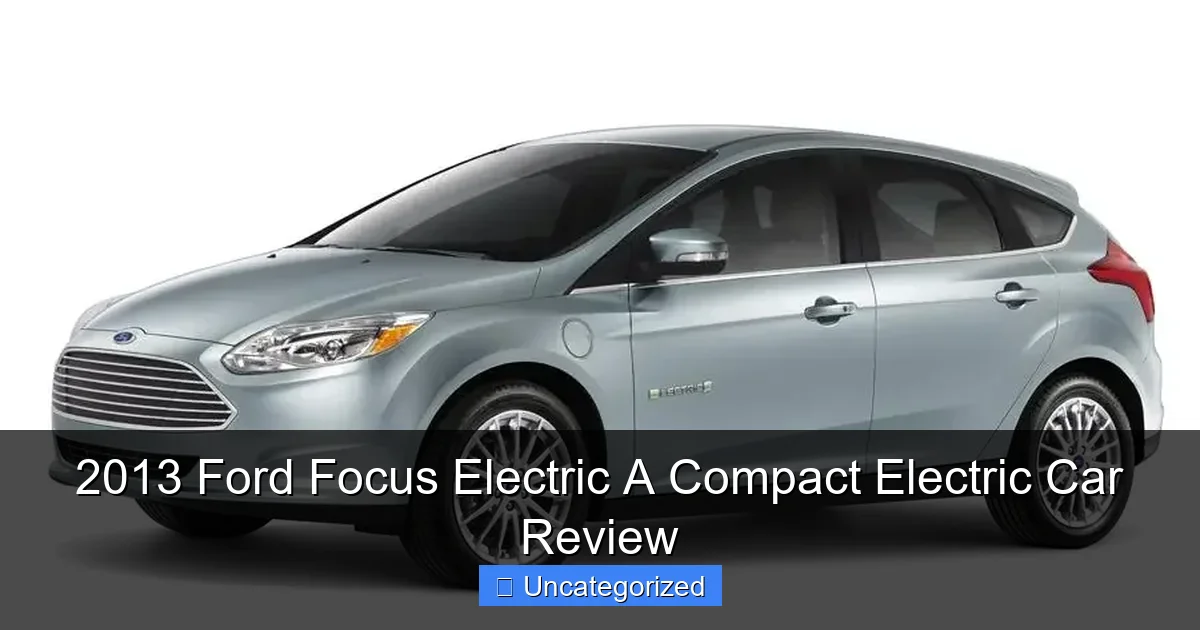
Featured image for 2013 ford focus electric electric cars
Image source: cstatic-images.com
The 2013 Ford Focus Electric stands out as a practical and efficient compact EV, offering a smooth, quiet ride with an EPA-estimated 76-mile range. With its peppy acceleration, upscale interior, and user-friendly tech, it delivers strong value in the early electric car market—perfect for eco-conscious urban drivers seeking reliability without sacrificing comfort.
Key Takeaways
- Efficient Performance: Delivers 110 MPGe, ideal for eco-conscious city driving.
- Limited Range: 76-mile range suits daily commutes but not long trips.
- Fast Charging: Recharges in 3–4 hours with Level 2 charger.
- Affordable Option: Lower upfront cost than many 2013 EV rivals.
- Spacious Interior: Roomy cabin and trunk for a compact EV.
- Outdated Tech: Lacks modern infotainment features found in newer EVs.
📑 Table of Contents
- 2013 Ford Focus Electric: A Compact Electric Car Review
- Design and Exterior: Subtle EV Styling with Purpose
- Performance and Driving Experience: Efficiency Over Excitement
- Charging and Practicality: The Urban Commuter’s Friend
- Technology and Features: Ahead of Its Time
- Ownership Costs and Market Position: Value vs. Competition
- Legacy and Verdict: A Solid First Attempt
2013 Ford Focus Electric: A Compact Electric Car Review
Introduction: The Rise of Compact EVs
The early 2010s marked a pivotal moment in the automotive industry as electric vehicles (EVs) transitioned from niche prototypes to practical consumer products. Among the pioneers was the 2013 Ford Focus Electric, Ford’s first mass-produced battery-electric passenger car. Designed to compete with the Nissan Leaf and Chevrolet Volt, this compact EV represented Ford’s ambitious entry into the zero-emission vehicle market. With a sleek hatchback design, a 76-mile EPA-rated range, and a suite of innovative tech features, the Focus Electric aimed to prove that practicality and sustainability could coexist in a single package.
At a time when EV adoption was still in its infancy, the Focus Electric faced challenges ranging from range anxiety to limited charging infrastructure. However, its competitive pricing, federal tax credits, and Ford’s brand reputation made it an intriguing option for eco-conscious urban drivers. This review dives deep into the 2013 Focus Electric’s performance, design, technology, and real-world usability to evaluate whether it succeeded in its mission—and how it holds up a decade later in the rapidly evolving EV landscape.
Design and Exterior: Subtle EV Styling with Purpose
Visual Differentiation from Gas Models
The 2013 Focus Electric shared its platform with the gasoline-powered Focus but incorporated subtle design cues to highlight its eco-friendly identity. Unlike flashy competitors, Ford opted for a minimalist approach:
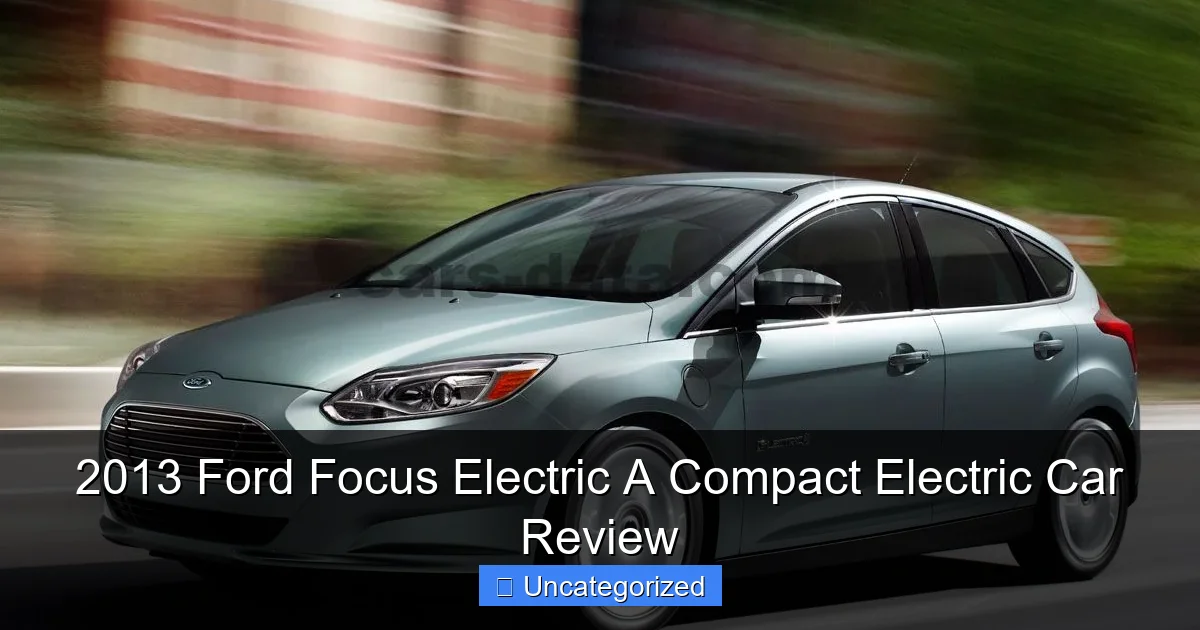
Visual guide about 2013 ford focus electric electric cars
Image source: cars-data.com
- Front fascia: A unique closed-off grille with blue accents (a signature Ford EV design element) replaced the traditional grille, reducing aerodynamic drag.
- Badging: “ELECTRIC” lettering on the liftgate and blue-tinted headlights distinguished it from combustion-engine variants.
- Aero wheels: 17-inch aluminum wheels with a turbine-inspired design improved efficiency by minimizing air resistance.
While some critics noted its resemblance to the standard Focus, this understated styling appealed to buyers seeking an EV without excessive visual flair. The hatchback body style (shared with the Focus Titanium trim) provided 14.5 cubic feet of cargo space—expandable to 43.9 cubic feet with seats folded—making it practical for daily errands.
Color and Trim Options
Buyers could choose from four exterior colors: White Platinum, Tuxedo Black, Ingot Silver, and Blue Candy Metallic (a $395 option). The sole trim level included:
- Heated front seats with eco-friendly cloth upholstery
- Power-adjustable driver’s seat
- Rearview camera
- SYNC infotainment system with voice control
Notably, the Focus Electric skipped the sunroof option to preserve battery range—a decision reflecting Ford’s prioritization of efficiency over luxury.
Performance and Driving Experience: Efficiency Over Excitement
Powertrain and Range
The 2013 Focus Electric’s 107-kW (143-hp) electric motor drew power from a 23-kWh liquid-cooled lithium-ion battery pack. Key specifications included:
- EPA-estimated range: 76 miles (122 km) per charge
- Top speed: 84 mph (electronically limited)
- Acceleration: 0–60 mph in 9.6 seconds (slower than the 2013 Nissan Leaf’s 9.9 seconds)
- Regenerative braking: Strong “one-pedal driving” capability with adjustable levels
While the range was competitive for 2013, it fell short of the Leaf’s 84-mile rating. Real-world tests by Green Car Reports found the Focus Electric achieved 60–70 miles in mixed driving, dropping to 45–50 miles in cold weather. The car’s SmartGauge cluster displayed real-time efficiency data, encouraging drivers to adopt energy-saving habits like smooth acceleration.
Handling and Ride Quality
The Focus Electric’s 2,960-lb curb weight (300 lbs heavier than the gas model) improved stability but affected handling. The suspension tuning prioritized comfort over sportiness, resulting in:
- Softer ride quality ideal for city potholes
- Noticeable body roll in sharp turns
- Quiet cabin with minimal wind noise (thanks to sound-deadening materials)
Tip: For spirited driving, the “Sport” mode (activated via a dashboard button) sharpened throttle response and reduced regenerative braking—ideal for highway merging.
Charging and Practicality: The Urban Commuter’s Friend
Charging Options and Times
The Focus Electric supported two charging levels:
- Level 1 (120V): 20+ hours for a full charge (included portable cord)
- Level 2 (240V): 3–4 hours (required a $1,000–$2,000 home charger installation)
Ford partnered with Best Buy to offer free home charger installations for early buyers—a smart move to ease adoption. Public charging was limited in 2013, but the car’s 120V cord allowed emergency top-ups at outlets (e.g., parking garages, shopping malls).
Real-World Charging Scenarios
Example: A 15-mile round-trip commute in Seattle (with a 20% battery buffer) required:
- 30% charge (22.8 miles) for the workday
- Level 2 charger: 1.5 hours to replenish
- Level 1 charger: 8+ hours (overnight)
Tip: Use the MyFord Mobile app (or the car’s touchscreen) to schedule charging during off-peak electricity rates (e.g., 12 AM–6 AM) to save money.
Climate Control Efficiency
The electric heater consumed ~3.5 kW, draining the battery by 10–15 miles in sub-freezing temperatures. Pre-conditioning (warming the cabin while plugged in) mitigated this issue. Example: A 20-minute pre-heat in -10°C weather preserved 8 miles of range.
Technology and Features: Ahead of Its Time
SYNC Infotainment and Connectivity
The Focus Electric’s 8-inch touchscreen ran Ford’s SYNC system, featuring:
- Voice-activated navigation (with EV route planning)
- Bluetooth audio streaming
- HD Radio and USB connectivity
- Integration with the MyFord Mobile app for remote monitoring
Standout feature: The app allowed drivers to:
- Check battery status remotely
- Start/stop charging
- Pre-heat/cool the cabin
- Find nearby charging stations
While the interface felt dated by 2020s standards, it was revolutionary in 2013.
Safety and Driver Aids
Standard safety features included:
- AdvanceTrac stability control
- Six airbags
- Blind-spot mirrors
- Rear parking sensors
Optional tech (rarely ordered) included a rearview camera and active park assist. The NHTSA awarded the Focus Electric a 5-star overall safety rating.
Unique EV-Specific Features
The car’s Brake Coach feature provided real-time feedback on regenerative braking efficiency, helping drivers maximize energy recapture. Example: A smooth stop at a red light could recover 2–3% battery, adding 1–2 miles of range.
Ownership Costs and Market Position: Value vs. Competition
Pricing and Incentives
The 2013 Focus Electric’s MSRP started at $39,200—$1,000 below the Nissan Leaf. After federal tax credits ($7,500) and state incentives (e.g., $2,500 in California), the effective price could drop to $29,200. Resale values were poor due to rapid EV advancements, with 2013 models selling for $5,000–$8,000 by 2018.
Maintenance and Reliability
EV-specific maintenance was minimal:
- No oil changes or exhaust system repairs
- Annual battery coolant checks
- Brake pads lasting 100,000+ miles (thanks to regenerative braking)
Common issues included:
- Battery degradation (5–10% loss after 5 years)
- SYNC system glitches (fixed via software updates)
- 12V auxiliary battery failures (replaced every 3–4 years)
Tip: Buyers should verify battery health using a diagnostic tool (e.g., OBD2 scanner) before purchasing a used model.
Competition Comparison
| Model | MSRP | Range | Charging Time (240V) | Key Advantage |
|---|---|---|---|---|
| 2013 Ford Focus Electric | $39,200 | 76 mi | 3–4 hrs | Best infotainment system |
| 2013 Nissan Leaf | $35,200 | 84 mi | 4–5 hrs | Lower price, higher range |
| 2013 Chevrolet Volt | $39,145 | 38 mi (EV) + 344 mi (gas) | 4 hrs (EV) | Gasoline backup engine |
Legacy and Verdict: A Solid First Attempt
Where the Focus Electric Shined
The 2013 Focus Electric excelled as a:
- Urban commuter: Compact size and 76-mile range suited city driving
- Tech pioneer: SYNC and MyFord Mobile set benchmarks for EV connectivity
- Value option: Competitive pricing after incentives
Its quiet cabin, smooth acceleration, and hatchback practicality made it a favorite among suburban families and eco-conscious professionals.
Where It Fell Short
Critics highlighted:
- Range limitations: 76 miles felt restrictive by 2015 standards
- Lack of CHAdeMO fast charging: Unlike the Leaf, it couldn’t use 50-kW DC fast chargers
- Underwhelming performance: 0–60 mph times lagged behind competitors
Ford discontinued the Focus Electric in 2018, shifting focus to the Mach-E SUV—a sign of changing market demands.
Final Verdict: 3.8/5 Stars
The 2013 Ford Focus Electric was a capable but imperfect entry into the EV market. While it didn’t revolutionize the industry like the Tesla Model S, it proved that mainstream automakers could build compelling electric cars. For buyers in 2013, it offered a balanced mix of practicality, technology, and affordability. Today, it serves as a reminder of how far EVs have progressed—and a testament to Ford’s early commitment to electrification. If you’re considering a used model, prioritize one with low mileage and a well-maintained battery. For new buyers, the Mach-E or Tesla Model 3 offer better range and charging options—but the Focus Electric remains a nostalgic milestone in the EV revolution.
Frequently Asked Questions
What is the range of the 2013 Ford Focus Electric on a full charge?
The 2013 Ford Focus Electric offers an EPA-estimated range of 76 miles on a full charge, making it ideal for daily commutes and short trips. This range was competitive among compact electric cars at the time of its release.
How long does it take to charge the 2013 Ford Focus Electric?
Using a 240V Level 2 charger, the 2013 Ford Focus Electric takes about 3–4 hours to fully charge. With a standard 120V household outlet, charging can take up to 20 hours, so a dedicated home charging station is recommended.
Is the 2013 Ford Focus Electric eligible for federal tax credits?
Yes, the 2013 Ford Focus Electric qualifies for a federal tax credit of up to $7,500, depending on your tax liability. Additional state or local incentives may also apply, making this compact electric car a cost-effective choice.
What are the standout features of the 2013 Ford Focus Electric?
This compact electric car includes features like SYNC infotainment, regenerative braking, and a quiet, smooth ride. Its eco-conscious interior materials and advanced tech set it apart from other electric vehicles in its class.
How does the 2013 Ford Focus Electric compare to other EVs in its price range?
The 2013 Ford Focus Electric competes well with rivals like the Nissan Leaf, offering similar range and features at a comparable price point. Its refined interior and user-friendly tech give it an edge among compact electric cars.
What maintenance costs are associated with the 2013 Ford Focus Electric?
Maintenance costs for the 2013 Ford Focus Electric are generally lower than gas-powered cars, with no oil changes and fewer moving parts. However, owners should budget for battery health checks and potential replacements over time.