2013 Ford Focus Electric Cars Review Performance and Reliability Insights

Featured image for 2013 ford focus electric cars
Image source: platform.cstatic-images.com
The 2013 Ford Focus Electric delivers a smooth, quiet ride with an EPA-estimated 76 MPGe, making it a standout in early mainstream electric vehicles. Performance is peppy in city driving, though its 76-mile range and aging battery tech limit long-distance appeal—reliability is generally solid, but check for battery degradation and outdated charging standards. A compelling, budget-friendly EV choice for urban commuters seeking eco-conscious efficiency.
Key Takeaways
- Efficient Performance: Delivers smooth, quiet acceleration ideal for city driving.
- Limited Range: 76-mile range suits daily commutes but not long trips.
- Reliable Build: Fewer moving parts boost long-term durability and lower maintenance.
- Charging Speed: 240V charging adds ~20 miles per hour—plan accordingly.
- Regen Braking: Maximize range by mastering one-pedal driving techniques.
- Cabin Quality: Premium interior materials enhance comfort in compact EV segment.
- Tech Features: Sync system excels but lacks advanced driver aids.
📑 Table of Contents
- The Dawn of a New Electric Era: The 2013 Ford Focus Electric
- Performance and Driving Experience: Power, Range, and Real-World Usability
- Battery Technology and Charging Infrastructure: The Heart of the EV
- Reliability and Maintenance: What Owners Say After 10 Years
- Technology and Interior: A Glimpse into the Future (for 2013)
- Ownership Costs, Incentives, and Long-Term Value
- Conclusion: A Pioneering EV with Lasting Lessons
The Dawn of a New Electric Era: The 2013 Ford Focus Electric
The automotive world in 2013 stood at the precipice of a transformation, and Ford was determined to be a leader in the electric vehicle (EV) revolution. Amid a growing demand for eco-friendly transportation and stricter emissions regulations, the 2013 Ford Focus Electric emerged as a bold statement from a major American automaker embracing electrification. Unlike previous attempts at electric cars, which were often niche or underpowered, the Focus Electric was Ford’s first mass-market, fully electric passenger car built on a globally recognized platform. With its sleek styling, advanced tech, and zero-emission promise, it aimed to prove that electric cars could be practical, stylish, and accessible to everyday drivers.
But how did Ford’s entry into the EV market perform in real-world conditions? Was the 2013 Focus Electric truly ready for the demands of modern commuters, or was it a prototype wrapped in a production body? This comprehensive review dives deep into the performance, reliability, driving experience, battery technology, ownership costs, and long-term value of the 2013 Ford Focus Electric. Whether you’re a first-time EV buyer, a Ford enthusiast, or a sustainability advocate, this analysis offers essential insights to help you understand where the Focus Electric succeeded, where it fell short, and what it means for the evolution of electric mobility.
Performance and Driving Experience: Power, Range, and Real-World Usability
The 2013 Ford Focus Electric was designed to deliver a smooth, quiet, and efficient driving experience—hallmarks of electric vehicles. But how does that translate into actual performance on the road?
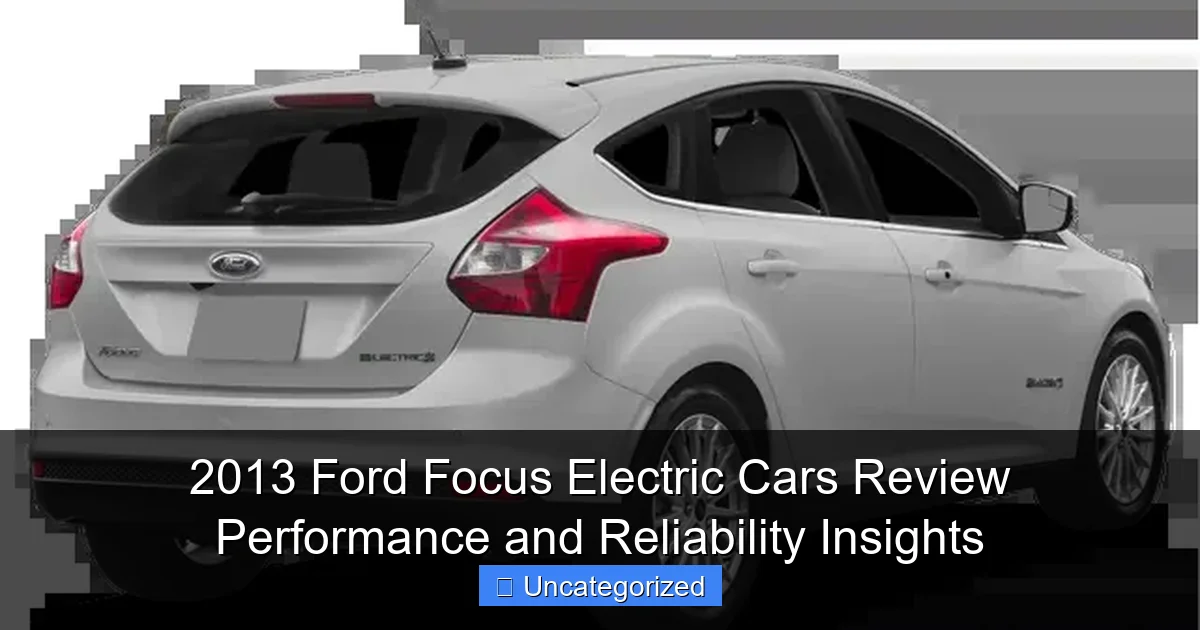
Visual guide about 2013 ford focus electric cars
Image source: platform.cstatic-images.com
Motor and Acceleration
Powered by a 107-kilowatt (143 horsepower) electric motor, the Focus Electric generates 184 lb-ft of torque instantly—a key advantage of electric drivetrains. Unlike internal combustion engines that need to build revs, electric motors deliver maximum torque from a standstill. This results in brisk acceleration from 0 to 60 mph in approximately 10.1 seconds, which may not break records, but feels responsive and confident in city driving.
For example, merging onto highways or navigating stop-and-go traffic becomes effortless. The car’s single-speed transmission ensures seamless power delivery without gear shifts, contributing to a smooth, vibration-free ride. While it won’t win drag races, the Focus Electric excels in urban environments where quick bursts of acceleration are more valuable than top speed.
Range and Efficiency
The 2013 Focus Electric features a 23 kWh lithium-ion battery pack mounted under the floor, providing an EPA-estimated 76 miles of range on a full charge. While this may seem modest by today’s standards (2023+ EVs often exceed 250 miles), it was competitive for its time, especially when compared to the Nissan Leaf (84 miles) and Chevrolet Spark EV (82 miles).
Real-world range varies based on driving habits, climate, and use of accessories. For instance:
- Driving in eco mode with regenerative braking maximizes range—some drivers report up to 85 miles in mild weather.
- Using heater or air conditioning in winter or summer can reduce range by 20–30%.
- Highway speeds above 65 mph significantly drain the battery due to aerodynamic drag.
Tip: To extend range, pre-condition the cabin while the car is still plugged in. The Focus Electric allows remote climate control via the MyFord Mobile app, so you can heat or cool the interior without drawing from the driving battery.
Regenerative Braking and Driving Modes
The Focus Electric features a strong regenerative braking system that captures energy when slowing down. Drivers can engage “Low” or “High” regen modes using a button on the center console. In High mode, lifting off the accelerator causes noticeable deceleration—almost like “one-pedal driving”—which helps recapture energy and reduces reliance on friction brakes.
For new EV drivers, this takes some getting used to. However, once mastered, it enhances efficiency and reduces brake wear. Ford even includes a brake coach in the instrument cluster that provides real-time feedback on how effectively you’re using regen braking—great for eco-conscious drivers.
Battery Technology and Charging Infrastructure: The Heart of the EV
The battery is the most critical component of any electric car, and the 2013 Focus Electric’s 23 kWh pack was a significant leap for Ford. Understanding its design, degradation, and charging options is essential for long-term ownership.
Battery Pack Design and Cooling
The battery uses lithium-ion cells arranged in a flat, skateboard-style configuration beneath the floor. This design lowers the car’s center of gravity, improving handling and stability. Importantly, Ford equipped the pack with a liquid thermal management system—a rare feature in early 2010s EVs—that actively heats and cools the battery to maintain optimal performance in extreme temperatures.
This system is crucial. In cold climates, a poorly managed battery can lose 30–40% of its range. The Focus Electric’s thermal management helps mitigate this, ensuring more consistent performance in winter. For example, drivers in Minnesota reported only a 15–20% range drop in sub-zero temperatures—better than many competitors at the time.
Charging Options and Times
The Focus Electric supports three charging levels:
- Level 1 (120V): Standard household outlet. Charging time: 20–24 hours for a full charge. Best for overnight charging at home.
- Level 2 (240V): Requires a dedicated 30-amp circuit and a home charging station (e.g., ClipperCreek or ChargePoint). Charging time: 3.5 to 4 hours. Highly recommended for daily use.
- DC Fast Charging (CHAdeMO): The Focus Electric is one of the few 2013 EVs with DC fast charging capability. Using a CHAdeMO station, it can charge to 80% in about 30 minutes—a major advantage for road trips or quick top-ups.
Tip: Install a Level 2 charger at home if possible. It cuts charging time dramatically and increases convenience. Many utility companies offer rebates for home EV charger installations—check your local programs.
Battery Degradation and Longevity
After a decade, many 2013 Focus Electrics still retain 75–85% of their original range, according to data from Plug-In America and Ford owner forums. Ford offered an 8-year/100,000-mile battery warranty, covering defects and excessive degradation (defined as losing more than 30% capacity).
Factors affecting degradation include:
- Frequent use of DC fast charging (can accelerate wear)
- Consistently charging to 100% or letting the battery drain to 0%
- Extreme temperatures without preconditioning
To maximize battery life, Ford recommends:
- Keeping the state of charge between 20% and 80% for daily use
- Using Level 2 charging over Level 1 when possible (less stress on the system)
- Avoiding repeated full discharges
Reliability and Maintenance: What Owners Say After 10 Years
Reliability is a major concern for any vehicle, especially EVs with complex electronics and high-voltage systems. How has the 2013 Focus Electric held up over time?
Common Mechanical and Electrical Issues
Based on data from the National Highway Traffic Safety Administration (NHTSA), Ford’s own service bulletins, and owner forums (e.g., MyFocusElectric.com), the most reported issues include:
- 12V auxiliary battery failure: A frequent complaint. The 12V battery powers lights, infotainment, and the high-voltage system’s “on” signal. If it dies, the car won’t start. Replacing it every 3–5 years is recommended.
- Charging port door actuator failure: The motor that opens/closes the charging port cover can fail, especially in cold or wet climates. A $200–$400 repair.
- Infotainment system glitches: The MyFord Touch system (SYNC 2) was known for lag, unresponsiveness, and occasional reboots. Ford released software updates to improve stability.
- Thermal management pump failure: Rare but serious. If the coolant pump fails, the battery may overheat or underperform. Replacement costs ~$800–$1,200.
<
Notably, there were no major recalls related to the high-voltage battery or electric motor—a testament to Ford’s engineering rigor.
Maintenance Costs vs. Gas-Powered Focus
One of the biggest advantages of EVs is lower maintenance. The Focus Electric has:
- No oil changes, spark plugs, or timing belts
- Reduced brake wear due to regenerative braking
- Fewer moving parts in the drivetrain
According to a 2022 study by AAA, EV owners spend 50% less on maintenance over the life of the vehicle compared to gasoline cars. For the Focus Electric, annual maintenance costs average $400–$600, compared to $800–$1,000 for a gas-powered 2013 Focus.
Example: A 2013 Focus Electric with 80,000 miles might need:
- Brake pad replacement (rear only, due to regen): $150
- Tire rotation and alignment: $100
- 12V battery replacement: $200
- Total: ~$450/year
Real-World Owner Experiences
Owners praise the Focus Electric for:
- Reliable daily commuting (especially under 70 miles)
- Low running costs (electricity is cheaper than gas)
- Quiet, smooth ride quality
Common criticisms include:
- Limited range for long trips
- Outdated infotainment system
- Smaller trunk due to battery placement (14.5 cu ft vs. 18.5 in gas Focus)
Still, many owners report 100,000+ miles with minimal issues, making it a solid choice for urban dwellers.
Technology and Interior: A Glimpse into the Future (for 2013)
The 2013 Focus Electric wasn’t just about being electric—it was packed with tech to make the EV experience smarter and more convenient.
Infotainment and Connectivity
The car features Ford’s SYNC with MyFord Touch system, including:
- 8-inch touchscreen
- Voice-activated controls
- Bluetooth, USB, and SD card inputs
- Available navigation with EV-specific routing
The navigation system could estimate range based on terrain, weather, and driving habits—a novel feature at the time. However, the interface was often criticized for being slow and unintuitive. Tip: Use smartphone integration (via Bluetooth or USB) for music and maps to avoid system lag.
Smartphone App Integration
Ford’s MyFord Mobile app (iOS and Android) was a standout feature. It allowed owners to:
- Remote start climate control
- Check battery status and charging progress
- Find nearby charging stations
- Lock/unlock doors remotely
This level of connectivity was rare in 2013 and gave the Focus Electric an edge over competitors like the Nissan Leaf, which had limited app functionality.
Interior Design and Comfort
The cabin shares design cues with the gas-powered Focus but includes EV-specific touches:
- Eco-conscious materials: Recycled fabrics and soy-based foam in seats
- Digital instrument cluster: Shows real-time energy use, regen braking, and range estimates
- Heated front seats and steering wheel: Standard on all trims—great for cold climates
While the interior isn’t luxurious, it’s well-built and practical. The front seats are supportive, and rear legroom is adequate for average adults. However, the sloping roofline reduces rear headroom for taller passengers.
Ownership Costs, Incentives, and Long-Term Value
Buying an EV isn’t just about the sticker price—it’s about total cost of ownership. The 2013 Focus Electric offers several financial advantages.
Upfront Cost and Incentives
The 2013 Focus Electric had a base MSRP of $39,200, significantly higher than the gas Focus ($16,000–$20,000). However, buyers were eligible for:
- $7,500 federal tax credit (available at purchase, not as a refund)
- State and local incentives (e.g., $2,500 in California, free parking in some cities)
- HOV lane access in certain states (e.g., California, New York)
After incentives, the effective price could drop to $29,000–$32,000, making it competitive with premium compact cars.
Fuel and Energy Savings
Charging costs vary by region, but on average:
- At $0.15/kWh, a full charge costs $3.45
- At 3.5 miles/kWh, the cost per mile is $0.043 vs. $0.10–$0.15 for gas cars
For a driver averaging 12,000 miles/year, that’s a yearly savings of $700–$1,300 on fuel alone.
Resale Value and Depreciation
Like most EVs, the Focus Electric suffered from steep depreciation in its early years. A new model lost ~50% of its value in 3 years. However, by 2023, prices have stabilized. Used 2013 Focus Electrics typically sell for $6,000–$9,000 with 80,000–100,000 miles—making them affordable entry-level EVs today.
Tip: Look for models with a newer battery pack (Ford offered free replacements under warranty for degraded units). A car with a recent battery swap is a better long-term investment.
Data Table: 2013 Ford Focus Electric vs. Key Competitors
| Feature | 2013 Ford Focus Electric | 2013 Nissan Leaf | 2013 Chevrolet Spark EV |
|---|---|---|---|
| MSRP | $39,200 | $35,200 | $27,495 |
| Range (EPA) | 76 miles | 84 miles | 82 miles |
| Motor Power | 143 hp | 107 hp | 140 hp |
| DC Fast Charging | Yes (CHAdeMO) | Yes (CHAdeMO) | Yes (SAE Combo) |
| Home Charging (Level 2) | 3.5–4 hours | 4–5 hours | 4 hours |
| Federal Tax Credit | $7,500 | $7,500 | $7,500 |
| Key Tech | MyFord Mobile, SYNC, Regen Modes | CarWings, Leaf Link | OnStar, Regen Paddles |
Conclusion: A Pioneering EV with Lasting Lessons
The 2013 Ford Focus Electric was more than just a car—it was a bold experiment in mainstream electrification. While it didn’t dominate the market like the Tesla Model S, it played a crucial role in proving that EVs could be practical, reliable, and desirable for everyday Americans. Its 76-mile range, DC fast charging, and smartphone integration were ahead of their time, and its low maintenance costs and eco-friendly materials aligned with growing environmental concerns.
Ten years later, the Focus Electric remains a solid used EV option, especially for city drivers with short commutes. Its reliability after a decade of real-world use is impressive, with most major components holding up well. While it lacks the range and tech of modern EVs, it offers a cost-effective entry point into electric driving—perfect for budget-conscious buyers or those wanting to “try out” an EV without a long-term commitment.
Ultimately, the 2013 Focus Electric taught the auto industry valuable lessons: EVs need robust battery management, intuitive tech, and strong charging support to succeed. Ford took those lessons and evolved into the Mustang Mach-E and F-150 Lightning—but it all started with this compact, quiet, and surprisingly capable hatchback. For those willing to embrace its limitations, the 2013 Ford Focus Electric remains a smart, sustainable, and surprisingly fun choice in the used EV market.
Frequently Asked Questions
What is the driving range of the 2013 Ford Focus Electric car?
The 2013 Ford Focus Electric offers an EPA-estimated range of 76 miles on a full charge, making it suitable for daily commutes and urban driving. Real-world range may vary slightly depending on driving habits and weather conditions.
How does the performance of the 2013 Ford Focus Electric compare to gas models?
The 2013 Ford Focus Electric delivers instant torque with its 143-horsepower electric motor, providing quicker acceleration off the line than the gas-powered Focus. However, top speed is limited to 84 mph to optimize battery efficiency.
What are the charging options for the 2013 Ford Focus Electric?
The 2013 Ford Focus Electric comes with a 6.6 kW onboard charger, allowing a full charge in about 4 hours using a 240V Level 2 station. A standard 120V household outlet takes significantly longer—up to 20 hours.
How reliable is the 2013 Ford Focus Electric car?
The 2013 Ford Focus Electric has a reputation for solid reliability, with few reported issues related to its battery or electric drivetrain. As with all EVs, maintaining proper charging habits helps ensure long-term dependability.
Does the 2013 Ford Focus Electric support fast charging?
No, the 2013 Ford Focus Electric does not support DC fast charging. It is limited to Level 1 (120V) and Level 2 (240V) charging, which may affect convenience for drivers seeking rapid top-ups on longer trips.
What safety features does the 2013 Ford Focus Electric include?
The 2013 Ford Focus Electric comes equipped with standard safety features like stability control, anti-lock brakes, and multiple airbags. It also includes EV-specific systems such as a pedestrian alert sound and battery safety monitoring.