2014 Ford Focus Electric Car Battery Guide and Tips
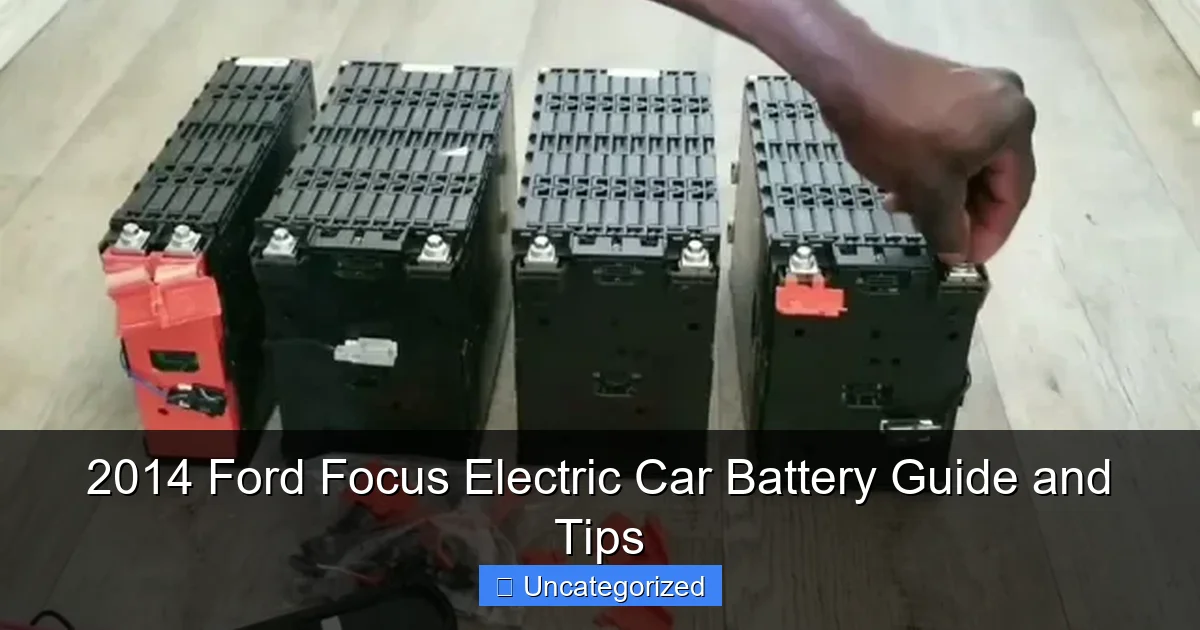
Featured image for 2014 ford focus electric car battery
Image source: electriccarwiki.com
The 2014 Ford Focus Electric car battery delivers an EPA-estimated 76-mile range and relies on a 23 kWh lithium-ion pack for reliable daily performance. To maximize longevity, avoid frequent deep discharges and extreme temperatures, and use scheduled charging to maintain optimal battery health. With proper care, owners can expect consistent efficiency and fewer costly replacements over time.
Key Takeaways
- Maximize range: Precondition the battery while plugged in to conserve energy.
- Charge smart: Use Level 2 charging for faster, more efficient battery replenishment.
- Monitor degradation: Track capacity loss via the onboard battery health indicator.
- Optimize temperature: Park in shade or garage to reduce thermal strain.
- Drive efficiently: Use Eco mode and regenerative braking to extend battery life.
- Schedule maintenance: Follow Ford’s battery inspection schedule for long-term reliability.
📑 Table of Contents
- Introduction to the 2014 Ford Focus Electric Car Battery
- Understanding the 2014 Ford Focus Electric Battery Specifications
- Common Battery Issues and Troubleshooting Tips
- Battery Maintenance Best Practices for Longevity
- Replacing or Upgrading the Battery: Options and Costs
- Maximizing Range and Efficiency: Pro Tips and Tricks
- Conclusion: Making the Most of Your 2014 Ford Focus Electric Battery
Introduction to the 2014 Ford Focus Electric Car Battery
The 2014 Ford Focus Electric was one of the automaker’s boldest steps into the world of zero-emission transportation. As a compact electric vehicle (EV), it aimed to deliver practicality, efficiency, and modern technology to eco-conscious drivers. At the heart of this vehicle lies its lithium-ion battery pack—a sophisticated energy storage system that powers everything from acceleration to climate control. Unlike conventional gasoline engines, the performance, range, and longevity of the Focus Electric depend almost entirely on the health and maintenance of its 2014 Ford Focus Electric car battery. For current owners, prospective buyers, or EV enthusiasts, understanding this critical component is essential for maximizing the vehicle’s value and reliability.
While the 2014 Focus Electric may not have the same range as today’s cutting-edge EVs like the Tesla Model 3 or Ford’s own Mustang Mach-E, it remains a noteworthy option in the used EV market. With an EPA-estimated range of 76 miles on a full charge, it’s ideal for urban commuters and daily errands. However, battery degradation, charging habits, and environmental factors can significantly impact real-world performance. This guide dives deep into the 2014 Ford Focus Electric car battery, exploring its specifications, common issues, maintenance best practices, replacement options, and tips to extend its lifespan. Whether you’re troubleshooting a charging problem or planning a long-term ownership strategy, this comprehensive resource will equip you with the knowledge you need.
Understanding the 2014 Ford Focus Electric Battery Specifications
The battery system in the 2014 Ford Focus Electric is a critical component that defines the vehicle’s capabilities. Unlike internal combustion engines, where fuel is simply consumed, the EV battery must store energy efficiently, deliver power consistently, and endure thousands of charge-discharge cycles. Let’s break down the technical details and what they mean for everyday driving.
Visual guide about 2014 ford focus electric car battery
Image source: i0.wp.com
Battery Chemistry and Capacity
The 2014 Focus Electric uses a 23 kWh lithium-ion battery pack, manufactured by LG Chem. This chemistry was chosen for its high energy density, relatively stable thermal performance, and long cycle life compared to older nickel-metal hydride (NiMH) systems. Lithium-ion batteries are sensitive to temperature extremes, which is why Ford integrated an advanced thermal management system—more on that later.
With a nominal capacity of 23 kWh, the battery delivers a usable range of approximately 76 miles (EPA rating). However, real-world range varies based on driving habits, terrain, and climate. For example, highway driving at 65 mph can reduce range to around 60 miles, while city driving with regenerative braking may stretch it closer to 80 miles. The battery’s capacity is distributed across multiple modules, each containing individual cells monitored by the Battery Management System (BMS).
Thermal Management System
One of the standout features of the 2014 Focus Electric’s battery is its liquid-cooled thermal management system. Unlike air-cooled batteries, which can overheat or lose efficiency in extreme temperatures, the liquid system circulates coolant through channels around the battery cells. This helps maintain optimal operating temperatures (typically between 68°F and 86°F or 20°C to 30°C).
- Preconditioning Tip: Use the Ford MyTouch app or the vehicle’s climate controls while plugged in to heat or cool the cabin before driving. This reduces battery load during operation and preserves range.
- Extreme Weather Caution: In sub-zero temperatures, the BMS may limit charging speed or reduce available power to protect the battery. Always allow extra charging time in winter.
This system is crucial for longevity. Overheating accelerates degradation, while prolonged exposure to cold reduces charge acceptance and efficiency. Owners in regions with harsh winters or scorching summers should be especially mindful of thermal impacts.
Charging Infrastructure and Compatibility
The 2014 Focus Electric supports both Level 1 (120V) and Level 2 (240V) charging. It comes with a portable charging cord that works with standard household outlets (Level 1), but a dedicated Level 2 charger (sold separately) is recommended for faster charging.
- Level 1: Adds about 4–5 miles of range per hour. A full charge from empty takes 18–20 hours.
- Level 2 (6.6 kW onboard charger): Adds 22–25 miles per hour. A full charge takes 3.5–4 hours.
The vehicle uses the SAE J1772 connector standard, compatible with most public charging stations. However, it does not support DC fast charging (DCFC), which limits its utility for long-distance travel. This is a key limitation compared to newer EVs with CCS or Tesla Supercharger access.
Common Battery Issues and Troubleshooting Tips
Despite Ford’s engineering efforts, the 2014 Focus Electric battery is not immune to issues. Over time, owners have reported several recurring problems. Being aware of these can help you diagnose and address them early—before they lead to costly repairs.
Reduced Range and Capacity Loss
The most common complaint among 2014 Focus Electric owners is gradual battery capacity loss. After 5–7 years, many vehicles show a 15–25% reduction in range. For example, a car that once achieved 76 miles may now max out at 55–60 miles.
Causes include:
- Natural aging of lithium-ion cells (typically 2–3% per year).
- Frequent deep discharges (below 20% state of charge).
- Prolonged exposure to high temperatures (e.g., parking in direct sunlight).
- Infrequent use or long-term storage without proper maintenance.
Tip: Monitor your battery health using the Ford SYNC app or third-party tools like OBD-II scanners with EV-specific apps (e.g., ScanMyTesla, though adapted for Ford). These can estimate remaining capacity (SOH – State of Health).
Charging Failures and Error Messages
Some owners report issues such as “Charging Interrupted,” “Charging System Fault,” or failure to initiate charging. These can stem from:
- Faulty charging port or inlet. Debris, corrosion, or bent pins can disrupt the connection.
- Defective onboard charger. This component converts AC from the grid to DC for the battery. Failures are rare but expensive to repair (often $1,500+).
- Charging cable problems. The included portable charger is durable but can suffer from internal wire breaks.
Troubleshooting Steps:
- Inspect the charging port for debris. Use compressed air to clean it.
- Try a different charging station or cable to isolate the issue.
- Restart the vehicle and attempt charging again.
- If the problem persists, consult a Ford-certified EV technician.
One user in Arizona reported intermittent charging. After replacing the factory cable with a high-quality third-party unit, the issue resolved—likely due to overheating in the desert climate.
Battery Management System (BMS) Glitches
The BMS monitors cell voltages, temperatures, and state of charge. If it malfunctions, it can trigger false warnings or disable charging. Symptoms include:
- Sudden range drops without explanation.
- Dashboard warnings like “Service Battery Charging System.”
- Inability to charge beyond a certain percentage.
Ford issued a Technical Service Bulletin (TSB) 15-0113 addressing BMS calibration issues. If your car is affected, a dealer can reflash the software to improve accuracy.
Battery Maintenance Best Practices for Longevity
Proper maintenance can significantly extend the life of your 2014 Focus Electric battery. Unlike traditional car batteries (which last 3–5 years), EV traction batteries are designed for 10–15 years or more—but only with care.
Optimize Charging Habits
To minimize stress on the battery:
- Avoid full charges (100%) unless necessary. Keeping the battery between 20% and 80% reduces degradation. Use the “Daily” charging limit in the Ford app to cap at 80%.
- Don’t let the battery sit at 0% for long. Deep discharges accelerate wear. If you’re not driving for a week, charge to 50%.
- Use Level 2 charging when possible. Level 1 is slower and can cause the onboard charger to overheat over time.
Example: A daily commuter who drives 30 miles can charge to 70–80% each night, avoiding the stress of frequent 100% charges. This simple habit can add years to battery life.
Manage Temperature Exposure
Extreme temperatures are the enemy of lithium-ion batteries.
- In hot climates: Park in the shade or use a car cover. If your garage is insulated, park inside. Avoid leaving the car plugged in during heatwaves—the thermal system will run continuously, draining the 12V auxiliary battery.
- In cold climates: Precondition the battery while plugged in. Use seat heaters instead of the cabin heater when possible (they draw less power).
Ford’s liquid cooling system helps, but it’s not foolproof. A study by Geotab found that EVs parked in Phoenix, AZ, lost 1.5% more capacity per year than those in Seattle, WA—largely due to heat exposure.
Regular Software Updates and Inspections
Ford occasionally releases software updates that improve BMS algorithms, charging efficiency, and thermal management. Visit a dealer every 6–12 months for:
- Diagnostic scans to check battery health.
- Software updates.
- Inspection of charging port, cables, and cooling system.
Even if no issues are present, a professional inspection can catch early signs of trouble—like a coolant leak in the battery tray.
Replacing or Upgrading the Battery: Options and Costs
Eventually, every battery degrades to the point where replacement becomes necessary. For the 2014 Focus Electric, you have several options—each with trade-offs in cost, performance, and complexity.
OEM Replacement from Ford
The most straightforward option is a factory-remanufactured battery pack from Ford. These are refurbished units that meet OEM specifications.
- Cost: $4,000–$6,000 (parts only).
- Labor: $1,000–$1,500 (8–12 hours of work).
- Warranty: Typically 12 months or 12,000 miles.
Pros: Guaranteed compatibility, full BMS integration, no range loss.
Cons: High cost, limited availability (some dealers no longer stock them).
Aftermarket and Recycled Batteries
Third-party suppliers like EV Battery Solutions or Green Bean Battery offer refurbished or rebuilt packs.
- Cost: $2,500–$4,000.
- Capacity: Often upgraded to 25–27 kWh (vs. OEM 23 kWh).
- Warranty: 1–3 years, depending on vendor.
Pros: Lower cost, potential for higher capacity.
Cons: Varying quality, possible BMS compatibility issues, limited service network.
Tip: Choose vendors with ISO 9001 certification and positive customer reviews. Ask if they test cells individually before assembly.
DIY Battery Module Replacement
For advanced users, replacing individual modules (not the entire pack) is possible.
- Cost: $500–$1,000 per module (4–6 needed).
- Skill Level: Requires electrical safety training, specialized tools, and BMS recalibration.
This is not recommended for beginners. A single mistake can damage the BMS or create a fire hazard. However, some YouTube tutorials (e.g., “Focus Electric Battery Rebuild by EV West”) provide detailed walkthroughs.
Cost-Benefit Analysis
Before replacing, consider:
- Vehicle value: A 2014 Focus Electric with a new battery may be worth $8,000–$10,000 (vs. $3,000–$5,000 with degraded battery).
- Alternatives: For the same cost, you could buy a newer used EV with higher range (e.g., 2017–2018 Nissan Leaf, 100+ miles).
Recommendation: If the car is otherwise in good condition and you plan to keep it 5+ years, a battery replacement is justified. Otherwise, consider upgrading to a newer model.
Maximizing Range and Efficiency: Pro Tips and Tricks
Even with a slightly degraded battery, you can optimize your 2014 Focus Electric’s performance. These strategies focus on driving habits, vehicle settings, and environmental factors.
Smart Driving Techniques
- Use Regenerative Braking: The Focus Electric has three levels of regen (set via paddle shifters). Use “L” for maximum energy recovery in stop-and-go traffic.
- Smooth Acceleration: Avoid “jackrabbit” starts. Gradual acceleration uses less power.
- Coast Whenever Possible: Lift off the accelerator early when approaching stops. The car will regen without braking.
Example: One owner increased their city range from 65 to 72 miles by using “L” mode and coasting 200 feet before every stoplight.
Optimize Climate Control
Heating and cooling are major range killers.
- Use Seat and Steering Wheel Heaters: They draw 50–70% less power than the cabin heater.
- Precondition While Plugged In: Set the departure time in the Ford app to warm/cool the cabin before driving.
- Park in the Shade or Use a Sunshade: Reduces AC load on hot days.
Reduce Vehicle Load and Drag
- Remove unnecessary items from the trunk (every 100 lbs reduces range by 1–2%).
- Keep tires properly inflated (underinflation increases rolling resistance).
- Close windows at highway speeds to reduce aerodynamic drag.
Data Table: Real-World Range Estimates
| Driving Condition | Speed (mph) | Average Range (miles) | Notes |
|---|---|---|---|
| City (stop-and-go) | 25–35 | 70–80 | Regen braking boosts efficiency |
| Highway | 60–65 | 55–65 | Higher speed = more drag |
| Mixed (50% city, 50% highway) | 45 | 65–70 | Most realistic daily use |
| Cold Weather (20°F, cabin heat on) | 30–50 | 45–55 | Heater reduces range by 20–30% |
| Hot Weather (95°F, AC on) | 30–50 | 50–60 | AC impact is less severe than heating |
Conclusion: Making the Most of Your 2014 Ford Focus Electric Battery
The 2014 Ford Focus Electric car battery is a marvel of engineering for its era, offering reliable performance, smart thermal management, and a practical range for urban drivers. While it may lack the bells and whistles of newer EVs, its simplicity and lower cost make it an excellent entry point into electric mobility. By understanding its specifications, addressing common issues proactively, and following best practices for maintenance and driving, you can extend its lifespan far beyond expectations.
Whether you’re charging at home, troubleshooting a BMS error, or considering a battery replacement, knowledge is power—literally and figuratively. Remember: small habits like avoiding 100% charges, preconditioning in extreme weather, and using regenerative braking can add up to thousands of extra miles over the vehicle’s lifetime. And when the time comes for a new battery, weigh your options carefully—OEM, aftermarket, or even a vehicle upgrade—based on your budget and long-term goals.
The 2014 Focus Electric may be a decade old, but with the right care, its battery can still deliver years of clean, efficient driving. Embrace the technology, stay informed, and enjoy the ride. The future of transportation is electric—and the journey starts with the battery under the hood.
Frequently Asked Questions
What is the battery capacity of the 2014 Ford Focus Electric car battery?
The 2014 Ford Focus Electric is equipped with a 23 kWh lithium-ion battery pack. This provides an EPA-estimated range of 76 miles on a full charge under ideal conditions.
How long does it take to charge the 2014 Ford Focus Electric car battery?
Using a 240V Level 2 charger, the battery can be fully recharged in about 3-4 hours. A standard 120V household outlet takes significantly longer—up to 18-20 hours for a full charge.
What is the lifespan of the 2014 Ford Focus Electric car battery?
The battery is designed to last the lifetime of the vehicle under normal use, with Ford offering an 8-year/100,000-mile warranty. Most owners report minimal degradation even after years of daily charging cycles.
Can I replace the 2014 Ford Focus Electric car battery myself?
No, the high-voltage battery pack requires specialized tools and certified training to replace safely. Always consult a Ford dealership or authorized EV technician for battery service or replacement.
Does extreme weather affect the 2014 Ford Focus Electric battery performance?
Yes, cold weather can reduce the battery’s range by up to 30-40% due to increased energy demands for heating. Preconditioning the car while plugged in helps mitigate this issue.
Are there aftermarket upgrades available for the 2014 Ford Focus Electric car battery?
Currently, there are no official aftermarket battery upgrades for the 2014 model. However, third-party services may offer reconditioning or capacity restoration for degraded battery cells.