2014 Nissan Electric Cars A Complete Review of Models and Features
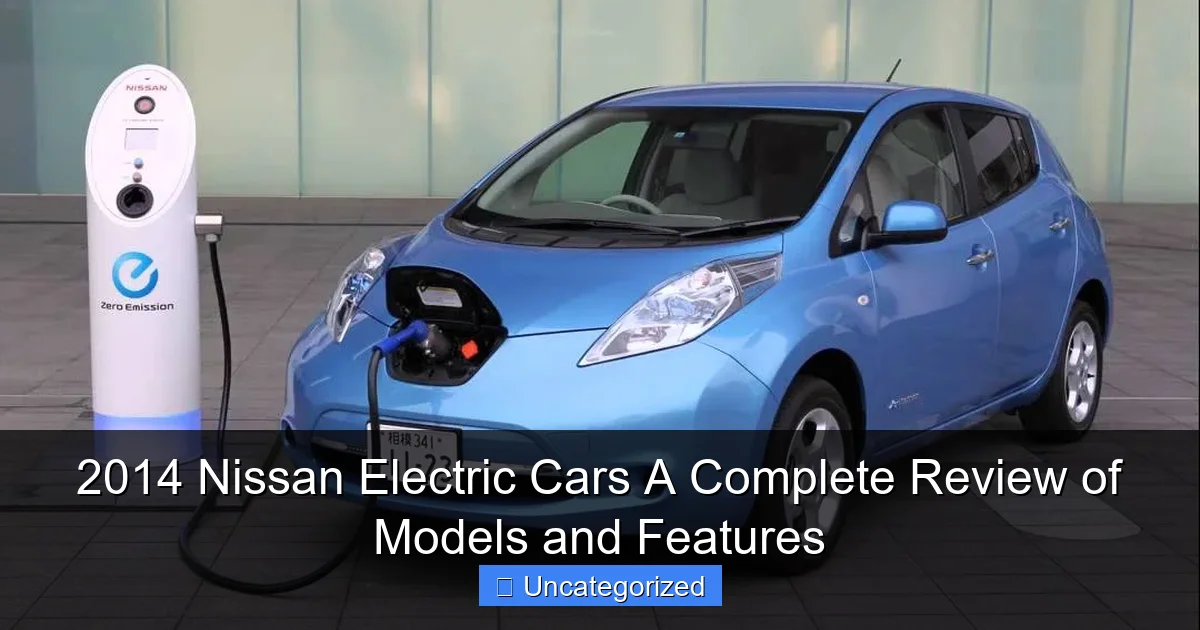
Featured image for 2014 nissan electric cars
Image source: i.ytimg.com
The 2014 Nissan electric car lineup, led by the groundbreaking Nissan LEAF, delivers impressive zero-emission performance and cutting-edge tech at an affordable price. With a 84-mile range, fast-charging capability, and advanced features like regenerative braking and the CARWINGS telematics system, the LEAF stands out as a top choice in the growing EV market. Nissan solidified its leadership in accessible, practical electric mobility with reliable, eco-friendly models perfect for urban and suburban drivers alike.
Key Takeaways
- 2014 Nissan Leaf dominates as the brand’s sole EV with 84-mile range.
- Affordable pricing starts under $30K, ideal for budget-conscious buyers.
- Quick Charge port available for faster charging on select trims.
- Spacious interior seats five, balancing practicality and eco-friendly design.
- Safety features include standard ABS and multiple airbags for peace of mind.
- Regenerative braking boosts efficiency and extends driving range effectively.
📑 Table of Contents
- The Dawn of Nissan’s Electric Revolution: 2014 in Focus
- 2014 Nissan Leaf: The Flagship of Nissan’s Electric Fleet
- Technology and Innovation: Nissan’s EV Ecosystem
- Performance, Handling, and Real-World Driving
- Safety, Reliability, and Ownership Experience
- Comparison with Competitors and Market Position
- Legacy and Final Verdict: Was the 2014 Leaf a Success?
The Dawn of Nissan’s Electric Revolution: 2014 in Focus
By 2014, the electric vehicle (EV) market had begun to shift from novelty to necessity, and Nissan stood at the forefront of this transformation. As one of the earliest mainstream automakers to commit to mass-market electrification, Nissan’s 2014 electric lineup represented a bold statement: affordable, practical, and reliable EVs were no longer a futuristic dream, but a present-day reality. The year 2014 was a pivotal moment in the EV timeline, marked by increased consumer interest, expanding charging infrastructure, and growing competition. Amid this dynamic landscape, Nissan doubled down on its commitment to zero-emission mobility, refining its flagship electric car and introducing new technologies that would shape the future of sustainable transportation.
The 2014 Nissan electric cars weren’t just about cutting emissions—they were about reimagining the driving experience. With a focus on real-world usability, Nissan prioritized range, comfort, and affordability, ensuring that EVs were accessible to everyday drivers. Whether you were a city commuter seeking efficiency, a tech-savvy early adopter, or an environmentally conscious family, Nissan’s 2014 offerings provided compelling reasons to go electric. This comprehensive review dives into the models, features, technology, performance, and ownership experience of Nissan’s 2014 electric vehicles, offering insights for both prospective buyers and EV enthusiasts alike.
2014 Nissan Leaf: The Flagship of Nissan’s Electric Fleet
The Evolution of the Leaf
The 2014 Nissan Leaf was the second model year of the second-generation Leaf (introduced in 2013), representing a significant leap forward in design, efficiency, and technology. Building on the success of the original 2011–2012 Leaf, Nissan addressed early criticisms—particularly around range anxiety and cabin refinement—by introducing a more aerodynamic body, improved battery chemistry, and a more intuitive user interface. The 2014 Leaf was available in three trim levels: S, SV, and SL, each offering a tiered suite of features to suit different budgets and needs.
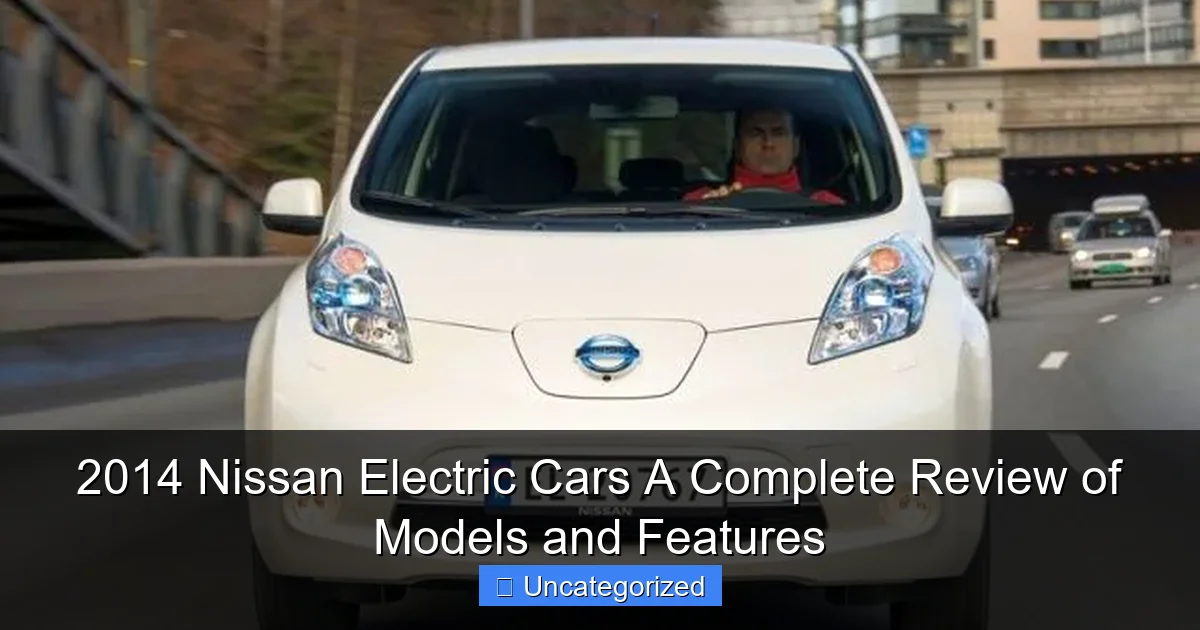
Visual guide about 2014 nissan electric cars
Image source: oopscars.com
One of the most notable improvements was the Leaf’s range. While the first-gen Leaf offered around 73 miles on a full charge (EPA-estimated), the 2014 model achieved up to 84 miles under ideal conditions. This increase was due to several factors: a more efficient electric motor (107 horsepower, 187 lb-ft of torque), reduced drag (Cd of 0.28), and optimized regenerative braking. For context, this range was sufficient for 90% of daily commutes in the U.S., according to Department of Energy data, making the Leaf a practical choice for urban and suburban drivers.
Trim Levels and Feature Breakdown
- Leaf S (Base Model): Priced around $28,980 (before federal and state incentives), the S trim included 16-inch steel wheels, a 4.3-inch display, Bluetooth, a rearview camera, and Nissan’s CarWings telematics system. It was the most affordable entry point into Nissan’s EV lineup, ideal for budget-conscious buyers.
- Leaf SV (Mid-Tier): At approximately $32,680, the SV added 16-inch alloy wheels, a 7-inch touchscreen with navigation, heated front seats, a heated steering wheel, and automatic climate control. This trim struck a balance between value and comfort, appealing to families and frequent drivers.
- Leaf SL (Top-Tier): The SL trim, starting at $35,020, featured premium touches like LED headlights, a Bose 7-speaker audio system, a power driver’s seat, and a rear spoiler. It also included a 6.6 kW onboard charger (standard on SV and SL), enabling faster Level 2 charging.
Tip: If you live in a colder climate, consider the SV or SL trims for the heated seats and steering wheel—these features significantly improve comfort during winter months when battery efficiency drops.
Charging and Battery Insights
The 2014 Leaf used a 24 kWh lithium-ion battery pack, composed of 192 cells arranged in 48 modules. This battery was air-cooled (unlike liquid-cooled systems in some competitors), which helped reduce weight and complexity but raised concerns about thermal management in extreme temperatures. Nissan addressed this with a “battery thermal management system” that monitored and adjusted cell temperatures, though some long-term owners reported capacity loss in hotter climates.
Charging was straightforward:
- Level 1 (120V): ~22 hours for a full charge (ideal for overnight charging).
- Level 2 (240V): ~4 hours with the 6.6 kW charger (SV/SL) or ~8 hours with the 3.3 kW charger (S).
- DC Fast Charging (optional on SV/SL): Up to 80% charge in 30 minutes via CHAdeMO ports. This was a game-changer for road trips, though public fast-charging stations were still limited in 2014.
Technology and Innovation: Nissan’s EV Ecosystem
CarWings Telematics and Remote Control
One of the standout features of the 2014 Leaf was Nissan CarWings, a cloud-based telematics system that turned the car into a “smart” device. Available via a smartphone app or web portal, CarWings allowed owners to:
- Remotely start climate control (pre-cool or pre-heat the cabin).
- Monitor battery charge level and estimated range.
- Locate the nearest charging stations.
- Schedule charging during off-peak hours to save on electricity costs.
- Receive alerts for charging completion or system issues.
For example, a Leaf owner in Chicago could use CarWings to pre-heat the cabin on a winter morning while the car was still plugged in—ensuring a warm, defrosted vehicle without drawing power from the battery. This feature was especially valuable in cold weather, where cabin heating could reduce range by up to 30%.
Regenerative Braking and E-Pedal (Precursor)
The 2014 Leaf featured regenerative braking via the “B” mode on the gear selector. When activated, the car used the electric motor as a generator during deceleration, converting kinetic energy back into electricity. This could add 5–10% to the effective range in stop-and-go traffic. While not as aggressive as modern “one-pedal driving” systems (introduced in later models), the B mode allowed drivers to coast to a stop with minimal use of the friction brakes—extending brake life and improving efficiency.
Pro Tip: Practice using B mode in low-traffic areas to get a feel for the deceleration. Over time, it becomes second nature and maximizes energy recovery.
Infotainment and Connectivity
The SV and SL trims came with a 7-inch touchscreen running NissanConnect, offering:
- Navigation with real-time traffic.
- Voice commands for phone and audio.
- USB/iPod integration.
- Streaming via Bluetooth (no Apple CarPlay/Android Auto in 2014).
While the system was functional, it lacked the polish of modern interfaces. However, Nissan offered free map updates for three years—a rare perk in 2014. For audiophiles, the SL’s Bose system delivered crisp, immersive sound, a notable upgrade over the base audio.
Performance, Handling, and Real-World Driving
Acceleration and Driving Dynamics
The 2014 Leaf’s electric motor delivered instant torque, resulting in smooth, linear acceleration from 0–30 mph. While not a sports car (0–60 mph in ~10 seconds), the Leaf felt zippy in city traffic, with a quiet cabin and minimal vibration. The steering was light and responsive, ideal for parking and tight maneuvers, though some critics noted a lack of road feel at highway speeds.
The suspension was tuned for comfort, absorbing bumps well on rough roads. However, the Leaf’s low center of gravity (due to the underfloor battery) improved cornering stability, reducing body roll compared to gas-powered compacts. The regenerative braking system added a unique “pull” sensation during deceleration—something drivers either loved or needed time to adapt to.
Real-World Range and Efficiency
While Nissan claimed 84 miles, real-world range varied based on:
- Temperature: In winter, range could drop to 60–65 miles; in summer, it might exceed 80 miles.
- Driving Style: Aggressive acceleration and high speeds reduced efficiency. Eco mode (standard on all trims) optimized throttle response and climate settings.
- Terrain: Hilly routes reduced range by 10–15% due to increased energy demand.
A 2014 owner in Portland, Oregon, reported an average range of 72 miles in mixed driving, while a San Diego driver averaged 82 miles. Tip: Use the Leaf’s “ECO” mode and pre-condition the cabin while plugged in to maximize range.
Noise and Vibration
Electric cars are famously quiet, and the 2014 Leaf was no exception. At low speeds, the cabin was nearly silent, with only a faint whine from the motor. At highway speeds, wind and tire noise became more noticeable, though still quieter than gas-powered rivals. Nissan used acoustic glass and sound-deadening materials to enhance refinement, a key selling point for luxury-minded buyers.
Safety, Reliability, and Ownership Experience
Safety Features and Ratings
The 2014 Leaf earned a 5-star overall rating from the NHTSA and was named a “Top Safety Pick” by the IIHS. Standard safety features included:
- Six airbags (front, side, curtain).
- Vehicle Dynamic Control (VDC) and Traction Control (TCS).
- Anti-lock Braking System (ABS) with Electronic Brake-force Distribution (EBD).
- Rearview camera (standard on all trims).
The Leaf’s high-strength steel frame and battery enclosure provided excellent crash protection. In a side-impact test, the battery pack remained intact, alleviating fears about post-accident electrical hazards.
Reliability and Common Issues
Overall, the 2014 Leaf was a reliable vehicle with few major mechanical problems. However, some common issues included:
- Battery Degradation: By 2014, early Leaf models (2011–2012) had shown significant capacity loss in hot climates. Nissan responded with a “battery health” monitoring tool and extended battery warranties (8 years/100,000 miles). Most 2014 Leafs retained 80–85% capacity after 5 years.
- HVAC System: Some owners reported weak cabin heating, especially in cold weather. This was due to the lack of a traditional engine to generate heat—relying instead on electric resistance heating.
- Software Glitches: Early CarWings updates occasionally caused app disconnections or incorrect range estimates.
Ownership Tip: Regularly check the battery health via the CarWings app or a dealership scan. If degradation exceeds 20%, consider a battery replacement (cost: $5,500–$8,000 in 2014).
Cost of Ownership
Electric cars are cheaper to maintain than gas vehicles, and the 2014 Leaf was no exception:
- Fuel Savings: At $0.12/kWh, a full charge cost ~$2.88. Over 15,000 miles/year, this saved ~$1,200 vs. a 30 mpg gas car.
- Maintenance: No oil changes, spark plugs, or exhaust systems. Annual service (tire rotation, cabin filter) cost ~$100–$150.
- Incentives: Federal tax credit of $7,500, plus state/local incentives (e.g., California’s $2,500 rebate).
Comparison with Competitors and Market Position
2014 EV Landscape: Who Did Nissan Compete With?
In 2014, the EV market was small but growing. Key competitors included:
- Chevrolet Spark EV: 82-mile range, $26,685 (before incentives). Smaller and less refined than the Leaf.
- Ford Focus Electric: 76-mile range, $35,995. Higher price, similar features.
- Tesla Model S: 208–265-mile range, $69,900+. Luxury-focused, far beyond Leaf’s price range.
- BMW i3: 81-mile range (150-mile with range extender), $41,350. More premium, but pricier.
The Leaf stood out for its value proposition—a well-equipped EV at a competitive price. It outsold all rivals combined in the U.S., with over 30,000 units sold in 2014 alone.
Data Table: 2014 Nissan Leaf vs. Key Competitors
| Model | Range (EPA) | Starting Price | Onboard Charger | DC Fast Charging | Notable Feature |
|---|---|---|---|---|---|
| Nissan Leaf (S) | 84 miles | $28,980 | 3.3 kW | No | CarWings telematics |
| Nissan Leaf (SV) | 84 miles | $32,680 | 6.6 kW | Yes (optional) | Heated seats, navigation |
| Chevrolet Spark EV | 82 miles | $26,685 | 3.3 kW | Yes | Smaller footprint |
| Ford Focus Electric | 76 miles | $35,995 | 6.6 kW | Yes | SYNC infotainment |
| BMW i3 | 81 miles | $41,350 | 7.4 kW | Yes | Carbon fiber body |
Nissan’s Market Strategy
Nissan didn’t just sell cars—it built an ecosystem. The company partnered with charging networks (e.g., ChargePoint), offered home charger installation, and launched “No Charge to Charge” programs, giving Leaf owners free public charging for up to 12 months. This aggressive strategy helped overcome early EV adoption barriers and cemented Nissan as a leader in affordable electrification.
Legacy and Final Verdict: Was the 2014 Leaf a Success?
The 2014 Nissan Leaf was more than a car—it was a milestone in the democratization of electric mobility. By offering a practical, reliable, and affordable EV, Nissan proved that zero-emission driving didn’t require sacrifices in comfort, technology, or convenience. While it faced limitations—modest range, early battery degradation concerns, and a nascent charging network—the Leaf’s strengths far outweighed its weaknesses.
For buyers in 2014, the Leaf represented a smart investment. It delivered:
- Lower operating costs.
- Reduced environmental impact.
- Access to HOV lanes (in some states).
- Cutting-edge tech like CarWings and regenerative braking.
Today, the 2014 Leaf remains a viable used EV option, with many units available for under $10,000. While newer EVs offer longer range and faster charging, the Leaf’s legacy endures. It paved the way for models like the Leaf Plus (2019) and Nissan’s Ariya SUV, proving that a bold vision, combined with incremental innovation, can drive an industry forward.
In the grand narrative of electric vehicles, the 2014 Nissan Leaf wasn’t just a chapter—it was a catalyst. For those who took the leap in 2014, the rewards were clear: cleaner air, quieter streets, and a glimpse into the future. As the EV revolution accelerates, the 2014 Leaf stands as a testament to what’s possible when innovation meets accessibility.
Frequently Asked Questions
What 2014 Nissan electric car models were available?
The only 2014 Nissan electric car offered was the 2014 Nissan LEAF, available in three trims: S, SV, and SL. It remained Nissan’s flagship EV with no other electric models released that year.
How far can a 2014 Nissan LEAF go on a single charge?
The 2014 Nissan LEAF has an EPA-estimated range of 84 miles (135 km) per full charge with its 24 kWh lithium-ion battery. Real-world range varies based on driving habits, terrain, and temperature.
What charging options does the 2014 Nissan electric car support?
The 2014 Nissan LEAF supports Level 1 (120V), Level 2 (240V), and DC fast charging (CHAdeMO). The SL trim includes a standard quick-charge port, allowing an 80% charge in about 30 minutes.
How does the 2014 Nissan LEAF compare to other electric cars in its class?
The 2014 Nissan LEAF offered competitive range and pricing among affordable EVs like the Mitsubishi i-MiEV. Its spacious interior and advanced infotainment (NissanConnect) gave it an edge over rivals.
What are the key safety features of the 2014 Nissan electric cars?
The 2014 LEAF includes standard safety features like six airbags, ABS, and electronic stability control. Higher trims add a rearview camera and tire pressure monitoring for enhanced driver awareness.
Is the 2014 Nissan LEAF eligible for tax credits or incentives?
Yes, the 2014 Nissan LEAF qualified for a $7,500 federal tax credit in the U.S. Some states and regions also offered additional rebates, making it an affordable EV option at the time.