2016 Nissan Electric Car Review Features and Performance Insights
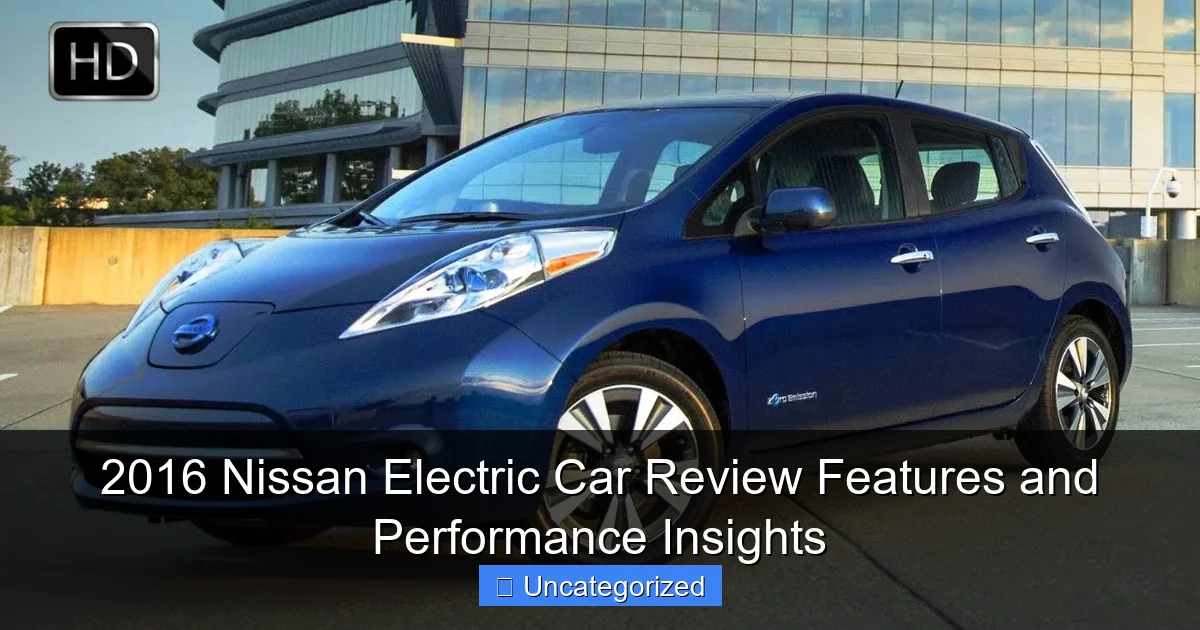
Featured image for 2016 nissan electric car
Image source: i.ytimg.com
The 2016 Nissan electric car, primarily the Nissan Leaf, delivers an impressive 107-mile range and a peppy 107-hp electric motor, making it a top contender in the affordable EV market. With quick charging options, a tech-rich interior, and nimble handling, it balances efficiency and daily practicality. This model also stands out for its low maintenance costs and eco-friendly performance, ideal for urban commuters and green drivers alike.
Key Takeaways
- Efficient range: 107-mile range suits daily commutes with ease.
- Smooth drive: Instant torque delivers responsive, quiet acceleration.
- Affordable pricing: Competitive cost with strong EV incentives available.
- Spacious interior: Roomy cabin and cargo area outshine rivals.
- Fast charging: 30-minute DC fast charge adds 80% battery.
- User-friendly tech: Intuitive infotainment with smartphone integration.
📑 Table of Contents
- Introduction: The 2016 Nissan Electric Car – A Leap into Sustainable Mobility
- Design and Exterior Features: Modern Aesthetics Meets Aerodynamic Efficiency
- Interior and Comfort: A Tech-Forward Cabin Designed for Everyday Life
- Performance and Driving Experience: Efficiency Meets Responsiveness
- Technology and Safety: Smart Features for a Connected World
- Ownership Experience and Long-Term Value: Is the 2016 Leaf Still a Smart Buy?
- Conclusion: A Pioneering EV That Still Delivers Value
Introduction: The 2016 Nissan Electric Car – A Leap into Sustainable Mobility
The year 2016 marked a pivotal moment in the evolution of electric vehicles (EVs), with Nissan reinforcing its leadership in the affordable EV segment through the 2016 Nissan electric car lineup. At the heart of this offering was the 2016 Nissan Leaf, a vehicle that had already established itself as the world’s best-selling electric car since its debut in 2010. With over 200,000 units sold globally by 2015, Nissan doubled down on its commitment to zero-emission mobility by introducing meaningful upgrades to the Leaf’s range, technology, and design in the 2016 model year. This wasn’t just an incremental update—it was a strategic refinement aimed at addressing one of the most critical barriers to EV adoption: range anxiety.
For environmentally conscious drivers, tech-savvy commuters, and budget-minded families, the 2016 Nissan electric car represented a compelling blend of practicality, innovation, and sustainability. With a refreshed exterior, improved interior materials, and a more powerful 30 kWh battery option (on the Leaf SV and SL trims), Nissan sought to close the gap between early adopters and mainstream consumers. The 2016 Leaf wasn’t just about driving farther—it was about driving smarter. From its intuitive infotainment system to its suite of driver-assist features, this model proved that electric vehicles could be both accessible and advanced. In this comprehensive review, we’ll explore the features, performance, technology, and real-world usability of the 2016 Nissan electric car, offering insights that go beyond specs and into the daily experience of ownership.
Design and Exterior Features: Modern Aesthetics Meets Aerodynamic Efficiency
Exterior Styling and Aerodynamics
The 2016 Nissan Leaf underwent a subtle but significant redesign that enhanced both its visual appeal and aerodynamic performance. The front fascia received a more aggressive look with a redesigned grille—still sealed since it doesn’t need airflow for engine cooling—and a sleeker LED signature lighting system. The headlights were reshaped to improve aerodynamics, contributing to a drag coefficient of just 0.28, which is impressive for a compact hatchback. The rear bumper was also revised with integrated reflectors and a more sculpted profile, giving the car a modern, futuristic presence on the road.
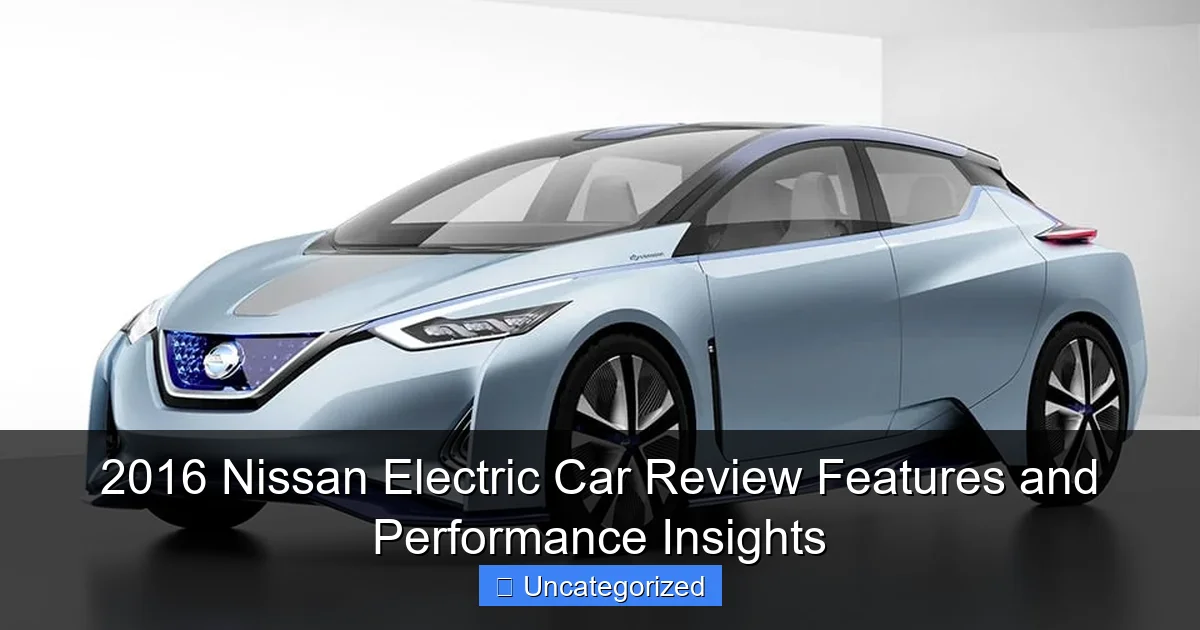
Visual guide about 2016 nissan electric car
Image source: 95octane.com
One of the most notable design changes was the introduction of a “floating roof” effect, achieved through blacked-out A- and C-pillars, a trend popularized by luxury SUVs. This gave the Leaf a more upscale look, distancing it from its more utilitarian predecessors. The car was offered in a range of vibrant colors, including Cayenne Red, Gun Metallic, and Deep Blue Pearl, with the SV and SL trims offering optional two-tone paint schemes. These aesthetic upgrades weren’t just about looks—they helped the Leaf stand out in a growing EV market while reinforcing Nissan’s commitment to innovation.
Wheels, Lighting, and Practical Touches
Depending on the trim level, the 2016 Nissan electric car came with 16-inch or 17-inch alloy wheels. The base S model featured standard 16-inch steel wheels with hubcaps, while the SV and SL trims offered lightweight aluminum alloys designed to reduce rolling resistance and improve efficiency. The 17-inch wheels on higher trims were wrapped in low-rolling-resistance tires, which helped extend range without compromising ride quality.
Lighting was another area of improvement. The SV and SL trims featured LED headlights and daytime running lights (DRLs), which not only enhanced visibility and safety but also reduced power consumption. The LED taillights spanned the full width of the rear hatch, creating a distinctive light signature at night. Practical touches included heated side mirrors (standard on SV and SL), rain-sensing wipers, and a rearview camera with dynamic guidelines—features that made daily driving easier and safer, especially in adverse weather conditions.
Tip: If you’re considering a used 2016 Leaf, look for models with the 17-inch wheels and LED lighting—these trims often retain better resale value due to their enhanced features and visual appeal.
Interior and Comfort: A Tech-Forward Cabin Designed for Everyday Life
Seating, Materials, and Space
Inside, the 2016 Nissan Leaf offered a surprisingly spacious and well-appointed cabin for its class. The front seats were supportive and offered good lateral bolstering, making them suitable for long drives. Heated front seats were standard on the SV and SL trims, a welcome feature in colder climates. The rear seats provided ample legroom for two adults, though the center seat was best suited for children due to the floor hump—a necessary compromise for the battery pack beneath.
Nissan upgraded the interior materials for 2016, replacing the previous model’s hard plastics with softer-touch surfaces on the dashboard and door panels. The center console featured a piano-black trim on higher trims, adding a touch of sophistication. The seats were upholstered in cloth (S and SV) or premium leather (SL), with the leather option including a heated steering wheel—another luxury touch in an otherwise practical vehicle.
Infotainment and Connectivity
The 2016 Leaf came equipped with NissanConnect, a user-friendly infotainment system centered around a 5-inch or 7-inch touchscreen (depending on trim). The 7-inch display, standard on SV and SL models, included features like Bluetooth phone and audio streaming, USB connectivity, and a six-speaker audio system. The SL trim added a 7-inch color display with navigation, real-time traffic updates, and a voice recognition system that responded to natural commands like “Find nearby charging stations.”
One standout feature was the NissanConnect EV app, which allowed owners to remotely monitor battery status, schedule charging, pre-heat or pre-cool the cabin, and even locate the vehicle using GPS—all from a smartphone. This was particularly useful for owners with off-street parking or those who wanted to optimize charging during off-peak electricity rates.
Example: A commuter in Chicago could use the app to start charging at 10 PM when electricity rates dropped, then pre-warm the cabin at 7 AM before heading to work—ensuring a comfortable ride without draining the battery.
Storage and Practicality
With 23.6 cubic feet of cargo space behind the rear seats (expandable to 30 cubic feet with the seats folded), the Leaf offered competitive storage for a compact EV. The rear hatch opened high, making it easy to load groceries, luggage, or sports equipment. Interior storage included a deep center console, door pockets, and a covered bin in the dashboard. The flat floor in the rear—thanks to the absence of a transmission tunnel—made the cabin feel more spacious and allowed for easier movement between seats.
Performance and Driving Experience: Efficiency Meets Responsiveness
Motor, Battery, and Range Options
The 2016 Nissan Leaf was offered with two battery pack options: a 24 kWh battery on the base S model and a larger 30 kWh battery on the SV and SL trims. The 24 kWh battery provided an EPA-estimated range of 84 miles, while the 30 kWh version boosted that to 107 miles—a significant improvement that addressed one of the most common concerns about EVs.
The electric motor produced 107 horsepower and 187 lb-ft of torque, delivering instant acceleration from a standstill. Unlike internal combustion engines, the Leaf’s motor responded immediately to pedal input, making it feel zippy in city traffic. The 0–60 mph time was approximately 10 seconds, which is adequate for daily driving but not performance-oriented. However, the real strength of the Leaf was its smooth, quiet, and linear power delivery.
Tip: If your daily commute exceeds 70 miles or you frequently drive on highways, the 30 kWh battery is worth the extra cost. The additional 23 miles of range can mean the difference between arriving with a 20% charge or needing a midday recharge.
Regenerative Braking and Driving Modes
The 2016 Leaf introduced Nissan’s “e-Pedal” concept in a more accessible form through its advanced regenerative braking system. By lifting off the accelerator, drivers could slow the car significantly—almost to a complete stop—without touching the brake pedal. This feature, known as one-pedal driving, not only improved efficiency by recapturing energy but also reduced brake wear.
The Leaf offered two driving modes: D (Drive) and B (Braking). In B mode, regenerative braking was more aggressive, ideal for stop-and-go traffic or downhill driving. Additionally, the SL trim included a “Eco” mode that adjusted throttle response and climate control to maximize range—perfect for long trips or when charging stations are sparse.
Handling and Ride Quality
With a low center of gravity due to the floor-mounted battery, the Leaf handled corners with surprising agility. The steering was light but accurate, making it easy to maneuver in tight city streets and parking lots. The suspension was tuned for comfort, absorbing road imperfections well, though it could feel a bit soft on rough pavement at higher speeds.
One minor drawback was wind and road noise at highway speeds—a common trait in EVs due to the absence of engine noise. However, the 2016 Leaf was quieter than many competitors, thanks to sound-deadening materials and aerodynamic design. For drivers used to traditional cars, the silence could be eerie at first, but most found it relaxing after a few days.
Technology and Safety: Smart Features for a Connected World
Advanced Driver Assistance Systems (ADAS)
The 2016 Nissan Leaf was among the first affordable EVs to offer a suite of driver-assist technologies. The SL trim included Intelligent Cruise Control, which maintained a set distance from the vehicle ahead, and Lane Departure Warning, which alerted drivers if they unintentionally drifted out of their lane. While these systems weren’t fully autonomous, they reduced driver fatigue on long trips and improved safety.
All trims came standard with a rearview camera, and the SV and SL added around-view monitor (AVM) with four cameras that provided a bird’s-eye view of the car’s surroundings—ideal for parking in tight spots. The system even included moving object detection, which warned drivers of approaching vehicles or pedestrians while backing up.
Charging and Connectivity
Charging flexibility was a strong suit of the 2016 Leaf. It supported three charging levels:
- Level 1 (120V): 12–20 hours for a full charge (useful for overnight charging at home)
- Level 2 (240V): 4–6 hours (common at public stations and home installations)
- DC Fast Charging (CHAdeMO): 30 minutes for 80% charge (available on SV and SL trims)
The DC fast charging port was located behind the front grille, and the car included a portable charging cable for Level 1 and Level 2 use. Nissan also partnered with networks like ChargePoint and EVgo, giving owners access to thousands of public charging stations across the U.S.
Tip: Always check the condition of the charging port and cable when buying a used Leaf. Corrosion or damaged connectors can lead to slow charging or safety issues.
Smartphone Integration and Over-the-Air Updates
While not as advanced as today’s systems, the 2016 Leaf’s NissanConnect EV app allowed for remote diagnostics, charging scheduling, and even cabin pre-conditioning. Some owners reported that Nissan occasionally pushed minor software updates over the air, improving system stability and adding new features—a precursor to modern EV connectivity.
Ownership Experience and Long-Term Value: Is the 2016 Leaf Still a Smart Buy?
Cost of Ownership and Incentives
The 2016 Nissan Leaf started at $29,010 for the S model and reached $36,790 for the SL trim. After federal tax credits (up to $7,500 at the time) and state incentives, the effective price could drop below $20,000—making it one of the most affordable EVs on the market. Maintenance costs were significantly lower than gasoline cars, with no oil changes, spark plugs, or exhaust systems to worry about. The battery was covered by an 8-year/100,000-mile warranty, providing peace of mind for long-term owners.
Real-World Range and Battery Degradation
While the EPA range was 84–107 miles, real-world performance varied based on driving habits, climate, and terrain. In cold weather, range could drop by 20–30% due to battery chemistry and cabin heating. However, pre-heating the cabin while still plugged in helped mitigate this loss.
One concern with used Leafs is battery degradation. By 2023–2024, a 2016 model may have lost 10–20% of its original capacity, depending on usage and climate. A battery health check (using the car’s built-in diagnostics or third-party tools) is essential before purchase. Look for models with 9 or more bars on the battery indicator—fewer bars suggest significant degradation.
Resale Value and Market Position
The 2016 Leaf holds its value better than many EVs of its era, thanks to Nissan’s reputation and the car’s reliability. As of 2024, a well-maintained 2016 Leaf with the 30 kWh battery can still fetch $8,000–$12,000 on the used market, depending on condition and location. Its role as a second car or urban commuter remains strong, especially in cities with robust charging infrastructure.
Data Table: 2016 Nissan Leaf Trim Comparison
| Feature | S (24 kWh) | SV (30 kWh) | SL (30 kWh) |
|---|---|---|---|
| Starting MSRP | $29,010 | $32,680 | $36,790 |
| Range (EPA) | 84 miles | 107 miles | 107 miles |
| DC Fast Charging | No | Yes | Yes |
| Infotainment Screen | 5-inch | 7-inch with navigation | 7-inch with navigation |
| LED Headlights | No | Yes | Yes |
| Heated Seats | No | Front only | Front and steering wheel |
| Driver Assistance | Rearview camera | + Around-view monitor | + Intelligent Cruise, Lane Departure |
Conclusion: A Pioneering EV That Still Delivers Value
The 2016 Nissan electric car—specifically the 2016 Nissan Leaf—was more than just a vehicle; it was a statement of intent. At a time when EVs were still seen as niche or impractical, Nissan delivered a car that was affordable, reliable, and genuinely usable in real-world conditions. With its improved 30 kWh battery, refined interior, advanced technology, and thoughtful design, the 2016 Leaf proved that electric mobility could be both accessible and enjoyable.
Today, as the EV market explodes with new models, the 2016 Leaf holds a unique place as a pioneer of the modern electric era. While newer EVs offer longer range and faster charging, the Leaf remains a smart choice for budget-conscious buyers, urban commuters, and those taking their first step into electric driving. Its legacy is not just in the miles it traveled, but in the millions of drivers it convinced that going electric was not only possible—but practical.
Whether you’re considering a used 2016 Leaf as a secondary car, a city runabout, or a gateway to sustainable driving, this model continues to offer compelling value. With proper care and battery management, it can serve faithfully for years to come. The 2016 Nissan electric car wasn’t just a car of its time—it helped define the future of transportation.
Frequently Asked Questions
What is the range of the 2016 Nissan electric car on a full charge?
The 2016 Nissan Leaf, the brand’s flagship electric car, offers an EPA-estimated range of 84 miles (135 km) on a full charge with its 30 kWh battery. Real-world range may vary depending on driving habits, terrain, and weather conditions.
How does the 2016 Nissan electric car compare to other EVs in its class?
The 2016 Nissan Leaf stands out for its affordability and practicality, offering more cargo space than rivals like the BMW i3. While it has a shorter range than the Tesla Model S, it remains a top choice for budget-conscious buyers seeking a reliable EV.
What are the key features of the 2016 Nissan Leaf electric car?
The 2016 Nissan electric car includes features like a 7-inch touchscreen, NissanConnect infotainment, heated seats, and a rearview camera. Higher trims add advanced safety tech like blind-spot monitoring and a 360-degree camera system.
How long does it take to charge the 2016 Nissan electric car?
Using a 240V Level 2 charger, the 2016 Nissan Leaf takes about 6 hours for a full charge. With a standard 120V outlet, charging time extends to 18–20 hours, making a home charging station a recommended upgrade.
Does the 2016 Nissan electric car have regenerative braking?
Yes, the 2016 Nissan Leaf features regenerative braking that captures energy during deceleration, improving efficiency. Its “B” driving mode maximizes regen for one-pedal driving in city conditions.
What is the performance like in the 2016 Nissan Leaf electric car?
The 2016 Nissan electric car delivers 107 horsepower and 187 lb-ft of torque, providing smooth, instant acceleration ideal for urban driving. While not sporty, it handles daily commutes with ease and offers a quiet, comfortable ride.