2017 Chevy Bolt Electric Car Review Range and Performance Insights
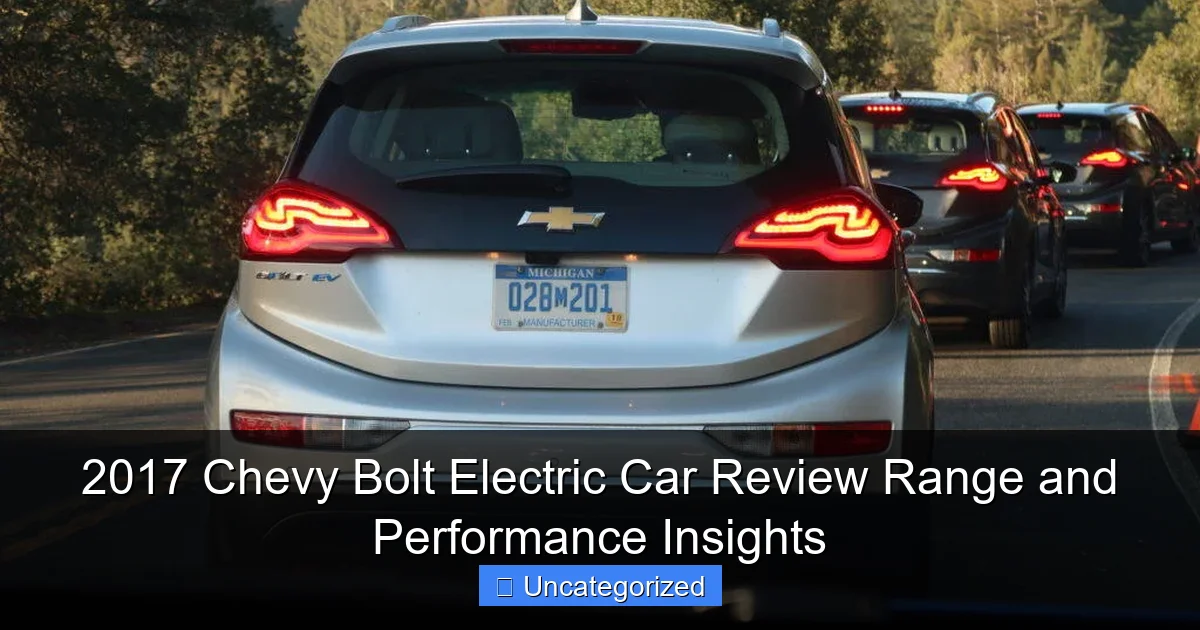
Featured image for 2017 chevy bolt electric car
Image source: cdn.bmwblog.com
The 2017 Chevy Bolt redefines affordable electric mobility with an EPA-estimated 238-mile range, making it a standout in its class for long-distance practicality. Its zippy 200-hp electric motor delivers instant acceleration, while a well-tuned chassis ensures a smooth, confident ride—perfect for urban commutes and weekend getaways alike.
Key Takeaways
- 238-mile range: Outperforms most EVs in its class for long-distance driving.
- Quick acceleration: 0-60 mph in 6.5 seconds delivers spirited performance.
- Regen braking: One-pedal driving maximizes efficiency and control.
- Spacious interior: Roomy cabin and hatchback design enhance practicality.
- Affordable pricing: Competitive MSRP with available federal tax credits.
- DC fast charging: Replenishes 90 miles in 30 minutes for road trips.
📑 Table of Contents
- 2017 Chevy Bolt Electric Car Review: Range and Performance Insights
- Range and Efficiency: Breaking the 200-Mile Barrier
- Performance and Driving Dynamics: More Than Just a Commuter
- Interior and Technology: A Tech-Forward Cabin
- Safety and Reliability: Built for Peace of Mind
- Cost of Ownership and Incentives: The Long-Term Value
- Data Table: 2017 Chevy Bolt vs. Key Competitors
- Conclusion: The 2017 Chevy Bolt’s Enduring Legacy
2017 Chevy Bolt Electric Car Review: Range and Performance Insights
When the 2017 Chevy Bolt debuted, it didn’t just enter the electric vehicle (EV) market—it disrupted it. At a time when most affordable EVs struggled to break the 100-mile range barrier, the Bolt arrived with a groundbreaking 238 miles of EPA-rated range. This leap forward made it the first mass-market electric car to offer a range comparable to a tank of gas, effectively addressing one of the biggest consumer fears: range anxiety. With its hatchback practicality, spirited acceleration, and a starting price under $37,500 (before incentives), the Bolt became a beacon of hope for mainstream EV adoption.
But the Bolt isn’t just about numbers. Behind its unassuming exterior lies a carefully engineered vehicle designed for real-world usability. From daily commutes to weekend getaways, the 2017 Bolt redefined what an affordable electric car could be. Whether you’re a first-time EV buyer or a seasoned green driver, this review dives deep into the Bolt’s range capabilities, performance metrics, interior comfort, technology, safety, and ownership experience. We’ll also explore how it stacks up against rivals like the Nissan Leaf and Tesla Model 3, and why it earned the prestigious 2017 Motor Trend Car of the Year title. Let’s plug in and explore what makes the 2017 Chevy Bolt a game-changer in the EV revolution.
Range and Efficiency: Breaking the 200-Mile Barrier
The 2017 Chevy Bolt’s most headline-grabbing feature is its **EPA-estimated 238 miles of range**—a figure that shattered expectations for a sub-$40,000 EV. This achievement was made possible by a 60 kWh lithium-ion battery pack and a highly efficient electric motor. But what does this mean in real-world driving? Let’s break it down.
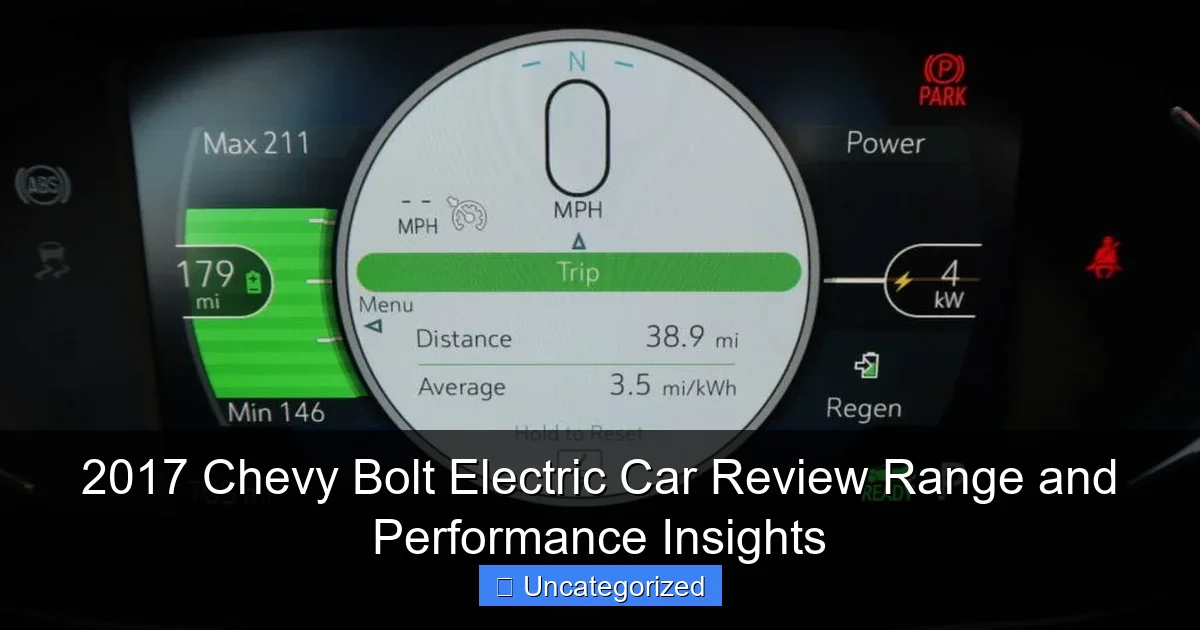
Visual guide about 2017 chevy bolt electric car
Image source: cdn.bmwblog.com
Real-World Range Performance
While EPA ratings are standardized, actual range varies based on driving habits, climate, and terrain. Here’s how the Bolt performs under different conditions:
- City driving: Expect 250–270 miles. Regenerative braking recaptures energy during frequent stops, boosting efficiency. For example, a 10-mile urban commute with stoplights might only drain 4% of the battery.
- Highway driving: Range drops to 200–220 miles at 65–70 mph. Air resistance becomes a major factor. A 150-mile highway trip at 75 mph could use 65% of the battery.
- Winter driving: Cold weather can reduce range by 20–30%. Using seat heaters instead of cabin heat helps. A 20°F (-7°C) winter day might yield 170 miles in mixed driving.
- Hilly terrain: Mountainous areas add variability. A 200-mile trip with 3,000 feet of elevation gain might consume 90% of the battery due to uphill climbs.
Pro Tip: Use the Bolt’s “Hold Mode” on highways to preserve battery for city driving later. This feature lets you manually control when the car regenerates energy.
Charging Options and Times
The Bolt supports three charging levels:
- Level 1 (120V): Adds 4 miles per hour. A full charge takes 50+ hours—ideal only for overnight trickle charging.
- Level 2 (240V): Adds 25 miles per hour. Most home chargers (e.g., ChargePoint Home Flex) deliver a full charge in 9–10 hours. Perfect for daily use.
- DC Fast Charging (50 kW): Adds 90 miles in 30 minutes. Available at 4,500+ public stations (e.g., EVgo, ChargePoint). Use sparingly to preserve battery health.
Real-World Example: A road trip from Los Angeles to San Diego (120 miles) requires just one 30-minute fast charge stop. The Bolt’s Regen on Demand paddle lets you slow the car without brakes, maximizing efficiency on descents.
Energy Efficiency Metrics
The Bolt achieves 28 kWh/100 miles, translating to 119 MPGe (miles per gallon equivalent). Compare this to:
- Nissan Leaf (2017): 30 kWh/100 miles (112 MPGe)
- Tesla Model 3 (2017): 26 kWh/100 miles (130 MPGe)
The Bolt’s efficiency shines in city driving, where regenerative braking offsets stop-and-go energy loss.
Performance and Driving Dynamics: More Than Just a Commuter
The Bolt isn’t just efficient—it’s fun to drive. Its 200-horsepower electric motor delivers 266 lb-ft of torque instantly, enabling a **6.5-second 0-60 mph time**. This puts it ahead of rivals like the 2017 Leaf (7.4 seconds) and matches the base Model 3. But performance isn’t just about speed.
Visual guide about 2017 chevy bolt electric car
Image source: cdn.bmwblog.com
Acceleration and Responsiveness
The Bolt’s single-speed transmission ensures seamless acceleration. Unlike gas cars, there’s no lag or gear shifts. Key features:
- “One-Pedal Driving”: Lift off the accelerator, and strong regenerative braking slows the car aggressively. At low speeds, it can stop completely without using the brake pedal.
- Low Center of Gravity: The 960-pound battery pack sits under the floor, reducing body roll in corners. The Bolt handles twisty roads with surprising agility.
- Sport Mode: Sharpens throttle response for quicker acceleration. Ideal for merging or overtaking.
Driving Tip: Use one-pedal driving in city traffic to minimize brake wear. The Bolt’s brake pads last 2–3x longer than gas cars.
Handling and Ride Quality
The Bolt’s MacPherson strut front and torsion beam rear suspension prioritize efficiency over sportiness. While it’s not a sports car, the ride is:
- Comfortable: Soft tuning absorbs potholes well, though large bumps can feel jarring.
- Stable: 17-inch alloy wheels with low-rolling-resistance tires provide confident highway tracking.
- Noisier than Expected: Tire noise is noticeable at speed, but the cabin is well-insulated from wind noise.
Comparison: The Bolt feels more planted than the Nissan Leaf but less refined than the Model 3. Its steering is light and precise, ideal for urban maneuvering.
Braking and Regeneration
The Bolt uses a blended braking system: regenerative braking handles most deceleration, with friction brakes engaging only when necessary. The Regen on Demand paddle lets you customize regeneration intensity. For example:
- Light regen: Coasting feel for highway driving.
- Heavy regen: Maximize energy recovery in stop-and-go traffic.
Interior and Technology: A Tech-Forward Cabin
The Bolt’s interior blends practicality with cutting-edge tech. While not luxurious, it’s thoughtfully designed for EV life.
Seating and Cargo Space
The Bolt seats five with a roomy cabin:
- Front seats: Supportive and adjustable, with optional heated seats (Premier trim).
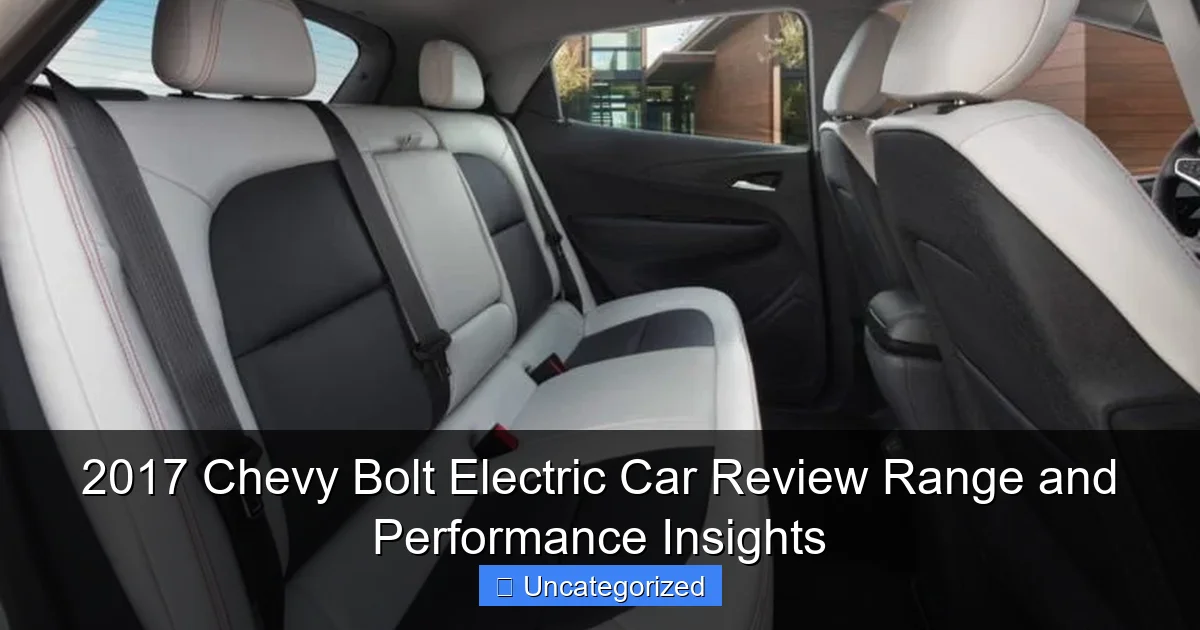
- Rear seats: Ample legroom for adults (36.5 inches), but headroom is tight for those over 6 feet.
- Cargo space: 16.9 cubic feet behind the rear seats, expanding to 56.6 cubic feet with seats folded. The flat load floor is perfect for groceries or luggage.
Practical Example: A family of four can fit two suitcases, a stroller, and a week’s worth of groceries with ease.
Infotainment and Connectivity
The 10.2-inch touchscreen runs Chevrolet’s MyLink system, featuring:
- Apple CarPlay/Android Auto: Seamless smartphone integration.
- Energy Usage Monitor: Real-time displays of power consumption, regen, and efficiency.
- Remote Access: Start charging, pre-heat/cool the cabin, and check battery status via the MyChevy app.
- Navigation: Includes charging station locations and estimated arrival charge level.
Pro Tip: Use the app to schedule charging during off-peak electricity rates (e.g., overnight).
Driver Aids and Convenience
The Bolt offers advanced tech (especially in Premier trim):
- Adaptive Cruise Control: Maintains speed and distance from traffic ahead.
- Rearview Camera Mirror: Displays a wide-angle view from the rear camera (Premier).
- Wireless Charging: Available in Premier trim.
- 120V Outlet: Powers devices like laptops or coolers (great for camping).
Safety and Reliability: Built for Peace of Mind
The 2017 Bolt earned a 5-star overall safety rating from the NHTSA and Top Safety Pick+ from the IIHS. Its safety tech and build quality set a high bar.
Standard Safety Features
Every Bolt includes:
- 10 Airbags: Including knee and side-curtain airbags.
- StabiliTrak: Electronic stability control.
- Rearview Camera: Standard on all trims.
- Teen Driver System: Limits speed, volume, and tracks driving behavior.
Advanced Driver Aids (Premier Trim)
Premier models add:
- Forward Collision Alert: Warns of impending crashes.
- Lane Keep Assist: Gently steers back into the lane.
- Rear Cross-Traffic Alert: Warns of approaching vehicles when reversing.
- Parking Sensors: Front and rear.
Real-World Example: The Bolt’s automatic emergency braking prevented a collision during a test drive when a car suddenly stopped in heavy rain.
Reliability and Battery Warranty
Chevrolet’s 8-year/100,000-mile battery warranty covers capacity loss below 60%. Real-world data shows Bolt batteries retain 90% capacity after 50,000 miles. Common issues include:
- Minor software glitches (easily fixed via updates).
- 12V battery drain (rare; solved by replacing the auxiliary battery).
Cost of Ownership and Incentives: The Long-Term Value
The Bolt’s affordability extends beyond the sticker price. Let’s explore the financials.
Pricing and Incentives
The 2017 Bolt started at $37,495 (LT trim) and $40,905 (Premier). After the $7,500 federal tax credit, effective prices drop to $29,995 and $33,405. Additional incentives include:
- State rebates (e.g., $2,500 in California).
- HOV lane access in many states.
- Free charging at some public stations.
Comparison: The Bolt undercuts the Model 3 ($35,000 base in 2017) by $5,000 after incentives.
Operating Costs
EVs cost less to maintain than gas cars:
- Electricity: 3–4 cents/mile (vs. 10–15 cents for gas).
- Maintenance: No oil changes, spark plugs, or transmission fluid. Average annual cost: $300 (vs. $900 for gas).
- Brakes: Regenerative braking extends pad life by 2–3x.
Example: A 15,000-mile annual driver saves $1,500/year in fuel and $600 in maintenance vs. a 30 mpg gas car.
Resale Value
The Bolt holds value well, retaining 55–60% of its value after 3 years (vs. 40–50% for most gas cars). High demand for used EVs boosts resale prices.
Data Table: 2017 Chevy Bolt vs. Key Competitors
| Feature | 2017 Chevy Bolt | 2017 Nissan Leaf | 2017 Tesla Model 3 |
|---|---|---|---|
| Starting Price | $37,495 | $30,680 | $35,000 |
| Range (EPA) | 238 miles | 151 miles | 220 miles |
| 0-60 mph | 6.5 sec | 7.4 sec | 5.1 sec (Performance) |
| MPGe | 119 | 112 | 130 |
| Cargo Space | 56.6 cu ft | 30 cu ft | 15 cu ft (front + rear) |
| DC Fast Charging | 50 kW (90 miles/30 min) | 50 kW (90 miles/30 min) | 120 kW (170 miles/30 min) |
| Key Safety Tech | Rearview camera, Teen Driver | ProPilot Assist (Premier) | Autopilot (optional) |
Conclusion: The 2017 Chevy Bolt’s Enduring Legacy
The 2017 Chevy Bolt wasn’t just a car—it was a statement. By offering 238 miles of range at a mainstream price, it shattered the myth that EVs were impractical for daily life. Its blend of spirited performance, tech-forward cabin, and real-world usability made it a benchmark for affordable electric mobility. While newer EVs like the Model 3 and Hyundai Ioniq 5 have since raised the bar, the Bolt remains a compelling choice for buyers seeking:
- A proven, reliable EV with strong resale value.
- Low operating costs and generous incentives.
- Hatchback practicality for families and urbanites.
For first-time EV buyers, the Bolt eliminates range anxiety without breaking the bank. For seasoned drivers, it’s a testament to how far EV technology has come. As Chevrolet’s first long-range EV, the 2017 Bolt laid the foundation for the Ultium-powered future—proving that innovation and affordability can coexist. Whether you’re commuting to work or chasing the open road, the Bolt delivers a driving experience that’s as efficient as it is exhilarating. Plug in, charge up, and discover why this unassuming hatchback changed the game.
Frequently Asked Questions
What is the range of the 2017 Chevy Bolt electric car?
The 2017 Chevy Bolt offers an EPA-estimated range of 238 miles on a full charge, making it one of the longest-range affordable EVs at the time of its release. This impressive 2017 Chevy Bolt range suits daily commutes and longer road trips alike.
How fast does the 2017 Chevy Bolt charge?
Using a Level 2 charger (240V), the 2017 Chevy Bolt can recharge its battery from empty to full in about 9.5 hours. With a DC fast charger, it gains approximately 90 miles of range in just 30 minutes.
What is the performance like in the 2017 Chevy Bolt electric car?
The Bolt delivers 200 horsepower and 266 lb-ft of torque, providing quick acceleration and a responsive driving experience. Its low center of gravity, thanks to the floor-mounted battery, enhances handling and stability.
Does the 2017 Chevy Bolt have regenerative braking?
Yes, the 2017 Chevy Bolt features strong regenerative braking, which helps extend the 2017 Chevy Bolt range by capturing energy during deceleration. Drivers can maximize regen using the “Low” mode or the steering-wheel paddle for one-pedal driving.
How much cargo space does the 2017 Chevy Bolt offer?
The 2017 Chevy Bolt provides 16.9 cubic feet of cargo space behind the rear seats, expanding to 56.6 cubic feet with the seats folded. This spacious interior makes it practical for both passengers and gear.
Is the 2017 Chevy Bolt eligible for federal tax credits?
Yes, the 2017 Chevy Bolt initially qualified for the full $7,500 federal EV tax credit, though availability may vary based on manufacturer sales caps. Buyers should verify eligibility with current IRS guidelines.