2017 Electric Chevy Volt Car Review Performance and Value

Featured image for 2017 electric chevy volt car
Image source: images.techhive.com
The 2017 Chevy Volt delivers an impressive blend of electric efficiency and gas-powered range, making it a top contender in the hybrid market. With 53 miles of all-electric range and a total range of 420 miles, it excels in both performance and value, offering a smooth, quiet ride with responsive acceleration. Packed with tech and a spacious interior, it’s a smart, stylish choice for eco-conscious drivers.
Key Takeaways
- Impressive range: 53-mile electric range before gas engine kicks in.
- Fuel efficiency: Achieves 42 mpg combined in hybrid mode.
- Smooth acceleration: Electric torque delivers quick, quiet takeoffs.
- Spacious interior: Comfortable seating and cargo space for its class.
- Tech-forward: Standard 8-inch touchscreen with smartphone integration.
- Strong value: Competitive pricing with federal and state incentives.
📑 Table of Contents
2017 Electric Chevy Volt Car Review Performance and Value
The 2017 Chevy Volt represents a pivotal moment in the evolution of hybrid vehicles, bridging the gap between pure electric and traditional gasoline-powered cars. As one of the most advanced plug-in hybrids of its time, the Volt offers drivers the best of both worlds: the environmental benefits and cost savings of electric driving, paired with the extended range and convenience of a gasoline engine. Whether you’re a daily commuter, an eco-conscious driver, or simply someone looking for a reliable, tech-forward vehicle, the 2017 Volt delivers on multiple fronts. With over 53 miles of all-electric range and a total driving range exceeding 420 miles, this car was designed to eliminate range anxiety while maximizing efficiency.
But the 2017 Chevy Volt isn’t just about numbers. It’s about redefining what a hybrid can be. From its sleek, aerodynamic design to its refined interior and cutting-edge infotainment system, the Volt appeals to drivers who want innovation without sacrificing comfort or style. In a market crowded with electric SUVs and luxury EVs, the Volt stands out as a practical, accessible, and forward-thinking choice. This review dives deep into the performance, value, technology, and real-world usability of the 2017 Chevy Volt, helping you decide if this hybrid pioneer still holds its ground in today’s rapidly evolving automotive landscape.
Design and Exterior Styling
Aerodynamic and Modern Aesthetics
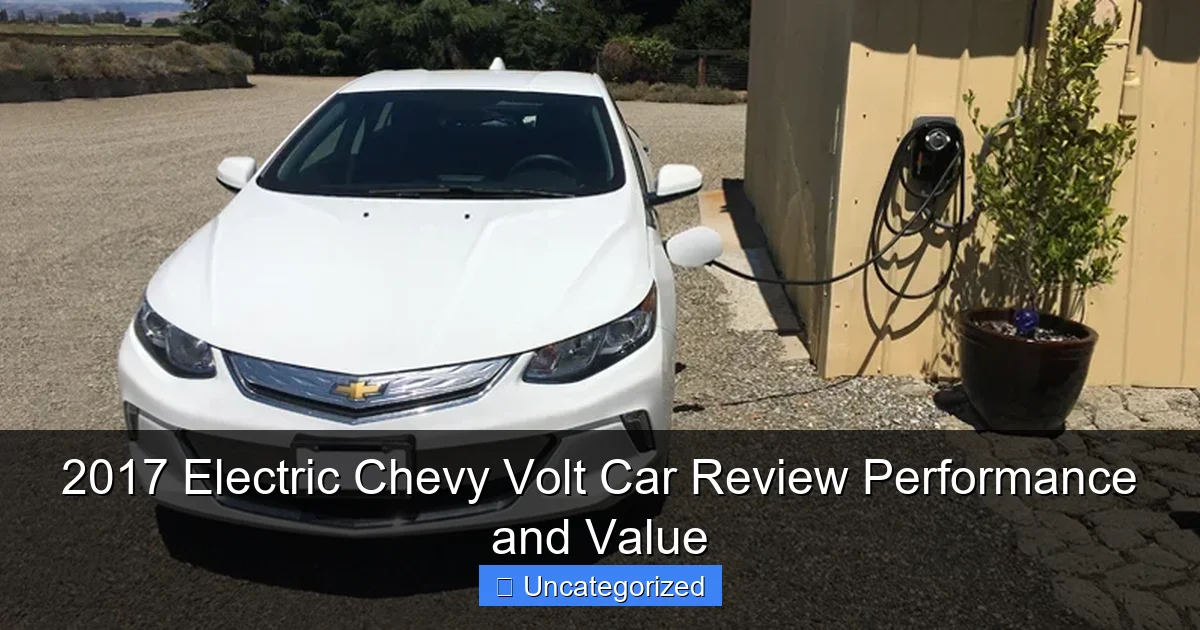
The 2017 Chevy Volt sports a bold yet refined design that prioritizes aerodynamics without compromising visual appeal. With a drag coefficient of just 0.28 Cd, the Volt slices through the air with minimal resistance, improving both efficiency and range. The front fascia features a distinctive blacked-out grille flanked by sharp LED daytime running lights, giving it a futuristic and aggressive look. The sloping roofline, sculpted side panels, and integrated rear spoiler enhance the car’s sporty profile while contributing to its wind-cheating design.

Visual guide about 2017 electric chevy volt car
Image source: thumbs.dreamstime.com
One of the most noticeable design cues is the absence of a traditional grille — a hallmark of many electric and hybrid vehicles. Instead, the Volt uses active grille shutters that open and close based on engine cooling needs, further improving aerodynamics. The 17-inch alloy wheels are specifically designed for low rolling resistance, and the available two-tone paint options (such as Summit White with a black roof) add a touch of sophistication.
Lighting and Visibility
The Volt features LED headlights and taillights as standard, offering better visibility and energy efficiency compared to halogen bulbs. The headlights include automatic high-beam control, which adjusts based on surrounding traffic — a small but impactful feature for nighttime driving. The taillights wrap around the rear hatch, creating a signature lighting effect that makes the Volt instantly recognizable at night.
For added convenience, the Volt includes heated side mirrors with integrated turn signals, a rearview camera with dynamic guidelines, and available blind-spot monitoring. These features not only improve safety but also reflect Chevy’s commitment to integrating smart technology into everyday driving scenarios.
Color and Trim Options
The 2017 Volt comes in a range of exterior colors, including:
- Silver Ice Metallic
- Black
- Summit White
- Kinetic Blue Metallic
- Mosaic Black Metallic
- Iridescent Pearl Tricoat (premium option)
Two trim levels are available: the base LT and the top-tier Premier. The Premier trim adds features like chrome accents, a power liftgate, and upgraded 17-inch polished aluminum wheels. While the exterior differences between trims are subtle, the Premier’s refined touches give it a more upscale presence on the road.
Interior Comfort and Technology
Spacious and Premium Cabin
Step inside the 2017 Chevy Volt, and you’re greeted by a cabin that feels more like a luxury compact than a hybrid. High-quality materials, soft-touch surfaces, and thoughtful ergonomics make the interior both comfortable and functional. The front seats are supportive and offer excellent visibility, while the rear seats provide adequate legroom for two adults — a rarity in many hybrid hatchbacks.
Visual guide about 2017 electric chevy volt car
Image source: chargepoint.com
The Volt seats four passengers comfortably, with a center console that replaces the traditional middle seat. This design improves rear-seat comfort and provides additional storage. The cabin is well-insulated, with minimal road and wind noise, making long drives more enjoyable. Available heated front seats and a heated steering wheel (standard on Premier) add to the comfort, especially in colder climates.
Infotainment and Connectivity
At the heart of the Volt’s interior is the Chevrolet MyLink infotainment system, displayed on a crisp 8-inch touchscreen. The system supports:
- Apple CarPlay and Android Auto (a major upgrade over previous model years)
- Bluetooth hands-free calling and audio streaming
- Voice recognition for navigation, music, and climate control
- Available built-in 4G LTE Wi-Fi hotspot
- SiriusXM satellite radio with a 3-month trial
One standout feature is the Energy App, which provides real-time data on energy usage, battery charge levels, and driving efficiency. This tool helps drivers optimize their electric range and understand how their driving habits affect fuel economy. For example, you can monitor how much energy is regenerated during braking — a great way to learn eco-driving techniques.
Storage and Practicality
The Volt offers 10.6 cubic feet of cargo space behind the rear seats, expandable to 43.9 cubic feet with the rear seats folded flat. While not as large as a traditional SUV, this is more than sufficient for daily errands, groceries, or a weekend trip. The hatchback design provides easy access to the cargo area, and the available hands-free power liftgate (Premier trim) adds convenience when your hands are full.
Interior storage includes a deep center console, door pockets, a glovebox, and a wireless charging pad (available on Premier). The front console also features two USB ports and an auxiliary input, ensuring all your devices stay charged and connected.
Performance and Driving Experience
Dual Powertrain: Electric + Gasoline
The 2017 Chevy Volt is powered by a 1.5L 4-cylinder gasoline engine and a 18.4 kWh lithium-ion battery pack paired with two electric motors. Together, they produce a combined output of 149 horsepower and 294 lb-ft of torque — a significant improvement over the first-generation Volt. The electric motors deliver instant torque, resulting in smooth, responsive acceleration from a stop.
The car operates in three primary modes:
- Electric Mode: Uses only the battery for up to 53 miles (EPA-estimated). Ideal for city driving, school runs, or short commutes.
- Extended Range Mode: When the battery depletes, the gasoline engine acts as a generator, recharging the battery and powering the electric motors. This mode kicks in seamlessly, with no noticeable shift in driving dynamics.
- Hold Mode: Allows you to save battery charge for later use (e.g., entering a city with low-emission zones).
<
<
Thanks to this dual system, the Volt achieves an EPA-estimated 42 MPG combined when using the gasoline engine, and 106 MPGe in all-electric mode. This flexibility makes it perfect for drivers with unpredictable commutes or long-distance travel needs.
Handling and Ride Quality
The Volt rides on a MacPherson strut front and torsion beam rear suspension, tuned for comfort and stability. While it’s not a sports car, the Volt handles corners with confidence, thanks to its low center of gravity (aided by the battery placement under the floor). The steering is light and precise, making it easy to maneuver in tight city streets or parking lots.
Regenerative braking is one of the Volt’s standout features. When you lift off the accelerator, the car automatically slows down using energy recovery, which can be adjusted via the steering-wheel-mounted paddle shifters. In Low Mode, you can achieve near one-pedal driving — ideal for stop-and-go traffic. For example, in urban environments like Los Angeles or New York, this feature reduces brake wear and increases energy efficiency.
Real-World Driving Scenarios
Consider a daily commute of 40 miles: with the Volt’s 53-mile electric range, you could complete your round trip on electricity alone, using no gasoline. If you drive 60 miles one way, the gasoline engine would activate after 53 miles, ensuring you reach your destination without range anxiety.
For longer trips, say a 200-mile weekend getaway, the Volt’s extended range means you only need to refuel once — or even not at all, depending on charging access. The car’s OnStar RemoteLink app allows you to pre-condition the cabin, check charging status, and locate nearby charging stations — all from your smartphone.
Charging Options and Efficiency
Home and Public Charging
The 2017 Volt comes with a 120V Level 1 charging cable that plugs into any standard household outlet. Using Level 1, a full charge takes about 13 hours — suitable for overnight charging. However, for faster charging, a 240V Level 2 charger is recommended, reducing charge time to 4.5 hours.
Installing a Level 2 charger at home (typically a 3.3 kW or 7.2 kW unit) is a smart investment. For example, a 7.2 kW charger can add up to 25 miles of range per hour — meaning a full charge in under 3 hours. Many utility companies offer rebates or incentives for installing Level 2 chargers, making this upgrade more affordable.
Public charging is supported through networks like ChargePoint, EVgo, and Blink. The Volt is compatible with most Level 2 public stations, but it does not support DC fast charging — a limitation compared to pure EVs like the Tesla Model 3 or Nissan Leaf Plus. However, since the Volt has a gasoline engine, this isn’t a major drawback for most drivers.
Energy Efficiency and Cost Savings
Let’s look at the numbers. Assuming an average electricity cost of $0.13 per kWh and gasoline at $3.50 per gallon:
- Electric cost per mile: ~$0.03 (53 miles on 18.4 kWh)
- Gasoline cost per mile: ~$0.08 (42 MPG)
For a 15,000-mile annual driving habit, the Volt could save you $750+ per year in fuel costs compared to a 25 MPG gasoline car. Over five years, that’s over $3,700 in savings — not including reduced maintenance (fewer oil changes, less brake wear due to regenerative braking).
Additionally, the Volt qualifies for a federal tax credit of $7,500 (depending on your tax liability), and many states offer additional incentives, such as HOV lane access, reduced registration fees, or rebates for purchasing a plug-in hybrid.
Charging Tips for Volt Owners
- Charge at night: Take advantage of off-peak electricity rates (often 30-50% cheaper).
- Use scheduled charging: Program the Volt to start charging at 11 PM, ensuring a full battery by morning.
- Pre-condition the cabin remotely: Use the app to heat or cool the car while it’s still charging — no wasted battery power while driving.
- Monitor energy usage: Use the Energy App to identify inefficient driving habits and improve your MPGe.
Value, Reliability, and Ownership Experience
Pricing and Trim Comparison
The 2017 Chevy Volt had a starting MSRP of $33,220 for the LT trim and $38,445 for the Premier trim. After the federal tax credit, the effective price drops to $25,720 and $30,945, respectively. This makes the Volt one of the most affordable plug-in hybrids with such a high electric range.
Here’s a comparison of key features by trim:
| Feature | LT Trim | Premier Trim |
|---|---|---|
| Starting MSRP | $33,220 | $38,445 |
| Leather-appointed seats | No | Yes |
| Heated front seats & steering wheel | No | Yes |
| Power liftgate | No | Yes |
| Premium Bose audio system | No | Yes |
| Wireless charging pad | No | Yes |
| Adaptive headlights | No | Yes |
| Lane Keep Assist & Forward Collision Alert | Optional | Standard |
For most buyers, the LT trim offers excellent value, while the Premier is ideal for those who want a more premium experience. Both trims come with a 3-year/36,000-mile bumper-to-bumper warranty and an 8-year/100,000-mile battery warranty — among the best in the industry.
Reliability and Maintenance
The 2017 Volt has a strong reputation for reliability. According to Consumer Reports, it scored above average for predicted reliability, with few reported issues. Common concerns include minor software glitches in the infotainment system (easily fixed with updates) and occasional sensor issues, but these are rare.
Maintenance costs are lower than average. With fewer moving parts than a traditional engine, the Volt requires less frequent servicing. Oil changes are needed only every 7,500 miles or 12 months, and brake pads last longer due to regenerative braking. Many owners report 100,000+ miles with minimal issues.
Resale Value and Long-Term Ownership
While the Volt’s resale value isn’t as high as some SUVs, it holds up well compared to other hybrids. A well-maintained 2017 Volt with average mileage (around 12,000 miles/year) can still command $15,000–$18,000 on the used market — a testament to its durability and desirability.
For long-term owners, the Volt offers peace of mind. The battery degradation is minimal; most owners report only 10–15% capacity loss after 5 years, meaning you still get 45+ miles of electric range. Combined with low operating costs, this makes the Volt a smart financial decision over time.
Conclusion
The 2017 Chevy Volt is more than just a car — it’s a statement. A statement that you don’t need to choose between sustainability and convenience, between innovation and affordability. With its 53-mile electric range, 420+ mile total range, and smart hybrid technology, the Volt delivers exceptional performance and value in a stylish, comfortable package.
Whether you’re a city dweller looking to cut fuel costs, a suburban commuter seeking a reliable daily driver, or an eco-conscious buyer wanting to reduce your carbon footprint, the Volt meets your needs with grace. Its seamless transition between electric and gasoline power, intuitive technology, and low ownership costs make it one of the most practical plug-in hybrids ever made.
While newer EVs offer longer ranges and faster charging, the 2017 Volt still holds its ground as a smart, balanced, and forward-thinking choice. It proves that hybrid technology can be both efficient and enjoyable — a true pioneer in the electrified automotive revolution. If you’re in the market for a used plug-in hybrid, the 2017 Chevy Volt deserves a top spot on your shortlist. It’s not just a car of the past — it’s a car for the future.
Frequently Asked Questions
What is the electric range of the 2017 Chevy Volt?
The 2017 Electric Chevy Volt offers an EPA-estimated 53 miles of all-electric range, making it ideal for daily commutes. After the battery depletes, the gas-powered generator extends the total range to 420 miles.
How does the 2017 Chevy Volt perform compared to other plug-in hybrids?
The 2017 Electric Chevy Volt stands out with its smooth dual-powertrain system, delivering 149 horsepower and quick acceleration. Its refined handling and quiet cabin outperform many rivals in its class.
Is the 2017 Chevy Volt eligible for federal tax credits?
Yes, the 2017 Chevy Volt qualifies for a federal tax credit of up to $7,500, depending on your tax liability. Some states also offer additional incentives for plug-in hybrid vehicles.
What are the charging options for the 2017 Chevy Volt?
The 2017 Electric Chevy Volt comes with a 120V portable charger for Level 1 charging and supports Level 2 (240V) charging for faster replenishment. A full charge takes about 4.5 hours with Level 2.
Does the 2017 Chevy Volt have enough space for families?
With seating for five and 10.6 cubic feet of cargo space (expandable to 43.9 with rear seats folded), the Volt offers practicality for small families. However, taller rear passengers may find legroom slightly limited.
How reliable is the 2017 Chevy Volt according to owner reviews?
Owners praise the 2017 Electric Chevy Volt for its reliability, with few reported mechanical issues. Its battery and powertrain are backed by an 8-year/100,000-mile warranty for added peace of mind.