2018 Chevy Electric Car Review Performance and Value Explored
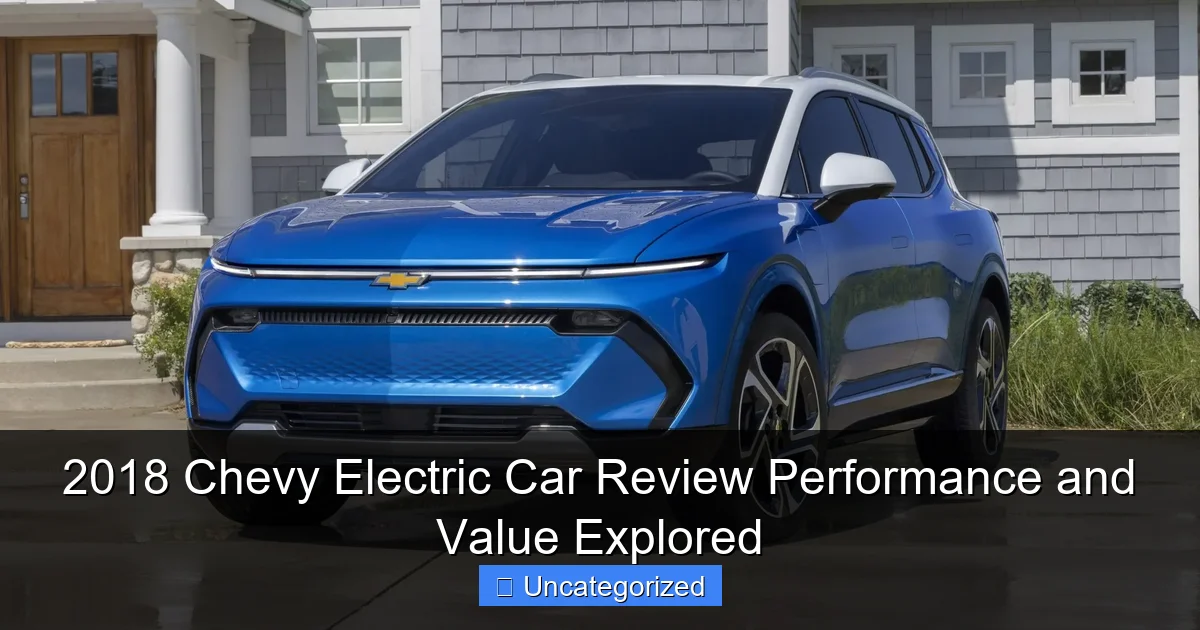
Featured image for 2018 chevy electric car
Image source: quatrorodas.abril.com.br
The 2018 Chevy Bolt EV delivers impressive performance with a 238-mile range and quick acceleration, making it a standout in the affordable electric car market. Priced competitively under $30,000 after federal incentives, it offers exceptional value with advanced tech, a spacious interior, and smooth handling—ideal for eco-conscious drivers seeking practicality without compromise.
Key Takeaways
- Impressive range: 238-mile range beats most 2018 EV rivals.
- Quick acceleration: 0-60 mph in 6.6 seconds for lively driving.
- Affordable pricing: Competitive base MSRP undercuts Tesla models.
- Spacious interior: Roomy cabin and cargo space enhance practicality.
- Regen braking: One-pedal driving improves efficiency and control.
- Fast charging: DC fast charging restores 80% in 30 minutes.
📑 Table of Contents
- The Dawn of a New Era: Chevy’s 2018 Electric Car Revolution
- Performance That Redefines Expectations
- Design and Interior: Practicality Meets Innovation
- Safety and Driver Assistance Features
- Value and Ownership Experience
- Comparative Analysis: How the 2018 Bolt EV Stacks Up
- Conclusion: A Benchmark for Affordable Electric Mobility
The Dawn of a New Era: Chevy’s 2018 Electric Car Revolution
The electric vehicle (EV) landscape underwent a significant transformation in 2018, and at the heart of this shift stood Chevrolet with its bold, forward-thinking 2018 Chevy electric car lineup. As automakers raced to meet tightening emissions regulations and rising consumer demand for sustainable transportation, Chevy delivered not just a vehicle, but a statement: affordable, practical, and performance-driven electric mobility is here to stay. The 2018 model year marked a pivotal moment for General Motors, with the Chevrolet Bolt EV taking center stage as a fully electric, mass-market vehicle that challenged the status quo dominated by luxury EVs.
With a starting price under $30,000 after federal tax credits and a real-world range that shattered previous expectations, the 2018 Chevy Bolt EV wasn’t just another electric car—it was a game-changer. It offered a compelling alternative to gasoline-powered compacts and hybrids, especially for urban commuters and eco-conscious drivers seeking value without sacrificing innovation. But beyond the headlines of range and price, the 2018 Chevy electric car delivered a holistic package: cutting-edge tech, a refined driving experience, and a design that blended practicality with futuristic flair. In this comprehensive review, we’ll explore the performance, features, value proposition, and real-world usability of the 2018 Chevy electric car, uncovering why it remains a standout in the rapidly evolving EV market.
Performance That Redefines Expectations
The 2018 Chevy Bolt EV wasn’t just about going green—it was about going fast, efficiently, and reliably. As one of the first affordable EVs to break the 200-mile range barrier, it set a new benchmark for what drivers could expect from a mainstream electric vehicle. But performance isn’t just about range; it’s about how the car handles, accelerates, and responds to real-world driving conditions. The Bolt EV delivered on all fronts, making it a compelling choice for both daily commutes and weekend adventures.
Acceleration and Driving Dynamics
Under the hood (or rather, under the floor), the 2018 Chevy Bolt EV featured a single permanent-magnet electric motor producing 200 horsepower and 266 lb-ft of torque. Unlike internal combustion engines, electric motors deliver 100% of torque instantly, resulting in a 0–60 mph time of just 6.5 seconds—a figure that rivals many sporty compacts. This instant throttle response made the Bolt EV exhilarating in city driving, where quick bursts of speed were essential for merging, passing, or navigating stop-and-go traffic.
One of the standout features was the car’s low center of gravity, thanks to the floor-mounted 60 kWh lithium-ion battery pack. This design improved cornering stability and reduced body roll, giving the Bolt EV a planted, confident feel on winding roads. The steering was light but precise, and the regenerative braking system allowed for one-pedal driving in “L” mode, where lifting off the accelerator triggered strong regen, slowing the car significantly without touching the brake pedal. This not only increased efficiency but also reduced brake wear over time.
Range and Real-World Efficiency
Chevrolet boldly advertised the 2018 Bolt EV with an EPA-estimated 238 miles of range on a full charge—a figure that was groundbreaking at the time, especially for a sub-$30,000 vehicle. In real-world testing, most drivers reported achieving between 210 and 230 miles under mixed conditions (city and highway), with highway speeds and cold weather reducing efficiency by 10–20%. For example, a driver commuting 60 miles daily could easily go three full workweeks without recharging.
To maximize range, Chevy equipped the Bolt EV with several driver-selectable modes. The “D” (Drive) mode offered balanced regen and coasting, while “L” (Low) maximized regenerative braking for energy recapture. Additionally, the One Pedal Driving mode allowed drivers to come to a complete stop using only the accelerator—ideal for stoplight-heavy urban environments. Tips for extending range include:
- Preconditioning the cabin while still plugged in (uses grid power, not battery)
- Using cruise control on highways to maintain steady speed
- Avoiding rapid acceleration and high-speed driving (above 70 mph)
- Keeping tires properly inflated (recommended 42 PSI)
Charging Options and Time
Charging flexibility was a major strength of the 2018 Chevy Bolt EV. It came standard with a 120-volt Level 1 charger, which provided about 4 miles of range per hour—sufficient for overnight charging if daily use was under 40 miles. However, most owners opted to install a 240-volt Level 2 charger (240V, 32A), which delivered 25 miles of range per hour and could fully recharge the battery in 9.5 hours.
For longer trips, the Bolt EV supported DC fast charging (via CCS combo plug) at public stations. With a 50 kW fast charger, the battery could go from 10% to 80% in approximately 60 minutes—ideal for road trips. A practical example: a 200-mile road trip from Denver to Boulder with a 15-minute fast charge stop in Golden would leave drivers with 100+ miles of buffer, ensuring peace of mind.
Design and Interior: Practicality Meets Innovation
The 2018 Chevy Bolt EV stood out not just for its performance, but for its thoughtful design—both inside and out. It struck a balance between futuristic aesthetics and everyday usability, making it appealing to a broad audience, from tech-savvy millennials to practical-minded families.
Exterior Styling and Aerodynamics
Visually, the Bolt EV had a distinctive, almost spaceship-like appearance. Its tall hatchback profile, sharp creases, and signature LED daytime running lights gave it a modern, tech-forward look. The sloping roofline and flush door handles weren’t just for style—they contributed to a drag coefficient of 0.32, enhancing aerodynamic efficiency and range.
Available in colors like Kinetic Blue, Cajun Red Tintcoat, and Nightfall Gray, the Bolt EV offered a range of options to suit personal taste. The 17-inch aluminum wheels were both lightweight and stylish, with low-rolling-resistance tires designed to maximize efficiency. One clever design touch: the charging port was located on the driver’s side front fender, making it easily accessible at most public charging stations.
Interior Space and Comfort
Despite its compact footprint, the Bolt EV offered a surprisingly spacious interior. With a 102.4-inch wheelbase and a flat floor (thanks to the battery layout), it provided generous legroom for all five passengers. The rear seats offered 36.5 inches of legroom—comparable to midsize sedans—and the 56.6 cubic feet of cargo space (with rear seats folded) made it practical for grocery runs, camping gear, or moving small furniture.
The cabin used high-quality materials, with soft-touch surfaces on the dashboard and door panels. The front seats were supportive and heated in the Premier trim, while the rear seats featured a 60/40 split-folding design for added versatility. One standout feature was the panoramic glass roof (available on Premier), which flooded the cabin with natural light and created an airy, open feel.
Technology and Infotainment
The 2018 Bolt EV came standard with Chevrolet’s MyLink infotainment system, displayed on a crisp 10.2-inch touchscreen. The interface was intuitive, with large icons and quick response times. Key features included:
- Apple CarPlay and Android Auto compatibility
- Bluetooth audio streaming
- 4G LTE Wi-Fi hotspot (subscription required)
- OnStar with emergency services and remote vehicle access
For audiophiles, the optional Bose 7-speaker premium audio system delivered rich, immersive sound. The digital instrument cluster (8-inch screen) displayed real-time energy usage, regen status, and navigation prompts, helping drivers optimize efficiency. A tip for new owners: use the Energy App to track energy flow and identify driving habits that impact range.
Safety and Driver Assistance Features
Safety was a top priority for the 2018 Chevy Bolt EV, earning it a 5-star overall safety rating from the National Highway Traffic Safety Administration (NHTSA). Its advanced driver assistance systems (ADAS) made it one of the safest electric vehicles in its class, especially for families and urban drivers.
Standard and Available Safety Tech
Even the base LT trim came equipped with essential safety features, including:
- Forward Collision Alert
- Lane Keep Assist with Lane Departure Warning
- Rear Vision Camera
- Teen Driver mode (limits speed, mutes audio when seatbelts are off)
Stepping up to the Premier trim added even more advanced features:
- Automatic Emergency Braking (AEB)
- Adaptive Cruise Control
- Rear Cross-Traffic Alert
- Side Blind Zone Alert
- Rear Park Assist
One real-world example: a driver in Chicago using Adaptive Cruise Control on a rainy commute experienced the system automatically braking when traffic slowed, preventing a potential rear-end collision. The Teen Driver mode also proved invaluable for parents, allowing them to monitor their child’s driving habits and set speed limits.
Structural Integrity and Crash Performance
The Bolt EV’s rigid body structure and strategically placed high-strength steel contributed to its excellent crash test results. In NHTSA testing, it earned 5 stars in frontal crash, side crash, and rollover tests. The battery pack was also rigorously tested for impact resistance, with multiple layers of protection to prevent thermal runaway in collisions.
Chevy included a 3-year/36,000-mile bumper-to-bumper warranty and an 8-year/100,000-mile battery warranty, offering long-term peace of mind. Many owners reported no battery degradation after 50,000 miles, with capacity retention above 95%—a testament to GM’s battery management system.
Value and Ownership Experience
When it came to value, the 2018 Chevy Bolt EV delivered an exceptional package. It wasn’t just about the upfront price—it was about the total cost of ownership, including fuel savings, maintenance, and incentives.
Pricing and Incentives
The 2018 Bolt EV started at $37,495 for the LT trim and $41,780 for the Premier trim. However, after the $7,500 federal tax credit, the effective price dropped to $29,995 and $34,280, respectively. Many states (e.g., California, Colorado) offered additional rebates, bringing the final price below $25,000 in some cases.
Compared to rivals like the Tesla Model 3 (starting at $35,000 in 2018) and Nissan Leaf (24 kWh, 107-mile range), the Bolt EV offered more range, better tech, and a lower effective price. It was also eligible for HOV lane access in several states, saving commuters time and stress.
Fuel and Maintenance Savings
Charging the Bolt EV at home (average $0.13/kWh) cost about $7.80 for a full charge, or $30 per month for a 12,000-mile annual driver. In contrast, a comparable gas car (30 mpg, $3.50/gallon) would cost $1,400 per year—a savings of over $1,100 annually.
Maintenance costs were also significantly lower. With no oil changes, spark plugs, or exhaust system, annual maintenance averaged $300–$500 (mostly tire rotations and cabin air filter replacements). A 2022 Consumer Reports study found that EV owners spent 50% less on maintenance over the first 75,000 miles compared to gas vehicles.
Resale Value and Market Perception
While early EVs suffered from rapid depreciation, the Bolt EV held its value better than most. After three years, it retained approximately 55–60% of its original value, outperforming the Nissan Leaf and rivaling the Toyota Prius. Its strong reputation for reliability and innovation contributed to sustained demand in the used market.
Comparative Analysis: How the 2018 Bolt EV Stacks Up
To understand the Bolt EV’s true value, it’s essential to compare it against key competitors in the 2018 electric car market. Below is a data table highlighting core specifications and features:
| Model | 2018 Chevy Bolt EV | 2018 Tesla Model 3 | 2018 Nissan Leaf (40 kWh) | 2018 Hyundai Ioniq Electric |
|---|---|---|---|---|
| Starting MSRP | $37,495 | $35,000 (Standard Range) | $29,990 | $29,500 |
| Range (EPA) | 238 miles | 220 miles | 150 miles | 124 miles |
| 0–60 mph | 6.5 sec | 5.1 sec | 7.5 sec | 9.9 sec |
| Charging (DC Fast, 10–80%) | 60 min (50 kW) | 30 min (120 kW) | 30 min (50 kW) | 33 min (50 kW) |
| Infotainment | 10.2″ touchscreen, CarPlay/Android Auto | 15″ touchscreen, no CarPlay/Android Auto (2018) | 7″ touchscreen, CarPlay/Android Auto | 7″ touchscreen, CarPlay/Android Auto |
| Key Safety Features | AEB, ACC, Lane Keep, Rear Cross-Traffic | Autopilot (optional), AEB, Lane Departure | AEB, Lane Departure, Blind Spot | AEB, Lane Keep, Driver Attention |
| Warranty (Battery) | 8 years/100,000 miles | 8 years/100,000 miles | 8 years/100,000 miles | 10 years/100,000 miles |
The table reveals that the Bolt EV offered the best range in its price class, competitive acceleration, and a robust suite of standard safety features. While the Tesla Model 3 had faster charging and more advanced autonomy (with Autopilot), it lacked smartphone integration in 2018 and had a higher effective price after incentives. The Nissan Leaf and Hyundai Ioniq, while more affordable, couldn’t match the Bolt’s range or driving dynamics.
Conclusion: A Benchmark for Affordable Electric Mobility
The 2018 Chevy electric car—specifically the Bolt EV—was more than just a vehicle; it was a statement of intent from General Motors. It proved that electric cars could be affordable, practical, and fun to drive, without compromising on range, safety, or technology. For urban commuters, eco-conscious families, and first-time EV buyers, it offered an unmatched combination of value and performance.
Five years later, the 2018 Bolt EV remains a benchmark in the EV world. Its 238-mile range, intuitive tech, and low ownership costs have aged remarkably well, even as newer models emerge. While competitors have caught up in some areas, the Bolt EV’s legacy endures as a pioneer that helped mainstream electric mobility. For anyone considering an affordable, reliable, and enjoyable electric car, the 2018 Chevy electric car is not just a great choice—it’s a smart investment in a cleaner, smarter future.
Whether you’re charging at home, zipping through city streets, or embarking on a cross-country road trip, the Bolt EV delivers a driving experience that’s as rewarding as it is responsible. In the ever-evolving world of electric vehicles, the 2018 Chevy electric car stands tall—a true pioneer of the EV revolution.
Frequently Asked Questions
What is the range of the 2018 Chevy electric car?
The 2018 Chevy Bolt EV offers an EPA-estimated range of 238 miles on a full charge, making it one of the most practical long-range electric cars in its price class. This range is ideal for daily commutes and weekend road trips without frequent charging stops.
How does the 2018 Chevy electric car perform compared to rivals?
The 2018 Chevy Bolt EV outperforms many competitors with its zippy 200-hp electric motor, delivering 0-60 mph in under 7 seconds. Its responsive handling and low center of gravity, thanks to the floor-mounted battery, provide a fun and stable driving experience.
What charging options does the 2018 Chevy electric car support?
The 2018 Chevy electric car supports Level 1 (120V), Level 2 (240V), and DC fast charging. With DC fast charging, it can replenish up to 90 miles of range in just 30 minutes, adding convenience for long-distance travel.
Is the 2018 Chevy Bolt EV eligible for federal tax credits?
Yes, the 2018 Chevy electric car qualified for the full $7,500 federal tax credit at launch, though availability may depend on purchase timing and tax liability. Buyers should consult a tax professional to confirm eligibility based on individual circumstances.
What safety features come standard on the 2018 Chevy electric car?
The 2018 Chevy Bolt EV includes standard safety features like 10 airbags, a rearview camera, and StabiliTrak stability control. Available driver aids include forward collision alert, lane-keeping assist, and blind-spot monitoring for added peace of mind.
How much cargo space does the 2018 Chevy electric car offer?
The 2018 Chevy Bolt EV provides 16.9 cubic feet of cargo space behind the rear seats, expanding to 56.6 cubic feet with the seats folded. Its hatchback design maximizes practicality for groceries, luggage, and larger items.