2018 Chevy Electric Cars A Complete Guide to Models and Features
Featured image for 2018 chevy electric cars
The 2018 Chevy electric car lineup delivers impressive range, cutting-edge tech, and eco-friendly performance, led by the all-electric Bolt EV with an EPA-estimated 238 miles per charge. With fast-charging capability, advanced infotainment, and a suite of driver-assist features, Chevy sets a high bar for affordable EVs. Whether you’re a daily commuter or a tech-savvy driver, the 2018 models offer a compelling blend of practicality and innovation in the growing electric vehicle market.
Key Takeaways
- 2018 Chevy Bolt EV offers 238-mile range, ideal for daily commutes and road trips.
- Regenerative braking enhances efficiency and extends battery life with one-pedal driving.
- DC fast charging adds 90 miles in 30 minutes, reducing downtime significantly.
- Affordable pricing after tax credits makes it competitive in the EV market.
- Spacious interior seats five with ample cargo room, balancing practicality and comfort.
- Advanced tech includes 10.2-inch touchscreen and smartphone integration for seamless connectivity.
📑 Table of Contents
The Rise of Chevy’s Electric Vision in 2018
As the automotive world shifted gears toward a cleaner, more sustainable future, 2018 marked a pivotal year for General Motors and its Chevrolet division. With global pressure to reduce carbon emissions and rising consumer interest in electric mobility, Chevy responded with a bold electric strategy that combined innovation, affordability, and real-world usability. The 2018 Chevy electric cars lineup wasn’t just a response to Tesla’s dominance—it was a statement: American automakers could lead the electric revolution too. From city commuters to long-distance travelers, Chevrolet offered electric vehicles (EVs) that balanced practicality with cutting-edge technology, all wrapped in a design language that felt both modern and familiar.
The year 2018 was a turning point in EV adoption. Battery costs were dropping, charging infrastructure was expanding, and federal tax incentives were still in place to sweeten the deal for early adopters. Chevy seized this moment, refining its electric offerings to appeal to a broader audience. Whether you were a tech-savvy urbanite looking for a zippy daily driver or a family seeking a spacious, eco-friendly SUV alternative, the 2018 Chevy electric portfolio had something to offer. With over 200,000 EVs sold in the U.S. that year—Chevy playing a significant role—this was no longer a niche market. It was the beginning of a mainstream transformation, and Chevrolet was right in the driver’s seat.
Overview of the 2018 Chevy Electric Car Lineup
In 2018, Chevrolet offered two primary electric models: the Chevy Bolt EV and the Chevy Volt (PHEV), each serving a distinct segment of the EV market. While the Bolt EV was a fully electric vehicle (BEV), the Volt operated as a plug-in hybrid (PHEV), offering the best of both electric and gasoline-powered worlds. Together, they formed a strategic dual approach—giving consumers flexibility based on their driving habits, budget, and charging access.
Chevy Bolt EV: The All-Electric Game-Changer
The 2018 Chevy Bolt EV was the star of the show—a fully electric hatchback that shattered range expectations at the time. With an EPA-estimated range of 238 miles on a single charge, it outperformed nearly every affordable EV on the market, including the Nissan Leaf and the first-generation Tesla Model 3 (when equipped with the smaller battery). This range made the Bolt EV a viable option for daily commuters and even occasional road trippers, especially in regions with robust charging networks.
The Bolt EV was powered by a 60 kWh lithium-ion battery pack and a 200-horsepower electric motor, delivering instant torque and smooth acceleration. It could go from 0 to 60 mph in about 6.5 seconds—quick enough to keep up with traffic and even surprise some gas-powered compacts. Charging was flexible: a standard Level 1 charger (120V) added about 4 miles per hour, while a Level 2 charger (240V) could replenish the battery in roughly 9.5 hours. DC fast charging was also available, adding up to 90 miles of range in just 30 minutes—a game-changer for long-distance travel.
Chevy Volt: The Plug-In Hybrid for the Transition Era
While the Bolt EV led the all-electric charge, the 2018 Chevy Volt catered to drivers not yet ready to go fully electric. As a plug-in hybrid, it featured a 18.4 kWh battery and an electric motor that provided 53 miles of all-electric range—ideal for most daily commutes. Once the battery was depleted, a 1.5-liter gasoline engine kicked in as a generator, extending the total range to 420 miles. This “extended-range electric” design eliminated “range anxiety” and made the Volt a practical choice for families, rural drivers, or anyone with limited access to public charging stations.
The Volt’s dual powertrain was seamless, switching between electric and hybrid modes without driver intervention. It offered 149 horsepower and 294 lb-ft of torque, with a 0–60 mph time of about 8.4 seconds. While not as quick as the Bolt, it was more than adequate for city and highway driving. The Volt also supported Level 1 and Level 2 charging, with a full recharge taking about 4.5 hours on a 240V charger.
Trim Levels and Pricing
Both models came in multiple trim levels to suit different budgets and preferences. The 2018 Chevy Bolt EV was offered in two trims:
- LT: Starting at $37,495 (before federal tax credit), it included 17-inch alloy wheels, automatic climate control, a 10.2-inch touchscreen, Apple CarPlay, Android Auto, and keyless entry.
< Premier: Starting at $41,780, it added heated front and rear seats, a heated steering wheel, rear park assist, a rearview camera mirror, and advanced safety features like blind-spot monitoring and rear cross-traffic alert.
The 2018 Chevy Volt was available in three trims:
- LT: Starting at $33,995, with cloth seats, a 8-inch touchscreen, and standard safety tech.
- Premier: Starting at $38,345, adding leather upholstery, Bose audio, heated seats, and a power driver’s seat.
- LT w/ Leather: A mid-tier option with leather seats but fewer premium features than the Premier.
With the federal tax credit of up to $7,500, both vehicles became even more attractive—especially for buyers in states with additional rebates (e.g., California, Colorado, New York).
Performance and Driving Experience
One of the most compelling aspects of the 2018 Chevy electric cars was how they performed on the road. These weren’t just eco-friendly vehicles—they were genuinely fun to drive, thanks to the inherent advantages of electric powertrains: instant torque, quiet operation, and responsive handling.
Bolt EV: Agile, Nimble, and Responsive
The Bolt EV’s low center of gravity—thanks to the floor-mounted battery pack—gave it excellent stability and cornering ability. Its steering was light and precise, making it ideal for city driving and tight parking spots. The electric motor delivered 266 lb-ft of torque from a standstill, resulting in a punchy, engaging driving experience. Unlike many EVs that feel sluggish at low speeds, the Bolt felt lively and eager.
One unique feature was one-pedal driving, made possible by strong regenerative braking. When drivers lifted off the accelerator, the car slowed down significantly, capturing energy to recharge the battery. With a simple press of the “Low” mode button, drivers could increase regen for even more aggressive coasting—ideal for stop-and-go traffic. This not only improved efficiency but also reduced brake wear over time.
On the highway, the Bolt EV held its own. Its top speed was electronically limited to 91 mph, but it cruised comfortably at 75 mph with minimal wind or road noise. The suspension was tuned for comfort, absorbing bumps well, though it could feel slightly firm on rough pavement. Overall, it was a well-rounded package that balanced efficiency, performance, and practicality.
Volt: The Best of Both Worlds
The Chevy Volt’s driving experience was defined by its dual personality. In all-electric mode, it drove like a pure EV—quiet, smooth, and responsive. The transition to hybrid mode was nearly imperceptible; drivers often didn’t even notice the gasoline engine starting unless they checked the energy flow screen. The Volt’s handling was more traditional than the Bolt’s, with slightly more body roll in corners, but it remained stable and predictable.
One of the Volt’s standout features was its “Hold Mode”, which allowed drivers to preserve battery charge for later use—perfect for saving electric range for city driving after a highway trip. Another useful tool was the “Mountain Mode”, which pre-charged the battery to ensure sufficient power for steep climbs or high-elevation driving.
For daily commuters, the 53-mile electric range covered the average American’s round-trip commute (about 40 miles). This meant many Volt owners could drive for weeks without using a drop of gas, significantly reducing fuel costs and emissions. When gas was needed, the 1.5L engine was efficient, averaging about 42 mpg in hybrid mode.
Real-World Driving Tips
- Maximize regenerative braking: Use one-pedal driving in city traffic to extend range and reduce brake wear.
- Precondition the cabin: Use the MyChevrolet app to heat or cool the car while it’s still plugged in—this preserves battery range.
- Use Eco mode: Both models offer Eco driving modes that limit power output and HVAC use to maximize efficiency.
- Plan charging stops: For long trips, use apps like PlugShare or ChargePoint to locate DC fast chargers along your route.
- Monitor tire pressure: Properly inflated tires can improve range by up to 3%.
Charging, Range, and Efficiency
One of the biggest concerns for EV buyers is charging convenience and range. The 2018 Chevy electric cars addressed these challenges with a mix of real-world range, flexible charging options, and smart energy management.
Charging Options and Times
Both the Bolt EV and Volt supported multiple charging levels:
- Level 1 (120V): Standard household outlet. Adds about 4 miles of range per hour for the Bolt, 3 miles per hour for the Volt. Full charge: ~50 hours (Bolt), ~24 hours (Volt).
- Level 2 (240V): Home or public charging station. Adds about 25 miles per hour (Bolt), 10 miles per hour (Volt). Full charge: ~9.5 hours (Bolt), ~4.5 hours (Volt).
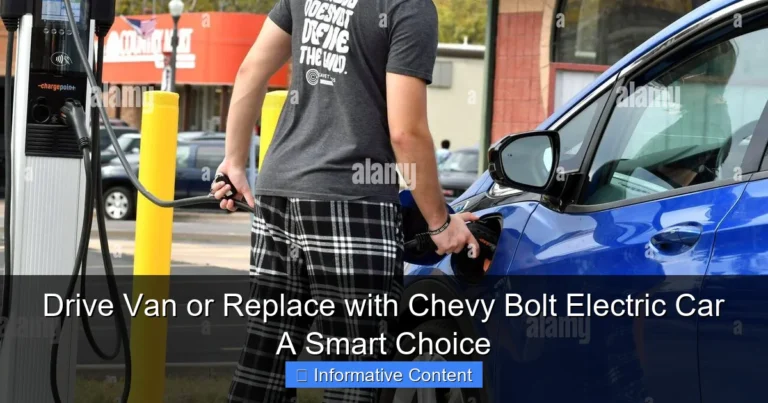
- DC Fast Charging (Bolt EV only): Available at select public stations. Adds up to 90 miles of range in 30 minutes. Uses SAE Combo (CCS) connector.
For homeowners, installing a Level 2 charger was highly recommended. A 240V outlet (like a dryer plug) could be installed by a licensed electrician for $500–$1,500, depending on wiring needs. Many utility companies offered rebates to offset the cost.
Range and Efficiency Metrics
The Bolt EV’s 238-mile EPA range was a major selling point. In real-world tests, drivers often achieved 220–240 miles in moderate temperatures, though cold weather could reduce range by 20–30%. The Volt’s 53-mile electric range was consistent, with many owners reporting 50+ miles in mixed driving.
Efficiency was measured in MPGe (miles per gallon equivalent):
- Bolt EV: 128 MPGe city / 110 MPGe highway / 119 MPGe combined
- Volt (electric mode): 106 MPGe city / 93 MPGe highway / 102 MPGe combined
- Volt (hybrid mode): 42 mpg combined
These numbers made both vehicles among the most efficient in their classes. The Bolt EV, in particular, was a leader in MPGe, outperforming competitors like the Nissan Leaf (112 MPGe) and the Hyundai Ioniq Electric (136 MPGe city, but lower range).
Charging Infrastructure and Incentives
Chevy partnered with charging networks like ChargePoint and EVgo to expand access to DC fast chargers. The Bolt EV came with a free trial of DC fast charging at select stations. Additionally, GM offered a “Chevy Clean Energy” program, providing discounts on home solar installations and EV charging equipment.
Buyers also benefited from the $7,500 federal tax credit, which applied to both models. Many states added incentives—California offered up to $2,500 in rebates, and Colorado provided a $5,000 tax credit. These incentives made the effective price of a Bolt EV as low as $22,500 and a Volt as low as $21,500—competitive with many gas-powered compact cars.
Technology and Interior Features
Chevy didn’t just electrify the powertrain—it packed its 2018 electric cars with tech to enhance comfort, connectivity, and safety.
Infotainment and Connectivity
Both models featured a 10.2-inch diagonal touchscreen (Bolt) or 8-inch screen (Volt) running Chevrolet’s MyLink system. Key features included:
- Apple CarPlay and Android Auto
- Bluetooth audio and phone streaming
- OnStar 4G LTE Wi-Fi hotspot (with data plan)
- Navigation with real-time traffic and charging station locations
- MyChevrolet app for remote start, climate control, and charging scheduling
The Bolt EV’s larger screen was more intuitive, with split-screen views and customizable widgets. The Volt’s interface was slightly older but still user-friendly. Both systems supported over-the-air updates, ensuring software remained current.
Interior Comfort and Space
The Bolt EV offered a surprisingly spacious interior for a compact hatchback. Rear legroom was generous (36.5 inches), and the flat floor made it comfortable for three adults. Cargo space was 16.9 cubic feet behind the rear seats, expanding to 56.6 cubic feet with seats folded—perfect for groceries, bikes, or camping gear.
The Volt had a more traditional sedan layout with a center console tunnel due to the gasoline engine. Rear legroom was slightly less (34.7 inches), but still adequate for most passengers. Cargo space was 10.6 cubic feet, with a pass-through for longer items.
Premier trims added luxury touches: leather seats, heated front and rear seats, a heated steering wheel, and ambient lighting. The Bolt EV Premier also included a rearview camera mirror—a rare feature that replaced the traditional mirror with a live camera feed, improving rear visibility.
Safety and Driver Assistance
Safety was a priority. Both models earned top marks from the IIHS (Insurance Institute for Highway Safety). Standard features included:
- Rearview camera
- Teen Driver system (monitors speed, seat belt use, and audio volume)
- StabiliTrak electronic stability control
Available on Premier trims:
- Forward Collision Alert
- Lane Keep Assist with Lane Departure Warning
- Low-Speed Forward Automatic Braking
- Rear Park Assist
- Blind-Spot Monitoring
- Rear Cross-Traffic Alert
While not offering full autonomy, these features provided a strong foundation for driver awareness and accident prevention.
Comparative Analysis: How 2018 Chevy EVs Stack Up
To understand the value of the 2018 Chevy electric cars, it’s essential to compare them with key competitors of the time.
Chevy Bolt EV vs. Nissan Leaf (2018)
- Range: Bolt EV – 238 miles; Leaf – 150 miles (SV/SL trims)
- Price: Bolt EV starts at $37,495; Leaf at $30,885 (before incentives)
- Charging: Bolt has DC fast charging; Leaf (2018) lacks fast charging on base models
- Interior: Bolt has more modern tech and better rear space
Verdict: The Bolt EV offered significantly more range and faster charging, justifying its higher price for most buyers.
Chevy Volt vs. Toyota Prius Prime (2018)
- Electric Range: Volt – 53 miles; Prius Prime – 25 miles
- Total Range: Volt – 420 miles; Prius Prime – 640 miles (gasoline)
- MPGe: Volt – 102; Prius Prime – 133
- Interior: Volt has more legroom and a larger touchscreen
Verdict: The Volt was better for daily electric driving, while the Prius Prime had a longer gas range and slightly better efficiency.
Data Table: 2018 Chevy Electric Cars vs. Key Competitors
| Model | Type | EPA Range (mi) | MPGe | 0–60 mph (sec) | DC Fast Charging | Base Price (before incentives) |
|---|---|---|---|---|---|---|
| 2018 Chevy Bolt EV | BEV | 238 | 119 | 6.5 | Yes | $37,495 |
| 2018 Chevy Volt | PHEV | 53 (electric) | 102 (electric) | 8.4 | No | $33,995 |
| 2018 Nissan Leaf SV | BEV | 150 | 112 | 7.4 | Yes (SV/SL) | $30,885 |
| 2018 Toyota Prius Prime | PHEV | 25 (electric) | 133 | 10.6 | No | $27,100 |
| 2018 Tesla Model 3 (Standard Range) | BEV | 220 | 130 | 5.1 | Yes (Tesla Supercharger) | $35,000 |
This comparison highlights how Chevy’s 2018 electric cars offered a compelling mix of range, price, and technology—especially the Bolt EV, which was a standout in its class.
Conclusion: A Pivotal Year for Chevy and the EV Revolution
The 2018 Chevy electric cars—the Bolt EV and the Volt—were more than just vehicles; they were milestones in Chevrolet’s journey toward electrification. The Bolt EV shattered the myth that affordable EVs couldn’t offer long range, while the Volt proved that plug-in hybrids could bridge the gap between gas and electric with grace and efficiency. Together, they showcased GM’s commitment to innovation, sustainability, and customer choice.
For buyers in 2018, these models offered tangible benefits: lower fuel costs, reduced emissions, cutting-edge tech, and generous tax incentives. The Bolt EV, in particular, set a new benchmark for what a mainstream EV could achieve—paving the way for future models like the Chevrolet Silverado EV and the Equinox EV. Meanwhile, the Volt’s extended-range design influenced the development of GM’s Ultium platform, which now powers a new generation of electric trucks and SUVs.
Looking back, 2018 was a year when electric cars moved from curiosity to credibility. Chevrolet didn’t just participate in this shift—it helped lead it. Whether you were a first-time EV buyer or a long-time hybrid enthusiast, the 2018 Chevy electric lineup provided options that were practical, reliable, and forward-thinking. As the world continues its transition to electric mobility, the legacy of these vehicles remains clear: Chevy didn’t just build electric cars—it built confidence in a cleaner, smarter future.
Frequently Asked Questions
What 2018 Chevy electric cars are available?
The 2018 lineup includes the Chevrolet Bolt EV, the brand’s flagship fully electric car, and the Chevrolet Volt, a plug-in hybrid. Both models offer distinct advantages, with the Bolt EV providing a longer all-electric range, while the Volt features a gasoline engine for extended driving flexibility.
What is the range of the 2018 Chevy Bolt EV?
The 2018 Chevy Bolt EV delivers an EPA-estimated range of 238 miles on a single charge. This makes it one of the most competitive options in the affordable electric car segment for long-distance driving without frequent recharging.
Does the 2018 Chevy Volt count as an electric car?
Yes, the 2018 Chevy Volt is a plug-in hybrid electric car (PHEV) with a 53-mile all-electric range before switching to hybrid mode. It qualifies for many EV incentives while offering the versatility of a gas-electric powertrain for longer trips.
How long does it take to charge a 2018 Chevy electric car?
Using a 240-volt Level 2 charger, the 2018 Bolt EV takes about 9.5 hours to fully charge, while the Volt requires around 4.5 hours. With a DC fast charger, the Bolt EV can reach 80% charge in approximately 60 minutes.
Are there tax credits for 2018 Chevy electric cars?
Yes, both the 2018 Chevy Bolt EV and Volt qualify for federal tax credits up to $7,500, depending on your tax liability. Some states also offer additional incentives for purchasing 2018 Chevy electric cars, making them even more cost-effective.
What tech features come standard on 2018 Chevy electric models?
The 2018 Bolt EV and Volt include standard 4G LTE Wi-Fi, Apple CarPlay, Android Auto, and a rearview camera. Higher trims add advanced safety features like lane-keep assist and forward collision warning, enhancing comfort and driver confidence.