2022 Nissan Leaf Electric Car Review Pros and Cons You Need to Know
The 2022 Nissan Leaf remains a top contender in the affordable EV market, offering a reliable 149-mile base range and a comfortable, tech-forward interior. Pros include smooth handling, fast-charging capability, and a suite of standard driver aids, though the cons—like modest range and aging infotainment—may give range-focused buyers pause.
Key Takeaways
- Affordable EV option: Priced competitively for budget-conscious electric car buyers.
- Decent range: Offers up to 226 km on a full charge with the Plus model.
- Quick charging: 80% charge in 40 minutes using DC fast charging.
- User-friendly tech: Standard Apple CarPlay and Android Auto enhance connectivity.
- Limited cargo space: Rear seats reduce storage; plan trips accordingly.
- Outdated design: Interior lacks premium feel compared to newer rivals.
- Strong safety: Standard Nissan Safety Shield 360 offers excellent driver aids.
📑 Table of Contents
- 2022 Nissan Leaf Electric Car Review: A Closer Look at the Iconic EV
- Design and Exterior: Modern, Practical, and Aerodynamic
- Interior and Technology: Comfort Meets Connectivity
- Performance and Driving Experience: Smooth, Efficient, and Fun
- Range, Charging, and Ownership Costs: The Bottom Line
- Safety and Reliability: Peace of Mind for Daily Driving
- 2022 Nissan Leaf Electric Car Review: The Verdict
2022 Nissan Leaf Electric Car Review: A Closer Look at the Iconic EV
The electric vehicle (EV) revolution is in full swing, and the 2022 Nissan Leaf stands as a pivotal player in the transition from gas-powered cars to cleaner, more sustainable transportation. As one of the earliest mass-market electric cars, the Leaf has evolved significantly since its 2010 debut, and the 2022 model represents a refined version of Nissan’s commitment to accessible EV technology. With a starting price that’s still competitive in the growing EV market, the Leaf continues to appeal to urban commuters, eco-conscious drivers, and first-time electric car buyers. But does it hold up against newer, more technologically advanced rivals? This comprehensive review dives deep into the 2022 Nissan Leaf electric car to uncover its strengths, weaknesses, and real-world usability.
While newer EVs like the Tesla Model 3, Chevrolet Bolt, and Hyundai Kona Electric boast longer ranges and faster charging, the 2022 Leaf carves out a niche by offering a balance of affordability, practicality, and Nissan’s proven EV platform. It’s not just about range—it’s about how the car fits into your daily life. From city driving to weekend errands, the Leaf delivers a smooth, quiet ride with intuitive tech and a surprisingly spacious interior. However, it’s not without its trade-offs. In this review, we’ll explore the pros and cons of the 2022 Nissan Leaf, from its driving dynamics and charging capabilities to its tech features and long-term ownership value. Whether you’re considering your first EV or upgrading from an older model, this guide will help you decide if the Leaf is the right fit for your lifestyle.
Design and Exterior: Modern, Practical, and Aerodynamic
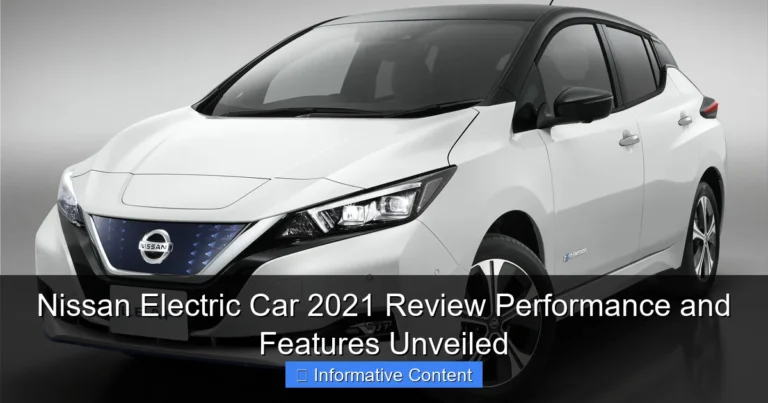
The 2022 Nissan Leaf sports a refreshed exterior design that blends modern aesthetics with functional aerodynamics. Unlike flashy EVs with futuristic styling, the Leaf opts for a clean, approachable look that prioritizes efficiency and practicality. Its sloping roofline, active grille shutters, and underbody panels reduce drag, contributing to a drag coefficient of 0.28—impressive for a compact hatchback.

Visual guide about 2022 nissan leaf electric car
Image source: images.ctfassets.net
Exterior Styling and Features
The 2022 Leaf features Nissan’s signature V-Motion grille, now illuminated in blue to denote its electric nature. LED headlights and daytime running lights are standard across all trims, enhancing visibility and giving the car a premium feel. The rear design is equally modern, with wraparound taillights and a sculpted tailgate that adds visual width. The Leaf SV and SL trims come with 17-inch alloy wheels, while the base S trim rolls on 16-inch steel wheels with plastic covers. A power liftgate is available on higher trims, making it easier to load groceries or luggage.
- Color Options: The 2022 Leaf is available in six exterior colors, including Gun Metallic, Deep Blue Pearl, and Scarlet Ember Tintcoat (a $395 premium).
- LED Lighting: Full LED headlights, taillights, and fog lights improve night visibility and reduce energy consumption.
- Active Grille Shutters: Automatically open or close to regulate airflow, improving efficiency and battery cooling.
Size and Practicality
Measuring 176.4 inches long and 70.5 inches wide, the Leaf is compact but spacious. Its hatchback design offers 23.6 cubic feet of cargo space behind the rear seats and 30 cubic feet with the seats folded—more than enough for a week’s worth of groceries, strollers, or camping gear. The low lift-over height makes loading easy, and the wide rear opening accommodates bulky items. For city dwellers, the Leaf’s tight turning radius (34.8 feet) and compact footprint make it ideal for navigating narrow streets and parallel parking.
Pro Tip: If you frequently carry large items, opt for the SL trim, which includes a hands-free power liftgate activated by kicking under the rear bumper—perfect when your hands are full.
Interior and Technology: Comfort Meets Connectivity
Step inside the 2022 Nissan Leaf, and you’re greeted by a clean, minimalist cabin that prioritizes driver focus and comfort. Unlike some EVs with over-the-top digital dashboards, the Leaf keeps things simple but effective, with intuitive controls and a focus on usability.
Cabin Materials and Comfort
The base S trim features cloth upholstery, while SV and SL trims upgrade to Nissan’s “Prima-Tex” synthetic leather, which is durable, easy to clean, and more eco-friendly than traditional leather. Heated front seats are standard on SV and SL trims, and the SL adds heated rear seats and a heated steering wheel—a welcome feature in colder climates. The front seats are well-padded and supportive, though taller drivers may find headroom tight due to the sloping roofline. Rear seat legroom is generous (33.3 inches), making it comfortable for two adults or three children.
- Climate Control: Dual-zone automatic climate control is standard on SV and SL trims, with a heat pump option (available on SL) that improves efficiency in winter.
- Quiet Ride: The Leaf’s electric drivetrain and sound-deadening materials create a serene cabin, with minimal wind or road noise at highway speeds.
Infotainment and Tech Features
The 2022 Leaf comes with an 8-inch touchscreen infotainment system (upgraded from 7 inches in previous models) that runs Nissan’s latest Connect software. Apple CarPlay and Android Auto are standard, and the system supports wireless connectivity on SV and SL trims. The interface is responsive, with large icons and minimal lag. A 7-inch digital driver display (standard on SV and SL) provides key driving data, including battery charge, range, and energy flow.
Pro Tip: Use the NissanConnect app to pre-condition the cabin (heating or cooling) while the car is charging, saving battery and ensuring a comfortable interior when you depart.
Other notable tech features include:
- ProPILOT Assist: Available on SV and SL trims, this semi-autonomous system combines adaptive cruise control and lane-keeping assist for stress-free highway driving.
- Bose Premium Audio: Optional on SL trim, this 7-speaker system delivers crisp, immersive sound.
- e-Pedal: Nissan’s one-pedal driving mode allows you to accelerate and decelerate using just the accelerator, with regenerative braking bringing the car to a complete stop.
Performance and Driving Experience: Smooth, Efficient, and Fun
The 2022 Nissan Leaf offers two powertrain options, each tailored to different driving needs. Whether you prioritize range or responsiveness, there’s a Leaf variant for you.
Powertrain Options
The base Leaf S and SV come with a 40 kWh lithium-ion battery and a 147-horsepower electric motor, delivering 236 lb-ft of torque. This setup provides a range of 149 miles on a full charge—ideal for city driving and short commutes. The Leaf SL and SV Plus trims upgrade to a 62 kWh battery and a 214-horsepower motor, boosting range to 212 miles and torque to 250 lb-ft. Both versions use a single-speed direct-drive transmission, ensuring smooth, seamless acceleration.
Real-World Example: A 212-mile range means you could drive from downtown Los Angeles to Santa Barbara (100 miles) and back with 12 miles to spare, assuming no detours or heavy traffic.
Driving Dynamics
The Leaf’s electric motor delivers instant torque, making it feel quick off the line. The 0-60 mph time is 7.4 seconds for the 40 kWh model and 6.8 seconds for the 62 kWh version—respectable for a compact EV. The steering is light and precise, though not as engaging as sportier EVs like the Ford Mustang Mach-E. The suspension is tuned for comfort, soaking up bumps and potholes with ease, though it can feel floaty on undulating highways.
- Regenerative Braking: The Leaf’s e-Pedal mode is highly effective, allowing one-pedal driving in most situations. It’s especially useful in stop-and-go traffic.
- Eco Mode: Reduces throttle response and climate control output to maximize range. Useful for extending trips when charging isn’t available.
Charging and Efficiency
The 2022 Leaf supports Level 1 (120V), Level 2 (240V), and DC fast charging. With a Level 2 charger, the 40 kWh battery charges from 0 to 100% in about 7.5 hours, while the 62 kWh battery takes 11 hours. DC fast charging (50 kW max) can replenish 80% of the battery in 40 minutes (40 kWh) or 45 minutes (62 kWh). The Leaf’s energy efficiency is rated at 111 MPGe (40 kWh) and 109 MPGe (62 kWh)—among the best in its class.
Pro Tip: Use public fast chargers strategically. For daily use, a home Level 2 charger is more cost-effective and easier on the battery.
Range, Charging, and Ownership Costs: The Bottom Line
Range anxiety remains a concern for many EV buyers, and the 2022 Leaf’s numbers are a mixed bag. While the 62 kWh model’s 212-mile range is competitive, it falls short of rivals like the Tesla Model 3 (272 miles) and Hyundai Ioniq 5 (303 miles). However, the Leaf’s affordability and lower operating costs make it a compelling choice for budget-conscious buyers.
Range Realities
Real-world range varies based on driving style, weather, and terrain. Cold weather can reduce range by 20-30%, especially if you use the heater heavily. The Leaf’s heat pump (available on SL trim) mitigates this by using less energy for cabin heating. On a 70°F day, the 62 kWh Leaf can achieve 200+ miles with moderate driving. At 20°F, expect 140-160 miles.
- Tip: Pre-heat the cabin while plugged in to preserve battery range during winter drives.
- Regen Braking: Maximizes range by converting kinetic energy back into the battery during deceleration.
Charging Infrastructure
Nissan partners with EVgo for fast charging, offering 1,000 free charging sessions over three years (for 2022 Leaf buyers). This is a significant perk, reducing the cost of long trips. However, the Leaf uses the CCS (Combined Charging System) standard, which is less common than Tesla’s Supercharger network. In areas with sparse CCS coverage, charging can be inconvenient.
Ownership Costs
The 2022 Leaf’s total cost of ownership is among the lowest in the EV segment. Here’s a breakdown:
| Cost Factor | 2022 Nissan Leaf (62 kWh) | Industry Average (EV) |
|---|---|---|
| Starting MSRP | $31,620 (after $7,500 federal tax credit) | $45,000 |
| Annual Electricity Cost (15,000 miles) | $600 | $800 |
| Maintenance (5 years) | $1,200 | $2,500 |
| Insurance (annual) | $1,400 | $1,800 |
| Depreciation (3 years) | 45% | 50% |
The Leaf’s low maintenance costs stem from its simple electric drivetrain (no oil changes, fewer moving parts) and Nissan’s 8-year/100,000-mile battery warranty.
Safety and Reliability: Peace of Mind for Daily Driving
The 2022 Nissan Leaf prioritizes safety with a comprehensive suite of driver-assistance features and a solid track record for reliability.
Crash Test Ratings
The Leaf earned a 4-star overall safety rating from the NHTSA, with 5 stars for side crash protection. The IIHS named it a Top Safety Pick+, with “Good” ratings in all crash tests and “Superior” for front crash prevention (with optional ProPILOT Assist).
Standard and Available Safety Tech
All trims come with:
- Automatic Emergency Braking: Detects pedestrians and cyclists.
- Blind Spot Warning: Alerts you to vehicles in adjacent lanes.
- Rear Cross-Traffic Alert: Warns of approaching cars when backing up.
SV and SL trims add:
- ProPILOT Assist: Keeps the car centered in its lane and maintains a safe distance from traffic ahead.
- Intelligent Around View Monitor: 360-degree camera system for easier parking.
Reliability and Warranty
Nissan’s EV platform is proven, with the Leaf’s battery and motor having a low failure rate over the past decade. The 2022 model comes with:
- 3-year/36,000-mile bumper-to-bumper warranty.
- 5-year/60,000-mile powertrain warranty.
- 8-year/100,000-mile battery warranty.
Tip: Check for battery degradation over time. Most Leafs retain 80-85% of their capacity after 8 years.
2022 Nissan Leaf Electric Car Review: The Verdict
The 2022 Nissan Leaf electric car is a practical, affordable, and reliable entry point into the world of electric driving. Its strengths—low operating costs, user-friendly tech, and a comfortable ride—make it ideal for urban commuters, first-time EV owners, and those with short daily drives. The 62 kWh model’s 212-mile range is sufficient for most needs, and the free charging perk adds real value.
However, the Leaf isn’t perfect. The infotainment system lags behind rivals, the fast-charging speed is slower than newer EVs, and the range is modest compared to the competition. If you frequently drive long distances or demand cutting-edge tech, you might prefer a Tesla, Hyundai, or Ford. But if you value simplicity, affordability, and Nissan’s proven EV expertise, the Leaf remains a compelling choice.
Ultimately, the 2022 Nissan Leaf is a testament to how far EVs have come—and how accessible they’ve become. It’s not the flashiest or fastest EV on the road, but it’s a dependable workhorse that makes going electric easier than ever. For many drivers, that’s exactly what they need.
Frequently Asked Questions
What is the range of the 2022 Nissan Leaf electric car?
The 2022 Nissan Leaf offers two battery options: the base 40 kWh battery delivers up to 149 miles of range, while the upgraded 62 kWh Leaf Plus provides an EPA-estimated 226 miles. Actual range may vary based on driving habits and conditions.
How does the 2022 Nissan Leaf compare to other electric cars in its price range?
The 2022 Nissan Leaf stands out for its affordability and standard safety features like ProPILOT Assist, but it lags behind rivals in charging speed and interior tech. It’s a practical choice for budget-focused buyers prioritizing value over cutting-edge performance.
What are the charging options for the 2022 Nissan Leaf?
The 2022 Nissan Leaf supports Level 1 (120V), Level 2 (240V), and DC fast charging (standard on Leaf Plus). With DC fast charging, the Leaf Plus can reach 80% charge in about 45 minutes, making longer trips more feasible.
Does the 2022 Nissan Leaf qualify for federal tax credits?
As of 2022, the Nissan Leaf no longer qualifies for the full $7,500 federal EV tax credit due to Nissan meeting the 200,000-vehicle sales cap. However, buyers may still qualify for state or local incentives depending on their location.
What are the key safety features of the 2022 Nissan Leaf electric car?
The 2022 Nissan Leaf comes standard with Nissan Safety Shield 360, including automatic emergency braking, blind-spot monitoring, and rear cross-traffic alert. Higher trims add ProPILOT Assist, a semi-autonomous driving aid for highway convenience.
Is the 2022 Nissan Leaf a reliable electric car for daily commuting?
Yes, the 2022 Nissan Leaf excels as a daily commuter with its smooth electric powertrain, low running costs, and compact size for city driving. However, drivers needing longer range or faster charging may find newer EVs more suitable.