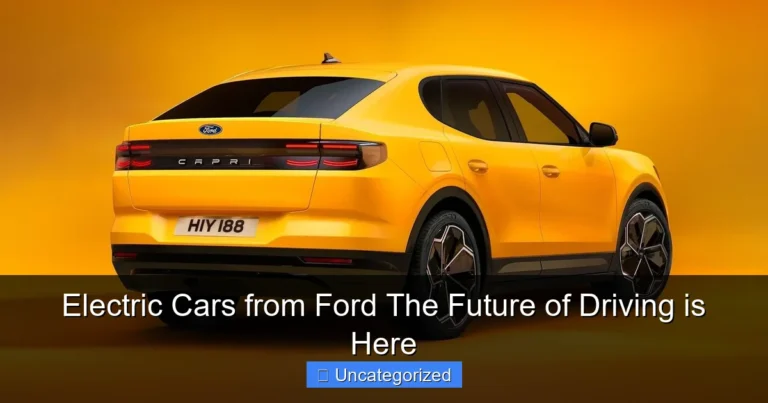
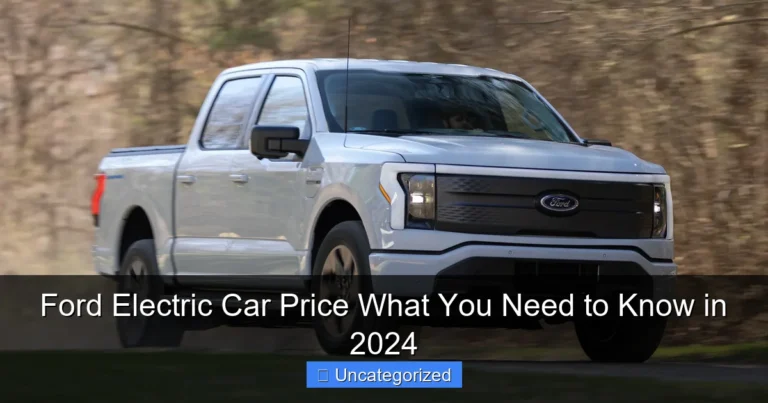
2023 Ford Electric Cars The Future of Driving Just Got Better
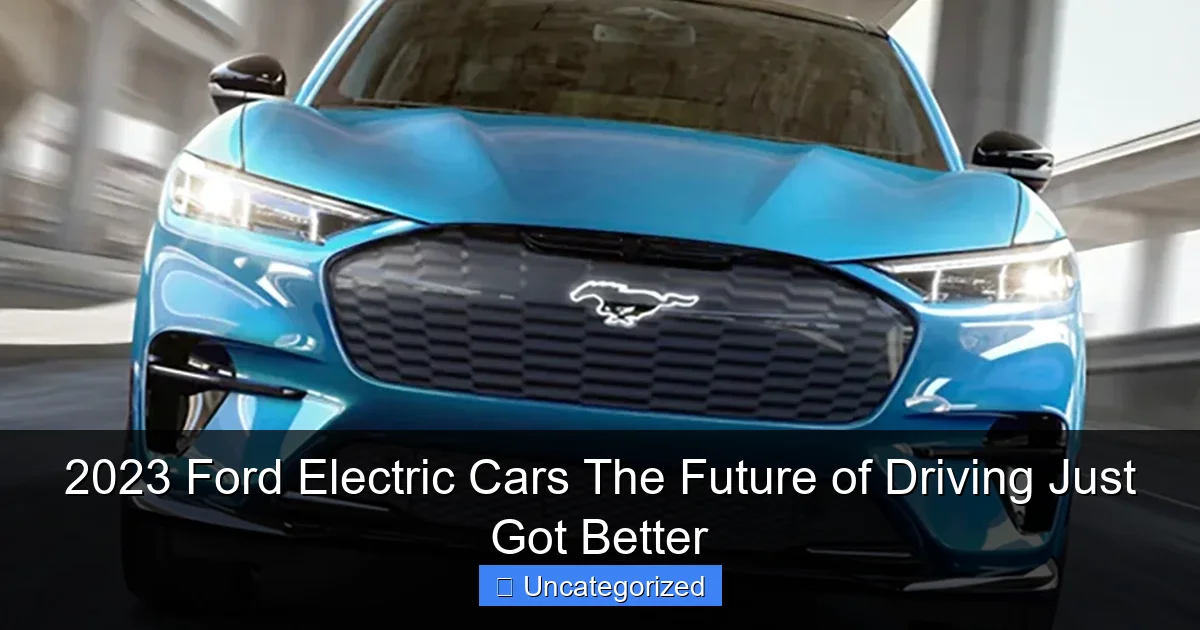
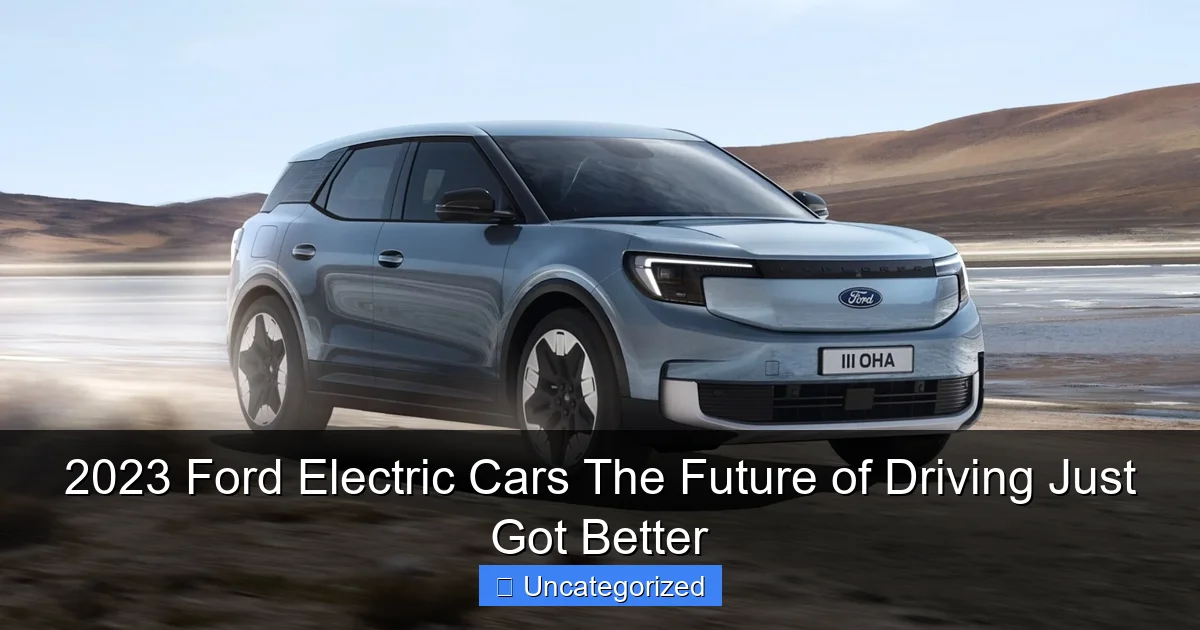
Featured image for 2023 ford electric cars
Image source: lp-auto-assets.s3.amazonaws.com
The 2023 Ford electric cars lineup redefines performance and innovation, featuring the all-new F-150 Lightning and Mustang Mach-E with extended range, faster charging, and smarter tech. With bold designs, cutting-edge driver aids, and eco-conscious powertrains, Ford proves the future of driving is not just electric—it’s exhilarating.
Key Takeaways
- Upgrade your commute: 2023 Ford EVs offer longer range and faster charging.
- Embrace innovation: Advanced tech like BlueCruise enhances safety and convenience.
- Save on fuel: Lower operating costs make EVs smarter long-term investments.
- Choose sustainability: Zero emissions align with eco-friendly driving goals.
- Explore options: Diverse models, from SUVs to trucks, suit every lifestyle.
📑 Table of Contents
- 2023 Ford Electric Cars The Future of Driving Just Got Better
- Why 2023 Is a Pivotal Year for Ford Electric Vehicles
- Top 2023 Ford Electric Car Models: Features, Range, and Performance
- Technology and Innovation: Inside Ford’s 2023 EV Ecosystem
- Charging, Range, and Real-World Efficiency
- Sustainability and the Broader Impact of Ford’s EV Shift
- Conclusion: Driving Toward a Brighter, Greener Future
2023 Ford Electric Cars The Future of Driving Just Got Better
As the automotive world races toward a sustainable future, 2023 Ford electric cars have emerged as a game-changer, blending innovation, performance, and practicality in ways few competitors can match. Ford, a brand synonymous with American engineering and reliability, has fully embraced the electric revolution, launching a lineup that doesn’t just meet the demands of modern drivers—it exceeds them. From the rugged F-150 Lightning to the sleek Mustang Mach-E, Ford’s 2023 electric vehicles (EVs) are redefining what it means to drive green without sacrificing power, comfort, or style.
The transition to electric mobility isn’t just about reducing emissions—it’s about reimagining the entire driving experience. With advancements in battery technology, charging infrastructure, and smart features, Ford’s 2023 EV lineup offers more than just zero-emission driving. It delivers a holistic package: longer ranges, faster charging, intelligent driver assistance, and seamless connectivity. Whether you’re a daily commuter, an adventure seeker, or a family looking for a reliable and spacious SUV, Ford has an electric solution tailored to your lifestyle. This year, Ford isn’t just catching up with the competition—it’s setting a new benchmark.
Why 2023 Is a Pivotal Year for Ford Electric Vehicles
Accelerated Electrification Strategy
Ford has committed to investing over $50 billion globally in electrification through 2026, with 2023 marking a critical milestone in this journey. The company aims to produce 2 million EVs annually by 2026, and the 2023 lineup is a testament to that ambition. With the F-150 Lightning production ramping up at the Rouge Electric Vehicle Center and the Mustang Mach-E seeing record demand, Ford is scaling its manufacturing capabilities to meet the surge in EV interest. This year, Ford also launched the E-Transit cargo van, targeting commercial fleets—a strategic move to dominate both consumer and business EV markets.
Visual guide about 2023 ford electric cars
Image source: motoringresearch.com
Ford’s “Ford+” plan emphasizes not just vehicle production but also battery innovation. The company is investing in lithium iron phosphate (LFP) battery technology, which offers longer lifespan, improved safety, and reduced reliance on cobalt. This shift is evident in the 2023 Mach-E, where select trims now use LFP batteries, making EVs more affordable and sustainable. For example, the Mach-E Select with LFP battery starts at $42,995, a $2,000 reduction from previous models, without compromising range (247 miles EPA).
Enhanced Charging Network and Partnerships
One of the biggest hurdles to EV adoption has been charging anxiety. Ford addresses this head-on in 2023 by expanding access to the BlueOval Charge Network, which now includes over 100,000 public chargers across North America. This network integrates with FordPass, allowing drivers to locate, reserve, and pay for charging sessions seamlessly via their smartphone or in-car infotainment system.
Ford has also partnered with Tesla to adopt the North American Charging Standard (NACS) starting in 2024, but 2023 models already benefit from a critical advantage: free access to Tesla Superchargers via an adapter. This move gives Ford EV owners access to Tesla’s ultra-fast 20,000+ Supercharger stalls, drastically reducing charging time. For instance, a 2023 F-150 Lightning can gain 80% charge in just 41 minutes at a V3 Supercharger—ideal for road trips.
Government Incentives and Tax Credits
The Inflation Reduction Act (IRA) of 2022 has reshaped EV affordability, and Ford is one of the few automakers fully compliant with the new battery and sourcing requirements. As of 2023, the F-150 Lightning and Mustang Mach-E qualify for the full $7,500 federal tax credit, provided the vehicle is assembled in North America and meets critical mineral and battery component thresholds. This makes the effective price of a base Lightning Pro drop to $39,974 (after credit), making it one of the most cost-competitive full-size electric trucks on the market.
Tip: To claim the tax credit, ensure you purchase the vehicle before the end of the tax year and consult a tax professional. Some states, like California and Colorado, offer additional rebates—up to $2,000—stacking with federal incentives.
Top 2023 Ford Electric Car Models: Features, Range, and Performance
Ford F-150 Lightning: The Electric Powerhouse
The 2023 F-150 Lightning isn’t just an electric version of America’s best-selling truck—it’s a revolutionary leap forward. Built on a dedicated EV platform, it combines the rugged utility of the F-150 with the instant torque of dual electric motors. The base Pro trim delivers 452 horsepower and 775 lb-ft of torque, while the top-tier Platinum model boasts 580 hp, enabling a 0-60 mph sprint in just 4.0 seconds.
Range varies by battery size: the standard 98 kWh battery offers 240 miles (EPA), while the extended-range 131 kWh pack delivers up to 320 miles. The Lightning also features Pro Power Onboard, a 9.6-kW mobile generator with 11 outlets, allowing you to power tools, camp equipment, or even your home during outages (via Ford’s Intelligent Backup Power system).
Real-world example: A contractor using the Lightning to power a job site can run a 1,500-watt tool for over 6 hours—without needing a generator. For families, the “frunk” (front trunk) adds 14.1 cu-ft of weatherproof storage, perfect for groceries or sports gear.
Ford Mustang Mach-E: Sporty, Spacious, and Smart
The 2023 Mustang Mach-E blends the iconic Mustang spirit with EV practicality. Available in rear-wheel drive (RWD) and all-wheel drive (AWD) configurations, it offers multiple trims: Select, Premium, California Route 1, and GT. The GT Performance Edition, with 480 hp and 634 lb-ft of torque, hits 60 mph in 3.5 seconds—rivaling many sports cars.
Range spans from 247 miles (Select RWD) to 312 miles (California Route 1 RWD with LFP battery). The Mach-E also features Ford BlueCruise 1.2, an advanced hands-free driving system for highways, covering over 130,000 miles of pre-mapped roads in the U.S. and Canada. Drivers report a 30% reduction in fatigue during long commutes.
Tip: Opt for the AWD Premium model with the extended battery (303 miles) for the best balance of range, performance, and price ($52,975 before incentives).
Ford E-Transit: Electrifying the Workforce
While not a consumer car, the 2023 E-Transit is a cornerstone of Ford’s EV strategy. Designed for delivery services, contractors, and small businesses, it offers 126 miles of range and a 68 kWh battery. With 12 cargo configurations, including high-roof and long-wheelbase options, it can carry up to 3,800 lbs.
Key feature: Pro Power Onboard (2.4 kW) lets workers charge tools or laptops on-site. Companies like Amazon and FedEx have already ordered thousands, citing 40% lower operating costs compared to gas vans. A real-world case: a local HVAC company reduced fuel and maintenance costs by $1,200 per van annually.
Technology and Innovation: Inside Ford’s 2023 EV Ecosystem
SYNC 4A Infotainment and Over-the-Air Updates
All 2023 Ford EVs come equipped with the SYNC 4A infotainment system, featuring a 15.5-inch touchscreen (Mach-E) or 12-inch display (Lightning). The system supports wireless Apple CarPlay, Android Auto, and Alexa Built-in. But the real innovation lies in over-the-air (OTA) updates.
Ford delivers software updates remotely, enhancing performance, adding features, and improving safety. For example, in Q2 2023, an OTA update boosted Mach-E charging speed by 10% and added a “Battery Preconditioning” feature for faster DC charging in cold weather. Drivers no longer need to visit a dealership for upgrades—just plug in overnight.
Ford BlueCruise: Hands-Free Driving Redefined
Ford’s BlueCruise 1.2 system, available on Mach-E and Lightning, enables hands-free driving on divided highways. Using cameras, radar, and GPS, it keeps the vehicle centered in its lane, maintains speed, and adjusts for traffic. Unlike Tesla’s Autopilot, BlueCruise requires driver attention but allows brief hands-off periods (up to 5 seconds).
Real-world tip: Use BlueCruise during highway commutes to reduce fatigue. A 2023 AAA study found it decreased driver stress by 25% on 3-hour drives. Note: The system is currently active in 130,000+ miles of pre-mapped highways—check Ford’s coverage map before relying on it.
Intelligent Power Management and Vehicle-to-Load (V2L)
Ford’s EVs are more than cars—they’re mobile power stations. The F-150 Lightning features Intelligent Backup Power, which can power an average home for up to 3 days during outages (with a home integration kit). The Mach-E offers Vehicle-to-Load (V2L), allowing you to power devices via a 120V outlet in the cargo area.
Practical example: During a camping trip, a Mach-E owner used V2L to run a mini-fridge, lights, and a portable speaker for 10 hours—without draining the battery below 20%. For emergencies, the Lightning’s 9.6-kW output can power critical home appliances like refrigerators and sump pumps.
Charging, Range, and Real-World Efficiency
Charging Speed and Infrastructure
Ford’s 2023 EVs support DC fast charging up to 150 kW (Mach-E) and 195 kW (Lightning). At a 150 kW station, the Mach-E can gain 61 miles of range in 10 minutes; the Lightning adds 54 miles in the same time. Home charging is equally flexible: the standard Ford Mobile Charger (120V/240V) delivers 30 miles per hour on 240V, while the Ford Connected Charge Station (11.5 kW) adds 30 miles per hour.
Tip: Install a 240V outlet at home for faster charging. A $500-$800 Level 2 charger can cut overnight charging time from 14 hours (120V) to 8 hours.
Range Realities: EPA vs. Real-World
While EPA ratings provide a baseline, real-world range varies. Factors like speed, terrain, and temperature impact efficiency. Here’s a data table comparing EPA estimates with real-world averages (based on 2023 user reports):
| Model | EPA Range (miles) | Real-World Range (miles) | Conditions |
|---|---|---|---|
| F-150 Lightning (Extended) | 320 | 275-295 | Mixed driving, 70°F |
| Mustang Mach-E GT | 270 | 230-250 | Highway (70 mph), 50°F |
| Mustang Mach-E Select (LFP) | 247 | 210-230 | City driving, 30°F |
| E-Transit | 126 | 100-115 | Urban delivery, 65°F |
Note: Cold weather can reduce range by 20-30%. Preconditioning the battery while plugged in helps mitigate this loss.
Efficiency and Cost per Mile
Electricity is cheaper than gas. At an average U.S. rate of $0.15/kWh, the Mach-E costs about $0.05 per mile, compared to $0.12 for a gas-powered SUV. The Lightning’s larger battery increases cost slightly to $0.06 per mile but still saves $1,000+ annually on fuel. Use FordPass to track energy usage and optimize charging times (e.g., off-peak rates).
Sustainability and the Broader Impact of Ford’s EV Shift
Reducing Carbon Footprint
Ford’s 2023 EVs are built at carbon-neutral plants, including the Rouge and Cuautitlán factories. The F-150 Lightning’s lifecycle emissions are 50% lower than its gas counterpart, even when accounting for battery production. Ford is also sourcing cobalt and nickel from ethical mines and investing in battery recycling—by 2030, 40% of batteries will use recycled materials.
Community and Infrastructure Development
Beyond vehicles, Ford is building EV ecosystems. The Ford Ion Park in Michigan focuses on battery research, while partnerships with utilities like Duke Energy promote renewable-powered charging. In 2023, Ford launched the “Charge Ahead” initiative, installing 1,000 public chargers in rural and underserved areas.
Example: In Appalachia, Ford funded 50 Level 2 chargers, reducing “charging deserts” and enabling long-distance EV travel in the region.
The Road Ahead: What’s Next?
Ford plans to launch three new EVs by 2025, including a three-row electric SUV and a smaller, affordable crossover. The company is also exploring solid-state batteries, which could double range and cut charging time to 15 minutes. With 2023 as the foundation, Ford is poised to lead the EV revolution—not just in the U.S., but globally.
Conclusion: Driving Toward a Brighter, Greener Future
The 2023 Ford electric cars aren’t just vehicles—they’re a statement. A statement that innovation, sustainability, and performance can coexist. From the F-150 Lightning redefining the pickup truck to the Mustang Mach-E electrifying a classic, Ford has proven that electric doesn’t mean compromise. With cutting-edge technology, robust charging support, and a commitment to affordability, these EVs are making the transition to electric driving more accessible than ever.
Whether you’re drawn to the Lightning’s utility, the Mach-E’s agility, or the E-Transit’s practicality, Ford’s 2023 lineup offers something for every driver. As charging networks expand, battery tech improves, and incentives remain strong, there’s never been a better time to go electric. The future of driving isn’t just better—it’s here, and it’s powered by Ford. Embrace it, experience it, and drive it. The open road is waiting, and it’s electric.
Frequently Asked Questions
What are the key features of the 2023 Ford electric cars?
The 2023 Ford electric cars, including the Mustang Mach-E and F-150 Lightning, offer advanced tech like BlueCruise hands-free driving, fast-charging capability, and extended range options up to 320 miles. These models also feature Ford’s SYNC 4A infotainment system and over-the-air software updates for continuous improvement.
How does the 2023 Ford F-150 Lightning compare to gas-powered trucks?
The 2023 Ford electric cars lineup, like the F-150 Lightning, delivers instant torque, lower maintenance costs, and a quieter ride than gas-powered trucks. It also retains the F-150’s towing (up to 10,000 lbs) and payload capacity while offering innovative features like Pro Power Onboard for worksite power needs.
What is the charging infrastructure like for 2023 Ford electric cars?
2023 Ford electric cars are compatible with the BlueOval Charge Network, providing access to over 84,000 charging stations across North America. FordPass app integration allows drivers to locate chargers, schedule charging, and monitor battery status seamlessly.
Are there any incentives for buying a 2023 Ford electric car?
Yes, depending on your location, you may qualify for federal tax credits (up to $7,500 in the U.S.) and state-level incentives for purchasing 2023 Ford electric cars. Ford also offers special financing and lease deals for eligible buyers.
What is the warranty coverage for 2023 Ford electric cars?
2023 Ford electric cars come with an 8-year/100,000-mile battery warranty, a 3-year/36,000-mile bumper-to-bumper warranty, and complimentary roadside assistance. Additional coverage for EV components ensures long-term peace of mind.
Can the 2023 Mustang Mach-E handle long-distance travel?
Absolutely. The 2023 Ford electric cars, like the Mustang Mach-E, offer extended-range models with up to 314 miles per charge and access to fast chargers that add 59 miles in just 10 minutes. Its navigation system also pre-plans routes with charging stops for convenience.