All Ford Electric Cars Reviewed The Complete Guide to Fords EV Lineup
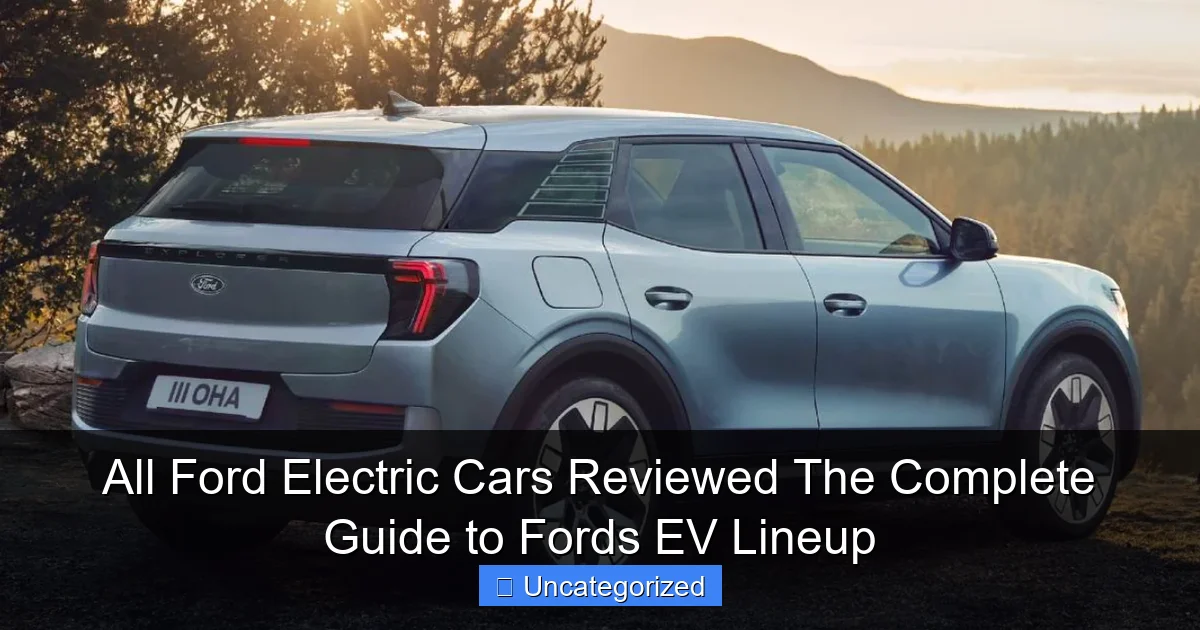
Featured image for all ford electric cars
Image source: fordusamodel.com
Ford’s electric vehicle lineup delivers rugged performance, cutting-edge tech, and versatile options for every driver, from the sporty Mustang Mach-E to the work-ready F-150 Lightning and the nimble E-Transit van. With impressive range, fast-charging capabilities, and innovative features like Pro Power Onboard, Ford’s EVs prove the brand is fully committed to dominating the electric future.
Key Takeaways
- Ford offers 5 EVs from trucks to SUVs for diverse needs.
- F-150 Lightning excels with 320-mile range and work-ready features.
- Mustang Mach-E delivers sporty performance and up to 314-mile range.
- E-Transit van suits businesses with 159-mile range and cargo space.
- BlueCruise hands-free driving available on most models for safer trips.
- Charging network access includes 10,000+ stations via FordPass app.
- Federal tax credits apply to select models—check eligibility before buying.
📑 Table of Contents
- Introduction to Ford’s Electric Revolution
- Ford Mustang Mach-E: The Electric Pony Car
- Ford F-150 Lightning: The Electric Workhorse
- Ford E-Transit: Electrifying Commercial Fleets
- Upcoming Ford EVs: What’s on the Horizon
- Charging, Ownership, and Sustainability
- Comparison Table: Ford’s Current EV Lineup
- Conclusion: Why Ford’s EV Lineup Stands Out
Introduction to Ford’s Electric Revolution
The automotive landscape is shifting at an unprecedented pace, and Ford Motor Company stands at the forefront of this transformation. Once synonymous with gas-guzzling muscle cars and rugged pickup trucks, the iconic American automaker has embraced the electric future with a bold and ambitious vision. With a commitment to invest over $50 billion in electric vehicle (EV) development through 2026, Ford is not just adapting to the EV era—it’s redefining it. From reimagining legendary nameplates like the Mustang and F-150 as zero-emission powerhouses to launching entirely new platforms, Ford’s electric vehicle lineup represents a seismic shift in how we think about performance, utility, and sustainability.
Ford’s EV journey is more than a product strategy; it’s a cultural and technological reinvention. The company aims to produce 2 million EVs annually by 2026, a goal backed by the construction of massive battery plants and the development of next-generation platforms like the Global Electrification Platform (GEP) and the Skateboard platform for commercial vehicles. But beyond the numbers, Ford’s electric vehicles deliver real-world benefits: lower operating costs, exhilarating acceleration, advanced tech integration, and a reduced carbon footprint. Whether you’re a daily commuter, an adventure seeker, or a fleet manager, Ford’s EV lineup offers a compelling mix of innovation and heritage. This guide dives deep into every Ford electric car currently available and on the horizon, offering insights to help you choose the right model for your lifestyle and needs.
Ford Mustang Mach-E: The Electric Pony Car
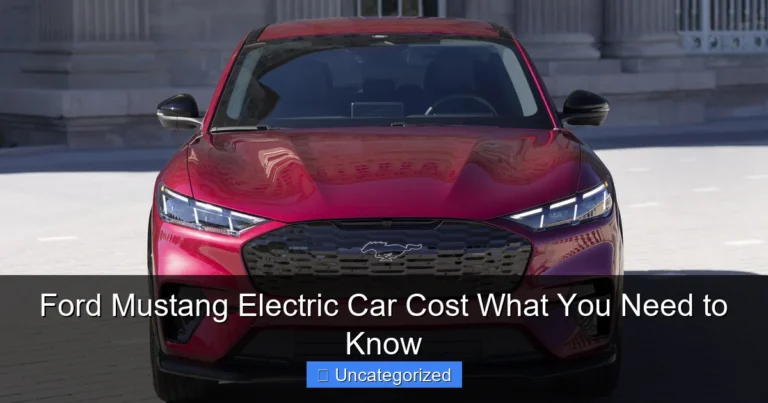
The Ford Mustang Mach-E is more than just an electric SUV—it’s a statement. When Ford unveiled the Mach-E in 2019, purists raised eyebrows at the idea of a Mustang without a V8 engine. But Ford silenced the critics with a vehicle that blends the Mustang’s sporty DNA with the practicality of an SUV and the efficiency of an EV. The Mach-E is Ford’s first dedicated electric vehicle built from the ground up, and it’s a game-changer in the compact electric SUV segment.
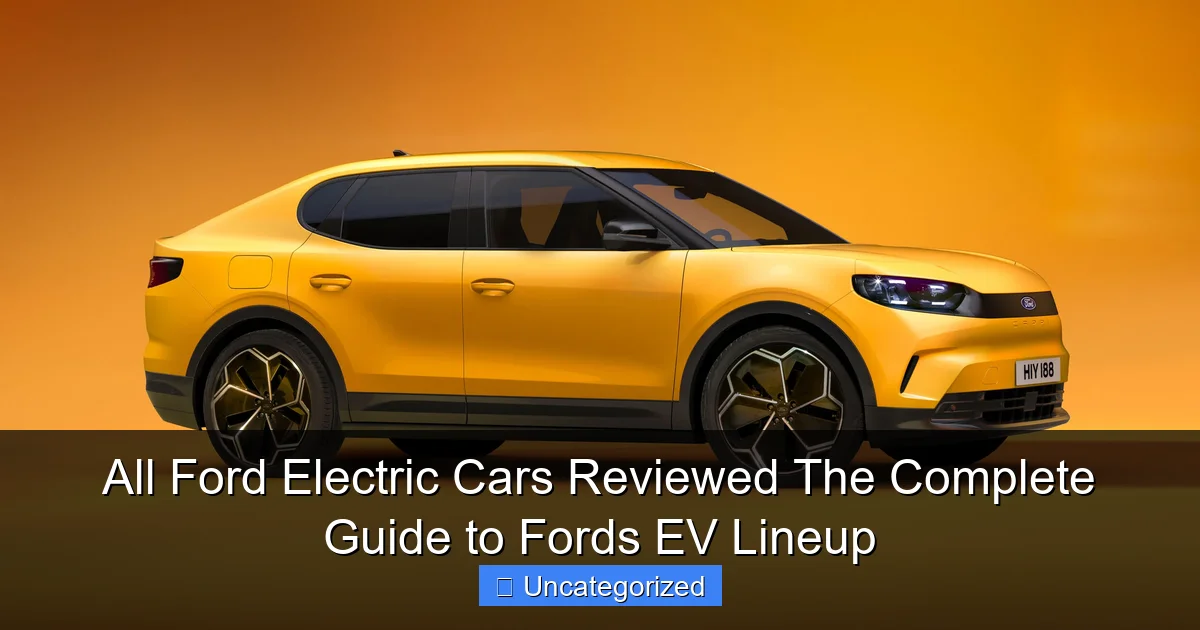
Visual guide about all ford electric cars
Image source: topgear.com
Design and Performance
The Mach-E’s design is instantly recognizable, borrowing cues from the Mustang coupe—like the tri-bar taillights, aggressive grille (or grille-delete), and fastback roofline. But it’s the performance that truly sets it apart. The lineup includes several trims:
- Select: Standard Range (247–270 miles), RWD or AWD, 266 hp (RWD), 428 hp (AWD)
- Premium: Same range as Select, but with upgraded interior, B&O audio, and ambient lighting
- California Route 1: Extended Range (314 miles), RWD only, 346 hp—ideal for long-distance drivers
- GT: Performance-focused with 480 hp (up to 634 lb-ft torque), 0–60 mph in 3.5 seconds, and 270-mile range
- GT Performance Edition: 480 hp, MagneRide suspension, 20-inch wheels, and 0–60 mph in 3.3 seconds
One standout feature is the one-pedal driving mode, which uses strong regenerative braking to recapture energy and reduce wear on friction brakes. This is especially useful in city driving or stop-and-go traffic.
Interior and Technology
Inside, the Mach-E feels premium and futuristic. A massive 15.5-inch vertical touchscreen dominates the dashboard, running Ford’s SYNC 4A system with over-the-air updates, Apple CarPlay, Android Auto, and built-in Alexa. The digital instrument cluster is customizable, and the cabin offers ample legroom and cargo space (29.7 cu ft behind rear seats, 59.7 cu ft max).
Ford also includes FordPass Connect, which allows remote start, climate control, and charging status monitoring via smartphone. The Mach-E supports DC fast charging, adding up to 61 miles of range in just 10 minutes with a 150 kW charger.
Real-World Tips
For daily commuters, the California Route 1 trim offers the best balance of range and efficiency. If you prioritize performance, the GT is a thrill ride—but expect slightly reduced range. Tip: Use the FordPass Charging Network to locate and pay for charging stations across the U.S., including Electrify America and ChargePoint locations.
Ford F-150 Lightning: The Electric Workhorse
The Ford F-150 Lightning isn’t just the first electric F-150—it’s a reimagining of the best-selling vehicle in America for over 40 years. Built on the same platform as the gas-powered F-150, the Lightning retains the rugged utility and towing prowess of its predecessor while adding instant torque, quiet operation, and innovative features that make it a true 21st-century truck.
Powertrain and Range
The F-150 Lightning comes in two battery options:
- Standard Range: 240-mile EPA range, 452 hp, 775 lb-ft torque
- Extended Range: 320-mile EPA range, 580 hp, 775 lb-ft torque
Both versions feature dual-motor all-wheel drive and a towing capacity of up to 10,000 lbs (Extended Range with Max Trailer Tow Package). The Lightning can accelerate from 0–60 mph in under 4.5 seconds (Extended Range), making it one of the quickest full-size trucks on the market.
Innovation: The Mega Power Frunk and Pro Power Onboard
One of the Lightning’s most talked-about features is the Mega Power Frunk—a massive 14.1 cu ft front trunk (frunk) that’s lockable, drainable, and even includes a power outlet. It’s perfect for storing tools, groceries, or outdoor gear without cluttering the cab.
Even more revolutionary is the Pro Power Onboard system, which turns the truck into a mobile generator. The Standard Range offers 2.4 kW of power (enough for tools or small appliances), while the Extended Range delivers 9.6 kW—capable of running a home for up to three days during a power outage when paired with a Ford Intelligent Backup Power system (sold separately).
Worksite and Lifestyle Use
For contractors, the Lightning is a game-changer. With 2,000 lbs of payload capacity, it can haul heavy loads while offering silent, emission-free operation on job sites. The Workplace Mode in the infotainment system provides job site checklists, weather updates, and navigation to supply stores.
For families, the Lightning offers a spacious cabin with available Max Recline seats, a panoramic sunroof, and Ford Co-Pilot360 Active 2.0 (with BlueCruise hands-free highway driving). Tip: If you plan to use Pro Power Onboard at home, install a transfer switch to safely integrate with your home’s electrical system.
Ford E-Transit: Electrifying Commercial Fleets
While passenger EVs dominate headlines, Ford’s E-Transit is quietly revolutionizing the commercial vehicle segment. As one of the first electric full-size vans, the E-Transit is designed for delivery services, tradespeople, and fleet operators seeking lower operating costs and zero tailpipe emissions.
Configurations and Range
The E-Transit is available in three roof heights, three body lengths, and three trim levels (Cargo, Cutaway, Chassis Cab). All models use a 68 kWh battery and a single rear-mounted electric motor producing 266 hp and 317 lb-ft of torque. The EPA-estimated range is 126 miles—ideal for urban delivery routes where daily mileage is predictable.
Ford offers over 20 configurations, ensuring the E-Transit can be tailored to specific needs—from refrigerated delivery vans to mobile workshops.
Fleet Management and Charging
For businesses, the E-Transit integrates seamlessly with Ford Pro Intelligence, a suite of software tools that includes:
- Vehicle health monitoring
- Remote diagnostics
- Charging station mapping
- Energy usage analytics
The van supports DC fast charging (115 kW), adding up to 45 miles of range in 15 minutes. For overnight charging, Level 2 (240V) is standard. Tip: Use Ford Pro Charging to set up a depot charging solution with load management to avoid utility spikes during peak hours.
Real-World Example
UPS has ordered 10,000 E-Transit vans for its U.S. delivery fleet. The company reports a 40% reduction in fuel and maintenance costs compared to diesel vans. For small businesses, the E-Transit offers a 3-year/36,000-mile warranty and a 8-year/100,000-mile battery warranty—providing peace of mind for long-term ownership.
Upcoming Ford EVs: What’s on the Horizon
Ford’s EV ambitions don’t stop at the Mach-E, Lightning, and E-Transit. The company has several upcoming models that will expand its lineup into new segments and price points, all built on next-generation platforms designed for scalability and efficiency.
Ford Explorer EV (2025)
Slated for a 2025 launch, the Explorer EV will be Ford’s first electric three-row SUV. Built on the Global Electrification Platform (GEP), it’s expected to offer:
- 300+ miles of range
- Available all-wheel drive
- Seating for seven
- Advanced driver-assist features
Targeted at families and SUV enthusiasts, the Explorer EV will compete with the Tesla Model Y and Hyundai Ioniq 7. Early prototypes suggest a sleek, modern design with a focus on aerodynamics and interior space.
Ford Expedition EV (2026)
Following the Explorer EV, Ford plans to electrify its largest SUV. The Expedition EV will likely feature:
- Extended range (350+ miles)
- High towing capacity (up to 12,000 lbs)
- Premium interior with massaging seats and rear entertainment
This model will appeal to luxury buyers and outdoor adventurers, offering the space and capability of the gas-powered Expedition with zero emissions.
Affordable Compact EV (2026–2027)
Ford is developing a sub-$30,000 compact EV to compete with the Chevrolet Bolt and upcoming Tesla Model 2. Built on a new low-cost platform, it will target urban drivers and first-time EV buyers. While details are scarce, Ford CEO Jim Farley has confirmed it will use lithium-iron-phosphate (LFP) batteries for improved safety and longevity.
Skateboard Platform for Commercial Vehicles
Beyond passenger cars, Ford is investing in a skateboard platform for electric delivery vans and medium-duty trucks. This modular design places batteries and motors under the floor, maximizing cargo space and simplifying manufacturing. Expect new E-Transit variants and a potential electric F-650/F-750 in the coming years.
Charging, Ownership, and Sustainability
Owning a Ford EV isn’t just about the vehicle—it’s about the entire ecosystem. From charging infrastructure to maintenance and sustainability, Ford has built a comprehensive support system to make the transition to electric as seamless as possible.
Charging Solutions
Ford offers multiple charging options:
- Home Charging: The Ford Connected Charge Station (Level 2, 11.5 kW) can be installed in your garage. It supports scheduling, usage tracking, and integration with solar panels.
- Public Charging: FordPass Charging Network provides access to over 84,000 stations across the U.S. and Canada, including 1,500+ DC fast chargers.
- BlueOval Charge Network: A collaboration with Electrify America, EVgo, and ChargePoint, offering seamless payment and real-time station availability.
Tip: Use the FordPass app to locate chargers, start/stop sessions, and monitor charging progress remotely.
Maintenance and Costs
EVs have fewer moving parts than gas vehicles, resulting in lower maintenance costs. Ford estimates that Mach-E owners save $6,000 in fuel and maintenance over five years compared to a gas-powered SUV. Key savings include:
- No oil changes
- No transmission servicing
- Reduced brake wear (thanks to regenerative braking)
Ford also offers a 8-year/100,000-mile battery warranty and free scheduled maintenance for two years on select models.
Sustainability and Manufacturing
Ford is committed to carbon neutrality by 2050. Key initiatives include:
- Using recycled materials in EVs (e.g., Mach-E uses 25% recycled aluminum)
- Powering plants with renewable energy
- Recycling 95% of manufacturing waste
The Rouge Electric Vehicle Center in Michigan, where the F-150 Lightning is built, runs on 100% renewable energy.
Comparison Table: Ford’s Current EV Lineup
| Model | Starting Price | Range (EPA) | Power (HP) | 0–60 mph | Key Feature |
|---|---|---|---|---|---|
| Mustang Mach-E Select | $42,995 | 247–270 mi | 266–428 hp | 4.8–6.1 sec | SYNC 4A with 15.5″ screen |
| Mustang Mach-E GT | $59,995 | 270 mi | 480 hp | 3.3–3.5 sec | MagneRide adaptive suspension |
| F-150 Lightning Pro | $49,995 | 240–320 mi | 452–580 hp | 4.4–5.0 sec | Mega Power Frunk (14.1 cu ft) |
| F-150 Lightning Lariat | $69,995 | 320 mi | 580 hp | 4.4 sec | Pro Power Onboard (9.6 kW) |
| E-Transit Cargo Van | $51,995 | 126 mi | 266 hp | 6.5 sec | Ford Pro Intelligence |
Conclusion: Why Ford’s EV Lineup Stands Out
Ford’s electric vehicle lineup is a masterclass in balancing innovation with tradition. The Mustang Mach-E proves that performance and practicality can coexist. The F-150 Lightning redefines what a pickup truck can be—powerful, versatile, and intelligent. The E-Transit shows Ford’s commitment to electrifying not just personal vehicles, but entire industries. And with upcoming models like the Explorer EV and an affordable compact car, Ford is positioning itself as a leader in accessible electrification.
What sets Ford apart is its ecosystem. From the FordPass app to the BlueOval Charge Network, from Pro Power Onboard to fleet management tools, Ford doesn’t just sell EVs—it sells a complete ownership experience. Whether you’re a tech-savvy urbanite, a hardworking contractor, or a family seeking adventure, there’s a Ford EV that fits your life.
As the world moves toward a sustainable future, Ford isn’t just keeping pace—it’s setting the standard. With a legacy of innovation and a clear roadmap for the future, Ford’s electric vehicles aren’t just an alternative to gas cars. They’re the next chapter in American automotive excellence. So whether you’re ready to plug in today or planning for the future, Ford’s EV lineup offers performance, value, and a vision worth driving toward.
Frequently Asked Questions
What are the current models in Ford’s electric car lineup?
Ford’s current EV lineup includes the Mustang Mach-E, F-150 Lightning, and E-Transit van. These models cover SUVs, trucks, and commercial vehicles, showcasing Ford’s commitment to electrifying its most iconic nameplates.
How does the Mustang Mach-E compare to other electric SUVs?
The Mustang Mach-E stands out with its sporty design, up to 314 miles of range, and performance-focused GT trim. It competes directly with the Tesla Model Y and Hyundai Ioniq 5, offering a balance of driving dynamics and practicality.
What is the range of the Ford F-150 Lightning, and can it power a home?
The F-150 Lightning offers up to 320 miles of range (Extended Range model) and features Ford’s Intelligent Backup Power system, allowing it to power a home for days during outages. This makes it one of the most versatile all Ford electric cars for both work and emergencies.
Are Ford electric vehicles eligible for federal tax credits?
Yes, as of 2024, the Mustang Mach-E and F-150 Lightning qualify for up to $7,500 in federal tax credits, depending on battery and assembly criteria. The E-Transit may also qualify for commercial EV incentives.
How long does it take to charge a Ford EV?
Charging times vary by model and charger type: the Mach-E can gain 59 miles in 10 minutes with DC fast charging, while the F-150 Lightning charges from 15% to 80% in about 40 minutes. Level 2 charging (240V) typically takes 8-12 hours for a full charge.
What warranty coverage comes with Ford’s electric cars?
All all Ford electric cars come with an 8-year/100,000-mile battery warranty and a 3-year/36,000-mile bumper-to-bumper warranty. Additional perks include complimentary roadside assistance and EV-specific maintenance coverage.