Are Ford Making Electric Cars The Future of Driving
Featured image for are ford making electric cars
Image source: i.ytimg.com
Ford is aggressively investing in electric vehicles (EVs), signaling a major shift toward electrification as the future of driving. With plans to launch multiple new EV models, including the popular F-150 Lightning, Ford aims to compete head-on with Tesla and other industry leaders. This bold move reflects their commitment to innovation, sustainability, and capturing a significant share of the rapidly growing EV market.
Key Takeaways
- Ford is investing $50B+ in EVs through 2026, signaling long-term commitment.
- Mustang Mach-E and F-150 Lightning prove Ford’s EV lineup is expanding fast.
- New battery plants aim to cut costs and boost production capacity.
- Over-the-air updates enhance vehicle performance and user experience post-purchase.
- Ford aims for 50% EV sales by 2030, aligning with global electrification trends.
- Charging partnerships simplify access to 10,000+ fast chargers in North America.
📑 Table of Contents
- Are Ford Making Electric Cars The Future of Driving?
- The Evolution of Ford’s Electric Vehicle Strategy
- Ford’s Electric Vehicle Lineup: Models That Define the Future
- Ford’s Battery and Charging Infrastructure: Powering the EV Revolution
- How Ford’s EVs Compare to Competitors
- Challenges and Opportunities in Ford’s Electric Future
- Conclusion: Ford’s Electric Cars Are Here to Stay
Are Ford Making Electric Cars The Future of Driving?
The automotive landscape is undergoing a seismic shift, and at the forefront of this revolution stands Ford, an iconic American automaker with over a century of history. As the world pivots toward sustainable transportation, the question on everyone’s mind is: Are Ford making electric cars the future of driving? The answer, resoundingly, is yes. Ford has committed billions of dollars to electrify its lineup, signaling a bold departure from its gas-powered roots and a leap into a cleaner, smarter, and more connected era of mobility.
With climate change concerns escalating and governments worldwide tightening emissions regulations, automakers are racing to electrify. Ford isn’t just joining the race—it’s aiming to lead it. The company’s Ford+ Plan outlines a vision for a fully electric future, with a target of achieving carbon neutrality by 2050 and 40–50% global sales from electric vehicles (EVs) by 2030. This isn’t just about building electric cars; it’s about redefining what Ford stands for in the 21st century. From the rugged F-150 Lightning to the sleek Mustang Mach-E, Ford is proving that electric doesn’t mean sacrificing power, performance, or practicality.
The Evolution of Ford’s Electric Vehicle Strategy
From Concept to Commitment
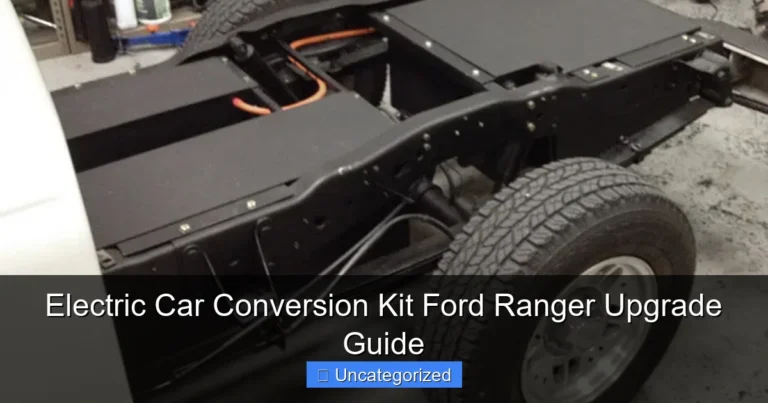
Ford’s journey into electrification began long before the current EV boom. In 1998, the company introduced the Ford Ranger EV, a battery-electric pickup that, while ahead of its time, was limited by range and infrastructure. Fast-forward to the 2010s, and Ford launched the Focus Electric and C-Max Energi, plug-in hybrids that tested the waters of consumer acceptance. These early models were modest steps, but they laid the groundwork for Ford’s aggressive pivot to full-scale EV production.
Visual guide about are ford making electric cars
Image source: i.ytimg.com
The real turning point came in 2021 with the launch of the Mustang Mach-E, a bold move that placed an electric SUV under the Mustang badge—a nameplate synonymous with American muscle. This wasn’t just a new car; it was a statement. Ford was willing to disrupt its own heritage to embrace the future. The Mach-E’s success, with over 27,000 units sold in its first year, proved that consumers were ready for electric vehicles from a legacy automaker.
The Ford+ Plan: A Blueprint for Electrification
Announced in 2021, the Ford+ Plan is the company’s roadmap to electrification. Key components include:
- $50 billion investment in EVs and batteries by 2026.
- Launch of 30+ new EVs globally by 2025, including 16 fully electric vehicles.
- Establishment of BlueOval SK, a joint venture with SK Innovation to build battery plants in Kentucky and Tennessee.
- Development of the Ford Ion Park, a research center dedicated to next-gen battery technology.
This strategy isn’t just about vehicles—it’s about infrastructure. Ford is investing in charging networks, battery recycling, and software platforms to create an ecosystem around its EVs. For example, the FordPass Charging Network gives drivers access to over 19,500 charging stations across the U.S., with plans to expand globally.
Ford’s Electric Vehicle Lineup: Models That Define the Future
Mustang Mach-E: Where Performance Meets Electrification
The Mustang Mach-E is Ford’s flagship EV, blending the spirit of the Mustang with modern SUV practicality. Available in multiple trims, including the high-performance Mach-E GT (480 hp, 0–60 mph in 3.5 seconds), this vehicle proves that electric doesn’t mean dull. With a range of up to 314 miles (EPA-estimated) and fast-charging capability (adding 61 miles in 10 minutes), the Mach-E is a viable option for long-distance travel.
Pro tip: For buyers prioritizing efficiency, the Select trim with the Extended Range battery offers the best value. Those craving speed should opt for the GT, but be prepared for a stiffer ride and slightly reduced range.
F-150 Lightning: The Electric Workhorse
The F-150 Lightning is perhaps Ford’s most ambitious EV project. As the electric version of America’s best-selling vehicle (the F-150), it’s designed to appeal to both contractors and everyday drivers. Key features include:
- 580 hp (in the Platinum trim).
- Up to 320 miles of range.
- 10,000 lbs towing capacity (with the Max Trailer Tow Package).
- Pro Power Onboard, which turns the truck into a mobile generator (up to 9.6 kW).
What sets the Lightning apart is its dual-purpose design. It’s a rugged work truck by day and a high-tech family hauler by night. For example, the “Frunk” (front trunk) offers 14.1 cubic feet of lockable storage—perfect for tools or groceries.
Ford E-Transit: Electrifying Commercial Fleets
Ford isn’t just targeting individual consumers; it’s electrifying businesses. The E-Transit is an all-electric version of the popular Transit van, aimed at delivery companies, tradespeople, and fleets. With a range of 126 miles (ideal for urban routes) and 265 lb-ft of torque, it’s a practical solution for reducing emissions in last-mile logistics.
Real-world example: Companies like UPS and FedEx have already placed bulk orders for the E-Transit, signaling confidence in Ford’s commercial EV strategy.
Upcoming Models: The Next Generation of Ford EVs
Ford has teased several upcoming EVs, including:
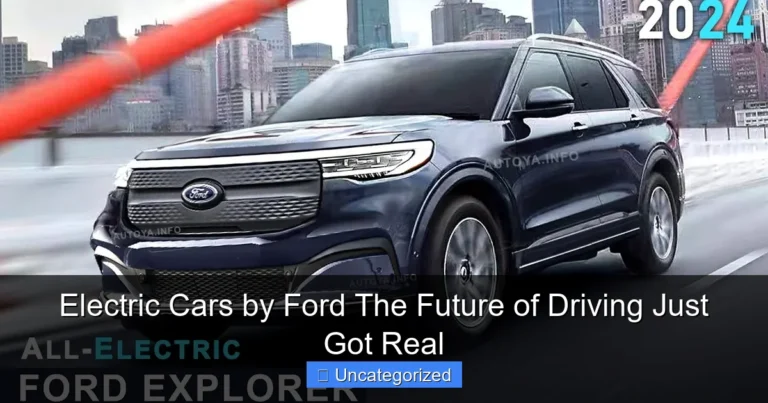
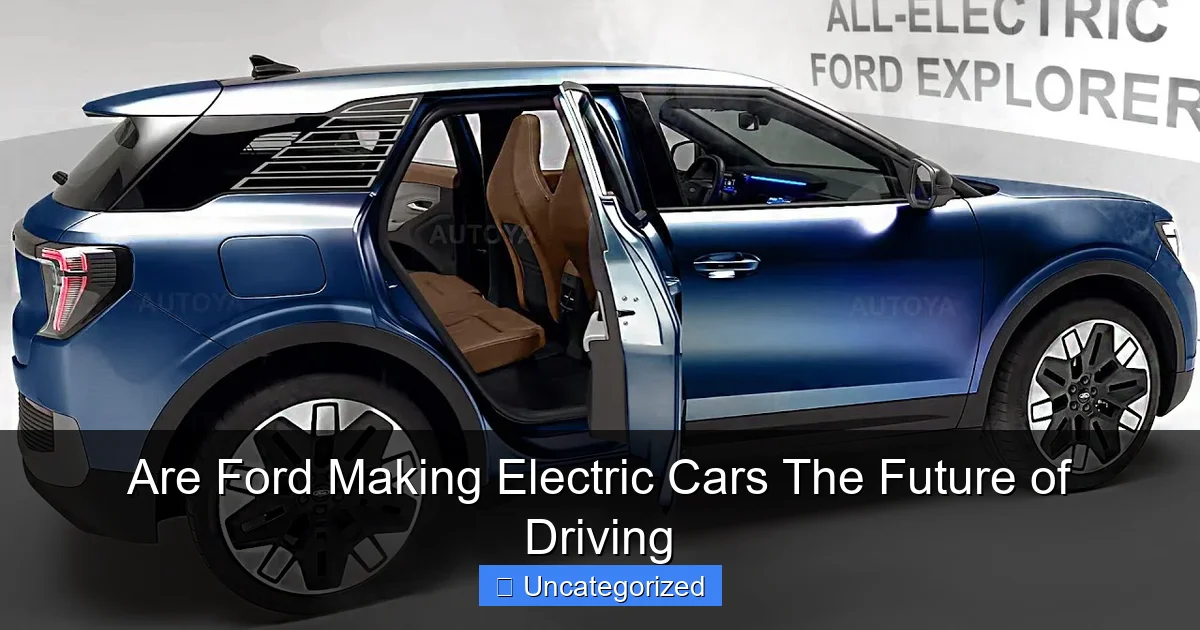
- Explorer Electric (a 7-seater SUV, expected in 2025).
- All-electric Puma (a compact SUV for Europe).
- Next-gen F-Series EVs (potentially including an electric F-250).
These models will leverage Ford’s Global Electrification Platform, a flexible architecture designed to reduce costs and speed up production.
Ford’s Battery and Charging Infrastructure: Powering the EV Revolution
Next-Generation Battery Technology
Battery innovation is central to Ford’s EV strategy. The company is investing in:
- Nickel Cobalt Manganese (NCM) batteries for high energy density (used in the Mach-E and Lightning).
- Lithium Iron Phosphate (LFP) batteries for cost-effective, longer-life options (coming in 2024).
- Solid-state battery research (through partnerships with companies like QuantumScape).
LFP batteries, in particular, could be a game-changer. They’re cheaper, safer, and have a longer lifespan, making them ideal for fleet vehicles and budget-conscious buyers.
Charging Solutions: From Home to Highway
Ford is addressing “range anxiety” with a multi-pronged approach:
- Ford Connected Charge Station: A 48-amp home charger ($799) that fully charges the Lightning overnight.
- FordPass Charging Network: Access to 19,500+ stations, including 1,300+ DC fast chargers.
- Plug & Charge: A feature that lets drivers plug in and automatically start charging (no app or card needed).
- BlueOval Charge Network: A partnership with Electrify America and others to expand fast-charging coverage.
Tip: For road trips, use the FordPass app to plan routes with charging stops. The app integrates with PlugShare to show real-time charger availability.
BlueOval SK: Building America’s Battery Future
Ford’s joint venture with SK Innovation, BlueOval SK, will build three battery plants in the U.S. by 2025:
- BlueOval SK Battery Park (Glendale, Kentucky) – 8,500 jobs, 43 GWh annual capacity.
- BlueOval City (Stanton, Tennessee) – 5,800 jobs, 43 GWh capacity.
- Third plant (TBD) – Location to be announced in 2024.
These plants will produce batteries for Ford and Lincoln EVs, reducing reliance on foreign suppliers and strengthening domestic supply chains.
How Ford’s EVs Compare to Competitors
Performance and Range: The Numbers Game
Let’s compare Ford’s key EVs to rivals in a head-to-head matchup:
| Model | Range (EPA) | 0–60 mph | Base Price | Competitor | Competitor Range |
|---|---|---|---|---|---|
| F-150 Lightning | 230–320 miles | 4.5 sec | $49,995 | Rivian R1T | 314 miles |
| Mustang Mach-E | 224–314 miles | 3.5 sec (GT) | $42,895 | Chevy Blazer EV | 293–320 miles |
| E-Transit | 126 miles | N/A | $43,295 | BrightDrop Zevo 600 | 250 miles |
While Ford’s EVs aren’t always the absolute leaders in range or speed, they strike a balance between performance, practicality, and price. For example, the Lightning offers more towing capacity than the Rivian R1T at a lower cost.
Technology and Features: The Ford Edge
Ford’s EVs stand out for their user-friendly tech:
- SYNC 4A: A responsive 15.5-inch touchscreen with over-the-air updates.
- Ford BlueCruise: A hands-free driving system (available on select models).
- Phone as a Key: Unlock and start your EV using your smartphone.
- FordPass App: Remote start, charging status, and vehicle diagnostics.
Compared to Tesla’s minimalist interface, Ford’s approach is more intuitive for first-time EV buyers. For instance, the Lightning’s 12-inch digital instrument cluster displays real-time energy usage, a feature many competitors lack.
Challenges and Opportunities in Ford’s Electric Future
Supply Chain and Production Hurdles
Ford’s EV ambitions face real-world challenges:
- Chip shortages: Delayed Lightning production in 2022–2023.
- Battery material costs: Rising prices of lithium and cobalt.
- Labor disputes: UAW strikes in 2023 impacted EV plant timelines.
To mitigate these, Ford is diversifying suppliers and investing in battery recycling (via Redwood Materials) to recover materials from old EVs.
Consumer Adoption: Overcoming Barriers
Despite progress, EV adoption isn’t universal. Ford is addressing key concerns:
- Range anxiety: By expanding the FordPass network.
- Upfront cost: Through federal tax credits (up to $7,500 for Lightning and Mach-E).
- Charging time: With fast-charging partnerships and home charger incentives.
Tip: Buyers in states like California or New York can stack state-level incentives (e.g., $2,000–$4,500) on top of federal credits.
The Road Ahead: Ford’s Vision for 2030 and Beyond
By 2030, Ford aims to:
- Be carbon neutral across its operations.
- Derive 40–50% of global sales from EVs.
- Launch autonomous EVs (through partnerships with Argo AI).
The company is also exploring vehicle-to-grid (V2G) technology, allowing EVs to power homes during outages (a feature already tested with the Lightning).
Conclusion: Ford’s Electric Cars Are Here to Stay
So, are Ford making electric cars the future of driving? The evidence is overwhelming. With a $50 billion investment, a diverse lineup of EVs, and a robust charging infrastructure, Ford isn’t just adapting to the electric era—it’s shaping it. From the Mustang Mach-E to the F-150 Lightning, these vehicles prove that electrification doesn’t mean sacrificing the performance, utility, or heritage that made Ford an American icon.
For consumers, Ford’s EVs offer a compelling mix of innovation and familiarity. The company’s focus on practicality (like the Lightning’s Frunk and Pro Power Onboard) and accessibility (through tax credits and charging networks) makes it a standout choice in a crowded market. While challenges remain—supply chains, material costs, and consumer adoption—Ford’s long-term vision is clear: a future where every Ford on the road is electric.
The road to 2030 and beyond will be transformative, but one thing is certain: Ford is no longer just an automaker. It’s a mobility company, and its electric vehicles are leading the charge toward a cleaner, smarter, and more exciting future of driving.
Frequently Asked Questions
Are Ford making electric cars for the mass market?
Yes, Ford is actively producing electric vehicles (EVs) for the mass market, including popular models like the Mustang Mach-E and F-150 Lightning. The company has committed to investing billions in electrification to make EVs more accessible.
What electric cars does Ford currently offer?
Ford’s current EV lineup includes the Mustang Mach-E (SUV), F-150 Lightning (pickup truck), and E-Transit (commercial van). These models highlight Ford’s push to electrify iconic vehicles while expanding into new segments.
Is Ford making electric cars more affordable in the future?
Ford aims to lower EV prices through scalable platforms, battery tech advancements, and expanded production. Upcoming models like the “Project T3” truck are designed to be cost-competitive with gas-powered equivalents.
Are Ford making electric cars in the US or overseas?
Most Ford EVs, like the F-150 Lightning and Mustang Mach-E, are built in the US (Michigan, Illinois, and Mexico). The company is also expanding battery plants domestically to support its EV goals.
What’s Ford’s timeline for going all-electric?
Ford plans to offer all-electric versions of its entire lineup by 2035, with a 50% global EV sales target by 2030. The shift aligns with their “Ford+” strategy for sustainable mobility.
Do Ford’s electric cars have good range and charging options?
Yes, Ford EVs offer competitive ranges (e.g., 320 miles for F-150 Lightning) and access to the BlueOval Charge Network, with 10,000+ fast chargers in the US. Many models also support home charging and bidirectional power features.