Best Time to Charge Electric Car in Florida for Maximum Savings
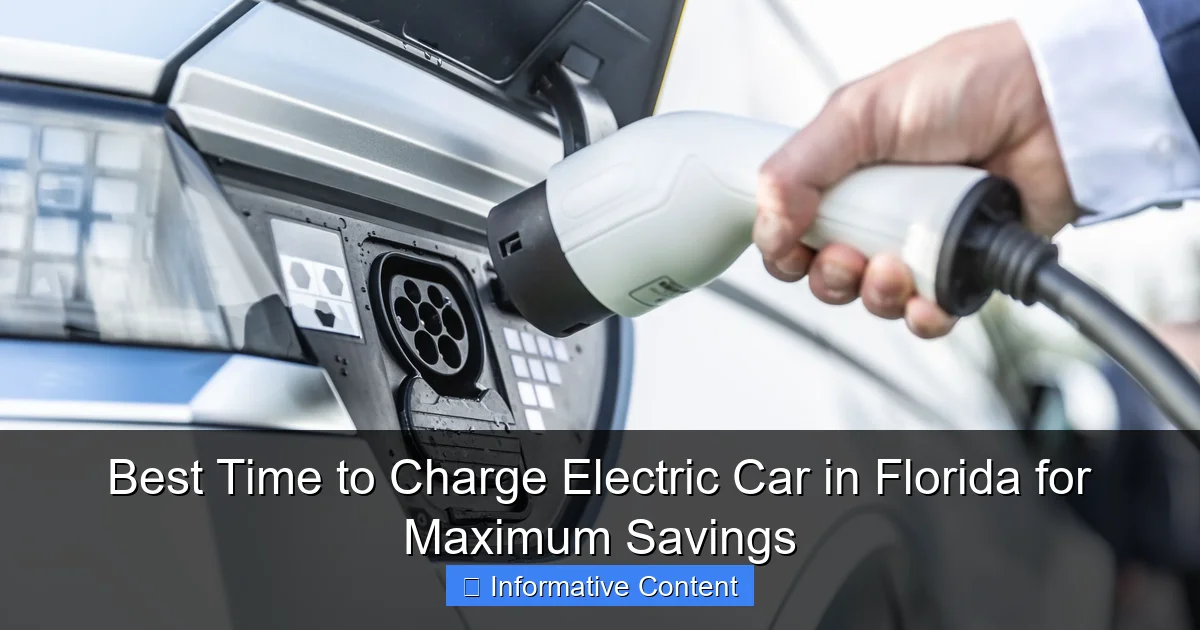
Featured image for best time to charge electric car in florida
Image source: hertz.com
The best time to charge your electric car in Florida is overnight, between 11 PM and 7 AM, when electricity rates are lowest due to off-peak demand. Taking advantage of utility-specific EV plans and time-of-use (TOU) rates—especially from providers like FPL and Duke Energy—can slash charging costs by up to 50%. Smart scheduling via your EV or charger app ensures maximum savings while supporting grid efficiency.
Key Takeaways
- Charge overnight (12 AM–6 AM): Lower rates and grid demand.
- Use off-peak hours: Save up to 50% vs. peak pricing.
- Check utility TOU plans: Align charging with discounted rate periods.
- Avoid 4 PM–9 PM: Peak demand means higher electricity costs.
- Set charging schedules: Automate to maximize savings effortlessly.
- Solar owners: Use midday sun: Free energy during high solar output.
📑 Table of Contents
- Why Timing Matters When Charging Your Electric Car in Florida
- Understanding Florida’s Electricity Rate Structure
- When Is the Best Time to Charge Electric Car in Florida?
- How Your Utility Company Affects Charging Costs
- Tools and Tips to Automate Smart Charging
- Data Table: Florida Utility Off-Peak Hours and Rates
- Final Thoughts: Charge Smart, Save Big
Why Timing Matters When Charging Your Electric Car in Florida
Living in the Sunshine State has its perks—beautiful beaches, year-round warmth, and a growing network of electric vehicle (EV) charging stations. But if you’re an EV owner in Florida, you might have noticed something surprising: the cost of charging your car can vary dramatically depending on when you plug in. That’s because electricity rates in Florida aren’t flat—they change throughout the day based on demand. And while your EV might be more efficient than a gas-powered car, you can still save serious money (and reduce your carbon footprint) by charging at the right time.
Imagine this: It’s a typical summer day in Miami. The temperature hits 95°F, and air conditioners are cranked to full blast. The grid is strained, and electricity prices soar. You come home after work and plug in your car without thinking—only to see your utility bill jump by $15 that month. Now picture the same scenario, but instead of charging during peak hours, you plug in at 11 p.m. when demand is low and rates are half the price. That’s the power of timing your EV charging. In this guide, we’ll explore the best time to charge electric car in Florida to maximize your savings, minimize strain on the grid, and make the most of your EV ownership experience.
Understanding Florida’s Electricity Rate Structure
Time-of-Use (TOU) vs. Flat Rates
Not all utility companies in Florida charge the same way. Some still offer flat rates—meaning you pay the same price per kilowatt-hour (kWh) no matter when you use electricity. But many, especially larger providers like Florida Power & Light (FPL), Tampa Electric (TECO), and Duke Energy, now offer Time-of-Use (TOU) pricing plans. These plans charge different rates based on the time of day, day of the week, and season.
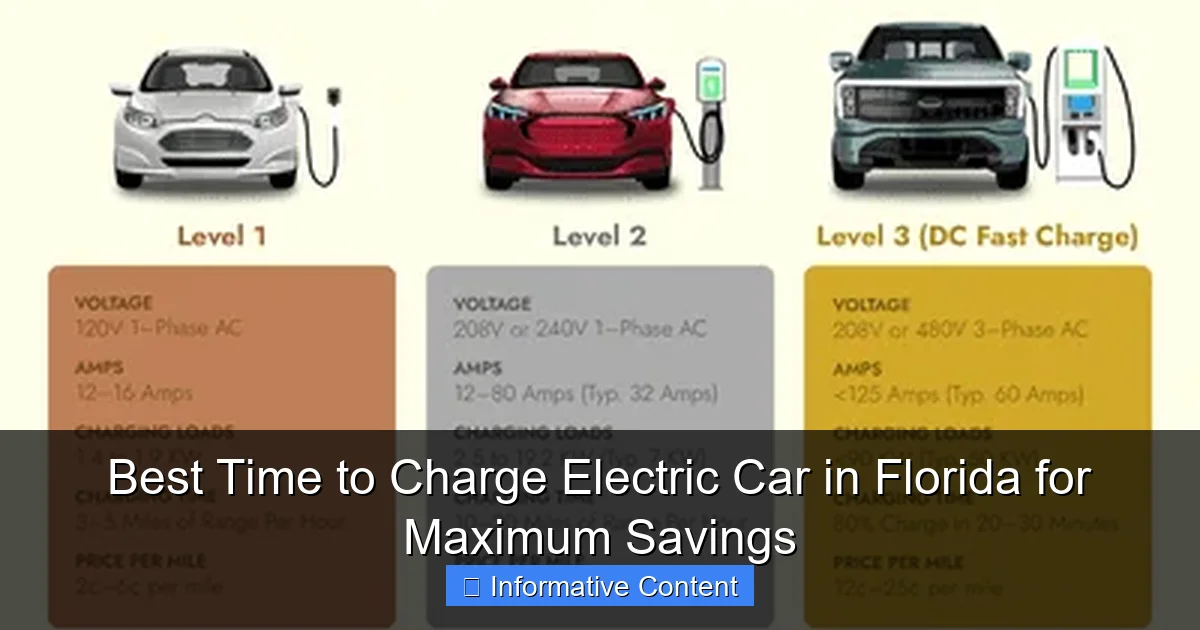
Visual guide about best time to charge electric car in florida
Image source: global-uploads.webflow.com
For example, under FPL’s TOU plan, electricity costs about $0.08/kWh during off-peak hours, but jumps to $0.18/kWh during on-peak hours. That’s more than double the cost—just for charging at the wrong time. If you’re on a flat rate, you might not see a big difference, but switching to a TOU plan can save you hundreds a year if you’re strategic about when you charge.
- Flat rate plans: Same price 24/7 (e.g., $0.12/kWh)
- TOU plans: Vary by time (e.g., $0.08/kWh off-peak, $0.18/kWh on-peak)
- Super off-peak: Available in some areas (e.g., 12 a.m.–6 a.m.) at even lower rates
Pro tip: Log into your utility account and check if you’re on a TOU plan. If not, ask about switching. Many providers now offer EV-specific TOU plans with extra-low overnight rates—perfect for charging your car while you sleep.
Seasonal Rate Changes
Florida’s electricity rates also change with the seasons. Summer (June–September) is the most expensive time to use electricity because of air conditioning demand. In winter, rates are lower, but not as dramatically as in colder states. Still, even a 10–15% difference can add up over a year.
For instance, Duke Energy Florida’s summer peak rate is 20% higher than its winter peak. That means charging your car at 5 p.m. in July costs more than doing the same in January. If you can shift even a portion of your charging to winter months, you’ll save money.
Here’s a real-life example: Sarah, an EV owner in Orlando, charges her Tesla Model 3 (75 kWh battery) twice a week. In summer, she pays $13.50 per charge during peak hours. In winter, the same charge costs $10.80. Over a year, that’s a savings of nearly $140—just by being aware of seasonal rates.
When Is the Best Time to Charge Electric Car in Florida?
Off-Peak Hours: Your Golden Window
The best time to charge electric car in Florida is during off-peak hours, typically late at night and early in the morning. Most utility companies define off-peak as:
- Night: 9 p.m. to 7 a.m. (weekdays and weekends)
- Weekends: All day Saturday and Sunday
- Holidays: Often treated as off-peak
During these times, electricity demand is lowest because most homes are asleep, businesses are closed, and air conditioners aren’t running at full capacity. As a result, rates drop—sometimes by as much as 50% compared to peak times.
For example, FPL’s off-peak rate is $0.08/kWh, while its on-peak rate (3 p.m.–8 p.m. on weekdays) is $0.18/kWh. If you charge a 60 kWh battery (common for many EVs), that’s the difference between paying $4.80 and $10.80 per charge. Over 100 charges a year, that’s $600 in savings.
Bonus: Charging at night also helps balance the grid. Renewable energy (like solar) is most abundant during the day, but demand is high. By charging at night, you’re using surplus electricity that would otherwise go to waste.
Avoiding Peak Hours: The Costly Trap
Peak hours in Florida are the worst time to charge your EV. These are when demand is highest—usually weekday afternoons and early evenings (3 p.m.–8 p.m.)—and rates skyrocket.
Why is this a trap? Because it’s convenient. You come home from work, plug in your car, and forget about it. But that convenience comes at a cost. Not only do you pay more, but you also contribute to grid strain, which can lead to brownouts or higher rates for everyone.
Take this scenario: You drive home at 5:30 p.m. and plug in your car. You’re in the middle of peak hours. Your car charges for 4 hours at $0.18/kWh. Total cost: $10.80 for a 60 kWh battery. If you had waited just 30 minutes (until 6 p.m., when peak ends in some plans) or used a delayed start, you’d pay only $4.80.
Tip: Use your EV’s scheduling feature (available in most modern EVs and apps) to set charging to start at 9 p.m. or later. That way, you’re not paying peak rates, and you wake up with a full battery.
Weekend Charging: A Hidden Advantage
Weekends are often overlooked, but they’re a fantastic time to charge. Most TOU plans treat weekends as off-peak all day, meaning you can charge anytime from Friday night to Sunday night at the lowest rates.
For example, TECO’s weekend off-peak rate is $0.07/kWh—cheaper than their weekday off-peak rate of $0.08/kWh. That might not sound like much, but over time, it adds up. If you charge 200 times a year and 50 of those are on weekends, you save $100 compared to weekday peak charging.
Plus, charging on weekends means your car is ready for errands, road trips, or just peace of mind. No need to wait until Monday night to plug in.
How Your Utility Company Affects Charging Costs
Florida Power & Light (FPL)
FPL is Florida’s largest utility, serving over 5 million customers. They offer several EV-friendly TOU plans, including:
- FPL EV Plan: Super off-peak (12 a.m.–6 a.m.) at $0.06/kWh, off-peak (6 p.m.–12 a.m. and 6 a.m.–9 a.m.) at $0.08/kWh, and on-peak (9 a.m.–6 p.m. weekdays) at $0.18/kWh.
- FPL SolarTogether: Offers discounted rates for solar energy users, with off-peak as low as $0.05/kWh.
With FPL, the best time to charge electric car in Florida is between 12 a.m. and 6 a.m. on their EV plan. That’s the cheapest rate available in the state—perfect for overnight charging.
Real-world example: Mark in Fort Lauderdale switched to the FPL EV plan and now charges his Nissan Leaf from 1 a.m. to 7 a.m. His monthly charging cost dropped from $35 to $21—a 40% savings.
Tampa Electric (TECO)
TECO’s TOU plan has three tiers:
- Off-peak: 9 p.m.–6 a.m. weekdays, all day weekends/holidays at $0.07/kWh
- Mid-peak: 6 a.m.–3 p.m. and 8 p.m.–9 p.m. weekdays at $0.10/kWh
- On-peak: 3 p.m.–8 p.m. weekdays at $0.17/kWh
For TECO customers, the sweet spot is 9 p.m. to 6 a.m. on weekdays and anytime on weekends. Charging during mid-peak is okay but not ideal—stick to off-peak when possible.
Pro tip: TECO also offers a “Charge at Home” program with free Level 2 chargers for qualified customers. Pair this with off-peak charging, and you’re saving on both hardware and electricity.
Duke Energy Florida
Duke’s TOU plan is similar, with off-peak from 10 p.m.–6 a.m. weekdays and all day weekends at $0.08/kWh. On-peak (2 p.m.–7 p.m. weekdays) is $0.19/kWh.
Here, the best time to charge electric car in Florida is 10 p.m. to 6 a.m. But if you must charge during the day, avoid 2 p.m.–7 p.m. at all costs.
Fun fact: Duke also offers a “Smart Saver” program that pays you for reducing usage during peak events. If you’re willing to pause charging for 2–3 hours during rare grid emergencies, you could earn $50–$100/year.
Tools and Tips to Automate Smart Charging
Use Your EV’s Built-in Scheduler
Most EVs come with a built-in charging scheduler. For example:
- Tesla: Use the “Schedule” feature in the app or touchscreen to set charging to start at a specific time.
- Chevy Bolt: Go to Settings > Charging > Charge Time > Start at [time].
- Ford Mustang Mach-E: Use the FordPass app to set delayed charging.
Just plug in when you get home, but set the car to start charging at 9 p.m. or 12 a.m. This way, you’re not paying peak rates, and you still wake up with a full battery.
Real-life story: Lisa in Jacksonville used to charge her Bolt at 6 p.m. every night. After setting the scheduler to 10 p.m., her monthly bill dropped by $20. “I didn’t even notice the difference,” she says. “My car was still full every morning.”
Smart Plugs and Charging Stations
If your car doesn’t have a scheduler (or you want more control), invest in a smart charging station like:
- ChargePoint Home Flex: Connects to Wi-Fi and lets you set schedules via app.
- Wallbox Pulsar Plus: Offers energy monitoring and off-peak charging automation.
- Emporia EV Charger: Integrates with home energy systems for maximum efficiency.
These chargers can automatically start and stop based on your utility’s TOU rates. Some even sync with your utility’s API to charge only during the cheapest hours.
Tip: Look for chargers with “load balancing” to avoid overloading your home circuit. A 40-amp charger is ideal for most EVs.
Monitor Your Usage with Apps
Apps like MyEnergy (FPL), TECO Energy Manager, and Duke Energy App let you track your electricity usage in real time. You can see exactly when you’re using power and adjust your charging habits.
For example, you might discover that you’re accidentally charging during mid-peak hours because you forgot to set the scheduler. A quick app notification can save you money.
Bonus: Some apps offer “rate alerts” that notify you when rates drop—perfect for opportunistic charging if you’re home during off-peak.
Data Table: Florida Utility Off-Peak Hours and Rates
| Utility | Off-Peak Hours | Off-Peak Rate ($/kWh) | On-Peak Hours | On-Peak Rate ($/kWh) |
|---|---|---|---|---|
| Florida Power & Light (FPL) | 6 p.m.–12 a.m., 6 a.m.–9 a.m. (weekdays); all day weekends | 0.08 | 9 a.m.–6 p.m. (weekdays) | 0.18 |
| FPL EV Plan | 12 a.m.–6 a.m. (super off-peak); 6 p.m.–12 a.m., 6 a.m.–9 a.m. (off-peak) | 0.06 (super), 0.08 (off) | 9 a.m.–6 p.m. (weekdays) | 0.18 |
| Tampa Electric (TECO) | 9 p.m.–6 a.m. (weekdays); all day weekends | 0.07 | 3 p.m.–8 p.m. (weekdays) | 0.17 |
| Duke Energy Florida | 10 p.m.–6 a.m. (weekdays); all day weekends | 0.08 | 2 p.m.–7 p.m. (weekdays) | 0.19 |
Note: Rates are approximate and may vary by plan. Check your utility’s website for exact pricing.
Final Thoughts: Charge Smart, Save Big
Charging your electric car in Florida doesn’t have to be expensive. By understanding your utility’s rate structure, avoiding peak hours, and using tools like schedulers and smart chargers, you can save hundreds of dollars a year. The best time to charge electric car in Florida is almost always during off-peak hours—late at night, early in the morning, or on weekends.
Remember, it’s not just about saving money. Charging during off-peak times also reduces strain on the grid, supports renewable energy integration, and makes you a more responsible EV owner. And the best part? It takes almost no effort. Set your scheduler once, and let your car do the rest.
So next time you plug in, ask yourself: “Am I charging at the right time?” With a little planning, you can turn your EV into a money-saving, planet-friendly machine—one charge at a time.
Frequently Asked Questions
What is the best time to charge an electric car in Florida to save money?
The best time to charge your EV in Florida is typically overnight during off-peak hours (11 PM to 7 AM), when electricity demand is lowest and utility rates are cheaper. Many providers offer time-of-use (TOU) plans that incentivize charging during these hours.
Does Florida have time-of-use rates for EV charging?
Yes, many Florida utilities like FPL and Duke Energy offer time-of-use (TOU) plans with discounted rates for EV owners who charge during off-peak hours. These plans can reduce charging costs by up to 50% compared to standard rates.
Is it cheaper to charge my EV during the day or at night in Florida?
Charging at night is almost always cheaper in Florida due to lower demand and off-peak rates. Daytime charging, especially during summer afternoons, often incurs higher “peak” rates due to increased AC usage.
How does the best time to charge an electric car in Florida vary by season?
Summer months see higher peak rates (2 PM–7 PM) due to heavy air conditioning use, making nighttime charging even more critical. In winter, peak hours may shift slightly earlier (4 PM–6 PM), but overnight charging remains optimal.
Are there free EV charging stations in Florida, and when should I use them?
Some public stations (e.g., malls, workplaces) offer free charging, but these are often busiest during daytime. For maximum savings, pair free daytime charging with overnight home charging during off-peak hours.
Can smart chargers help me optimize EV charging times in Florida?
Absolutely. Smart chargers let you schedule charging during off-peak hours automatically, ensuring you always get the lowest rates without manual adjustments. Many also sync with your utility’s TOU plan for real-time savings.