BYD Car Company Stock – Investor’s Guide

Featured image for this comprehensive guide about byd car company stock
Image source: byd.com
The automotive industry is undergoing its most significant transformation in a century, spearheaded by the electric vehicle (EV) revolution. At the forefront of this electrifying charge stands BYD, a Chinese multinational manufacturing company that has rapidly become a titan in the global EV market. Far from being a niche player, BYD car company stock represents an investment in a vertically integrated powerhouse that spans everything from cutting-edge battery technology to electric buses, trucks, and a rapidly expanding lineup of passenger vehicles. As the world shifts away from fossil fuels, understanding the potential and pitfalls of investing in BYD stock is crucial for any forward-thinking investor.
For many, Tesla often comes to mind as the undisputed leader in EVs. However, BYD has not only caught up but, in many metrics, surpassed its rivals, particularly in terms of unit sales and diversified product offerings. This comprehensive guide will delve deep into the world of BYD car company stock, exploring its remarkable growth story, its technological advantages, financial health, and the future outlook for this automotive giant. Whether you’re a seasoned investor or new to the stock market, understanding BYD’s position and potential risks is key to making an informed decision about this compelling EV stock opportunity.
Investing in the dynamic EV sector demands careful analysis, and BYD investment is no exception. We’ll cover everything from BYD’s strategic advantages to the macroeconomic factors influencing its performance, providing you with actionable insights to navigate the complexities of this high-growth sector. Prepare to uncover why BYD is more than just another car company, and why its stock might be a significant player in your portfolio.
Quick Answers to Common Questions
What’s the main ticker symbol for BYD car company stock?
You can primarily find BYD car company stock listed on the Hong Kong Stock Exchange under the ticker “1211.HK”. For US investors, there’s also an American Depositary Receipt (ADR) available.
Can I buy BYD car company stock on a major US exchange like the NYSE or Nasdaq?
BYD car company stock isn’t directly listed on major US exchanges. However, US investors can trade its ADRs (American Depositary Receipts) on the over-the-counter (OTC) market under the ticker “BYDDY” through most brokerage accounts.
Why is BYD car company stock getting so much attention from investors lately?
BYD car company stock is drawing significant attention due to the company’s rapid growth and leadership in electric vehicle (EV) sales globally, often outperforming competitors. Its robust battery technology and diverse product portfolio beyond passenger cars are key attractions.
What does BYD do besides making passenger cars that might impact its stock?
Beyond its popular EV passenger cars, BYD is a major player in battery manufacturing, electric buses, trucks, and even monorail systems. This diversified portfolio makes BYD car company stock an investment in broader green technology and transportation solutions.
Should I consider BYD car company stock if I’m interested in the EV market?
If you’re interested in the EV market, BYD car company stock is definitely worth researching due to its strong market position, integrated supply chain, and global expansion. Always conduct your own due diligence and consider consulting a financial advisor before investing.
📋 Table of Contents
- BYD’s Dominance in the EV Landscape: More Than Just Cars
- Unpacking the Financials: What Drives BYD’s Value?
- Key Growth Drivers for BYD Stock
- Navigating the Road Ahead: Risks and Challenges for BYD Investors
- Is BYD Stock a Good Investment? Valuation and Future Outlook
- Actionable Steps for Potential Investors
- Conclusion
BYD’s Dominance in the EV Landscape: More Than Just Cars
BYD, an acronym for “Build Your Dreams,” has lived up to its name by constructing a formidable presence across multiple high-growth industries. While its passenger electric vehicles are increasingly recognized globally, BYD’s influence extends far beyond mere car manufacturing. This integrated approach is a core reason why BYD car company stock is often viewed as distinct from its competitors.
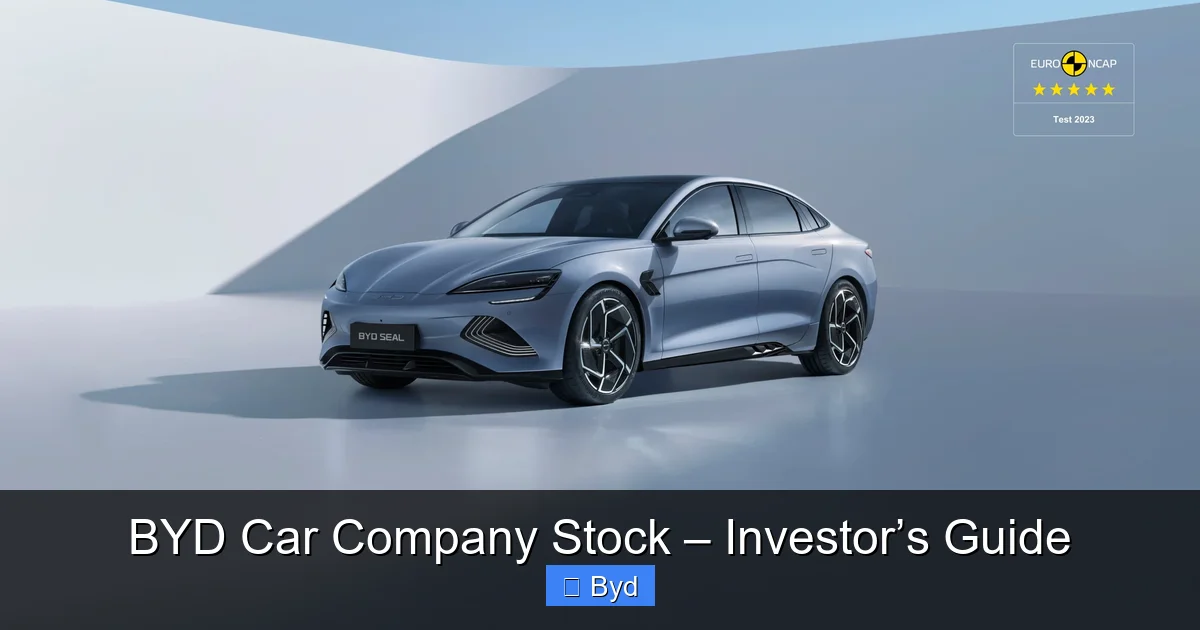
Learn more about byd car company stock – BYD Car Company Stock – Investor’s Guide
Image source: byd.com
From Batteries to Buses: BYD’s Diverse Ecosystem
At the heart of BYD’s strategic advantage is its unparalleled vertical integration. Unlike many automotive manufacturers that rely on external suppliers for critical components, BYD produces almost everything in-house. This includes:
- Batteries: BYD is a world leader in battery technology, particularly with its innovative Blade Battery. This lithium iron phosphate (LFP) battery is known for its safety, durability, and energy density, providing a competitive edge for all BYD products.
- Semiconductors: BYD also manufactures its own automotive-grade semiconductors, a critical component that has plagued many global automakers with supply chain issues. This self-sufficiency provides a significant buffer against external shocks.
- Electric Vehicles: Beyond passenger cars, BYD is a major producer of electric buses, trucks, forklifts, and even monorail systems. This diversified product portfolio reduces reliance on any single market segment and opens up multiple revenue streams.
- Renewable Energy Solutions: The company is also involved in solar power generation and energy storage systems, leveraging its battery expertise across the entire clean energy value chain.
This comprehensive ecosystem not only enhances efficiency and quality control but also provides substantial cost advantages, making BYD a highly competitive player in the global EV market. This robust foundation significantly contributes to the stability and growth potential of BYD stock.
| Metric | Value (BYD 1211.HK) | Note/Context |
|---|---|---|
| Current Share Price | HKD 204.60 | As of early April 2024 |
| Market Capitalization | HKD 595.3 Billion | Approximately USD 76.1 Billion |
| P/E Ratio (TTM) | 22.0x | Trailing Twelve Months (approx.) |
| 52-Week Range | HKD 180.20 – 289.40 | High / Low for the past year |
| Dividend Yield | 0.26% | Annualized (approx.) |
| Year-to-Date Performance | -4.96% | Since Jan 1, 2024 (approx.) |
Global Reach and Market Penetration
While often associated with the Chinese market, BYD’s global footprint is rapidly expanding. The company has aggressively moved into international markets, particularly in Europe, Southeast Asia, Latin America, and Australia. Its electric buses and trucks are already operating in over 70 countries and regions worldwide, demonstrating its capability to adapt to diverse market demands and regulatory environments. The introduction of its passenger EV models like the Atto 3 (Yuan Plus), Seal, and Dolphin in these new markets has been met with significant interest, challenging established players and carving out new market shares. This global expansion is a critical growth driver for BYD car company stock.
BYD’s ability to offer a range of vehicles, from budget-friendly options to more premium models, allows it to capture a broader spectrum of consumers. This strategic flexibility, combined with a strong distribution network and localized manufacturing, positions BYD for continued international growth, bolstering investor confidence in the long-term prospects of BYD investment.
Unpacking the Financials: What Drives BYD’s Value?
For investors eyeing BYD car company stock, a deep dive into its financial performance is non-negotiable. BYD has demonstrated impressive revenue growth and increasing profitability, reflecting its market leadership and operational efficiency. Understanding these financial metrics provides crucial insights into the underlying value of BYD stock.

Learn more about byd car company stock – BYD Car Company Stock – Investor’s Guide
Image source: byd.com
Revenue Growth and Profitability Trends
BYD’s financial trajectory has been characterized by explosive growth, particularly in recent years, driven by soaring EV sales and its diversified business segments. The company has consistently reported robust revenue increases, often outpacing general market growth and even some of its closest competitors. This growth is fueled by both increasing unit sales of electric vehicles and the expansion of its battery and components divisions.
Profitability has also seen a significant uptick. While early stages of EV market expansion often involve heavy investment and lower margins, BYD’s vertical integration and economies of scale are starting to pay off, leading to improved gross and net profit margins. Its ability to control key parts of the supply chain, from raw materials to final assembly, helps mitigate cost fluctuations and maintain competitive pricing. This strong financial performance makes BYD stock an attractive proposition for growth investors.
Key Financial Ratios to Watch
When evaluating BYD car company stock, several financial ratios provide critical insights:
- Revenue Growth: Look for consistent double-digit revenue growth year-over-year, indicating strong market demand and successful expansion strategies.
- Gross Profit Margin: This ratio indicates how efficiently BYD produces its goods. An improving margin suggests better cost management and pricing power.
- Net Income Growth: Essential for understanding the company’s overall profitability. Sustained net income growth demonstrates BYD’s ability to translate sales into profits.
- Return on Equity (ROE): Measures how much profit the company generates for each dollar of shareholder equity. A high ROE indicates efficient use of shareholder funds.
- Debt-to-Equity Ratio: While growth companies often take on debt, monitoring this ratio helps assess financial risk. BYD has generally managed its debt levels prudently relative to its assets and cash flow.
- Price-to-Earnings (P/E) Ratio: This valuation metric compares the company’s share price to its earnings per share. While high P/E ratios are common in growth sectors like EVs, comparing it to industry averages and BYD’s own growth rate is crucial.
Here’s a simplified illustration of potential financial trends for BYD (hypothetical data for illustrative purposes):
| Metric | FY 2021 (Approx.) | FY 2022 (Approx.) | FY 2023 (Approx.) | Growth Trend |
|---|---|---|---|---|
| Revenue (RMB Billions) | 216 | 424 | 602 | Significant Growth |
| Net Profit (RMB Billions) | 3 | 16 | 30 | Explosive Growth |
| Gross Margin (%) | 13% | 17% | 20% | Improving |
| EV Sales (Units Million) | 0.7 | 1.8 | 3.0 | Rapid Expansion |
| R&D Investment (RMB Billions) | 7 | 12 | 18 | Increasing Investment |
(Note: The data above is illustrative and simplified. Investors should always refer to official financial reports for accurate figures.)
These trends highlight BYD’s ability to scale its operations and improve financial efficiency, making the prospects for BYD share price attractive for long-term investors.
Key Growth Drivers for BYD Stock
The future performance of BYD car company stock hinges on several powerful growth drivers that are reshaping the global automotive and energy landscape. Understanding these catalysts is essential for anticipating the trajectory of BYD investment.
The Electric Vehicle Boom, Especially in China
The global transition to electric vehicles is undeniable, and China remains the largest and fastest-growing EV market in the world. As a dominant player in its home market, BYD is exceptionally well-positioned to capitalize on this trend. Government incentives, increasing consumer awareness, and significant infrastructure development continue to accelerate EV adoption in China. BYD’s extensive lineup, from entry-level models to premium offerings, allows it to capture a broad segment of this booming market. This domestic strength provides a stable foundation for BYD stock.
Furthermore, global EV adoption rates are projected to accelerate dramatically in the coming decade, driven by stricter emissions regulations, falling battery costs, and evolving consumer preferences. BYD’s strategic expansion into key international markets means it’s poised to ride this global wave, translating into sustained growth for BYD future prospects.
Technological Innovation: The Blade Battery Advantage
BYD’s proprietary Blade Battery technology is arguably its most significant competitive advantage. This innovative LFP battery design offers superior safety, longevity, and space utilization compared to traditional lithium-ion batteries. Its enhanced thermal stability significantly reduces the risk of thermal runaway, a major safety concern for EVs. The Blade Battery’s compact design also allows for more efficient packaging, leading to improved vehicle design and increased range. This technological edge not only benefits BYD’s own vehicles but also positions BYD as a crucial battery supplier for other major automakers.
The ability to innovate and control critical battery technology gives BYD a unique position in the supply chain, reducing its reliance on external suppliers and enhancing its profit margins. This differentiator makes BYD car company stock a compelling option for investors seeking exposure to advanced EV technology.
Strategic Partnerships and Global Expansion
BYD is not just expanding organically; it’s also leveraging strategic partnerships to accelerate its growth. Collaborations with companies like Toyota for EV development and significant investments in overseas manufacturing facilities (e.g., in Brazil, Thailand, Hungary) underscore its commitment to global presence. These partnerships and localized production strategies help BYD navigate regulatory complexities, reduce logistics costs, and tailor products to specific regional demands. For instance, BYD’s penetration into European markets is a testament to its adaptability and the quality of its offerings, directly impacting the long-term outlook for BYD stock.
The company’s expansion into new geographical markets and product segments (e.g., hybrid vehicles alongside pure EVs) ensures diversified revenue streams and reduces concentration risk. This multi-pronged growth strategy is a powerful engine for the appreciation of BYD car company stock.
Navigating the Road Ahead: Risks and Challenges for BYD Investors
While the growth story of BYD car company stock is compelling, no investment is without its risks. Prudent investors must consider the potential headwinds that could impact BYD’s performance and the trajectory of BYD stock. Understanding these challenges is crucial for a balanced investment perspective.
Intense Competition in the EV Space
The electric vehicle market is rapidly evolving and becoming increasingly crowded. BYD faces formidable competition from several fronts:
- Tesla: The global EV leader continues to innovate and has a strong brand presence worldwide.
- Traditional Automakers: Giants like Volkswagen, General Motors, and Toyota are pouring billions into their EV transitions, launching competitive models with established dealer networks.
- Chinese EV Startups: Companies like Nio, Xpeng, and Li Auto are strong domestic rivals, often targeting specific premium segments.
- New Entrants: Technology companies and even luxury brands are entering the EV arena, intensifying price wars and innovation races.
This fierce competition could put pressure on BYD’s pricing, margins, and market share, potentially impacting the long-term appreciation of BYD share price.
Geopolitical Tensions and Supply Chain Volatility
As a prominent Chinese company with significant global operations, BYD is susceptible to geopolitical tensions, particularly between the US and China. Trade disputes, tariffs, and potential restrictions on technology transfer could disrupt BYD’s international expansion plans and supply chains. Furthermore, the global supply chain remains vulnerable to disruptions, as seen during the semiconductor shortage. While BYD’s vertical integration provides some resilience, it is not entirely immune to raw material price fluctuations (e.g., lithium, nickel) or logistics bottlenecks. These factors represent potential “risks BYD stock” investors must consider.
Regulatory Changes and Subsidy Dependence
A significant portion of EV adoption, especially in China, has historically been supported by government subsidies and favorable policies. While many markets are transitioning away from direct subsidies, changes in regulatory environments, emission standards, or incentives for EV purchases could impact demand and profitability. Any sudden shifts in government support could slow the pace of EV adoption or affect BYD’s competitive positioning, thereby influencing the performance of BYD car company stock. Investors need to monitor these policy changes closely to assess their potential impact on BYD investment.
Is BYD Stock a Good Investment? Valuation and Future Outlook
Determining whether BYD car company stock is a “good investment” depends on an investor’s individual financial goals, risk tolerance, and investment horizon. However, by analyzing its valuation and future outlook, we can form a more informed perspective on the potential of BYD stock.
Analyzing Valuation Metrics (P/E, P/S)
Growth stocks like BYD often trade at higher valuation multiples than mature industries. Key metrics to consider include:
- Price-to-Earnings (P/E) Ratio: This compares the current share price to the company’s earnings per share. A high P/E indicates that investors expect significant future growth. It’s crucial to compare BYD’s P/E to its historical average, its growth rate, and its competitors. Given BYD’s rapid expansion and profitability improvements, its P/E might appear elevated, but could be justified by its growth trajectory.
- Price-to-Sales (P/S) Ratio: Useful for companies experiencing rapid growth but not yet highly profitable, or when comparing companies in a high-growth sector. A lower P/S ratio can indicate better value relative to revenue. BYD’s strong revenue growth makes this a relevant metric for assessing its market valuation against its top-line performance.
Investors should conduct a thorough valuation analysis, potentially using discounted cash flow (DCF) models or relative valuation against peers, to determine if BYD share price aligns with its intrinsic value and future earnings potential.
Analyst Sentiments and Price Targets
Financial analysts widely cover BYD, and their collective sentiment often provides valuable insights. Generally, analysts covering BYD car company stock tend to be optimistic, citing its strong market position, technological leadership, and global expansion efforts. Price targets, which represent an analyst’s estimate of a stock’s future value, are often positive, indicating an expectation of continued upward movement. However, it’s important to remember that analyst ratings are not guarantees and should be taken as one input among many in your research process. Keeping an eye on consensus ratings and the rationale behind them can offer a broader market perspective on BYD investment.
Long-Term Vision and Sustainable Growth
BYD’s long-term vision extends beyond merely selling EVs; it aims to be a comprehensive provider of new energy solutions. This holistic approach, encompassing batteries, vehicles, and renewable energy infrastructure, positions it well for sustainable growth in a world increasingly committed to decarbonization. The company’s continuous investment in R&D, particularly in battery technology and intelligent driving systems, suggests a commitment to maintaining its competitive edge. For investors with a long-term horizon, the strategic foresight and execution of BYD’s leadership team are key factors supporting the bullish case for BYD future.
In summary, while valuation multiples might appear high for BYD car company stock, its robust growth, technological advantages, and strategic diversification provide a compelling argument for its long-term potential. The fundamental strength of the company, coupled with the tailwinds of the global EV transition, suggests a promising outlook for BYD stock, provided macroeconomic conditions remain favorable and the company continues to execute effectively.
Actionable Steps for Potential Investors
Considering an investment in BYD car company stock requires careful thought and a strategic approach. Here are actionable tips to guide your decision-making process for BYD investment.
Do Your Own Research (DYOR)
Before committing any capital, conduct thorough due diligence.
- Review Financial Reports: Access BYD’s official annual and quarterly reports (available on investor relations pages or financial data sites) to understand its latest revenues, profits, cash flow, and debt levels.
- Analyze Market Trends: Stay updated on the broader EV market, including sales data, government policies, and technological advancements that could impact BYD.
- Evaluate Competition: Understand who BYD’s main competitors are and how BYD differentiates itself in terms of technology, pricing, and market share.
- Assess Management: Look into the company’s leadership team, their track record, and strategic vision.
This comprehensive research will provide a solid foundation for evaluating the true potential of BYD car company stock.
Diversification is Key
Even the most promising stocks carry risk. Avoid putting all your investment capital into a single stock, no matter how attractive it appears. Diversifying your portfolio across different industries, asset classes, and geographical regions can help mitigate risk. If you choose to invest in BYD stock, ensure it represents a balanced portion of your overall portfolio, aligned with your risk tolerance.
Stay Informed and Monitor Trends
The EV market is dynamic. Keep abreast of news related to:
- BYD’s product launches and sales figures: New models or unexpected sales performance can significantly impact BYD share price.
- Battery technology advancements: Innovations in battery tech could either strengthen or challenge BYD’s competitive edge.
- Regulatory changes: New government policies or subsidies (or their removal) can affect EV demand and BYD’s operational environment.
- Geopolitical developments: Trade relations and international politics can have a direct impact on global companies like BYD.
Regularly monitoring these trends will enable you to make informed decisions about holding, buying more, or selling your BYD car company stock.
Consider Your Investment Horizon and Risk Tolerance
Are you looking for short-term gains or long-term growth? BYD investment is generally considered a long-term growth play, given the multi-year transition to EVs.
- Long-Term Investors: May be more comfortable weathering short-term volatility, focusing on BYD’s fundamental growth story and strategic advantages.
- Short-Term Investors: Should be aware of the inherent volatility in high-growth stocks and the impact of market sentiment on BYD stock.
Assess your personal comfort level with risk. The EV sector can be volatile, and BYD car company stock is no exception. Invest only what you can afford to lose without impacting your financial stability.
Consult a Financial Advisor
If you’re unsure about any aspect of investing in BYD car company stock, or how it fits into your broader financial plan, consider consulting a qualified financial advisor. They can provide personalized advice based on your specific financial situation and goals, helping you navigate the complexities of the stock market and make sound investment choices regarding BYD investment.
Conclusion
BYD stands as a formidable force in the global electric vehicle and new energy landscape, uniquely positioned through its unparalleled vertical integration, cutting-edge battery technology, and aggressive international expansion. The narrative of BYD car company stock is one of explosive growth, driven by a diversified product portfolio and strategic foresight that extends far beyond just passenger cars. Its robust financial performance and innovative prowess make it a compelling consideration for investors seeking exposure to the accelerating EV revolution.
However, like any high-growth investment, BYD stock is not without its challenges. Intense competition, geopolitical uncertainties, and evolving regulatory landscapes present inherent risks that potential investors must carefully weigh. The journey of BYD investment requires diligence, continuous monitoring of market trends, and a clear understanding of one’s own investment horizon and risk tolerance.
Ultimately, BYD embodies the future of mobility and sustainable energy. For those willing to navigate the inherent volatility of the growth sector, and who believe in the long-term shift towards electrification, BYD car company stock offers a unique opportunity to invest in a company that is not just building vehicles, but truly building dreams for a greener future. Always remember to conduct your own thorough research and consider consulting a financial professional before making any investment decisions.
🎥 Related Video: BYD just told more electric vehicles in Europe than Tesla
📺 Bloomberg Opinion
BYD Co. sold more #electricvehicles in #Europe than #Tesla Inc. for the first time, overtaking the American brand that long led the …
Frequently Asked Questions
What is BYD Company Limited and its stock?
BYD Company Limited is a leading Chinese multinational manufacturing company, primarily known for its automobiles, battery-electric vehicles (EVs), and rechargeable batteries. Investing in **BYD stock** means buying shares in this innovative company, allowing you to participate in its growth across various high-tech sectors.
How can I buy BYD car company stock?
To buy **BYD car company stock**, you typically need to open an account with a brokerage that offers access to the Hong Kong Stock Exchange (HKEX) or the Shenzhen Stock Exchange (SZSE). You can then place an order for either its H-shares (traded in Hong Kong) or A-shares (traded in Shenzhen), depending on your brokerage’s offerings and your residency.
What are the primary ticker symbols for BYD stock?
**BYD stock** is primarily traded under two ticker symbols: “1211” on the Hong Kong Stock Exchange (HKEX), which represents its H-shares, and “002594” on the Shenzhen Stock Exchange (SZSE), representing its A-shares. Investors should ensure they are buying the correct class of shares for their investment strategy.
What are the main drivers for BYD’s business growth?
BYD’s growth is largely driven by its leadership in new energy vehicles (NEVs), including electric cars and buses, and its robust battery manufacturing capabilities. The company also benefits from its electronics contract manufacturing and semiconductor divisions, capitalizing on the global demand for sustainable transportation and advanced tech components.
Is investing in BYD stock a good idea for long-term growth?
Many analysts view BYD stock as a strong long-term growth prospect due to its dominant position in the rapidly expanding EV market and its integrated battery technology. However, like all investments, it carries risks such as market competition, regulatory changes, and geopolitical factors, so thorough research is essential.
Does BYD pay dividends to its shareholders?
Yes, BYD Company Limited has a history of paying dividends to its shareholders, though the frequency and amount can vary based on the company’s performance and financial policies. Prospective investors should check the latest dividend declarations and yield information through their brokerage or financial news sources.