BYD Co Ltd Stock Symbol Explained
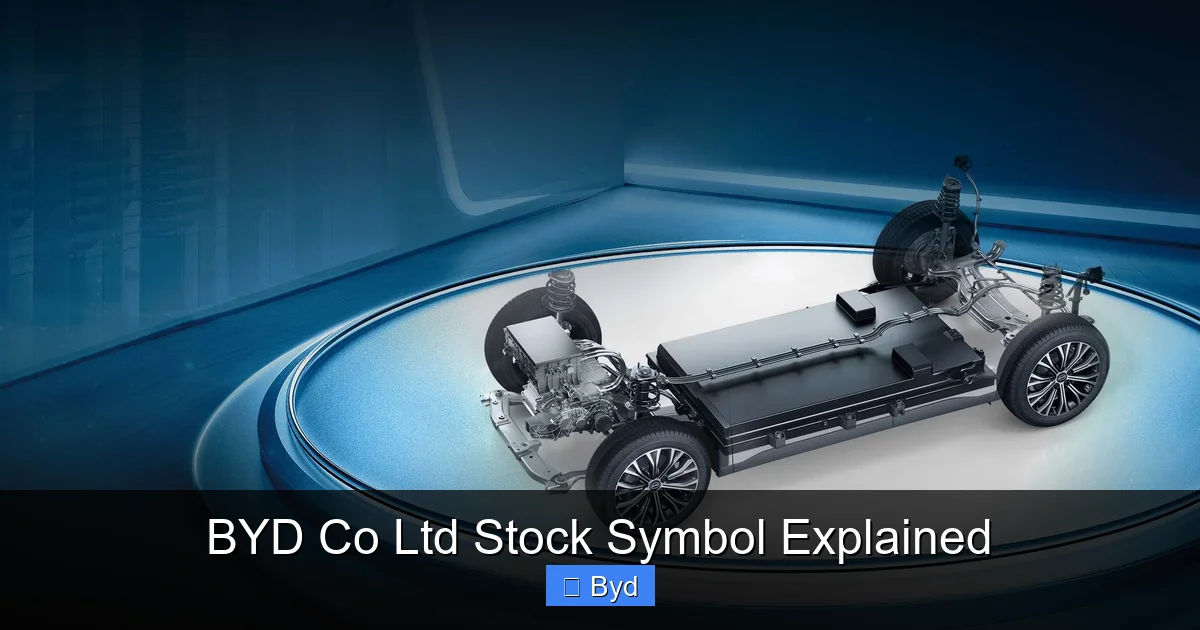
Featured image for this comprehensive guide about byd co ltd stock symbol
Image source: byd.com
BYD Co Ltd Stock Symbol Explained
In the dynamic world of electric vehicles (EVs) and renewable energy, one name consistently stands out: BYD Co Ltd. From its humble beginnings as a battery manufacturer, BYD has evolved into a global powerhouse, challenging established automotive giants and leading the charge in sustainable transportation. Its innovative spirit, robust product lineup, and expansive global presence have made it a fascinating subject for investors worldwide. However, for many keen individuals looking to buy a piece of this pioneering company, a common question arises: “What is the BYD Co Ltd stock symbol?”
Navigating the stock market can be complex, and companies like BYD, with listings on multiple international exchanges, often present a unique challenge. You might encounter various ticker symbols, each representing a different way to access the company’s shares. Understanding these symbols is not just a matter of technicality; it’s crucial for making informed investment decisions, ensuring you’re trading on the right exchange, and comprehending the specific implications of each listing. This comprehensive guide will demystify the BYD Co Ltd stock symbol, breaking down its various forms and offering actionable insights for current and prospective investors.
Whether you’re a seasoned investor tracking global EV trends or a newcomer eager to participate in the green revolution, deciphering BYD’s stock symbols is your first step. We’ll explore the primary symbols, their respective exchanges, and what each means for you as an investor. Get ready to dive deep into the world of BYD stock, understand its investment appeal, and learn how to navigate its multifaceted market presence effectively.
Quick Answers to Common Questions
What is the primary BYD Co Ltd stock symbol?
The main BYD Co Ltd stock symbol depends on where you’re looking: on the Hong Kong Stock Exchange it’s 1211.HK, and in the U.S. over-the-counter market, it trades as BYDDY.
Why does BYD Co Ltd have multiple stock symbols?
BYD Co Ltd is listed on several international stock exchanges to make its shares accessible to investors globally. Each exchange assigns its own unique stock symbol for the company.
Which BYD Co Ltd stock symbol should I use if I’m a U.S. investor?
If you’re investing from the U.S., you’ll typically use BYDDY, which represents an American Depositary Receipt (ADR) for BYD Co Ltd, making it easy to trade through U.S. brokers.
Is the BYDDY stock symbol the actual BYD Co Ltd stock?
The BYDDY stock symbol represents an ADR, which is a certificate issued by a U.S. bank that represents shares of BYD Co Ltd. It’s a way for U.S. investors to own BYD shares indirectly.
Where can I find the BYD Co Ltd stock symbol for its original listing?
The original primary listing for BYD Co Ltd is on the Hong Kong Stock Exchange, where its stock symbol is 1211.HK. It’s also listed on the Shenzhen Stock Exchange as 002594.SZ.
📋 Table of Contents
- Unraveling the BYD Stock Symbols: Why Multiple Tickers?
- Deciphering BYDDY: The US OTC Market Connection
- Understanding 1211.HK: BYD’s Hong Kong Home
- BYD’s Global Footprint and Investment Appeal
- Key Factors Influencing BYD’s Stock Performance
- Navigating Investment in BYD: Tips for Potential Shareholders
- BYD Stock Symbols and Key Financial Snapshot
- Conclusion
Unraveling the BYD Stock Symbols: Why Multiple Tickers?
When you begin your research into BYD Co Ltd, you might quickly notice that there isn’t just one simple stock symbol like ‘TSLA’ for Tesla. Instead, you’ll encounter a few different tickers, which can initially be confusing. This phenomenon of multiple stock symbols for a single company is quite common, especially for large, multinational corporations that seek to raise capital and attract investors from various regions across the globe. For BYD Co Ltd stock symbol, this multi-listing strategy serves several strategic purposes, primarily increasing market access and liquidity.
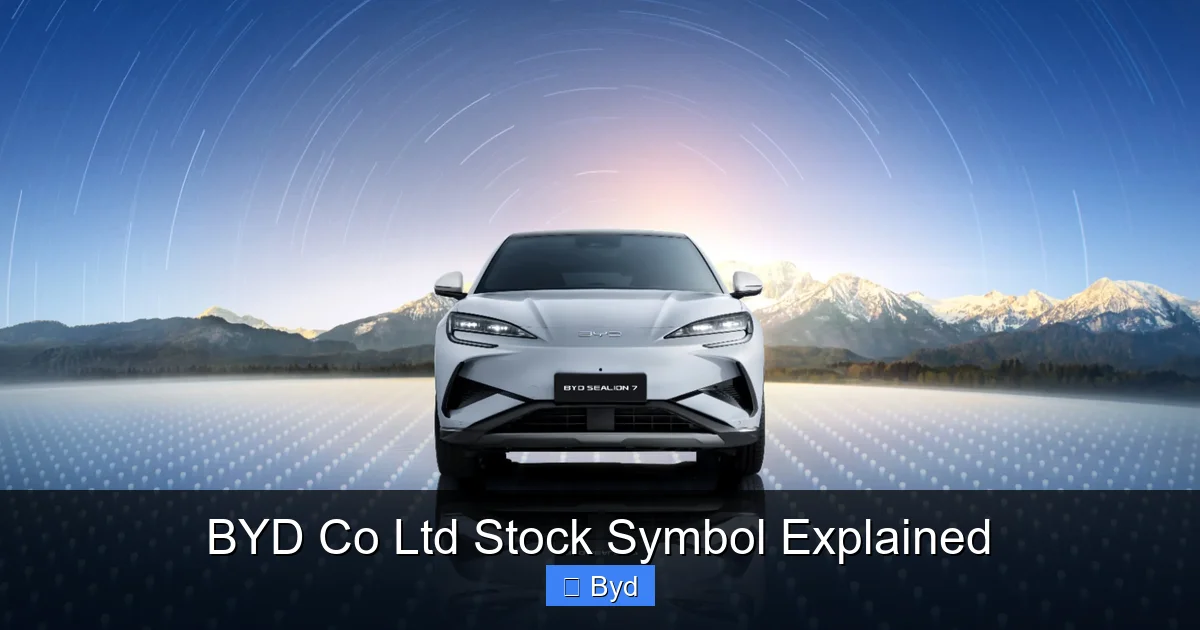
Learn more about byd co ltd stock symbol – BYD Co Ltd Stock Symbol Explained
Image source: byd.com
The primary reason for multiple symbols stems from a company’s decision to list its shares on different stock exchanges in various countries. Each exchange typically has its own set of rules, regulations, and, importantly, its own system for assigning unique ticker symbols. For a company of BYD’s stature, with significant operations and investor interest spanning continents, listing on more than one exchange broadens its investor base considerably. It allows investors in different geographical locations to trade its shares more easily, often in their local currency and within their preferred regulatory framework.
| Exchange | Stock Symbol | Share Type | Notes/Description |
|---|---|---|---|
| Hong Kong Stock Exchange | 1211.HK | H-Shares | Primary listing for international investors. |
| Shenzhen Stock Exchange | 002594.SZ | A-Shares | Primary listing for mainland Chinese investors. |
| OTC Markets (USA) | BYDDY | ADR (Level 1) | American Depositary Receipts for U.S. investors (OTC Pink). |
| Hong Kong Stock Exchange | 0285.HK | H-Shares | BYD Electronic (International) Co. Ltd. (a BYD subsidiary). |
Furthermore, these listings can represent different classes of shares or different mechanisms for ownership. For example, a company might issue ‘A-shares’ for domestic investors and ‘H-shares’ for international investors, as is the case with many Chinese companies, including BYD. Another common mechanism for international investment is through American Depositary Receipts (ADRs), which are traded on U.S. exchanges and represent ownership of shares in a foreign company. Understanding these distinctions is paramount when you’re searching for the right BYD Co Ltd stock symbol to suit your investment strategy.
The Key International BYD Stock Symbols
- BYDDY: This is the symbol you’ll most likely encounter if you’re looking to invest in BYD from the United States, particularly through an over-the-counter (OTC) market. It represents an American Depositary Receipt (ADR).
- 1211.HK: This is BYD’s primary listing on the Hong Kong Stock Exchange (HKEX). It represents the H-shares of the company and is often considered the most direct way for international investors outside of mainland China to invest in BYD.
- 002594.SZ: While less accessible for most international retail investors, this symbol represents BYD’s A-shares listed on the Shenzhen Stock Exchange. This listing is primarily for domestic Chinese investors and typically has different trading rules and currency (RMB). Our focus will primarily be on BYDDY and 1211.HK.
Each of these symbols offers a distinct pathway to investing in BYD, with its own set of advantages and considerations. In the following sections, we will delve into the specifics of BYDDY and 1211.HK, providing you with a clear understanding of what each entails for your investment journey.
Deciphering BYDDY: The US OTC Market Connection
For investors in the United States, the most common BYD Co Ltd stock symbol you’ll likely encounter is BYDDY. This symbol isn’t for a direct share of BYD traded on a major US exchange like the NYSE or Nasdaq. Instead, BYDDY represents an American Depositary Receipt (ADR). But what exactly is an ADR, and what does it mean for your investment?
What are American Depositary Receipts (ADRs)?
An ADR is a certificate issued by a U.S. bank that represents a specified number of shares (or a fraction of a share) in a foreign stock. These underlying shares are held by the bank in the foreign company’s home market. ADRs allow U.S. investors to buy shares of foreign companies without the complexities of cross-border transactions and foreign stock exchanges. They trade just like regular US stocks, in US dollars, and clear through US settlement systems, making them highly accessible.
In the case of BYDDY, the underlying shares are BYD’s H-shares traded on the Hong Kong Stock Exchange. The ratio of ADRs to underlying shares can vary; for BYD, it’s typically a certain number of ADRs for one HKEX share. This information is crucial for understanding the true value and movements of the ADR relative to the primary listing.
Trading BYDDY on the OTC Market
The BYDDY ticker is traded on the OTC Markets Group’s OTCQX Best Market. The OTCQX is the highest tier of the three marketplaces for trading over-the-counter (OTC) stocks. Companies listed on OTCQX must meet high financial standards, be current in their disclosures, and be audited by a PCAOB-qualified firm. While it’s not a major exchange like the NYSE or Nasdaq, the OTCQX provides a regulated and transparent environment for trading international securities like BYD’s ADRs.
Advantages of Investing via BYDDY:
- Accessibility: U.S. investors can easily buy and sell BYD shares through their existing brokerage accounts, denominated in U.S. dollars.
- Familiarity: Trading takes place during U.S. market hours, and reporting is often translated into English, simplifying the investment process.
- Dividends: Any dividends paid by BYD are typically converted into U.S. dollars and distributed to ADR holders, though subject to certain fees and foreign withholding taxes.
Considerations for BYDDY Investors:
- Liquidity: While generally good for a stock of BYD’s prominence, liquidity on the OTC market can sometimes be less robust than on a major exchange.
- Custodian Fees: Banks that facilitate ADRs typically charge annual fees to cover the costs of managing the underlying shares. These fees are usually deducted from dividend payments or directly from your brokerage account.
- Price Differences: The price of BYDDY will generally track the price of 1211.HK, but minor differences can occur due to currency fluctuations, trading hours, and supply/demand dynamics specific to the ADR market. It’s important to monitor both.
- Information Lag: While OTCQX requires disclosure, primary news and regulatory filings often originate from the home market (Hong Kong), potentially leading to a slight delay in information propagation.
For many U.S.-based investors, BYDDY offers a straightforward and convenient way to gain exposure to BYD’s growth story. However, being aware of the specific mechanics and potential nuances of ADRs and OTC trading is key to making a well-informed decision.
Understanding 1211.HK: BYD’s Hong Kong Home
For many global investors, particularly those outside of the United States, the true heart of BYD’s international stock presence lies with the BYD Co Ltd stock symbol 1211.HK. This ticker represents BYD’s H-shares, which are directly listed and traded on the Hong Kong Stock Exchange (HKEX). Investing directly in 1211.HK offers a slightly different experience than trading ADRs and provides a more direct connection to BYD’s core market operations.
The Significance of the Hong Kong Stock Exchange (HKEX)
The HKEX is one of the world’s largest and most important stock exchanges, serving as a critical gateway for international investors seeking access to Chinese companies. It is known for its robust regulatory framework, high liquidity, and international investor base. Many prominent mainland Chinese companies choose to list their H-shares on the HKEX to attract foreign capital and enhance their global visibility.
For BYD, its listing as 1211.HK on the HKEX is significant. These H-shares are denominated in Hong Kong Dollars (HKD) and are available to a broad spectrum of international investors who have brokerage accounts that can access foreign markets. The “HK” suffix in the ticker symbol is a common convention indicating its listing on the Hong Kong exchange.
Advantages of Investing Directly in 1211.HK:
- Direct Ownership: Investing in 1211.HK means you are directly owning shares of BYD Co Ltd, without the intermediary structure of an ADR.
- Transparency: All primary company news, financial reports, and regulatory filings are typically released in Hong Kong first, offering investors the most immediate and unfiltered access to information.
- Liquidity: The HKEX is a highly liquid market, and as a major component of the Hang Seng Index, BYD’s H-shares generally enjoy strong trading volumes.
- No ADR Fees: Investors bypass the annual depositary fees associated with ADRs, which can eat into returns over the long term.
- Wider Market Access: Many international brokers offer direct access to the HKEX, making it accessible to investors globally, not just in the US.
Considerations for 1211.HK Investors:
- Currency Risk: As 1211.HK trades in HKD, investors will be exposed to currency fluctuations between their local currency and the Hong Kong Dollar.
- Brokerage Access: Not all brokers provide direct access to foreign exchanges. You may need a specialized international brokerage account to trade on the HKEX.
- Trading Hours: You’ll need to be aware of the Hong Kong trading hours, which can be significantly different from your local time zone.
- Tax Implications: Foreign withholding taxes on dividends may apply, and the tax treatment of capital gains can vary based on your country of residence and specific tax treaties.
Choosing between BYDDY and 1211.HK often comes down to your geographic location, preferred brokerage, and appetite for dealing with foreign exchange and market complexities. For those seeking the most direct investment and willing to navigate international brokerage processes, 1211.HK often represents the preferred BYD Co Ltd stock symbol.
BYD’s Global Footprint and Investment Appeal
Beyond simply identifying the correct BYD Co Ltd stock symbol, understanding why BYD is such a compelling investment is critical. BYD has evolved from a niche battery manufacturer into a global diversified technology company, making it a pivotal player in several high-growth industries. Its strategic vision and impressive execution paint a picture of significant future potential, attracting attention from investors worldwide.
A Diversified Business Model
One of BYD’s greatest strengths lies in its highly diversified business model. Unlike many of its competitors who focus solely on electric vehicles, BYD’s operations span several interconnected sectors:
- Automobiles: This is arguably BYD’s most visible segment, encompassing a wide range of electric vehicles, including passenger cars, buses, trucks, and specialized vehicles. BYD has consistently ranked as one of the top global EV manufacturers by sales volume.
- Battery Technology: BYD started as a battery company and remains a leader in this field. Its proprietary Blade Battery technology, known for its safety, longevity, and energy density, is a significant competitive advantage and is supplied to other automakers.
- New Energy and Rail Transit: BYD is a pioneer in renewable energy solutions, including solar power generation and energy storage systems. It also has a burgeoning rail transit division, developing and deploying SkyRail monorail systems in various cities.
- Electronics: This segment includes the manufacturing of components for consumer electronics, highlighting BYD’s advanced manufacturing capabilities and supply chain expertise.
This diversification provides BYD with multiple revenue streams and helps to mitigate risks associated with reliance on a single market or product category. For investors tracking the BYD Co Ltd stock symbol, this breadth of innovation offers a more resilient growth story.
Market Leadership and Innovation
BYD’s commitment to innovation is evident in its continuous development of cutting-edge technologies. The company holds thousands of patents and invests heavily in R&D. Key innovations include:
- Blade Battery: A revolutionary lithium iron phosphate (LFP) battery that offers enhanced safety, longer lifespan, and improved space utilization, redefining industry standards.
- DM-i Super Hybrid Technology: A plug-in hybrid system that provides exceptional fuel efficiency and performance, appealing to a broader market segment.
- Vertical Integration: BYD controls much of its supply chain, from battery cells to semiconductors and even vehicle manufacturing, giving it significant cost advantages and resilience against supply chain disruptions.
This leadership in innovation, combined with aggressive market expansion, has solidified BYD’s position as a global leader in new energy vehicles. In certain periods, BYD has surpassed major competitors in global EV sales, a testament to its market appeal and production capacity.
Global Expansion and Strategic Partnerships
While deeply rooted in China, BYD has aggressively expanded its footprint across the globe. It is increasingly establishing a presence in Europe, Latin America, Southeast Asia, and other key markets. This global outreach is crucial for sustainable long-term growth and reducing reliance on its home market. Strategic partnerships with companies like Daimler (for the Denza brand) and various public transport operators further cement its international standing. As you watch the BYD Co Ltd stock symbol, these international growth stories are important indicators of future success.
In essence, investing in BYD is not just about betting on the future of electric cars; it’s about investing in a comprehensive new energy ecosystem spearheaded by a company with proven innovation, strong manufacturing capabilities, and a clear vision for sustainable development. This fundamental strength underpins the appeal of BYDDY and 1211.HK.
Key Factors Influencing BYD’s Stock Performance
Understanding the fundamental drivers behind BYD’s business is essential for any investor, regardless of which BYD Co Ltd stock symbol they choose to trade. Like any publicly traded company, BYD’s share price is influenced by a complex interplay of industry-specific trends, macroeconomic factors, geopolitical developments, and company-specific news. Staying informed about these factors can provide critical insights into potential price movements and help you make more strategic investment decisions.
1. Electric Vehicle (EV) Market Trends and Competition
- Global EV Adoption Rates: The pace at which consumers and businesses worldwide switch to EVs directly impacts BYD’s sales and revenue. Government incentives, charging infrastructure development, and falling battery costs are key drivers.
- Intense Competition: The EV market is highly competitive, with established automakers (e.g., Tesla, Volkswagen, GM, Ford) and new entrants (e.g., Nio, Xpeng, Rivian) vying for market share. BYD’s ability to innovate, control costs, and expand globally amidst this competition is crucial.
- Battery Technology Advancements: As a leader in battery technology, BYD’s innovations (like the Blade Battery) give it an edge. However, breakthroughs from competitors or shifts in raw material availability (e.g., lithium, cobalt prices) can affect its production costs and profitability.
2. Global Economic Outlook and Consumer Spending
- Economic Growth: A robust global economy generally supports higher consumer spending on big-ticket items like cars. Economic downturns or recessions can significantly dampen demand for new vehicles, including EVs.
- Interest Rates and Inflation: Higher interest rates can increase the cost of financing for consumers and businesses, potentially slowing vehicle sales. Inflation can drive up production costs, impacting BYD’s margins.
- Supply Chain Resilience: BYD’s vertical integration helps, but it’s still exposed to global supply chain disruptions, particularly for critical components like semiconductors.
3. Geopolitical Factors and Regulatory Environment
- China’s Policies: As a Chinese company, BYD is heavily influenced by the policies and regulations of the Chinese government, including subsidies for EVs, industrial policies, and trade relations.
- International Relations: Tensions between China and other major economies (e.g., US-China trade relations) can impact BYD’s ability to expand into foreign markets or its access to certain technologies.
- Environmental Regulations: Stricter emissions standards and mandates for EV adoption in various countries can create tailwinds for BYD’s growth.
4. Company-Specific News and Financial Performance
- Earnings Reports: Quarterly and annual earnings announcements are critical, revealing BYD’s revenue, profit margins, sales figures, and future guidance. Strong financial results often lead to positive stock performance.
- New Product Launches: The introduction of popular new EV models, battery innovations, or entry into new market segments can generate significant investor enthusiasm.
- Production Capacity and Deliveries: BYD’s ability to ramp up production and meet delivery targets is a key indicator of its operational efficiency and market demand.
- Management Changes and Strategic Announcements: Shifts in leadership, major partnerships, or strategic investments can also influence investor sentiment.
Understanding these drivers allows investors to move beyond just tracking the BYD Co Ltd stock symbol and instead, evaluate the underlying health and future prospects of the company. A holistic view, combining macro trends with micro-level company performance, is key to informed investing in BYD.
Navigating Investment in BYD: Tips for Potential Shareholders
Now that you’re well-versed in the various forms of the BYD Co Ltd stock symbol and the factors that influence its performance, it’s time to consider how to approach an investment in this innovative company. Investing requires careful planning, due diligence, and an understanding of your own financial goals and risk tolerance. Here are some actionable tips for potential shareholders interested in BYD.
1. Conduct Thorough Due Diligence
Before buying BYDDY or 1211.HK, immerse yourself in BYD’s financial reports. Look at its:
- Revenue Growth: Is the company consistently increasing its sales?
- Profitability: Are profits growing, and what are the margins like?
- Balance Sheet: Is the company financially sound, with manageable debt and sufficient cash flow?
- Cash Flow: Is BYD generating enough cash from its operations to fund its growth and investments?
- Competitive Landscape: How does BYD stack up against rivals like Tesla, Volkswagen, and other Chinese EV makers in terms of technology, market share, and profitability?
Also, pay attention to analyst reports and industry forecasts for the EV and battery sectors. Understand BYD’s long-term strategy, including its expansion plans and technological roadmap.
2. Choose the Right Stock Symbol and Brokerage
Your choice between BYDDY (ADR on OTCQX) and 1211.HK (H-share on HKEX) will largely depend on your location, brokerage capabilities, and preference for direct vs. indirect ownership.
- For U.S. Investors (BYDDY): Most U.S. brokerage accounts can facilitate trades of BYDDY. It offers convenience and trades in USD. Be mindful of potential ADR fees and less immediate access to primary news releases.
- For International Investors (1211.HK): If your broker provides direct access to the Hong Kong Stock Exchange, 1211.HK offers direct ownership and full transparency. You’ll need to consider currency conversion (HKD) and potentially higher transaction costs for international trades.
Confirm with your brokerage firm which symbol they support and what fees are involved for each option.
3. Understand Currency and Tax Implications
- Currency Risk: If you invest in 1211.HK (HKD) from a non-HKD currency, your returns will be affected by the exchange rate between your local currency and the Hong Kong Dollar. Even BYDDY is indirectly exposed, as its underlying value is tied to 1211.HK.
- Taxation: Research the tax implications of investing in foreign stocks or ADRs in your country of residence. This includes dividend withholding taxes and capital gains taxes. Consult with a tax professional for personalized advice.
4. Assess Risk and Diversify Your Portfolio
No investment is without risk, and BYD is subject to market volatility, geopolitical risks, and industry-specific challenges. Consider:
- Volatility: Growth stocks, especially in rapidly evolving sectors like EVs, can be highly volatile. Be prepared for price swings.
- Regulatory Risk: Changes in government policies, particularly in China, can significantly impact BYD’s operations and profitability.
- Competition: The EV market is fiercely competitive. BYD needs to maintain its innovative edge and market share.
- Diversification: Avoid putting all your eggs in one basket. BYD can be a valuable part of a diversified portfolio, but it shouldn’t be your sole investment. Balance it with other sectors and asset classes.
5. Adopt a Long-Term Perspective
BYD is fundamentally a growth stock in a high-growth industry. While short-term trading opportunities may exist, many investors approach BYD with a long-term perspective, betting on the sustained global transition to electric vehicles and renewable energy. Patience and a belief in the company’s long-term vision are often rewarded.
By following these tips, you can approach your investment in BYD more strategically and confidently, regardless of which BYD Co Ltd stock symbol you ultimately choose to trade.
BYD Stock Symbols and Key Financial Snapshot
To provide a quick reference and illustrate the significance of BYD in the global market, here’s a summary of its main international stock symbols and a glimpse into its financial scale (Note: Financial data is illustrative and based on general market knowledge; for real-time and precise figures, always consult official company reports and financial platforms.).
Key International BYD Stock Symbols
| Stock Symbol | Exchange | Type | Currency | Primary Target Investor |
|---|---|---|---|---|
| BYDDY | OTCQX (Over-the-Counter) | American Depositary Receipt (ADR) | USD | U.S. Investors |
| 1211.HK | Hong Kong Stock Exchange (HKEX) | H-Share | HKD | Global Investors (Direct) |
| 002594.SZ | Shenzhen Stock Exchange (SZSE) | A-Share | RMB | Mainland China Investors |
Illustrative Financial Highlights (Approximate, as of a recent period)
| Metric | Value (Approx.) | Significance |
|---|---|---|
| Market Capitalization | $90 – $110 Billion USD | Indicates the company’s size and total market value. |
| Annual Revenue | $80 – $95 Billion USD | Reflects strong sales growth across diverse segments. |
| Net Profit Growth (YoY) | +100% to +300% (or more) | Highlights exceptional profitability expansion. |
| Annual EV Sales | ~3 Million Units (BEV + PHEV) | Positions BYD as a global leader in new energy vehicle sales. |
| R&D Investment | Billions of USD Annually | Demonstrates commitment to innovation and future growth. |
This snapshot underscores BYD’s substantial scale and robust financial performance, reflecting its leading position in the new energy vehicle and technology sectors. For detailed and up-to-the-minute figures, always refer to BYD’s official investor relations website or reputable financial data providers.
Conclusion
Navigating the world of international stock investments, particularly for a multifaceted company like BYD, can seem daunting at first. However, by understanding the nuances of the BYD Co Ltd stock symbol, you equip yourself with the foundational knowledge needed to make informed and strategic investment decisions. We’ve explored the primary symbols – BYDDY for U.S. investors via ADRs on the OTC market, and 1211.HK for direct investment in H-shares on the Hong Kong Stock Exchange – each offering a distinct pathway to ownership.
Beyond the tickers, we delved into the compelling story of BYD itself: a global leader in new energy vehicles, battery technology, and diversified sustainable solutions. Its innovative spirit, vertical integration, and aggressive global expansion plans underscore its significant potential in the rapidly evolving clean energy landscape. We also highlighted the various factors, from market trends and economic conditions to geopolitical influences and company-specific news, that continuously shape BYD’s stock performance.
Ultimately, whether you choose to invest through BYDDY or 1211.HK, the key to successful investment lies in thorough due diligence, understanding the associated risks and opportunities, and aligning your choices with your personal financial strategy. BYD represents more than just a stock; it’s an investment in the future of sustainable transportation and energy. By staying informed and making calculated decisions, you can confidently participate in the journey of one of the world’s most exciting and impactful companies.
Ready to explore more? Continue your research, consult with financial advisors, and keep a watchful eye on the global new energy market. Your informed decisions about the BYD Co Ltd stock symbol can open doors to exciting investment opportunities.
🎥 Related Video: What is the difference between BYDDF and BYDDY? | BYDDF vs BYDDY | BYD different OTC stock tickers
📺 THE INVESTMENT ABC
Hi guys, in this video I want to clarify the question what the difference between the two BYD tickers BYDDF and BYDDY is.
Frequently Asked Questions
What is the main stock symbol for BYD Co Ltd?
BYD Co Ltd has different primary stock symbols depending on the exchange where its shares are traded. For the Hong Kong Stock Exchange (HKEX), its symbol is 1211.HK, while on the Shenzhen Stock Exchange (SZSE), it trades as 002594.SZ. Investors should specify the exchange when looking up BYD stock.
Does BYD Co Ltd use different stock symbols across various stock exchanges?
Yes, BYD Co Ltd operates and is listed on multiple stock exchanges, with each exchange assigning its unique stock symbol. This is a standard practice for large, multinational companies to facilitate trading in different regions. You will find distinct BYD Co Ltd stock symbols for its Hong Kong, Shenzhen, and Over-The-Counter (OTC) US listings.
Is there a BYD Co Ltd stock symbol for the US market or an ADR?
Yes, while BYD Co Ltd is primarily listed in Hong Kong and Shenzhen, it also has an Over-The-Counter (OTC) listing in the United States. US investors can trade its American Depositary Receipts (ADRs) under the symbol BYDDY. This allows for indirect investment in BYD’s shares through US brokerages.
Why does BYD Co Ltd have multiple stock symbols for its shares?
BYD Co Ltd has multiple stock symbols because it is dually listed on separate major exchanges: the Hong Kong Stock Exchange and the Shenzhen Stock Exchange. Each exchange assigns its own unique identifier to the company’s shares traded on its platform. This enables investors in different regions to easily identify and trade BYD’s stock according to their local market rules.
What’s the distinction between BYD’s H-share and A-share stock symbols?
BYD’s H-share stock symbol, 1211.HK, represents shares listed on the Hong Kong Stock Exchange and are generally available to international investors. Its A-share stock symbol, 002594.SZ, refers to shares listed on the Shenzhen Stock Exchange, which are primarily accessible to mainland Chinese investors. These share classes often have different trading rules and investor bases.
How can I ensure I’m using the correct BYD Co Ltd stock symbol when researching or trading?
To ensure you’re using the correct BYD Co Ltd stock symbol, always specify the exchange you are interested in. For instance, search for “BYD 1211.HK” for Hong Kong shares or “BYD 002594.SZ” for Shenzhen shares. If you are looking for US-traded ADRs, the correct symbol to use is “BYDDY”.