BYD Electric Car Company – History, Innovation, and Growth
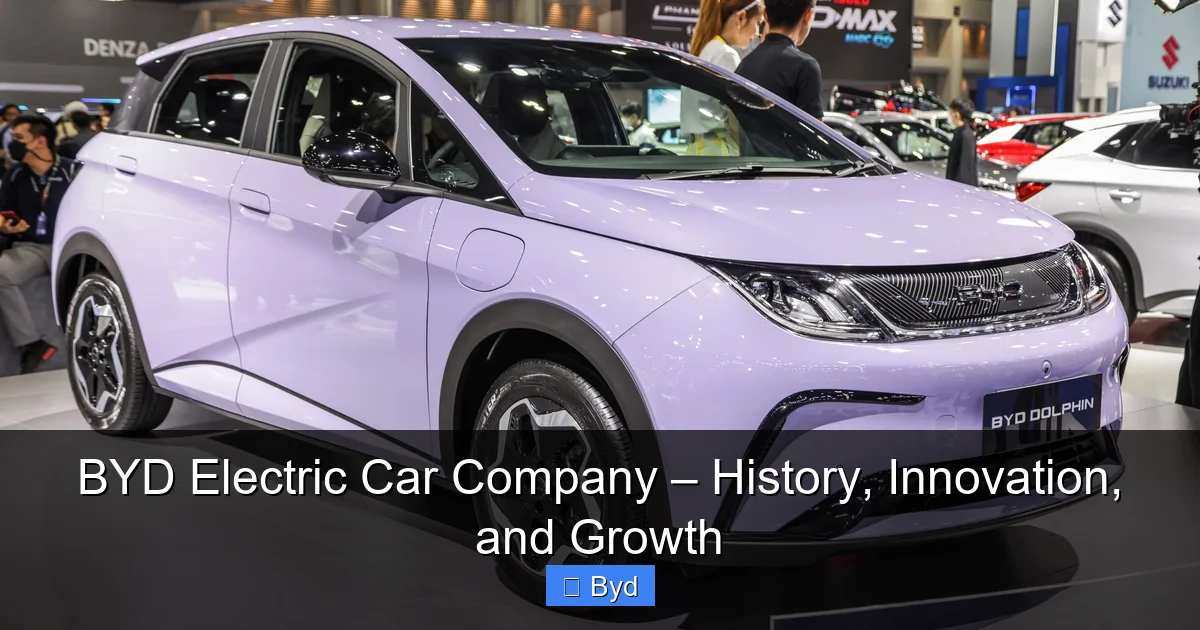
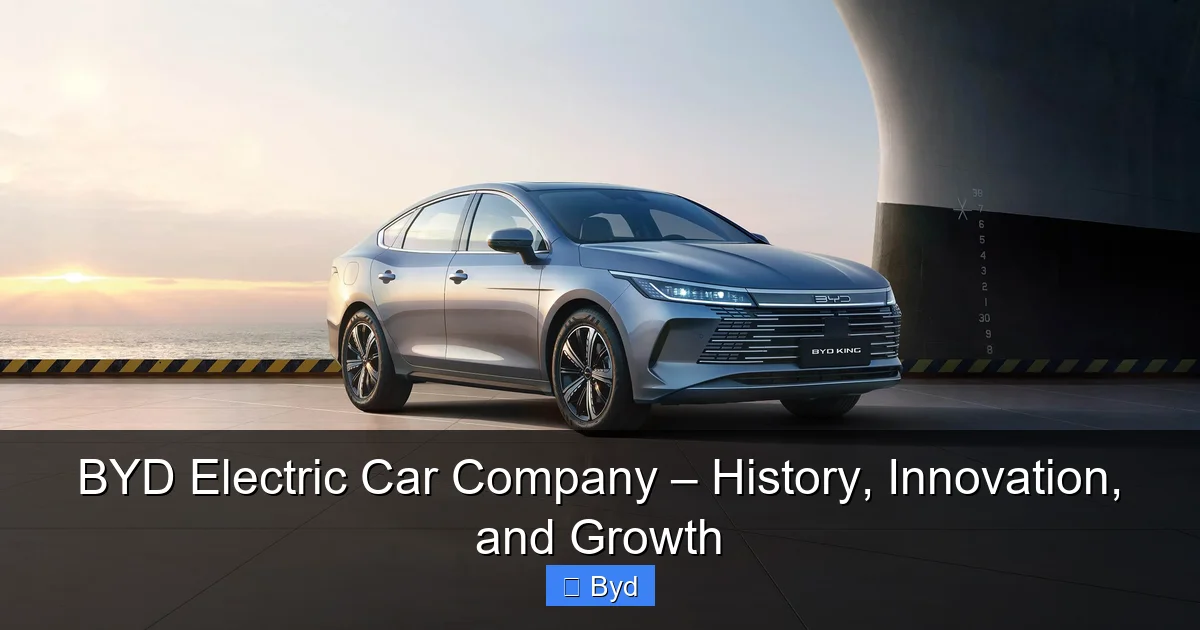
Featured image for this comprehensive guide about byd electric car company
Image source: paultan.org
In the rapidly evolving landscape of sustainable transportation, one name has consistently risen to prominence, challenging established automotive giants and redefining what’s possible in the electric vehicle (EV) industry: BYD electric car company. From its humble beginnings as a battery manufacturer, BYD has orchestrated a remarkable transformation, becoming a global powerhouse that champions innovation, sustainability, and unparalleled growth. Its journey is a testament to visionary leadership, relentless technological pursuit, and an unwavering commitment to electrifying the world.
For many, the mention of electric cars immediately brings to mind familiar Western brands, but increasingly, the conversation shifts to Asia, where BYD EV models are making significant waves. This Chinese multinational conglomerate, whose name stands for “Build Your Dreams,” is no longer just a challenger; it’s a frontrunner, reshaping the automotive industry with its integrated approach to energy solutions. Its influence extends far beyond passenger cars, encompassing everything from electric buses and trucks to forklifts and even monorail systems, all powered by its advanced battery technologies.
This comprehensive blog post will delve deep into the fascinating world of BYD electric car company. We’ll explore its intriguing history, unpack the technological innovations that set it apart, marvel at its explosive growth, and understand its strategic vision for a greener future. Whether you’re an EV enthusiast, an industry observer, or simply curious about the companies driving the next generation of transportation, prepare to discover why BYD is a force to be reckoned with on the global stage.
Quick Answers to Common Questions
What does BYD stand for?
BYD stands for “Build Your Dreams.” This aspirational name reflects the company’s ambition and vision in the automotive and technology sectors, especially as a leading BYD electric car company.
Where is the BYD electric car company based?
The BYD electric car company is headquartered in Shenzhen, China. From these beginnings, it has grown into a formidable global player in various industries, including electric vehicles.
What types of vehicles does the BYD electric car company produce?
The BYD electric car company produces an extensive range of electric vehicles, including popular passenger cars (like sedans, SUVs, and hatchbacks), buses, trucks, and even electric forklifts.
Are BYD electric cars available outside of China?
Yes, BYD electric cars are rapidly expanding their global footprint and are now available in numerous markets across Europe, Asia, Latin America, Australia, and more, offering consumers worldwide access to their innovative EVs.
What’s a key innovation from the BYD electric car company?
A significant innovation from the BYD electric car company is its revolutionary Blade Battery technology. This design enhances safety, increases energy density, and improves the overall durability of their electric vehicles.
📋 Table of Contents
- The Genesis of a Giant: BYD’s Humble Beginnings and Vision
- Powering the Future: BYD’s Groundbreaking Battery Technology
- A Fleet of Innovation: BYD’s Diverse Electric Vehicle Portfolio
- Global Ambition and Exponential Growth: BYD’s Market Domination
- Driving Sustainability: BYD’s Commitment to a Greener Planet
- The Road Ahead: What’s Next for BYD?
- Conclusion: Building Dreams, Electrifying the World
The Genesis of a Giant: BYD’s Humble Beginnings and Vision
The story of BYD electric car company is not one that began on an automotive assembly line. It started in 1995, in Shenzhen, China, with a bold vision from its founder, Wang Chuanfu. Originally established as a rechargeable battery manufacturer, BYD quickly made a name for itself by producing nickel-cadmium batteries for various electronic devices, including mobile phones. Its rapid success in this sector, fueled by an emphasis on research and development, allowed it to become a significant supplier for global electronics brands.
Learn more about byd electric car company – BYD Electric Car Company – History, Innovation, and Growth
Image source: byd.com
Wang Chuanfu, with a keen eye on future trends and a deep understanding of battery chemistry, recognized the immense potential of electric power beyond small electronics. He envisioned a world where this power could revolutionize transportation. This audacious vision led BYD to enter the automotive industry in 2003, acquiring the struggling Qinchuan Automobile Company. This strategic move marked a pivotal moment, laying the groundwork for what would eventually become a leading BYD electric car company.
| Metric | BYD Performance (2023 Full Year) | Key Comparison (e.g., Tesla) | Notes/Context |
|---|---|---|---|
| Total NEV Sales (BEV + PHEV) | ~3.02 Million Units | Tesla: ~1.81 Million Units (BEV only) | BYD led global new energy vehicle sales, including plug-in hybrids. |
| Battery Electric Vehicle (BEV) Sales | ~1.57 Million Units | Tesla: ~1.81 Million Units | BYD briefly surpassed Tesla in Q4 2023 BEV sales volume. |
| Global BEV Market Share | ~15.5% (2023) | Tesla: ~19.9% (2023) | Rapidly closing the gap with significant growth, especially in Q4. |
| Core Battery Technology | Blade Battery (LFP) | Diverse (e.g., NCA, NCM, LFP) | Known for enhanced safety, durability, and cost-effectiveness. |
| International Presence | ~70+ Countries & Regions | Aggressive global expansion | Strong focus on Europe, APAC, Latin America markets. |
The transition from batteries to cars was not without its challenges. Early BYD models were often criticized for their design and perceived quality. However, Wang Chuanfu’s strategy was clear: leverage BYD’s core competency in battery technology to create a competitive advantage in the burgeoning EV market. This vertical integration — controlling the entire production process from batteries to vehicles — became a cornerstone of BYD’s business model and a key driver of its eventual success. The initial years were about learning, adapting, and relentlessly pursuing the dream of electrifying the world’s roads.
Powering the Future: BYD’s Groundbreaking Battery Technology
At the heart of every BYD electric car company success story lies its unparalleled expertise in battery technology. Unlike many competitors who rely on external suppliers, BYD has maintained complete control over its battery development and manufacturing, leading to innovations that have redefined safety, longevity, and performance in electric vehicles. This strategic advantage is perhaps best exemplified by its revolutionary Blade Battery.
Learn more about byd electric car company – BYD Electric Car Company – History, Innovation, and Growth
Image source: blogger.googleusercontent.com
The Game-Changing Blade Battery
Unveiled in 2020, the Blade Battery is a testament to BYD innovation and engineering prowess. It utilizes lithium iron phosphate (LFP) chemistry, known for its inherent stability and long cycle life, but with a radically re-engineered cell-to-pack design. Instead of traditional modular battery packs, the Blade Battery features long, thin battery cells arranged like blades within the battery pack. This innovative design offers several critical advantages:
- Enhanced Safety: The Blade Battery has undergone rigorous safety tests, including the notorious nail penetration test, emerging virtually unscathed. Its thermal stability significantly reduces the risk of thermal runaway, a major concern for EV batteries. This makes BYD electric car company vehicles among the safest in terms of battery integrity.
- Increased Space Utilization: By eliminating traditional modules and integrating the cells directly into the pack, the Blade Battery achieves a higher energy density per unit volume. This means more range from a smaller footprint, allowing for more cabin space or a sleeker vehicle design.
- Extended Lifespan: LFP chemistry naturally offers a longer lifespan compared to other battery chemistries, often exceeding 3,000 to 5,000 charge cycles before significant degradation. This contributes to the overall longevity and value of a BYD EV.
- Cost-Effectiveness: LFP batteries use more abundant and less expensive materials (iron and phosphate) compared to nickel and cobalt, contributing to lower production costs and, consequently, more affordable electric vehicles.
Vertical Integration and Self-Sufficiency
BYD’s control over its battery supply chain is a significant competitive edge. From raw material procurement to battery cell production and pack assembly, every step is managed internally. This vertical integration ensures consistent quality, optimized performance, and shields the company from supply chain disruptions that often plague the broader EV industry. This comprehensive approach underscores why BYD electric car company is not just an automaker but a holistic energy solutions provider.
A Fleet of Innovation: BYD’s Diverse Electric Vehicle Portfolio
The evolution of BYD electric car company‘s product lineup reflects its journey from a niche player to a global automotive leader. Today, BYD boasts an incredibly diverse portfolio of electric vehicles, catering to a wide range of consumers and commercial needs. Each model showcases BYD’s commitment to cutting-edge technology, striking design, and practical functionality.
Passenger Vehicles: Style, Performance, and Accessibility
BYD’s passenger car division has witnessed explosive BYD growth, with a range of models designed to appeal to different market segments. These vehicles are built on BYD’s advanced e-Platform 3.0, which integrates key components, optimizes weight distribution, and enhances overall efficiency and safety. Popular models include:
- BYD Dolphin: A compact, urban-friendly hatchback known for its vibrant design, spacious interior, and affordability. It’s a prime example of an accessible BYD EV for everyday commuting.
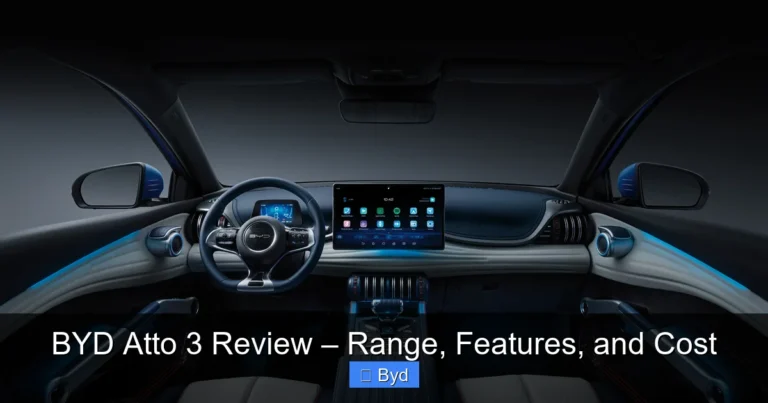
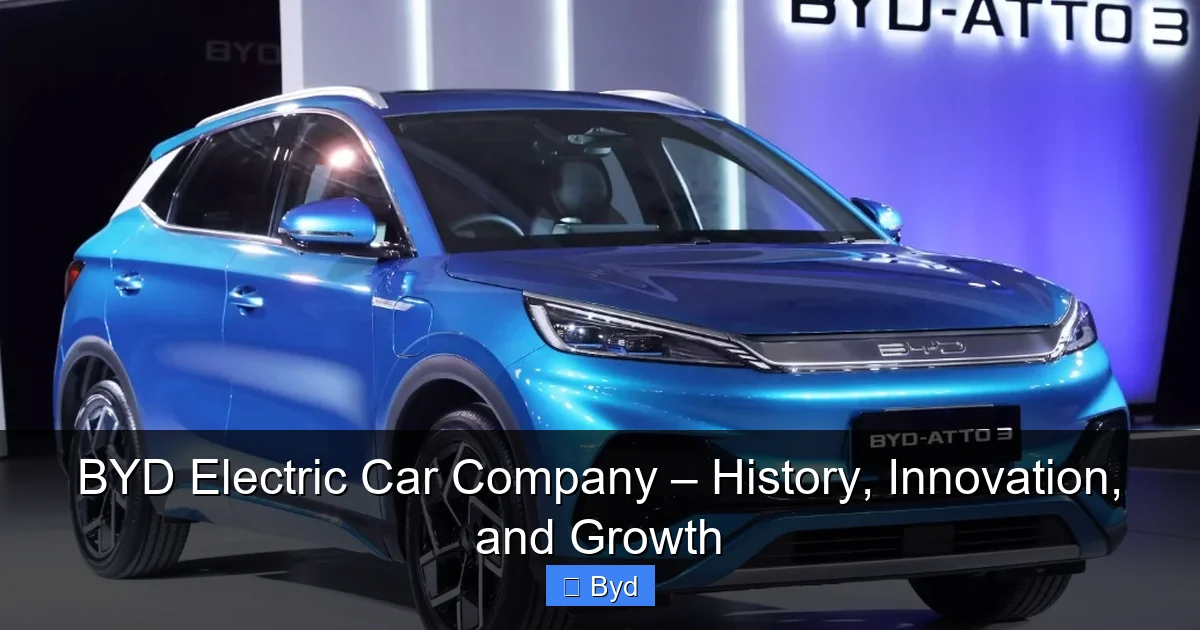
- BYD Atto 3 (Yuan Plus): A highly popular compact SUV that has garnered international acclaim. It features a modern interior, impressive range, and dynamic driving characteristics, positioning it as a strong competitor in the global SUV market.
- BYD Seal: A sleek, sporty sedan designed to compete with premium electric vehicles. It showcases elegant aesthetics, powerful performance, and advanced intelligent features, highlighting BYD’s capability in higher-end segments.
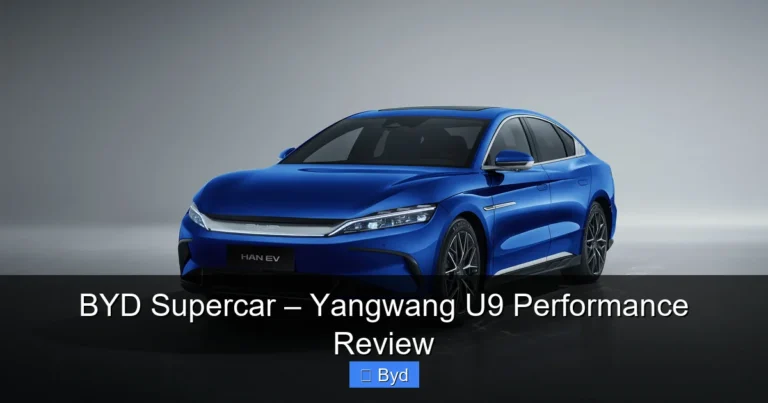
- BYD Han: A luxurious flagship sedan offering a blend of performance, sophisticated design, and advanced technology. It demonstrates BYD’s ambition to compete with established luxury brands.
- BYD Tang: A stylish and powerful seven-seater SUV, known for its impressive acceleration, luxurious interior, and practicality for families.
These models are not just electric; they embody a shift in automotive design and user experience. With features like rotating infotainment screens, premium materials, and advanced driver-assistance systems, BYD is proving that sustainable transport can also be stylish and sophisticated.
Commercial Vehicles: Electrifying Public and Industrial Transport
Beyond passenger cars, BYD electric car company has been a pioneer in electrifying public and commercial transport sectors globally. Its electric buses and trucks are deployed in cities worldwide, contributing significantly to reducing urban pollution and noise.
- Electric Buses: BYD is the world’s largest manufacturer of electric buses, with its models operating in hundreds of cities across six continents. These buses are known for their reliability, long range, and quiet operation, making urban transport cleaner and more efficient.
- Electric Trucks: From refuse collection vehicles to logistics trucks, BYD offers a range of electric trucks designed for various commercial applications, helping businesses reduce their carbon footprint and operational costs.
- Electric Forklifts and Specialized Vehicles: BYD’s expertise extends to industrial applications, providing electric forklifts and other specialized vehicles that enhance efficiency and sustainability in logistics and manufacturing.
This extensive range of vehicles underscores BYD’s holistic approach to electrification, demonstrating its capability to build a comprehensive ecosystem of electric mobility solutions.
Global Ambition and Exponential Growth: BYD’s Market Domination
The trajectory of BYD electric car company‘s growth has been nothing short of phenomenal. What started as a domestic battery firm has blossomed into a global automotive giant, challenging and often surpassing established players in the race for EV market share. This exponential growth is driven by a combination of strategic foresight, aggressive market expansion, and an unparalleled product lineup.
Market Share and Production Prowess
BYD has consistently broken sales records, especially in its home market of China, which is the world’s largest EV market. In recent years, BYD has frequently outsold rivals, including Tesla, in total EV and plug-in hybrid sales globally. Its production capacity has scaled dramatically, fueled by significant investments in new manufacturing plants and technological advancements. This allows BYD to meet the surging demand for its diverse range of BYD EV models.
- Dominance in China: BYD holds a commanding lead in the Chinese NEV (New Energy Vehicle) market, leveraging its strong brand recognition, vast dealer network, and diverse product offerings.
- International Expansion: BYD has aggressively expanded into international markets, particularly in Europe, Southeast Asia, Australia, and Latin America. It has established a strong presence through local partnerships, dedicated showrooms, and robust after-sales support.
- Sales Milestones: The company regularly announces impressive sales figures, often hitting monthly and quarterly records that highlight its rapid ascent in the global automotive hierarchy.
Strategic Partnerships and Investment
A key aspect of BYD growth has been its ability to forge strategic partnerships and attract significant investment. Early on, Warren Buffett’s Berkshire Hathaway made a substantial investment in BYD, providing crucial capital and a powerful endorsement that bolstered investor confidence. Furthermore, BYD has collaborated with various international partners for technology development, market entry, and localized manufacturing, showcasing its adaptability and global integration.
The company’s success is not just in selling vehicles; it’s in building an entire ecosystem. This includes developing charging infrastructure solutions, energy storage systems, and even semiconductor manufacturing capabilities, further solidifying its vertical integration and reducing reliance on external suppliers. This comprehensive strategy positions BYD electric car company as a resilient and self-sufficient player in a complex global market.
Driving Sustainability: BYD’s Commitment to a Greener Planet
At its core, BYD electric car company is driven by a profound commitment to sustainability and environmental stewardship. The company’s mission, “Technological Innovations for a Better Life,” is deeply intertwined with its efforts to combat climate change and promote greener living. This commitment is evident across its entire value chain, from manufacturing processes to the end products it delivers.
Holistic Sustainable Solutions
BYD’s vision extends beyond simply producing electric vehicles. It aims to provide comprehensive new energy solutions that address multiple facets of sustainable living. This holistic approach is often encapsulated in its “3 Green Dreams”:
- Electrification of Transportation: Replacing fossil fuel-powered vehicles with electric alternatives across all segments – passenger cars, buses, trucks, and specialized vehicles. This is the most visible aspect of BYD EV‘s contribution to sustainability.
- Solar Power Generation: Developing and deploying solar energy solutions to generate clean electricity, reducing reliance on fossil fuels.
- Energy Storage: Creating advanced battery energy storage systems (BESS) for homes, businesses, and grid-scale applications, enabling efficient management and utilization of renewable energy.
By integrating these three pillars, BYD offers a closed-loop clean energy ecosystem that maximizes efficiency and minimizes environmental impact. This makes BYD electric car company not just an automaker but a pivotal player in the global energy transition.
Eco-Friendly Manufacturing and Practices
BYD is also dedicated to making its manufacturing processes as environmentally friendly as possible. This includes:
- Reducing Waste: Implementing strategies to minimize waste generation and increase recycling rates in its factories.
- Water Conservation: Employing advanced water treatment and recycling systems to reduce water consumption.
- Renewable Energy in Production: Increasingly powering its manufacturing facilities with renewable energy sources, including its own solar installations.
- Ethical Sourcing: Striving for responsible and ethical sourcing of raw materials, particularly for its batteries, focusing on reducing the environmental and social impact of mining.
These efforts underscore BYD’s dedication to corporate social responsibility and its role in fostering a sustainable future for all. The growth of BYD electric car company is thus inextricably linked to the global imperative for greener, more responsible industrial practices.
The Road Ahead: What’s Next for BYD?
As BYD electric car company continues its meteoric rise, the future holds immense promise and new challenges. The company is not resting on its laurels but is actively investing in next-generation technologies, expanding into new markets, and refining its strategies to maintain its competitive edge.
Continued Technological Advancement
Innovation remains at the core of BYD’s strategy. Expect to see continued advancements in:
- Battery Technology: Further iterations of the Blade Battery, potentially with even higher energy density, faster charging capabilities, and extended lifespans. BYD’s battery R&D is a continuous cycle of improvement.
- Intelligent Driving Systems: BYD is heavily investing in autonomous driving capabilities and advanced driver-assistance systems (ADAS), aiming to integrate more sophisticated AI and sensor technology into its vehicles. This will enhance both safety and convenience for BYD EV owners.
- e-Platform Evolution: The modular e-Platform 3.0 provides a flexible and efficient architecture for future models. Expect to see new vehicle types, including potentially ultra-luxury segments and more specialized commercial vehicles, all built upon this robust foundation.
- PHEV Innovation (DM-i/DM-p): While primarily known for BEVs, BYD’s DM-i (Dual Mode – intelligent) and DM-p (Dual Mode – powerful) plug-in hybrid systems are industry-leading, offering exceptional fuel efficiency and performance. Expect these technologies to evolve further, bridging the gap for consumers not yet ready for full BEV adoption.
Global Market Expansion and Diversification
BYD’s global ambitions show no signs of slowing down. The company is expected to:
- Enter New Markets: Continue its expansion into untapped regions, particularly in emerging economies where the demand for affordable and reliable EVs is growing.
- Strengthen European Presence: Further solidify its foothold in Europe, a key market for premium EVs, by introducing more competitive models and building a stronger brand identity.
- Localize Production: Increase localized manufacturing in key international markets to reduce logistical costs, improve supply chain resilience, and adapt products to local preferences. This strategic localization is crucial for sustained BYD growth.
Addressing Challenges
While the outlook is bright, BYD electric car company will face challenges, including:
- Intensified Competition: The global EV market is becoming increasingly crowded with new entrants and established automakers pouring resources into electrification.
- Supply Chain Volatility: Despite its vertical integration, BYD is still susceptible to global supply chain disruptions for certain components and raw materials.
- Brand Perception: In some Western markets, BYD may still need to overcome perceptions related to its Chinese origin, working to build trust and demonstrate premium quality.
However, with its strong foundation in battery technology, relentless innovation, and a clear strategic roadmap, BYD is exceptionally well-positioned to navigate these challenges and continue its ascent as a global leader in sustainable transportation.
Key BYD EV Model Specifications
To illustrate the breadth and capability of BYD’s current offerings, here’s a snapshot of some popular models:
| Model | Type | Battery Capacity (kWh) | WLTP Range (km) | Key Feature/Highlight |
|---|---|---|---|---|
| BYD Dolphin | Compact Hatchback | 44.9 / 60.4 | 340 / 427 | Affordable urban EV, spacious interior. |
| BYD Atto 3 (Yuan Plus) | Compact SUV | 49.92 / 60.48 | 345 / 420 | Globally popular, modern design, engaging drive. |
| BYD Seal | Mid-size Sedan | 61.4 / 82.5 | 460 / 570 | Sporty performance, sleek design, CTP 2.0. |
| BYD Han EV | Full-size Sedan | 85.4 | 605 (CLTC) | Luxury flagship, powerful, sophisticated interior. |
| BYD Tang EV | Mid-size SUV (7-seater) | 86.4 | 400 (WLTP) | Family-friendly, robust performance, premium features. |
Note: Ranges and specifications may vary slightly by market and configuration. WLTP = Worldwide Harmonized Light Vehicles Test Procedure; CLTC = China Light-duty Vehicle Test Cycle.
Conclusion: Building Dreams, Electrifying the World
The journey of BYD electric car company is a powerful narrative of ambition, innovation, and relentless execution. From its origins in battery manufacturing to its current status as a global leader in new energy vehicles, BYD has not just built cars; it has built an entire ecosystem of sustainable solutions. Its commitment to vertical integration, pioneering battery technology like the Blade Battery, and a diverse product portfolio has allowed it to outpace many competitors and redefine the automotive landscape.
As the world accelerates its transition towards sustainable transportation, BYD stands at the forefront, not merely reacting to market demands but actively shaping them. Its unwavering dedication to technological advancement, aggressive global expansion, and a holistic approach to environmental responsibility positions it as a critical player in the fight against climate change. The future of mobility is undoubtedly electric, and BYD EV is poised to be one of the most significant architects of that future.
Whether you’re considering an electric vehicle for your next purchase, following the pulse of the automotive industry, or simply inspired by companies that are genuinely building dreams, BYD offers a compelling story of progress and potential. Keep an eye on BYD electric car company; its journey is far from over, and its impact on electrifying the world is only just beginning to be fully realized.
Frequently Asked Questions
What does BYD stand for, and what is the BYD electric car company’s origin story?
BYD stands for “Build Your Dreams.” Founded in 1995 by Wang Chuanfu, the company initially focused on rechargeable batteries before expanding into the automotive sector in 2003, later prioritizing new energy vehicles (NEVs) including electric cars.
What specific innovations distinguish BYD electric car batteries from others in the market?
BYD is renowned for its Blade Battery technology, a lithium iron phosphate (LFP) battery that offers exceptional safety, durability, and a longer lifespan. This innovative design also optimizes space utilization, contributing to better vehicle performance and range.
How has the BYD electric car company achieved its remarkable global growth and market position?
BYD’s growth is driven by its strong vertical integration, allowing control over core components like batteries and semiconductors, along with a diverse product portfolio. Aggressive expansion into international markets and a focus on both affordability and advanced technology have solidified its global leadership.
Beyond batteries, what other key innovative technologies are integrated into BYD electric cars?
BYD electric cars feature the advanced e-Platform 3.0, designed for intelligence, efficiency, and safety. They also incorporate intelligent connectivity with the DiLink intelligent cockpit system and Cell-to-Body (CTB) technology, further enhancing structural integrity and space.
What range of electric car models does the BYD electric car company currently offer?
The BYD electric car company offers a diverse range of passenger vehicles, including popular models like the BYD Atto 3 (Yuan Plus), Dolphin, and Seal, covering various segments from hatchbacks to sedans and SUVs. These vehicles cater to different consumer needs with varying sizes, ranges, and features.
What are the future prospects and strategic directions for the BYD electric car company’s global expansion?
BYD is aggressively expanding its presence across Europe, Asia-Pacific, and Latin America, introducing new models tailored for specific markets. The company continues to invest heavily in research and development for smarter, safer, and more efficient electric vehicle technologies to maintain its competitive edge globally.