BYD Electric Car Range Comparison – Longest-Range Models
Featured image for this comprehensive guide about byd electric car range
Image source: piston.my
The electric vehicle (EV) revolution is in full swing, and one name that’s rapidly gaining global traction is BYD (Build Your Dreams). From its origins as a battery manufacturer, BYD has evolved into a powerhouse, producing some of the most innovative and popular EVs on the market today. As more drivers consider making the switch to electric, a common question consistently arises: “What about the range?”
Range anxiety, the fear of running out of power before reaching a charging station, is a significant hurdle for many prospective EV owners. However, with advancements in battery technology and expanding charging infrastructure, modern electric cars are more capable than ever. BYD, in particular, has made impressive strides in addressing this concern, offering a diverse lineup of vehicles designed to meet a wide array of driving needs, all featuring their groundbreaking Blade Battery technology.
In this comprehensive guide, we’ll dive deep into the world of BYD electric car range. We’ll explore the underlying technologies that make BYD a leader in the segment, demystify official range figures, and provide a detailed look at the range capabilities of popular BYD models. Whether you’re an urban commuter, a family adventurer, or someone looking for a long-distance cruiser, understanding the BYD electric car range is crucial for making an informed decision. Let’s build your dreams, one mile at a time!
Quick Answers to Common Questions
What’s a typical BYD electric car range I can expect?
Most BYD models offer a fantastic practical range, with many delivering between 400 to over 600 kilometers (WLTP) on a single charge, making them perfect for daily commutes and longer journeys alike.
Which BYD electric car has the longest range available?
The BYD Seal is often highlighted for its impressive long-distance capabilities, with some variants pushing the BYD electric car range upwards of 650 km on the WLTP cycle, making it a top choice for maximum mileage.
Is the BYD electric car range enough for daily driving and errands?
Absolutely! Even the entry-level BYD models typically offer more than enough range for most daily commutes and errands, often exceeding 300-400 km, meaning less frequent charging stops for you.
How does real-world driving impact the stated BYD electric car range?
Like all EVs, factors such as driving style, speed, temperature, and using air conditioning can slightly reduce the stated BYD electric car range. However, BYD’s efficient battery technology still provides excellent practical mileage in various conditions.
Are BYD electric car ranges competitive with other popular EVs?
Definitely! BYD electric car range figures are very competitive, often matching or exceeding what’s offered by many well-known brands, providing excellent value and confidence for drivers looking for reliable long-distance travel.
📋 Table of Contents
- The Heart of BYD’s Range: Understanding Blade Battery Technology
- Decoding Range Figures: WLTP, CLTC, and Real-World Performance for BYD EVs
- A Deep Dive into BYD Model Ranges: From Dolphin to Seal and Beyond
- Maximizing Your BYD Electric Car Range: Practical Tips and Strategies
- The Future of BYD Range: Innovations on the Horizon
- Addressing Range Anxiety with BYD: Confidence on the Road
- Conclusion
The Heart of BYD’s Range: Understanding Blade Battery Technology
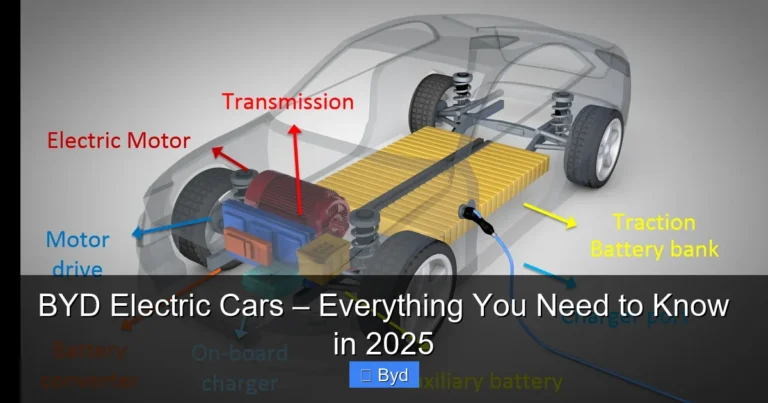
At the core of every modern BYD electric vehicle lies a technological marvel: the Blade Battery. This innovation isn’t just a fancy name; it’s a fundamental shift in battery design and chemistry that significantly impacts the BYD electric car range, safety, and longevity. Unlike traditional block-shaped lithium-ion cells, BYD’s Blade Battery utilizes elongated, blade-like cells that are arranged in an array and then inserted into the battery pack.

Learn more about byd electric car range – BYD Electric Car Range Comparison – Longest-Range Models
Image source: paultan.org
What Makes the Blade Battery Special?
The ingenuity of the Blade Battery stems from several key aspects:
| BYD Model | Battery Capacity (kWh) | WLTP Range (km) | Vehicle Segment |
|---|---|---|---|
| Dolphin (Extended Range) | 60.48 | 427 | Compact Hatchback |
| Atto 3 (Extended Range) | 60.48 | 420 | Compact SUV |
| Seal (Long Range RWD) | 82.5 | 570 | Sport Sedan |
| Han EV (Flagship) | 85.4 | 610 | Executive Sedan |
| Tang EV (Long Range) | 108.8 | 530 | Large SUV |
- Enhanced Safety: Perhaps its most celebrated feature is its exceptional safety record. The Blade Battery has passed rigorous tests, including the notorious nail penetration test, without catching fire or exploding. This is largely due to its Lithium Iron Phosphate (LFP) chemistry, which is inherently more stable and less prone to thermal runaway compared to other lithium-ion chemistries.
- Increased Space Utilization: The ‘blade’ design allows for a higher volume utilization rate within the battery pack. By arranging cells in a more compact and efficient manner, BYD can pack more energy into the same space, directly translating to a better BYD electric car range without significantly increasing the vehicle’s footprint or weight. This cell-to-pack (CTP) technology eliminates the need for modules, further streamlining the battery structure.
- Exceptional Longevity: LFP batteries are renowned for their long cycle life, meaning they can withstand a greater number of charge and discharge cycles before significant degradation occurs. This translates to a longer operational life for the vehicle’s battery, providing peace of mind to owners regarding the long-term performance of their BYD electric car range.
- Environmental Benefits: LFP chemistry avoids the use of cobalt, a material often associated with ethical and environmental concerns in its mining. This makes the Blade Battery a more sustainable choice in the EV landscape.
How Blade Battery Impacts BYD Electric Car Range
The practical implications of the Blade Battery for BYD electric car range are profound. Its high energy density, combined with its compact packaging, allows BYD vehicles to carry larger battery capacities without compromising cabin space or vehicle dynamics. This means more kilowatt-hours (kWh) available for propulsion, leading to extended driving distances on a single charge. Furthermore, the battery’s robust construction and thermal management systems ensure consistent performance across various temperatures, helping to maintain optimal range even in challenging conditions. The inherent stability also allows for faster charging rates, reducing downtime and enhancing the overall EV ownership experience.
Decoding Range Figures: WLTP, CLTC, and Real-World Performance for BYD EVs
When you start researching electric vehicles, you’ll inevitably encounter various range figures like WLTP, CLTC, NEDC, or EPA. These acronyms represent different testing standards used to measure an EV’s range, and understanding them is crucial for setting realistic expectations about your BYD electric car range. It’s important to remember that these are laboratory tests, and real-world results will almost always vary.
Learn more about byd electric car range – BYD Electric Car Range Comparison – Longest-Range Models
Image source: autotijd.be
WLTP vs. CLTC: What Do the Numbers Mean?
- WLTP (Worldwide Harmonized Light Vehicles Test Procedure): This is arguably the most common standard globally, used extensively in Europe, Australia, and many other regions. WLTP is designed to be more realistic than its predecessor (NEDC) by incorporating a wider range of driving conditions, speeds, temperatures, and dynamic maneuvers. While it’s a significant improvement, it still represents an idealized scenario. A BYD electric car range quoted in WLTP will typically be higher than what you might achieve in everyday mixed driving.
- CLTC (China Light-Duty Vehicle Test Cycle): As BYD is a Chinese company, many of its models are initially certified using the CLTC standard, particularly for the Chinese market. The CLTC cycle tends to be even more optimistic than WLTP. It involves lower average speeds and less aggressive acceleration/deceleration, reflecting typical urban driving conditions in some Chinese cities. Therefore, a BYD electric car range figure based on CLTC will almost always be higher than its WLTP or real-world equivalent. It’s crucial to be aware of this distinction when comparing models or making purchase decisions.
- NEDC (New European Driving Cycle): An older, less realistic standard that is largely being phased out. If you see an NEDC range, treat it with caution, as it will be significantly inflated compared to real-world driving.
Bridging the Gap: Real-World BYD Electric Car Range
While official figures provide a baseline, numerous factors influence the actual BYD electric car range you’ll experience on the road:
- Driving Style: Aggressive acceleration, high speeds, and frequent hard braking consume significantly more energy. Smooth, consistent driving is key to maximizing range.
- Temperature: Cold weather reduces battery efficiency and increases the need for cabin heating, both of which can notably decrease range. Conversely, very hot weather can also impact efficiency, especially with heavy air conditioning use.
- Terrain: Driving uphill requires more energy than driving on flat roads. Regenerative braking can recoup some energy on descents, but overall, hilly routes will reduce range.
- Load: Carrying heavy passengers or cargo increases the vehicle’s weight, requiring more energy to move and thus reducing range.
- Auxiliary Systems: Using climate control (heating and air conditioning), heated seats, infotainment systems, and other electrical accessories draws power from the battery, impacting the available BYD electric car range for propulsion.
- Tire Pressure: Under-inflated tires increase rolling resistance, forcing the motor to work harder and reducing efficiency.
As a general rule of thumb, expect your real-world BYD electric car range to be 15-25% lower than the official WLTP figure, and potentially 30-40% lower than the CLTC figure, depending on your driving conditions and habits.
A Deep Dive into BYD Model Ranges: From Dolphin to Seal and Beyond
BYD offers a compelling range of electric vehicles, each designed to cater to different segments of the market, from compact urban hatchbacks to executive sedans and family SUVs. Each model boasts impressive range figures, largely thanks to the underlying Blade Battery technology. Let’s explore the BYD electric car range across its most popular models.
BYD Dolphin Range: Urban Agility
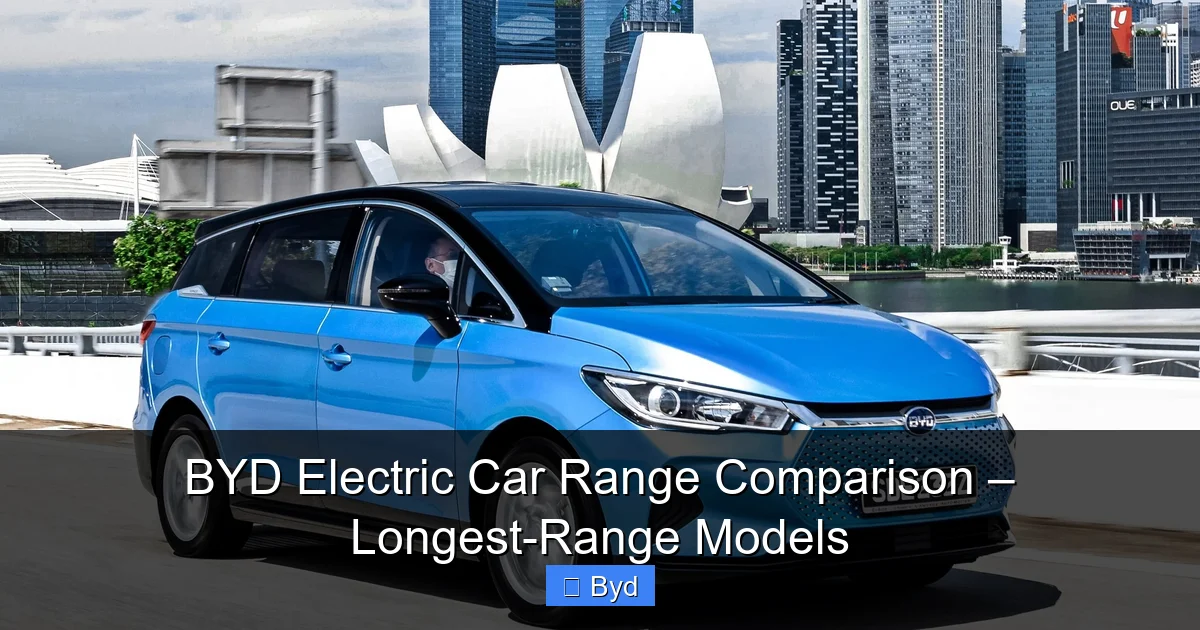
The BYD Dolphin is a compact, stylish hatchback perfect for city dwellers and those seeking an agile and efficient urban commuter. It offers surprising interior space for its class and a respectable range.
- Battery Options: Typically offered with 44.9 kWh or 60.48 kWh (Extended Range) Blade Batteries.
- Official WLTP Range:
- 44.9 kWh: Approximately 340 km (211 miles)
- 60.48 kWh: Approximately 427 km (265 miles)
- Estimated Real-World Range:
- 44.9 kWh: 270-300 km (168-186 miles)
- 60.48 kWh: 350-380 km (217-236 miles)
BYD Atto 3 Range: The Family SUV Sweet Spot
The BYD Atto 3 (also known as Yuan Plus in some markets) is a popular compact SUV, offering a blend of practicality, comfort, and advanced features. It’s a strong contender for families and those needing more versatility than a hatchback.
- Battery Options: Usually available with a 60.48 kWh Blade Battery.
- Official WLTP Range: Approximately 420 km (261 miles).
- Estimated Real-World Range: 340-370 km (211-230 miles).
BYD Seal Range: Performance and Long Haul Capability
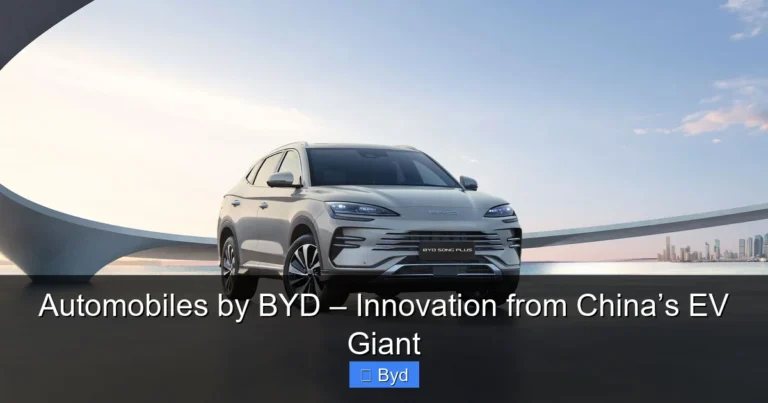
The BYD Seal is an elegant and sporty sedan designed to compete with premium EVs. It combines striking aesthetics with impressive performance and a substantial BYD electric car range, making it suitable for longer journeys and enthusiastic driving.
- Battery Options: Available with 61.4 kWh (Dynamic) or 82.5 kWh (Excellence/Performance) Blade Batteries.
- Official WLTP Range:
- 61.4 kWh: Approximately 510 km (317 miles)
- 82.5 kWh: Approximately 570 km (354 miles) (RWD Excellence)
- 82.5 kWh: Approximately 520 km (323 miles) (AWD Performance, due to higher power draw)
- Estimated Real-World Range:
- 61.4 kWh: 410-450 km (255-280 miles)
- 82.5 kWh (RWD): 460-500 km (286-311 miles)
- 82.5 kWh (AWD): 420-460 km (261-286 miles)
BYD Han EV Range: Executive Luxury with Miles
The BYD Han EV is BYD’s flagship executive sedan, offering luxury, advanced technology, and a truly impressive long-distance BYD electric car range. It’s designed for those who demand premium features without range compromise.
- Battery Options: Typically uses an 85.4 kWh Blade Battery.
- Official WLTP Range: Approximately 521 km (324 miles).
- Official CLTC Range (AWD): Approximately 610 km (379 miles).
- Estimated Real-World Range: 420-460 km (261-286 miles).
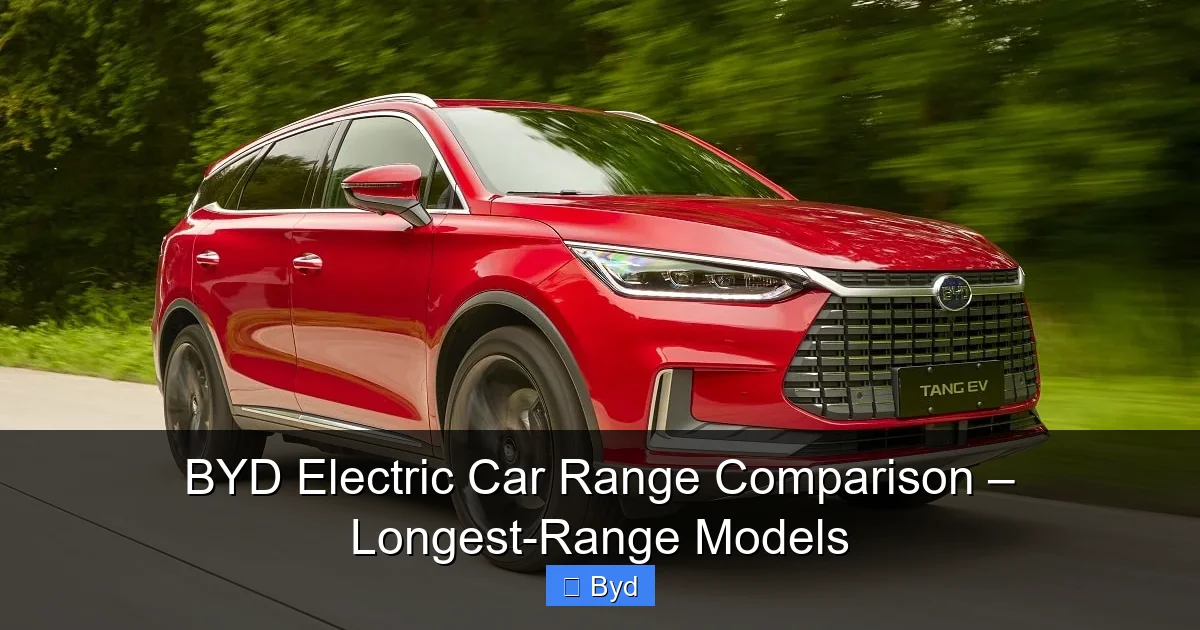
BYD Tang EV Range: Seven-Seater Versatility
The BYD Tang EV is a large, luxurious seven-seater SUV, perfect for larger families who need space, comfort, and a capable electric powertrain. Despite its size, it delivers a competitive BYD electric car range.
- Battery Options: Often equipped with an 86.4 kWh or 108.8 kWh Blade Battery.
- Official WLTP Range (108.8 kWh): Approximately 530 km (329 miles).
- Official CLTC Range (108.8 kWh): Approximately 635 km (395 miles).
- Estimated Real-World Range (108.8 kWh): 430-470 km (267-292 miles).
To summarize the impressive **BYD electric car range** offerings, here’s a comparative table:
| BYD Model | Battery Capacity (kWh) | Official WLTP Range (km / miles) | Estimated Real-World Range (km / miles) | Primary Segment |
|---|---|---|---|---|
| Dolphin (Standard) | 44.9 | 340 / 211 | 270-300 / 168-186 | Urban Hatchback |
| Dolphin (Extended) | 60.48 | 427 / 265 | 350-380 / 217-236 | Urban Hatchback |
| Atto 3 | 60.48 | 420 / 261 | 340-370 / 211-230 | Compact SUV |
| Seal (Dynamic) | 61.4 | 510 / 317 | 410-450 / 255-280 | Sporty Sedan |
| Seal (Excellence RWD) | 82.5 | 570 / 354 | 460-500 / 286-311 | Premium Sedan |
| Seal (Performance AWD) | 82.5 | 520 / 323 | 420-460 / 261-286 | Performance Sedan |
| Han EV | 85.4 | 521 / 324 | 420-460 / 261-286 | Executive Sedan |
| Tang EV | 108.8 | 530 / 329 | 430-470 / 267-292 | 7-Seater SUV |
*Note: Range figures are approximate and based on available data. Real-world range will vary. Some models may have different battery options or range certifications depending on the market.
Maximizing Your BYD Electric Car Range: Practical Tips and Strategies
Owning a BYD EV with its excellent range capabilities is just the first step. Understanding how to maximize that range in your day-to-day driving can significantly enhance your ownership experience and reduce any lingering range anxiety. Here are some actionable tips to help you get the most out of your BYD electric car range.
Smart Driving Habits
- Smooth Acceleration and Braking: This is arguably the most impactful tip. Aggressive driving drains the battery quickly. Gentle acceleration, anticipating traffic, and smooth deceleration allow the regenerative braking system to recover more energy. Imagine driving with an egg under your accelerator pedal.
- Utilize Regenerative Braking: BYD vehicles feature advanced regenerative braking. Learn to feather the accelerator and allow the car to coast, letting the motor act as a generator and feed energy back into the battery. Many BYD models offer adjustable regeneration levels; experiment to find what works best for you.
- Maintain Optimal Speed: Aerodynamic drag increases exponentially with speed. Driving at highway speeds (e.g., 120 km/h or 75 mph) consumes significantly more energy than driving at a moderate speed (e.g., 90-100 km/h or 55-60 mph). If time allows, reducing your cruising speed on long trips can dramatically extend your BYD electric car range.
- Eco Mode: Most BYD EVs come with an ‘Eco’ driving mode. Engaging this mode often limits power output, softens throttle response, and optimizes climate control settings to prioritize efficiency over performance, helping you squeeze more miles out of your charge.
Pre-conditioning and Climate Control
- Pre-condition Your Cabin: In cold or hot weather, pre-heating or pre-cooling your BYD EV while it’s still plugged into the charger is a game-changer. This uses grid electricity to get the cabin to your desired temperature, rather than draining the battery once you start driving. Many BYD models allow this through their companion apps.
- Use Seat Heaters/Coolers: Heating or cooling your body directly with seat heaters/coolers is far more energy-efficient than trying to heat or cool the entire cabin with the HVAC system. Use these judiciously to extend your BYD electric car range.
Tire Pressure and Aerodynamics
- Maintain Correct Tire Pressure: Under-inflated tires increase rolling resistance and reduce efficiency. Check your tire pressure regularly and keep it at the manufacturer’s recommended level for optimal range and safety.
- Minimize Drag: Roof racks, cargo boxes, and open windows (especially at higher speeds) create aerodynamic drag, which increases energy consumption. Remove unnecessary external attachments when not in use.
Route Planning and Charging Infrastructure
- Plan Your Routes: Use in-car navigation or dedicated EV apps (like PlugShare or A Better Routeplanner) to plan routes, identify charging stations, and estimate energy consumption, especially for longer journeys. This helps avoid unnecessary detours and range anxiety.
- Charge Smart: While it’s tempting to always charge to 100%, frequent DC fast charging to full capacity can accelerate battery degradation. For daily driving, charging to 80-90% is often recommended, reserving 100% for longer trips. The Blade Battery is known for its robustness, but smart charging habits are always beneficial for extending battery life and thus your long-term BYD electric car range.
The Future of BYD Range: Innovations on the Horizon
BYD isn’t resting on its laurels; the company is continuously investing in research and development to push the boundaries of electric vehicle technology. The future promises even more impressive advancements that will further enhance the BYD electric car range, charging speeds, and overall EV ownership experience. These innovations demonstrate BYD’s commitment to staying at the forefront of the EV revolution.
Continuous Battery Advancements
- Higher Energy Density: While the Blade Battery already offers excellent energy density for its LFP chemistry, ongoing research aims to further improve this without compromising safety. This could lead to even larger capacities in the same physical footprint, translating directly to an extended BYD electric car range for future models.
- New Battery Chemistries: BYD is exploring next-generation battery technologies, including semi-solid-state and solid-state batteries. These technologies promise even greater energy density, faster charging times, and enhanced safety, potentially revolutionizing the industry.
- Improved Thermal Management: Enhancements in battery thermal management systems will allow batteries to operate at optimal temperatures more consistently, leading to better efficiency in extreme climates and extending battery lifespan. This directly supports more reliable and consistent BYD electric car range performance.
Software Optimizations and Over-the-Air Updates
- Advanced Battery Management Systems (BMS): Software plays a crucial role in optimizing battery performance. Future BMS advancements will allow for even more precise control over charging, discharging, and energy regeneration, squeezing every last electron out of the battery pack and improving the overall BYD electric car range.
- Predictive Range Algorithms: More sophisticated algorithms will offer highly accurate range predictions based on real-time driving conditions, topography, traffic, and even anticipated weather. This reduces range anxiety by providing more reliable information to the driver.
- Over-the-Air (OTA) Updates: Like smartphones, BYD vehicles can receive OTA updates. These updates can improve motor efficiency, refine regenerative braking, and optimize battery usage, effectively enhancing your BYD electric car range and performance over time without needing a trip to the service center.
Expanding Charging Networks and Infrastructure Integration
- Faster Charging Capabilities: As battery technology evolves, so too will the vehicle’s ability to accept higher charging rates. Future BYD models are expected to support even faster DC rapid charging, significantly reducing the time required for top-ups on long journeys.
- Vehicle-to-Grid (V2G) and Vehicle-to-Load (V2L) Integration: BYD is actively developing V2G and V2L capabilities, allowing EVs to not only draw power from the grid but also feed power back into it or power external devices. While not directly extending range, this enhances the utility and value of the EV, integrating it more deeply into our energy ecosystem and providing energy solutions.
Addressing Range Anxiety with BYD: Confidence on the Road
For many potential EV buyers, range anxiety remains a top concern, despite significant advancements in battery technology and charging infrastructure. However, BYD’s strategic approach—combining innovative battery tech with a diverse model lineup—is effectively mitigating this fear, empowering drivers with confidence on every journey. Understanding BYD’s commitment to reliability and the evolving EV ecosystem is key to overcoming range anxiety.
Understanding Charging Infrastructure
One of the primary reasons for range anxiety is the perceived lack of charging options. However, the charging landscape is rapidly expanding, and BYD owners benefit from this growth:
- Home Charging: For most EV owners, 80-90% of charging happens at home overnight. Installing a Level 2 (240V) charger provides a full charge for your BYD electric car range in 6-10 hours, ensuring you start each day with maximum range.
- Public AC (Level 2) Chargers: Widely available in urban areas, workplaces, and shopping centers, these chargers offer convenient top-ups for a few hours. While slower than DC fast chargers, they are perfect for extending your BYD electric car range while you run errands or work.
- Public DC Fast Chargers (Level 3): These are critical for long-distance travel. BYD models are designed to utilize rapid DC charging, allowing you to replenish a significant portion of your BYD electric car range (e.g., 10-80%) in as little as 30-45 minutes. The number of fast chargers on major routes is growing exponentially, making cross-country trips increasingly feasible.
- Charging Apps and Navigation: Modern EV navigation systems and smartphone apps provide real-time information on charger locations, availability, and charging speeds, making route planning and impromptu stops seamless.
BYD’s Commitment to Reliability and Longevity
Beyond impressive initial range figures, the long-term reliability of the battery is crucial. BYD’s Blade Battery provides immense peace of mind:
- Exceptional Durability: The LFP chemistry of the Blade Battery is known for its robustness and resistance to degradation over time, meaning the advertised BYD electric car range is more likely to hold up over years of ownership compared to some other battery types.
- Long Warranties: BYD typically offers comprehensive warranties on its battery packs (e.g., 8 years or 160,000 km), further underscoring their confidence in the battery’s longevity and performance. This financial reassurance helps alleviate concerns about battery replacement costs or diminished range down the line.
- Integrated Ecosystem: As an original battery manufacturer, BYD has unparalleled control over the entire EV production process, from cells to finished vehicles. This vertical integration allows for superior quality control and optimization, ensuring that every component works harmoniously to deliver reliable performance and an impressive BYD electric car range.
The Evolving EV Ecosystem
The entire EV landscape is rapidly evolving to support longer ranges and more convenient charging:
- Government Support and Incentives: Many governments worldwide are investing heavily in charging infrastructure and offering incentives for EV purchases, making adoption easier and more affordable.
- Battery Swapping Stations: In some markets, BYD is exploring battery swapping technology, offering a solution for ultra-fast “recharging” by simply exchanging a depleted battery for a fully charged one.
- Better Route Planners: Tools like A Better Routeplanner (ABRP) integrate real-time data, elevation changes, weather, and driving style to give highly accurate range predictions and charging recommendations for any trip, making range planning a breeze.
With its robust battery technology, diverse model offerings, and the rapidly improving charging infrastructure, BYD is effectively putting range anxiety in the rearview mirror. Drivers can embark on their journeys with confidence, knowing their BYD electric car range is not just a number, but a reliable promise.
Conclusion
As the world transitions towards sustainable mobility, BYD has firmly established itself as a frontrunner, offering a compelling array of electric vehicles that challenge traditional notions of range and performance. From the urban agility of the Dolphin to the executive luxury of the Han EV and the family-friendly Tang EV, there’s a BYD model with a BYD electric car range to suit almost every lifestyle and need.
The cornerstone of this success is undoubtedly BYD’s revolutionary Blade Battery technology, which combines exceptional safety, impressive energy density, and remarkable longevity. This innovation not only provides segment-leading range figures but also instills confidence in drivers, knowing their vehicle is powered by a robust and reliable energy source. While official range figures serve as a useful benchmark, understanding real-world driving factors and adopting smart driving habits can further maximize the miles you get from your BYD EV.
As BYD continues to innovate with advancements in battery chemistry, software optimizations, and integration with an expanding global charging network, the future of BYD electric car range looks brighter than ever. For those considering an electric vehicle, BYD offers not just a car, but a comprehensive solution to sustainable driving, effectively addressing and alleviating range anxiety. Embrace the electric future with BYD, and build your dreams, one long, confident journey at a time.
Frequently Asked Questions
Which BYD electric car currently offers the longest range?
The BYD Seal Excellence model often boasts one of the longest ranges, with its 82.5 kWh battery offering up to 570 km (WLTP) on a single charge. This makes it a top contender for drivers prioritizing maximum distance between recharges within the BYD lineup.
What factors can affect the actual BYD electric car range I experience?
Several factors can significantly impact your real-world BYD electric car range, including driving style, speed, ambient temperature, and the use of heating or air conditioning. Hilly terrain and heavy loads can also reduce the overall distance you can travel compared to advertised figures.
How accurate are the advertised BYD electric car range figures in everyday driving?
Advertised BYD electric car range figures, typically based on WLTP or CLTC testing cycles, represent optimal laboratory conditions. In everyday driving, factors like traffic, weather, and personal driving habits usually mean the actual range experienced will be slightly lower than the official rating, though these figures remain useful for comparison.
How does BYD electric car range compare to other brands in the market?
BYD electric car range is highly competitive, often matching or exceeding many established rivals, especially when considering their advanced Blade Battery technology. Models like the Han and Seal demonstrate that BYD is at the forefront of offering long-range electric vehicles across various segments.
Are there specific BYD models known for their exceptional electric car range suitable for long trips?
Yes, models such as the BYD Han EV and BYD Seal are particularly well-suited for long trips due to their larger battery capacities and impressive electric car range figures. These flagship sedans are designed to offer extended driving distances, making them excellent choices for journeys requiring fewer charging stops.
What is the typical BYD electric car range I can expect across their popular models?
Across BYD’s popular lineup, you can generally expect a BYD electric car range anywhere from approximately 300 km for more compact models to well over 500 km (WLTP) for their longer-range sedans and SUVs. This variance largely depends on the specific model and its battery pack size.