BYD Electric Car Stock Forecast for 2025
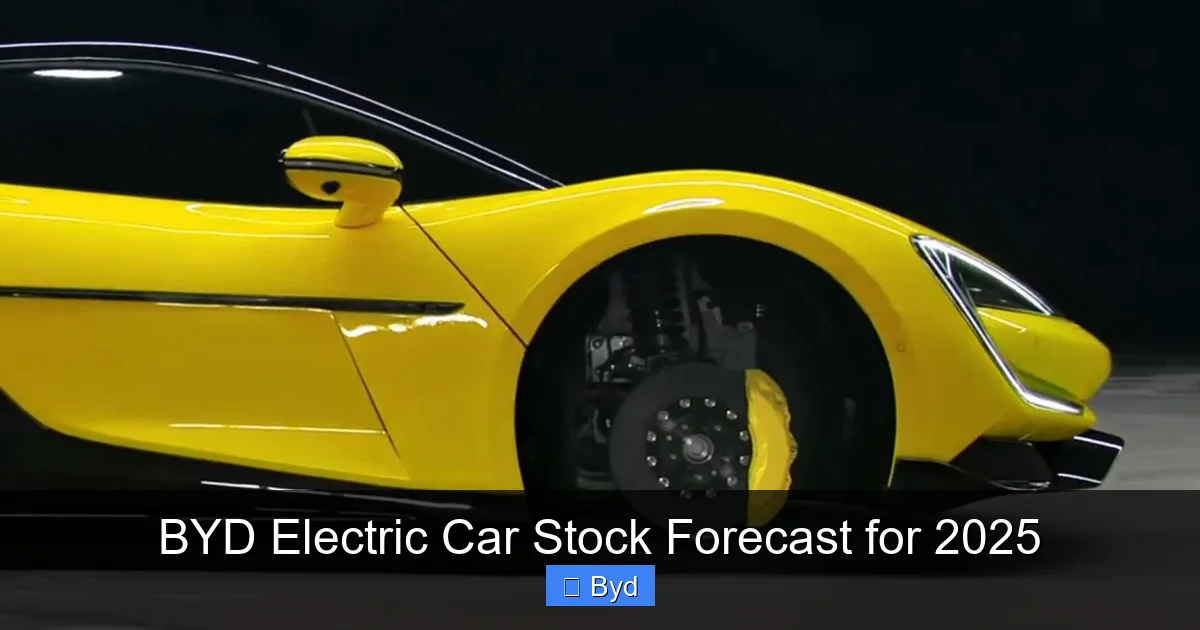
Featured image for this comprehensive guide about byd electric car stock
Image source: cdn.motor1.com
The global automotive landscape is undergoing a monumental transformation, driven by an accelerating shift towards electric vehicles (EVs). At the forefront of this revolution stands BYD (Build Your Dreams), a Chinese multinational manufacturing company that has rapidly ascended to become a dominant force in the EV market. Once a lesser-known challenger, BYD has not only carved out a significant niche but has also, at times, surpassed industry giants in sales volume. This remarkable growth naturally turns investors’ eyes towards its financial prospects, specifically the performance of BYD electric car stock.
For many, investing in EVs isn’t just about financial gains; it’s about being part of a sustainable future. And with BYD’s comprehensive ecosystem, spanning batteries, semiconductors, and a vast array of electric vehicles from passenger cars to buses and trucks, its potential seems boundless. However, the stock market is a complex beast, influenced by global economics, geopolitical shifts, technological advancements, and intense competition. As we look towards 2025, a critical question emerges: what does the future hold for BYD electric car stock, and what factors will shape its trajectory?
This comprehensive guide delves deep into the multifaceted world of BYD, analyzing its current market position, key growth drivers, potential headwinds, financial health, and expert forecasts. Whether you’re a seasoned investor or new to the EV market, understanding the intricate dynamics at play is crucial for making informed decisions. Join us as we explore the landscape of BYD electric car stock and provide insights to help you navigate the road ahead.
Quick Answers to Common Questions
Is BYD electric car stock a good investment right now?
Many investors are keen on BYD due to its dominant position in EVs and batteries, but like any stock, it comes with risks. Always do your own thorough research to see if BYD fits your investment strategy and risk tolerance.
What’s the ticker symbol for BYD electric car stock?
You can find BYD’s stock primarily on the Hong Kong Stock Exchange under the ticker 1211. For those looking to trade in the US, it’s also available as an ADR (American Depositary Receipt) on the OTC market under the symbol BYDDY.
Where can I buy BYD electric car stock?
You can purchase BYD electric car stock through most online brokerage platforms that offer access to international markets or ADRs. Simply search for its ticker symbols (1211 or BYDDY) on your chosen brokerage account.
How has BYD electric car stock performed recently?
BYD stock has seen significant volatility, reflecting the dynamic nature of the EV market and global economic factors. While it has experienced impressive growth periods, recent performance requires careful analysis of current market trends.
What are the biggest drivers for BYD electric car stock performance?
Key drivers include BYD’s robust EV sales, its advancements in battery technology, and its expanding global market share. Government policies, raw material costs, and overall economic sentiment also play a huge role in its stock movements.
📋 Table of Contents
BYD’s Current Market Position and Competitive Edge
BYD has emerged as a true powerhouse in the electric vehicle industry, commanding significant market share and establishing a formidable competitive advantage. Its journey from a battery manufacturer to a global EV leader is a testament to its strategic vision and execution. Understanding where BYD stands today is the first step in forecasting the future of BYD electric car stock.
Dominance in Sales Volume
In recent periods, BYD has made headlines by outselling many competitors, including Tesla, in terms of total new energy vehicle (NEV) sales, which includes both battery electric vehicles (BEVs) and plug-in hybrid electric vehicles (PHEVs). This achievement underscores its broad appeal and extensive product line. While comparisons with pure-play EV manufacturers like Tesla can be nuanced, BYD’s sheer volume demonstrates its operational efficiency and market penetration, especially in its home market of China, the world’s largest EV market.
| Metric | BYD (1211.HK / BYDDY) | Comparison (e.g., Tesla) | Notes / Context |
|---|---|---|---|
| Primary Stock Ticker | 1211.HK (Hong Kong) / BYDDY (OTC, US) | TSLA (NASDAQ, US) | BYD also listed on Shenzhen (002594.SZ) |
| Recent Share Price (approx.) | HKD 205.00 / USD 50.00 | USD 175.00 | As of late May 2024 (subject to daily change) |
| Market Capitalization (approx.) | USD 75 Billion | USD 560 Billion | Reflects overall company valuation |
| 2023 NEV Sales Volume | 3.02 Million units (BEV+PHEV) | 1.81 Million units (BEV only) | BYD includes PHEV in “New Energy Vehicles” |
| YTD Stock Performance (approx.) | -10% to -15% | -25% to -30% | Year-to-Date (as of late May 2024) |
Vertical Integration: A Key Differentiator
One of BYD’s most compelling competitive advantages is its unparalleled vertical integration. Unlike many automakers who rely on external suppliers for critical components, BYD manufactures nearly everything in-house. This includes:
- Batteries: BYD is a leading battery producer, famous for its innovative Blade Battery technology. This LFP (lithium iron phosphate) battery offers enhanced safety, durability, and a longer lifespan, making it highly attractive for both BYD’s own vehicles and external clients.
- Semiconductors: In an industry frequently plagued by chip shortages, BYD’s self-sufficiency in semiconductor production provides a crucial edge, ensuring more stable production lines.
- Electric Motors and Powertrains: The company designs and produces its own electric motors and integrated powertrains, optimizing performance and cost.
This vertical integration provides several benefits: greater control over the supply chain, reduced costs, enhanced quality control, and faster innovation cycles. These factors directly contribute to BYD’s profitability and market resilience, making BYD electric car stock an interesting proposition.
Diverse Product Portfolio and Global Expansion
BYD’s product range extends far beyond passenger cars. It’s a major player in electric buses, trucks, and even monorail systems. This diversification hedges against fluctuations in any single segment. In the passenger car market, BYD offers a spectrum of models, from affordable compacts to premium sedans and SUVs, catering to a wide array of consumers.
Geographically, BYD is rapidly expanding its footprint. While China remains its stronghold, the company is making aggressive inroads into international markets, including Europe, Southeast Asia, Latin America, and Australia. Establishing manufacturing plants and sales networks globally is critical for its long-term growth and strengthens the global appeal of BYD electric car stock.
Key Growth Drivers for BYD Stock
The future performance of BYD electric car stock will largely be dictated by several powerful growth drivers. These factors, ranging from technological advancements to market expansion, paint a picture of continued upward potential for the company.
Pioneering Battery Technology (Blade Battery)
BYD’s Blade Battery is not just a component; it’s a strategic asset. Its LFP chemistry, combined with a unique cell-to-pack design, offers exceptional safety (passing the nail penetration test), long range, and durability. This technology is not only deployed in BYD’s own vehicles but is also being supplied to other major automakers, including Tesla, Mercedes-Benz, and Toyota. The growing demand for safe and efficient EV batteries positions BYD as a critical supplier to the entire industry, creating an additional revenue stream and enhancing its overall market influence, which bodes well for BYD electric car stock.
Aggressive International Market Expansion
While China is a massive market, BYD’s ambition stretches globally. The company is actively:
- Entering New Markets: Establishing sales channels and service networks in numerous countries across Europe, Asia-Pacific, and Latin America.
- Localizing Production: Building factories in key regions, such as Brazil, Thailand, and Hungary, to reduce logistical costs, mitigate trade barriers, and better serve local demand. This strategy is crucial for long-term sustainable growth and resilience.
Successful execution of this global expansion strategy will unlock new revenue streams and significantly increase BYD’s total addressable market, directly impacting the value of BYD electric car stock.
Product Innovation and Premiumization
BYD is continuously innovating its vehicle lineup. Beyond its popular “Dynasty” and “Ocean” series, the company has introduced premium brands like Denza (a joint venture with Mercedes-Benz) and Yangwang, which targets the ultra-luxury segment with advanced technologies like quad-motor setups and vehicle-mounted drone systems. This move into higher-margin segments can significantly boost average selling prices (ASPs) and profitability, enhancing the appeal of BYD electric car stock.
Furthermore, ongoing investment in intelligent driving systems, advanced infotainment, and software-defined vehicles will keep BYD competitive in a rapidly evolving tech landscape.
Supportive Government Policies and EV Adoption Trends
Governments worldwide continue to implement policies that favor EV adoption, including subsidies, tax incentives, charging infrastructure investments, and stricter emissions standards for internal combustion engine (ICE) vehicles. This regulatory push provides a strong tailwind for companies like BYD. Coupled with increasing consumer awareness about climate change and the long-term cost savings of EVs, the global transition to electric mobility is an irreversible trend that will fuel BYD’s growth for years to come.
Potential Headwinds and Risks for Investors
No investment is without risk, and BYD electric car stock is no exception. While the growth prospects are strong, several headwinds and challenges could impact its performance. Prudent investors must consider these factors when evaluating BYD’s future.
Intensifying Competition
The EV market is becoming increasingly crowded and competitive. BYD faces rivals on multiple fronts:
- Tesla: A global leader known for its brand, innovation, and direct-to-consumer model.
- Traditional Automakers: Giants like Volkswagen, General Motors, Ford, and Toyota are investing billions in their EV transitions, leveraging their established brands and vast distribution networks.
- New Chinese EV Startups: Companies like Nio, Xpeng, and Li Auto are rapidly innovating and gaining traction, particularly in the premium segment.
- Other Battery Manufacturers: CATL, LG Energy Solution, and Panasonic are fierce competitors in the battery supply market, potentially eroding BYD’s market share or pricing power in this segment.
Price wars, especially in China, could squeeze profit margins across the industry, potentially affecting BYD’s financial performance.
Geopolitical Tensions and Trade Barriers
As a Chinese company with global ambitions, BYD is susceptible to geopolitical tensions, particularly between China and Western nations. Potential risks include:
- Tariffs and Trade Wars: Increased tariffs on Chinese-made EVs or components could make BYD’s products less competitive in key markets like Europe and the US.
- Supply Chain Disruptions: Political instability or trade restrictions could disrupt the flow of critical raw materials or components, impacting production.
- Consumer Sentiment: Geopolitical issues can sometimes translate into negative consumer sentiment towards brands from specific countries.
These external factors are largely beyond BYD’s control but can significantly influence its international growth prospects and, consequently, BYD electric car stock.
Raw Material Volatility and Supply Chain Reliance
The production of EVs and batteries relies heavily on critical raw materials such as lithium, cobalt, nickel, and rare earth elements. The prices of these commodities can be highly volatile due to supply-demand imbalances, mining challenges, and geopolitical factors. While BYD’s vertical integration provides some insulation, it is not entirely immune to these fluctuations. Significant spikes in raw material costs could impact BYD’s profitability and pricing strategy.
Slowing EV Demand and Economic Downturns
While the long-term trend for EV adoption is positive, there could be short-term periods of slowing demand due to various factors, such as:
- Economic Slowdown: A global or regional economic recession could reduce discretionary spending, impacting car sales.
- Reduced Subsidies: As EV markets mature, governments may reduce or eliminate subsidies, potentially slowing adoption rates for some consumers.
- Charging Infrastructure Gaps: Inadequate charging infrastructure in certain regions could deter potential buyers.
Any significant slowdown in EV sales could pressure BYD’s revenue and profit growth, thereby affecting BYD electric car stock.
BYD’s Financial Performance and Valuation Metrics
A deep dive into BYD’s financial performance and key valuation metrics is essential for any investor considering BYD electric car stock. Strong financials underpin sustainable growth and provide confidence in a company’s long-term viability.
Revenue Growth and Profitability
BYD has demonstrated impressive revenue growth year-over-year, driven by increased EV sales volume, expansion into new markets, and diversification into higher-margin segments. This growth is supported by its efficient production capabilities and cost controls from vertical integration. Profitability, as measured by net income and operating margins, has also shown a positive trend, though it can be influenced by raw material costs, R&D investments, and competitive pricing pressures.
Market Capitalization and Valuation Ratios
BYD’s market capitalization reflects its position as a global EV leader. When evaluating BYD electric car stock, investors often look at valuation ratios such as:
- Price-to-Earnings (P/E) Ratio: Compares the stock price to its earnings per share. A higher P/E often indicates investor confidence in future growth but can also suggest the stock is expensive.
- Price-to-Sales (P/S) Ratio: Useful for high-growth companies that may not yet have high profits. It compares market cap to total revenue.
- EV/EBITDA (Enterprise Value to Earnings Before Interest, Taxes, Depreciation, and Amortization): Provides a more comprehensive view of valuation by including debt and considering operational profitability before non-cash expenses.
It’s crucial to compare these ratios against industry peers (e.g., Tesla, traditional automakers) and BYD’s historical averages to determine if the stock is trading at a fair, overvalued, or undervalued price. Growth stocks like BYD often command higher multiples due to their perceived future potential.
Balance Sheet Strength
A robust balance sheet is vital. Investors should examine BYD’s cash and equivalents, debt levels, and working capital. A healthy cash position provides flexibility for R&D, capital expenditures, and navigating economic downturns. Manageable debt levels ensure the company isn’t overleveraged and can service its obligations. BYD’s ability to self-fund a significant portion of its growth through internally generated cash flow is a positive indicator.
Illustrative Financial Snapshot (Hypothetical for demonstration)
Note: The figures below are illustrative and do not represent actual current or future financial results for BYD. Always refer to official financial reports for accurate data.
| Metric | 2022 (Actual) | 2023 (Estimated) | 2024 (Projected) |
|---|---|---|---|
| Total Revenue (RMB Billions) | 424.06 | 602.35 | 810.00 |
| Net Profit (RMB Billions) | 16.62 | 30.70 | 45.00 |
| EPS (RMB) | 5.72 | 10.55 | 15.40 |
| P/E Ratio (Approx.) | ~35x | ~25x | ~18x |
| EV Sales (Million Units) | 1.86 | 3.02 | 4.20 |
This table highlights potential trends in BYD’s financial performance, showing significant growth in revenue and net profit, with an improving (lower) P/E ratio as earnings catch up to valuation, assuming stable stock price growth relative to earnings.
Expert Analyst Consensus and Price Targets
When considering an investment in BYD electric car stock, it’s beneficial to gauge the sentiment and analysis of professional financial experts. Investment banks, equity research firms, and independent analysts regularly publish reports and price targets for major companies like BYD. While these are not guarantees, they offer valuable perspectives.
General Consensus on BYD
The general consensus among many analysts leans positive for BYD, reflecting confidence in its market leadership, technological prowess, and global expansion strategy. Most reports highlight BYD’s robust sales growth, vertical integration advantages, and strong position in the world’s largest EV market as key strengths. Concerns often revolve around intense competition, potential geopolitical risks, and the company’s valuation.
Range of Price Targets for 2025
Analyst price targets for BYD electric car stock in 2025 typically vary, reflecting different methodologies, assumptions, and risk assessments. For example, some analysts might project a conservative target based on current fundamentals and slower global EV adoption, while others might offer a more aggressive target, factoring in rapid international expansion and technological breakthroughs. A typical range might span from a 15% to 40% upside from current levels, though this is highly dynamic and changes with market conditions and new information.
- Bull Case: Optimistic analysts foresee continued strong sales growth, successful international expansion, a sustained lead in battery technology, and effective management of competitive pressures. They might project a significant increase in earnings per share (EPS), driving the stock higher.
- Bear Case: Pessimistic views often cite intensified price wars, slower-than-expected global EV adoption, significant geopolitical headwinds, or unexpected disruptions in raw material supply. Such scenarios could lead to downward revisions in earnings forecasts and, consequently, stock price targets.
- Hold/Neutral: Some analysts may adopt a neutral stance, acknowledging BYD’s strengths but expressing caution regarding its current valuation or short-term market uncertainties.
It’s important to remember that analyst forecasts are fluid and subject to change. Investors should consult multiple sources, read the full research reports where possible, and understand the underlying assumptions behind each target rather than blindly following a single projection.
Investing in BYD Stock: Strategy for 2025
For those considering adding BYD electric car stock to their portfolio, a well-thought-out strategy is paramount. Given the dynamic nature of the EV market and global economy, here are some actionable tips and insights for investing in BYD leading up to and into 2025.
1. Long-Term Perspective is Key
BYD is a growth stock operating in a transformative industry. While short-term volatility is inevitable, the long-term trend for EV adoption and BYD’s strategic position suggests significant growth potential over several years. Investors with a long-term horizon (3-5+ years) are better positioned to ride out market fluctuations and benefit from BYD’s continued expansion and innovation.
2. Diversify Your Portfolio
Even a promising stock like BYD should not be the sole focus of your investment portfolio. Diversification across different sectors, geographies, and asset classes helps mitigate risk. Consider allocating a portion of your portfolio to growth stocks like BYD, while balancing it with more stable, value-oriented investments.
3. Monitor Key Catalysts and Risks
Stay informed about factors that could significantly impact BYD electric car stock:
- Quarterly Earnings Reports: Pay close attention to revenue growth, profit margins, vehicle delivery numbers, and future guidance.
- International Expansion Updates: News on new market entries, factory openings, and sales performance in regions outside China.
- Battery Technology News: Advancements in Blade Battery or new battery chemistries, and new supply deals with other automakers.
- Competitive Landscape: Keep an eye on actions by Tesla, traditional automakers, and other Chinese EV players, especially concerning pricing and new model launches.
- Geopolitical Developments: Any significant shifts in US-China or EU-China relations could have an impact.
4. Understand Valuation and Entry Points
While BYD is a growth stock, valuation still matters. Avoid buying solely based on hype. Compare BYD’s P/E, P/S, and EV/EBITDA ratios against its peers and historical averages. Consider dollar-cost averaging (investing a fixed amount regularly) to smooth out your entry price and reduce the impact of market timing.
5. Assess Your Risk Tolerance
Growth stocks can be more volatile than established, mature companies. Be honest about your comfort level with potential price swings. Only invest capital that you are prepared to see fluctuate and potentially lose, especially in the short to medium term.
6. Keep an Eye on Policy Changes
Government policies around EV subsidies, emissions regulations, and trade policies can directly affect BYD’s sales and profitability. Staying aware of these changes at both national and international levels is crucial.
By adopting a disciplined approach and continuously educating yourself, you can navigate the complexities of investing in BYD electric car stock and potentially capitalize on its growth trajectory towards 2025 and beyond.
Conclusion
BYD stands at a pivotal juncture in the global automotive industry. Its journey from a battery manufacturer to a leading electric vehicle powerhouse is a testament to its innovation, strategic vision, and relentless execution. As we look towards 2025, the future of BYD electric car stock appears poised for continued growth, driven by a confluence of powerful forces.
The company’s unparalleled vertical integration, highlighted by its cutting-edge Blade Battery technology, provides a crucial competitive edge in terms of cost control, supply chain resilience, and product innovation. Its aggressive international expansion, coupled with a diverse product portfolio spanning all major EV segments, positions BYD to capitalize on the accelerating global transition to electric mobility. Furthermore, supportive government policies worldwide continue to act as a significant tailwind for the entire EV sector.
However, the path forward is not without its challenges. Intensifying competition from both established players and emerging startups, potential geopolitical headwinds, raw material price volatility, and the inherent risks of economic downturns all present hurdles that could impact BYD’s trajectory. Investors must weigh these factors carefully and maintain a balanced perspective.
Ultimately, BYD electric car stock remains an attractive prospect for those with a long-term investment horizon and a conviction in the future of electric vehicles. By understanding BYD’s core strengths, recognizing potential risks, staying informed on market developments, and employing a disciplined investment strategy, you can position yourself to participate in the exciting journey of this global EV leader. The road to 2025 for BYD promises to be dynamic, challenging, and potentially very rewarding.
Frequently Asked Questions
What is the general forecast for BYD electric car stock in 2025?
Most analysts anticipate continued growth for BYD electric car stock in 2025, driven by its expanding global market share and diversified product portfolio. The company’s strong position in both electric vehicles and battery technology is expected to contribute to a positive outlook.
Is BYD electric car stock considered a good investment for 2025?
Investing in BYD electric car stock involves considering various factors like market trends, competition, and BYD’s strategic initiatives. While many see its long-term potential due to accelerating EV adoption, it’s crucial to conduct thorough research and consider your own risk tolerance before making an investment decision.
What key factors will influence the performance of BYD electric car stock leading into 2025?
Key factors influencing BYD electric car stock include global EV demand, government subsidies, raw material costs for batteries, and BYD’s ability to innovate and expand internationally. Competitive pressures from other EV manufacturers and macroeconomic conditions will also play a significant role.
What are the primary risks associated with BYD electric car stock for investors?
Major risks for BYD electric car stock include intense competition in the global EV market, potential trade disputes, supply chain disruptions, and fluctuations in raw material prices. Regulatory changes and a slowdown in global economic growth could also impact BYD’s performance.
What growth opportunities support a positive forecast for BYD electric car stock?
BYD’s growth is propelled by its vertical integration, including proprietary battery production, and its aggressive expansion into international markets beyond China. The increasing global adoption of electric vehicles and BYD’s diverse product range, from passenger cars to commercial vehicles, present significant opportunities.
How do short-term and long-term outlooks differ for BYD electric car stock?
The short-term outlook for BYD electric car stock might be more volatile, influenced by quarterly results, geopolitical events, and market sentiment. However, the long-term forecast generally remains strong, underpinned by global decarbonization efforts and BYD’s strategic position in the growing EV and battery sectors.