BYD Electric Cars in the USA – Availability and Buying Tips
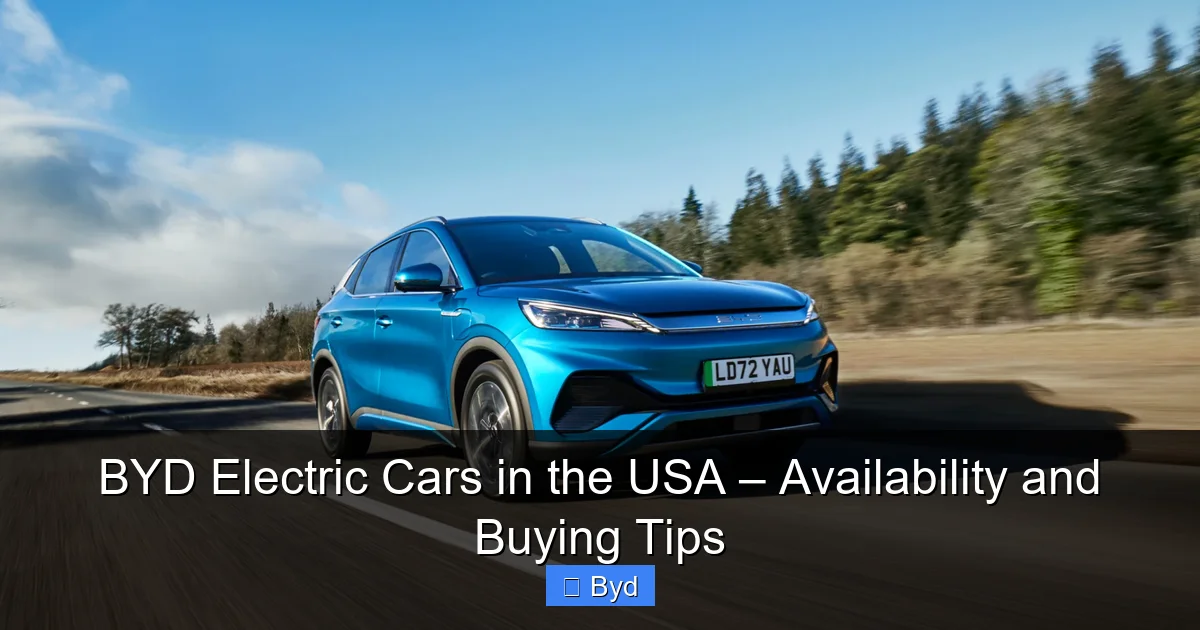
Featured image for this comprehensive guide about byd electric car in usa
Image source: byd.com
The automotive world is undergoing a seismic shift, with electric vehicles (EVs) leading the charge towards a sustainable future. In this global race, one name has risen to prominence, often challenging established giants: BYD. A Chinese multinational manufacturing company, BYD electric cars have become a dominant force globally, outselling many well-known brands in various markets. From sophisticated sedans to versatile SUVs and even commercial vehicles, BYD’s portfolio is extensive and innovative, particularly with its groundbreaking Blade Battery technology.
Yet, despite its monumental success across Europe, Asia, Australia, and parts of Latin America, a common question echoes among American consumers: “Where are the BYD electric cars in USA?” While headlines tout BYD’s global sales records and technological advancements, direct access to their popular passenger EVs like the Seal, Atto 3, or Dolphin remains elusive for the average American buyer. This creates a fascinating paradox: a global EV leader that’s largely a mystery to one of the world’s largest automotive markets.
This comprehensive guide aims to unravel the enigma of BYD electric car in USA availability. We’ll delve deep into BYD’s global prowess, explore its current (limited) presence in the U.S., dissect the complex barriers preventing wider market entry for its passenger vehicles, speculate on future possibilities, and provide actionable insights for US consumers eager to embrace the EV revolution. If you’ve been wondering why you can’t walk into a dealership and buy a BYD EV in USA, you’ve come to the right place.
Quick Answers to Common Questions
Can I buy a BYD electric car in the USA right now?
For most consumers, directly purchasing a new BYD electric car in the USA isn’t broadly possible yet. While BYD has a presence here, their main focus for passenger vehicles has been other international markets.
So, are any BYD models available in the USA at all?
Yes, but primarily for commercial fleets! You’ll find BYD electric buses, trucks, and forklifts widely in use across the USA, showcasing their robust technology and commitment to the American commercial sector.
Why isn’t BYD selling their passenger cars to US consumers?
Navigating unique US regulatory requirements, establishing a comprehensive dealer network, and building strong consumer awareness takes significant time and investment. BYD is strategically expanding, but direct consumer passenger car sales in the USA are still being planned.
Will BYD electric cars come to the USA soon?
While no official timeline for a widespread consumer launch has been set, BYD has expressed interest in the US passenger car market. Keep an eye on automotive news for potential updates, as the landscape for BYD electric car availability in the USA could change.
If I really want a BYD electric car, are there any options in the USA?
Currently, your best bet for a BYD electric car in the USA would be to explore potential gray market imports, though this comes with challenges regarding warranty, servicing, and compliance. Otherwise, it’s a waiting game for official BYD electric car sales to consumers.
📋 Table of Contents
- BYD’s Global Dominance: Why the Hype?
- The Current Landscape: Is BYD in the USA Today?
- Understanding the Barriers: Why BYD EVs Aren’t Widely Available in the USA (Yet)
- A Glimmer of Hope: BYD’s USA Presence – What *Is* Here?
- What Does the Future Hold for BYD Passenger Cars in the USA?
- Alternative Electric Car Options for US Consumers (While You Wait for BYD)
- Conclusion
BYD’s Global Dominance: Why the Hype?
Before diving into the specifics of BYD in USA, it’s crucial to understand the sheer scale and innovation that has propelled BYD to the forefront of the global EV market. BYD isn’t just another car manufacturer; it’s an integrated energy solutions provider with a sprawling empire.

Learn more about byd electric car in usa – BYD Electric Cars in the USA – Availability and Buying Tips
Image source: garagem360.com.br
A Global EV Titan
In recent years, BYD has often surpassed major players like Tesla in global EV sales (when including plug-in hybrids alongside battery electric vehicles). In Q4 2023, for instance, BYD briefly surpassed Tesla in pure battery electric vehicle (BEV) sales, delivering over 526,000 units globally, a testament to its rapid expansion and diverse product line. This isn’t a flash in the pan; BYD has consistently demonstrated impressive growth, leveraging its comprehensive capabilities ranging from battery production to semiconductor manufacturing.
| Market Aspect | BYD’s Current Status in USA | Key Context / Challenges |
|---|---|---|
| **Passenger Car Sales** | Minimal to no direct consumer sales (as of late 2023/early 2024). Globally successful models are not offered. | High import tariffs (e.g., 27.5% for Chinese-made cars), strong domestic competition, geopolitical tensions, regulatory hurdles. |
| **Commercial Vehicle Sales** | Significant presence. Leading supplier of electric buses (e.g., to transit authorities), forklifts, and some trucks. | Established market for fleet operations, less consumer-facing. Benefits from local manufacturing for specific products. |
| **US Manufacturing & R&D** | Operates a bus manufacturing plant in Lancaster, CA. Focus on battery technology (Blade Battery) for various applications. | Investment primarily for the commercial sector. No passenger car assembly plants in the US. Battery expertise could be a key strategic asset. |
| **Brand Recognition & Perception** | High recognition globally as a top EV manufacturer, but low recognition among general US consumers for passenger cars. | Requires substantial marketing, dealership network, and trust-building to compete with established brands (Tesla, GM, Ford). |
| **Future Outlook (Passenger EVs)** | Official statements indicate no immediate plans for US passenger car market entry due to “complicated” market conditions. | Future entry highly dependent on evolving geopolitical climate, trade policies, and potential strategic partnerships or licensing agreements. |
The company’s success stems from a strategy of vertical integration, controlling much of its supply chain. This approach provides significant advantages in terms of cost control, quality assurance, and resilience against supply chain disruptions, allowing BYD to offer competitive pricing and consistent product delivery across numerous international markets.
Innovation at Its Core: The Blade Battery
One of BYD’s most significant technological breakthroughs is the “Blade Battery.” This innovative lithium iron phosphate (LFP) battery pack design addresses several critical concerns associated with EV batteries:
- Safety: The Blade Battery is renowned for its exceptional safety performance, having passed rigorous nail penetration tests without thermal runaway. This addresses a major consumer concern regarding battery fire risks.
- Space Utilization: Its unique, elongated cell design improves space utilization within the battery pack by over 50% compared to conventional LFP block batteries, leading to greater energy density and thus longer range for a given footprint.
- Longevity: LFP chemistry generally offers a longer cycle life compared to nickel-manganese-cobalt (NMC) batteries, promising greater durability and a longer lifespan for the vehicle.
This proprietary battery technology is not only used in BYD electric cars but is also supplied to other major automotive manufacturers globally, including potentially Tesla in some of its models. This highlights BYD’s role as a fundamental innovator and supplier in the broader EV ecosystem, extending its influence beyond its own branded vehicles.
Diverse Product Portfolio
BYD’s reach extends far beyond passenger cars. The company manufactures:
- Passenger Cars: A wide range of sedans (Han, Seal), SUVs (Atto 3/Yuan Plus, Tang), and compact vehicles (Dolphin), known for their stylish designs, advanced features, and competitive pricing.
- Commercial Vehicles: Electric buses, trucks (delivery trucks, sanitation trucks, tractors), and coaches, which are operating in numerous cities worldwide.
- Forklifts and Specialty Vehicles: Electric forklifts and other industrial vehicles, further showcasing its battery and electric powertrain expertise.
- Rail Transit: Even urban rail transit systems like the SkyRail and SkyShuttle.
This holistic approach to electrification across various sectors underscores BYD’s vision of a fully electric future, making it a formidable player that cannot be ignored, even in markets where its passenger cars are not yet present.
The Current Landscape: Is BYD in the USA Today?
Given BYD’s global footprint, it’s natural to assume a significant presence in the United States. However, the reality, particularly for consumer passenger vehicles, is far more nuanced. So, to directly answer the burning question: can you buy a BYD electric car in USA today for personal use? Generally, no.

Learn more about byd electric car in usa – BYD Electric Cars in the USA – Availability and Buying Tips
Image source: quatrorodas.abril.com.br
Passenger Cars: A Limited Presence
As of early 2024, BYD passenger vehicles in USA are not officially sold through a traditional dealer network for consumer purchase. You won’t find a BYD showroom next to your local Ford or Toyota dealership. While individual grey market imports might exist, these are not supported by the manufacturer, lack warranties, and typically do not meet US safety and emissions standards.
BYD has, for years, expressed interest in entering the US passenger car market, but practical entry has been continuously delayed due to a confluence of factors we will explore later. For now, the dream of owning a new BYD Seal or Atto 3 directly from the factory remains unfulfilled for American consumers.
Commercial Vehicles: A Different Story
While passenger cars remain absent, BYD has established a tangible and significant presence in the US commercial vehicle market. This is where the company has strategically focused its efforts, building a strong foundation and proving its capabilities.
- Electric Buses: BYD is a major supplier of electric transit buses across the United States. Cities and public transit agencies from coast to coast have deployed BYD electric buses, appreciating their zero-emission operation, lower running costs, and robust build quality.
- Electric Trucks: The company also offers a range of electric trucks, including refuse trucks, yard tractors, and delivery vans, primarily catering to fleet operators and logistics companies seeking to electrify their operations.
This commercial success demonstrates that BYD vehicles can meet US regulatory standards and operate reliably within the country’s infrastructure. It’s a testament to their engineering and manufacturing prowess, albeit in a different segment of the market.
Batteries and Energy Storage: A Key US Connection
Beyond vehicles, BYD’s influence in the US extends significantly into energy storage solutions. BYD is a global leader in battery technology, and its batteries are utilized in various applications within the US:
- Energy Storage Systems (ESS): BYD supplies large-scale battery storage solutions for utility companies, industrial facilities, and renewable energy projects. These systems help stabilize the grid, integrate intermittent renewable energy sources, and provide backup power.
- Forklift Batteries: BYD also supplies batteries for electric forklifts and other material handling equipment used in warehouses and manufacturing plants across the US.
This aspect of BYD’s business is often overlooked but plays a crucial role in the US’s broader transition to clean energy. It illustrates BYD’s deep integration into the American industrial and energy landscape, even if its consumer-facing products are not yet widely available.
Understanding the Barriers: Why BYD EVs Aren’t Widely Available in the USA (Yet)
The absence of BYD electric car in USA showrooms for passenger vehicles isn’t due to a lack of ambition on BYD’s part or a disinterest from US consumers. Rather, it’s a complex interplay of regulatory, economic, and geopolitical factors.
Regulatory Hurdles and Safety Standards
Entering the US automotive market is notoriously challenging due to stringent safety and emissions regulations. Vehicles sold in the US must comply with:
- Federal Motor Vehicle Safety Standards (FMVSS): Mandated by the National Highway Traffic Safety Administration (NHTSA), these cover everything from crashworthiness to lighting and braking systems. Adapting a vehicle designed primarily for other markets to meet these specific standards can be costly and time-consuming.
- Environmental Protection Agency (EPA) Regulations: These govern emissions (even for EVs, for manufacturing processes and components) and fuel economy, including range testing for EVs.
While BYD’s commercial vehicles have successfully navigated these, bringing a full line of passenger cars to compliance requires significant investment in re-engineering, testing, and certification processes specifically for the US market.
Tariffs and Trade Tensions
One of the most significant obstacles is the ongoing trade relationship between the US and China. Currently, the US imposes a 27.5% tariff on imported Chinese-made vehicles (a 2.5% standard auto tariff plus an additional 25% tariff imposed during the Trump administration, which remains in effect).
- Cost Disadvantage: This substantial tariff immediately makes any imported BYD EV in USA significantly more expensive, eroding BYD’s competitive pricing advantage which is a cornerstone of its global success. An EV that might cost $30,000 in another market could instantly jump to over $38,000 before shipping, logistics, and dealer markups.
- Economic Headwinds: Beyond tariffs, the general climate of geopolitical tension between the two nations makes large-scale investments and market entry strategies more complicated and politically sensitive.
This economic barrier makes it extremely difficult for BYD to compete on price with domestically produced or tariff-exempt imported EVs.
Brand Perception and Consumer Trust
While Chinese brands like Volvo (owned by Geely) have successfully integrated into the US market, direct Chinese-branded passenger vehicles face an uphill battle in establishing trust and a positive perception among American consumers. Decades of “Made in China” stereotypes, sometimes associated with lower quality, persist, even though many global brands manufacture in China and BYD itself is a leader in quality and innovation.
Building a strong brand reputation requires significant marketing investment, time, and a proven track record of reliability and customer service in the US, which BYD has yet to fully establish for passenger cars.
Establishing a Dealer Network and Service Infrastructure
Selling cars isn’t just about manufacturing them; it’s about distribution, sales, and aftermarket support. Entering the US market requires:
- Building a Dealer Network: This involves recruiting and establishing partnerships with dealerships across the country, a massive undertaking that demands capital investment and a robust sales strategy.
- Service and Parts Supply: Consumers expect easy access to service centers, maintenance, and genuine parts. Creating this infrastructure from scratch for a new brand is complex and costly.
- Charging Infrastructure Integration: While not unique to BYD, ensuring seamless compatibility with the dominant North American Charging Standard (NACS) and other charging networks is crucial for consumer confidence.
Without a comprehensive plan for sales and service, any attempt to launch BYD vehicles in USA would likely falter.
Competitive Landscape
The US EV market is already fiercely competitive, dominated by established players and innovative newcomers:
- Tesla: The market leader with a strong brand, extensive Supercharger network, and popular models.
- Traditional Automakers: Ford, GM, Hyundai, Kia, Volkswagen, Mercedes-Benz, BMW, etc., are all heavily investing in and rapidly rolling out compelling EV models.
- New Entrants: Rivian, Lucid, and others are carving out niches.
BYD would need to differentiate itself significantly to capture market share, which is challenging when facing tariff disadvantages and a lack of established brand recognition among consumers.
A Glimmer of Hope: BYD’s USA Presence – What *Is* Here?
Despite the hurdles for passenger cars, BYD’s existing footprint in the US offers a blueprint and a foundation for potential future expansion. It’s not a complete absence, but a strategic, albeit limited, presence.
BYD’s North American Manufacturing Footprint
Crucially, BYD has a manufacturing presence in the United States, specifically in Lancaster, California. This facility primarily focuses on assembling electric buses and trucks for the North American market. Having a “Made in USA” label is vital for several reasons:
- Circumventing Tariffs: Vehicles assembled domestically can bypass the hefty import tariffs imposed on goods from China.
- Meeting “Buy America” Requirements: Many public procurement contracts (e.g., for transit buses) require a certain percentage of components and final assembly to be done in the US. BYD’s Lancaster plant allows it to meet these requirements.
- Job Creation: Local manufacturing creates American jobs, fostering goodwill and political support.
This existing manufacturing capability suggests that if BYD were to launch passenger vehicles in the US, local production or at least final assembly would likely be a critical part of the strategy to make BYD EV in USA a viable option.
Beyond Passenger Cars: Forklifts and Specialty Vehicles
BYD’s presence in the US material handling sector is another unsung success story. Their electric forklifts, powered by their advanced LFP batteries, are gaining traction in warehouses and logistics operations. These vehicles offer significant advantages:
- Zero Emissions: Ideal for indoor operation, improving air quality for workers.
- Lower Operating Costs: Reduced fuel costs compared to propane or diesel models, and lower maintenance requirements.
- Long Battery Life: BYD’s batteries offer extended operating times and rapid charging capabilities.
This niche market allows BYD to showcase its battery technology and electric powertrain expertise in a less scrutinizing and less regulated consumer environment, building a reputation for reliability and performance from the ground up.
The Blade Battery’s Impact in the US Market
Even without its passenger cars, BYD’s Blade Battery technology is poised to have a significant impact on the US EV market. As a potential supplier to other automakers, BYD’s battery technology could power vehicles assembled and sold by US brands. This indirect influence could be substantial, accelerating the adoption of safer, more efficient LFP batteries in the US.
Additionally, BYD’s energy storage solutions for utilities and businesses contribute directly to the stability and growth of the US electric grid, facilitating the integration of renewable energy sources. This makes BYD a key, albeit often invisible, player in the US’s clean energy transition.
What Does the Future Hold for BYD Passenger Cars in the USA?
While the present state offers limited direct access for consumers, the future of BYD electric car in USA is a subject of intense speculation and strategic planning. The question isn’t entirely “if” but “when” and “how.”
Gradual Market Entry: A Phased Approach?
If BYD decides to make a full-scale entry into the US passenger car market, it’s highly probable they would adopt a phased approach:
- Initial Focus on Niche Markets: Perhaps starting with ride-sharing fleets or corporate customers, similar to how they entered commercial vehicle markets.
- Limited Model Selection: Launching with one or two key models (e.g., a popular SUV like the Atto 3 or a competitive sedan like the Seal) to test the waters and gather market intelligence.
- Online Sales Model: Potentially bypassing traditional dealerships initially with a direct-to-consumer online sales model, similar to Tesla, to reduce overhead and control the customer experience.
Such a strategy would allow BYD to minimize risk, gather crucial data, and gradually build its brand and infrastructure.
Addressing US Consumer Preferences
For successful market entry, BYD would need to tailor its offerings to US consumer tastes, which can differ from other global markets. This might involve:
- Larger Vehicles: Americans often prefer larger SUVs and trucks, which BYD already produces (e.g., Tang SUV), but might need to optimize for the US market.
- Feature Sets: Specific infotainment systems, advanced driver-assistance systems (ADAS) tuned for US roads, and connectivity features preferred by American buyers.
- Charging Standards: Full integration with the North American Charging Standard (NACS) and partnerships with major charging networks are non-negotiable.
The Role of US Manufacturing
To overcome tariff barriers and leverage “Buy America” sentiment, establishing significant passenger car manufacturing operations within the US would be a game-changer. This could involve:
- New Gigafactories: Building dedicated EV assembly plants and potentially battery manufacturing facilities.
- Strategic Partnerships: Collaborating with existing US manufacturers or setting up joint ventures.
This would be a massive investment but could unlock the market potential for BYD EV in USA by making their vehicles eligible for federal EV tax credits (which currently require significant US manufacturing and battery component sourcing).
The Geopolitical Factor
Ultimately, the timeline and scale of BYD’s entry into the US passenger car market will be heavily influenced by geopolitical considerations. Trade relations, political rhetoric, and national security concerns will continue to play a significant role. Any major move by BYD would likely be scrutinized from various angles, making it a strategic decision with implications far beyond just automotive sales.
Potential BYD Models vs. US Market Alternatives (Illustrative Comparison)
To give you a better idea of what BYD electric cars could bring to the USA, here’s a hypothetical comparison with some current US market EVs:
| Model | Category | Est. Range (WLTP/EPA equiv.) | Est. Price (Global conversion) | Key Competitors (USA) | US Availability (Passenger) |
|---|---|---|---|---|---|
| BYD Atto 3 (Yuan Plus) | Compact SUV | 260-310 miles | $30,000 – $40,000 | Hyundai Kona EV, Chevy Bolt EUV, Tesla Model Y (RWD) | Not available |
| BYD Seal | Sport Sedan | 340-435 miles | $45,000 – $60,000 | Tesla Model 3, Hyundai Ioniq 6, Polestar 2 | Not available |
| BYD Dolphin | Compact Hatchback | 200-260 miles | $25,000 – $35,000 | Mini Cooper SE, Nissan Leaf, Chevy Bolt EV | Not available |
| BYD Han EV | Luxury Sedan | 370-450 miles | $50,000 – $70,000 | Mercedes EQS, BMW i5, Tesla Model S, Lucid Air | Not available |
Note: Ranges are based on WLTP estimates and converted to approximate EPA equivalents. Prices are illustrative conversions from global markets and do not account for potential US tariffs, shipping, or dealer markups. US Availability refers specifically to consumer passenger vehicles. This table highlights that BYD offers compelling options across various segments, often at very competitive price points globally.
Alternative Electric Car Options for US Consumers (While You Wait for BYD)
While the prospect of buying a BYD electric car in USA is exciting, it’s not a current reality for most. The good news is that the American EV market is rapidly expanding, offering a wealth of excellent choices across various price points and segments. There’s no shortage of innovative, high-performance, and practical EVs available right now.
Explore the Diverse US EV Market
The US market boasts a growing array of electric vehicles from both established automakers and new players. Here’s a brief overview of what’s available:
- Market Leaders: Tesla (Model 3, Model Y, Model S, Model X, Cybertruck) continues to dominate with its strong brand, performance, and charging network.
- Traditional Automakers Going Electric:
- Ford: Mustang Mach-E, F-150 Lightning (electric pickup), E-Transit van.
- General Motors: Chevrolet Bolt EV/EUV, Silverado EV, Equinox EV, Blazer EV, Cadillac Lyriq, GMC Hummer EV.
- Hyundai & Kia: Ioniq 5, Ioniq 6, Kona EV (Hyundai); EV6, EV9, Niro EV (Kia) – known for great range and fast charging.
- Volkswagen: ID.4 (popular SUV).
- Mercedes-Benz, BMW, Audi: A growing line of luxury EVs (EQS, EQE, i4, i5, iX, e-tron series).
- New Entrants:
- Rivian: R1T (electric pickup) and R1S (electric SUV) for adventurous buyers.
- Lucid Motors: Lucid Air (luxury sedan with impressive range).
- Polestar: Polestar 2 and Polestar 3 (performance-oriented EVs).
Key Considerations When Buying an EV
When selecting an electric car, consider the following actionable tips:
- Range: Determine your daily driving needs and factor in potential range degradation in extreme weather. Most modern EVs offer ample range for daily commutes and road trips.
- Charging:
- Home Charging: A Level 2 (240V) home charger is highly recommended for convenience.
- Public Charging: Familiarize yourself with charging networks (Electrify America, EVgo, ChargePoint, Tesla Superchargers) and ensure your chosen EV has good compatibility.
- Charging Speed: Look at DC fast-charging rates for road trips.
- Price and Incentives:
- MSRP: EVs can have a higher upfront cost, but consider the total cost of ownership (lower “fuel” and maintenance costs).
- Federal Tax Credit: Many EVs qualify for a federal tax credit up to $7,500, depending on manufacturing location, battery sourcing, and buyer income/vehicle price. Check current IRS guidelines.
- State & Local Incentives: Research any additional state or local rebates, tax credits, or utility incentives in your area.
- Test Drive: Always test drive multiple models to find the one that best suits your driving style and comfort.
- Reviews and Reliability: Consult reputable automotive reviews and owner forums for insights into real-world performance and reliability.
The US EV market is dynamic and continuously evolving, offering exciting choices that cater to a wide range of needs and budgets. You don’t have to wait for BYD electric car in USA to experience the benefits of electric driving.
Conclusion
BYD’s journey into the American market is a compelling narrative of global ambition meeting complex local realities. While BYD electric cars have achieved spectacular success and innovation worldwide, becoming a dominant force in the global EV transition, their passenger vehicles remain largely out of reach for US consumers. This isn’t due to a lack of quality or technological prowess, but rather a combination of stringent regulatory hurdles, significant trade tariffs, the immense undertaking of building a brand and infrastructure, and the existing competitive landscape.
However, BYD’s presence in the US is far from non-existent. Its electric buses, trucks, forklifts, and critical battery technologies are already playing a vital role in America’s clean energy future. This commercial and industrial footprint, coupled with a potential shift in geopolitical and economic conditions, offers a glimmer of hope that BYD EV in USA for passenger car buyers could become a reality in the future.
For now, American consumers have an ever-growing selection of exceptional electric vehicles from various manufacturers. While waiting for the potential arrival of BYD electric cars in USA, the opportunity to embrace sustainable transportation is readily available. Whether BYD will eventually conquer the US passenger car market remains to be seen, but one thing is certain: their global impact on the electric vehicle revolution is undeniable, and their future moves will be watched with great interest.
Frequently Asked Questions
Are BYD electric cars available for individual purchase by consumers in the USA?
No, currently **BYD electric cars in the USA** are not sold directly to individual consumers. BYD primarily focuses on the commercial and fleet vehicle market, offering electric buses, trucks, and forklifts to businesses and public transport authorities across the United States.
Which BYD electric car models are currently available or planned for consumer sale in the USA?
While BYD offers a range of passenger electric vehicles internationally, none of their passenger **BYD electric car models** are currently available for consumer purchase in the USA. Their U.S. operations are concentrated on commercial vehicles like the K-series electric buses and various electric trucks.
When can consumers expect BYD electric cars to be widely available for purchase in the USA?
There is no definitive timeline or official announcement from BYD regarding the widespread availability of their passenger **BYD electric cars** for U.S. consumers. The company seems to be prioritizing expansion in other global markets and its established commercial vehicle segment in North America for now.
What is BYD’s current focus and presence for electric vehicles in the USA market?
BYD’s primary focus for **electric vehicles in the USA** is on the commercial sector, manufacturing electric buses, trucks, and forklifts at its Lancaster, California plant. They serve transit agencies, businesses, and government fleets, rather than individual car buyers.
If BYD electric cars aren’t available to consumers, what are my options for importing or alternatives?
Importing a **BYD electric car** from another country is highly complex, expensive, and generally not practical due to U.S. safety and emissions regulations. For now, consumers interested in EVs should explore the wide range of excellent electric car options already available from domestic and international brands in the U.S. market.
What is the estimated price range for BYD electric cars if they were available for consumers in the USA?
Without official U.S. consumer models, specific pricing for **BYD electric cars** is speculative. Internationally, BYD offers models across various price points, from more affordable compacts to premium sedans and SUVs, generally competitive within their respective segments.