BYD Share Price – Market Updates and Predictions
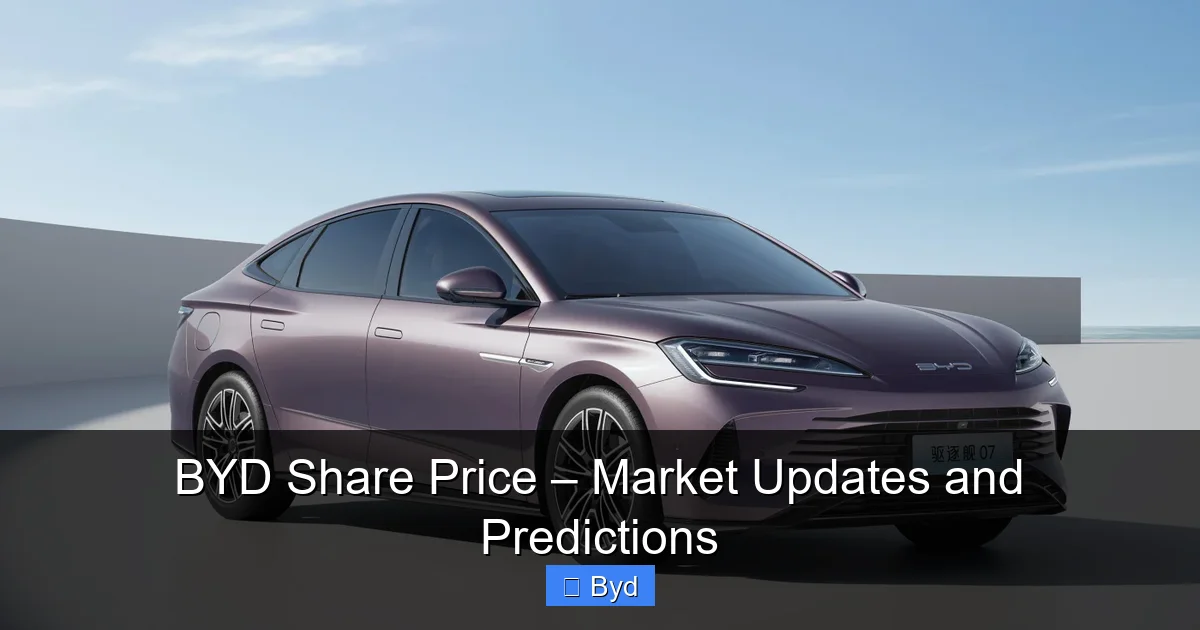
Featured image for this comprehensive guide about byd car models
Image source: ev.iphonemod.net
In the dynamic world of electric vehicles (EVs), few companies have captured the imagination and investment dollars quite like BYD (Build Your Dreams). Once primarily known as a battery manufacturer, BYD has undergone a spectacular transformation, emerging as a global powerhouse in new energy vehicles (NEVs), directly challenging industry giants. This meteoric rise has naturally placed the BYD share price under an intense spotlight, with investors and market watchers keenly observing every development.
The journey of BYD stock is a compelling narrative of innovation, strategic expansion, and fierce competition. But what truly fuels this rapid ascent? While technological breakthroughs like the Blade Battery are crucial, the undeniable engine driving BYD’s success – and by extension, its market valuation – is its diverse, innovative, and increasingly popular lineup of BYD car models. These vehicles, from accessible city cars to luxurious performance sedans, are not just products; they are tangible representations of the company’s vision and performance, directly influencing investor confidence and market sentiment.
This comprehensive analysis delves into the intricate relationship between BYD’s groundbreaking electric vehicles, its strategic market moves, and the resultant impact on the BYD share price. We’ll explore the key BYD car models that have captivated consumers worldwide, dissect the technological innovations setting BYD apart, and examine the market factors that shape the company’s financial trajectory. Whether you’re an investor, an EV enthusiast, or simply curious about the future of mobility, understanding these connections is paramount to grasping BYD’s monumental influence.
Quick Answers to Common Questions
What kind of BYD car models are currently available?
BYD offers a diverse portfolio of car models, primarily focusing on electric vehicles (EVs) and plug-in hybrids (PHEVs), ranging from sleek sedans and versatile SUVs to compact hatchbacks.
Are all BYD car models fully electric?
While BYD is renowned for its extensive lineup of battery-electric vehicles, many BYD car models are also available as plug-in hybrids, offering consumers flexibility with both electric and gasoline power.
Which BYD car models are most popular globally?
Globally, popular BYD car models include the Atto 3 (also known as Yuan Plus SUV), the Dolphin compact hatchback, and the Seal sedan, all of which have seen strong adoption thanks to their range and features.
Are BYD car models sold outside of China?
Yes, BYD car models are rapidly expanding their international presence and are now sold in numerous markets across Europe, Asia-Pacific, Latin America, and more, beyond their dominant position in China.
What makes BYD car models unique compared to competitors?
Many BYD car models feature their innovative Blade Battery technology, known for its safety and efficiency, along with integrated design and often competitive pricing, setting them apart in the electric vehicle market.
📋 Table of Contents
- Understanding BYD’s Market Dominance and Share Price Drivers
- The Powerhouse Behind the Price: Exploring Key BYD Car Models
- Technological Innovation: The Engine Powering BYD’s Future Growth
- Global Expansion and Market Challenges: What Lies Ahead for BYD Stock?
- BYD Share Price: Market Updates, Analysis, and Predictions
Understanding BYD’s Market Dominance and Share Price Drivers
BYD’s evolution from a rechargeable battery producer in 1995 to a leading global NEV manufacturer is nothing short of remarkable. This strategic pivot began over two decades ago, but it’s in the last few years that the company has truly accelerated, fundamentally reshaping the automotive landscape. Its success isn’t accidental; it’s a culmination of vertical integration, relentless innovation, and a keen understanding of the burgeoning EV market.

Learn more about byd car models – BYD Share Price – Market Updates and Predictions
Image source: images.wired.it
The Rise of a NEV Giant
BYD’s early focus on battery technology provided a crucial competitive advantage, allowing it to control a vital component of EV production. This foresight meant that as demand for electric vehicles soared, BYD was uniquely positioned with a robust and secure supply chain. Key milestones, such as discontinuing purely internal combustion engine (ICE) vehicle production in 2022 to focus entirely on NEVs, significantly bolstered its image as a future-forward company and positively impacted the BYD share price. The company has since become the world’s largest NEV manufacturer, surpassing even established giants in terms of sales volume.
| Model | Body Type | Est. WLTP Range (km) | Est. Starting Price (USD) |
|---|---|---|---|
| BYD Han EV | Full-size Sedan | ~600 | ~$45,000 |
| BYD Seal EV | Mid-size Sedan | ~570-700 | ~$40,000 |
| BYD Atto 3 (Yuan Plus) | Compact SUV | ~420 | ~$38,000 |
| BYD Dolphin EV | Compact Hatchback | ~310-420 | ~$28,000 |
| BYD Tang EV | Mid-size SUV | ~505-635 | ~$48,000 |
Global EV Landscape and BYD’s Position
The global EV market is a battleground of innovation and market share. While Tesla often dominates headlines, BYD has quietly, yet powerfully, established itself as a formidable contender, particularly in its home market of China, the world’s largest EV market. Its aggressive pricing strategies, combined with a diverse range of high-quality BYD car models, have allowed it to capture significant market share. The increasing global demand for sustainable transportation directly fuels the potential for growth in BYD stock, as more countries embrace electrification. BYD’s presence is rapidly expanding beyond China, with significant inroads into Europe, Southeast Asia, Australia, and Latin America, signaling its intent for global leadership.
The Powerhouse Behind the Price: Exploring Key BYD Car Models
The true measure of an automotive company’s success lies in its products. For BYD, its diverse and compelling lineup of BYD car models is the tangible manifestation of its technological prowess and market strategy. These vehicles are not just moving metal; they are the direct drivers of sales, revenue, and ultimately, the BYD share price.

Learn more about byd car models – BYD Share Price – Market Updates and Predictions
Image source: rutamotor.com
The Ocean Series: Accessibility Meets Innovation
BYD’s “Ocean Series” represents a pivotal strategy: making stylish, feature-rich EVs accessible to a broader audience. Two models, in particular, have stood out:
- BYD Dolphin: This compact hatchback has been a game-changer, offering an attractive blend of urban practicality, modern design, and an impressive range for its segment. The Dolphin’s competitive pricing and appealing features have made it a strong seller in multiple markets, significantly contributing to BYD’s sales volumes and expanding its international footprint. Its success demonstrates BYD’s ability to cater to mass-market appeal, a critical factor for sustained growth in BYD stock.
- BYD Seagull: Even more compact and aggressively priced than the Dolphin, the Seagull (also known as the Mini EV in some markets) is designed to further democratize EV ownership. Its introduction has been met with immense interest, particularly in markets where affordability is a key driver. Models like the Seagull are instrumental in boosting BYD’s overall market share by tapping into segments traditionally dominated by gasoline-powered vehicles.
These models embody BYD’s commitment to bringing cutting-edge EV technology to the mainstream, directly translating into robust sales figures that positively influence the BYD share price.
The e-Platform 3.0 Flagships: Performance and Range
Beyond the mass market, BYD also excels in delivering premium and performance-oriented EVs, largely built on its advanced e-Platform 3.0. These models showcase BYD’s design language, sophisticated technology, and competitive edge against established premium brands:
- BYD Atto 3 (Yuan Plus): This compact SUV has become a global sensation, particularly outside China. Its dynamic design, comfortable interior, and impressive range make it a strong contender in the highly competitive SUV segment. The Atto 3 has been instrumental in establishing BYD’s brand recognition and reliability in international markets, demonstrating the company’s ability to produce vehicles that resonate with diverse consumer preferences.
- BYD Seal: A sleek and sporty sedan, the Seal is a direct competitor to premium EVs like the Tesla Model 3. It boasts impressive performance, cutting-edge aerodynamics, and the integrated Cell-to-Body (CTB) technology utilizing the BYD Blade Battery. The Seal elevates BYD’s brand image, showcasing its capability to produce high-performance, technologically advanced vehicles that appeal to discerning buyers.
- BYD Han: As BYD’s flagship sedan, the Han embodies luxury, performance, and advanced technology. Available in both EV and DM-i (Dual Mode, plug-in hybrid) variants, it offers a premium experience with luxurious interiors and strong performance metrics. The Han’s success contributes significantly to BYD’s profitability and reinforces its position as a serious player in the luxury EV segment.
These flagship BYD car models are critical for enhancing the company’s reputation, attracting higher-margin sales, and solidifying the perception of BYD as an innovator, all of which are vital for sustained growth in BYD stock.
SUVs and Luxury: The Tang and Beyond
BYD’s portfolio extends further to include larger SUVs and ultra-luxury segments, diversifying its revenue streams and market reach:
- BYD Tang: This large SUV, available as an EV or DM-p (Performance plug-in hybrid), offers ample space, premium features, and strong performance. It caters to families and those seeking a more robust and versatile vehicle. The Tang’s presence in international markets further broadens BYD’s appeal.
- YangWang and Denza: BYD has also launched ultra-luxury brands like YangWang, featuring models like the U8 and U9, pushing the boundaries of technology and design with features like tank turns and advanced suspension systems. The Denza brand, a joint venture with Mercedes-Benz, focuses on premium MPVs and SUVs. These ventures into the high-end market demonstrate BYD’s ambition and capability to compete at every price point, bolstering long-term investor confidence in BYD stock.
Technological Innovation: The Engine Powering BYD’s Future Growth
While the aesthetic appeal and performance of BYD car models are crucial, the underlying technological innovations are what truly set BYD apart and underpin its long-term growth prospects. These advancements are not just marketing buzzwords; they represent significant competitive advantages that directly influence the BYD share price.
The Revolutionary Blade Battery
The BYD Blade Battery is arguably BYD’s most significant innovation. This lithium iron phosphate (LFP) battery pack utilizes a unique cell-to-pack design, eliminating modules and maximizing space utilization. Its key benefits include:
- Enhanced Safety: The Blade Battery has passed extreme nail penetration tests without thermal runaway, setting new benchmarks for battery safety. This is a massive selling point for consumers and a differentiator in a market sensitive to battery fire concerns.
- Increased Longevity: LFP chemistry offers a longer cycle life compared to NMC batteries, contributing to the overall durability and lifespan of BYD car models.
- Cost-Effectiveness: LFP batteries are generally less expensive to produce, allowing BYD to offer competitive pricing on its EVs without compromising on quality or performance.
The Blade Battery is not only integral to almost all BYD car models but is also being supplied to other automakers, creating an additional revenue stream and solidifying BYD’s position as a technology leader. This technological edge provides a strong foundation for sustained growth in the BYD share price.
e-Platform 3.0 and Integrated Systems
BYD’s e-Platform 3.0 is a dedicated EV architecture that integrates key components into a single platform, offering numerous advantages:
- Enhanced Efficiency: Features like an 8-in-1 electric powertrain (integrating drive motor, motor controller, reducer, onboard charger, DC converter, power distribution unit, battery management system, and vehicle control unit) improve efficiency and reduce weight.
- Optimal Space Utilization: The platform is designed to maximize cabin space and battery placement, leading to better interior ergonomics and a lower center of gravity for improved handling.
- Scalability and Versatility: The modular nature of e-Platform 3.0 allows BYD to develop a wide range of BYD car models, from compact sedans to large SUVs, efficiently and cost-effectively.
This integrated platform approach streamlines production, reduces costs, and provides a solid base for future vehicle development, directly contributing to BYD’s competitive edge and potential for profit, positively impacting BYD stock.
Software, Autonomy, and Ecosystem Development
Beyond hardware, BYD is also heavily investing in software and intelligent driving solutions. Features like DiLink intelligent network connection system, over-the-air (OTA) updates, and advanced driver-assistance systems (ADAS) are increasingly becoming standard in BYD car models. Future developments in autonomous driving and an integrated BYD ecosystem (connecting vehicles with smart homes and personal devices) will further enhance the appeal of its vehicles and ensure BYD remains at the forefront of automotive innovation, securing long-term value for BYD stock.
Global Expansion and Market Challenges: What Lies Ahead for BYD Stock?
While BYD’s domestic success is undeniable, its long-term growth trajectory and the sustained upward movement of the BYD share price depend heavily on its ability to conquer international markets. This expansion comes with both immense opportunities and significant challenges.
International Market Penetration
BYD is aggressively expanding its presence across the globe. From Europe to Latin America, Southeast Asia to Australia, BYD car models are increasingly visible on roads outside China. This global strategy involves:
- Establishing Local Production: Building factories in countries like Thailand, Brazil, and Hungary reduces logistical costs, mitigates tariff risks, and demonstrates a long-term commitment to local markets.
- Strategic Partnerships: Collaborating with local distributors and charging infrastructure providers helps BYD navigate new regulatory environments and accelerate market entry.
- Tailored Offerings: Adapting BYD car models to specific market preferences, such as right-hand drive configurations or specific charging standards, is crucial for success.
Successful international adoption of BYD car models is paramount for sustained BYD share price growth, diversifying revenue sources beyond the sometimes volatile Chinese market.
Regulatory and Competitive Landscape
The global EV market is subject to evolving regulations, government subsidies, and intense competition:
- Tariffs and Trade Barriers: Rising geopolitical tensions and protectionist measures (e.g., potential EU or US tariffs on Chinese EVs) pose a significant risk to BYD’s international expansion plans.
- Local Competition: In every market, BYD faces competition from established local automakers and other global EV players, requiring continuous innovation and competitive pricing.
- Subsidies and Incentives: Changes in government incentives for EV purchases can impact consumer demand and BYD’s sales volumes.
Navigating this complex landscape effectively will be critical for BYD’s continued success and the stability of BYD stock.
Production Capacity and Supply Chain Resilience
BYD’s vertically integrated business model, encompassing battery production, semiconductor manufacturing, and vehicle assembly, provides a unique advantage in supply chain resilience. This control over key components allows BYD to mitigate risks associated with global supply chain disruptions, which have plagued many competitors. Increasing production capacity to meet surging global demand for its BYD car models without compromising quality will be a continuous challenge and a key indicator for investors monitoring BYD stock.
BYD Share Price: Market Updates, Analysis, and Predictions
The performance of BYD stock is a fascinating barometer of the global EV market, reflecting the company’s innovation, execution, and strategic foresight. Understanding recent trends and expert forecasts is crucial for anyone with an interest in BYD’s financial future.
Recent Performance and Key Metrics
Over the past few years, the BYD share price has seen significant volatility, but with an overall upward trend driven by impressive sales growth and expanding market share. The company has consistently reported strong financial results, often exceeding analyst expectations. This performance is directly attributable to the overwhelming success of its diverse BYD car models, particularly the mass-market offerings that have driven volume sales.
- Record Sales: BYD has frequently broken its own sales records, outpacing rivals in quarterly and annual NEV deliveries.
- Profitability: Unlike many EV startups, BYD has demonstrated robust profitability, supported by its cost-efficient vertical integration and economies of scale.
- Market Capitalization Growth: While subject to market fluctuations, BYD’s market cap has grown substantially, placing it among the most valuable automotive companies globally.
Expert Opinions and Analyst Forecasts
Market analysts generally hold a positive long-term outlook for BYD stock, citing its technological leadership (especially the BYD Blade Battery), strong product pipeline, and aggressive international expansion. However, short-term volatility is always a factor, influenced by broader economic conditions, geopolitical events, and competitive pressures. Key factors analysts frequently point to include:
- New Model Launches: The introduction of new, compelling BYD car models (like the recent Seagull or future luxury vehicles) often provides a significant boost to investor sentiment.
- International Sales Figures: Strong growth in non-China markets is a critical metric for long-term valuation.
- Battery Technology Advancements: Any further breakthroughs or significant supply deals for BYD’s battery technology could positively impact the BYD share price.
Actionable insight: Investors should closely monitor BYD’s monthly sales reports, its progress in establishing overseas manufacturing hubs, and any news related to its battery technology or partnerships.
Investment Considerations and Future Outlook
For potential investors, BYD represents a unique opportunity in the EV space. Its diversified portfolio (automotive, batteries, rail transit, electronics) provides a degree of resilience. However, like all growth stocks, it comes with risks, including intense competition, potential regulatory headwinds, and the inherent volatility of emerging markets. The future outlook for BYD stock remains largely positive, anchored by its relentless innovation and its ability to consistently deliver appealing BYD car models to a global audience.
Table 1: Key BYD Performance Metrics (Estimate as of Q3 2023 / Recent Data)
| Metric | Value | Impact on BYD Share Price |
|---|---|---|
| Q3 2023 NEV Sales | Approx. 822,094 units | Strong sales volumes indicate robust demand for BYD car models, positively influencing investor confidence and revenue growth. |
| Market Capitalization (recent) | Approx. $70-80 Billion USD | Reflects overall market valuation, directly tied to company performance and future growth expectations. |
| Revenue Growth (YoY, recent) | Approx. 50-60% | Sustained high growth rates often attract investors, signaling expansion and profitability, largely driven by BYD car models‘ success. |
| Blade Battery Adoption | Widespread across BYD car models and external clients | Technological leadership and revenue diversification, enhancing long-term value and competitive advantage. |
| International Expansion | Presence in over 70 countries and regions | Broadening market reach reduces dependence on single markets, stabilizing and potentially boosting BYD stock through new revenue streams. |
The long-term trajectory of BYD stock will continue to be closely tied to its strategic execution, its ability to innovate faster than competitors, and its success in broadening the appeal and sales of its growing portfolio of BYD car models across diverse global markets.
BYD’s remarkable ascent in the global automotive industry is a testament to its visionary leadership, engineering prowess, and an unwavering commitment to sustainable mobility. While its battery technology and vertical integration provide a robust foundation, it is the compelling range of BYD car models—from the accessible Dolphin and Seagull to the luxurious Han and Tang, and innovative Seal and Atto 3—that truly translates vision into tangible success. These vehicles, designed with a keen understanding of diverse consumer needs, have propelled BYD to the forefront of the new energy vehicle revolution.
The constant evolution and expansion of its lineup, coupled with groundbreaking innovations like the BYD Blade Battery and e-Platform 3.0, are the primary engines driving the company’s formidable market presence and, consequently, influencing the BYD share price. As BYD continues its aggressive international expansion, the success of these electric vehicles in new markets will be crucial indicators for investors and a key determinant of the company’s future valuation. While market dynamics, competition, and regulatory changes will always pose challenges, BYD’s intrinsic strength lies in its ability to consistently deliver high-quality, technologically advanced, and desirable BYD car models.
In conclusion, tracking the BYD share price is more than just monitoring a stock; it’s observing the unfolding narrative of an automotive giant rewriting the rules of mobility. The company’s future prospects, and indeed the future of BYD stock, remain intrinsically linked to its capacity for innovation, its strategic market penetration, and above all, its enduring ability to build dreams, one exceptional BYD car model at a time.
🎥 Related Video: BYD just told more electric vehicles in Europe than Tesla
📺 Bloomberg Opinion
BYD Co. sold more #electricvehicles in #Europe than #Tesla Inc. for the first time, overtaking the American brand that long led the …
Frequently Asked Questions
What are the most popular BYD car models currently available?
BYD offers a diverse range of popular car models globally, with key contenders including the BYD Atto 3 (known as Yuan Plus in some markets), a compact electric SUV, and the BYD Dolphin, an electric hatchback. Other acclaimed models are the BYD Seal sedan, known for its sporty design and performance, and the luxurious BYD Han sedan, both available as pure EVs or plug-in hybrids depending on the market.
Does BYD primarily offer electric car models, or do they have hybrid options as well?
BYD is a leading manufacturer of New Energy Vehicles (NEVs), focusing on both Battery Electric Vehicles (BEVs) and Plug-in Hybrid Electric Vehicles (PHEVs). While they are widely recognized for their pure electric car models, BYD also offers a strong lineup of PHEVs, particularly utilizing their DM-i (Dual Mode intelligence) technology, which provides impressive fuel efficiency and range flexibility.
What is the typical price range for BYD car models?
The price range for BYD car models varies significantly depending on the specific model, configuration, and the market it’s sold in. Generally, entry-level models like the BYD Dolphin start at a more accessible price point, while premium sedans like the BYD Han or Seal, especially higher trim levels, can fall into a more luxury segment. Prices are competitive within their respective categories, offering a strong value proposition for the technology and features included.
Are BYD car models available for purchase in international markets, or are they mainly in China?
BYD car models are increasingly available in a growing number of international markets beyond China. The company has aggressively expanded its global footprint, now selling vehicles in regions such as Europe, Southeast Asia, Australia, Japan, Brazil, and several other countries. This expansion highlights BYD’s commitment to becoming a major player in the global electric vehicle market.
What are some of the key technological features found in BYD car models?
BYD car models are packed with innovative technology, most notably the revolutionary Blade Battery, known for its safety, durability, and space efficiency. They also feature the e-Platform 3.0, an integrated architecture designed specifically for intelligent electric vehicles. Additionally, models often include the DiLink intelligent network system for infotainment and advanced driver-assistance systems (ADAS) to enhance safety and convenience.
How do BYD car models compare in terms of performance and range?
BYD car models offer a strong balance of performance and range, tailored to their specific segments and target audiences. Electric models often boast impressive acceleration and competitive range figures, with some vehicles capable of over 500 km (WLTP) on a single charge. Their PHEV models, utilizing DM-i technology, provide exceptional combined range and fuel efficiency, allowing for both pure electric short trips and long-distance travel without range anxiety.