BYD Stock and Warren Buffett Investment Story
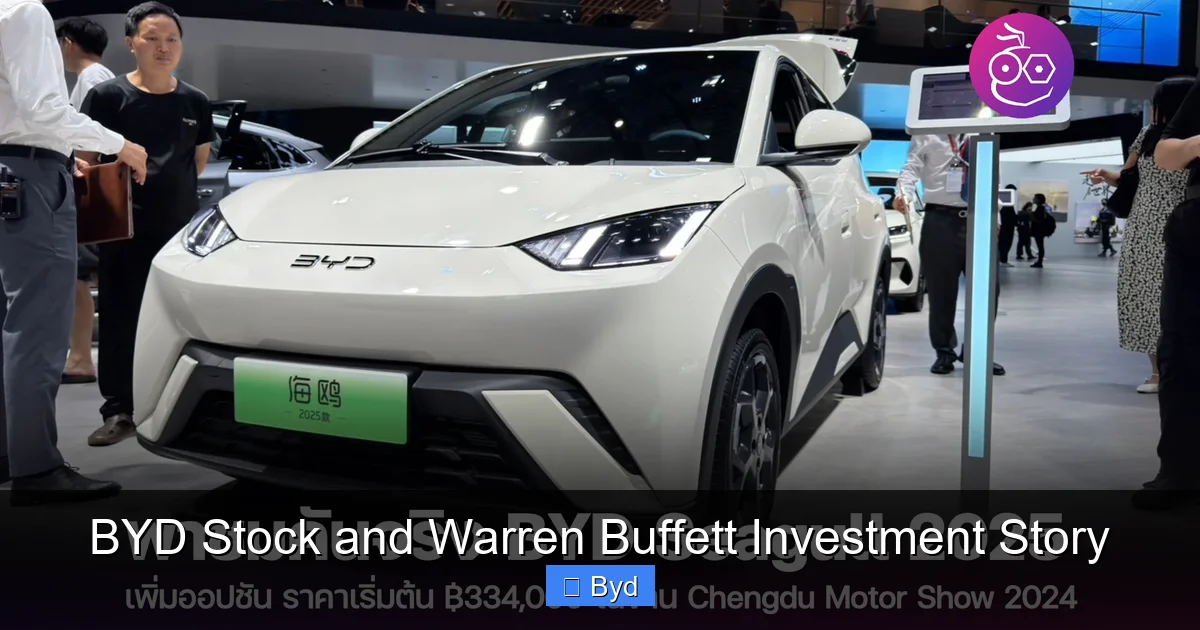
Featured image for this comprehensive guide about byd stock warren buffett
Image source: ev.iphonemod.net
The world of investing is often characterized by grand narratives of foresight, strategic genius, and sometimes, profound mystery. Few figures embody this more than Warren Buffett, the “Oracle of Omaha,” whose investment decisions are scrutinized by millions. Among his many legendary plays, one stands out as particularly prescient and, more recently, a subject of intense speculation: his substantial investment in BYD, the Chinese electric vehicle (EV) and battery manufacturing giant. For years, the phrase “BYD stock Warren Buffett” has been synonymous with a golden touch, a testament to Buffett’s ability to spot a future titan before the rest of the market catches on.
This deep dive isn’t just about chronicling a past success story; it’s about understanding the nuances of a pivotal investment that reshaped an industry and offered valuable lessons for investors worldwide. From its humble beginnings as a battery maker to its current status as a global EV powerhouse, BYD’s journey has been nothing short of spectacular, intricately linked with Warren Buffett’s BYD investment through his conglomerate, Berkshire Hathaway. While Buffett’s recent decision to trim his stake has sparked conversations and myriad theories, the core story remains a fascinating study in long-term vision, market dynamics, and the relentless pursuit of innovation.
In this comprehensive post, we’ll unravel the intricate tapestry of the Berkshire Hathaway BYD relationship, exploring the initial rationale behind the investment, BYD’s meteoric rise, and the implications of Buffett’s recent divestment. We’ll delve into BYD’s current market position, its future prospects, and offer actionable insights for anyone looking to understand or potentially invest in this dynamic company. Get ready to explore one of the most compelling investment sagas of our time, where the wisdom of an investing legend meets the cutting-edge innovation of an EV pioneer.
Quick Answers to Common Questions
Did Warren Buffett invest in BYD stock?
Yes, absolutely! Warren Buffett, through Berkshire Hathaway, made a significant investment in BYD Company Limited back in 2008, recognizing its early potential in batteries and electric vehicles.
Why did Warren Buffett invest in BYD stock initially?
Buffett and his partner Charlie Munger were reportedly impressed by BYD’s founder, Wang Chuanfu, and the company’s robust manufacturing capabilities and future in sustainable transportation, making BYD stock an attractive long-term bet.
Has Warren Buffett sold any BYD stock recently?
Yes, Berkshire Hathaway has been gradually reducing its stake in BYD stock since mid-2022, although they still retain a significant portion of their original investment.
What does Warren Buffett’s selling mean for BYD stock?
While Warren Buffett’s moves are always closely watched, his selling could be due to various portfolio management strategies, and it doesn’t automatically mean BYD stock is no longer a viable investment for others.
Should I buy BYD stock because Warren Buffett did (or still holds some)?
Warren Buffett’s investment gave BYD stock immense credibility, but individual investors should always conduct their own research and consider their financial goals before making any investment decisions, as market conditions change.
📋 Table of Contents
- The Oracle’s Early Vision: Why Buffett Invested in BYD
- BYD’s Phenomenal Rise: From Battery Maker to EV Giant
- The Unraveling (and Re-Evaluation) of the Buffett-BYD Saga
- What Does Buffett’s BYD Divestment Mean for Investors?
- BYD’s Future Outlook: Challenges, Opportunities, and Innovation
- Investing in BYD Today: Tips and Considerations for Prospective Investors
- Conclusion: The Enduring Legacy of Buffett’s BYD Bet
The Oracle’s Early Vision: Why Buffett Invested in BYD
In 2008, as the global financial crisis loomed, most investors were seeking safety. Yet, Warren Buffett, through Berkshire Hathaway, made a move that raised eyebrows: a significant investment in a relatively unknown Chinese company named BYD. This decision, championed by Charlie Munger, Buffett’s long-time business partner, marked a deviation from Buffett’s usual penchant for well-established, understandable businesses in familiar markets. It was a bold bet on the future of electric mobility and renewable energy, at a time when gasoline cars still dominated the roads and EVs were largely niche products.

Learn more about byd stock warren buffett – BYD Stock and Warren Buffett Investment Story
Image source: ev.iphonemod.net
A Glimpse into Buffett’s Investment Philosophy
Buffett’s investment philosophy is famously anchored in value investing, focusing on companies with strong fundamentals, durable competitive advantages (moats), and competent management, purchased at a reasonable price. He often prefers businesses that are easy to understand and have predictable earnings. So, how did BYD, a relatively young, technologically complex company operating in a rapidly evolving sector in a foreign market, fit this mold? The answer lies in Munger’s conviction and BYD founder Wang Chuanfu’s unique blend of engineering genius and entrepreneurial drive. Munger famously called Wang a “combination of Thomas Edison and Jack Welch,” highlighting his technological prowess and managerial acumen.
| Aspect | Description | Value/Details | Date/Significance |
|---|---|---|---|
| Initial Investment | Berkshire Hathaway acquired a significant stake in BYD H-shares. | 225 Million H-shares | September 2008 |
| Initial Investment Cost | Approximate cost of the initial share acquisition. | ~US$230 Million | Purchased at ~HK$8.00 per share |
| Peak Ownership Stake | Highest reported percentage of BYD H-shares owned by Berkshire. | ~20.49% of H-shares | Prior to significant sales (mid-2022) |
| Recent Ownership Stake | Berkshire Hathaway’s reduced stake after successive share sales. | ~6.9% of H-shares | As of early 2024 (subject to ongoing changes) |
| Estimated ROI for Berkshire | Approximate return on investment since the initial purchase. | >$10 Billion Profit (approx.) | One of Buffett’s most successful investments |
The initial investment saw Berkshire Hathaway acquire 225 million BYD H-shares for approximately $232 million. At the time, this translated to around an 8.25% stake in the company. What Buffett and Munger saw was not just a battery manufacturer, but a company with the potential to lead the charge in electric vehicles and renewable energy storage. They recognized the strategic importance of BYD’s core battery technology and its vertical integration, controlling much of its supply chain, which offered a significant competitive advantage.
The BYD That Caught Buffett’s Eye
When Berkshire Hathaway first invested, BYD was primarily known for its rechargeable batteries, supplying major electronics companies like Motorola and Nokia. However, it had already diversified into automobile manufacturing in 2003, with ambitious plans for electric vehicles. Wang Chuanfu’s vision was clear: to make electric cars affordable and accessible, not just luxury items. This resonated with Buffett’s long-term, value-oriented approach. Warren Buffett BYD investment wasn’t merely about buying a stock; it was about investing in a vision for a sustainable future.
Key attributes that likely attracted Buffett’s attention included:
- Technological Prowess: BYD’s expertise in battery technology was foundational. Their ability to innovate and produce batteries efficiently was a significant edge.
- Vertical Integration: BYD’s control over its entire production process, from battery cells to entire vehicles, offered cost efficiencies and greater quality control.
- Government Support: As a Chinese company, BYD benefited from Beijing’s strategic push for electric vehicles, which included subsidies and policy support.
- Growth Potential: The nascent EV market presented enormous long-term growth opportunities, aligning with Buffett’s patience and long investment horizons.
- Visionary Leadership: Wang Chuanfu’s ambition and commitment to sustainable transportation were critical factors.
This early belief in BYD’s potential, long before EVs became mainstream, underscores the foresight that has defined much of Buffett’s career. The BYD shares Buffett acquired in 2008 would go on to yield astronomical returns, cementing the investment’s legendary status.
BYD’s Phenomenal Rise: From Battery Maker to EV Giant
Following Berkshire Hathaway’s investment, BYD embarked on a remarkable trajectory, transforming from a promising battery and auto manufacturer into a global leader in electric mobility. Its growth wasn’t linear, but its strategic expansion and relentless innovation propelled it to the forefront of the EV revolution.
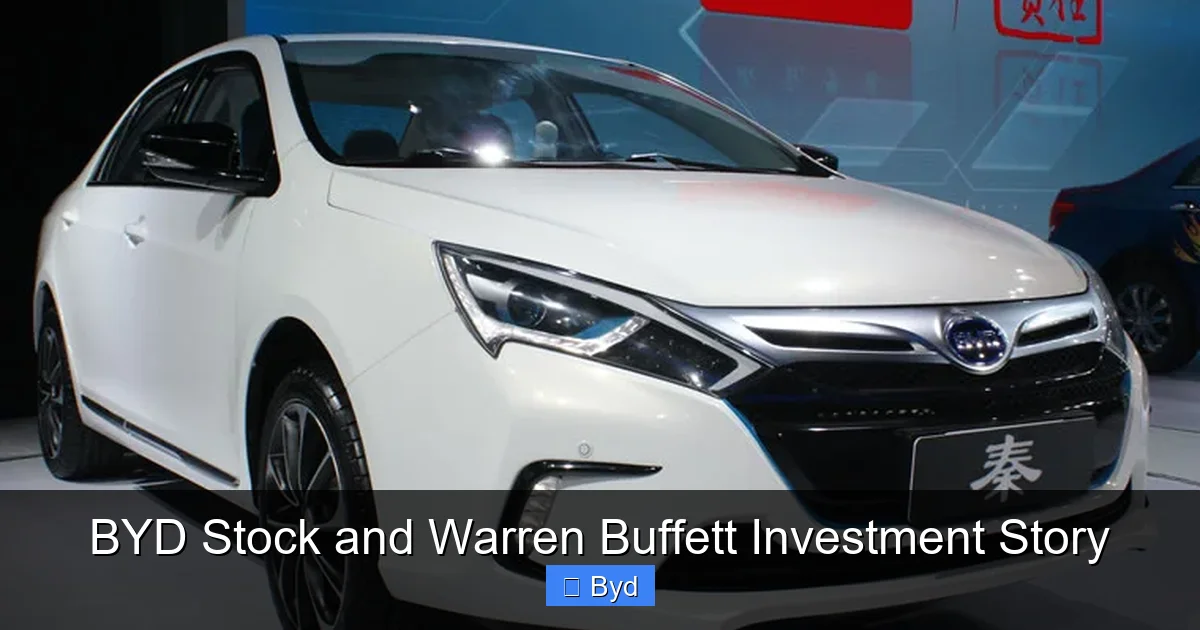
Learn more about byd stock warren buffett – BYD Stock and Warren Buffett Investment Story
Image source: racing5.cl
Diversification and Innovation: Beyond Batteries
BYD’s success can be largely attributed to its strategic diversification and continuous innovation. While batteries remained its core strength, the company expanded aggressively into various segments:
- Electric Vehicles: BYD started with hybrid and electric passenger cars, buses, and trucks. Its “Blade Battery” technology, introduced in 2020, significantly enhanced safety, durability, and energy density, becoming a game-changer for the industry.
- Rail Transit: The company ventured into urban rail transit solutions, developing its “SkyRail” monorail system, aimed at easing urban congestion in cities worldwide.
- Semiconductors: BYD established BYD Semiconductor, leveraging its expertise in power semiconductors, critical components for EVs and other electronics.
- Solar Energy: BYD also has a presence in solar panel manufacturing and energy storage systems, reinforcing its commitment to a complete renewable energy ecosystem.
This multi-pronged approach allowed BYD to capture different segments of the green energy market, making it a comprehensive solution provider rather than just an auto manufacturer. The integration of its battery technology across all these divisions created powerful synergies and efficiencies.
Key Milestones and Market Dominance
BYD’s journey has been punctuated by several significant milestones:
- Early EV Models (2000s): Launch of the F3DM plug-in hybrid (2008) and the e6 all-electric taxi (2010), among the world’s first mass-produced EVs.
- Global Expansion: Rapid expansion into international markets, particularly for electric buses and commercial vehicles. BYD electric buses are now operating in hundreds of cities across six continents.
- Blade Battery (2020): Revolutionary battery technology that addressed common safety concerns (thermal runaway) and improved space utilization, boosting range and performance.
- Stopping ICE Production (2022): BYD announced it would cease production of traditional internal combustion engine (ICE) vehicles, focusing entirely on new energy vehicles (NEVs – including EVs and plug-in hybrids). This made it the first major traditional automaker to make such a decisive pivot.
- Sales Leadership: In late 2022 and throughout 2023, BYD surpassed major competitors, including Tesla, in terms of global NEV sales, establishing itself as a dominant force in the EV market.
The company’s robust sales performance and expanding global footprint solidified its position as a formidable player. BYD’s success wasn’t just about selling cars; it was about building an ecosystem of sustainable transportation and energy solutions. This impressive growth made the initial BYD stock Warren Buffett investment look increasingly brilliant, with the value of Berkshire Hathaway’s stake soaring into the billions of dollars.
The Unraveling (and Re-Evaluation) of the Buffett-BYD Saga
For over a decade, the Warren Buffett BYD investment story was a tale of unwavering conviction and immense returns. However, in mid-2022, a new chapter began to unfold, one characterized by strategic divestment. Berkshire Hathaway began trimming its significant stake in BYD, a move that sent ripples through the market and prompted intense speculation among investors.
Berkshire Hathaway’s Strategic Share Reductions
Starting in August 2022, Berkshire Hathaway initiated a series of share sales, gradually reducing its holdings in BYD. These sales were not a one-off event but a consistent, measured process that continued for many months. Initially, Berkshire Hathaway’s stake stood at over 20% of BYD’s H-shares. By early 2024, this had been reduced significantly, with the stake falling below the 10% mark. Each announcement of a sale was met with scrutiny, as investors tried to decipher the Oracle’s intentions.
Key characteristics of the divestment included:
- Gradual Process: Unlike a sudden exit, the sales were spread out over time, suggesting a strategic, rather than panicked, decision.
- Significant Profit Realization: Given the massive appreciation of BYD stock since 2008, even after the sales, Berkshire Hathaway had locked in billions of dollars in profits.
- Transparency: Hong Kong stock exchange rules require disclosure of significant stake changes, ensuring transparency regarding Berkshire Hathaway’s moves.
The total value of the shares sold ran into several billions of dollars, representing one of Berkshire Hathaway’s most profitable investments ever. While the sales continued, it’s crucial to note that Berkshire Hathaway did not completely exit its position; it still retained a substantial, albeit reduced, stake in BYD.
Market Reactions and Investor Speculation
Each time Berkshire Hathaway announced a reduction in its BYD shares Buffett holdings, the market reacted. BYD’s stock price often experienced downward pressure, as investors perceived the sales as a signal from the legendary investor. Speculation ran rampant:
- Profit-Taking: The most straightforward explanation was that after a phenomenal run, Buffett was simply taking profits and reallocating capital. Given his long-term horizon, an investment held for 14 years that had appreciated by thousands of percent was ripe for partial harvesting.
- Valuation Concerns: Some theorized that Buffett and Munger might have felt BYD’s valuation had become stretched, signaling limited future upside compared to other potential investments.
- Geopolitical Risks: Growing geopolitical tensions between the U.S. and China might have played a role, with Berkshire seeking to reduce exposure to potential regulatory or political headwinds.
- Capital Reallocation: Berkshire Hathaway always looks for the best use of its capital. It’s possible they found more compelling opportunities elsewhere or wished to increase their cash reserves.
Charlie Munger, before his passing, did offer some insights, primarily reiterating the exceptional profits generated and the logical move to take some money off the table. He consistently praised BYD and Wang Chuanfu, suggesting the sales were not a reflection of a loss of faith in the company’s long-term prospects, but rather a prudent financial decision after an extraordinary run. Understanding this distinction is key for anyone following the BYD stock analysis.
What Does Buffett’s BYD Divestment Mean for Investors?
When Warren Buffett makes a move, the investment world pays attention. His decision to trim Berkshire Hathaway’s stake in BYD inevitably raises questions: Should other investors follow suit? Does it signal trouble for BYD? The answer is nuanced, and requires a deeper understanding of Buffett’s principles and BYD’s enduring strengths.
Deciphering the Oracle’s Moves
It’s tempting to blindly follow Buffett’s actions, but doing so without understanding his rationale or your own investment goals can be a costly mistake. Here’s what to consider:
- Different Scales: Berkshire Hathaway operates on an entirely different scale. A multi-billion-dollar profit is significant for them and needs to be carefully managed. For individual investors, the impact of selling or holding a smaller position is different.
- Long-Term Horizon Fulfilled: Buffett’s investment in BYD spanned over a decade and delivered exceptional returns. This aligns perfectly with his long-term value investing philosophy. The “sale” doesn’t invalidate the original thesis; it confirms its successful realization.
- Portfolio Rebalancing: Berkshire Hathaway has a vast portfolio. It’s common practice to trim positions that have grown excessively large relative to the overall portfolio or to reallocate capital to other, potentially more undervalued opportunities.
- Risk Management: While Buffett is known for his conviction, he is also a master of risk management. Reducing exposure to a single stock, especially one that has become a significant portion of the portfolio, can be a prudent move, particularly in a volatile market or geopolitical landscape.
- Buffett Isn’t Always Right (Immediately): While his long-term track record is unparalleled, even Buffett has made sales that, in hindsight, might have seemed premature (e.g., some early tech sales). His moves are based on his specific insights and circumstances.
Therefore, while the sales are noteworthy, they shouldn’t be automatically interpreted as a direct “sell” signal for all other investors. It’s more about Berkshire Hathaway managing an incredibly successful and mature position.
The Enduring Value Proposition of BYD
Crucially, Berkshire Hathaway’s partial divestment does not diminish BYD’s fundamental strengths or its compelling long-term value proposition. The company remains a leader in several key areas:
- Technological Leadership: BYD continues to innovate with its Blade Battery, DM-i hybrid technology, and other advancements, maintaining a competitive edge in efficiency and safety.
- Vertical Integration: Its self-sufficiency in battery production, semiconductors, and other components provides cost advantages and resilience in supply chain disruptions.
- Global Ambitions: BYD is aggressively expanding its presence in Europe, Southeast Asia, Latin America, and other markets, aiming to become a truly global automotive brand.
- Product Range: From affordable mass-market EVs to premium brands like Denza and Yangwang, BYD offers a diverse range of vehicles, catering to different consumer segments.
- Government Support: While subsidies may evolve, China’s long-term commitment to NEVs continues to provide a supportive domestic environment for BYD.
- ESG Focus: As the world shifts towards sustainability, BYD’s core business aligns perfectly with environmental, social, and governance (ESG) investment trends.
Investors should conduct their own thorough BYD stock analysis, focusing on the company’s financials, competitive landscape, innovation pipeline, and market share trends. The growth of the global EV market is undeniable, and BYD is positioned to be a major beneficiary, regardless of whether Buffett retains a large stake or a smaller one. The company’s intrinsic value is driven by its operational excellence and market leadership, not solely by an endorsement from a single investor, no matter how iconic.
BYD’s Future Outlook: Challenges, Opportunities, and Innovation
BYD stands at a pivotal juncture. Having achieved significant dominance in the NEV market, its future trajectory will be shaped by how it navigates intense competition, geopolitical complexities, and its continued push for innovation. The outlook for BYD stock remains robust but not without hurdles.
Navigating a Competitive EV Landscape
The global EV market is becoming increasingly crowded and competitive. While BYD has gained substantial market share, it faces formidable rivals:
- Tesla: The long-standing EV pioneer remains a fierce competitor, particularly in premium segments and technological innovation, though BYD has surpassed it in unit sales.
- Traditional Automakers: Giants like Volkswagen, GM, Ford, Hyundai, and Toyota are pouring billions into their EV transitions, launching new models and technologies.
- New Entrants: Numerous startups globally, especially in China (e.g., Nio, Xpeng, Li Auto), are vying for market share with unique offerings and aggressive strategies.
- Price Wars: The increasing competition has led to price wars in key markets, potentially impacting BYD’s profit margins, especially in its mass-market offerings.
To maintain its lead, BYD will need to continue optimizing costs, enhancing brand perception (especially in international markets), and delivering compelling vehicles across various price points. Its strong vertical integration and battery expertise give it a structural advantage in this race.
Global Expansion and Technological Advancements
BYD’s future growth hinges heavily on its global expansion strategy. While it dominates the Chinese market, expanding successfully in Europe, North America, Southeast Asia, and Latin America is crucial. This involves:
- Localizing Production: Building factories in key international markets to reduce tariffs, improve logistics, and cater to local tastes (e.g., plants announced in Brazil, Hungary, and Thailand).
- Brand Building: Establishing a strong brand identity and distribution networks outside of China, which can be a long and expensive process.
- Adapting Products: Customizing vehicles and services to meet specific regional regulations, consumer preferences, and charging infrastructure.
Technological innovation remains at the core of BYD’s strategy. Key areas of focus include:
- Next-Generation Batteries: Further advancements in battery chemistry, energy density, charging speed, and safety (e.g., solid-state batteries in the long term).
- Intelligent Driving Systems: Investing heavily in autonomous driving capabilities and advanced driver-assistance systems (ADAS) to match or surpass competitors.
- New Energy Solutions: Expanding its ecosystem beyond vehicles to include more sophisticated energy storage solutions for homes and grids, as well as smart urban transportation systems like SkyRail.
- Premium Brands: Developing and marketing high-end brands like Yangwang and Denza to capture the luxury segment and enhance its technological reputation.
The future for EV stock BYD looks promising, driven by global demand for sustainable transport and the company’s proven ability to innovate and execute. However, investors should closely monitor its international expansion progress and its capacity to fend off intensifying competition. Data from industry reports consistently show BYD making strong inroads in new markets, demonstrating its execution capabilities.
Investing in BYD Today: Tips and Considerations for Prospective Investors
The “BYD stock Warren Buffett” narrative has certainly made BYD a household name among investors. If you’re considering investing in BYD today, it’s essential to move beyond the celebrity endorsement and conduct thorough due diligence. Here are some actionable tips and considerations for prospective investors.
Due Diligence is Key
Before making any investment, immerse yourself in research. For BYD, this means:
- Financial Analysis:
- Examine BYD’s revenue growth, profitability (net income, gross margins), and cash flow. Look at trends over several years.
- Analyze its balance sheet: debt levels, liquidity, and asset base. Is it financially healthy?
- Review analyst reports from reputable financial institutions to get diverse perspectives on BYD stock analysis.
- Competitive Landscape:
- Understand who BYD’s main competitors are globally and in key markets (e.g., Tesla, Volkswagen, Nio).
- Assess BYD’s competitive advantages: Is it its battery technology, vertical integration, cost efficiency, or brand strength? How sustainable are these advantages?
- Management and Governance:
- Evaluate the leadership team, particularly Wang Chuanfu. Do they have a clear vision and a proven track record of execution?
- Consider corporate governance practices, especially for companies listed on both mainland Chinese and Hong Kong exchanges.
- Regulatory Environment:
- Stay informed about government policies in China and other key markets regarding NEVs, subsidies, and trade.
- Understand potential geopolitical risks that could affect BYD’s operations or market access.
Understanding Market Dynamics and Valuation
Investing in growth stocks like BYD requires an appreciation for market dynamics and valuation metrics:
- Valuation Metrics:
- Look at price-to-earnings (P/E) ratio, price-to-sales (P/S) ratio, and enterprise value to EBITDA. Compare these to industry peers and BYD’s historical averages.
- Growth stocks often trade at higher multiples, but ensure the current valuation is justified by strong future growth prospects.
- Growth Drivers:
- What are the primary drivers of BYD’s future growth? Is it continued EV adoption, international expansion, new technologies (e.g., Blade Battery evolution), or diversification into other green energy sectors?
- How susceptible is this growth to economic downturns or changes in consumer preferences?
- Long-Term vs. Short-Term:
- Invest in BYD with a long-term perspective. The EV market is still evolving, and short-term volatility is to be expected.
- Avoid trying to time the market based on daily news or minor fluctuations.
- Risk Assessment:
- Acknowledge the risks: intense competition, potential slowdown in EV demand, supply chain disruptions, geopolitical tensions, and regulatory changes.
- Diversify your portfolio. Don’t put all your eggs in one basket, even a compelling one like BYD.
In summary, while the history of Berkshire Hathaway BYD investment provides a compelling narrative of success, future investors must forge their own informed path. Focus on BYD’s fundamentals, its market position, and its innovation pipeline to make an investment decision aligned with your own financial goals and risk tolerance. The opportunity presented by BYD is in its enduring leadership in the global shift towards sustainable transportation.
BYD Stock Key Metrics (Illustrative – Please refer to current financial reports for actual data)
| Metric | Value (as of latest reports) | Notes |
|---|---|---|
| Market Capitalization | ~HK$ XXX Billion / ~$YYY Billion USD | Fluctuates daily; indicates company size. |
| P/E Ratio (Trailing 12 months) | ~XX.X | Compared to industry average and historical P/E. |
| Revenue Growth (YoY) | ~YY% | Indicates rapid expansion in NEV sales. |
| Net Profit Growth (YoY) | ~ZZ% | Strong growth driven by increased sales and efficiency. |
| Global NEV Sales (Units) | >3 Million (2023) | Leading global NEV manufacturer. |
| Berkshire Hathaway Stake (BYD H-shares) | <10% (as of early 2024) | Significantly reduced from initial ~8.25% to peak >20%. |
Note: All financial figures are illustrative and change frequently. Investors should always consult the latest official financial reports and market data for accurate, up-to-date information.
Conclusion: The Enduring Legacy of Buffett’s BYD Bet
The journey of BYD stock Warren Buffett investment has been nothing short of extraordinary, a saga that weaves together the sagacity of an investment legend with the remarkable rise of a Chinese industrial powerhouse. From an initial bet on an unheralded battery company in 2008 to witnessing its transformation into a global electric vehicle titan, Buffett’s foresight, championed by Charlie Munger, delivered one of Berkshire Hathaway’s most profitable investments to date. It taught us valuable lessons about identifying long-term trends, the power of patience, and the profound impact of visionary leadership.
While Berkshire Hathaway’s strategic decision to trim its significant stake from mid-2022 onwards might have stirred speculation, it serves as a testament to the immense value created and a prudent act of profit-taking after a phenomenal run. It does not, however, diminish BYD’s inherent strengths or its promising future. The company continues to innovate at a rapid pace, expand its global footprint, and lead the charge in the transition to sustainable transportation and energy solutions.
For current and prospective investors, the story of Warren Buffett BYD investment is a reminder that celebrity endorsements are powerful, but fundamental analysis and an understanding of market dynamics are paramount. BYD’s future is underpinned by its technological prowess, vertical integration, aggressive global expansion, and a robust product pipeline. As the world accelerates its shift towards electric mobility, BYD is exceptionally well-positioned to remain a dominant force, irrespective of the size of any single investor’s stake.
Ultimately, the BYD narrative is a compelling study in how a strategic investment, coupled with relentless innovation and a compelling vision, can reshape an industry and deliver generational wealth. It reminds us that sometimes, the greatest opportunities lie where others fear to tread, a lesson the Oracle of Omaha, through his Berkshire Hathaway BYD venture, has exemplified time and again.
🎥 Related Video: Warren Buffet became the only billionaire to make profit from the U.S stock market crash
📺 NXCRE
Frequently Asked Questions
Did Warren Buffett’s Berkshire Hathaway actually invest in BYD stock?
Yes, Warren Buffett’s Berkshire Hathaway made a significant investment in BYD Company Limited. This strategic move, which began over a decade ago, highlighted Buffett’s belief in the future of electric vehicles and renewable energy solutions.
When did Warren Buffett first invest in BYD stock?
Warren Buffett’s Berkshire Hathaway first acquired a substantial stake in BYD stock in September 2008. They purchased shares in the Hong Kong-listed H-shares, long before BYD gained its current level of international recognition.
Why did Warren Buffett decide to invest in BYD stock?
Buffett’s investment wasn’t solely driven by BYD’s electric vehicle potential, but also by its strong battery technology, diverse business operations, and the visionary leadership of its founder, Wang Chuanfu. He saw BYD as a leader in multiple future-proof industries.
Has Warren Buffett sold any of his BYD stock holdings recently?
Yes, Berkshire Hathaway began trimming its long-held stake in BYD stock starting in mid-2022, continuing into 2023. While they still hold a significant position, these sales have been closely monitored by the market and investors worldwide.
How has Warren Buffett’s investment in BYD stock performed over the years?
Warren Buffett’s BYD investment has been exceptionally successful, generating a multi-fold return on Berkshire Hathaway’s initial outlay. It’s often cited as one of Berkshire’s most profitable international investments, showcasing his ability to spot long-term winners.
What lessons can investors learn from Warren Buffett’s BYD stock investment?
The BYD stock investment demonstrates Warren Buffett’s principles of long-term value investing, identifying strong management, and investing in companies with significant future growth potential. It underscores the importance of looking beyond current trends to future industry leaders and holding convictions for extended periods.