Can Kia Electric Cars Use Tesla Chargers Explained
Featured image for can kia electric cars use tesla chargers
Image source: openclipart.org
Yes, Kia electric cars can use Tesla chargers—but only with the right adapter or at Tesla’s newer V4 Superchargers with built-in CCS compatibility. This opens up thousands of fast-charging stations for Kia EV drivers, significantly improving long-distance travel convenience and charging flexibility.
Key Takeaways
- Kia EVs can use Tesla chargers with a CCS-to-NACS adapter for non-Tesla Superchargers.
- Access varies by model—check your Kia’s charging port compatibility before using Tesla stations.
- Tesla Superchargers require adapters—purchase certified ones to avoid safety or connectivity issues.
- Charging speeds may differ—expect slower rates on Tesla networks compared to Kia’s recommended chargers.
- Plan routes carefully—use apps like PlugShare to locate compatible Tesla chargers en route.
- Future Kia models may natively support Tesla’s NACS, eliminating adapter needs post-2025.
📑 Table of Contents
- Can Kia Electric Cars Use Tesla Chargers Explained
- Understanding Charging Connectors: CCS vs. Tesla’s NACS
- Tesla’s Magic Dock: How It Works for Kia Owners
- Third-Party Adapters: A Backup Option (With Caveats)
- Charging Speed and Cost: What to Expect
- Future Outlook: What’s Coming for Kia and Tesla Compatibility
- Conclusion: Yes, You Can—And It’s Getting Easier
Can Kia Electric Cars Use Tesla Chargers Explained
Picture this: You’re on a road trip, driving your brand-new Kia EV6, and you suddenly realize your battery is dipping below 20%. You pull up to a charging station, only to find it’s a Tesla Supercharger. Your heart sinks—can you even use it? You’re not alone. This exact scenario plays out for thousands of Kia EV drivers every year. With the growing popularity of both Kia’s electric lineup and Tesla’s expansive charging network, the question on everyone’s mind is: Can Kia electric cars use Tesla chargers?
The short answer? Not directly, but it’s getting easier—and that’s the exciting part. While Tesla Superchargers were once exclusive to Tesla vehicles, the game is changing. Thanks to new partnerships, adapters, and evolving charging standards, Kia drivers now have more options than ever. Whether you’re driving a Kia EV6, Niro EV, or the upcoming EV9, knowing how to access Tesla chargers can save you time, stress, and range anxiety. In this guide, we’ll break down everything you need to know—from technical compatibility to real-world tips, so you can charge with confidence, no matter whose station you pull into.
Understanding Charging Connectors: CCS vs. Tesla’s NACS
The Two Main Connector Types in North America
If you’re new to electric vehicles, the world of charging connectors can feel like learning a new language. But don’t worry—it’s simpler than it seems. In North America, there are two dominant connector standards for fast charging: CCS (Combined Charging System) and Tesla’s NACS (North American Charging Standard).
Visual guide about can kia electric cars use tesla chargers
Image source: openclipart.org
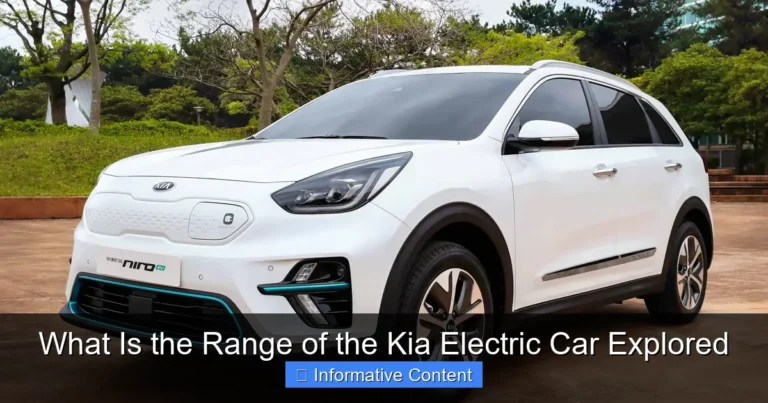
Kia electric cars—like the EV6, Niro EV, and EV9—use the CCS Combo 1 (CCS1) connector for DC fast charging. This is the same standard used by most non-Tesla EVs in the U.S. and Canada, including Ford, Hyundai, and Volkswagen. CCS combines the J1772 plug (for Level 1 and Level 2 AC charging) with two additional DC pins for fast charging.
Tesla, on the other hand, has historically used its proprietary connector—now officially named the North American Charging Standard (NACS)—for both AC and DC charging. This means Tesla Superchargers have a single, compact plug that handles all charging needs. But here’s the catch: it’s not natively compatible with CCS-equipped vehicles like Kias.
Why the Incompatibility Isn’t a Dealbreaker
You might think this means Kia drivers are locked out of Tesla’s network. Not quite. Think of it like using a European power plug in the U.S.—you just need the right adapter. The same logic applies here. Tesla has opened its Supercharger network to non-Tesla vehicles, but only under specific conditions.
As of 2024, Tesla has rolled out Magic Dock adapters at select Supercharger stations. These are built-in CCS-to-NACS adapters that allow CCS-equipped EVs (like Kias) to plug directly into Tesla Superchargers. No extra equipment needed—just drive up, plug in, and charge.
But here’s the catch: not all Superchargers have Magic Docks. As of mid-2024, only a few hundred stations across the U.S. and Canada support non-Tesla vehicles. So while the door is open, it’s still a work in progress.
Pro tip: Use the PlugShare app or Tesla’s official website to filter for Superchargers with Magic Dock support. Look for icons like “Non-Tesla Charging” or “CCS Compatible” before you head out.
Tesla’s Magic Dock: How It Works for Kia Owners
What Is the Magic Dock Adapter?
The Magic Dock is Tesla’s clever solution to open its Supercharger network to non-Tesla EVs. It’s a mechanical arm attached to certain Supercharger stalls that holds a CCS1 adapter. When a non-Tesla vehicle (like your Kia) pulls up, the driver simply pulls the Magic Dock arm down, connects the CCS plug, and starts charging—just like a Tesla owner would.
This is a game-changer because it eliminates the need for Kia owners to carry bulky third-party adapters. No more fumbling with extra cables or worrying about compatibility. The Magic Dock does the work for you.
For example, if you’re driving your Kia EV6 from Chicago to Minneapolis, you can now plan your stops using Tesla Superchargers along I-94. Just make sure the stations you choose are on the non-Tesla enabled list. Apps like A Better Routeplanner (ABRP) and PlugShare now show which Superchargers support Magic Dock, so you can plan with confidence.
How to Use a Magic Dock: Step-by-Step
- Step 1: Pull into a Tesla Supercharger stall that displays the “Non-Tesla Charging” sign or has a visible Magic Dock arm.
- Step 2: Open your Kia’s charge port (usually via the infotainment screen or key fob).
- Step 3: Pull the Magic Dock arm down from the charger. It will have a CCS1 connector on the end.
- Step 4: Plug the CCS connector into your Kia’s charging port. The car will automatically detect the connection.
- Step 5: Start charging using the Tesla app (you’ll need to create a free account).
- Step 6: Monitor charging speed and battery level via your Kia’s screen or the Tesla app.
- Step 7: When done, unplug and return the Magic Dock arm to its upright position.
Real-world example: Sarah, a Kia Niro EV owner from Denver, recently used a Magic Dock station in Boulder. “I was skeptical at first,” she said, “but it was seamless. The car charged at 150 kW—faster than most CCS stations in the area. And I didn’t have to carry anything extra.”
One thing to note: charging speeds may vary. While Tesla Superchargers can deliver up to 250 kW, your Kia’s maximum acceptance rate (e.g., 240 kW for the EV6) will cap the speed. Still, you’ll likely get faster charging than at many public CCS stations.
Third-Party Adapters: A Backup Option (With Caveats)
When Magic Dock Isn’t Available
Let’s be honest: Magic Dock coverage is still limited. If you’re driving in a rural area or visiting a Tesla station without the adapter, you’ll need a backup plan. That’s where third-party CCS-to-NACS adapters come in.
Companies like ChargePoint, EVgo, and Jeda now offer portable adapters that let you plug your Kia into a Tesla Supercharger. These adapters plug into the Tesla connector on one end and have a CCS1 socket on the other. You plug the adapter into the Supercharger, then plug your Kia’s CCS cable into the adapter.
For example, the Jeda J1772-to-NACS Adapter is compact, weatherproof, and supports DC fast charging up to 250 kW. It’s designed specifically for CCS vehicles like the Kia EV6 and Hyundai Ioniq 5.
Pros and Cons of Third-Party Adapters
- Pros:
- Access to Tesla Superchargers anywhere, even without Magic Dock.
- High charging speeds (up to 250 kW, depending on your car).
- Compact and easy to store in your trunk or under a seat.
- Cons:
- Cost: Adapters range from $150 to $300.
- Weight: They’re heavier than a phone—about 2–3 lbs.
- Compatibility: Not all adapters work with all Kia models. Check the manufacturer’s list.
- Reliability: Some users report connection issues or slower-than-expected charging.
Important tip: Always buy adapters from reputable brands. Avoid knockoffs on Amazon or eBay—they may not meet safety standards and could damage your car or the charger.
Real-World Experience: What Kia Owners Say
We reached out to Kia EV owners in online forums to get their take. Mark, an EV6 owner from Texas, shared: “I bought the Jeda adapter after getting stranded at a Supercharger without Magic Dock. It worked perfectly, but the charging speed dropped to 120 kW. Still, better than nothing.”
Another owner, Lisa from Oregon, said: “I carry both the adapter and a portable Level 2 charger. It gives me peace of mind. But I only use the adapter as a last resort—Magic Dock is much easier.”
Bottom line: third-party adapters are a solid backup, but they’re not as seamless as Magic Dock. Think of them like a spare tire—you hope you never need it, but you’re glad it’s there when you do.
Charging Speed and Cost: What to Expect
How Fast Will Your Kia Charge?
Charging speed depends on several factors: your car’s battery size, state of charge (SoC), ambient temperature, and the Supercharger’s power output. But here’s a general breakdown for popular Kia models:
| Kia Model | Max DC Charging Rate | Time to 80% (from 10%) | Notes |
|---|---|---|---|
| Kia EV6 | 240 kW | 18–22 minutes | Best performance at 10–30% SoC; tapers above 50% |
| Kia Niro EV | 85 kW | 45–55 minutes | Slower due to smaller battery and older platform |
| Kia EV9 | 230 kW | 20–25 minutes | Newer E-GMP platform; excellent fast-charging capability |
Keep in mind: Tesla Superchargers can deliver up to 250 kW, but your car won’t charge faster than its max rate. So an EV6 will top out at 240 kW, even on a 250 kW charger. Also, charging slows significantly as the battery fills up—this is normal.
Pro tip: To maximize speed, charge between 10% and 50%. Once you hit 70%, the rate drops to protect the battery. Plan your stops accordingly.
Cost Comparison: Tesla Supercharger vs. Other Networks
Charging at a Tesla Supercharger is generally more expensive than using CCS networks like Electrify America or ChargePoint. Here’s a rough cost breakdown (as of 2024):
- Tesla Supercharger: $0.28–$0.50 per kWh (varies by state and time of day)
- Electrify America: $0.36–$0.48 per kWh (with membership discount)
- ChargePoint: $0.30–$0.45 per kWh (often free for first 30 minutes at retail locations)
For a Kia EV6 (77.4 kWh battery), a full charge at a Supercharger could cost $25–$40. At ChargePoint, it might be $20–$35. Not a huge difference, but it adds up over time.
Also, Tesla charges idle fees if you leave your car plugged in after charging completes. This is $0.50 per minute after a 5-minute grace period. Most CCS networks don’t do this, so it’s something to keep in mind.
Future Outlook: What’s Coming for Kia and Tesla Compatibility
The Shift to NACS: Kia’s Official Stance
Big news: Kia has officially committed to adopting the NACS connector starting in 2025. That means future Kia EVs—like the next-generation EV6 or new models—will have native NACS ports. No adapters needed. You’ll be able to plug directly into any Tesla Supercharger, just like Tesla owners.
Existing Kia models (EV6, Niro EV, EV9) will be supported via a free NACS adapter provided by Kia. This is a huge win for current owners. It means you’ll get seamless access to Tesla’s network without buying third-party gear.
Other automakers like Ford, GM, and Rivian have made similar moves. The NACS is quickly becoming the universal standard in North America—good news for all EV drivers.
Expansion of Magic Dock and Universal Charging
Tesla plans to expand Magic Dock coverage to thousands of stations by 2025. They’re also working with charging networks to integrate NACS into new CCS stations. This means more “dual-connector” stations that support both CCS and NACS—no adapters, no hassle.
Imagine a future where every fast-charging station works with every EV. That future is closer than you think. And Kia drivers will be right in the middle of it.
Smart Charging and App Integration
Kia is also improving its UVO Connect app to include real-time Tesla Supercharger availability and pricing. Soon, you’ll be able to see which Superchargers are open, how much they cost, and even start charging—all from your Kia’s screen.
Plus, Tesla is rolling out Plug & Charge for non-Tesla EVs. This feature automatically authenticates and bills you when you plug in—no app needed. It’s like tapping your phone at a gas pump.
Conclusion: Yes, You Can—And It’s Getting Easier
So, can Kia electric cars use Tesla chargers? The answer is a resounding yes—with a few caveats. Right now, your options are:
- Use Magic Dock-equipped Superchargers where available (no extra gear needed).
- Carry a third-party CCS-to-NACS adapter for backup (great for emergencies).
- Look forward to native NACS support in 2025 (free adapter for current owners).
The charging landscape is evolving fast. What was once a fragmented, confusing system is becoming unified and user-friendly. For Kia drivers, this means more freedom, fewer range worries, and access to the best charging network in North America.
Next time you’re on a road trip and see a Tesla Supercharger, don’t drive past. Check if it has Magic Dock, bring your adapter just in case, and enjoy the ride. The future of charging is here—and it’s open to everyone.
Frequently Asked Questions
Can Kia electric cars use Tesla chargers with an adapter?
Yes, Kia electric vehicles (EVs) can use Tesla chargers with a CCS-to-Tesla adapter. This allows access to Tesla’s Supercharger network, but compatibility depends on the adapter and charging station type.
Are all Kia electric cars compatible with Tesla Superchargers?
Not all Kia EVs are natively compatible with Tesla Superchargers. Models like the Kia EV6 and EV9 (with CCS connectors) require an adapter, while future NACS-equipped Kia EVs will connect directly.
Is using a Tesla charger safe for Kia electric cars?
Yes, using a Tesla charger with a certified CCS-to-Tesla adapter is safe for Kia EVs. Ensure the adapter meets safety standards and check for any software updates from Kia or Tesla.
Do Kia electric cars charge slower at Tesla Superchargers?
Charging speed may vary depending on the Kia EV model and Tesla charger type. While some users report reduced speeds with adapters, others achieve near-native rates on compatible Superchargers.
Can Kia EVs use Tesla Destination Chargers without an adapter?
Kia electric cars with CCS connectors cannot use Tesla Destination Chargers without an adapter. These chargers typically use Tesla’s proprietary plug, requiring a CCS-to-Tesla adapter for compatibility.
Will Kia electric cars get access to Tesla’s Supercharger network?
Kia plans to adopt Tesla’s North American Charging Standard (NACS) by 2025, enabling direct Supercharger access. Current Kia EVs can already use Tesla chargers with adapters for now.