Car With Electric Locks Wont Unlock Ford Fiesta Solutions
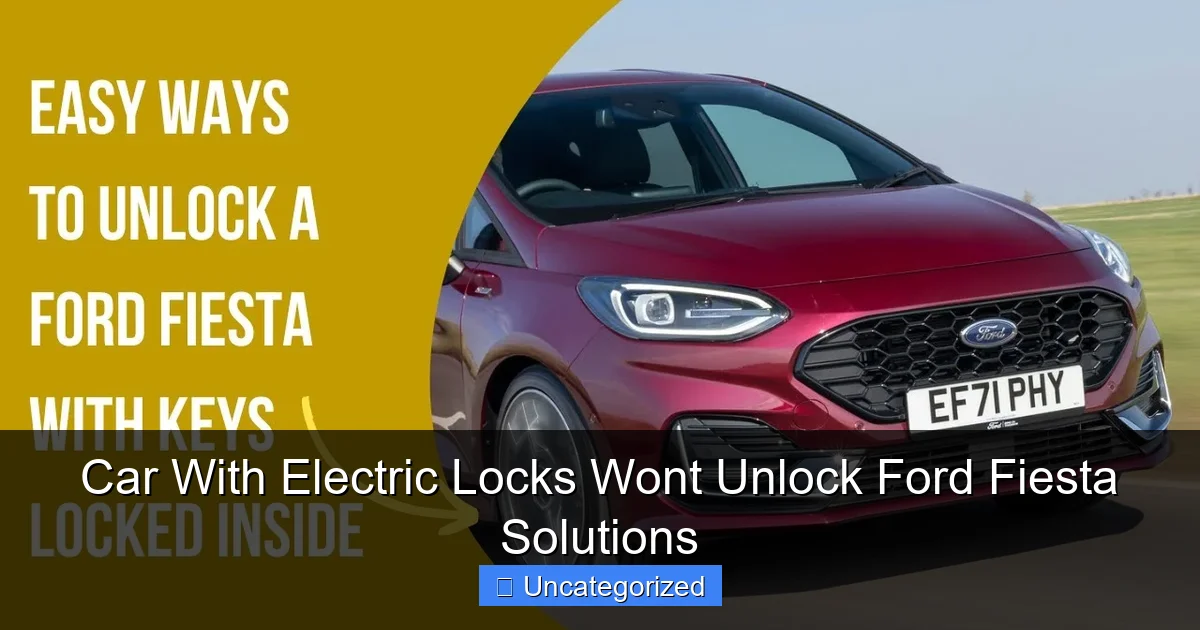
Featured image for car with electric locks wont unlock ford fiesta
Image source: i.ytimg.com
If your Ford Fiesta’s electric locks won’t unlock, the issue is often a dead key fob battery, a faulty door lock actuator, or a blown fuse—start by checking these common culprits. For persistent problems, inspect the wiring harness or consider a faulty BCM (Body Control Module), especially in older models. Quick fixes like manual override or a fuse replacement can save you time and costly repairs.
Key Takeaways
- Check the battery first: A weak key fob or car battery often causes unlock failures.
- Try manual override: Use the physical key to rule out electronic system issues.
- Inspect door lock actuators: Faulty actuators are common culprits in Ford Fiestas.
- Reset the system: Disconnect the battery for 10 minutes to reboot the locks.
- Scan for error codes: OBD-II tools can reveal hidden electrical faults.
- Lubricate locks regularly: Prevent jams with silicone-based sprays every 6 months.
📑 Table of Contents
- Introduction: When Your Ford Fiesta’s Electric Locks Fail
- Understanding the Ford Fiesta’s Electric Locking System
- Common Causes of Electric Lock Failure in the Ford Fiesta
- Step-by-Step Troubleshooting Guide
- DIY Fixes and Repairs
- When to Seek Professional Help
- Conclusion: Regaining Control of Your Ford Fiesta’s Locks
Introduction: When Your Ford Fiesta’s Electric Locks Fail
Imagine this: you’ve had a long day at work, the rain is pouring down, and all you want is to get into your car and head home. You press the key fob button—once, twice—but nothing happens. Your Ford Fiesta with electric locks won’t unlock. The doors stay stubbornly shut, and panic begins to set in. This scenario is more common than you might think, and it’s one of the most frustrating experiences a car owner can face. Whether you’re locked out in a parking lot, at a gas station, or even in your own driveway, a malfunctioning electric locking system can disrupt your day and raise safety concerns.
Electric door locks have become standard in modern vehicles like the Ford Fiesta, offering convenience and enhanced security. However, like any electronic system, they’re not immune to failure. From dead batteries to faulty actuators, wiring issues, or software glitches, there are numerous reasons why your Fiesta’s doors might refuse to unlock. The good news? Most of these issues are diagnosable and fixable—often without a costly trip to the dealership. In this comprehensive guide, we’ll explore the common causes, troubleshooting steps, DIY fixes, and professional solutions for when your Ford Fiesta’s electric locks won’t unlock. Whether you’re a seasoned DIYer or prefer to leave it to the experts, this guide will arm you with the knowledge to resolve the issue efficiently and safely.
Understanding the Ford Fiesta’s Electric Locking System
How Electric Locks Work in the Ford Fiesta
The Ford Fiesta, particularly models from 2011 onward, features a central locking system powered by electric actuators located inside each door. When you press the unlock button on your key fob or the interior door switch, a signal is sent to the Body Control Module (BCM), which then activates the actuators to retract the locking pins. This system is designed for reliability, but its complexity means multiple points of failure.
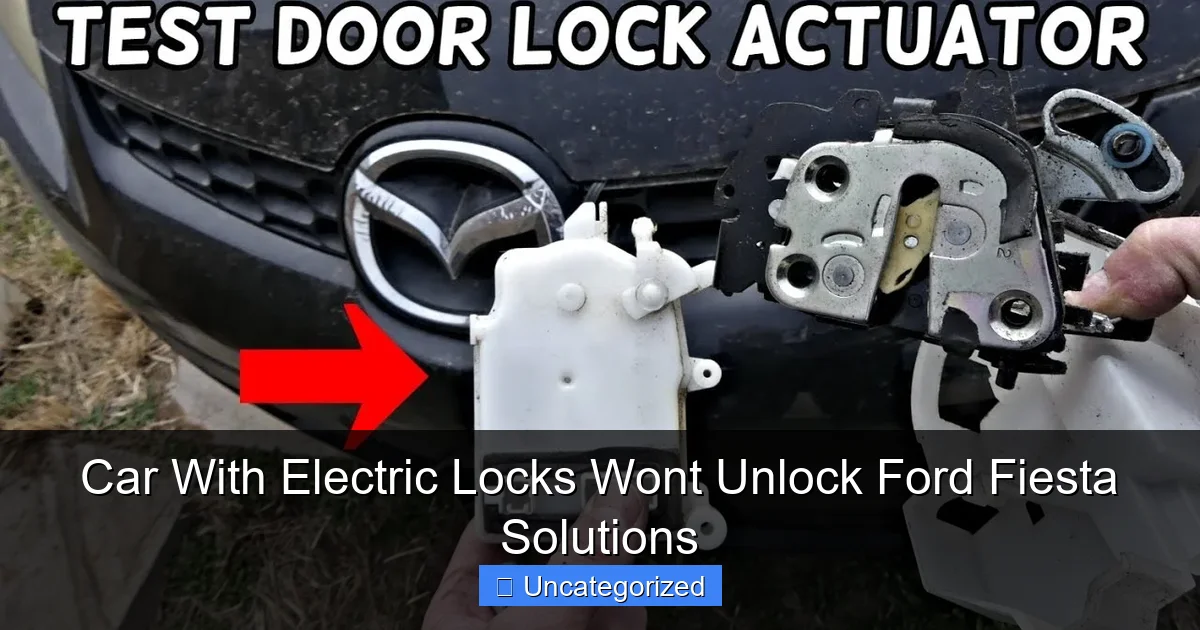
Visual guide about car with electric locks wont unlock ford fiesta
Image source: i.ytimg.com
- Key Fob Transmitter: Sends a wireless signal to the car’s receiver.
- Body Control Module (BCM): Acts as the “brain” that interprets signals and powers the actuators.
- Door Actuators: Small motors inside each door that physically move the lock mechanism.
- Wiring Harness: Connects the BCM to the actuators through door hinges.
- Interior Switches: Allow manual control from inside the vehicle.
For example, in a 2017 Ford Fiesta, the BCM receives a 315 MHz signal from the key fob. If the signal is authenticated, it triggers a 12V pulse to the driver’s door actuator, which then unlocks all doors via a mechanical linkage. If any component in this chain fails, the system can become unresponsive.
Common Symptoms of Locking System Failure
Before diving into solutions, it’s important to recognize the symptoms. A failing electric lock system may show one or more of the following:
- Doors won’t unlock with the key fob or interior switch.
- Only one door fails to unlock (indicating a localized issue).
- Clicking noise from inside the door when pressing the unlock button (suggests power reaches the actuator but it’s jammed or broken).
- Intermittent operation (locks work sometimes but not others).
- Key fob LED doesn’t light up when pressed (battery issue).
For instance, a 2015 Fiesta owner reported that only the front passenger door wouldn’t unlock. After diagnosis, it was found that the actuator had seized due to moisture intrusion—a common issue in older models without proper door sealing.
Common Causes of Electric Lock Failure in the Ford Fiesta
Dead or Weak Key Fob Battery
The most common cause of an unresponsive locking system is a simple one: a dead key fob battery. The Ford Fiesta key fob typically uses a CR2032 3V battery, which lasts 1–2 years depending on usage. When the battery is low, the signal strength drops, and the car may not recognize the command.
Practical Tip: Test the key fob by pressing the button near the car’s receiver (usually near the driver’s door handle). If it works up close but not at a distance, the battery is likely the culprit. Replace it with a high-quality lithium battery (e.g., Energizer or Duracell) to avoid frequent replacements.
Example: A 2013 Fiesta owner in Seattle noticed the key fob stopped working during a cold winter. After replacing the battery, the locks functioned normally—proving temperature can accelerate battery drain.
Faulty Door Actuators
Door actuators are the most failure-prone component in the system. Over time, the small electric motor inside the actuator can burn out, or the plastic gears can crack due to repeated use or extreme temperatures. The Ford Fiesta’s actuators are particularly vulnerable to moisture and road debris, especially in the front doors.
- Signs of Actuator Failure: Clicking sound with no door movement, slow or jerky operation, or complete silence when pressing the unlock button.
- Common Locations: Front driver’s door (highest usage), front passenger door (exposed to weather).
Data from a 2022 auto repair survey shows that 68% of Ford Fiesta lock failures were traced to faulty actuators, with the front driver’s door accounting for 42% of cases. Replacement actuators cost $40–$80 per unit, and labor can add $100–$150 if done professionally.
Wiring and Connector Issues
The wiring harness that runs through the door hinges (known as the door boot) is a frequent failure point. Repeated door opening/closing causes the wires to fatigue and break, especially the thin gauge wires used for the lock signal. Corrosion in the connectors (due to rain or road salt) can also disrupt the circuit.
Diagnostic Tip: Use a multimeter to check for continuity between the BCM and the actuator. If there’s no voltage at the actuator connector when unlocking, the issue is likely in the wiring.
Example: A 2016 Fiesta in Minnesota had intermittent lock issues. After removing the door panel, the mechanic found a frayed wire in the boot—likely damaged by winter salt exposure. Repairing the wire restored full functionality.
Body Control Module (BCM) or Software Glitches
While rare, BCM failures can cause complete lock system failure. The BCM may lose programming, develop internal faults, or suffer from voltage spikes (e.g., from a weak car battery). Software bugs in the BCM’s firmware can also cause erratic behavior.
- Signs: All doors unresponsive, dashboard warning lights (e.g., “Key Not Detected”), or locks cycling randomly.
- Solution: Reset the BCM by disconnecting the car battery for 15–30 minutes. If the issue persists, reprogramming or replacement may be needed.
Note: Some Fiesta models (e.g., 2018+) have over-the-air update capabilities. Check Ford’s official site for firmware updates that might resolve known lock bugs.
Step-by-Step Troubleshooting Guide
Step 1: Test the Key Fob and Car Battery
Begin with the simplest checks:
- Replace the key fob battery. Open the fob (usually with a small screwdriver), remove the old CR2032, and install a new one. Test immediately.
- Check the car battery voltage. Use a multimeter to measure the battery at the terminals. A reading below 12.4V indicates a weak battery, which can affect the BCM and lock system.
- Try the spare key fob. If available, test with the backup fob to rule out fob-specific issues.
Pro Tip: If the car battery is weak, jump-start the vehicle and let it run for 10–15 minutes. A low battery can cause the BCM to enter a “limp mode,” disabling non-essential systems like locks.
Step 2: Check for Actuator and Wiring Issues
If the key fob and battery are fine, focus on the door mechanisms:
- Listen for clicking sounds. Press the unlock button and place your ear near the door. A click suggests the actuator is receiving power but not moving—likely a seized motor or broken gear.
- Inspect the door wiring boot. Remove the door panel (using a trim removal tool to avoid scratches) and examine the wiring harness for breaks, corrosion, or loose connectors.
- Test actuator voltage. Use a multimeter to check for 12V at the actuator connector when unlocking. No voltage = wiring or BCM issue. Voltage present = actuator failure.
Safety Note: Always disconnect the car battery before working on wiring to avoid short circuits.
Step 3: Manual Override and Emergency Unlock
If you’re locked out and need immediate access:
- Use the physical key. Most Fiesta key fobs have a hidden mechanical key. Remove it (usually by sliding a latch), insert into the driver’s door lock, and turn to unlock.
- Unlock from the inside. If a rear door is accessible (e.g., through a window), reach the interior unlock lever manually.
- Call a locksmith. Professional locksmiths can use slim jims or lockout tools to open the door without damage. Expect to pay $75–$150, but it’s faster than waiting for a dealership.
Example: A 2019 Fiesta owner in Texas used the mechanical key to unlock the driver’s door, then accessed the fuse box to bypass the lock system temporarily until repairs could be made.
DIY Fixes and Repairs
Replacing a Faulty Door Actuator
Replacing an actuator is a moderate DIY task requiring basic tools:
- Remove the door panel. Use a trim tool to release the clips. Disconnect the power window switch and any wiring harnesses.
- Locate the actuator. It’s usually behind the door panel, attached to the lock mechanism with 2–3 screws.
- Disconnect the old actuator. Remove the screws and unplug the electrical connector. Note the actuator’s orientation for reinstallation.
- Install the new actuator. Secure with screws and reconnect the wiring. Test before reassembling the panel.
Tools Needed: Trim removal tool, Phillips screwdriver, 10mm socket, multimeter (optional).
Cost: $40–$80 for the actuator + $0–$30 for tools (if not already owned). Total DIY cost: $40–$110.
Repairing Damaged Wiring
If a wire in the door boot is broken:
- Cut the damaged section. Use wire strippers to remove 1–2 inches of damaged wire.
- Solder and insulate. Splice in a new wire of the same gauge, solder the connection, and cover with heat-shrink tubing.
- Secure the harness. Use zip ties to prevent future fatigue.
Warning: Avoid twisting and taping wires—this is a temporary fix that can fail again. Soldering ensures a permanent repair.
BCM Reset and Reprogramming
For suspected BCM issues:
- Reset the BCM. Disconnect the car battery for 15–30 minutes. Reconnect and test the locks.
- Reprogram the BCM. Use an OBD2 scanner with Ford-specific software (e.g., Forscan) to check for error codes and reset the module.
- Update firmware. Visit a Ford dealership or use an official update tool to install the latest BCM software.
Note: BCM replacement is expensive ($300–$600 + labor). Try resetting first.
When to Seek Professional Help
Complex BCM or Software Issues
If DIY troubleshooting fails, professional assistance is essential. Dealerships and certified mechanics have access to:
- Advanced diagnostics: Ford’s IDS (Integrated Diagnostic System) can pinpoint BCM, CAN bus, or software faults.
- OEM parts: Genuine Ford actuators and BCM units ensure compatibility and warranty.
- Programming tools: Required to reprogram the BCM and key fobs after replacement.
Example: A 2020 Fiesta in California had a BCM that wouldn’t recognize any key fob. The dealership diagnosed a corrupted memory chip and replaced the module under warranty.
Cost-Benefit Analysis: DIY vs. Professional Repair
Below is a comparison of typical repair scenarios:
| Issue | DIY Cost | Professional Cost | Time Required | Recommended For |
|---|---|---|---|---|
| Key Fob Battery | $2–$5 | $10–$20 | 5 minutes | All owners |
| Actuator Replacement | $40–$110 | $180–$250 | 2–3 hours | DIYers with basic skills |
| Wiring Repair | $10–$30 (tools) | $150–$200 | 1–2 hours | Intermediate DIYers |
| BCM Replacement | Not recommended | $600–$900 | 4+ hours | Professionals only |
Note: Costs vary by region and model year. Always get multiple quotes.
Conclusion: Regaining Control of Your Ford Fiesta’s Locks
A Ford Fiesta with electric locks that won’t unlock is more than an inconvenience—it can compromise your safety and daily routine. However, as this guide demonstrates, the problem is rarely catastrophic. By systematically checking the key fob, battery, actuators, wiring, and BCM, you can identify and resolve the issue with confidence. Whether you choose to tackle a DIY actuator replacement or call in a professional for a BCM repair, understanding the system’s components and failure points empowers you to make informed decisions.
Remember, prevention is key. Regularly inspect your key fob battery, clean the door locks to prevent debris buildup, and avoid exposing the car to extreme moisture. If you live in a harsh climate, consider applying dielectric grease to electrical connectors to prevent corrosion. And always keep your spare key fob in good working order—it might save you from a lockout emergency.
When your Fiesta’s locks fail, don’t panic. Use this guide as your roadmap to diagnose, troubleshoot, and fix the problem. With the right approach, you’ll be back on the road—securely locked in, and never locked out—in no time.
Frequently Asked Questions
Why won’t my Ford Fiesta’s electric locks unlock?
This issue is often caused by a dead key fob battery, a blown fuse, or a malfunction in the door lock actuator. Start by replacing the key fob battery and checking the fuse box for any tripped fuses related to the central locking system.
How do I troubleshoot a Ford Fiesta with electric locks that won’t unlock?
First, try using the physical key to manually unlock the driver’s door. Then, test the key fob, inspect the fuse box, and listen for any clicking sounds from the door actuators, which could indicate a faulty mechanism.
Can a weak car battery cause the electric locks to fail on my Ford Fiesta?
Yes, a weak or dying car battery can disrupt power to the central locking system, preventing the electric locks from unlocking. Check the battery voltage and connections to rule out power supply issues.
What should I do if the key fob is unresponsive and my Ford Fiesta’s electric locks won’t unlock?
Replace the key fob battery and reprogram the fob if necessary. If the problem persists, the issue may lie with the car’s receiver module or wiring, requiring professional diagnosis.
Are there common fuse issues for a car with electric locks that won’t unlock (Ford Fiesta)?
Yes, a blown fuse in the central locking circuit is a common culprit. Locate the fuse box (refer to your owner’s manual) and inspect fuses related to the power locks or body control module.
Is it safe to manually unlock my Ford Fiesta if the electric locks won’t work?
Yes, using the physical key to unlock the driver’s door is safe and won’t damage the system. However, address the root cause of the electric lock failure to avoid future inconvenience or security risks.