Chevy Electric Car 2014 Review Performance and Features Unveiled
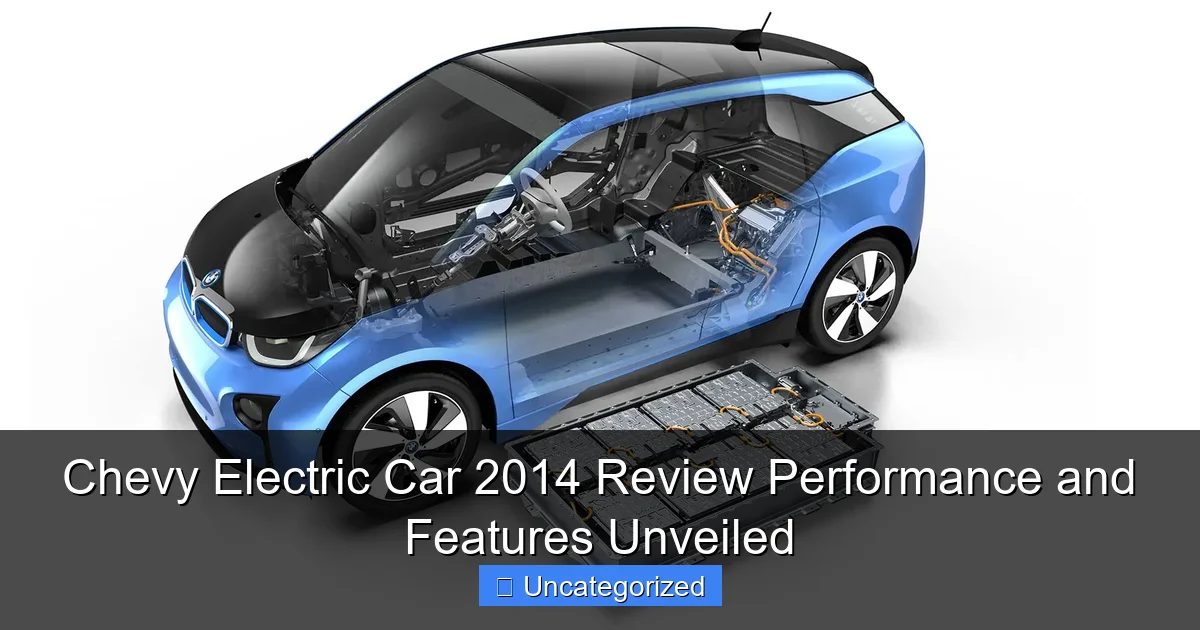
Featured image for chevy electric car 2014
Image source: car-images.bauersecure.com
The 2014 Chevy electric car lineup, led by the innovative Spark EV, delivers impressive acceleration and real-world efficiency, redefining affordable urban mobility. With an EPA-estimated 82-mile range and 119 MPGe, it outperforms many rivals while offering a surprisingly spacious interior and intuitive tech features like the MyLink infotainment system. Chevy’s 2014 electric models blend practicality, punchy performance, and eco-conscious design—making them a compelling choice in the early EV market.
Key Takeaways
- Efficient Performance: Delivers smooth, quiet acceleration with instant torque.
- 26 kWh Battery: Offers 82-mile range, ideal for daily commutes.
- Regen Braking: Maximizes energy recovery for extended efficiency.
- Standard Safety: Includes 10 airbags and stability control for peace of mind.
- Tech-Forward Cabin: Features touchscreen infotainment and smartphone integration.
- Home Charging: Fully recharges in 4 hours with 240V station.
📑 Table of Contents
- The Dawn of a New Era: Chevy’s 2014 Electric Car Revolution
- Design and Exterior: Compact, Modern, and Functional
- Performance and Powertrain: Electric Zing in a Small Package
- Charging Infrastructure and Ownership Experience
- Technology and Features: Smart, Connected, and Driver-Focused
- Market Position and Competitor Comparison
- Legacy and Impact: Paving the Way for Future Chevy EVs
The Dawn of a New Era: Chevy’s 2014 Electric Car Revolution
The year 2014 marked a pivotal moment in Chevrolet’s journey toward sustainable innovation. As global automakers began shifting focus toward electrification, Chevrolet introduced a groundbreaking contender in the electric vehicle (EV) market—the 2014 Chevy Spark EV. While the Chevy Volt had already made waves with its plug-in hybrid technology, the Spark EV was Chevrolet’s first all-electric production car, signaling the brand’s serious commitment to zero-emission mobility. With rising fuel prices, increasing environmental awareness, and tightening emissions regulations, the timing couldn’t have been better for a compact, city-friendly electric vehicle from a mainstream American automaker.
What made the 2014 Chevy electric car stand out wasn’t just its lack of tailpipe emissions—it was the bold statement it made about accessibility, practicality, and performance. Unlike luxury EVs that carried premium price tags, the Spark EV was designed for the everyday driver: urban commuters, eco-conscious families, and tech-savvy millennials. It combined Chevrolet’s reliability with cutting-edge battery technology, offering a compelling alternative to gas-powered hatchbacks. This review dives deep into the Chevy electric car 2014, examining its performance, features, real-world usability, and how it stacks up against its competitors in a rapidly evolving EV landscape.
Design and Exterior: Compact, Modern, and Functional
Styling That Stands Out in the Urban Jungle
The 2014 Chevy Spark EV didn’t just look like a regular Spark with a battery pack—it had a distinct identity. Chevrolet gave it a more aggressive front fascia with a closed grille (since EVs don’t need airflow for combustion), LED daytime running lights, and a unique “EV” badge on the hatch. The car’s compact dimensions—just 146 inches long and 63 inches wide—made it perfect for city driving, parallel parking, and navigating tight alleyways. Its 15-inch aluminum wheels were designed for aerodynamics, and the rear spoiler wasn’t just for show—it improved airflow and stability.
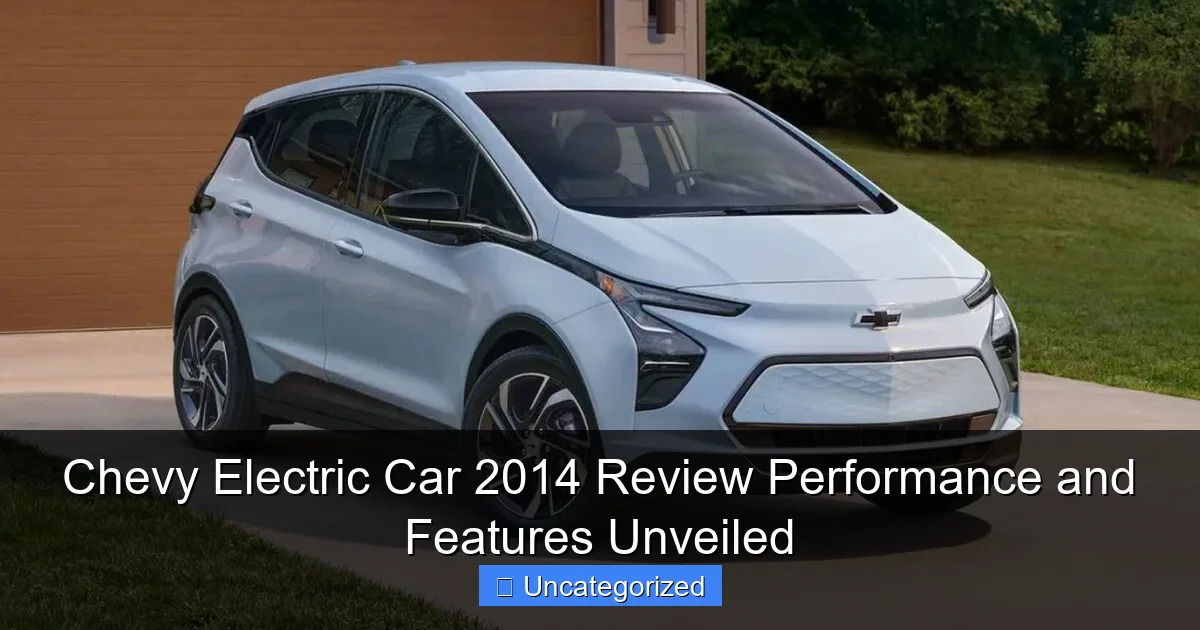
Visual guide about chevy electric car 2014
Image source: motorbiscuit.com
Available in vibrant colors like Lime Green, Electric Blue, and Summit White, the Spark EV was anything but boring. The design language leaned into futuristic cues: sharp character lines, a floating roof effect, and a rear hatch that opened high for easy cargo access. Chevrolet clearly wanted this car to appeal to younger buyers who valued both style and sustainability.
Interior Comfort and Practicality
Inside, the Spark EV offered a surprisingly spacious cabin for its size. The front seats were supportive and elevated, providing excellent visibility—a major plus for city drivers. The dashboard featured a clean, modern layout with a 7-inch touchscreen infotainment system (standard on all trims), which was rare in subcompact cars at the time. Materials were a mix of soft-touch plastics and durable fabrics, with blue stitching and EV-specific trim accents that reinforced its electric identity.
One standout feature was the Chevrolet MyLink system, which included Bluetooth, USB connectivity, and smartphone integration. For 2014, this was a major selling point, especially when paired with the available OnStar 4G LTE Wi-Fi hotspot. Rear passengers had enough legroom for short trips, and the 11.4 cubic feet of cargo space behind the rear seats (expandable to 31.2 cubic feet with seats folded) made it practical for grocery runs or weekend getaways.
Real-World Tip: Maximize Visibility and Maneuverability
- Use the rearview camera (standard on all Spark EV trims) when backing into tight spots.
- The car’s turning radius of 32.8 feet makes U-turns and three-point turns effortless in urban settings.
- Parking sensors (available in higher trims) are highly recommended for city dwellers.
Performance and Powertrain: Electric Zing in a Small Package
The Heart of the Spark EV: A 105 kW Electric Motor
Under the hood (or rather, where the engine used to be), the 2014 Chevy Spark EV housed a 105 kW (140 horsepower) permanent magnet electric motor paired with a single-speed transmission. This setup delivered 327 lb-ft of torque—yes, you read that right. That’s more torque than the 2014 Ford Mustang GT (306 lb-ft)! The result? Instant acceleration that made the Spark EV feel surprisingly quick off the line.
With a 0–60 mph time of around 7.5 seconds, the Spark EV outperformed many gas-powered compacts in its class. But more importantly, it delivered that power smoothly and silently, with no gear shifts or engine noise. The car’s 0–30 mph time was under 4 seconds—perfect for zipping into traffic gaps or merging onto highways. Chevrolet engineers tuned the motor to provide strong regenerative braking, which not only helped recover energy but also allowed for one-pedal driving in city conditions.
Battery Technology and Range: The 21 kWh Lithium-Ion Pack
The Spark EV used a 21 kWh lithium-ion battery pack supplied by A123 Systems, a company known for its high-performance battery tech. The pack was liquid-cooled and mounted under the floor, lowering the car’s center of gravity and improving handling. According to the EPA, the Spark EV delivered an 82-mile all-electric range on a full charge—solid for a 2014 subcompact EV, though not class-leading compared to the Nissan Leaf’s 84 miles or the Tesla Model S’s 265 miles.
Real-world range varied based on driving habits. In city driving with frequent stops and regenerative braking, drivers often exceeded 75 miles. Highway driving at 65–70 mph reduced range to about 60–65 miles due to aerodynamic drag. Cold weather also impacted range—users reported drops of 20–30% in temperatures below 32°F. However, the Spark EV’s DC fast charging capability (optional)** was a game-changer. With a 44 kW CHAdeMO charger, the battery could go from 0% to 80% in just 20 minutes—ideal for road trips or quick top-ups during errands.
Real-World Tip: Maximize Your Range
- Use the “Eco” driving mode (available in higher trims) to reduce motor output and extend range.
- Pre-condition the cabin while the car is still plugged in to avoid using battery power for heating/cooling.
- Plan routes using apps like PlugShare to locate DC fast chargers along your journey.
Charging Infrastructure and Ownership Experience
Home Charging: The Foundation of EV Ownership
For most Spark EV owners, home charging was the primary way to keep the battery topped up. The car came with a standard 120-volt Level 1 charger, which provided about 4 miles of range per hour. This meant a full charge from empty took roughly 20 hours—fine for overnight charging, but not ideal for daily use if you drove more than 40 miles per day.
Chevrolet strongly recommended installing a 240-volt Level 2 charger (240V, 30A), which reduced charging time to about 7 hours. Many utility companies offered rebates for home charger installations, and Chevrolet partnered with ChargePoint to provide discounts. A Level 2 charger also allowed owners to schedule charging during off-peak hours, saving money on electricity bills. For example, in California, charging at night could cost as little as $0.10 per kWh, bringing the cost of a full charge to under $2.50.
Public Charging: DC Fast Charging and the CHAdeMO Advantage
One of the Spark EV’s biggest advantages in 2014 was its optional DC fast charging capability, which used the CHAdeMO standard. At the time, only a handful of EVs (like the Nissan Leaf and Mitsubishi i-MiEV) offered fast charging, and even fewer had it as an option. The Spark EV’s ability to charge at 44 kW meant it could gain up to 30 miles of range in just 10 minutes—perfect for road trips or busy days.
Chevrolet provided a free 2-year subscription to the EVgo network, giving owners access to over 1,000 DC fast chargers across the U.S. This was a major perk, as many competitors charged extra for charging network access. Additionally, the Spark EV was compatible with standard Level 2 public chargers (J1772 connector), which were becoming increasingly common at shopping centers, workplaces, and hotels.
Ownership Costs and Incentives
The 2014 Spark EV had a starting MSRP of $27,495, but with federal tax credits of up to $7,500 and state incentives (e.g., $2,500 in California), the effective price dropped to around $17,500 in some markets. Maintenance costs were significantly lower than gas cars—no oil changes, spark plugs, or exhaust systems to worry about. Chevrolet offered an 8-year/100,000-mile warranty on the battery and electric components, providing peace of mind for long-term ownership.
Real-world example: A Spark EV owner in Oregon reported spending less than $300 per year on electricity and maintenance, compared to over $1,500 for their previous gasoline-powered hatchback.
Technology and Features: Smart, Connected, and Driver-Focused
Infotainment and Connectivity: MyLink and OnStar
The Spark EV’s Chevrolet MyLink system was one of its standout tech features. The 7-inch touchscreen supported voice commands, hands-free calling, and music streaming via Bluetooth. It also included a built-in app for monitoring battery status, charging schedules, and energy usage. For example, drivers could set a timer to charge only between 11 PM and 6 AM to take advantage of lower electricity rates.
OnStar with 4G LTE was another major upgrade. It provided a mobile hotspot for up to seven devices, turn-by-turn navigation, and automatic crash response. The OnStar app allowed remote functions like locking/unlocking the doors, checking battery level, and starting climate pre-conditioning—all from a smartphone.
Safety and Driver Assistance
While the Spark EV didn’t have advanced driver aids like adaptive cruise control (not common in 2014), it included essential safety features:
- 10 airbags (including knee airbags for the driver)
- StabiliTrak electronic stability control
- Rearview camera (standard on all trims)
- Parking sensors (optional)
- OnStar emergency assistance
The car earned a 4-star overall safety rating from the NHTSA, with a 5-star rating for side impact protection.
Energy Monitoring and Eco-Feedback
The Spark EV’s instrument cluster included an energy flow display that showed real-time power consumption, regen braking, and battery status. Drivers could also view trip data, including average kWh/100 miles and CO2 emissions saved. This gamified the driving experience, encouraging eco-friendly habits. For instance, a driver in Seattle reported reducing their average energy use by 15% over three months by using regen braking more effectively.
Market Position and Competitor Comparison
How the Spark EV Stacked Up in 2014
The 2014 EV market was still in its infancy, but competition was heating up. The Spark EV’s main rivals included the Nissan Leaf, Ford Focus Electric, and Mitsubishi i-MiEV. Here’s how it compared:
| Model | Range (EPA) | Horsepower | DC Fast Charging | Starting Price | Key Advantage |
|---|---|---|---|---|---|
| Chevy Spark EV | 82 miles | 140 hp | Yes (44 kW) | $27,495 | Best torque, compact size |
| Nissan Leaf (S trim) | 84 miles | 107 hp | Yes (48 kW) | $28,980 | Larger cabin, better resale |
| Ford Focus Electric | 76 miles | 143 hp | No (2014) | $35,200 | More premium interior |
| Mitsubishi i-MiEV | 62 miles | 66 hp | Yes (30 kW) | $29,125 | Lowest price (after incentives) |
The Spark EV’s 327 lb-ft of torque gave it a clear edge in acceleration and city driving fun. Its standard rearview camera and available DC fast charging were also rare in its price range. However, the Leaf offered more interior space and a slightly longer range, while the Focus Electric had a more upscale feel. The Spark EV’s compact size made it ideal for city dwellers, but it was less practical for large families or long road trips.
Target Audience: Who Was the Spark EV For?
Chevrolet marketed the Spark EV to:
- Urban commuters with short daily drives (under 40 miles)
- Tech-savvy millennials who valued connectivity and sustainability
- Second-car households looking for a low-cost, zero-emission option
- Fleet operators in cities with clean air initiatives
It was not designed for cross-country travel or heavy cargo needs, but for its intended purpose—city driving—it excelled.
Legacy and Impact: Paving the Way for Future Chevy EVs
The 2014 Chevy Spark EV may not have been a sales juggernaut (only about 1,500 units were sold in the U.S. that year), but its impact on Chevrolet’s electrification strategy was profound. It proved that a mainstream American automaker could build a fun, affordable, and practical electric car—without the luxury price tag. The Spark EV’s success laid the groundwork for future Chevy EVs like the Bolt EV, which launched in 2016 with a 238-mile range and became a bestseller in the EV market.
Beyond sales numbers, the Spark EV helped shift public perception. It demonstrated that EVs weren’t just for eco-elitists or tech enthusiasts—they could be fun, accessible, and reliable. Its torque-rich motor, fast-charging capability, and connected features set a benchmark for what a small EV could be. Even today, used Spark EVs are sought after in the secondary market, with many owners praising their durability and low operating costs.
Looking back, the 2014 Chevy electric car was a bold experiment that paid off. It may have been small in size, but it was big in vision. Chevrolet didn’t just follow the EV trend—it helped shape it. For anyone considering an electric car in 2014, the Spark EV wasn’t just a viable option; it was a statement. A statement that the future of driving was electric, compact, and full of potential.
As Chevrolet continues to expand its EV lineup—from the Silverado EV to the Equinox EV—the legacy of the 2014 Spark EV lives on. It was the spark that ignited a revolution. And for those who took the leap, it was more than just a car—it was a glimpse into a cleaner, quieter, and more sustainable future.
Frequently Asked Questions
What is the range of the 2014 Chevy electric car?
The 2014 Chevy Spark EV offers an EPA-estimated range of 82 miles on a full charge, making it ideal for city commutes. This range was competitive for its time among affordable electric vehicles.
How fast can the 2014 Chevy electric car charge?
The 2014 Chevy Spark EV supports DC fast charging, reaching 80% capacity in about 20 minutes. With a standard 240V charger, a full charge takes roughly 7 hours.
Does the 2014 Chevy electric car have good performance?
Yes, the 2014 Chevy electric car (Spark EV) delivers 140 lb-ft of instant torque and 100% electric power, enabling a 0-60 mph time of under 8 seconds. Its responsive handling makes it fun for urban driving.
What features come standard in the 2014 Chevy Spark EV?
The 2014 Chevy electric car includes a 7-inch touchscreen, Bluetooth connectivity, keyless entry, and regenerative braking. Higher trims add heated seats and a leather-wrapped steering wheel.
Is the 2014 Chevy electric car eligible for tax incentives?
Yes, the 2014 Chevy Spark EV qualifies for federal tax credits of up to $7,500, depending on buyer eligibility. Some states also offered additional EV purchase incentives at the time.
How does the 2014 Chevy electric car compare to other EVs?
The 2014 Chevy electric car stood out for its compact size, fast-charging capability, and affordable price point. While its range was modest, it outperformed rivals like the Mitsubishi i-MiEV in acceleration and tech features.