Chevy Electric Car Abandoned What Happened to the Future of GM EVs
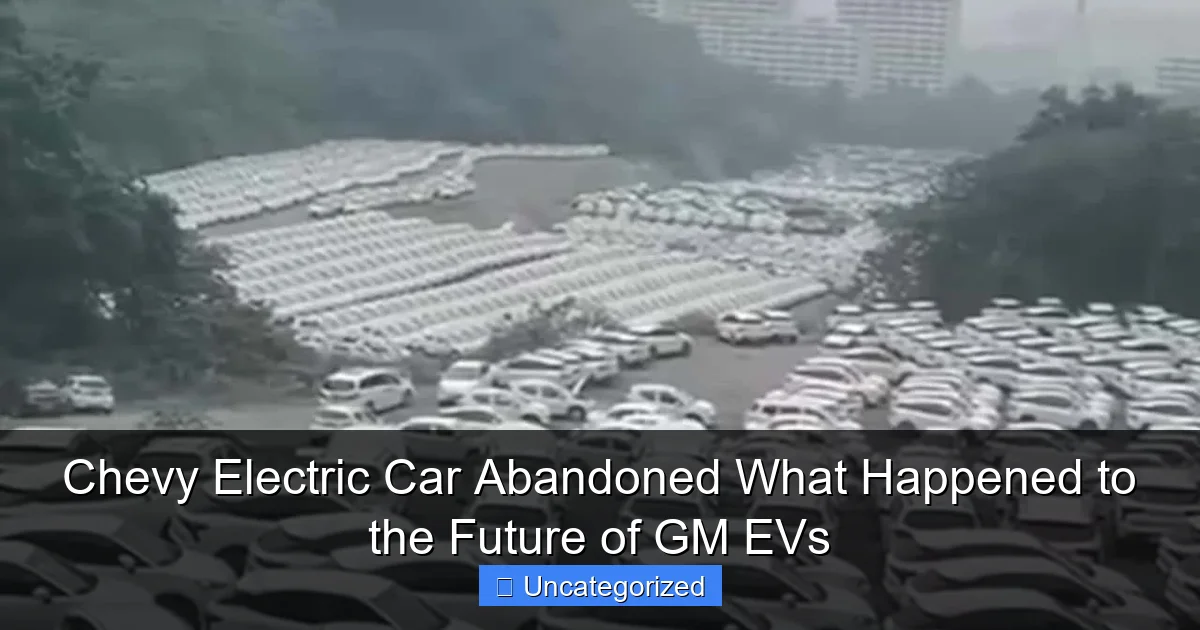
Featured image for chevy electric car abandoned
Image source: cdn.motor1.com
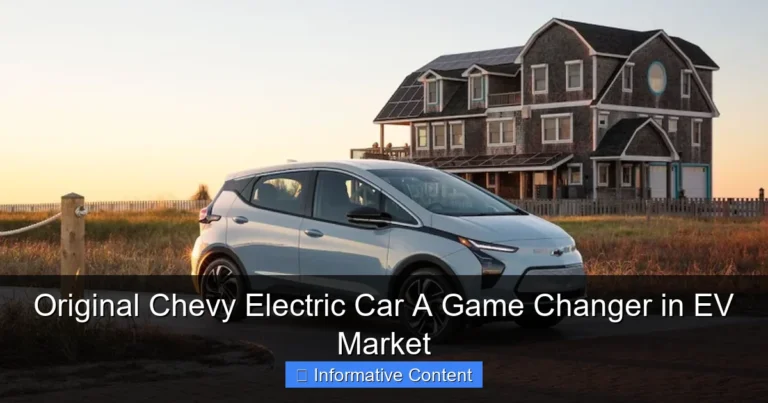
General Motors’ abrupt abandonment of the Chevy Bolt EV shocked the auto world, halting production in 2023 despite strong sales and critical acclaim. Citing a strategic shift toward Ultium-based electric vehicles and higher-profit trucks, GM pulled the plug on the affordable, long-range pioneer—leaving loyal owners and the future of its EV commitment in question.
Key Takeaways
- GM halted Chevy Bolt production to prioritize Ultium-platform EVs for scalability and profitability.
- Legacy battery issues plagued Bolt leading to costly recalls and damaged consumer trust.
- Shift to Ultium technology signals GM’s long-term bet on modular, next-gen EV architecture.
- Chevy’s EV lineup will expand with Equinox, Silverado EVs replacing discontinued models.
- Consumer incentives now favor new EVs over discontinued models like the Bolt, affecting resale value.
- GM remains committed to 2035 EV goal despite Bolt’s phase-out and transition challenges.
📑 Table of Contents
- The Rise and Fall of Chevy’s Electric Dreams
- The Chevy Bolt: A Promising Start with Hidden Flaws
- GM’s Strategic Shift: From Bolt to Ultium and Beyond
- Market Realities: Why Affordable EVs Are Hard to Build
- Environmental and Social Impact of the Bolt’s Demise
- Data Table: Chevy Bolt vs. Upcoming GM EVs
- Conclusion: The End of the Bolt, Not the End of GM’s EV Journey
The Rise and Fall of Chevy’s Electric Dreams
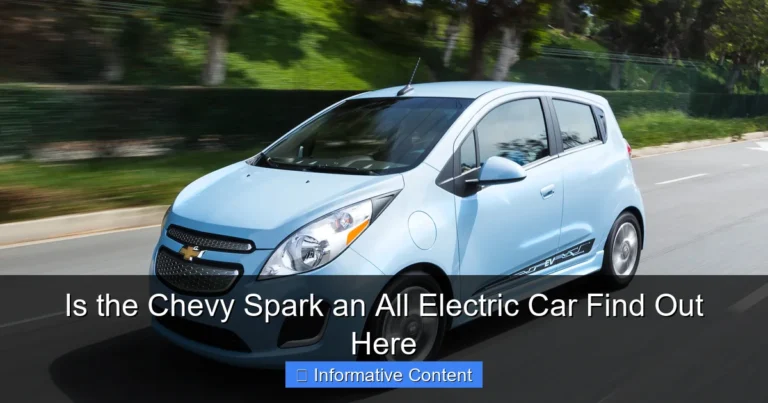
When Chevrolet first unveiled its electric car ambitions, the automotive world took notice. The promise of an affordable, long-range electric vehicle (EV) from a major American automaker seemed like a turning point for both GM and the EV industry as a whole. The Chevy Bolt EV, launched in 2016, was hailed as a game-changer—offering 238 miles of range at a price point under $37,000 (before incentives). For a brief moment, it looked like GM was leading the charge toward an all-electric future.
But by 2023, the narrative had drastically changed. General Motors announced the Chevy electric car abandoned project, effectively ending production of the Bolt EV and EUV by the end of the year. This decision sent shockwaves through the EV community, raising serious questions about GM’s commitment to electrification, the viability of affordable EVs, and what this means for consumers, investors, and the broader transition to sustainable transportation. How did one of the most promising electric vehicles in recent history go from industry darling to discontinued model?
The Chevy Bolt: A Promising Start with Hidden Flaws
The Chevy Bolt was introduced with much fanfare. It wasn’t just another EV—it was positioned as the vehicle that would make electric driving accessible to the masses. With its hatchback design, practical interior, and competitive range, it quickly became the best-selling non-Tesla EV in the U.S. for several years. But behind the success story lay a series of engineering, supply chain, and strategic challenges that would eventually undermine its long-term viability.
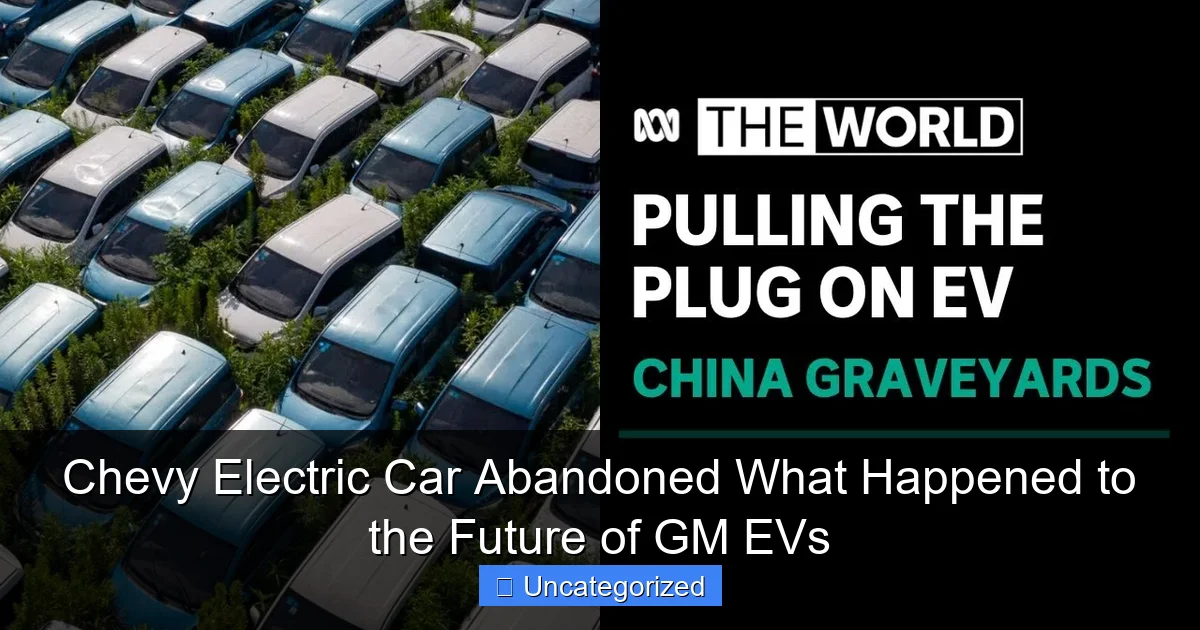
Visual guide about chevy electric car abandoned
Image source: i.ytimg.com
The Early Success and Market Positioning
When the Bolt launched in 2016, it was the first mass-market EV to offer over 200 miles of range at a sub-$40,000 price. This was revolutionary at a time when most EVs either cost significantly more (like the Tesla Model S) or had limited range (like the Nissan Leaf). The Bolt filled a critical gap in the market—a practical, affordable EV for everyday drivers.
- Sales Performance: In 2017, the Bolt sold over 23,000 units in the U.S., surpassing the Nissan Leaf.
- Consumer Trust: It earned high marks from Consumer Reports and J.D. Power for reliability and value.
- Government Incentives: Buyers could save up to $7,500 via federal tax credits, making it even more attractive.
Chevrolet marketed the Bolt as a vehicle for urban commuters, eco-conscious families, and first-time EV buyers. It was even featured in GM’s “EVerybody In” campaign, emphasizing inclusivity and accessibility in the EV revolution.
Battery Woes: The LG Chem Fire Crisis
Despite its early success, the Bolt’s reputation began to erode due to a series of high-profile battery fires. In late 2020, GM issued a safety recall after multiple reports of Bolt EVs catching fire while parked and charging. The root cause? A manufacturing defect in the battery cells supplied by LG Chem—specifically, folded anode tabs and insufficient insulation between electrodes, which could lead to thermal runaway.
- Recall Scope: Over 140,000 Bolts were recalled between 2020 and 2022.
- Cost to GM: Estimated at $1.8 billion, one of the most expensive recalls in automotive history.
- Customer Impact: Owners were advised not to park indoors or charge overnight, undermining trust in the vehicle’s safety.
GM worked with LG Energy Solution (the spun-off battery arm) to replace entire battery modules, but the process was slow and frustrating. Many owners faced months-long waits for repairs, and some lost faith in GM’s ability to deliver a reliable EV. The Chevy electric car abandoned narrative began gaining traction during this period, as critics questioned whether GM had rushed the Bolt to market without adequate quality control.
Design Limitations and Consumer Feedback
Even before the battery crisis, the Bolt had design quirks that limited its appeal. While praised for its range, it suffered from:
- A cramped back seat with limited legroom
- An outdated infotainment system with slow processing
- Uninspiring interior materials compared to newer EVs
- Lack of advanced driver-assist features (e.g., hands-free driving)
By 2022, newer EVs like the Hyundai Ioniq 5 and Ford Mustang Mach-E offered superior tech, comfort, and performance—often at similar or lower prices. The Bolt, once a leader, was beginning to look dated. GM attempted a refresh in 2022 with the Bolt EUV (a slightly larger version with Super Cruise), but it failed to reignite sales momentum.
GM’s Strategic Shift: From Bolt to Ultium and Beyond
The decision to discontinue the Bolt wasn’t sudden—it was the result of a strategic pivot by General Motors to focus on a new generation of EVs built on the Ultium platform. This shift reflects a broader industry trend: legacy automakers moving away from first-generation EVs to more scalable, profitable, and technologically advanced platforms.
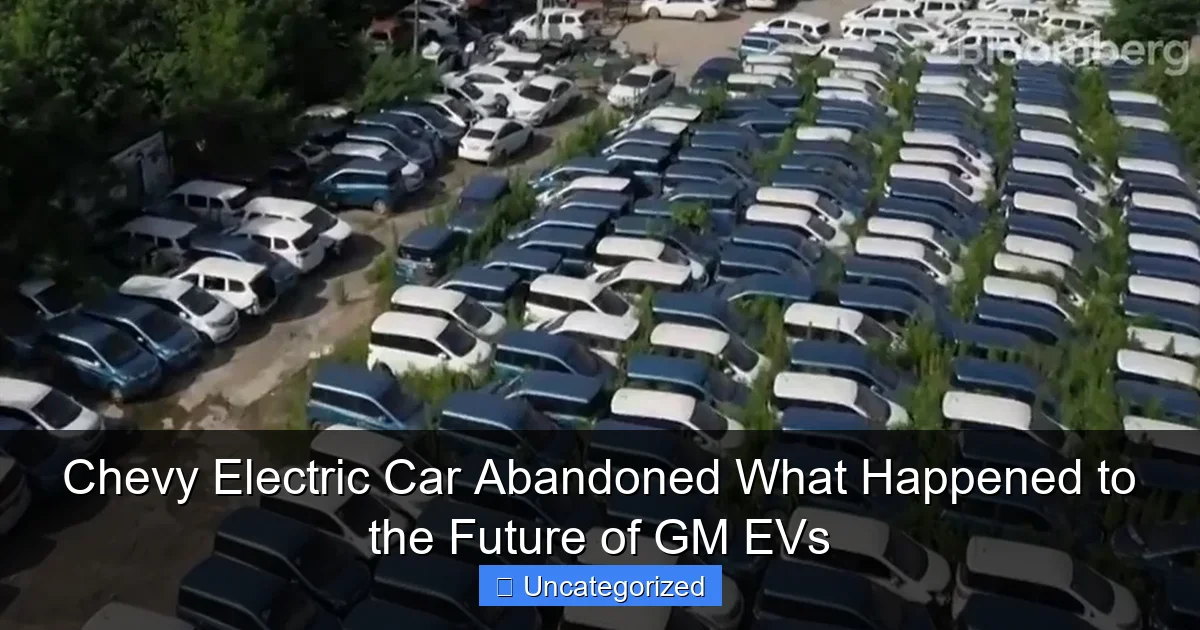
Visual guide about chevy electric car abandoned
Image source: cdn.24.co.za
The Ultium Platform: A New Foundation
Announced in 2020, the Ultium platform is GM’s answer to Tesla’s modular architecture. It’s designed to support a wide range of vehicles—from compact cars to full-size trucks—using a common battery cell design and scalable battery pack sizes. Key features include:
- Wider Voltage Range: Supports 400V and 800V architectures
- Modular Design: Enables battery packs from 50 kWh to 200 kWh
- Wire Harness Reduction: 80% fewer wires, lowering weight and cost
- Vehicle-to-Load (V2L): Allows vehicles to power external devices
GM has invested over $35 billion in Ultium through 2025, including new battery plants in Ohio, Tennessee, and Michigan. The goal is to produce 1 million EVs annually by 2025 and achieve carbon neutrality by 2040.
Why the Bolt Was Left Behind
The Bolt was built on GM’s older BEV2 platform, which was never designed for long-term scalability. It used a 350V architecture, limiting charging speeds and compatibility with future tech. By contrast, Ultium vehicles can charge up to 100 miles in 10 minutes (on 800V systems) and support over-the-air updates, bidirectional charging, and advanced autonomy.
From a business perspective, continuing the Bolt would have meant:
- Maintaining two separate EV platforms (BEV2 and Ultium), increasing R&D and manufacturing costs
- Limiting GM’s ability to innovate quickly across its EV lineup
- Perpetuating the “affordable EV” image, which conflicts with GM’s push toward premium EVs (e.g., Hummer EV, Cadillac Lyriq)
As Mary Barra, GM’s CEO, stated in a 2022 investor call: “We’re not walking away from affordable EVs. We’re evolving to a platform that allows us to deliver better vehicles, faster and more profitably.”
The New EV Lineup: What Replaces the Bolt?
GM is replacing the Bolt with a new generation of Ultium-based vehicles. Key models include:
- Chevy Equinox EV: Expected to start under $30,000 (after incentives), with 300+ miles of range
- Chevy Blazer EV: A midsize SUV with performance variants (SS trim)
- Chevy Silverado EV: An electric pickup with 400+ miles of range
- Cadillac LYRIQ: A luxury crossover with cutting-edge tech
These vehicles are designed to be more profitable, technologically advanced, and scalable than the Bolt. For example, the Equinox EV will use a 400V architecture (faster charging than the Bolt) and offer optional all-wheel drive and Super Cruise.
Market Realities: Why Affordable EVs Are Hard to Build
The discontinuation of the Chevy Bolt highlights a major challenge in the EV industry: profitability at low price points. While consumers demand affordable EVs, automakers struggle to deliver them without losing money. The Bolt was a prime example of this tension.
The Economics of EV Production
Building an EV profitably requires:
- High-volume production to spread R&D and tooling costs
- Efficient battery sourcing and manufacturing
- Lower material and labor costs
The Bolt faced challenges in all three areas:
- Battery Costs: In 2016, battery packs cost ~$150/kWh. By 2023, they were ~$100/kWh—but still too high for a $30K car to be profitable.
- Low Sales Volume: Bolt production peaked at ~38,000 units in 2017. By 2022, it had dropped to ~15,000, making it harder to achieve economies of scale.
- Legacy Platform: The BEV2 platform required unique tooling, increasing per-vehicle costs.
According to a 2023 analysis by BloombergNEF, automakers typically need to sell at least 50,000 units annually to make a compact EV profitable. The Bolt never reached that threshold consistently.
Consumer Behavior and the “EV Premium”
Despite growing interest in EVs, most consumers still perceive them as more expensive than gas cars. A 2023 J.D. Power study found that:
- 68% of car buyers cite price as the top barrier to EV adoption
- Only 25% are willing to pay more than $5,000 extra for an EV
- Range, charging speed, and brand trust are secondary concerns
This creates a catch-22: automakers can’t lower prices without losing money, but consumers won’t buy EVs until prices drop. The Bolt tried to break this cycle—but at a steep cost to GM’s bottom line.
Lessons for Future Affordable EVs
GM’s experience with the Bolt offers key lessons for automakers:
- Scale First: Build platforms that can be used across multiple models to reduce costs.
- Vertical Integration: Control battery production (e.g., Ultium Cells joint venture) to avoid supply chain issues.
- Government Support: Leverage incentives (e.g., Inflation Reduction Act) to lower consumer prices.
- Phased Innovation: Introduce tech gradually (e.g., start with 400V, then add 800V later).
The Equinox EV, for example, will use Ultium Cells batteries produced in the U.S. (making it eligible for tax credits) and be built at a high-volume plant in Mexico.
Environmental and Social Impact of the Bolt’s Demise
The end of the Chevy Bolt isn’t just a business story—it has real-world implications for the environment, consumers, and the pace of the EV transition.
Lost Opportunities for Carbon Reduction
The Bolt was one of the most efficient EVs on the road, with an EPA rating of 127 MPGe. Over its lifetime, a single Bolt can save ~4.5 tons of CO2 compared to a gas car. With over 140,000 Bolts sold, that’s ~630,000 tons of CO2 avoided.
But the discontinuation means fewer affordable EVs in the market. As of 2023, only a handful of new EVs start under $35,000—and most have lower range than the Bolt. This could slow the adoption of EVs among low- and middle-income households, undermining climate goals.
Consumer Trust and Brand Perception
The Bolt’s recall and discontinuation have damaged GM’s reputation among EV advocates. Online forums are filled with stories of:
- Owners who waited months for battery replacements
- Buyers who felt “abandoned” by GM
- Environmentalists who see the move as a betrayal of GM’s “Zero Emissions” pledge
GM has tried to mitigate this by offering Bolt owners a $500 credit toward a new GM EV and extending warranties. But many see these as inadequate.
What Happens to Bolt Owners?
For current Bolt owners, the future is uncertain:
- Service and Support: GM will continue to service Bolts through 2030, but parts may become scarce.
- Resale Value: Bolt prices have dropped ~30% since the discontinuation announcement.
- Software Updates: GM has promised to maintain infotainment and safety updates.
Tip: Bolt owners should:
- Register for the GM EV app to monitor battery health
- Consider a battery replacement if their vehicle is still under the extended 8-year/100,000-mile warranty
- Explore trade-in programs for newer Ultium models
Data Table: Chevy Bolt vs. Upcoming GM EVs
| Model | Platform | Starting Price | Range (EPA) | 0-60 mph | Charging Speed | Production Status |
|---|---|---|---|---|---|---|
| Chevy Bolt EV | BEV2 | $26,500 | 259 miles | 6.5 sec | 100 kW (DC) | Discontinued (2023) |
| Chevy Bolt EUV | BEV2 | $28,795 | 247 miles | 7.0 sec | 55 kW (DC) | Discontinued (2023) |
| Chevy Equinox EV | Ultium | $30,000* | 319 miles | 6.0 sec | 150 kW (DC) | Production (2024) |
| Chevy Blazer EV | Ultium | $45,000 | 320 miles | 4.0 sec (SS) | 190 kW (DC) | Production (2023) |
| Chevy Silverado EV | Ultium | $39,900 | 400+ miles | 4.5 sec (WT) | 350 kW (DC) | Production (2023) |
*After $7,500 federal tax credit (subject to eligibility)
Conclusion: The End of the Bolt, Not the End of GM’s EV Journey
The Chevy electric car abandoned narrative is more nuanced than it appears. While the Bolt’s discontinuation marks the end of an era, it’s not a retreat from electrification—it’s a strategic realignment. GM is betting big on the Ultium platform to deliver a new generation of EVs that are faster, smarter, and more profitable than the Bolt.
But the Bolt’s legacy lives on. It proved that affordable, long-range EVs are possible. It pushed Tesla to lower prices on the Model 3. It inspired a wave of compact EVs from Hyundai, Kia, and Volkswagen. And it taught GM hard lessons about battery safety, supply chains, and consumer trust.
As GM transitions to Ultium, the challenge will be to maintain the Bolt’s spirit of accessibility while delivering the performance and innovation that modern buyers expect. The Equinox EV, if priced and built correctly, could be the spiritual successor the Bolt deserves. But the road ahead is steep—competitors like Tesla, Ford, and Chinese automakers are racing ahead.
For consumers, the message is clear: the era of the $25,000 EV is not over—it’s just evolving. The Chevy electric car abandoned story reminds us that the future of EVs isn’t about nostalgia for past models, but about building a sustainable, scalable, and inclusive electric future. And GM, for all its missteps, is still in the race.
Frequently Asked Questions
Why was the Chevy electric car abandoned by GM?
General Motors discontinued its earlier Chevy electric car projects, like the Bolt EV’s predecessor, to shift focus toward newer EV platforms and Ultium battery technology. This strategic pivot aims to streamline production and compete more aggressively with Tesla and Ford.
What happened to the future of GM EVs after the Chevy electric car was abandoned?
GM redirected resources to its Ultium-based lineup, including the Silverado EV, Blazer EV, and Cadillac Lyriq, signaling a long-term commitment to electric vehicles. The “Chevy electric car abandoned” narrative reflects a transition, not an exit, from the EV market.
Will GM replace the discontinued Chevy Bolt EV?
Yes, GM plans to relaunch the Chevy Bolt EV in 2025 using its Ultium platform, offering longer range and lower costs. The pause was temporary, aligning with the brand’s broader EV strategy.
Did the Chevy electric car abandonment affect GM’s 2035 all-electric goal?
No, GM remains on track to phase out gas-powered vehicles by 2035. The shift from older models to Ultium-based EVs is a key step in achieving this target.
How does the “Chevy electric car abandoned” decision impact consumers?
While Bolt EV owners face a brief gap in new models, GM’s Ultium-based replacements promise better performance and affordability. Existing Bolt EVs remain supported with warranties and service.
What lessons did GM learn from the Chevy electric car projects?
The challenges of early EVs, like battery costs and charging infrastructure, informed GM’s current strategy, emphasizing scalable technology and partnerships. The “Chevy electric car abandoned” phase ultimately strengthened its long-term EV vision.