Chevy Electric Car Battery Warranty What You Need to Know
Featured image for chevy electric car battery warranty
Image source: electriccarwiki.com
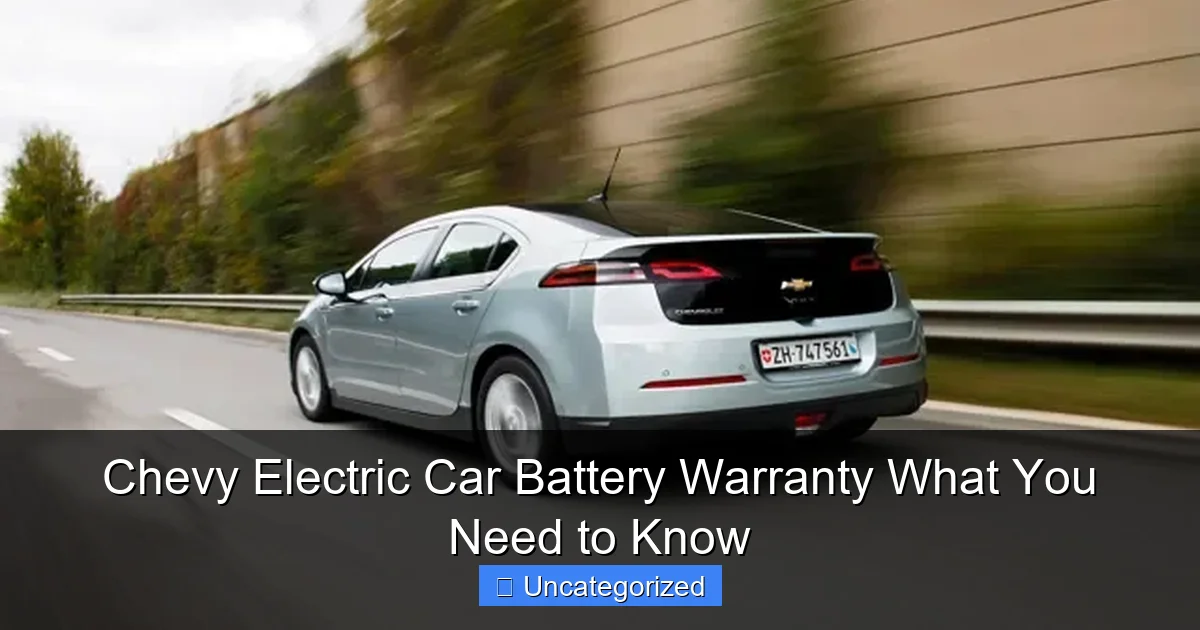
Chevy’s electric car battery warranty covers 8 years or 100,000 miles, ensuring long-term peace of mind for EV owners. This comprehensive protection includes repairs or replacements for battery capacity loss below 70%, making it a competitive offering in the electric vehicle market.
Key Takeaways
- 8-year/100k-mile warranty: Covers battery defects and capacity loss for most Chevy EVs.
- Pro-rated after 8 years: Partial coverage may apply if battery fails post-warranty.
- Transferable ownership: Warranty stays with the vehicle, boosting resale value.
- Free repairs: Covered issues fixed at no cost during warranty period.
- Check exclusions: Damage from misuse or modifications isn’t covered.
- State-specific terms: Some states offer extended warranty protections.
📑 Table of Contents
- Understanding the Chevy Electric Car Battery Warranty: A Buyer’s Guide
- What Does the Chevy Electric Car Battery Warranty Cover?
- Warranty Duration and Transferability: Who Benefits?
- How to File a Warranty Claim: Step-by-Step Guide
- Comparing Chevy’s Battery Warranty to Competitors
- Tips to Maximize Battery Life and Avoid Warranty Issues
- Conclusion: Is Chevy’s Battery Warranty Worth It?
Understanding the Chevy Electric Car Battery Warranty: A Buyer’s Guide
The electric vehicle (EV) revolution is in full swing, and Chevrolet has positioned itself as a key player in this transformative era. With models like the Chevy Bolt EV and Bolt EUV leading the charge, Chevrolet has made a bold commitment to electrification. However, as with any major purchase—especially one involving new technology—potential buyers have legitimate concerns. One of the most pressing questions revolves around battery longevity and protection: What does the Chevy electric car battery warranty actually cover?
For many, the battery is the heart of an electric car. It’s not just a component; it’s the lifeblood that determines driving range, performance, and long-term ownership costs. Unlike traditional internal combustion engines, EV batteries degrade over time, and replacing one can cost thousands of dollars. That’s why understanding the warranty terms is crucial. Chevrolet’s battery warranty is designed to offer peace of mind, but the details matter. From coverage duration and capacity thresholds to transferability and what voids the warranty, this guide will break down everything you need to know before buying or leasing a Chevy electric vehicle. Whether you’re a first-time EV buyer or considering a switch from another brand, this comprehensive review will equip you with the knowledge to make a confident, informed decision.
What Does the Chevy Electric Car Battery Warranty Cover?
Chevrolet offers one of the most competitive battery warranties in the electric vehicle market, designed to protect owners against premature degradation and manufacturing defects. But what exactly is covered under this warranty? Let’s dive into the specifics.
Visual guide about chevy electric car battery warranty
Image source: energydmmanagement.com
Comprehensive Battery Pack and Component Coverage
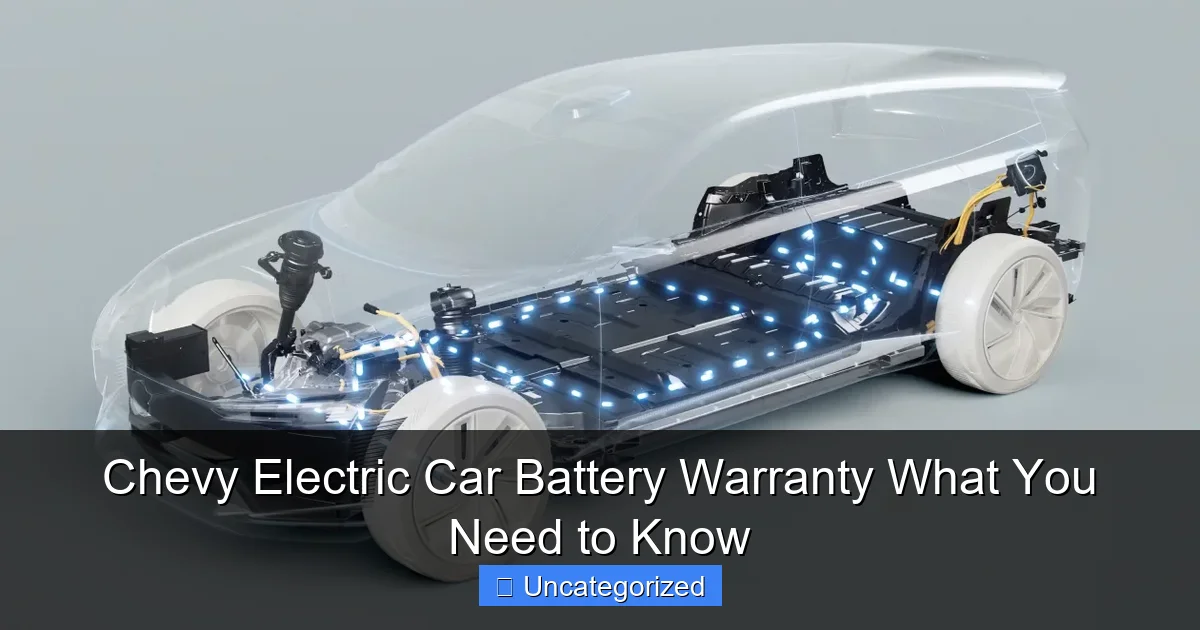
The core of Chevy’s electric car battery warranty is its 8-year/100,000-mile (whichever comes first) coverage for the high-voltage battery pack and associated components. This includes the lithium-ion cells, battery management system (BMS), cooling system, and related electronics. If any of these parts fail due to a defect in materials or workmanship, Chevrolet will repair or replace them at no cost to the owner—provided the vehicle is within the warranty period and meets all eligibility criteria.
For example, if your 2023 Chevy Bolt EV’s battery management system malfunctions after 60,000 miles, causing the vehicle to lose charging capability, Chevrolet will cover the diagnosis and replacement. This coverage applies across all current Chevy EV models, including the Bolt EV, Bolt EUV, and the upcoming Silverado EV and Equinox EV (once released).
It’s important to note that this is a limited warranty, meaning it applies only to factory-installed components and does not cover damage from accidents, misuse, or aftermarket modifications. For instance, if you install a third-party charging system that overloads the battery, the warranty may be voided for related repairs.
Capacity Retention Guarantee: The 70% Threshold
Beyond mechanical failure, Chevy’s warranty includes a capacity retention clause. This is a critical feature for EV owners concerned about range loss over time. The warranty guarantees that the high-voltage battery will retain at least 70% of its original capacity during the 8-year/100,000-mile period.
What does this mean in practice? Let’s say your 2022 Chevy Bolt EV originally had a 240-mile range. After 7 years, if the range drops below 168 miles (70% of 240), and the degradation is not due to external factors like extreme temperatures or improper charging habits, Chevrolet will step in. The automaker will either repair the battery, replace individual modules, or in rare cases, install an entirely new battery pack.
This capacity guarantee is a significant differentiator. While many automakers offer 8-year warranties, not all include a minimum capacity threshold. Chevy’s 70% benchmark aligns with industry best practices and provides tangible reassurance to long-term owners.
What’s Not Covered: Understanding the Exclusions
While the warranty is robust, it doesn’t cover everything. Here are key exclusions to be aware of:
- Normal wear and tear: Minor capacity loss due to regular use is expected and not covered.
- Accident damage: If the battery is damaged in a collision, repairs fall under your auto insurance, not the factory warranty.
- Improper charging: Using non-certified chargers, frequent DC fast charging (especially above 80% state of charge), or leaving the vehicle at 100% charge for extended periods can accelerate degradation and may void warranty claims.
- Aftermarket modifications: Installing non-Chevy battery upgrades or performance tuning tools can invalidate coverage.
- Neglect or misuse: Failing to maintain the vehicle or using it in extreme conditions without proper care may disqualify you from warranty benefits.
For instance, a 2021 Bolt EUV owner who consistently charges to 100% using a third-party fast charger and parks the car in direct sunlight in Arizona may see accelerated degradation. If a claim is filed, Chevrolet may investigate charging logs and environmental exposure before approving a replacement.
Warranty Duration and Transferability: Who Benefits?
One of the most appealing aspects of Chevy’s electric car battery warranty is its transferability, which significantly enhances the vehicle’s resale value. Let’s explore how long the warranty lasts and who can use it.
Visual guide about chevy electric car battery warranty
Image source: media.drivingelectric.com
Standard 8-Year/100,000-Mile Warranty
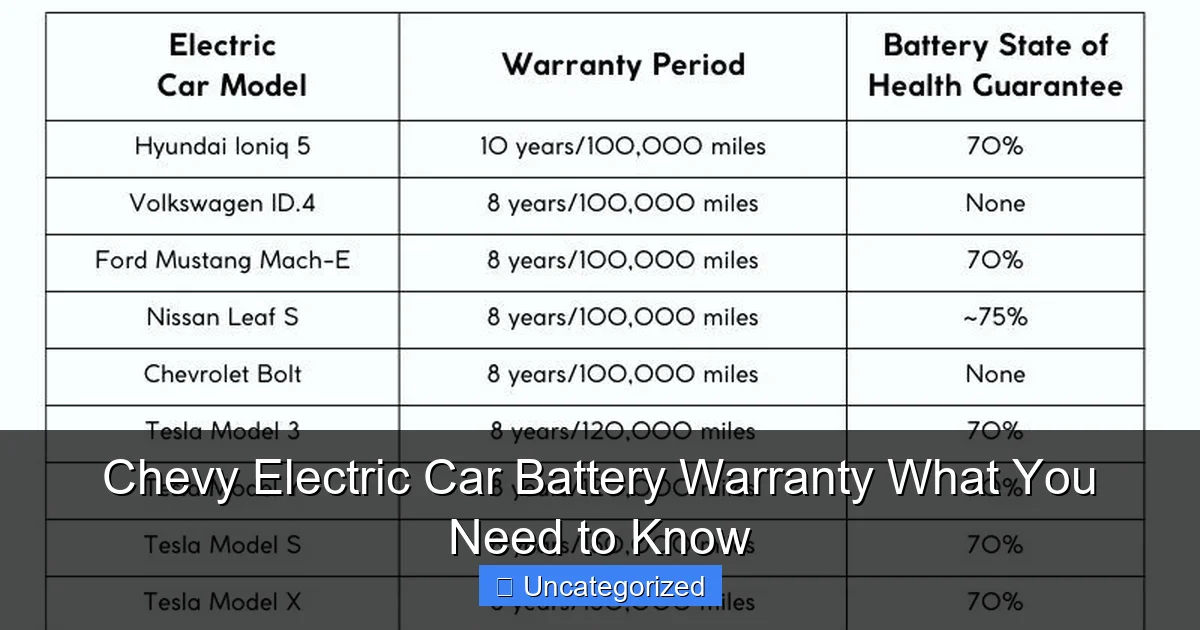
All new Chevy electric vehicles come with an 8-year/100,000-mile high-voltage battery warranty, which is standard across the U.S. market. This duration is competitive with other major EV manufacturers like Tesla (8 years/100,000–150,000 miles depending on model), Nissan (8 years/100,000 miles), and Hyundai (10 years/100,000 miles).
For example, if you purchase a 2023 Chevy Bolt EV in 2023, the battery warranty will last until either:
- December 31, 2031 (8 years from purchase date), or
- 100,000 miles on the odometer, whichever comes first.
This timeframe is generous and aligns with the average U.S. vehicle ownership period of 6–8 years, according to IHS Markit.
Transfer to Subsequent Owners
Unlike some warranties that expire when the vehicle changes hands, Chevy’s battery warranty is fully transferable to subsequent owners—at no additional cost. This is a major selling point in the used EV market.
Imagine you buy a 2020 Chevy Bolt EV in 2025 with 60,000 miles. The original warranty still has 2 years and 40,000 miles remaining. If you purchase the car from a private seller or dealership, you can register the warranty transfer with Chevrolet and receive full coverage until 2028 or 100,000 miles.
To transfer the warranty, the new owner must:
- Provide proof of ownership (title or registration).
- Submit a warranty transfer form to Chevrolet (available online or at dealerships).
- Ensure the vehicle is still within the 8-year/100,000-mile window.
This transferability not only protects second-hand buyers but also makes Chevy EVs more attractive in the used car market, potentially commanding higher resale prices.
Extended Warranty Options: Going Beyond 8 Years
For owners planning to keep their Chevy EV beyond the standard warranty, Chevrolet offers extended protection plans through its Chevrolet Protection Plan (CPP). These optional plans can extend battery coverage up to 10 or 12 years, though they come at an additional cost.
For example, a 12-year/150,000-mile battery protection plan might cost $2,500–$3,500, depending on the model and purchase timing. While this is an investment, it can be worthwhile for high-mileage drivers or those living in harsh climates where battery degradation may be accelerated.
Tip: Purchase the extended warranty before the original 8-year period ends to avoid coverage gaps.
How to File a Warranty Claim: Step-by-Step Guide
Even the best warranty is only as good as the claims process. Chevy has streamlined its battery warranty claims, but knowing the steps can save time and frustration.
Step 1: Recognize the Issue
Signs that your battery may need warranty service include:
- Sudden drop in driving range (e.g., from 240 to 180 miles).
- Error messages like “Service Battery” or “Reduced Power.”
- Inability to charge or hold a charge.
- Unusual noises from the battery compartment.
If you notice any of these, document them with photos, videos, and a log of when the issue first appeared.
Step 2: Visit a Certified Chevy EV Dealership
Only Chevrolet-certified EV service centers can perform battery warranty work. Independent mechanics, even those familiar with EVs, cannot process claims. Use the Chevrolet Service Center Locator to find the nearest authorized dealer with EV expertise.
At the dealership, technicians will run diagnostic tests using GM’s proprietary software (e.g., GDS2) to assess battery health, cell voltage, and capacity.
Step 3: Provide Documentation and Vehicle History
Be prepared to share:
- Your vehicle’s VIN and registration.
- Service records (especially if you’ve had previous battery-related repairs).
- Charging logs (if available via MyChevrolet app).
- Proof of ownership (if you’re a second owner).
Chevrolet may also request information on your charging habits, average state of charge, and climate conditions—all of which can influence battery health.
Step 4: Approval and Repair Process
If the diagnosis confirms a defect or capacity loss below 70%, Chevrolet will approve the claim. Repairs may include:
- Replacing individual battery modules (faster and cheaper than full pack replacement).
- Refurbishing the battery management system.
- Installing a new battery pack (rare, but possible for severe degradation).
Repair times vary: module replacements take 1–2 days; full pack swaps may take 3–5 days due to supply chain logistics.
Example: In 2022, a 2019 Bolt EV owner in Michigan reported a 25% range drop after 70,000 miles. After diagnostics, Chevrolet replaced two modules under warranty, restoring 98% of the original capacity within 48 hours.
Step 5: Post-Repair Verification
After the repair, the dealership will re-run diagnostics and provide a report. Save this document for your records. The replaced battery components will have their own warranty (typically 12 months/12,000 miles).
Comparing Chevy’s Battery Warranty to Competitors
To understand how Chevy’s warranty stacks up, let’s compare it with other major EV manufacturers. This comparison helps buyers make informed decisions based on long-term value and protection.
Chevy vs. Tesla
Tesla offers an 8-year warranty but varies by model:
- Model 3 Standard Range: 8 years/100,000 miles (70% capacity).
- Model S/X: 8 years/150,000 miles (70% capacity).
While Tesla’s warranty duration is similar, Chevy has an edge in transferability. Tesla’s warranty is non-transferable for used vehicles, which can reduce resale value. Chevy’s fully transferable warranty gives it a competitive advantage in the pre-owned market.
Chevy vs. Ford
Ford’s Mustang Mach-E and F-150 Lightning come with an 8-year/100,000-mile battery warranty with a 70% capacity threshold. Like Chevy, it’s transferable. However, Ford has faced criticism for inconsistent claims processing and longer repair times. Chevy’s established EV service network (especially for the Bolt) gives it an edge in reliability.
Chevy vs. Hyundai/Kia
Hyundai and Kia offer a 10-year/100,000-mile warranty with 70% capacity retention—longer than Chevy’s 8 years. However, this warranty is non-transferable for the first owner, and subsequent owners receive only a 5-year/60,000-mile extension. Chevy’s consistent 8-year transferable warranty may be more appealing to buyers who plan to sell within a decade.
Chevy vs. Nissan
Nissan’s Leaf has an 8-year/100,000-mile warranty but only guarantees 66% capacity retention—lower than Chevy’s 70%. Additionally, Nissan’s battery degradation rates have historically been higher, especially in hot climates. Chevy’s advanced thermal management system (liquid cooling) helps maintain more consistent performance over time.
Data Table: EV Battery Warranty Comparison (2023 Models)
| Manufacturer | Model | Warranty Duration | Capacity Threshold | Transferable? |
|---|---|---|---|---|
| Chevrolet | Bolt EV/EUV | 8 years / 100,000 miles | 70% | Yes |
| Tesla | Model 3 (SR) | 8 years / 100,000 miles | 70% | No |
| Ford | Mustang Mach-E | 8 years / 100,000 miles | 70% | Yes |
| Hyundai | Ioniq 5 | 10 years / 100,000 miles | 70% | Limited (5 years for 2nd owner) |
| Nissan | Leaf | 8 years / 100,000 miles | 66% | Yes |
This table highlights Chevy’s balanced approach: competitive duration, strong capacity guarantee, and full transferability—making it a top contender in the mid-tier EV market.
Tips to Maximize Battery Life and Avoid Warranty Issues
While Chevy’s warranty is robust, proactive care can help you avoid degradation and ensure warranty claims are approved when needed. Here are expert-backed tips to extend your battery’s life.
Optimize Charging Habits
- Keep state of charge between 20% and 80%: Frequent charging to 100% or letting the battery drain to 0% accelerates degradation. Use the MyChevrolet app to set charge limits.
- Use Level 2 chargers for daily use: Level 2 (240V) chargers are gentler on the battery than DC fast chargers. Reserve fast charging for road trips.
- Avoid frequent DC fast charging: If you must use it, charge to 80% and avoid doing it more than 2–3 times per week.
Example: A Bolt EV owner in Colorado who uses Level 2 charging at home and fast charges only on weekends reports only 8% capacity loss after 50,000 miles—well below average.
Manage Temperature Exposure
- Park in the shade or a garage: Extreme heat (above 95°F) and cold (below 20°F) can reduce battery efficiency and lifespan.
- Use preconditioning: Before driving in cold weather, use the MyChevrolet app to warm up the battery while plugged in. This reduces strain during cold starts.
- Enable battery cooling in hot climates: The Bolt’s liquid-cooled battery automatically manages temperature, but avoid prolonged exposure to direct sunlight.
Regular Maintenance and Software Updates
- Update vehicle software: Chevy regularly releases updates to improve battery management. Keep your vehicle connected to Wi-Fi for automatic updates.
- Visit the dealer annually: Even if no issues arise, a yearly check-up can catch early signs of degradation.
- Monitor battery health: Use the MyChevrolet app to track range, charging speed, and battery temperature trends.
Tip: If you notice a sudden range drop, don’t wait—schedule a diagnostic immediately. Early detection increases the chances of a successful warranty claim.
Document Everything
Keep detailed records of:
- Charging locations and times.
- Service visits and technician notes.
- Range and capacity readings (take screenshots from the app).
This documentation is crucial if you ever need to file a claim, especially as a second owner.
Conclusion: Is Chevy’s Battery Warranty Worth It?
Chevrolet’s electric car battery warranty stands out in a crowded EV market by offering a balanced mix of long duration, strong capacity guarantees, and full transferability. The 8-year/100,000-mile coverage with a 70% capacity threshold provides real peace of mind, while the ability to transfer the warranty to subsequent owners enhances resale value and long-term ownership appeal.
Compared to competitors, Chevy holds its own—matching Ford and Tesla in core coverage while outperforming Hyundai and Nissan in transferability and capacity retention. For buyers prioritizing affordability and reliability, the Chevy Bolt EV and EUV offer exceptional value, backed by a warranty that’s both comprehensive and practical.
However, the warranty is not a free pass for neglect. By following best practices—like avoiding extreme charging habits, managing temperature exposure, and maintaining regular service—you can maximize your battery’s lifespan and ensure warranty claims are honored when needed.
Ultimately, the Chevy electric car battery warranty is more than just fine print; it’s a promise of reliability and support. Whether you’re buying new, leasing, or shopping used, understanding these terms empowers you to make a smarter, more confident decision. As Chevrolet expands its EV lineup with the Silverado EV and Equinox EV, this warranty framework is likely to remain a cornerstone of its commitment to sustainable, worry-free electric mobility.
Frequently Asked Questions
What does the Chevy electric car battery warranty cover?
The Chevy electric car battery warranty covers defects in materials and workmanship for 8 years or 100,000 miles (whichever comes first). It also guarantees the battery will retain at least 70% of its capacity during this period.
How long is the Chevy electric car battery warranty?
Chevrolet offers an 8-year/100,000-mile limited warranty on electric vehicle batteries, including the Bolt EV and EUV. This warranty aligns with federal requirements for EV battery coverage.
Does the Chevy electric car battery warranty transfer to a new owner?
Yes, the warranty is fully transferable to subsequent owners within the 8-year/100,000-mile timeframe. This can increase your vehicle’s resale value and provide peace of mind to buyers.
What voids the Chevy electric car battery warranty?
Damage from accidents, misuse, unauthorized modifications, or improper charging practices may void the warranty. Always follow Chevy’s recommended maintenance and charging guidelines.
Does the warranty cover battery degradation in Chevy electric cars?
Yes, the warranty ensures the battery will maintain at least 70% capacity during the coverage period. If degradation falls below this threshold due to defects, Chevrolet will repair or replace it.
Are there additional battery warranty options for Chevy EVs?
Chevy offers extended protection plans (like Chevrolet Protection Plan) for added coverage beyond the standard warranty. Check with your dealer for details on extended battery coverage options.