Chevy Electric Car Charger Guide Top Picks and Tips

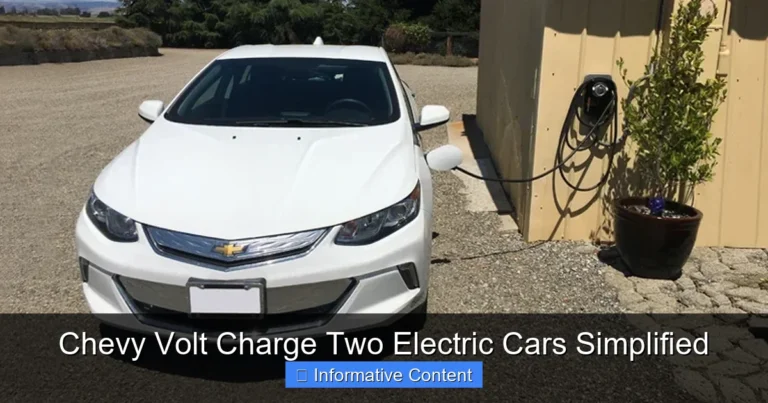
Featured image for chevy electric car charger
Image source: uber.energy
Choosing the right Chevy electric car charger can significantly enhance your EV ownership experience by reducing charging time and increasing convenience. Top-rated Level 2 chargers like the ChargePoint Home Flex and GM’s official 48-amp model deliver fast, reliable power tailored to Chevy’s Bolt, Blazer EV, and Silverado EV models. Ensure optimal performance by verifying compatibility, power output, and smart features like Wi-Fi scheduling and load balancing.
Key Takeaways
- Choose Level 2 chargers: Faster charging for Chevy EVs at home.
- Verify compatibility: Ensure charger works with your Chevy model.
- Install professionally: Hire a certified electrician for safety and efficiency.
- Use smart features: Schedule charging during off-peak hours to save money.
- Check incentives: Look for local rebates on charger installations.
- Portable options: Carry a backup charger for emergencies and travel.
📑 Table of Contents
- Why the Right Charger Matters for Your Chevy Electric Vehicle
- Understanding Chevy EV Charging Levels and Compatibility
- Top Chevy Electric Car Charger Picks for 2024
- How to Install a Chevy Electric Car Charger at Home
- Maximizing Efficiency and Safety with Your Chevy Charger
- Chevy EV Charging Comparison: Top Models at a Glance
- Conclusion: Powering Your Chevy EV Journey
Why the Right Charger Matters for Your Chevy Electric Vehicle
As Chevrolet continues to expand its electric vehicle (EV) lineup—with models like the Chevy Bolt EV, Bolt EUV, and upcoming Silverado EV—one critical component often overlooked by new owners is the chevy electric car charger. While these vehicles come equipped with a Level 1 portable charger, relying solely on this for daily charging can mean waiting up to 40 hours for a full charge. The right charging solution can transform your EV experience, offering faster charging times, greater convenience, and long-term cost savings.
Choosing the best chevy electric car charger isn’t just about speed—it’s about compatibility, safety, installation, and smart features that enhance usability. Whether you’re a first-time EV owner or upgrading your charging setup, this guide will walk you through everything you need to know: from understanding the different charger types to selecting top-rated models, installation tips, and how to maximize efficiency. With the EV market growing rapidly, having a reliable, high-performance charger is no longer a luxury—it’s a necessity.
Understanding Chevy EV Charging Levels and Compatibility
Before diving into specific charger models, it’s essential to understand how charging works for Chevy electric vehicles. All current and upcoming Chevy EVs use the SAE J1772 charging standard for Level 1 and Level 2 charging, ensuring broad compatibility with most home and public charging stations. However, the charging speed and infrastructure you choose will significantly impact your daily routine.

Visual guide about chevy electric car charger
Image source: static.vecteezy.com
Level 1 Charging: The Standard (But Slow) Option
Every Chevy EV comes with a Level 1 portable charger that plugs into a standard 120-volt household outlet. This setup delivers approximately 4-5 miles of range per hour of charging. For example, a Chevy Bolt EV with a 65 kWh battery would take about 35-40 hours to fully charge from empty using Level 1.
While this is sufficient for occasional or emergency use, it’s impractical for daily charging, especially if you drive more than 20-30 miles per day. However, Level 1 is a good fallback option when away from home or during power outages.
Level 2 Charging: The Gold Standard for Home Use
For most Chevy EV owners, Level 2 charging is the ideal solution. These chargers require a 240-volt circuit (similar to a dryer or oven outlet) and deliver 25-30 miles of range per hour—a dramatic improvement over Level 1.
- Charging speed: 7.2 kW to 11.5 kW (most common for home use)
- Full charge time (Bolt EV): 9–10 hours
- Compatibility: All Chevy EVs (Bolt EV/EUV, Silverado EV, Blazer EV, Equinox EV)
Level 2 chargers are available in both hardwired and plug-in versions. Plug-in models (like NEMA 14-50) are easier to install and can be relocated, while hardwired units offer a cleaner, permanent installation.
DC Fast Charging (Level 3): Public and Road Trip Solution
While not for home use, DC fast charging (also known as Level 3) is available at public charging stations and is compatible with all Chevy EVs. The Bolt EV supports up to 55 kW DC fast charging, allowing it to gain 100 miles of range in about 30 minutes under optimal conditions.
Chevy’s partnership with EVgo and access to the GM Ultium Charge 360 network provides over 100,000 charging points across the U.S. and Canada. For the Silverado EV, DC charging speeds will reach up to 350 kW, enabling 100 miles of range in just 10 minutes.
Tip: Use DC fast charging strategically—mainly for long trips or when you’re short on time. Frequent use can accelerate battery degradation over time, so rely on Level 2 for daily charging.
Top Chevy Electric Car Charger Picks for 2024
With dozens of Level 2 chargers on the market, selecting the right one for your Chevy EV can be overwhelming. We’ve evaluated models based on charging speed, safety certifications, smart features, ease of installation, and user reviews. Below are our top picks, each offering unique advantages.

Visual guide about chevy electric car charger
Image source: barsec.com.au
1. ChargePoint Home Flex (Best Overall)
The ChargePoint Home Flex is a favorite among EV owners for its blend of performance, smart features, and sleek design. It delivers up to 50 amps (12 kW), making it one of the fastest home chargers available.
- Charging speed: Up to 12 kW (48A on 60A circuit)
- Smart features: Wi-Fi connectivity, app control, scheduling, energy tracking
- Cable length: 23 ft (great for tight garages)
- Compatibility: All Chevy EVs via J1772 plug
- Price: $699 (often discounted to $599)
Why we love it: The ChargePoint app allows you to start/stop charging remotely, monitor usage, and even set charging to off-peak hours to save on electricity. It’s also UL-listed and ENERGY STAR certified, ensuring safety and efficiency.
Best for: Tech-savvy users who want full control and data insights.
2. Grizzl-E Classic (Best Budget Option)
The Grizzl-E Classic is a rugged, no-frills charger that delivers solid performance at a lower price point. It’s built in Canada and known for its durability in extreme weather.
- Charging speed: 40A (9.6 kW), adjustable down to 16A
- Smart features: Basic LED status lights; no app control
- Cable length: 24 ft
- Price: $449 (frequently under $400 on sale)
Why it’s great: It’s simple, reliable, and comes with a 3-year warranty. The Grizzl-E is ideal for users who don’t need smart features and want a dependable plug-and-play solution.
Best for: Budget-conscious buyers or secondary home chargers.
3. Tesla Wall Connector (Best for Multi-Vehicle Households)
Yes, you read that right—the Tesla Wall Connector works perfectly with Chevy EVs when paired with a J1772 adapter (included or sold separately). It’s one of the fastest and most reliable home chargers available.
- Charging speed: Up to 48A (11.5 kW)
- Smart features: Wi-Fi, scheduling, load sharing (for multiple EVs)
- Cable length: 24 ft
- Price: $550 (adapter included)
Why it stands out: The Tesla Wall Connector is compact, efficient, and supports load sharing if you have multiple EVs. It’s particularly useful in homes where a Tesla and Chevy EV are both charged.
Note: Use the included J1772 adapter—don’t modify the connector. It’s designed for safe, seamless use with non-Tesla vehicles.
Best for: Households with mixed EV brands or those planning to add more EVs later.
4. ClipperCreek HCS-40 (Best for Durability)
The ClipperCreek HCS-40 is a workhorse charger built for commercial and residential use. It’s weatherproof, rugged, and has been a top performer for over a decade.
- Charging speed: 32A (7.7 kW)
- Smart features: None (manual operation)
- Cable length: 25 ft
- Price: $545
Why it’s trusted: ClipperCreek is a U.S.-based company with a reputation for reliability. The HCS-40 is ideal for outdoor installations and extreme climates.
Best for: Users in harsh environments or those who prioritize longevity over smart features.
How to Install a Chevy Electric Car Charger at Home
Installing a Level 2 charger is a straightforward process, but it requires careful planning and, in most cases, professional help. Here’s what you need to know to get started.
Step 1: Assess Your Electrical Panel
Before buying a charger, evaluate your home’s electrical capacity. Most Level 2 chargers require a dedicated 240-volt circuit with a 40A to 60A breaker. Check your main electrical panel to see if you have:
- Available breaker space (at least one slot)
- Adequate amperage (a 200-amp panel is ideal; 100-amp may require an upgrade)
- Distance to installation location (longer runs may need larger wire gauge)
Tip: Hire a licensed electrician to perform a load calculation. They can determine if your panel can support the additional load or if an upgrade is needed.
Step 2: Choose the Right Charger and Outlet
Most plug-in chargers use a NEMA 14-50 outlet (common for RVs and dryers). Ensure your electrician installs the correct outlet type based on your charger model. For hardwired units, the electrician will connect the charger directly to the circuit.
Important: The charger must be UL-listed or ETL-certified to meet safety standards and qualify for utility rebates.
Step 3: Permits and Utility Incentives
Many states and local governments require a permit for EV charger installation. Your electrician will typically handle this. Additionally, you may qualify for:
- Federal tax credit: Up to $1,000 (2023–2032) for home charger installation
- State/local rebates: Varies by location (e.g., California’s Clean Vehicle Rebate Project)
- Utility company incentives: Some offer $200–$500 rebates (e.g., Con Edison, PG&E)
Tip: Apply for rebates before installation to ensure eligibility. Keep all receipts and permits.
Step 4: Installation and Testing
The electrician will:
- Install the circuit breaker and wiring
- Mount the charger (indoor or outdoor)
- Test the voltage and amperage
- Verify ground fault protection (GFCI)
Once complete, plug in your Chevy EV and confirm the charger communicates properly. For smart chargers, connect to Wi-Fi and set up the app.
Pro tip: Schedule installation during off-peak hours to minimize disruption. Most installations take 3–6 hours.
Maximizing Efficiency and Safety with Your Chevy Charger
Once your charger is installed, optimizing its use ensures safety, longevity, and cost savings. Here are key tips to get the most out of your chevy electric car charger.
Use Smart Scheduling to Save on Electricity
Most smart chargers (like ChargePoint and Tesla) allow you to schedule charging during off-peak hours (typically 10 PM–6 AM). This can reduce your electricity rate by 30–50%, depending on your utility plan.
- Example: Charging the Bolt EV at 10 cents/kWh (off-peak) vs. 20 cents/kWh (peak) saves $6.50 per full charge.
- Set your charger or EV’s built-in timer to start at 11 PM.
Bonus: Some utilities offer time-of-use (TOU) plans specifically for EV owners. Enroll to maximize savings.
Monitor Battery Health and Charging Habits
Frequent DC fast charging and charging to 100% can degrade your Chevy EV’s battery over time. For daily use:
- Charge to 80% for optimal battery longevity
- Use DC fast charging only when necessary (e.g., road trips)
- Enable battery preconditioning in winter to improve charging speed
Smart chargers with energy monitoring help track usage and identify inefficiencies.
Ensure Proper Maintenance and Safety
To keep your charger in top condition:
- Inspect the cable and connector monthly for damage
- Keep the area around the charger clean and dry
- Use a weatherproof cover if installed outdoors
- Never use extension cords or adapters (fire hazard)
Safety note: All chargers should have automatic shutoff in case of faults. Test this feature annually.
Leverage Public Charging Networks
Even with a home charger, public stations are useful for travel. Use apps like:
- PlugShare – Find nearby chargers and read user reviews
- ChargePoint App – Reserve and pay for stations
- GM Ultium Charge 360 – Access to 100,000+ stations with seamless billing
Tip: Download offline maps before long trips in case of poor signal.
Chevy EV Charging Comparison: Top Models at a Glance
To help you compare the best chevy electric car charger options, here’s a data table summarizing key specs:
| Charger Model | Max Power (kW) | Amps | Smart Features | Price | Best For |
|---|---|---|---|---|---|
| ChargePoint Home Flex | 12 | 48 | Wi-Fi, app, scheduling, energy tracking | $599–$699 | Tech-savvy users |
| Grizzl-E Classic | 9.6 | 40 | LED lights only | $399–$449 | Budget buyers |
| Tesla Wall Connector | 11.5 | 48 | Wi-Fi, load sharing, scheduling | $550 | Multi-EV households |
| ClipperCreek HCS-40 | 7.7 | 32 | None | $545 | Durability seekers |
| Enel X JuiceBox 40 | 9.6 | 40 | Wi-Fi, Alexa, scheduling | $649 | Smart home integration |
Note: Prices may vary. Check manufacturer websites and retailers for current deals.
Conclusion: Powering Your Chevy EV Journey
Choosing the right chevy electric car charger is one of the most impactful decisions you’ll make as an EV owner. From cutting charging time from 40 hours to under 10, to unlocking smart features and cost savings, the right charger enhances every aspect of your driving experience. Whether you opt for the feature-rich ChargePoint Home Flex, the budget-friendly Grizzl-E Classic, or the high-performance Tesla Wall Connector, investing in a quality Level 2 charger is a smart move.
Remember to plan your installation carefully—work with a licensed electrician, explore rebates, and prioritize safety. Once set up, use smart scheduling, monitor battery health, and take advantage of public charging networks to stay powered wherever you go. As Chevrolet rolls out more EVs like the Silverado EV and Equinox EV, having a future-proof charging solution ensures you’re ready for the next generation of electric driving.
With the right charger, your Chevy EV isn’t just a car—it’s a seamless, sustainable part of your lifestyle. Plug in, power up, and drive forward with confidence.
Frequently Asked Questions
What is the best Chevy electric car charger for home use?
The best Chevy electric car charger for home depends on your model and needs, but the GM-branded Level 2 charger (11.5 kW) is a top pick for its seamless integration with vehicles like the Bolt EV/EUV. It offers fast charging (up to 25 miles per hour) and smart features via the myChevrolet app.
Can I use a Tesla charger for my Chevy electric car?
Yes, but you’ll need a J1772-to-Tesla adapter (like the Tesla Universal Mobile Connector) for Level 2 charging at Tesla Destination Chargers. Note that Superchargers require a CCS Combo adapter, which GM now provides for eligible models like the Blazer EV.
How much does it cost to install a Chevy electric car charger at home?
Installation costs for a Chevy electric car charger typically range from $500–$2,000, depending on electrical panel upgrades, labor, and permit fees. Many states and utility companies offer rebates to offset the expense.
Are public Chevy electric car chargers compatible with all models?
Most public Level 2 chargers (J1772 standard) work with all Chevy EVs, including the Bolt. For DC fast charging, newer models like the Equinox EV use CCS connectors, while older Bolts may require a CHAdeMO adapter for select stations.
How long does it take to charge a Chevy Bolt with a Level 2 charger?
A Level 2 Chevy electric car charger can fully recharge a Bolt EV (65 kWh battery) in about 7–10 hours (25 miles of range per hour). For a 100% charge, plug in overnight for convenience.
Does Chevrolet offer free charging with a new electric car purchase?
Yes! GM partners with EVgo to offer 24 months of unlimited 30-minute fast charging sessions for 2023+ Chevy EV buyers. Some models also include credits for Ultium Charge 360 network access—check your vehicle’s terms.