Chevy Electric Car Distance How Far Can It Go on a Single Charge
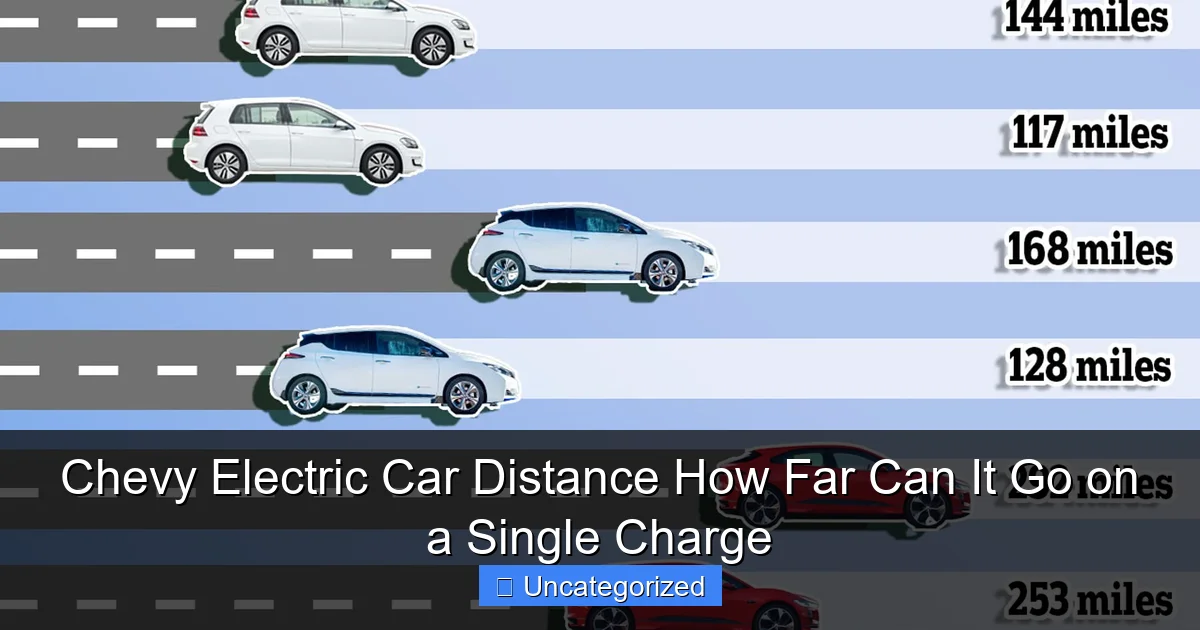
Featured image for chevy electric car distance
Image source: electriccarspedia.com
Chevy electric cars deliver impressive range, with models like the 2024 Chevrolet Blazer EV offering up to 324 miles on a single charge. Whether you’re commuting or road-tripping, Chevy’s advanced battery technology ensures reliable distance and fast charging to keep you moving with minimal downtime.
Key Takeaways
- Range varies by model: Chevy EVs offer 250–300+ miles per charge.
- Efficiency impacts distance: Driving habits affect real-world range significantly.
- Regen braking extends range: Use one-pedal driving to maximize battery life.
- Charging speed matters: DC fast charging adds 100 miles in ~30 minutes.
- Climate reduces range: Extreme temps can cut distance by 20–30%.
- Trim level changes range: Higher trims may sacrifice miles for features.
📑 Table of Contents
- The Future is Electric: Chevy’s Bold Leap into the EV World
- Chevy Electric Car Models and Their Range Capabilities
- Factors That Affect Chevy Electric Car Distance
- How to Maximize Your Chevy Electric Car Distance
- Real-World Range Comparison: Chevy vs. Competitors
- Chevy’s Vision for the Future: Expanding Range and Accessibility
- Conclusion: Chevy Electric Car Distance – Powering the Road Ahead
The Future is Electric: Chevy’s Bold Leap into the EV World
The automotive industry is undergoing a seismic shift, and at the heart of this transformation is the rise of electric vehicles (EVs). Among the pioneers leading the charge is Chevrolet, a brand synonymous with American innovation and performance. With the growing demand for sustainable transportation, Chevy has stepped into the EV arena with models like the Chevy Bolt EV, Chevy Bolt EUV, and the highly anticipated 2024 Chevy Blazer EV and Equinox EV. But one question consistently dominates conversations among potential EV buyers: How far can a Chevy electric car go on a single charge?
Range anxiety—the fear of running out of battery before reaching your destination—is one of the biggest hurdles in EV adoption. Fortunately, Chevrolet has addressed this concern head-on, designing vehicles that combine practicality, performance, and impressive range. Whether you’re a daily commuter, a road-trip enthusiast, or a family looking for a reliable EV, understanding the distance capabilities of Chevy’s electric lineup is crucial. In this comprehensive guide, we’ll dive deep into the Chevy electric car distance across models, explore the factors that influence range, and provide real-world tips to help you maximize every mile on a single charge.
Chevy Electric Car Models and Their Range Capabilities
Chevrolet currently offers a growing portfolio of electric vehicles, each tailored to different lifestyles and driving needs. While the brand’s EV journey began with the Bolt EV and Bolt EUV, its future is expanding rapidly with new SUVs and crossovers. Below, we break down the current and upcoming Chevy electric models and their EPA-estimated ranges.

Visual guide about chevy electric car distance
Image source: images.hgmsites.net
Chevy Bolt EV: The Compact Range Champion
Launched in 2017, the Chevy Bolt EV set a benchmark for affordable long-range EVs. The 2023 model offers an EPA-estimated range of 259 miles on a full charge, making it one of the most efficient compact EVs on the market. With a 65 kWh battery pack and a front-wheel-drive (FWD) electric motor producing 200 horsepower, the Bolt EV is ideal for city driving and suburban commutes.
- Best for: Urban drivers, budget-conscious buyers, and first-time EV owners
- Real-world range: Typically 240–250 miles in mixed driving conditions
- Charging time: ~7 hours on a Level 2 charger (240V), ~30 minutes for 100 miles on DC fast charging
For example, a driver commuting 30 miles round-trip daily can go over eight days on a single charge—plenty of headroom for weekend errands.
Chevy Bolt EUV: The Slightly Larger, Slightly Less Range
The Chevy Bolt EUV, introduced in 2022, is a slightly larger, more SUV-like version of the Bolt EV. It shares the same 65 kWh battery but has a slightly lower EPA-estimated range of 247 miles due to increased weight and aerodynamic drag. However, it offers more rear legroom, a panoramic sunroof, and available Super Cruise hands-free driving on compatible roads.
- Best for: Small families, tech-savvy drivers, and those who prefer a higher driving position
- Real-world range: 230–240 miles under normal conditions
- Charging time: Comparable to the Bolt EV, with DC fast charging adding up to 95 miles in 30 minutes
While the EUV sacrifices 12 miles compared to the Bolt EV, the added comfort and features make it a compelling choice for many.
2024 Chevy Blazer EV: The SUV Powerhouse
The upcoming 2024 Chevy Blazer EV marks Chevrolet’s entry into the electric SUV segment. Based on GM’s Ultium platform, it offers multiple configurations:
- Blazer EV 1LT (FWD): 247 miles
- Blazer EV 2LT (FWD): 279 miles
- Blazer EV RS (FWD): 320 miles (most efficient model)
- Blazer EV SS (AWD): 280 miles (performance-focused, 557 hp)
The RS trim’s 320-mile range is a game-changer, placing it among the top-tier electric SUVs. The Blazer EV also supports 190 kW DC fast charging, adding up to 78 miles in just 10 minutes—perfect for long-distance travel.
2024 Chevy Equinox EV: The Affordable Long-Ranger
Set to launch in 2024, the Chevy Equinox EV aims to bring long-range EV ownership to the mainstream. With an expected range of 300 miles on the 2LT and 3LT trims (FWD), and 280 miles on the AWD versions, it’s designed to compete directly with the Ford Mustang Mach-E and Hyundai Ioniq 5.
- Best for: Families, budget-minded SUV shoppers, and eco-conscious drivers
- Charging: Up to 70 miles of range in 10 minutes with DC fast charging (150 kW capability)
With a starting price under $35,000 (after incentives), the Equinox EV could become one of the most popular EVs in the U.S.
Future Models: Silverado EV and Beyond
Chevrolet is also developing the 2024 Silverado EV, an all-electric pickup truck with a projected range of up to 400 miles on the RST First Edition model. While not yet available for public purchase, it signals Chevy’s commitment to electrifying its entire lineup. The Silverado EV will use the Ultium platform and offer 350 kW fast charging, adding 100 miles in just 10 minutes.
Factors That Affect Chevy Electric Car Distance
While EPA ratings provide a standardized baseline, real-world Chevy electric car distance can vary significantly based on several factors. Understanding these variables helps drivers plan trips more accurately and get the most out of their EVs.
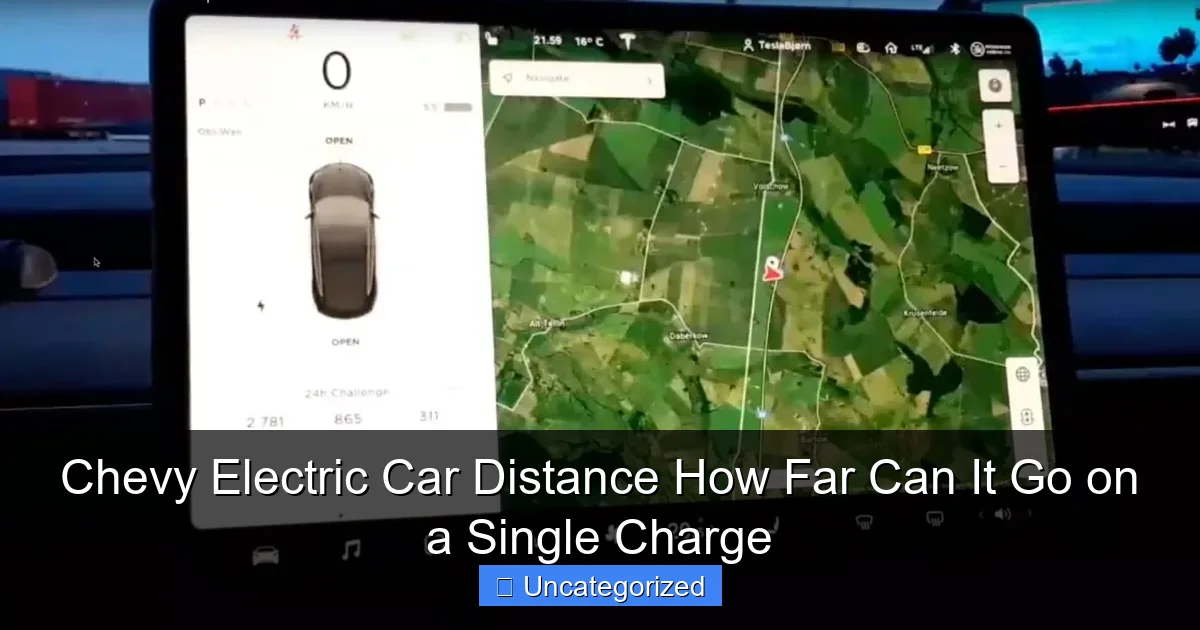
Visual guide about chevy electric car distance
Image source: i0.wp.com
Driving Habits and Speed
Your driving style has a massive impact on range. Aggressive acceleration, high-speed cruising, and frequent braking consume more energy.
- Highway driving at 70+ mph: Can reduce range by 20–30% compared to city driving at 35 mph
- Smooth acceleration: Using gradual throttle input improves efficiency
- Regenerative braking: Chevy EVs use one-pedal driving (via “L” mode), which recaptures energy during deceleration
Example: A Bolt EV rated for 259 miles might only achieve 180 miles on a 300-mile highway trip due to sustained high speeds.
Weather and Temperature
Extreme temperatures—both hot and cold—can significantly reduce battery efficiency.
- Cold weather (below 32°F): Can reduce range by 20–40% due to battery chemistry and cabin heating
- Hot weather (above 90°F): Air conditioning use can cut range by 10–15%
- Preconditioning: Using the Chevy app to heat or cool the cabin while the car is still plugged in preserves battery charge
For winter driving, Chevy EVs include heated seats, heated steering wheels, and heat pump systems (on newer models) to minimize energy loss.
Terrain and Elevation Changes
Driving uphill requires more energy, while downhill routes can recover some range through regenerative braking.
- Mountainous areas: Expect a 10–25% range reduction depending on elevation gain
- Rolling hills: Less impact than steep climbs, but still noticeable
- Coastal or flat regions: Ideal for maximizing range
Tip: Use the navigation system to plan routes with minimal elevation changes when range is critical.
Tire Pressure and Load
Underinflated tires increase rolling resistance, reducing efficiency.
- Proper tire pressure: Check monthly; underinflation by 5 psi can reduce range by 2–3%
- Excess cargo: Every 100 lbs of added weight can reduce range by 1–2%
- Roof racks and bike carriers: Increase drag, cutting range by up to 15% at highway speeds
Keep your trunk light and remove roof accessories when not in use.
Use of Climate Control and Electronics
Heating and cooling systems are energy-intensive.
- Defroster and rear window heater: Use sparingly; they can draw 1–2 kW of power
- Seat and steering wheel heaters: More efficient than cabin heating—use them to stay warm without cranking the heater
- Infotainment and screens: Minimal impact, but avoid leaving them on when not in use
Smart use of climate features can save 10–20 miles of range on a cold winter day.
How to Maximize Your Chevy Electric Car Distance
Getting the most out of your Chevy EV isn’t just about the car—it’s about how you drive and maintain it. Here are actionable tips to extend your range and reduce charging stops.
Adopt Efficient Driving Techniques
- Use One-Pedal Driving: In “L” mode, the car slows down significantly when you lift off the accelerator, maximizing regenerative braking
- Smooth Acceleration: Avoid rapid starts; use cruise control on highways
- Anticipate Traffic: Coast to stops instead of braking hard
- Speed Management: Drive at 55–60 mph on highways for optimal efficiency
Pro tip: The Bolt EV and EUV display real-time efficiency feedback on the dashboard—use it to refine your driving.
Precondition Your Vehicle
Using the myChevrolet app, you can start heating or cooling the cabin while the car is still plugged in.
- Winter: Preheat the cabin and defrost the windows using grid power
- Summer: Cool the car before unplugging to reduce AC load
This preserves battery charge for driving and improves comfort.
Optimize Charging Strategy
- Charge to 80% for daily use: Lithium-ion batteries degrade faster when kept at 100%
- Use DC fast charging strategically: Reserve it for long trips; rely on Level 2 for home/work charging
- Time charging during off-peak hours: Save money and reduce strain on the grid
Chevy EVs support “Charge Limit” settings to automatically stop charging at your desired level.
Plan Long Trips with Confidence
Use apps like PlugShare, A Better Routeplanner (ABRP), or the built-in navigation to:
- Find fast chargers along your route
- Estimate charging time based on current battery level
- Adjust for weather and terrain
Example: A 500-mile road trip in a Blazer EV RS (320-mile range) would require one 30-minute DC fast charge—easily achievable with modern infrastructure.
Regular Maintenance and Updates
- Update software: Chevy regularly releases updates to improve efficiency and battery management
- Check tire pressure monthly: Use the recommended PSI (found on the driver’s door jamb)
- Rotate tires: Ensures even wear and reduces rolling resistance
Many Chevy dealerships offer free EV maintenance checks for the first few years.
Real-World Range Comparison: Chevy vs. Competitors
How does Chevy’s electric car distance stack up against other popular EVs? Below is a comparison of key models in the compact and midsize SUV segments.
Compact EVs (Bolt EV/EUV vs. Competitors)
| Model | EPA Range (miles) | Real-World Range (est.) | DC Fast Charging (kW) |
|---|---|---|---|
| Chevy Bolt EV | 259 | 240–250 | 55 |
| Chevy Bolt EUV | 247 | 230–240 | 55 |
| Hyundai Kona Electric | 258 | 235–245 | 100 |
| Kia Niro EV | 253 | 230–240 | 85 |
| Nissan Leaf (Plus) | 212 | 190–200 | 100 |
Midsize SUVs (Blazer EV/Equinox EV vs. Competitors)
| Model | EPA Range (miles) | Real-World Range (est.) | DC Fast Charging (kW) |
|---|---|---|---|
| Chevy Blazer EV RS | 320 | 290–310 | 190 |
| Chevy Equinox EV 2LT | 300 | 270–290 | 150 |
| Ford Mustang Mach-E (Extended) | 314 | 280–300 | 150 |
| Hyundai Ioniq 5 (RWD) | 303 | 270–290 | 350 |
| Kia EV6 (RWD) | 310 | 275–295 | 350 |
While some competitors offer faster charging speeds (e.g., Ioniq 5 at 350 kW), Chevy strikes a balance between range, price, and charging convenience. The Blazer EV’s 320-mile range and 190 kW charging make it competitive with premium EVs.
Chevy’s Vision for the Future: Expanding Range and Accessibility
Chevrolet isn’t resting on its laurels. The brand is investing heavily in battery technology, charging infrastructure, and vehicle innovation to push the boundaries of Chevy electric car distance.
Ultium Battery Technology
All new Chevy EVs use GM’s Ultium platform, which features:
- Modular battery packs (50–200 kWh)
- Wider operating temperature range for better cold-weather performance
- Faster charging capabilities (up to 350 kW for future models)
- Longer battery life (up to 1 million miles in testing)
This platform allows Chevy to scale range and performance across vehicle types.
Expanding Charging Network
Through partnerships with EVgo, Blink, and ChargePoint, Chevy offers access to over 100,000 public charging stations in North America. The 2024 models will also support the NACS (Tesla) charging standard, enabling use of Tesla Superchargers via an adapter.
Affordable Long-Range EVs
With the Equinox EV priced under $35,000 (after federal tax credits), Chevy is making long-range EVs accessible to a broader audience. The company aims to offer an all-electric lineup by 2035, with a focus on practicality, performance, and planet-friendly innovation.
Customer Support and Incentives
- Home charger installation: Chevy offers a $500 credit toward a Level 2 charger and installation
- Federal tax credit: Up to $7,500 for qualifying models
- State and local incentives: Additional rebates in many areas
These incentives make Chevy EVs not just environmentally smart, but economically smart too.
Conclusion: Chevy Electric Car Distance – Powering the Road Ahead
When it comes to Chevy electric car distance, the numbers speak for themselves: from the 259-mile Bolt EV to the 320-mile Blazer EV RS and the upcoming 300-mile Equinox EV, Chevrolet has built a lineup that addresses the needs of modern drivers. Whether you’re navigating city streets, embarking on a cross-country adventure, or simply commuting to work, Chevy’s EVs offer the range, reliability, and technology to keep you moving.
But range isn’t just about the number on the EPA sticker. It’s about how you drive, how you maintain your car, and how you plan your trips. By adopting efficient habits, leveraging smart charging, and using available tools, you can confidently push the boundaries of what your Chevy EV can do.
As Chevrolet continues to innovate with Ultium batteries, expanded charging networks, and affordable long-range models, the future of electric driving looks brighter than ever. The question isn’t just “How far can a Chevy electric car go?”—it’s “How far can we go together?” With Chevy leading the way, the answer is clear: miles ahead.
Frequently Asked Questions
How far can a Chevy electric car go on a single charge?
The range varies by model, but the 2024 Chevrolet Bolt EV offers up to 259 miles, while the upcoming Silverado EV promises over 400 miles. Real-world distance depends on driving habits, terrain, and weather conditions.
What is the Chevy electric car distance for the Bolt EUV?
The Chevrolet Bolt EUV delivers an EPA-estimated 247 miles per charge. This compact SUV balances efficiency and practicality for daily commutes and longer trips.
Does cold weather reduce the Chevy electric car’s range?
Yes, extreme temperatures can reduce battery efficiency, cutting the Chevy electric car distance by 20-30% in freezing conditions. Preconditioning the battery while plugged in helps minimize this impact.
How does the Silverado EV’s range compare to other Chevy electric models?
The Silverado EV boasts a class-leading 400+ mile range, far surpassing the Bolt EV/EUV. This makes it ideal for truck buyers needing long-distance capability without frequent charging stops.
Can I extend the Chevy electric car’s driving range?
Using regenerative braking, eco-driving modes, and maintaining steady speeds can help maximize Chevy electric car distance. Avoiding rapid acceleration and high speeds also preserves battery life.
How long does it take to recharge for full Chevy electric car distance?
With DC fast charging, the Bolt EV/EUV can regain 100 miles of range in 30 minutes. A full charge using a Level 2 charger takes 7-10 hours, depending on the model and battery size.