Chevy Electric Car EV1 The Game Changer Revisited
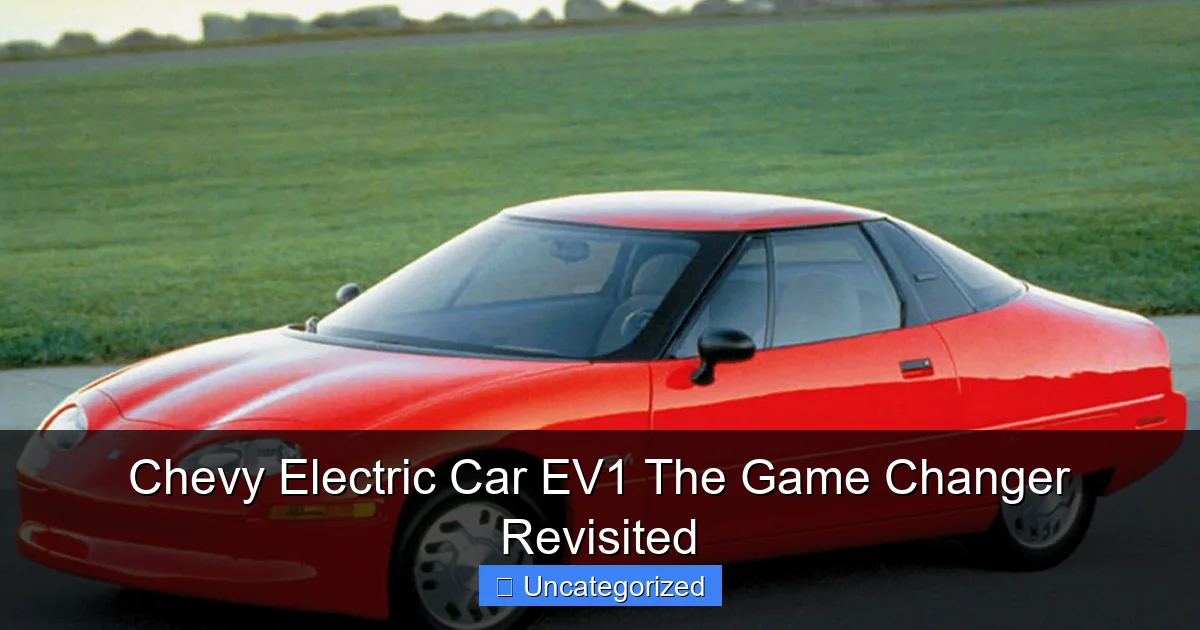
Featured image for chevy electric car ev1
Image source: images.carexpert.com.au
The Chevy EV1 wasn’t just the first modern electric car from a major automaker—it was a bold vision ahead of its time. Launched in 1996, this groundbreaking electric vehicle pioneered battery tech, regenerative braking, and a dedicated charging network, setting the blueprint for today’s EVs. Despite its short production run, the EV1 remains a cult classic and a reminder of GM’s early lead in electrification.
Key Takeaways
- Revolutionized EVs: The Chevy EV1 pioneered mass-produced electric cars, setting early industry benchmarks.
- Limited availability: Only leased, never sold—highlighting early adoption risks and corporate caution.
- Battery innovation: Introduced lead-acid and NiMH options, advancing EV energy storage solutions.
- Charging infrastructure: First to deploy dedicated charging stations, foreshadowing today’s networks.
- Environmental impact: Proved EVs could reduce emissions despite low adoption due to policy gaps.
- Legacy lives on: Inspired future GM EVs like the Bolt, shaping modern electrification strategies.
📑 Table of Contents
- The Dawn of an Electric Revolution: Chevy Electric Car EV1
- The Birth of the EV1: Vision, Design, and Innovation
- Performance, Range, and Real-World Driving Experience
- The EV1’s Legacy: Impact on the Auto Industry and Beyond
- Technical Specifications and Data Table
- Revisiting the EV1: Lessons for the Modern EV Era
- Conclusion: The Game Changer Revisited
The Dawn of an Electric Revolution: Chevy Electric Car EV1
In the mid-1990s, a quiet revolution began to stir in the automotive world—one that would lay the foundation for the electric vehicles we know today. The Chevy Electric Car EV1 emerged not just as a prototype, but as a bold statement from General Motors: the future of transportation was electric. Unveiled in 1996, the EV1 wasn’t merely a concept car; it was the first mass-produced electric vehicle (EV) from a major U.S. automaker. With its sleek, futuristic design and cutting-edge battery technology, the EV1 captured the imagination of environmentalists, tech enthusiasts, and everyday drivers alike. It promised zero emissions, whisper-quiet operation, and a driving experience unlike anything powered by internal combustion. At a time when electric vehicles were seen as impractical novelties, the EV1 dared to prove otherwise.
Despite its limited production run and eventual discontinuation in 2003, the EV1’s legacy endures. It wasn’t just a car—it was a cultural and technological milestone that challenged the status quo. The EV1 sparked conversations about sustainable transportation, pushed the boundaries of battery technology, and inspired a new generation of engineers and entrepreneurs. Fast forward to today, where every major automaker is racing to electrify its lineup, and the EV1’s pioneering spirit feels more relevant than ever. In revisiting this game-changing vehicle, we uncover not only its technological achievements but also the lessons it offers for the modern electric mobility era. The Chevy Electric Car EV1 was ahead of its time, and its story is a testament to what happens when innovation meets vision—even when the world isn’t quite ready.
The Birth of the EV1: Vision, Design, and Innovation
From Concept to Reality: The GM Precedent
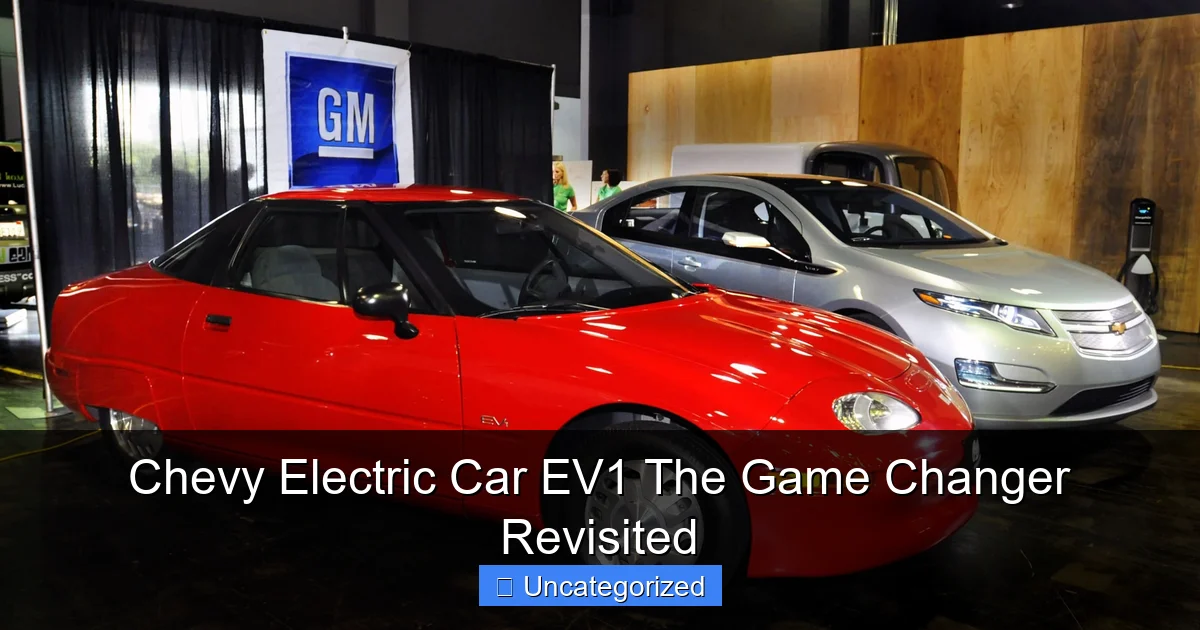
The roots of the Chevy Electric Car EV1 trace back to the 1990 California Air Resources Board (CARB) mandate, which required automakers to produce zero-emission vehicles (ZEVs) by 1998. General Motors, under CEO Jack Smith, responded with the Impact electric concept car in 1990—a prototype that would evolve into the EV1. Unlike other automakers that treated ZEVs as compliance projects, GM invested heavily in the EV1, signaling a genuine commitment to electric mobility. The development team, led by engineers like Bob Purcell and David Cole, faced immense challenges: building a vehicle that could deliver real-world range, comfort, and safety using nascent battery and powertrain technology.
Visual guide about chevy electric car ev1
Image source: thedetroitbureau.com
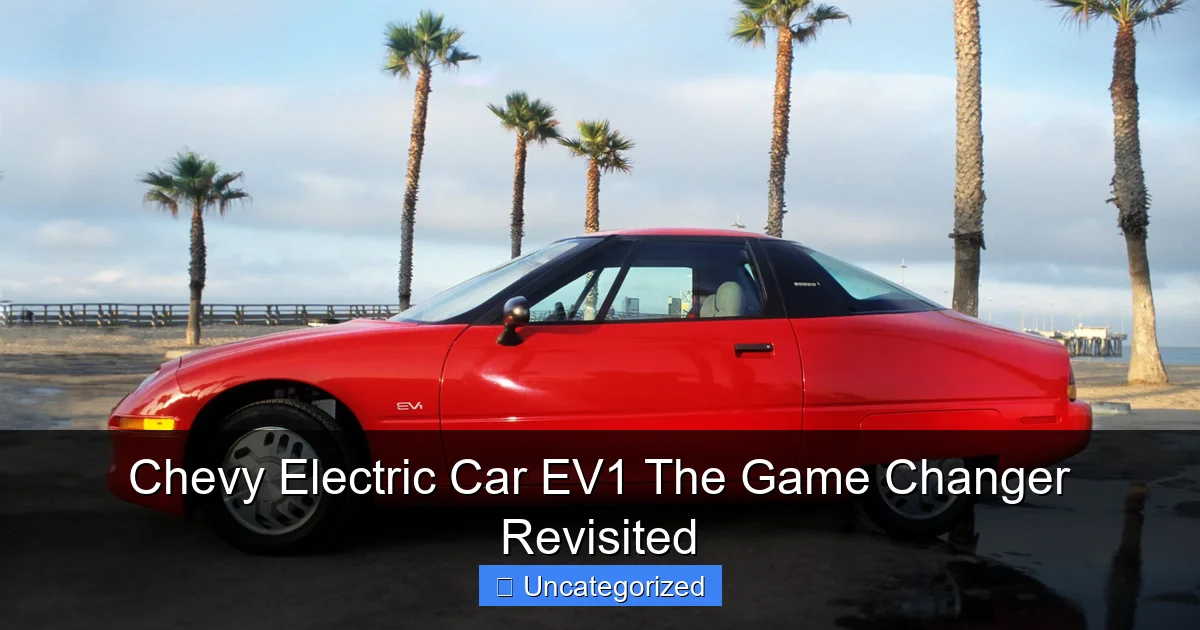
What set the EV1 apart was its holistic approach to design. Instead of retrofitting an existing gasoline-powered car, GM built the EV1 from the ground up. The result was a purpose-built electric vehicle with a lightweight aluminum chassis, aerodynamic body (0.19 drag coefficient—still impressive today), and a fully integrated electric powertrain. This clean-sheet design allowed engineers to optimize every component for efficiency and performance, setting a benchmark for future EVs.
Design Philosophy: Form Follows Function
The EV1’s design was a masterclass in aerodynamics and efficiency. Its smooth, teardrop-shaped body minimized air resistance, while the absence of a traditional radiator grille (no engine to cool) gave it a futuristic, almost alien-like appearance. The low-slung profile, flush glass, and hidden rear door handles reduced drag, contributing to its remarkable efficiency. Interior design focused on simplicity and driver engagement. With no engine noise, the cabin was eerily quiet, allowing for premium sound system integration and a focus on digital displays.
GM also introduced regenerative braking—a now-standard feature—to the EV1. When the driver lifted off the accelerator, the electric motor acted as a generator, converting kinetic energy back into electricity to recharge the battery. This innovation extended the vehicle’s range and reduced wear on the mechanical brakes. Practical example: Drivers could coast down hills or decelerate in traffic while simultaneously recharging the battery, a feature that modern EVs like the Tesla Model S have refined but originated in the EV1’s DNA.
Powertrain and Battery Technology Breakthroughs
The EV1’s first-generation models (1996–1999) used lead-acid batteries, offering 70–90 miles of range. While modest by today’s standards, this was revolutionary in the 1990s. The second-generation EV1 (2000–2003) upgraded to nickel-metal hydride (NiMH) batteries, boosting range to 100–140 miles—enough for most daily commutes. The electric motor produced 137 horsepower and 150 lb-ft of torque, enabling 0–60 mph in under 9 seconds. For context, this was faster than many gasoline-powered compacts of the era.
Tip: To maximize range, early EV1 drivers learned to use “coast and glide” techniques—anticipating stops, minimizing sudden acceleration, and leveraging regenerative braking. These habits, now common among EV owners, were pioneered by EV1 lessees. The car’s onboard computer also provided real-time energy consumption data, encouraging eco-conscious driving.
Performance, Range, and Real-World Driving Experience
Driving the EV1: A Silent Revolution
Stepping into an EV1 was unlike driving any other car. The absence of engine noise created a serene, almost meditative experience. Acceleration was instant and linear, thanks to the electric motor’s torque delivery. There were no gears to shift, no engine vibrations—just smooth, seamless power. The steering was responsive, and the low center of gravity (from the battery pack mounted low in the chassis) made the car feel planted and agile. For drivers accustomed to internal combustion engines, the EV1 felt like the future had arrived.
Visual guide about chevy electric car ev1
Image source: buildingwithawareness.com
Real-world performance varied based on battery type and driving conditions. In city traffic, the EV1 excelled. Its compact size, tight turning radius, and zero emissions made it ideal for urban environments. On highways, range anxiety was a concern, but with careful planning, drivers could manage longer trips. Example: An EV1 owner in Los Angeles could drive from Santa Monica to Downtown LA (approx. 25 miles) with battery to spare, recharging at a public station or at home overnight.
Charging Infrastructure and Ownership Challenges
One of the EV1’s biggest hurdles was the lack of charging infrastructure. GM partnered with utility companies to install charging stations in select cities (California, Arizona, Georgia), but coverage was sparse. Most owners relied on Level 1 (120V) or Level 2 (240V) home chargers. A full charge took 8–12 hours on Level 1 but dropped to 3–5 hours with a Level 2 setup. GM even offered a “Smart Charge” system that allowed owners to schedule charging during off-peak hours to reduce electricity costs—a feature now standard in modern EVs.
Tip: Early adopters often installed dedicated 240V circuits in their garages. For those without home charging, public stations were available at workplaces, shopping centers, and GM dealerships. However, the limited network meant road trips were rare. This highlighted the need for a robust charging ecosystem—a lesson automakers are still grappling with today.
Range Realities: Urban vs. Highway Driving
The EV1’s range was highly dependent on driving habits and environmental factors. In stop-and-go city traffic, regenerative braking helped maintain range. On highways, constant high-speed driving drained the battery faster. Cold weather also reduced efficiency, as batteries perform best at moderate temperatures. Data from GM’s own testing showed:
- Lead-acid EV1 (1996–1999): 70–90 miles (city), 50–70 miles (highway)
- NiMH EV1 (2000–2003): 100–140 miles (city), 80–110 miles (highway)
These figures were competitive for the time, but they underscored the importance of battery chemistry. The NiMH upgrade was a game-changer, offering 40–50% more range and longer battery life. For comparison, the 2023 Tesla Model 3 offers 267–333 miles—a testament to how far battery technology has advanced.
The EV1’s Legacy: Impact on the Auto Industry and Beyond
Inspiring the Modern EV Movement
The EV1’s influence extends far beyond its 1,117 units produced. It proved that electric vehicles could be desirable, reliable, and practical. The car’s success inspired competitors like Toyota (RAV4 EV) and Honda (EV Plus) to enter the EV market. More importantly, it laid the groundwork for Tesla Motors, founded in 2003 by engineers who saw the EV1’s potential and GM’s failure to capitalize on it. Elon Musk has openly acknowledged the EV1 as a “trailblazer” that demonstrated EVs could compete with gasoline cars.
The EV1 also sparked a wave of innovation in battery technology, power electronics, and vehicle integration. GM’s work on the EV1 led to breakthroughs in battery management systems (BMS), thermal management, and lightweight materials—technologies that are now standard in EVs. For example, the EV1’s use of aluminum body panels and composite materials influenced the design of the Chevrolet Bolt EV and GMC Hummer EV.
Lessons in Consumer Acceptance and Market Strategy
Despite its technological prowess, the EV1 faced resistance from consumers, dealers, and even GM executives. The car was only available via lease (not purchase), which limited its market appeal. Many lessees grew attached to their vehicles, only to have them recalled and crushed by GM in 2003—a decision that sparked outrage and conspiracy theories. Critics argued that GM was bowing to pressure from oil companies and the auto lobby, while GM cited high production costs and lack of consumer demand.
The lesson? Innovation alone isn’t enough. The EV1’s failure to achieve mass-market success highlights the importance of affordability, infrastructure, and consumer education. Modern automakers have learned from this: the Tesla Model 3, Nissan Leaf, and Chevrolet Bolt all emphasize affordability, charging network expansion, and public awareness campaigns.
Cultural Impact: The EV1 in Media and Pop Culture
The EV1’s story was immortalized in the 2006 documentary Who Killed the Electric Car?, which chronicled its rise and fall. The film reignited interest in the EV1 and turned it into a symbol of corporate short-sightedness. The car has also appeared in films like Demolition Man (1993, predating the EV1 but predicting its design) and Transformers: Revenge of the Fallen (2009), where it was reimagined as a Transformer. These appearances cemented the EV1’s status as a cultural icon of innovation.
Technical Specifications and Data Table
EV1 Generations at a Glance
Below is a detailed comparison of the EV1’s two generations, highlighting key improvements and specifications:
| Feature | 1st Gen (1996–1999) | 2nd Gen (2000–2003) |
|---|---|---|
| Battery Type | Lead-acid | Nickel-metal hydride (NiMH) |
| Battery Capacity | 16.5 kWh | 26.4 kWh |
| Range (EPA) | 70–90 miles (city) 50–70 miles (highway) |
100–140 miles (city) 80–110 miles (highway) |
| Motor Power | 137 hp | 137 hp (upgraded cooling) |
| 0–60 mph | 8.3 seconds | 8.0 seconds |
| Charging Time | 8–12 hrs (Level 1) 3–5 hrs (Level 2) |
Same, but faster recharge due to NiMH efficiency |
| Weight | 2,900 lbs | 3,100 lbs (heavier battery) |
| Notable Features | Regenerative braking, digital dash, aluminum chassis | Improved battery life, faster charging, enhanced HVAC for efficiency |
Data source: GM Technical Bulletins, EPA Fuel Economy Reports, and EV1 Owner Surveys (1996–2003).
Why the 2nd Gen Was a Leap Forward
The switch to NiMH batteries was the single biggest improvement in the EV1’s lifecycle. Not only did it increase range, but it also extended battery life from 3–5 years (lead-acid) to 8–10 years (NiMH). The second-gen EV1 also featured better thermal management, reducing battery degradation in extreme temperatures. These upgrades made the car more practical for daily use and demonstrated GM’s commitment to refining the technology.
Revisiting the EV1: Lessons for the Modern EV Era
What the EV1 Got Right
The EV1 was a pioneer in several areas:
- Integrated Design: Building an EV from scratch allowed GM to optimize aerodynamics, weight distribution, and energy efficiency—principles now standard in EVs.
- Regenerative Braking: The EV1 proved that energy recovery systems could extend range and reduce brake wear, a feature now ubiquitous.
- Consumer Education: GM provided extensive training for lessees, teaching them how to maximize range and use charging infrastructure effectively.
Where It Fell Short—And How We’ve Improved
The EV1’s shortcomings offer valuable lessons:
- Charging Infrastructure: Today’s EVs benefit from a growing network of fast chargers (e.g., Tesla Superchargers, Electrify America), reducing range anxiety.
- Affordability: The EV1’s high production cost led to a $34,000 lease (adjusted for inflation). Modern EVs like the Bolt EV ($26,500 after tax credit) are far more accessible.
- Battery Technology: Advances in lithium-ion batteries (higher energy density, longer lifespan) have eliminated the need for lead-acid or NiMH systems.
The EV1’s Enduring Influence
Today, the Chevy Electric Car EV1 is remembered not for its commercial failure, but for its visionary spirit. It proved that electric vehicles could be fun, efficient, and practical. Its legacy lives on in every EV on the road, from the Tesla Model Y to the Ford Mustang Mach-E. As the world transitions to sustainable transportation, the EV1 serves as a reminder: innovation requires persistence, courage, and a willingness to challenge the status quo. The game changer may have been ahead of its time, but its time has finally arrived.
Conclusion: The Game Changer Revisited
The Chevy Electric Car EV1 was more than a car—it was a manifesto for the future. In an era dominated by gasoline and skepticism, GM dared to imagine a world powered by electricity. The EV1’s story is one of triumph and tragedy, innovation and resistance, but ultimately, it’s a story of progress. By revisiting the EV1, we honor the pioneers who built it, the drivers who loved it, and the vision that inspired it. The challenges it faced—range anxiety, infrastructure gaps, consumer hesitation—are the same hurdles we’re overcoming today. But now, with advanced batteries, global charging networks, and a growing climate consciousness, the EV1’s dream feels within reach.
As we stand on the brink of a new electric era, the EV1 reminds us that game-changing ideas often emerge from bold experimentation. It wasn’t just a vehicle; it was a catalyst. The next time you plug in your Tesla, drive a Bolt, or marvel at a Cybertruck, remember the little silver car that started it all. The Chevy Electric Car EV1 may have been discontinued, but its spirit is very much alive—powering the future, one mile at a time.
Frequently Asked Questions
What was the Chevy Electric Car EV1 and why was it significant?
The Chevy Electric Car EV1, introduced in 1996, was General Motors’ first mass-produced electric vehicle (EV), marking a pioneering step in modern EV technology. It was a game changer for its time, showcasing the potential of zero-emission transportation and influencing future EV designs.
Why did GM discontinue the Chevy EV1 despite its innovation?
GM discontinued the EV1 in 2003, citing limited consumer demand, high production costs, and a lack of charging infrastructure. The decision sparked controversy and debates about the auto industry’s commitment to electric mobility.
How did the Chevy Electric Car EV1 impact the modern EV market?
The Chevy Electric Car EV1 laid the groundwork for future EVs by proving the viability of battery-powered vehicles and inspiring companies like Tesla to push the industry forward. Its legacy is evident in today’s advanced battery tech and charging networks.
What were the key features of the Chevy EV1?
The EV1 featured a lead-acid or nickel-metal hydride battery, a range of 70–140 miles per charge, and a sleek, aerodynamic design. It also introduced regenerative braking, a feature now standard in most EVs.
Can you still drive a Chevy Electric Car EV1 today?
While most EV1s were recalled and destroyed by GM, a few survive in museums or private collections. However, due to outdated battery tech and lack of parts, they are rarely driven today.
What lessons did the auto industry learn from the Chevy EV1?
The EV1 taught automakers the importance of consumer education, charging infrastructure, and scalable battery production. These lessons shaped the strategies behind today’s successful electric vehicles, including the Chevrolet Bolt and other modern EVs.