Chevy Electric Cars The Future of Affordable EVs
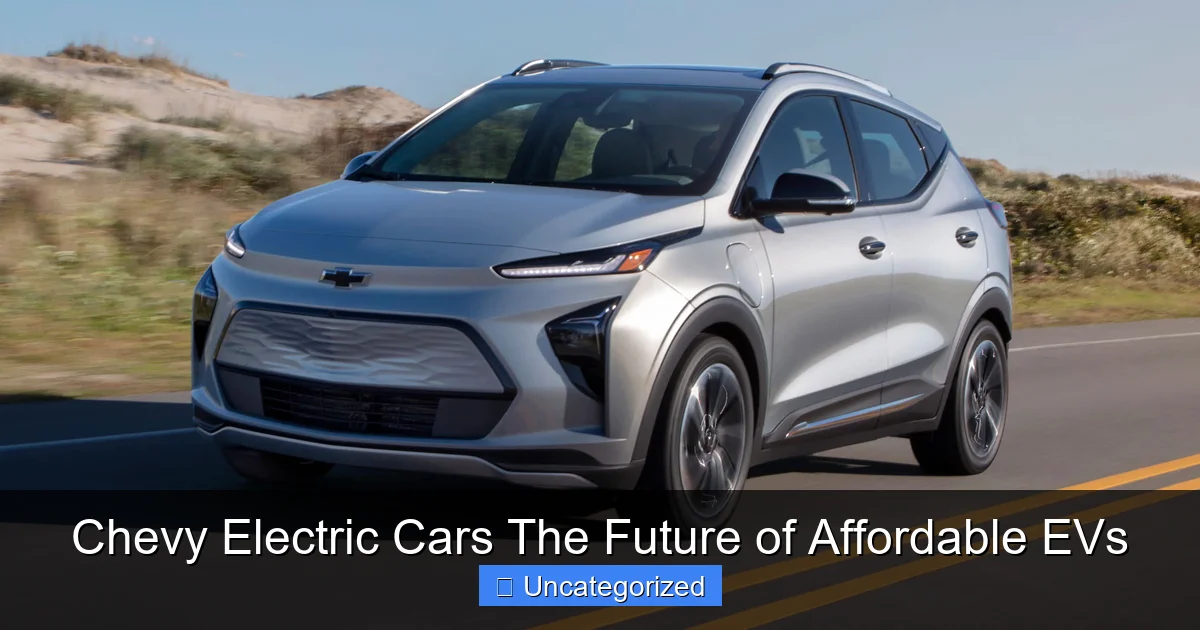
Featured image for chevy electric cars
Image source: image.cnbcfm.com
Chevy electric cars are redefining affordability in the EV market, offering cutting-edge technology and impressive range at a fraction of the cost of competitors. With models like the Bolt EV and Equinox EV, Chevrolet delivers practical, eco-friendly transportation without sacrificing performance or style. These vehicles prove that going electric doesn’t have to break the bank.
Key Takeaways
- Chevy EVs offer affordability: Competitive pricing makes electric driving accessible to more buyers.
- Expanding model lineup: From Bolt to Equinox, Chevy covers diverse EV needs.
- Long-range options available: Up to 300+ miles on select models for fewer charging stops.
- Fast-charging capability: Recharge 100 miles in 30 minutes with DC fast charging.
- Federal tax credit eligible: Save up to $7,500 with qualifying Chevy EV purchases.
- Home charging solutions: Chevy provides easy installation options for convenient overnight charging.
📑 Table of Contents
- The Dawn of a New Electric Era
- The Evolution of Chevy Electric Cars: From Concept to Reality
- Why Chevy Electric Cars Are Leading the Affordable EV Movement
- Chevy vs. the Competition: How Do They Stack Up?
- Real-World Benefits: Why Drivers Are Making the Switch
- The Road Ahead: What’s Next for Chevy Electric Cars?
- Conclusion: The Future Is Electric—And Affordable
The Dawn of a New Electric Era
The automotive industry is undergoing a seismic shift, and at the heart of this transformation is the rise of Chevy electric cars. Once synonymous with roaring V8 engines and classic American muscle, Chevrolet has boldly stepped into the future with a lineup of affordable, innovative, and environmentally conscious electric vehicles (EVs). As global concerns about climate change, rising fuel costs, and energy independence grow, the demand for practical and accessible electric transportation has never been higher. Chevy, a brand with over a century of engineering excellence, is now leading the charge in making EVs not just a luxury for the few, but a viable option for the many.
From the groundbreaking Chevy Bolt EV to the upcoming Silverado EV and Equinox EV, Chevrolet is redefining what it means to be an affordable electric car manufacturer. With competitive pricing, impressive range, and a commitment to American manufacturing, Chevy is positioning itself as a key player in the democratization of electric mobility. Whether you’re a first-time EV buyer or a long-time eco-conscious driver, Chevy electric cars offer a compelling blend of value, technology, and performance. This blog post dives deep into what makes Chevy’s electric lineup stand out, how it compares to the competition, and why it might just be the future of affordable EVs in America.
The Evolution of Chevy Electric Cars: From Concept to Reality
A Legacy Reimagined
Chevrolet’s journey into the electric vehicle space began long before the current EV boom. In 1996, Chevy launched the EV1, one of the first mass-produced electric cars in modern history. Though it was discontinued in 2003 due to limited market readiness and infrastructure, the EV1 laid the groundwork for future innovation. Fast forward to 2017, and Chevy returned with the Bolt EV—a car that wasn’t just a concept, but a practical, long-range EV designed for everyday drivers. The Bolt EV quickly earned accolades, including Motor Trend Car of the Year and Green Car of the Year, proving that Chevy was serious about electric mobility.

Visual guide about chevy electric cars
Image source: autozonic.com
The Bolt EV: A Game-Changer in Affordability
The Chevy Bolt EV (and its slightly larger sibling, the Bolt EUV) was revolutionary not just for its 259 miles of EPA-estimated range (2023 model), but for its price point. Starting around $26,500 (before federal tax credits), the Bolt EV became one of the most affordable long-range EVs on the market. For example, a driver commuting 40 miles a day would only need to charge the Bolt EV once a week under normal conditions. This made it ideal for urban dwellers, suburban commuters, and even small business owners needing a reliable, low-cost fleet vehicle.
Key features of the Bolt EV include:
- Regenerative braking with one-pedal driving mode
- 10.2-inch touchscreen with wireless Apple CarPlay and Android Auto
- Available Super Cruise hands-free driving assist (on EUV trims)
- Fast DC charging capability (up to 100 miles in 30 minutes)
<
Chevy’s decision to keep the Bolt EV in production despite industry trends to phase out compact EVs speaks volumes about its commitment to affordability and accessibility.
Expanding the Electric Lineup: Beyond the Bolt
While the Bolt EV remains a cornerstone, Chevy is rapidly expanding its electric portfolio. The Equinox EV, scheduled for release in late 2024, will offer an estimated 300-mile range and start under $30,000 (after tax incentives), making it one of the most affordable midsize electric SUVs. Similarly, the Silverado EV—Chevy’s first all-electric pickup—promises to deliver 400+ miles of range, 754 horsepower, and a towing capacity of up to 10,000 pounds. These vehicles signal Chevy’s intent to electrify not just passenger cars, but the entire spectrum of American transportation, from city commuters to work trucks.
Why Chevy Electric Cars Are Leading the Affordable EV Movement
Competitive Pricing with Real-World Value
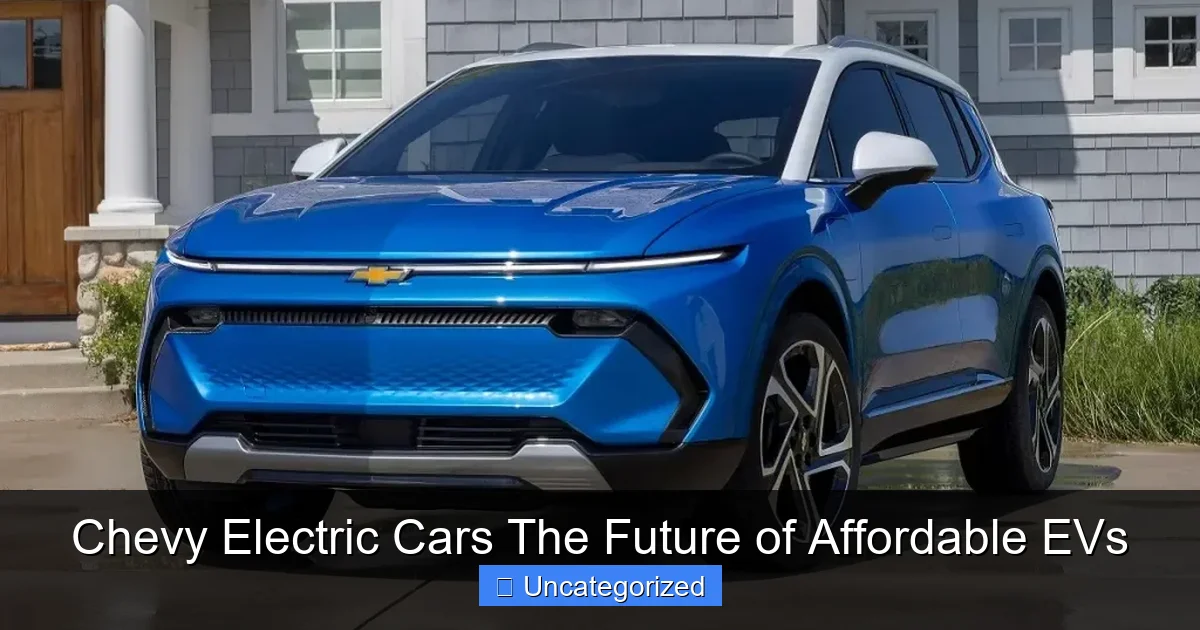
One of the biggest barriers to EV adoption is cost. While luxury EVs from Tesla, Lucid, and Rivian often exceed $60,000, Chevy electric cars are designed with affordability in mind. The Equinox EV is projected to start at $27,495 (before the $7,500 federal tax credit), potentially bringing the effective price below $20,000 for eligible buyers. This is a game-changer in a market where most new EVs start above $35,000.
Visual guide about chevy electric cars
Image source: motorbiscuit.com
But affordability isn’t just about the sticker price. Chevy also offers:
- Lower maintenance costs: No oil changes, fewer moving parts, and regenerative braking reduce wear on brake pads
- Lower fuel costs: Charging at home can cost as little as $0.10 per kWh, translating to ~$3 for a full charge
- Long-term savings: With federal, state, and utility incentives, the total cost of ownership can be significantly lower than gas-powered alternatives
For example, a 2023 Bolt EV driven 15,000 miles per year would cost approximately $600 annually in electricity, compared to over $1,800 for a gas-powered car averaging 30 MPG with $3.50/gallon fuel.
Built in America, For America
Chevy electric cars are not just designed in the U.S.—they’re built here. The Bolt EV is manufactured at GM’s Orion Assembly Plant in Michigan, powered by 100% renewable energy. The Equinox EV will be produced at GM’s Ramos Arizpe plant in Mexico, which is part of a broader North American supply chain strategy. This domestic focus ensures:
- Shorter supply chains and faster delivery times
- Support for American jobs and manufacturing
- Eligibility for federal and state EV incentives (many of which require domestic assembly)
Additionally, Chevy’s partnership with the U.S. Department of Energy and local governments to expand charging infrastructure—such as the Ultium Charge 360 network—demonstrates a holistic approach to EV adoption.
Technology That Doesn’t Break the Bank
Affordable doesn’t mean basic. Chevy electric cars come packed with advanced tech, including:
- Ultium Platform: GM’s modular EV architecture, enabling scalable battery sizes, faster charging, and improved safety
- Vehicle-to-Load (V2L): On models like the Silverado EV, power tools, appliances, or even another EV can be charged directly from the truck’s battery
- Over-the-Air Updates: Software improvements and new features are delivered wirelessly, just like a smartphone
- Enhanced Safety Suite: Standard features like automatic emergency braking, lane-keeping assist, and rear cross-traffic alert
For instance, the 2024 Equinox EV will offer an available 30-inch diagonal display—a first in its class—proving that cutting-edge tech can coexist with affordability.
Chevy vs. the Competition: How Do They Stack Up?
Range and Efficiency Comparison
When comparing Chevy electric cars to competitors like the Tesla Model 3, Ford Mustang Mach-E, and Hyundai Kona Electric, the value proposition becomes clear. Below is a data table highlighting key specifications:
| Model | Starting MSRP | EPA Range (Miles) | DC Fast Charging (10-80%) | Key Advantage |
|---|---|---|---|---|
| Chevy Bolt EV | $26,500 | 259 | 30 minutes | Lowest starting price for 250+ mile range |
| Chevy Equinox EV (est.) | $27,495 | 300 | 30 minutes | Best value in midsize SUV segment |
| Tesla Model 3 | $38,990 | 272 | 25 minutes | Larger charging network |
| Ford Mustang Mach-E | $42,995 | 250–314 | 30–40 minutes | Sportier design |
| Hyundai Kona Electric | $33,550 | 258 | 47 minutes | Longer warranty (10 years/100,000 miles) |
As the table shows, Chevy electric cars consistently offer more range per dollar than most competitors. The Bolt EV, for example, delivers 9.8 miles of range per $1,000 spent, compared to 7.0 for the Tesla Model 3 and 6.5 for the Mach-E.
Ownership Experience and Customer Support
Beyond specs, Chevy excels in real-world ownership. Unlike some EV makers that rely solely on online sales, Chevy leverages its extensive network of over 3,000 dealerships across the U.S. This means:
- Test drives and in-person support are readily available
- Local service centers can handle repairs and maintenance
- Trade-in options and financing are handled through trusted local partners
Additionally, Chevy’s 8-year/100,000-mile battery warranty (with coverage for capacity loss) provides peace of mind. In contrast, some competitors offer only 5-year warranties or charge extra for extended coverage.
Charging Infrastructure: Where Chevy Excels
While Tesla’s Supercharger network is the gold standard, Chevy is catching up fast. Through partnerships with EVgo, ChargePoint, and Electrify America, Chevy owners get access to over 100,000 public charging points nationwide. The Ultium Charge 360 program also offers:
- Free charging credits (e.g., 1,000 kWh for new Bolt buyers)
- Integrated navigation that plans routes with charging stops
- Home charging installation assistance (via Qmerit)
For example, a Chevy Equinox EV driver planning a 300-mile trip can use the MyChevrolet app to locate a DC fast charger en route, with estimated arrival times and pricing.
Real-World Benefits: Why Drivers Are Making the Switch
Lower Total Cost of Ownership
Switching to a Chevy electric car isn’t just good for the environment—it’s great for your wallet. A 2023 study by Consumer Reports found that EVs save owners an average of $6,000–$10,000 over their lifetime compared to gas cars. For a Chevy Bolt EV owner, this breaks down to:
- $1,200/year in fuel savings
- $500/year in maintenance savings
- $1,000+ in tax incentives (federal and state)
Tip: Use the U.S. Department of Energy’s Vehicle Cost Calculator to estimate your personal savings based on driving habits and local electricity rates.
Quiet, Smooth, and Fun to Drive
Electric motors deliver instant torque, resulting in a driving experience that’s both smooth and exhilarating. The Bolt EV, for instance, goes from 0 to 60 mph in 6.5 seconds—faster than many gas-powered compacts. The absence of engine noise makes city driving serene, while the low center of gravity (due to the underfloor battery pack) improves handling and cornering.
Many drivers report that after switching to a Chevy EV, they never want to go back to internal combustion engines. As one Bolt EV owner in Denver shared: “I used to dread stop-and-go traffic, but now it’s like a quiet meditation session. And the acceleration when merging onto the highway? Pure joy.”
Environmental Impact and Sustainability
Transportation accounts for nearly 30% of U.S. greenhouse gas emissions. By driving a Chevy electric car, you’re directly reducing your carbon footprint. A 2022 study by the Union of Concerned Scientists found that EVs produce 60–68% less CO2 over their lifetime than gas cars, even when accounting for electricity generation.
Chevy is also investing in sustainability beyond the vehicle itself:
- Recycled materials in interior components (e.g., seats made from recycled plastic bottles)
- Solar-powered manufacturing plants
- End-of-life battery recycling programs
For environmentally conscious buyers, a Chevy EV is a tangible way to support a cleaner, greener future.
The Road Ahead: What’s Next for Chevy Electric Cars?
Upcoming Models and Innovations
Chevy’s electric future is bright. In addition to the Equinox EV and Silverado EV, the automaker has teased several upcoming models:
- Blazer EV: A sporty midsize SUV with up to 320 miles of range and 557 horsepower
- Silverado EV RST: A high-performance version with 0–60 mph in under 4 seconds
- Affordable Crossover EV: A sub-$25,000 model targeting the budget-conscious market
These vehicles will leverage GM’s Ultium battery technology, which allows for flexible pack sizes, faster charging, and improved energy density. For example, the Silverado EV’s 200 kWh battery can add 100 miles of range in just 10 minutes using a 350 kW DC fast charger.
Expanding the Ecosystem
Chevy isn’t just building cars—it’s building an ecosystem. The Ultifi software platform will enable personalized user experiences, subscription-based features (e.g., premium audio or performance modes), and seamless integration with smart homes. Imagine your Chevy EV preheating the cabin before you leave work, or automatically scheduling charging during off-peak hours to save money.
Additionally, Chevy is exploring vehicle-to-grid (V2G) technology, where EVs can feed energy back into the power grid during peak demand. This could turn your car into a mobile power source, earning you credits on your electricity bill.
Challenges and Opportunities
Despite its progress, Chevy faces challenges: battery supply chain constraints, competition from Tesla and legacy automakers, and the need for faster charging infrastructure. However, its focus on affordability, American manufacturing, and customer-centric design gives it a unique edge. As battery costs continue to decline and charging networks expand, Chevy is well-positioned to dominate the affordable EV market.
Conclusion: The Future Is Electric—And Affordable
Chevy electric cars are more than just a trend—they’re a movement toward accessible, sustainable, and enjoyable transportation. With the Bolt EV leading the charge and a wave of new models on the horizon, Chevrolet is proving that going electric doesn’t require sacrificing value, performance, or practicality. Whether you’re drawn to the Bolt’s city-friendly size, the Equinox EV’s family-friendly space, or the Silverado EV’s rugged capability, there’s a Chevy EV for every lifestyle.
The message is clear: the future of affordable EVs is here, and it’s wearing a bowtie. By combining cutting-edge technology, domestic manufacturing, and unbeatable pricing, Chevy is not just keeping pace with the EV revolution—it’s helping to lead it. So, if you’ve been waiting for the right time to go electric, that time is now. Visit a local Chevy dealership, take a test drive, and experience the future of driving for yourself. Your wallet—and the planet—will thank you.
Frequently Asked Questions
What Chevy electric cars are currently available?
Chevrolet currently offers the Bolt EV and Bolt EUV, both affordable, compact electric vehicles with ranges over 250 miles. The upcoming Equinox EV and Blazer EV will expand their lineup by 2024, targeting SUV buyers seeking budget-friendly EVs.
How much do Chevy electric cars cost compared to other EVs?
Chevy electric cars like the Bolt EV start under $30,000 (after tax credits), making them among the most affordable EVs in the U.S. The upcoming Equinox EV aims to offer even lower entry pricing, solidifying Chevy’s reputation for value in the EV market.
What is the range of the Chevy Bolt EV and EUV?
The 2023 Chevy Bolt EV delivers 259 miles of range, while the Bolt EUV offers 247 miles—both ideal for daily commutes and road trips. With DC fast charging, both models can regain up to 100 miles in 30 minutes.
Are Chevy electric cars eligible for federal tax credits?
Yes, the Chevy Bolt EV and EUV qualify for the full $7,500 federal tax credit until December 2023. However, eligibility for the credit may change for future models like the Equinox EV due to updated battery sourcing rules.
When will the new Chevy Equinox EV be released?
The Chevy Equinox EV is slated for late 2023, with a starting price around $30,000. This compact SUV will feature up to 300 miles of range and advanced tech, appealing to families seeking an affordable electric SUV.
Do Chevy electric cars come with home charging solutions?
Yes, Chevy provides a dual-level charging cord for both 120V (Level 1) and 240V (Level 2) home charging. Buyers can also opt for a professional home charger installation through Chevrolet’s partnership with Qmerit.