Chevy Electric Cars 2017 A Look at the Future of Driving
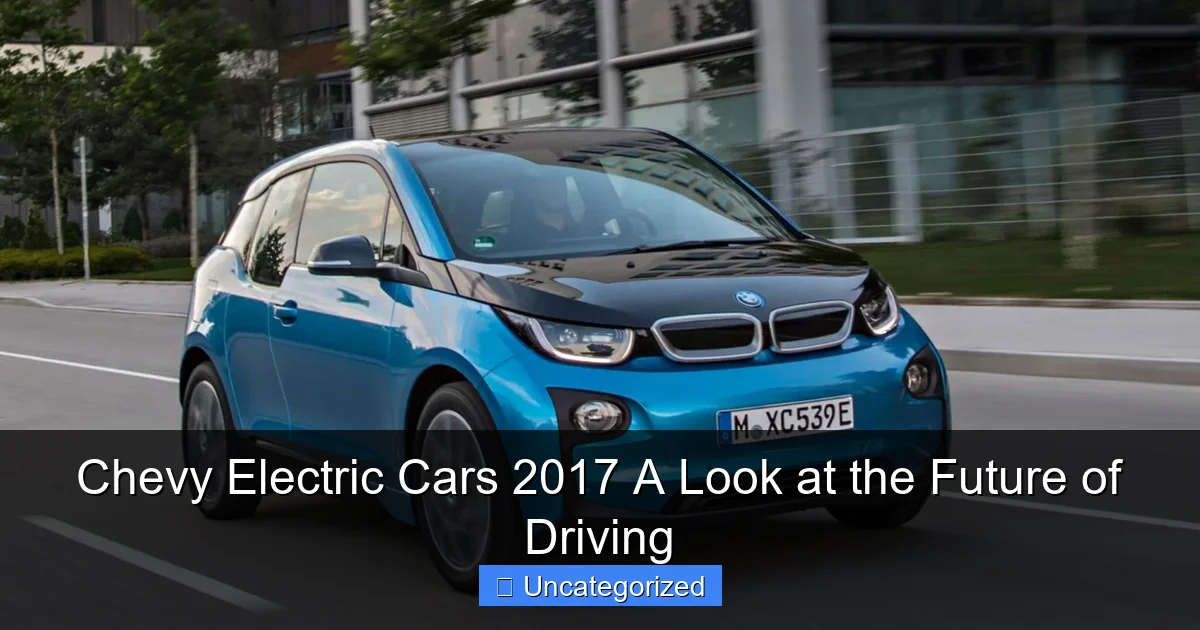
Featured image for chevy electric cars 2017
Image source: motoringresearch.com
The 2017 Chevy electric car lineup, headlined by the groundbreaking Bolt EV, marked a turning point in affordable, long-range electric mobility. With an EPA-estimated 238 miles per charge, the Bolt shattered range anxiety and proved that practical EVs could be both accessible and exhilarating. Chevy’s commitment to innovation positioned its 2017 electric models as serious contenders in the race toward a sustainable automotive future.
Key Takeaways
- Chevy Bolt EV launched in 2017 with 238-mile range, setting a new affordability benchmark.
- Regenerative braking maximizes efficiency—use one-pedal driving to extend battery life.
- DC fast charging available adds 90 miles of range in just 30 minutes.
- Spacious interior defies EV norms—ideal for families and long commutes.
- Affordable after tax credits makes it a top value in electric vehicles.
- MyChevy app enhances ownership with remote start, charging status, and route planning.
📑 Table of Contents
- The Dawn of a New Electric Era: Chevy Electric Cars 2017
- Chevrolet’s Electric Lineup in 2017: Models That Defined the Year
- Technology and Innovation: What Set Chevy Electric Cars Apart in 2017
- Real-World Performance and Ownership Experience
- Market Impact and Consumer Reception
- The Legacy of 2017: Paving the Way for Chevrolet’s Electric Future
- Data Table: 2017 Chevy Electric Cars at a Glance
- Conclusion: The Future Was Electric in 2017
The Dawn of a New Electric Era: Chevy Electric Cars 2017
The year 2017 marked a pivotal moment in the automotive industry, especially for General Motors and its Chevrolet division. As the world began to pivot toward sustainable transportation, Chevrolet emerged as a frontrunner in the electric vehicle (EV) revolution with its innovative lineup of Chevy electric cars 2017. This period wasn’t just about introducing new models; it was about redefining the driving experience, challenging long-standing perceptions about electric mobility, and setting the stage for a cleaner, smarter future. With growing environmental concerns, tightening emissions regulations, and rapid advancements in battery technology, Chevrolet seized the opportunity to position itself as a leader in the EV space—not just in the U.S., but globally.
For many consumers, the idea of electric vehicles in 2017 still carried skepticism. Range anxiety, charging infrastructure, and performance limitations were common concerns. However, Chevrolet responded with engineering excellence, consumer-focused design, and bold vision. The 2017 model year saw the full commercial launch of the Chevrolet Bolt EV, a vehicle that shattered expectations and earned accolades such as Motor Trend Car of the Year and Green Car of the Year. Alongside the continued presence of the Chevrolet Spark EV, Chevy proved that electric cars could be practical, affordable, and exciting. This blog post explores the significance of Chevy electric cars in 2017, examining their technological advancements, market impact, real-world usability, and what they signaled for the future of driving.
Chevrolet’s Electric Lineup in 2017: Models That Defined the Year
The Chevrolet Bolt EV: A Game-Changer in Affordable Long-Range EVs
The Chevy Bolt EV was the star of Chevrolet’s 2017 electric lineup. Unveiled in late 2016 and hitting dealerships in December, the Bolt EV was the first mass-market electric car to offer over 200 miles of EPA-estimated range at a price point under $40,000 (before federal and state incentives). With an official EPA range of 238 miles, the Bolt EV shattered the “200-mile barrier” that had long been seen as a psychological threshold for mainstream EV adoption. This was a monumental achievement, especially when compared to competitors like the Nissan Leaf (107 miles in its 2017 base model) or even the Tesla Model 3, which wouldn’t begin deliveries until late 2017.
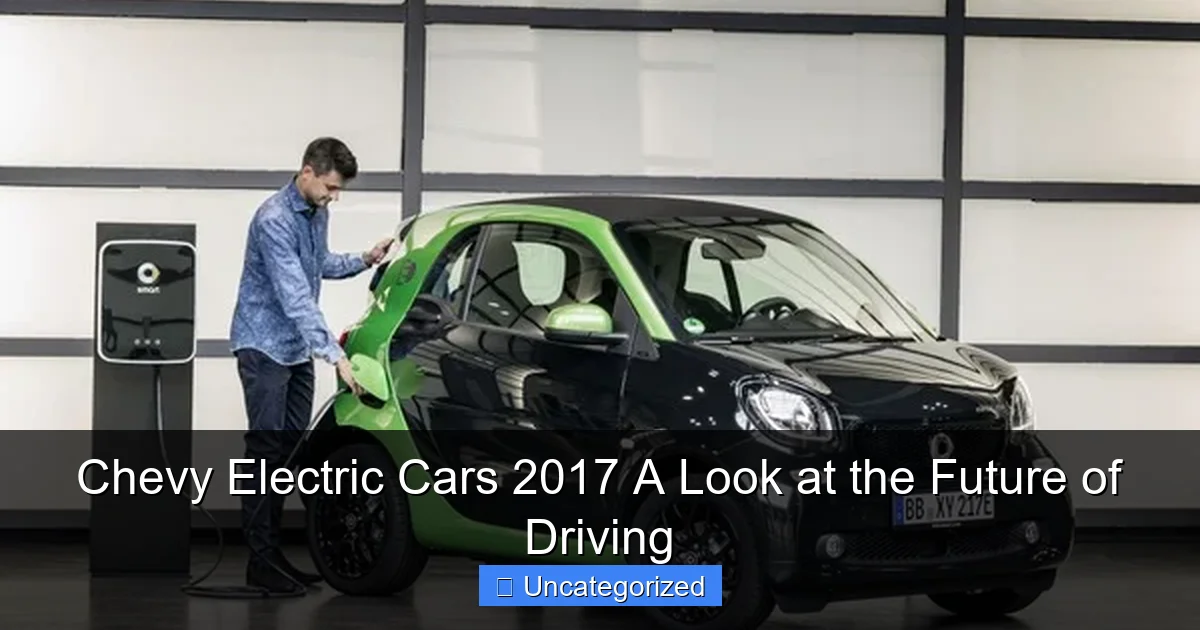
Visual guide about chevy electric cars 2017
Image source: cimg3.ibsrv.net
Under the hood (or rather, under the floor), the Bolt EV featured a 60 kWh lithium-ion battery pack and a 200-horsepower electric motor, delivering instant torque and a 0–60 mph time of around 6.5 seconds. This combination of range, performance, and price made the Bolt EV a compelling option for urban commuters, suburban families, and even long-distance travelers. Its hatchback design offered 16.9 cubic feet of cargo space, expandable to 56.6 cubic feet with the rear seats folded—making it practical for daily use.
The Chevrolet Spark EV: A Compact Urban Commuter
While the Bolt EV stole the spotlight, the Chevy Spark EV remained a viable option for city dwellers in 2017. Originally launched in 2013, the Spark EV was updated for 2016 and continued into 2017 with a 19 kWh battery and an EPA-estimated range of 82 miles. Though modest compared to the Bolt, the Spark EV excelled in its niche: short commutes, tight parking spaces, and low operating costs. It was available in select markets, including California, Maryland, and Oregon, where state incentives made it even more affordable.
With a 140-horsepower electric motor and a curb weight of just 2,600 pounds, the Spark EV was nimble and zippy in urban traffic. It also featured regenerative braking, which allowed drivers to recapture energy during deceleration—especially useful in stop-and-go city driving. For those who didn’t need long-range capability, the Spark EV was a cost-effective entry into electric mobility, with a starting price around $25,000 before incentives.
No Plug-In Hybrids? A Strategic Focus on Pure Electric
Unlike competitors such as Toyota (Prius Prime) and Ford (Fusion Energi), Chevrolet did not offer a plug-in hybrid electric vehicle (PHEV) in 2017. Instead, GM made a bold strategic decision to focus on all-electric vehicles, signaling its commitment to full electrification. This decision reflected confidence in battery technology and a vision for a future where internal combustion engines (ICE) would be phased out. While this limited options for buyers seeking hybrid flexibility, it allowed Chevrolet to channel resources into perfecting its EV platform, culminating in the Bolt EV’s success.
Technology and Innovation: What Set Chevy Electric Cars Apart in 2017
Advanced Battery Technology and Thermal Management
The heart of any electric car is its battery, and the 2017 Chevy Bolt EV featured one of the most advanced battery systems of its time. The 60 kWh lithium-ion battery pack used nickel-manganese-cobalt (NMC) chemistry, which offered a favorable balance of energy density, longevity, and safety. One of the standout features was the active thermal management system, which cooled the battery with liquid coolant during fast charging and in hot weather, and heated it in cold conditions to maintain optimal performance.
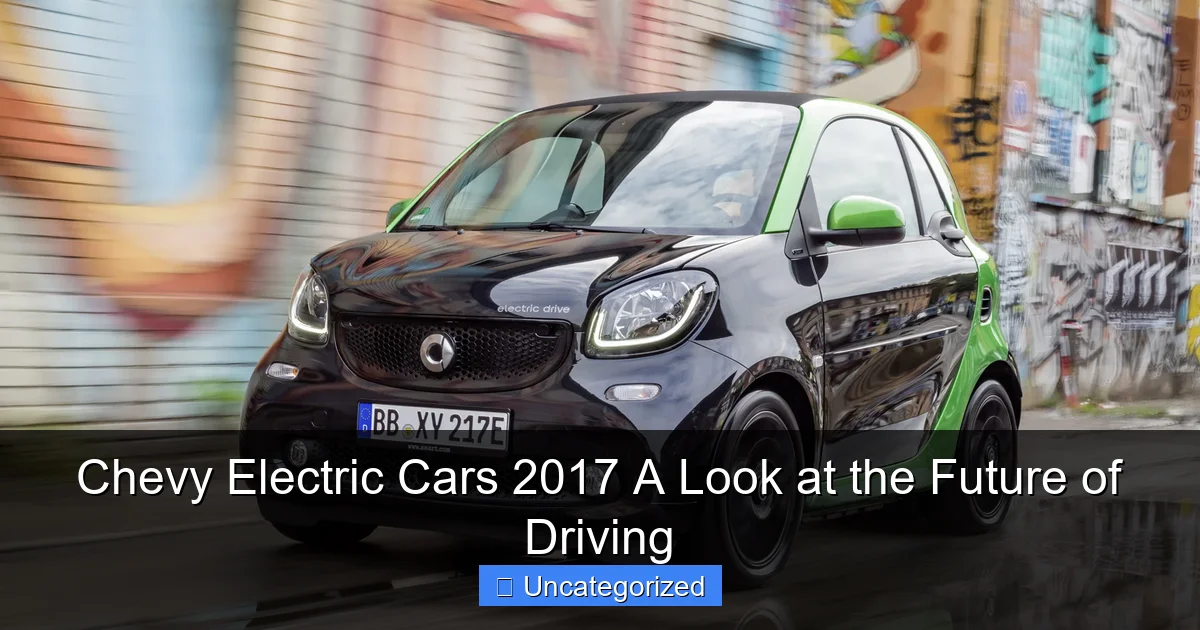
Visual guide about chevy electric cars 2017
Image source: images.hgmsites.net
This thermal regulation was critical for preserving battery life and ensuring consistent range, especially in extreme climates. For example, in Phoenix during summer, the system prevented overheating during Level 3 DC fast charging, while in Minnesota winters, it pre-conditioned the battery before driving to minimize range loss. This innovation gave the Bolt EV a significant edge over competitors with passive cooling systems, which often suffered from reduced efficiency in temperature extremes.
Regenerative Braking and One-Pedal Driving
Chevy electric cars in 2017 introduced a refined regenerative braking system that allowed for one-pedal driving in many scenarios. By pressing a button on the center console, drivers could enable “Low” mode, which increased regenerative braking to the point where lifting off the accelerator brought the car to a near stop—without using the brake pedal. This feature was particularly useful in city traffic, where frequent stops allowed drivers to recapture energy and reduce wear on mechanical brakes.
For example, a commuter in Los Angeles could navigate through heavy freeway traffic using only the accelerator, coasting to a stop at red lights and stop signs. This not only improved energy efficiency but also made driving more intuitive and less fatiguing. The system also included a “Regen on Demand” paddle behind the steering wheel, allowing drivers to manually increase regenerative braking for precise control, such as descending hills.
Infotainment and Connectivity: MyLink and OnStar Integration
The 2017 Bolt EV came equipped with Chevrolet’s MyLink infotainment system, featuring a 10.2-inch touchscreen, Apple CarPlay, Android Auto, and built-in navigation. The system was intuitive and responsive, with a clean interface that prioritized EV-specific functions like battery status, charging schedules, and energy usage. Drivers could monitor real-time energy consumption, view driving efficiency scores, and even set charging times to take advantage of off-peak electricity rates.
OnStar, GM’s connected services platform, added another layer of convenience. Through the OnStar mobile app, Bolt EV owners could remotely start charging, check battery levels, lock/unlock doors, and pre-condition the cabin (heating or cooling) while the car was still plugged in. This was especially valuable in extreme weather—imagine warming up your Bolt EV on a cold winter morning while still in your kitchen, without draining the battery.
Real-World Performance and Ownership Experience
Driving Dynamics: Smooth, Silent, and Responsive
Driving a Chevy electric car in 2017 was a revelation for many. The near-silent operation of the electric motor created a serene cabin environment, free from engine noise and vibration. The instant torque delivery—available from 0 RPM—meant that the Bolt EV and Spark EV accelerated with surprising urgency, making them feel more powerful than their horsepower numbers suggested.
Handling was also a strong point. The Bolt EV’s low center of gravity (due to the floor-mounted battery) contributed to stable cornering and reduced body roll. The steering was precise, and the ride was comfortable, absorbing bumps without feeling overly soft. For a compact hatchback, the Bolt EV offered a surprisingly refined driving experience, comparable to premium compact cars at a lower price.
Charging Infrastructure and Practicality
One of the biggest concerns for EV owners in 2017 was charging. The Bolt EV supported three charging levels:
- Level 1 (120V): Using a standard household outlet, it added about 4 miles of range per hour—ideal for overnight charging.
- Level 2 (240V): With a home charging station (e.g., 7.2 kW), it added 25 miles per hour, allowing a full charge in about 9.5 hours.
- DC Fast Charging (50 kW): Available at public stations, it could replenish 90 miles of range in 30 minutes—perfect for road trips.
Chevrolet partnered with charging networks like ChargePoint and EVgo to provide Bolt EV owners with access to thousands of public stations. The car’s navigation system could locate nearby chargers and even plan routes with charging stops—a feature that eased range anxiety on longer journeys. For example, a trip from San Francisco to Los Angeles (approx. 380 miles) could be completed with just one 30-minute fast charge in Santa Barbara, thanks to the Bolt’s range and charging capabilities.
Ownership Costs and Incentives
Chevy electric cars in 2017 were not only technologically advanced but also cost-effective to own. The federal tax credit of $7,500 brought the Bolt EV’s effective price down to around $30,000, while state incentives (e.g., $2,500 in California) further reduced costs. Maintenance was minimal—no oil changes, no spark plugs, and fewer moving parts. Over 5 years, a Bolt EV owner could save thousands in fuel and maintenance compared to a comparable gasoline car.
Electricity costs were also favorable. At an average U.S. rate of $0.13 per kWh, a full charge cost about $7.80 and provided 238 miles—equivalent to roughly $0.03 per mile, compared to $0.10–$0.15 per mile for gasoline vehicles. Additionally, many workplaces and public parking facilities offered free or discounted EV charging, adding to the savings.
Market Impact and Consumer Reception
Sales Performance and Industry Recognition
The 2017 Chevrolet Bolt EV sold over 23,000 units in the U.S., making it the second-best-selling electric car after the Tesla Model S—despite Tesla’s premium pricing. Its success demonstrated that there was strong demand for affordable, long-range EVs. The Bolt EV received widespread acclaim:
- Motor Trend Car of the Year (2017)
- Green Car of the Year by Green Car Journal
- Best EV for the Money by U.S. News & World Report
Consumer reviews praised its range, value, and practicality. J.D. Power and Consumer Reports gave it high reliability and satisfaction scores, with many owners reporting over 200,000 miles on their batteries with minimal degradation.
Shifting Public Perception of Electric Cars
The Bolt EV played a crucial role in changing how Americans viewed electric vehicles. It proved that EVs weren’t just for environmentalists or tech enthusiasts—they were for everyday people. Families appreciated the spacious interior and safety features (10 airbags, rearview camera, available blind-spot monitoring), while tech-savvy buyers loved the connectivity and one-pedal driving.
Chevrolet’s marketing emphasized real-world benefits: lower fuel costs, reduced emissions, and a fun driving experience. Test drives became a key conversion tool—once drivers experienced the Bolt EV’s acceleration and quiet cabin, many were hooked. Dealerships reported that over 70% of Bolt EV buyers were new to the EV market, indicating a successful outreach to mainstream consumers.
The Legacy of 2017: Paving the Way for Chevrolet’s Electric Future
From Bolt to Blazer: Expanding the Electric Portfolio
The success of the 2017 Chevy electric cars laid the foundation for GM’s broader electrification strategy. In the years following 2017, Chevrolet introduced the Chevrolet Bolt EUV (2022), a slightly larger SUV version of the Bolt, and announced plans for the Chevrolet Blazer EV and Equinox EV—both based on GM’s Ultium battery platform. The lessons learned from the Bolt EV’s development, such as thermal management and user interface design, directly influenced these newer models.
Moreover, the Bolt EV’s battery pack and electric drive unit served as the basis for GM’s modular EV architecture, which underpins not only Chevrolet models but also vehicles from Cadillac, GMC, and Buick. This scalability demonstrated the long-term value of the 2017 investment.
Environmental and Societal Impact
By 2017, Chevrolet had already reduced CO2 emissions from its vehicles by millions of tons through its EV initiatives. The Bolt EV, in particular, avoided an estimated 4.5 tons of CO2 per year compared to a 25 mpg gasoline car. Over its lifetime, a single Bolt EV could prevent over 40 tons of emissions—equivalent to planting over 1,000 trees.
Beyond emissions, Chevy electric cars contributed to reduced noise pollution, improved urban air quality, and increased energy independence. They also encouraged the growth of renewable energy integration, as EV owners began pairing their cars with solar panels and home battery systems.
Looking Ahead: The Road to an All-Electric Chevrolet
In 2021, GM announced its goal to phase out ICE vehicles by 2035 and achieve carbon neutrality by 2040. The 2017 Chevy electric cars were the first bold step in this journey. They proved that electric vehicles could be desirable, reliable, and accessible—not just a niche product. Today, Chevrolet’s EV lineup continues to expand, with new models offering longer range, faster charging, and advanced driver-assistance systems.
The spirit of innovation that defined the 2017 Bolt EV lives on. It was more than a car; it was a statement of intent—a declaration that Chevrolet was ready to lead the electric revolution.
Data Table: 2017 Chevy Electric Cars at a Glance
| Model | Battery Capacity | EPA Range | Horsepower | 0–60 mph | Starting MSRP | Key Feature |
|---|---|---|---|---|---|---|
| Chevrolet Bolt EV | 60 kWh | 238 miles | 200 hp | 6.5 sec | $37,495 | 200+ mile range at sub-$40K |
| Chevrolet Spark EV | 19 kWh | 82 miles | 140 hp | 7.2 sec | $25,120 | Compact, urban-friendly EV |
Conclusion: The Future Was Electric in 2017
The 2017 model year was a watershed moment for Chevrolet and the electric vehicle industry at large. With the Chevy electric cars 2017 lineup—particularly the groundbreaking Bolt EV—Chevrolet didn’t just enter the EV market; it redefined it. By combining long range, affordability, advanced technology, and real-world usability, Chevy proved that electric cars could meet the needs of everyday drivers without compromise.
From its innovative battery thermal management to its intuitive infotainment and one-pedal driving, the Bolt EV was a showcase of forward-thinking engineering. It helped dispel myths about EVs, inspired competitors to raise their game, and paved the way for a new era of sustainable transportation. For consumers, it offered not just a car, but a vision of a cleaner, quieter, and more efficient future.
Today, as Chevrolet rolls out its next generation of electric SUVs and trucks, it’s clear that the foundation was built in 2017. The Chevy electric cars of that year weren’t just a glimpse into the future—they were the beginning of it. Whether you’re a first-time EV buyer or a longtime enthusiast, the legacy of the 2017 Bolt EV and Spark EV reminds us that the future of driving is not only electric—it’s already here.
Frequently Asked Questions
What Chevy electric cars were available in 2017?
In 2017, Chevrolet offered two main electric vehicles: the **Chevy Bolt EV** (a fully electric hatchback) and the **Chevy Volt** (a plug-in hybrid). The Bolt EV was the standout, delivering 238 miles of range per charge, while the Volt combined electric driving with a gasoline generator for extended range.
How does the 2017 Chevy Bolt EV compare to other electric cars?
The 2017 Chevy Bolt EV stood out with its affordable price point and class-leading 238-mile range, rivaling the Tesla Model 3 (which was just launching). Its compact size and practical interior made it a top choice for urban drivers seeking a long-range Chevy electric car.
What is the charging time for the 2017 Chevy Volt and Bolt EV?
The 2017 Bolt EV charges in about 9 hours with a Level 2 charger (240V), while the Volt takes 4.5 hours for its smaller battery. Both support DC fast charging (Bolt EV only), adding 90 miles of range in 30 minutes.
Are 2017 Chevy electric cars eligible for tax credits?
Yes, both the 2017 Chevy Bolt EV and Volt qualified for the full $7,500 federal tax credit at launch. State and local incentives could further reduce ownership costs, making these Chevy electric cars even more budget-friendly.
How safe are the 2017 Chevy Bolt EV and Volt?
The 2017 Bolt EV earned a 5-star overall safety rating from the NHTSA, while the Volt received a 5-star side crash rating. Both included advanced safety features like lane departure warning and forward collision alert.
What’s the real-world range of the 2017 Chevy Bolt EV?
While EPA-rated at 238 miles, real-world tests showed the Bolt EV delivering 200–225 miles in mixed driving conditions. Cold weather and highway speeds could reduce range, but it remained competitive for daily commuting and road trips.