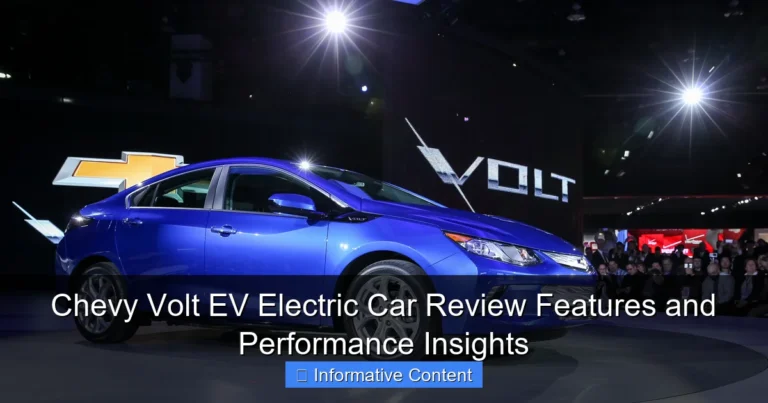
Chevy Electric Cars 2018 A Closer Look at the Future of Driving

Featured image for chevy electric cars 2018
Image source: techstory.in
The 2018 Chevy electric cars lineup, led by the impressive Bolt EV, delivers long-range capability and accessible pricing, marking a bold step toward mainstream electric mobility. With a 238-mile range, advanced tech features, and a sub-$30K price after incentives, Chevy proves EVs can be practical and affordable. This year solidified Chevrolet’s commitment to a sustainable driving future without compromising performance or value.
Key Takeaways
- Chevy Bolt EV leads 2018: Offers 238-mile range, ideal for daily commutes and long drives.
- Fast charging capability: Regains 90 miles in 30 minutes with DC fast charging.
- Affordable pricing strategy: Competitive MSRP makes it accessible for mainstream EV buyers.
- Spacious interior design: Hatchback layout maximizes cargo and passenger space efficiently.
- Advanced tech features: Includes 4G LTE Wi-Fi and smartphone integration for modern drivers.
- Strong safety ratings: Earned top NHTSA scores, ensuring peace of mind on the road.
📑 Table of Contents
- The Dawn of a New Era: Chevy Electric Cars 2018
- Chevrolet Bolt EV: The Game-Changing Pure Electric Car
- Chevrolet Volt: The Smart Choice for Plug-In Hybrid Drivers
- Performance, Safety, and Driving Experience
- Cost of Ownership and Incentives
- Environmental Impact and Sustainability
- Data Table: 2018 Chevy Electric Cars Comparison
- Conclusion: The Road Ahead for Chevy Electric Cars
The Dawn of a New Era: Chevy Electric Cars 2018
The automotive industry has undergone a seismic shift in recent years, with electric vehicles (EVs) emerging as the vanguard of a cleaner, more sustainable future. Among the pioneers in this transformation is Chevrolet, a brand long synonymous with American innovation and performance. In 2018, Chevrolet solidified its commitment to electrification with a lineup of electric cars that not only challenged the status quo but also redefined what consumers could expect from eco-friendly transportation. From the trailblazing Chevrolet Bolt EV to the versatile plug-in hybrid Chevrolet Volt, the 2018 Chevy electric cars signaled a bold new direction—one where efficiency, technology, and driving excitement coexist.
As environmental concerns and rising fuel costs pushed consumers toward greener alternatives, Chevrolet responded with vehicles designed to meet the demands of modern drivers. The 2018 lineup wasn’t just about reducing emissions; it was about delivering a seamless, enjoyable driving experience. With advanced battery technology, impressive range capabilities, and cutting-edge infotainment systems, Chevy electric cars in 2018 stood out in a rapidly growing EV market. Whether you were a tech-savvy urbanite, a long-distance commuter, or a family seeking reliable transportation, Chevrolet offered an electric solution tailored to your needs. This blog post takes a deep dive into the standout models, innovations, and real-world benefits of Chevy’s 2018 electric vehicles, providing you with everything you need to know about this pivotal moment in automotive history.
Chevrolet Bolt EV: The Game-Changing Pure Electric Car
Unmatched Range and Efficiency
The Chevrolet Bolt EV was the undisputed star of Chevrolet’s 2018 electric lineup. As a fully electric vehicle (EV) with no internal combustion engine, the Bolt EV set a new benchmark for affordability and range in the compact EV segment. With an EPA-estimated range of 238 miles on a single charge—surpassing most competitors at the time—it addressed one of the biggest concerns for potential EV buyers: range anxiety. This impressive range was made possible by a 60-kWh lithium-ion battery pack and a highly efficient 200-horsepower electric motor.
For context, a typical American commutes about 30 miles per day, meaning the Bolt EV could easily handle a week’s worth of driving without needing a recharge. This made it ideal for urban professionals, college students, and suburban families alike. Moreover, the Bolt EV achieved an EPA-estimated 119 MPGe (Miles Per Gallon equivalent) in combined city and highway driving, making it one of the most energy-efficient vehicles on the market in 2018.
Charging Flexibility and Real-World Use
Charging the Bolt EV was straightforward, thanks to its dual charging system. It supported both Level 1 (120V) and Level 2 (240V) charging, with the latter capable of replenishing the battery from 0 to 80% in about 90 minutes when using a DC fast charger (available at select public stations). For home charging, a Level 2 charger installed in a garage could fully charge the Bolt EV overnight, typically in 9–10 hours.
Pro tip: To maximize battery life, Chevy recommended avoiding frequent full 100% charges unless necessary for long trips. Instead, charging to 80–90% daily helps preserve battery health over time. The Bolt EV also featured a “Regen on Demand” paddle on the steering wheel, allowing drivers to increase regenerative braking with a pull, recapturing energy and extending range during city driving.
Interior and Tech Highlights
Inside, the Bolt EV offered a surprisingly spacious cabin for a subcompact hatchback. With 16.9 cubic feet of cargo space behind the rear seats (expanding to 56.6 cubic feet with seats folded), it rivaled larger hatchbacks. The centerpiece of the interior was a 10.2-inch diagonal touchscreen infotainment system with Chevrolet’s MyLink interface, offering Apple CarPlay, Android Auto, Bluetooth, and built-in navigation.
Additional tech features included:
- Available 4G LTE Wi-Fi hotspot (capable of connecting up to seven devices)
- Rearview camera and available rear park assist
- Teen Driver technology for monitoring driving habits
- Keyless open and start with remote start
The Bolt EV was available in two trims in 2018: the base LT and the top-tier Premier, which added leather upholstery, heated front seats, a heated steering wheel, and a Bose premium audio system.
Chevrolet Volt: The Smart Choice for Plug-In Hybrid Drivers
The Best of Both Worlds: Electric and Gasoline Power
While the Bolt EV catered to pure electric enthusiasts, the Chevrolet Volt was designed for drivers who wanted the benefits of electric driving without fully committing to a battery-only vehicle. As a plug-in hybrid electric vehicle (PHEV), the Volt offered a unique dual-powertrain system: a 18.4-kWh lithium-ion battery powering an electric motor for daily commutes, and a 1.5L gasoline engine acting as a generator to extend range when the battery was depleted.
In 2018, the Volt delivered an EPA-estimated 53 miles of all-electric range—enough for most daily commutes—followed by an additional 367 miles of total range when the gasoline engine kicked in. This meant drivers could drive emissions-free for short trips and still have the flexibility to take long road trips without range anxiety. The Volt achieved 106 MPGe in electric mode and 42 MPG in gasoline-only mode, making it a fuel-efficient hybrid when the battery was drained.
Who Should Choose the Volt?
The Volt was ideal for several types of drivers:
- Suburban commuters with access to home charging but occasional long drives
- Eco-conscious families who wanted to reduce emissions but needed reliability for road trips
- Early EV adopters who weren’t ready to go fully electric due to limited public charging infrastructure
For example, a family in a suburban area with a 40-mile round-trip commute could drive entirely on electric power during the week, using the gasoline engine only on weekends for trips to the mountains or the beach. This hybrid approach minimized fuel consumption while maintaining flexibility.
Charging and Maintenance Tips
Like the Bolt EV, the Volt supported Level 1 and Level 2 charging. A full charge took about 13 hours on Level 1 (120V) and 4.5 hours on Level 2 (240V). The Volt also featured a “Hold Mode” that allowed drivers to save battery power for later use—perfect for conserving energy for city driving after a highway trip.
Maintenance-wise, the Volt required less frequent servicing than traditional gasoline vehicles. Since it drove on electric power most of the time, wear on the gasoline engine and related components (like oil changes) was significantly reduced. Chevrolet recommended oil changes every 7,500 miles or 12 months, whichever came first.
Insider tip: Use the Volt’s “Mountain Mode” when driving in hilly areas to pre-condition the battery and ensure consistent power delivery, which helps maintain efficiency on steep grades.
Performance, Safety, and Driving Experience
Smooth, Responsive, and Fun to Drive
One of the most surprising aspects of Chevy’s 2018 electric lineup was how enjoyable they were to drive. The Bolt EV, in particular, delivered instant torque from its electric motor, resulting in brisk acceleration—0 to 60 mph in about 6.5 seconds. This made merging onto highways or navigating city traffic a breeze. The low center of gravity (thanks to the floor-mounted battery pack) provided excellent handling and cornering stability, giving the Bolt EV a sporty, agile feel.
The Volt, while slightly slower (0–60 mph in 8.4 seconds), still offered smooth, quiet acceleration in electric mode. Once the gasoline engine engaged, it operated seamlessly in the background, often going unnoticed by the driver. Both vehicles featured multiple drive modes: Normal, Sport, and (on the Bolt EV) Low mode for increased regenerative braking.
Safety Features and Ratings
Safety was a top priority in 2018 Chevy electric models. The Bolt EV earned a 5-Star Overall Safety Rating from the National Highway Traffic Safety Administration (NHTSA), thanks to its advanced driver-assistance systems and robust body structure. Key safety features included:
- Forward Collision Alert with Automatic Emergency Braking
- Lane Keep Assist with Lane Departure Warning
- Side Blind Zone Alert
- Rear Cross-Traffic Alert
- Following Distance Indicator
The Volt also received strong safety scores, with available features like Adaptive Cruise Control (on Premier trim), which maintained a safe distance from the vehicle ahead, and a rearview camera with guidelines. Both vehicles included a comprehensive suite of airbags, stability control, and OnStar emergency services with automatic crash response.
Real-World Driving Scenarios
Imagine this: a daily commute from downtown Chicago to a suburb 25 miles away. In the Bolt EV, you’d drive entirely on electric power, arriving with 188 miles of range remaining. With a Level 2 charger at the office, you could top up during the day, ensuring a full battery for the return trip. If you forgot to charge, no problem—the Bolt EV still had enough juice for multiple days of driving.
Now picture a weekend trip to a national park 300 miles away. In the Volt, you’d start with a full charge, driving the first 53 miles on electricity. Once the battery was depleted, the gasoline engine would engage, providing another 367 miles of range. You could refuel at any gas station, eliminating the need to hunt for charging stations in rural areas.
Cost of Ownership and Incentives
Upfront Pricing and Trim Options
In 2018, the Chevrolet Bolt EV started at $37,495 (before incentives), with the Premier trim priced at $41,895. The Chevrolet Volt started at $33,220 for the base LT trim, with the Premier trim reaching $37,570. While these prices were higher than many gasoline-powered compact cars, they were competitive within the EV segment—especially considering the Bolt EV’s range and tech features.
Federal and State Incentives
One of the biggest advantages of buying a 2018 Chevy electric car was the availability of tax incentives. The federal government offered a tax credit of up to $7,500 for both the Bolt EV and Volt, significantly reducing the effective purchase price. For example:
- Bolt EV LT: $37,495 – $7,500 = $29,995
- Volt LT: $33,220 – $7,500 = $25,720
Many states and local utilities also provided additional incentives:
- California: $2,500 Clean Vehicle Rebate (CVRP)
- New York: $500–$2,000 Drive Clean Rebate
- Colorado: $5,000 state tax credit
- Utility Rebates: Some electric companies offered $500–$1,000 rebates for installing a Level 2 charger
These incentives made Chevy’s electric cars among the most affordable EVs in their class, especially when combined with low operating costs.
Long-Term Savings and Maintenance
Owning a Chevy electric car in 2018 meant significant long-term savings:
- Fuel savings: At $3.00 per gallon, a gasoline car averaging 25 MPG would cost about $0.12 per mile. The Bolt EV, at $0.12 per kWh, cost just $0.07 per mile—a 42% savings.
- Maintenance: EVs have fewer moving parts. No oil changes, spark plugs, or exhaust systems meant lower maintenance costs. Chevrolet estimated that Bolt EV owners could save up to $4,600 in maintenance over 150,000 miles compared to a similar gasoline car.
- Resale value: Both the Bolt EV and Volt held their value well, with the Bolt EV maintaining around 50% of its value after three years—strong for a new EV model.
Environmental Impact and Sustainability
Reducing Carbon Footprint
One of the primary motivations behind adopting electric vehicles is their positive environmental impact. In 2018, driving a Chevy Bolt EV in the U.S. (based on average electricity grid emissions) produced about 120 grams of CO2 per mile, compared to over 400 grams for a typical gasoline car. In regions with clean energy sources (like hydroelectric or wind), emissions could drop to near zero.
The Volt, while not zero-emission, still reduced emissions significantly. For drivers who used electric mode for 70% of their driving, CO2 emissions were cut by over 50% compared to a standard hybrid.
Battery Production and Recycling
Chevrolet took sustainability seriously beyond the tailpipe. The battery cells in the Bolt EV and Volt were manufactured in a General Motors facility powered by 100% renewable energy. GM also partnered with battery recycling companies to recover valuable materials like lithium, cobalt, and nickel from end-of-life batteries, reducing the need for new mining and minimizing waste.
Additionally, the Bolt EV’s battery came with an 8-year/100,000-mile warranty, giving owners peace of mind and encouraging long-term use. GM also offered battery refurbishment programs, extending the life of batteries even after their automotive use ended (e.g., for grid storage).
Charging Infrastructure and Grid Integration
Chevrolet supported the growth of public charging through partnerships with networks like ChargePoint and EVgo. The MyChevrolet app allowed drivers to locate nearby chargers, check availability, and even pay for charging sessions. For home charging, GM offered rebates for installing Level 2 chargers, making the transition to electric driving seamless.
Smart charging features also helped balance grid demand. The Bolt EV and Volt could be programmed to charge during off-peak hours (e.g., overnight), reducing strain on the power grid and potentially lowering electricity costs for owners.
Data Table: 2018 Chevy Electric Cars Comparison
| Feature | Chevrolet Bolt EV LT | Chevrolet Bolt EV Premier | Chevrolet Volt LT | Chevrolet Volt Premier |
|---|---|---|---|---|
| Type | Full Electric (BEV) | Full Electric (BEV) | Plug-In Hybrid (PHEV) | Plug-In Hybrid (PHEV) |
| All-Electric Range | 238 miles | 238 miles | 53 miles | 53 miles |
| Total Range (with gas) | 238 miles | 238 miles | 420 miles | 420 miles |
| MPGe (Combined) | 119 MPGe | 119 MPGe | 106 MPGe | 106 MPGe |
| Gasoline MPG | N/A | N/A | 42 MPG | 42 MPG |
| Base MSRP | $37,495 | $41,895 | $33,220 | $37,570 |
| Federal Tax Credit | $7,500 | $7,500 | $7,500 | $7,500 |
| Seating Capacity | 5 | 5 | 5 | 5 |
| Cargo Space (max) | 56.6 cu ft | 56.6 cu ft | 42.9 cu ft | 42.9 cu ft |
| Infotainment | 10.2″ Touchscreen, Apple CarPlay, Android Auto | 10.2″ Touchscreen, Bose Audio, Wireless Charging | 8″ Touchscreen, Apple CarPlay, Android Auto | 8″ Touchscreen, Bose Audio, Adaptive Cruise |
Conclusion: The Road Ahead for Chevy Electric Cars
The 2018 lineup of Chevy electric cars represented a pivotal moment in the brand’s evolution—a clear signal that Chevrolet was not just adapting to the future of driving but actively shaping it. The Chevrolet Bolt EV shattered expectations with its class-leading range, affordable price point, and tech-rich interior, proving that electric vehicles could be practical, enjoyable, and accessible to everyday drivers. Meanwhile, the Chevrolet Volt offered a pragmatic bridge for those transitioning from gasoline, combining the efficiency of electric driving with the flexibility of a hybrid system.
Beyond performance and cost, these vehicles embodied a broader commitment to sustainability, innovation, and customer value. With federal and state incentives making ownership more affordable than ever, and long-term savings on fuel and maintenance, the 2018 Chevy electric cars were not just environmentally responsible—they were financially smart. As the world moved toward a greener future, Chevrolet positioned itself as a leader in the EV revolution, offering solutions for a diverse range of drivers.
Looking back, the 2018 Chevy electric lineup laid the foundation for what would come: the introduction of the Chevrolet Silverado EV, the Blazer EV, and the brand’s ambitious goal of an all-electric future by 2035. For anyone considering the switch to electric driving, the 2018 Bolt EV and Volt remain excellent entry points—vehicles that delivered on their promises, challenged conventions, and helped pave the way for a cleaner, more efficient tomorrow. The future of driving isn’t just coming—it’s already here, and Chevrolet is leading the charge.
Frequently Asked Questions
What Chevy electric cars were available in 2018?
In 2018, Chevrolet offered two primary electric vehicles: the Chevy Bolt EV and the Chevy Volt PHEV. The Bolt EV was a fully electric car with a 238-mile range, while the Volt was a plug-in hybrid combining a gasoline engine with electric power.
How far can the 2018 Chevy Bolt EV travel on a single charge?
The 2018 Chevy Bolt EV delivers an EPA-estimated range of 238 miles on a full charge. This made it one of the most affordable long-range electric cars available at the time, ideal for daily commutes and road trips alike.
Are 2018 Chevy electric cars eligible for federal tax credits?
Yes, the 2018 Chevy Bolt EV qualified for the full $7,500 federal tax credit, as GM had not yet hit the sales cap. The Chevy Volt also remained eligible, though buyers should verify state-level incentives for additional savings.
How long does it take to charge a 2018 Chevy electric car?
The 2018 Chevy Bolt EV can charge to 80% in about 90 minutes using a DC fast charger. With a Level 2 (240V) home charger, it takes roughly 9.5 hours for a full charge, while Level 1 (120V) charging takes significantly longer.
What’s the difference between the 2018 Chevy Volt and Bolt EV?
The Chevy electric cars 2018 lineup includes the fully electric Bolt EV and the plug-in hybrid Volt. The Volt offers 53 miles of electric range before switching to gas, while the Bolt runs solely on electricity with a longer 238-mile range.
Do 2018 Chevy electric cars have advanced safety features?
Yes, both the 2018 Chevy Bolt EV and Volt came equipped with advanced safety tech like forward collision alert, lane keep assist, and automatic emergency braking. These features, combined with strong crash-test ratings, made them reliable choices for safety-conscious drivers.