Chevy Gas and Electric Car Showdown Which One Wins Your Garage

Featured image for chevy gas and electric car
Image source: i.pinimg.com
Chevy’s gas and electric vehicles go head-to-head in performance, cost, and innovation—making the choice tougher than ever. From the raw power of the gas-powered Silverado to the eco-friendly efficiency of the all-electric Bolt EV, your ideal pick depends on priorities like range, budget, and sustainability. This showdown reveals which Chevy truly earns a spot in your garage.
Key Takeaways
- Chevy EVs save more on fuel and maintenance long-term.
- Gas models offer wider range and quicker refueling options.
- Electric cars shine in city driving with instant torque.
- Gas-powered Chevys lead for towing and rugged performance.
- EV tax credits can significantly reduce upfront costs.
- Home charging is essential for electric convenience and savings.
📑 Table of Contents
- Chevy Gas and Electric Car Showdown: Which One Wins Your Garage?
- Understanding the Chevy Lineup: Gas vs. Electric
- Cost Analysis: Upfront Price, Fuel, and Long-Term Ownership
- Performance and Driving Experience: Power, Handling, and Comfort
- Environmental Impact and Sustainability
- Lifestyle Fit: Matching Your Chevy to Your Needs
- Data Table: Chevy Gas vs. Electric Comparison (2023 Models)
- Conclusion: Which Chevy Wins Your Garage?
Chevy Gas and Electric Car Showdown: Which One Wins Your Garage?
When it comes to choosing a new vehicle, the decision between a gas-powered and an electric car can feel overwhelming—especially with a trusted brand like Chevrolet offering compelling options in both categories. From the roaring V8 engines of classic Chevys to the whisper-quiet efficiency of their cutting-edge electric models, the brand has evolved dramatically over the past century. Today, Chevy sits at the crossroads of tradition and innovation, offering a diverse lineup that caters to drivers with different priorities: performance, sustainability, cost, and convenience.
Chevrolet’s journey into electrification began with the Chevy Volt in 2011, a plug-in hybrid that proved electric driving could be practical for everyday Americans. Fast forward to today, and the Chevy Bolt EV and Bolt EUV have become household names in the affordable EV segment, while gas-powered stalwarts like the Chevy Silverado, Equinox, and Camaro continue to dominate in their respective categories. With rising fuel costs, growing environmental awareness, and rapid advancements in battery technology, the question isn’t just “Which Chevy should I buy?”—it’s “Which powertrain should I commit to?” In this comprehensive guide, we’ll dive deep into the pros, cons, and real-world implications of choosing between Chevy’s gas and electric vehicles, helping you decide which one truly earns the keys to your garage.
Understanding the Chevy Lineup: Gas vs. Electric
Gas-Powered Chevy Vehicles: The Backbone of the Brand
Chevrolet’s gas-powered lineup is extensive and well-established, built on decades of engineering excellence. These vehicles run on internal combustion engines (ICE), typically fueled by unleaded gasoline. Models like the Chevrolet Silverado 1500, Equinox, Trailblazer, and Camaro are staples in their segments, known for reliability, performance, and broad dealer support.

Visual guide about chevy gas and electric car
Image source: electriccarwiki.com
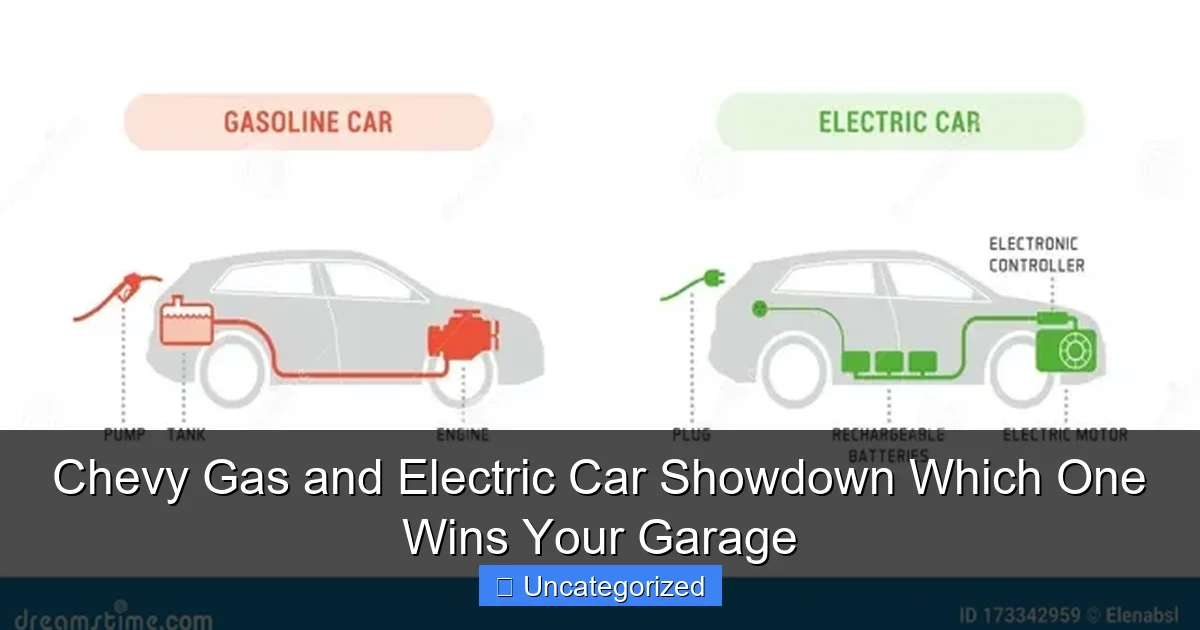
- Engine Options: From fuel-efficient 4-cylinder engines (e.g., Equinox) to high-performance V6 and V8 powerhouses (e.g., Silverado ZR2, Camaro SS), there’s a gas Chevy for every need.
- Transmission: Most models feature 6- to 10-speed automatic transmissions, with some performance variants offering manual options (e.g., Camaro).
- Refueling: Gas stations are ubiquitous—filling up takes 5–10 minutes, and ranges typically exceed 400 miles.
For drivers who value familiarity, long-distance capability, and the visceral thrill of engine sound, gas-powered Chevys remain a top choice. They’re especially popular in rural areas, where charging infrastructure is still developing.
Electric Chevy Vehicles: The Future is Here
Chevrolet’s electric vehicles (EVs) are powered entirely by electricity stored in lithium-ion battery packs and driven by electric motors. The Chevy Bolt EV and Bolt EUV are the brand’s current flagship EVs, offering zero tailpipe emissions, instant torque, and low operating costs.
- Battery & Range: The 2023 Bolt EV offers up to 259 miles of EPA-estimated range; the EUV reaches 247 miles. Both use a 65 kWh battery.
- Charging: Level 1 (120V) charging adds ~4 miles per hour. Level 2 (240V) adds ~25–30 miles per hour. DC fast charging (available on EUV) can add up to 100 miles in 30 minutes.
- Performance: The Bolt delivers 200 horsepower and 266 lb-ft of torque—more than sufficient for city and highway driving.
Chevy has also announced the Blazer EV and Silverado EV, signaling a major push into the EV space. These upcoming models promise SUV and truck versatility with electric powertrains, bridging the gap between traditional utility and modern sustainability.
Hybrid and PHEV Options: The Middle Ground?
While not the focus of this showdown, it’s worth noting that Chevy offers a few hybrid and plug-in hybrid (PHEV) models. The Chevy Volt (discontinued in 2019) was a pioneer, offering 53 miles of electric-only range and a gas engine for longer trips. Though no current PHEVs are in Chevy’s lineup, the Malibu Hybrid (gas-electric hybrid) offers improved fuel economy (47 mpg combined) for eco-conscious sedan buyers. These models are ideal for drivers who want partial electric benefits without full EV commitment.
Cost Analysis: Upfront Price, Fuel, and Long-Term Ownership
Upfront Purchase Price
One of the first considerations when choosing between gas and electric Chevys is the initial cost. Generally, EVs carry a higher sticker price due to battery technology, but incentives and lower operating costs can offset this over time.
Visual guide about chevy gas and electric car
Image source: electriccarwiki.com
- Chevy Bolt EV: Starting at $26,500 (after $7,500 federal tax credit; MSRP $34,000).
- Chevy Bolt EUV: Starting at $28,800 (after tax credit; MSRP $36,300).
- Chevy Equinox (Gas): Starting at $27,995 (FWD 1.5L Turbo).
- Chevy Silverado 1500 (Gas): Starting at $36,800 (WT trim).
While the Bolt EV is now one of the most affordable EVs on the market, higher-trim gas models (like the Equinox Premier or Silverado High Country) can exceed $50,000. However, EVs benefit from significant tax credits—especially the federal Inflation Reduction Act (IRA) credit, which can reduce the effective price by $7,500 (subject to income and vehicle eligibility).
Fuel and Energy Costs
This is where EVs shine. Electricity is cheaper than gasoline per mile, and the cost difference is substantial over time.
- Gasoline (Equinox): 31 mpg highway, 26 mpg city. At $3.50/gallon, driving 15,000 miles/year = ~$2,038 annually.
- Electric (Bolt EV): 120 MPGe combined. At $0.15/kWh, driving 15,000 miles = ~$625 annually.
That’s a savings of over $1,400 per year. In high-electricity-rate states like California, the savings may be less, but in areas with low electricity costs (e.g., Texas, Washington), EVs can be dramatically cheaper to “fuel.”
Maintenance and Repairs
EVs have fewer moving parts: no oil changes, spark plugs, exhaust systems, or transmission fluids. Chevy’s electric models are designed for low maintenance.
- Gas Chevy: Average annual maintenance cost: ~$600–$800 (oil changes, filters, brake pads, etc.).
- Electric Chevy (Bolt): Average annual maintenance: ~$300–$400. Regenerative braking reduces brake wear.
Additionally, Chevy offers a 8-year/100,000-mile battery warranty on the Bolt, giving peace of mind. Gas vehicles typically have 5-year/60,000-mile powertrain warranties. Over a 10-year ownership period, EV owners can save thousands in maintenance alone.
Depreciation and Resale Value
Historically, EVs depreciated faster than gas cars, but the tide is turning. The Bolt EV has seen improved resale values due to high demand for affordable EVs. According to iSeeCars.com, the 2020 Bolt retained 58% of its value after 3 years—better than the industry average. Gas vehicles like the Silverado and Equinox also hold value well, especially in truck-heavy markets.
Tip: If you plan to sell in 3–5 years, consider market trends. In urban areas, EVs may command higher resale prices; in rural or cold-weather regions, gas vehicles may retain more value.
Performance and Driving Experience: Power, Handling, and Comfort
Acceleration and Power Delivery
Electric motors deliver instant torque, meaning EVs like the Bolt accelerate quickly from a stop. The 0–60 mph time for the Bolt EV is around 6.5 seconds—comparable to the gas-powered Equinox (6.8 seconds) but with a smoother, quieter experience.
- Gas Advantage: High-performance models like the Camaro SS (0–60 in 4.0 sec) or Silverado ZR2 (with 420-hp V8) offer thrilling acceleration and towing capability.
- EV Advantage: The Bolt’s electric motor provides consistent power delivery without gear shifts—ideal for city driving and stop-and-go traffic.
For most drivers, the Bolt’s performance is more than adequate. But if you crave raw power, towing, or off-road capability, gas-powered Chevys still lead.
Driving Dynamics and Handling
The Bolt’s low center of gravity (due to floor-mounted batteries) improves handling and reduces body roll. It feels nimble in urban environments and confident on winding roads. However, its ride is slightly firm, and the steering is light—great for efficiency, less engaging for driving enthusiasts.
In contrast, gas models like the Equinox and Trailblazer offer a more traditional SUV feel: higher seating, softer suspension, and greater ground clearance. The Silverado excels in towing (up to 13,300 lbs) and payload (up to 2,280 lbs), making it a workhorse for contractors and outdoor adventurers.
Tip: Test drive both types. The Bolt feels “futuristic” and efficient; gas models feel “familiar” and capable. Your preference may depend on your lifestyle—commuting vs. hauling.
Noise, Vibration, and Harshness (NVH)
EVs are inherently quieter. The Bolt produces minimal wind and road noise, and the electric motor is nearly silent. This makes for a serene driving experience, especially on long trips.
Gas vehicles, while improved, still generate engine noise, especially under acceleration. Performance models like the Camaro or Silverado with V8s offer a desirable rumble, but it can be fatiguing on daily commutes.
Real-World Example: A Bolt driver in Chicago reported that the quiet cabin made phone calls and music listening much clearer during rush hour traffic—something their previous gas SUV couldn’t match.
Range and Refueling/Recharging Time
This is a critical factor. The Bolt’s 259-mile range is sufficient for most daily commutes and weekend trips. However, long road trips require planning.
- Gas Chevy (Equinox): 450+ miles on a 14.8-gallon tank. Refueling takes 5 minutes.
- Electric Chevy (Bolt): 259 miles. Level 2 charging: 7 hours for full charge. DC fast charging: 30 minutes for 100 miles.
For cross-country travel, gas wins. But for city dwellers, the Bolt’s range is rarely an issue—especially with home charging.
Environmental Impact and Sustainability
Carbon Emissions: Tailpipe vs. Power Grid
EVs produce zero tailpipe emissions. However, their overall carbon footprint depends on how the electricity is generated. In regions with clean energy (e.g., hydro, wind, solar), EVs are far cleaner than gas cars. In coal-heavy areas, the advantage is smaller—but still present.
- EPA Data: The average U.S. grid produces about 0.85 lbs of CO2 per kWh. A Bolt using this grid emits ~180 g/mi CO2-equivalent.
- Gas Equinox: Emits ~350 g/mi CO2 (based on 26 mpg and gasoline emissions).
Even with a mixed grid, EVs are 50–70% cleaner over their lifetime. As the grid gets greener (projected to be 50% renewable by 2030), EVs will only improve.
Lifecycle and Manufacturing Impact
EV batteries require mining for lithium, cobalt, and nickel—raising concerns about environmental and ethical sourcing. Chevy has committed to responsible sourcing and is investing in battery recycling programs.
However, gas vehicles also have a large footprint: oil extraction, refining, and distribution. Over the vehicle’s lifetime, the total emissions of an EV are still lower—typically by 60–70% in the U.S.
Tip: Pair your Bolt with solar panels or a green energy plan to maximize sustainability. Chevy’s partnership with SunPower offers home solar solutions for EV owners.
Recyclability and End-of-Life
Chevy is part of GM’s Ultium Platform, which uses modular battery designs for easier recycling. GM’s battery recycling program recovers up to 95% of key materials. Gas vehicles also have recyclable components, but engine fluids and catalytic converters pose environmental risks if not disposed of properly.
Lifestyle Fit: Matching Your Chevy to Your Needs
Urban Commuters and City Drivers
If you live in a city with charging infrastructure, the Bolt EV is an excellent choice. It’s compact, efficient, and easy to park. With home charging, you wake up with a “full tank” every day.
- Pros: Low operating cost, quiet, no gas stations, HOV lane access (in some states).
- Cons: Limited cargo space (16.3 cu ft behind rear seats), not ideal for large families or pets.
Tip: Use public Level 2 chargers at work, grocery stores, or malls to top up during the day.
Families and Suburban Drivers
For larger households, the Chevy Equinox (gas) offers more space, better towing (1,500 lbs), and greater range. The Bolt EUV adds 3 inches of wheelbase and more rear legroom, but still lags in cargo capacity.
- Consider: If you take frequent road trips, gas may be more practical. If your trips are under 200 miles and you have home charging, the EUV is a strong contender.
Real-World Example: A family in Denver uses a Bolt EUV for school runs and errands, and a gas Equinox for ski trips—best of both worlds.
Outdoor Enthusiasts and Tradespeople
The Chevy Silverado 1500 is unmatched for towing, payload, and off-road capability. The upcoming Silverado EV (launching 2024) will offer 400+ miles of range and 10,000 lbs of towing—potentially revolutionizing electric work trucks.
- Gas Silverado: Proven reliability, 13,300 lbs towing, available 4WD, and bed versatility.
- Future EV Silverado: Lower operating costs, instant torque, and regenerative braking for downhill towing.
Tip: If you’re a contractor, the gas Silverado is still the safer bet—until EV charging expands at job sites.
Data Table: Chevy Gas vs. Electric Comparison (2023 Models)
| Feature | Chevy Bolt EV (Electric) | Chevy Equinox (Gas) | Chevy Silverado 1500 (Gas) | Chevy Bolt EUV (Electric) |
|---|---|---|---|---|
| Starting MSRP | $34,000 ($26,500 after tax credit) | $27,995 | $36,800 | $36,300 ($28,800 after tax credit) |
| Range | 259 miles | 450+ miles | 500+ miles (with 24-gal tank) | 247 miles |
| Fuel/Energy Cost (15k mi/yr) | $625 | $2,038 | $2,500+ | $600 |
| Annual Maintenance | $350 | $700 | $800 | $375 |
| Towing Capacity | Not rated | 1,500 lbs | 13,300 lbs | Not rated |
| Cargo Space (Behind Rear Seats) | 16.3 cu ft | 29.9 cu ft | 62.9 cu ft (short bed) | 19.5 cu ft |
| 0–60 mph | 6.5 sec | 6.8 sec | 5.4 sec (V8) | 7.0 sec |
| Warranty (Powertrain/Battery) | 8 yr/100,000 mi (battery) | 5 yr/60,000 mi | 5 yr/60,000 mi | 8 yr/100,000 mi (battery) |
| Emissions (CO2/mile) | 180 g/mi | 350 g/mi | 400+ g/mi | 175 g/mi |
Conclusion: Which Chevy Wins Your Garage?
There is no one-size-fits-all answer to the Chevy gas vs. electric debate—your ideal choice depends on your lifestyle, budget, driving habits, and values. For urban commuters, eco-conscious drivers, and those with access to home charging, the Chevy Bolt EV or EUV offers unbeatable value, low operating costs, and a smooth, quiet ride. With the federal tax credit, it’s now one of the most affordable EVs on the market, and its 250+ mile range covers most daily needs.
On the other hand, if you tow, drive long distances, live in a rural area, or simply love the sound and feel of a powerful engine, Chevy’s gas-powered lineup—from the versatile Equinox to the rugged Silverado and the sporty Camaro—remains a compelling choice. These vehicles offer unmatched range, towing capability, and dealer support across the country.
The future, however, is electric. With the upcoming Blazer EV, Silverado EV, and GM’s investment in Ultium battery technology, Chevrolet is clearly betting on an all-electric future. If you’re ready to embrace that future—and your driving needs align with EV strengths—then an electric Chevy may be the smarter long-term investment.
Ultimately, the “winner” is the one that fits your life. Test drive both. Consider your commute, family size, budget, and environmental goals. Whether you choose the silent efficiency of the Bolt or the rumbling power of the Silverado, you’re getting a vehicle backed by a century of Chevy innovation. The real victory? Making a decision that aligns with your values—and drives you forward, one mile at a time.
Frequently Asked Questions
What are the main differences between Chevy gas and electric car models?
Chevy gas cars rely on internal combustion engines and offer longer driving ranges with quick refueling, while electric models like the Bolt EV use battery power for zero emissions and lower fuel costs. Electric variants excel in acceleration and tech features, whereas gas-powered Chevys often provide more towing capacity and model diversity.
Is a Chevy electric car more affordable long-term than a gas-powered one?
Yes, Chevy electric cars typically save money on fuel and maintenance due to fewer moving parts and lower electricity costs vs. gasoline. However, initial purchase prices may be higher, though tax incentives can offset this.
How does charging a Chevy electric car compare to filling up a gas Chevy?
Charging a Chevy electric car takes longer—up to 30+ hours on Level 1 or 30 minutes for 100 miles with DC fast charging. Gas Chevys refuel in minutes but require regular station visits and higher fuel expenses.
Which Chevy gas and electric car offers the best range?
The 2023 Chevy Bolt EUV leads electric models with 247 miles of range, while gas-powered options like the Silverado 1500 can exceed 500 miles per tank. Range depends on driving habits and conditions for both types.
Do Chevy electric cars have enough power for highway driving?
Absolutely. Electric models like the Bolt EV deliver instant torque for smooth highway merging and cruising. Gas-powered Chevys, however, may offer higher top speeds and sustained power for heavy loads or towing.
What maintenance differences exist between Chevy gas and electric car models?
Chevy electric cars need less maintenance—no oil changes or transmission repairs—but require battery health checks. Gas models demand routine engine upkeep, which adds long-term costs but is familiar to most mechanics.