Chevys Electric Car Revolution What You Need to Know

Featured image for chevy’s electric car
Image source: image.cnbcfm.com
Chevy’s electric car lineup is redefining affordability and innovation in the EV market, with models like the Bolt EV and upcoming Equinox EV offering impressive range and cutting-edge tech at competitive prices. Backed by GM’s Ultium battery platform, these vehicles promise faster charging, longer lifespans, and a sustainable driving future.
Key Takeaways
- Chevy’s electric lineup includes the Bolt EV and upcoming Equinox EV for diverse needs.
- Affordable pricing makes Chevy EVs competitive in the growing electric market.
- Fast-charging capability reduces downtime with 100+ miles in 30 minutes.
- Regenerative braking improves efficiency and extends driving range significantly.
- Federal tax credits may lower costs—check eligibility before purchasing.
- Dealer network support ensures reliable service and maintenance nationwide.
📑 Table of Contents
- The Dawn of a New Era: Chevrolet’s Electric Car Revolution
- The Evolution of Chevy’s Electric Vehicle Lineup
- Technology and Performance: What Sets Chevy EVs Apart
- Charging Infrastructure and Ownership Benefits
- Real-World Applications: Who Should Consider a Chevy EV?
- The Future of Chevy’s Electric Revolution
- Conclusion: Join the Revolution Today
The Dawn of a New Era: Chevrolet’s Electric Car Revolution
The automotive world is undergoing a seismic shift, and Chevrolet is at the forefront of this transformation. As global demand for sustainable transportation grows, General Motors’ iconic brand is redefining what it means to be a leader in the electric vehicle (EV) space. Chevrolet’s electric car lineup isn’t just a response to market trends—it’s a bold declaration of innovation, accessibility, and forward-thinking engineering. From the affordable Bolt EV to the upcoming Silverado EV and Blazer EV, Chevy is proving that electric mobility can be both practical and exciting. This revolution isn’t just about replacing gasoline with batteries; it’s about reimagining the driving experience for millions of Americans and beyond.
What sets Chevrolet apart in the crowded EV market? It’s a combination of value, range, technology, and legacy. While luxury brands like Tesla and Lucid focus on premium segments, Chevy is democratizing electric driving with vehicles that balance performance, affordability, and real-world usability. With GM’s Ultium battery platform as its backbone, Chevrolet is building a future where electric vehicles are not just for early adopters but for everyday drivers. Whether you’re a city commuter, a weekend adventurer, or a fleet operator, Chevy’s electric cars are designed to meet diverse needs—without sacrificing style or substance. In this comprehensive guide, we’ll explore the key models, technological breakthroughs, charging solutions, and what the future holds for Chevy’s electric revolution.
The Evolution of Chevy’s Electric Vehicle Lineup
From the EV1 to the Bolt: A Legacy of Innovation
Chevrolet’s journey into electric mobility began decades ago with the Chevy EV1, introduced in 1996 as one of the first mass-produced electric cars. Though discontinued in 2003, the EV1 laid the groundwork for future EVs by proving that battery-powered vehicles could be viable. Fast forward to 2017, and the Chevrolet Bolt EV emerged as a game-changer. With an EPA-estimated range of 238 miles at launch—later increased to 259 miles—it became one of the most affordable long-range EVs in the U.S. market.

Visual guide about chevy’s electric car
Image source: car-images.bauersecure.com
The Bolt EV wasn’t just about range; it introduced features like one-pedal driving with regenerative braking, a roomy interior, and a starting price under $30,000 (before incentives). Its successor, the Bolt EUV (Electric Utility Vehicle), added a slightly larger footprint, Super Cruise hands-free driving tech, and a more SUV-like design. These models established Chevy as a leader in the affordable EV segment, offering practicality and performance at a price point that undercuts many competitors.
The Ultium Era: A New Generation of Electric Vehicles
Chevy’s electric revolution took a giant leap forward with the introduction of the GM Ultium platform—a flexible, scalable architecture designed for everything from compact cars to full-size trucks. This platform enables faster charging, longer ranges, and modular battery systems that can be tailored to different vehicle types. The first Ultium-powered Chevy to hit the market is the 2024 Chevrolet Blazer EV, a midsize SUV that combines sleek design with up to 320 miles of range.
But the real showstopper is the 2024 Chevrolet Silverado EV, an all-electric pickup truck that redefines what a workhorse can be. With a maximum range of 450 miles, 754 horsepower in the RST First Edition trim, and a towing capacity of up to 10,000 pounds, the Silverado EV proves that electric trucks aren’t just a novelty—they’re a necessity. Upcoming models like the Equinox EV and Blazer EV SS (with over 550 horsepower) will further expand Chevy’s EV portfolio, targeting different price points and consumer preferences.
- Blazer EV: Midsize SUV with up to 320 miles of range, starting at $44,995
- Silverado EV: Full-size pickup with up to 450 miles of range, starting at $74,895 (RST First Edition)
- Equinox EV: Compact SUV with up to 300 miles of range, starting at $30,000 (expected 2024)
- Bolt EV/EUV: Affordable hatchbacks with 259/247 miles of range, starting at $26,500
Technology and Performance: What Sets Chevy EVs Apart
Ultium Battery Platform: The Heart of the Revolution
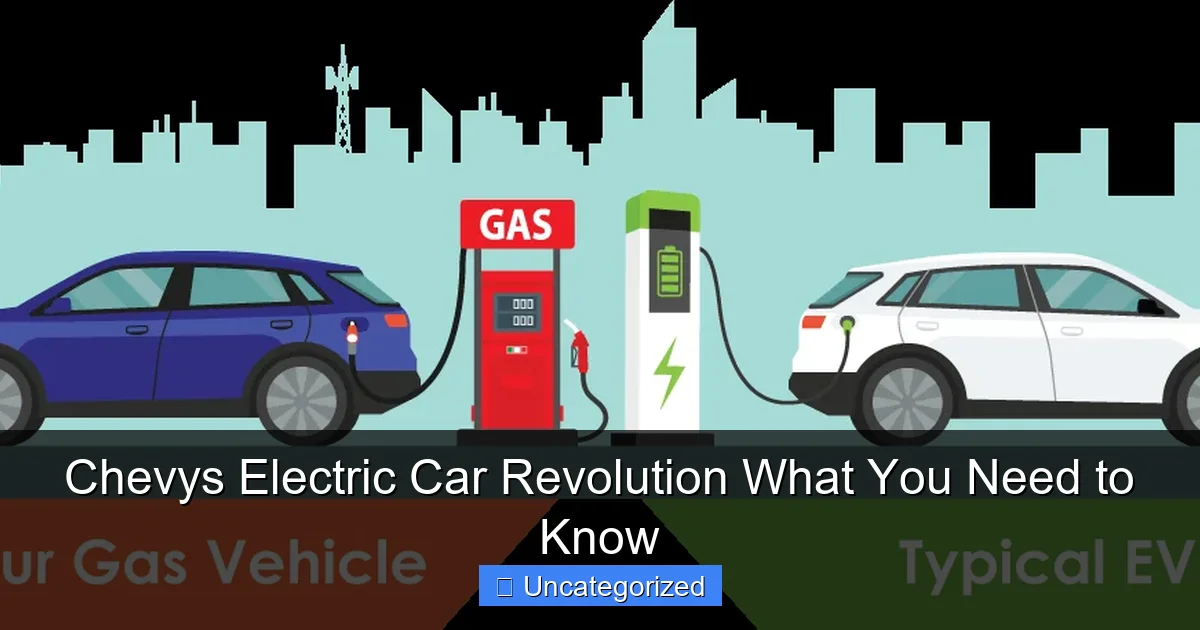
At the core of Chevy’s electric revolution is the Ultium battery platform, a modular system that uses large-format, pouch-style cells. Unlike traditional cylindrical cells, these are stacked horizontally, allowing for more efficient space utilization and better thermal management. The platform supports battery capacities from 50 kWh to over 200 kWh, enabling vehicles to achieve ranges from 250 to 450+ miles on a single charge.
Visual guide about chevy’s electric car
Image source: epa.gov
Key advantages of the Ultium platform include:
- Fast charging: Up to 100 miles of range in 10 minutes with DC fast charging (200 kW capability)
- Scalability: The same architecture powers everything from the compact Equinox EV to the heavy-duty Silverado EV
- Vehicle-to-everything (V2X) support: Some models (like the Silverado EV) can power your home during outages or run tools on a job site
- Lower production costs: GM claims a 40% reduction in battery costs compared to earlier platforms
Performance That Delivers: Power, Range, and Efficiency
Chevy EVs aren’t just about efficiency—they’re engineered for performance. The Blazer EV SS, for example, can accelerate from 0 to 60 mph in under 4 seconds, rivaling high-end sports cars. But it’s not just about speed; Chevy focuses on real-world usability. For instance, the Bolt EV’s 259-mile range is ideal for urban and suburban driving, while the Silverado EV’s 450-mile range makes it suitable for long-haul trips or rural areas with limited charging infrastructure.
Efficiency is another standout feature. The Bolt EV achieves 120 MPGe city / 100 MPGe highway, meaning it can travel 120 miles on the same energy a gas-powered car would use for one gallon of fuel. Even the larger Silverado EV achieves up to 78 MPGe, which is impressive for a full-size truck. Chevy also uses advanced aerodynamics, low-rolling-resistance tires, and regenerative braking to maximize efficiency.
Pro Tip: To get the most out of your Chevy EV, use the Regen on Demand paddle (available on most models) to control regenerative braking intensity. This feature can significantly extend your range, especially in city driving.
Charging Infrastructure and Ownership Benefits
Home Charging: The Most Convenient Option
For most EV owners, home charging is the primary way to keep their vehicle powered. Chevy EVs come with a standard 120V Level 1 charger, which provides about 4-5 miles of range per hour—ideal for overnight charging if you drive less than 20 miles daily. However, for faster charging, a 240V Level 2 charger is highly recommended. These can add 25-30 miles of range per hour, fully charging a Bolt EV in 7-10 hours or a Blazer EV in 10-12 hours.
Chevy offers a GM Energy Home System that includes a Level 2 charger (240V, 48-amp), a smart energy monitor, and optional solar integration. The system costs around $700-$1,200 (before installation) and can be paired with GM’s Energy Assist app, which helps you schedule charging during off-peak hours to save on electricity costs.
Practical Tip: If you rent or live in an apartment, look into community charging programs or ask your landlord about installing a Level 2 charger. Some states (like California) offer rebates for multi-family EV charging infrastructure.
Public Charging: Expanding the Network
Chevy is part of the Ultium Charge 360 network, a collaboration with EVgo, ChargePoint, and other providers to create a seamless public charging experience. GM has committed to adding 2,700 fast chargers across the U.S. and Canada by 2025, with 500 already installed as of 2023. These chargers are compatible with Chevy’s DC fast charging capability, adding up to 100 miles in 10 minutes.
Chevy EVs also support Plug & Charge technology, which automatically authenticates and bills your account when you plug in—no app or card needed. Additionally, the myChevrolet app provides real-time charger availability, pricing, and navigation to nearby stations. For long trips, use the app’s Trip Planner feature to map out charging stops along your route.
Incentives and Cost Savings
Owning a Chevy EV comes with significant financial benefits. Most models qualify for the federal EV tax credit (up to $7,500), and many states offer additional rebates (e.g., California’s $2,000 Clean Vehicle Rebate Project). For example, the 2024 Equinox EV could have an effective price of just $22,500 after incentives.
Other savings include:
- Lower maintenance: EVs have fewer moving parts, no oil changes, and reduced brake wear (thanks to regenerative braking)
- Lower fuel costs: Charging at home costs about $0.03-$0.06 per mile, compared to $0.10-$0.15 for gasoline
- HOV lane access: In states like California, EV owners can use carpool lanes solo
Real-World Applications: Who Should Consider a Chevy EV?
Urban and Suburban Commuters
For city dwellers and suburban families, the Chevy Bolt EV/EUV and Equinox EV are ideal choices. Their compact size makes parking and maneuvering easy, while their 250+ mile range covers daily commutes and weekend errands without range anxiety. The Bolt’s hatchback design also offers 57 cubic feet of cargo space—perfect for groceries, strollers, or luggage.
Example: A commuter in Chicago driving 30 miles daily would spend about $30/month on charging (assuming $0.12/kWh and 4 miles/kWh). Over a year, that’s $360—less than the cost of a single tank of gas for a large SUV.
Adventurers and Outdoor Enthusiasts
The Blazer EV and Silverado EV cater to those who love the outdoors. The Blazer EV offers all-wheel drive, a 2,500-pound towing capacity, and an available Off-Road Mode for light trail driving. The Silverado EV takes it further with a 10,000-pound towing capacity, a 7,500-pound payload, and a Multi-Flex Tailgate that can be configured six ways for camping, fishing, or hauling gear.
Pro Tip: Use the Silverado EV’s PowerBase system to run a campsite, power tools, or even a small cabin. With up to 10.2 kW of exportable power, it’s like having a portable generator built into your truck.
Fleet and Business Operators
Chevy’s electric vehicles are also gaining traction in commercial fleets. The Silverado EV WT (Work Truck) starts at $39,900 and offers 400 miles of range, making it a cost-effective alternative to diesel trucks. GM is partnering with companies like FedEx and Verizon to deploy thousands of Silverado EVs in their delivery and service fleets.
For smaller businesses, the Bolt EV’s low operating costs and federal tax credits make it a smart choice for service vehicles, ride-sharing, or employee shuttles. GM also offers fleet-specific incentives and charging solutions through its GM Energy division.
The Future of Chevy’s Electric Revolution
Upcoming Models and Innovations
Chevy’s EV roadmap is ambitious. In addition to the 2024 Equinox EV and Blazer EV SS, GM plans to launch a Chevy Equinox EV for under $30,000 by 2024—making it one of the most affordable long-range EVs in the U.S. The company is also exploring hydrogen fuel cell technology for future models, with prototypes already in testing.
On the technology front, Chevy is investing in vehicle-to-grid (V2G) systems, which allow EVs to feed power back into the grid during peak demand. This could turn your car into a mobile battery, earning you money while helping stabilize the grid. GM’s Ultium Home system already supports V2H (vehicle-to-home), and V2G integration is expected by 2025.
Sustainability and Manufacturing
Chevy is committed to carbon neutrality across its operations by 2040. The Ultium battery plant in Tennessee uses 100% renewable energy, and GM has pledged to phase out internal combustion engines by 2035. The company is also working with suppliers to ensure ethical sourcing of battery materials like lithium and cobalt.
For consumers, this means buying a Chevy EV isn’t just a personal choice—it’s a step toward a cleaner, more sustainable future. Every mile driven on electricity reduces your carbon footprint by up to 60% compared to a gas-powered car (based on U.S. grid averages).
Community and Support
Chevy’s electric revolution isn’t just about technology—it’s about building a community. The myChevrolet app offers EV-specific features like remote climate control, charging reminders, and battery health monitoring. GM also hosts EV Experience Centers across the U.S., where you can test drive models, learn about charging, and talk to EV experts.
| Model | Range (EPA) | Starting Price | Key Feature |
|---|---|---|---|
| Bolt EV | 259 miles | $26,500 | Affordable long-range hatchback |
| Bolt EUV | 247 miles | $28,800 | Super Cruise hands-free driving |
| Blazer EV | Up to 320 miles | $44,995 | Midsize SUV with fast charging |
| Silverado EV | Up to 450 miles | $74,895 (RST) | 400V/800V dual charging system |
| Equinox EV (2024) | Up to 300 miles | ~$30,000 | Most affordable Ultium-based SUV |
Conclusion: Join the Revolution Today
Chevrolet’s electric car revolution is more than a lineup of vehicles—it’s a comprehensive ecosystem designed to make sustainable driving accessible, affordable, and enjoyable. From the Bolt EV’s city-friendly practicality to the Silverado EV’s rugged capability, Chevy is proving that electric vehicles can meet the needs of every driver. With cutting-edge technology like the Ultium platform, a growing charging network, and strong financial incentives, there’s never been a better time to go electric.
Whether you’re motivated by environmental concerns, cost savings, or the thrill of instant torque, a Chevy EV is a smart choice. The brand’s commitment to innovation, sustainability, and value ensures that you’re not just buying a car—you’re investing in the future of transportation. So why wait? Test drive a Chevy EV today and experience the revolution for yourself. The road ahead is electric, and Chevy is leading the way.
Frequently Asked Questions
What is Chevy’s electric car lineup?
Chevrolet’s electric car lineup includes the Bolt EV, Bolt EUV, and the upcoming Silverado EV, Blazer EV, and Equinox EV. These models offer a range of options from compact hatchbacks to full-size trucks, catering to diverse EV needs.
How far can Chevy’s electric car models travel on a single charge?
The 2023 Bolt EV and EUV deliver up to 247 and 247 miles of range respectively, while the upcoming Silverado EV boasts over 400 miles. Exact range varies by model, driving habits, and conditions.
What is the price range for Chevy’s electric car options?
Chevy’s electric car prices start around $26,500 for the Bolt EV (after federal tax credits) and go up to $70,000+ for the Silverado EV. The Blazer and Equinox EVs are expected to slot in between, offering competitive pricing in their segments.
Does Chevy’s electric car support fast charging?
Yes, most Chevy EVs support DC fast charging. The Bolt EV/EUV can gain up to 100 miles of range in 30 minutes, while the Ultium-based models (Blazer, Equinox, Silverado) can charge even faster at compatible stations.
How does Chevy’s electric car warranty compare to rivals?
Chevy offers an 8-year/100,000-mile battery warranty, matching industry leaders like Tesla and Hyundai. Additional coverage includes 3-year/36,000-mile bumper-to-bumper and 5-year/60,000-mile powertrain warranties.
Can I use Chevy’s electric car for road trips?
Absolutely. With access to over 40,000 public charging stations via the GM network, plus navigation systems that plan charging stops, Chevy EVs are well-suited for long-distance travel. The Silverado EV’s extended range further enhances road trip capability.