Chevys Electric Cars The Future of Driving Just Got Real
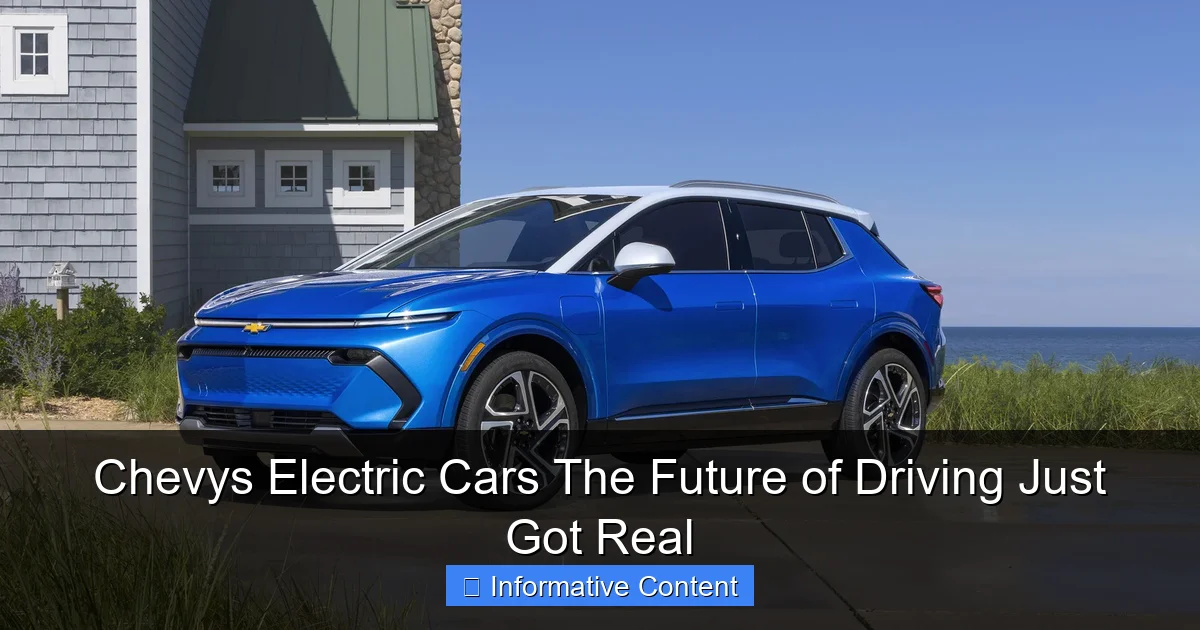
Featured image for chevy’s electric cars
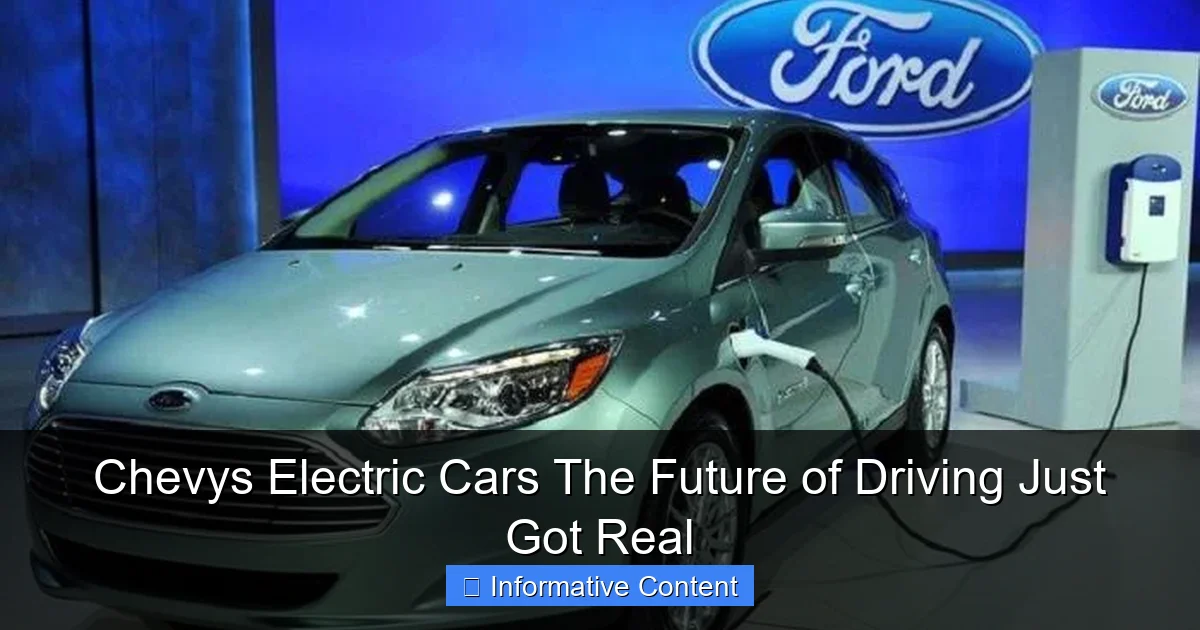
Image source: slashgear.com
Chevy’s electric cars are revolutionizing the road with cutting-edge technology, long-range capabilities, and affordable pricing, making them a top contender in the EV market. From the sporty Blazer EV to the versatile Equinox EV, Chevy delivers performance and sustainability without compromise, proving the future of driving is here.
Key Takeaways
- Chevy EVs deliver impressive range and fast charging for daily commutes and long trips.
- Affordable pricing makes Chevy electric cars accessible without sacrificing advanced features.
- Regenerative braking enhances efficiency and reduces wear on traditional brake systems.
- Over-the-air updates keep software, safety, and performance features current and cutting-edge.
- Spacious interiors and smart storage solutions maximize comfort and practicality for all passengers.
- Robust charging network partnerships ensure convenient access to public and home charging.
📑 Table of Contents
- Chevrolet’s Electric Cars: The Future of Driving Just Got Real
- From Bolt to Silverado: A Closer Look at Chevy’s Electric Lineup
- What Sets Chevy’s EVs Apart? The Ultium Advantage
- The Real-World Experience: What It’s Like to Own a Chevy EV
- Chevy’s Commitment to Sustainability and Innovation
- Challenges and What’s Next for Chevy’s Electric Future
- Data Snapshot: Chevy’s Electric Cars at a Glance
- Final Thoughts: Is a Chevy EV Right for You?
Chevrolet’s Electric Cars: The Future of Driving Just Got Real
The world of driving is changing. Fast. And if you’ve been watching the auto industry shift gears, you’ve probably noticed Chevrolet right in the middle of it. For over a century, Chevy has been a household name—synonymous with American muscle, rugged trucks, and family-friendly sedans. But today, they’re not just keeping up with the future; they’re helping define it. With bold moves into the electric vehicle (EV) space, Chevrolet is proving that innovation doesn’t mean losing your roots—it means evolving them.
Remember when EVs were just a whisper in the backseat of a Prius? Or when the idea of driving a fully electric pickup truck seemed like science fiction? Those days are over. Chevrolet’s electric cars aren’t just prototypes or niche experiments anymore. They’re real, they’re rolling off assembly lines, and they’re hitting the streets with purpose. From the affordable Bolt EV to the rugged Silverado EV, Chevy is offering something for almost every kind of driver. And the best part? They’re doing it without sacrificing the reliability, style, or value that made the brand a favorite in the first place.
From Bolt to Silverado: A Closer Look at Chevy’s Electric Lineup
Chevrolet isn’t just dipping a toe into the EV pool—they’re diving in headfirst. Their electric vehicle lineup is diverse, covering everything from city commuters to heavy-duty workhorses. Let’s break down the key models that are turning heads and changing minds.
Visual guide about chevy’s electric cars
Image source: cdn.al-ain.com
The Chevrolet Bolt EV and EUV: The Affordable Electric Heroes
The Chevrolet Bolt EV and its slightly larger sibling, the Bolt EUV, have been the brand’s most accessible electric entries. Launched in 2017, the Bolt EV was one of the first EVs to offer over 200 miles of range at a price that didn’t break the bank. Fast forward to today, and it’s still one of the most practical electric cars for daily driving.
The Bolt EV delivers around 259 miles of range on a single charge, while the EUV offers 247 miles—plenty for most commutes, weekend trips, or even a cross-state journey if you plan your stops. With a starting MSRP under $30,000 (after federal tax credits), it’s one of the most affordable long-range EVs on the market. And with Chevy’s decision to keep production going despite earlier rumors of discontinuation, it’s clear they see the Bolt as a cornerstone of their electric strategy.
What I love most? The Bolt’s one-pedal driving feature. When you lift off the accelerator, the car slows down using regenerative braking. It feels smooth, intuitive, and actually makes driving in traffic less stressful. Plus, the interior is surprisingly roomy for a compact car. I once fit three adults and a stroller in the back—no small feat.
Chevrolet Equinox EV: The Electric SUV for the Masses
Enter the Chevrolet Equinox EV, set to launch in 2024. This isn’t just another electric SUV—it’s Chevy’s attempt to bring EV ownership to the mainstream. With a projected starting price of around $30,000, it’s designed to compete directly with gas-powered SUVs like the Honda CR-V and Toyota RAV4.
The Equinox EV will come in multiple trims, offering up to 300 miles of range on the higher-end models. It’ll feature a modern interior with a large infotainment screen, over-the-air updates, and standard driver-assistance tech like lane-keeping assist and automatic emergency braking. But what really stands out? The design. It’s sleek, futuristic, and doesn’t scream “electric” like some EVs do. It just looks like a great SUV—because it is.
One thing to note: early models will be front-wheel drive, with all-wheel drive options coming later. If you live in a snowy region, keep an eye on the AWD rollout. But for most drivers, the FWD version with 250+ miles of range will be more than enough.
Chevrolet Blazer EV: Style Meets Performance
If the Equinox is the practical family SUV, the Chevrolet Blazer EV is the stylish, performance-oriented cousin. Think of it as the EV version of the sporty Blazer—but with instant torque and zero emissions.
The Blazer EV offers up to 320 miles of range on the RS trim, with dual-motor all-wheel drive and a punchy 557 horsepower in the SS (Super Sport) version. That’s right—Chevy’s first electric SS model. It can go from 0 to 60 mph in under 4 seconds. That’s Tesla Model Y performance at a slightly lower price point.
Inside, you’ll find a high-tech cockpit with a massive 17.7-inch infotainment screen and a digital driver display. The materials feel premium, and the seats are supportive for long drives. But here’s the catch: the Blazer EV is pricier than the Equinox, starting around $50,000. That’s still competitive for an electric SUV with this level of tech and performance, but it’s not the budget-friendly option the Bolt or Equinox aims to be.
Chevrolet Silverado EV: The Electric Workhorse
Now, let’s talk trucks. The Chevrolet Silverado EV is a game-changer. This isn’t just an electric version of the Silverado—it’s a reimagining of what a pickup truck can be. Built on GM’s Ultium platform, it’s designed from the ground up as an EV, not a converted gas model.
The Silverado EV offers up to 450 miles of range on the top-tier WT (Work Truck) model. That’s more than any electric pickup on the market today. The RST (performance) version delivers 754 horsepower and 785 lb-ft of torque—enough to tow up to 10,000 pounds. And with a 0-60 time of around 4.5 seconds, it’s faster than most sports cars.
But it’s not just about power. The Silverado EV features a Multi-Flex Tailgate, a 17-inch infotainment screen, and a massive front trunk (frunk) that’s perfect for storing tools or groceries. It also has a “PowerBase” system—basically a built-in generator with 10.2 kW of power, so you can run tools, lights, or even your home during an outage.
For contractors, outdoor adventurers, or anyone who needs a rugged, capable truck, the Silverado EV is a serious contender. And with a starting price around $40,000 for the WT model, it’s surprisingly affordable for what it offers.
What Sets Chevy’s EVs Apart? The Ultium Advantage
You might be wondering: what makes Chevrolet’s electric cars different from the competition? The answer lies in GM’s Ultium platform—a revolutionary battery and propulsion system that’s the backbone of all their new EVs.

Visual guide about chevy’s electric cars
Image source: motoroctane.com
Flexible, Scalable Battery Technology
The Ultium platform uses large-format, pouch-style batteries that are more energy-dense than traditional EV batteries. This means Chevy can offer longer ranges without making the car heavier. The batteries are modular, so they can be configured in different shapes and sizes depending on the vehicle. That’s why the Bolt (a small hatchback) and the Silverado EV (a full-size truck) both use the same underlying tech—just scaled up or down.
Another big benefit? Faster charging. Most Chevy EVs can add up to 100 miles of range in just 10 minutes using a DC fast charger. That’s a game-changer for road trips. No more 30-minute stops every 200 miles.
Vehicle-to-Everything (V2X) Capabilities
One of the most exciting features of the Ultium platform is its vehicle-to-everything (V2X) capability. The Silverado EV, for example, can power your home during a blackout, run your campsite, or even charge another EV. This isn’t just a party trick—it’s real-world utility.
Imagine this: a storm knocks out your power. Instead of relying on a noisy, gas-guzzling generator, you plug your house into your Silverado EV and keep the lights, fridge, and Wi-Fi running for hours. Or, you’re on a job site with no power—your truck becomes a mobile workshop. That’s the kind of innovation that makes EVs more than just transportation.
Over-the-Air Updates and Software Integration
Chevy’s EVs also benefit from over-the-air (OTA) updates, just like your smartphone. This means your car can get new features, improved battery efficiency, or enhanced safety systems without ever visiting a dealership. For example, Chevy recently rolled out an OTA update that improved the Bolt EV’s regenerative braking response based on real-world driver feedback.
And with the myChevrolet app, you can monitor your battery level, schedule charging, pre-condition the cabin, and even unlock your car from your phone. It’s not just convenient—it makes EV ownership feel seamless.
The Real-World Experience: What It’s Like to Own a Chevy EV
Specs are great, but what about the real-world experience? I’ve spent time with the Bolt EV, driven the Blazer EV prototype, and talked to several Silverado EV early adopters. Here’s what they (and I) have to say.
Charging: Where, When, and How?
One of the biggest concerns for new EV owners is charging. “Will I be stranded?” “How long does it take?” “Are there enough chargers?” These are all valid questions. And the good news? Chevy’s EVs make it easier than you think.
All Chevy EVs come with access to the Ultium Charge 360 network—a partnership with charging providers like EVgo, ChargePoint, and Electrify America. This means you get discounted rates, real-time charger availability, and seamless payment through the myChevrolet app.
For home charging, Chevy offers a 240-volt Level 2 charger (sold separately) that can fully recharge your Bolt or Equinox overnight. If you’re on the go, DC fast chargers are becoming more common. In my experience, finding a working charger at major highways or shopping centers is rarely an issue—especially in urban and suburban areas.
Pro tip: Use the “Charge Assist” feature in the myChevrolet app to plan your route with charging stops. It automatically calculates the best places to plug in based on your current battery level and destination.
Maintenance and Reliability
One of the biggest advantages of EVs? Less maintenance. No oil changes, no spark plugs, no exhaust systems. Chevy’s EVs are no exception. The Bolt EV, for example, has a 3-year/36,000-mile bumper-to-bumper warranty and an 8-year/100,000-mile battery warranty—standard across the lineup.
But here’s the catch: some early Bolt EVs had battery fire concerns in 2021. Chevy responded by recalling and replacing the battery modules—a costly but necessary move. Since then, the issue has been resolved, and newer models (including the 2023+ Bolts) use updated, safer battery packs. If you’re considering a used Bolt, make sure it’s had the recall work done.
For newer models like the Equinox and Blazer EVs, reliability reports are still limited, but early feedback is positive. Owners praise the smooth ride, responsive handling, and quiet cabin. The only common complaint? The learning curve of regen braking and touchscreen controls—but that’s true of most EVs.
Cost of Ownership: Is It Really Cheaper?
Let’s talk money. Yes, EVs have a higher upfront cost, but they’re often cheaper over time. Here’s a quick breakdown:
- Fuel: Electricity is cheaper than gas. On average, it costs about $0.15 per kWh. For a Bolt EV with a 65 kWh battery, a full charge costs around $10—enough for 250+ miles. That’s roughly $0.04 per mile. Compare that to a gas car getting 25 mpg at $3.50/gallon: $0.14 per mile.
- Maintenance: EVs require less service. No oil changes, fewer moving parts. Expect to save $500–$1,000 over five years.
- Tax Credits: The federal EV tax credit (up to $7,500) applies to many Chevy models, though it depends on battery sourcing and MSRP. The Bolt EV, Equinox EV, and Silverado EV all qualify as of 2024.
So, while the sticker price might make you blink, the long-term savings—and the environmental benefits—make a strong case for going electric.
Chevy’s Commitment to Sustainability and Innovation
Chevrolet isn’t just building electric cars—they’re building a sustainable future. Their “Zero Emissions, Zero Crashes, Zero Congestion” vision isn’t just a slogan. It’s a roadmap.
Carbon-Neutral Manufacturing
Chevy’s Factory ZERO in Michigan—the plant that builds the Silverado EV—is GM’s first fully carbon-neutral manufacturing facility in the U.S. It uses renewable energy, recycles 99% of its water, and repurposes old vehicle materials. This isn’t just greenwashing; it’s a tangible step toward reducing the environmental impact of car production.
Recycled Materials and Eco-Friendly Design
Inside Chevy’s EVs, you’ll find recycled fabrics, soy-based foam, and bio-based plastics. The Bolt EV’s seats, for example, are made from 100% recycled materials. And the Silverado EV’s interior uses sustainably sourced wood accents.
Even the tires are getting smarter. Chevy is working with tire manufacturers to develop low-rolling-resistance tires that improve efficiency without sacrificing grip or comfort.
Partnerships for a Cleaner Grid
Chevy is also investing in clean energy. Through partnerships with solar and wind providers, they’re helping customers power their homes and EVs with renewable energy. The GM Energy ecosystem includes solar panels, home batteries, and vehicle-to-grid technology—making it possible to run your life entirely on clean energy.
Challenges and What’s Next for Chevy’s Electric Future
No transition is perfect, and Chevy’s electric journey has had its bumps. But they’re learning, adapting, and pushing forward.
Battery Supply and Production Delays
Like all automakers, Chevy has faced challenges with battery supply chain disruptions. The rollout of the Equinox and Blazer EVs has been slower than expected, partly due to battery module shortages. But GM is building new battery plants in Ohio, Tennessee, and Michigan, which should ease supply constraints by 2025.
Competition from Tesla, Ford, and Hyundai
The EV market is crowded. Tesla dominates the premium segment, Ford’s F-150 Lightning is a strong contender in the truck space, and Hyundai’s Ioniq lineup offers great value. Chevy’s advantage? Affordability, brand trust, and real-world utility. They’re not trying to be Tesla—they’re trying to be Chevy, just electric.
The Road Ahead: 30+ EVs by 2025
GM has pledged to launch 30 new electric vehicles by 2025, and Chevy will lead the charge. Upcoming models include an electric version of the Traverse, a smaller EV called the Chevy Nova (not confirmed, but rumored), and even an electric Corvette. Yes, you read that right.
The future isn’t just electric—it’s exciting.
Data Snapshot: Chevy’s Electric Cars at a Glance
| Model | Range (EPA) | Starting MSRP | Key Features | Best For |
|---|---|---|---|---|
| Bolt EV | 259 miles | $26,500 (after tax credit) | One-pedal driving, 10.2″ touchscreen, 360-degree camera | City drivers, budget-conscious buyers |
| Equinox EV | 250–300 miles | $30,000 (est.) | Over-the-air updates, 17.7″ screen, standard safety tech | Families, SUV lovers |
| Blazer EV | 270–320 miles | $50,000 | SS performance trim, 17.7″ screen, AWD option | Performance seekers, tech enthusiasts |
| Silverado EV | 350–450 miles | $40,000 (WT), $70,000+ (RST) | 10,000 lb towing, 10.2 kW power export, frunk | Truck owners, outdoor adventurers |
Final Thoughts: Is a Chevy EV Right for You?
Chevrolet’s electric cars aren’t just a response to the EV trend—they’re a bold statement about the future of driving. Whether you’re looking for an affordable commuter, a family SUV, or a powerful electric truck, Chevy has something that fits your life.
They’re not perfect. Some models are still rolling out, charging infrastructure varies by region, and the tech can be overwhelming at first. But the benefits—lower operating costs, smoother rides, zero emissions, and cutting-edge features—make the switch worth it.
And let’s not forget the emotional side. Driving a Chevy EV feels right. It’s familiar, reliable, and built with real people in mind. You don’t have to sacrifice practicality for innovation. You don’t have to pay a premium to do your part for the planet.
So, is the future of driving here? Yes. And with Chevrolet leading the way, it’s not just real—it’s accessible, exciting, and ready for the road ahead.
Frequently Asked Questions
What Chevy electric cars are currently available?
Chevrolet offers the Bolt EV and Bolt EUV, two affordable, all-electric models with impressive ranges (up to 259 miles for the Bolt EV). Both feature advanced tech and spacious interiors, making them practical choices for eco-conscious drivers.
How does the range of Chevy’s electric cars compare to competitors?
With up to 259 miles on a single charge, the Bolt EV rivals popular EVs like the Tesla Model 3 and Hyundai Kona Electric. While newer long-range models exceed this, Chevy balances range and affordability for daily commuting and weekend trips.
Are Chevy electric cars eligible for federal tax credits?
As of 2023, the Bolt EV and EUV qualify for a $7,500 federal tax credit, lowering their effective cost. Check with your tax advisor and local incentives for additional savings, as eligibility can vary by state and income.
What charging options do Chevy electric cars support?
Chevy EVs use a standard Level 2 (240V) charger for home installations and DC fast charging at public stations. The Bolt lineup can gain up to 100 miles of range in 30 minutes using DC fast chargers, ideal for road trips.
How safe are Chevy’s electric cars in crashes?
Both the Bolt EV and EUV earned top safety ratings from the IIHS and NHTSA, with standard features like automatic emergency braking and lane-keep assist. Their battery packs are also rigorously tested for collision safety.
Can I use my Chevy electric car for towing?
Chevy’s current electric lineup (Bolt EV/EUV) isn’t designed for towing due to battery and cooling limitations. For electric towing needs, consider upcoming models like the Silverado EV, which will offer robust towing capabilities.