Chevy Spark EV Electric Cars A Compact Powerhouse Review
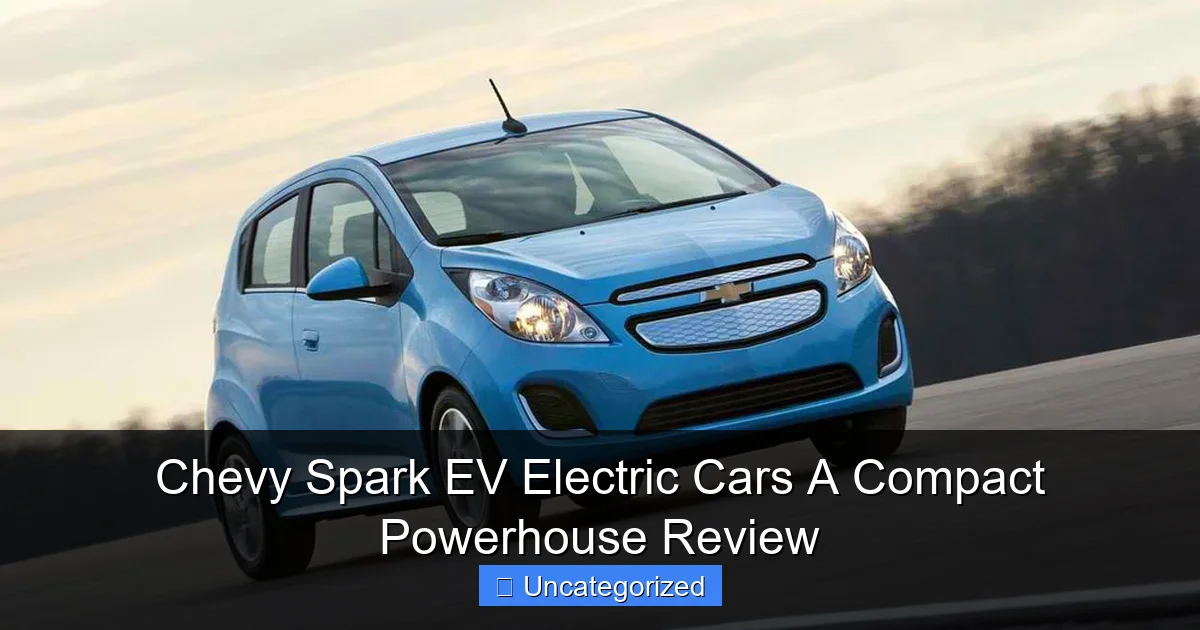
Featured image for chevy spark ev electric cars
Image source: thesupercars.org
The Chevy Spark EV delivers impressive electric performance in a compact, city-friendly package, making it a standout in the subcompact EV segment. With instant torque, 140 MPGe efficiency, and agile handling, it’s perfect for urban commuters seeking affordability without sacrificing fun. Despite its small size, the Spark EV packs a punch with reliable range and quick charging—ideal for eco-conscious drivers.
Key Takeaways
- Compact efficiency: Ideal for city driving with 82-mile range.
- Quick charging: 80% charge in 30 minutes with DC fast charging.
- Low maintenance: Fewer moving parts reduce long-term costs.
- Affordable entry: Competitive pricing for budget-conscious EV buyers.
- Nimble handling: Tight turning radius perfect for urban navigation.
📑 Table of Contents
- The Rise of the Compact Electric Revolution
- Powertrain and Performance: Small Size, Big Energy
- Range, Charging, and Real-World Efficiency
- Interior, Features, and Technology
- Cost of Ownership and Incentives
- Legacy and Why the Spark EV Still Matters
- Final Verdict: A Compact Powerhouse with Lasting Impact
The Rise of the Compact Electric Revolution
The automotive landscape has undergone a seismic shift over the past decade, with electric vehicles (EVs) transitioning from niche novelties to mainstream contenders. Among the pioneers of affordable, city-friendly electric mobility stands the Chevy Spark EV, a compact electric car that defied expectations and proved that eco-conscious transportation doesn’t require sacrificing practicality or personality. Launched as Chevrolet’s first all-electric vehicle in the U.S. market, the Spark EV carved out a unique space in the growing EV ecosystem—offering urban drivers a zippy, zero-emission solution without the premium price tag often associated with electric cars.
While the Spark EV may not have achieved the same cult status as the Tesla Model 3 or the Nissan Leaf, it played a critical role in democratizing electric mobility. Designed for city dwellers, college students, and eco-conscious commuters, this pint-sized powerhouse delivered a compelling mix of efficiency, affordability, and fun-to-drive characteristics. In this comprehensive review, we’ll dive deep into what made the Chevy Spark EV electric cars a standout in the subcompact EV segment, exploring everything from its powertrain and range to real-world usability, charging infrastructure, and long-term ownership experience. Whether you’re considering a used Spark EV or simply curious about early EV innovation, this guide unpacks the legacy and lessons of this compact electric pioneer.
Powertrain and Performance: Small Size, Big Energy
Electric Motor and Acceleration
At the heart of the Chevy Spark EV electric cars lies a 105-kilowatt (140 horsepower) permanent magnet electric motor, powered by a 18.4-kWh lithium-ion battery pack. While these specs might seem modest on paper, the Spark EV’s performance was surprisingly spirited. Thanks to the instant torque delivery inherent to electric motors—215 lb-ft of torque available from zero RPM—the Spark EV could sprint from 0 to 60 mph in just 7.2 seconds, according to Chevrolet’s official data. This placed it among the quickest in its class, outpacing many gas-powered subcompacts of its era, including the Honda Fit and Toyota Yaris.
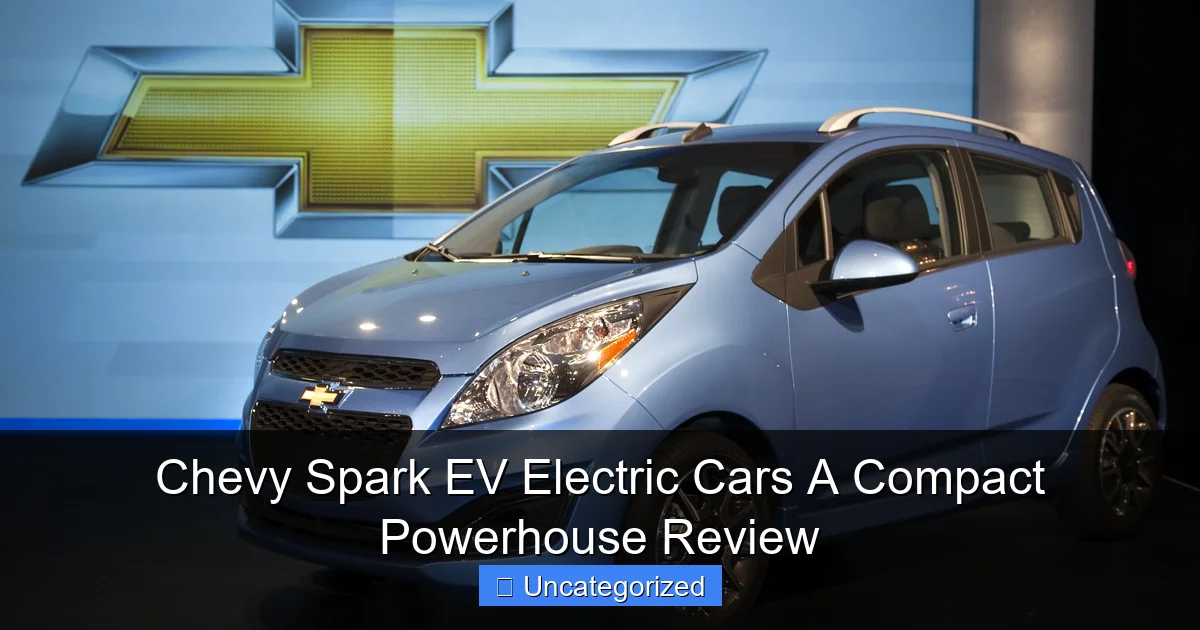
Visual guide about chevy spark ev electric cars
Image source: images.hgmsites.net
The secret to the Spark EV’s lively acceleration lies in its power-to-weight ratio. Weighing in at around 2,600 pounds (only about 300 lbs more than its gasoline counterpart), the car’s lightweight design allowed the electric motor to shine. Drivers frequently praised the car’s responsiveness in city driving, where quick bursts of speed are essential for merging, overtaking, and navigating dense traffic. One owner from Portland, OR, noted, “I could zip into gaps in traffic with confidence—something I never felt in my old gas-powered Spark.”
Regenerative Braking and Driving Modes
One of the Spark EV’s standout features was its advanced regenerative braking system, which allowed drivers to recapture energy during deceleration. Unlike many early EVs with a single-level regen, the Spark EV offered three distinct driving modes:
- Normal Mode: Balanced regeneration for everyday driving.
- Low Mode: Reduced regen for smoother coasting, ideal for highway cruising.
- High Mode: Aggressive regeneration that enabled “one-pedal driving”—lifting off the accelerator brought the car to a near-complete stop without touching the brake pedal.
This feature not only improved energy efficiency but also reduced wear on the physical brakes. Many owners reported getting 100,000+ miles on original brake pads—a testament to the effectiveness of regenerative braking. A practical tip: Use High Mode in stop-and-go traffic to maximize energy recovery and minimize brake dust buildup.
Top Speed and Handling
The Spark EV had a governed top speed of 90 mph, which was more than sufficient for city and suburban driving. While it wasn’t built for long highway journeys, its compact dimensions and low center of gravity (due to the floor-mounted battery) contributed to nimble handling. The electric power steering was precise, and the car’s turning radius of just 33.8 feet made it a master of tight parking spots and U-turns.
However, the suspension was tuned for comfort rather than sportiness, which meant it handled well in urban environments but could feel a bit floaty at higher speeds. For city-focused drivers, this was a non-issue—but those planning frequent highway trips might want to consider a larger EV with a longer range and more stable dynamics.
Range, Charging, and Real-World Efficiency
Official EPA Range and Efficiency
The Chevy Spark EV electric cars were EPA-rated at 82 miles of range on a full charge. While this might seem limited by today’s standards (where 200+ miles is the norm), it was competitive for its time (2014–2016 model years) and more than adequate for the average American’s daily commute, which is around 30 miles round-trip. The EPA also rated the Spark EV at 119 MPGe (miles per gallon equivalent) combined—a figure that underscores its energy efficiency.
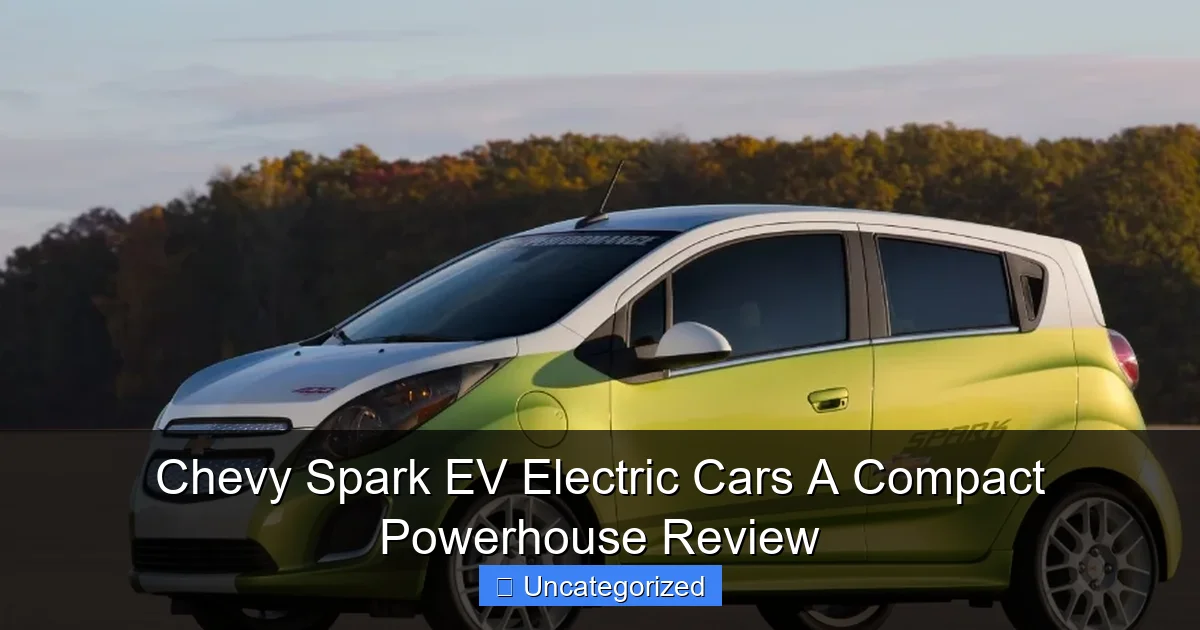
Visual guide about chevy spark ev electric cars
Image source: chevroletspecsnews.com
To put this into perspective: Driving 15,000 miles annually on electricity (at $0.13/kWh) would cost approximately $330 per year in charging costs, compared to over $1,200 for a 25 MPG gasoline car. For urban commuters who rarely drive long distances, the Spark EV’s range was a non-issue.
Charging Options and Times
The Spark EV came standard with a 120-volt Level 1 charger (included with purchase), which could fully recharge the battery in about 17 hours. While this was convenient for overnight charging at home, most owners opted for Level 2 charging (240-volt) to reduce charge times to just 7 hours. A practical tip: Install a Level 2 charger at home (cost: $500–$1,200 including installation) to maximize convenience and minimize downtime.
Crucially, the Spark EV was one of the first affordable EVs to support DC fast charging (DCFC) via the CHAdeMO standard. With a compatible fast charger, the battery could reach 80% capacity in about 20 minutes—a game-changer for road trips or unexpected low-battery situations. For example, a driver in Seattle could plug into a DCFC station during a coffee break and gain 65 miles of range, enough to reach their next destination.
Real-World Range Variability
While the EPA rating was 82 miles, real-world range varied significantly based on driving habits, terrain, and climate. Here are some key factors:
- Temperature: In cold weather (below 40°F), range could drop by 20–30% due to battery inefficiency and cabin heating demands.
- Speed: Driving above 60 mph reduced range by up to 25% due to aerodynamic drag.
- Use of Accessories: Running the heater, A/C, or seat warmers consumed 2–5 miles of range per hour.
<
A study by PlugShare users found that most Spark EV drivers achieved 65–75 miles in mixed driving conditions. To extend range, owners recommended:
- Preheating or cooling the cabin while plugged in (using the remote start feature).
- Using cruise control on highways to maintain steady speed.
- Minimizing rapid acceleration and hard braking.
Interior, Features, and Technology
Minimalist Design with Smart Touches
The Chevy Spark EV electric cars featured a surprisingly modern and tech-forward interior for a subcompact vehicle. The dashboard was dominated by a 7-inch touchscreen infotainment system (MyLink), which supported Bluetooth, USB connectivity, and later, Apple CarPlay (introduced in 2016 models). While the screen wasn’t as advanced as today’s systems, it provided intuitive access to music, navigation, and vehicle settings.
One unique feature was the driver information display in the instrument cluster, which showed real-time energy flow (e.g., “Battery to Motor” or “Regen to Battery”), helping drivers optimize efficiency. The display also included a “Power Gauge” that encouraged eco-driving by showing energy consumption in real time—similar to a fuel economy gauge in a hybrid.
Comfort and Practicality
Despite its small footprint, the Spark EV offered a surprisingly spacious interior for two adults and two children. The front seats were supportive, and the high seating position gave drivers excellent visibility. Rear legroom was limited (29.8 inches), but acceptable for short trips. The 9.6 cubic feet of trunk space was modest but expandable with the 60/40 split-folding rear seats.
Standard features included:
- Keyless entry and push-button start
- Automatic climate control
- Leatherette-trimmed seats (in higher trims)
- Rearview camera (a rare feature in 2014 subcompacts)
Optional upgrades included a premium audio system, heated front seats, and a sunroof. While the materials were mostly hard plastics, the build quality was solid, and the cabin felt more premium than its price point suggested.
Smartphone Integration and App Connectivity
Chevrolet’s OnStar RemoteLink app allowed owners to monitor and control their Spark EV remotely. Key features included:
- Remote start (to preheat/cool the cabin)
- Battery status and charging progress
- Vehicle location tracking
- Charge scheduling (to take advantage of off-peak electricity rates)
For example, a driver in Chicago could set their Spark EV to charge between 11 PM and 7 AM, when electricity rates dropped by 40%. This feature not only saved money but also reduced strain on the local grid.
Cost of Ownership and Incentives
Purchase Price and Depreciation
The Chevy Spark EV electric cars launched with a base MSRP of $27,495 (2014 model), but with federal and state incentives, the effective price dropped significantly. The federal tax credit of $7,500 brought the price down to $19,995, while states like California and Colorado offered additional rebates of $2,500–$5,000. Some buyers even paid as little as $14,000 out of pocket.
However, depreciation was steep. By 2020, used Spark EVs were selling for $5,000–$8,000, reflecting their limited range and the rapid advancement of EV technology. While this hurt resale value, it made the Spark EV an incredible bargain for used EV shoppers.
Maintenance and Reliability
One of the biggest advantages of the Spark EV was its low maintenance costs. With no engine, oil changes, spark plugs, or exhaust system, routine maintenance was minimal. Chevrolet recommended:
- Battery coolant check every 15,000 miles
- Brake fluid replacement every 30,000 miles
- Tire rotation every 7,500 miles
Annual maintenance costs averaged $300–$500, compared to $800+ for a comparable gas car. The electric motor and battery were covered by an 8-year/100,000-mile warranty, providing peace of mind. Most owners reported few major issues, though some noted occasional glitches with the infotainment system or charging port latch.
Insurance and Charging Costs
Insurance for the Spark EV was slightly higher than its gas counterpart (about 10–15% more) due to the higher repair costs for electric components. However, this was offset by lower fuel and maintenance costs. Charging costs varied by region:
| Region | Avg. Electricity Rate (¢/kWh) | Annual Charging Cost (15,000 miles) |
|---|---|---|
| California | 22 | $605 |
| Texas | 13 | $350 |
| New York | 20 | $540 |
| Florida | 12 | $320 |
For comparison, a 25 MPG gas car would cost $1,800+ annually at $3.60/gallon.
Legacy and Why the Spark EV Still Matters
A Pioneer in Affordable EV Adoption
The Chevy Spark EV electric cars may have been discontinued in 2016 (replaced by the Chevy Bolt EV), but its legacy lives on. It proved that EVs didn’t have to be expensive, large, or impractical. By offering fast charging, strong performance, and real-world usability, it helped normalize electric driving for everyday consumers.
For example, cities like San Francisco and Seattle saw a surge in EV adoption among young professionals and ride-share drivers, many of whom started with a Spark EV. Its compact size made it ideal for urban parking, and its low operating costs made it a favorite among budget-conscious drivers.
Used Market Value and Modern Alternatives
Today, used Spark EVs are a hidden gem for eco-conscious buyers. Priced under $10,000, they offer:
- Zero emissions
- Low fuel and maintenance costs
- Fast charging capability
- Proven reliability
However, buyers should consider its limitations: limited range, small cargo space, and outdated tech. For those needing more range, the Chevy Bolt EV (259-mile range) or Nissan Leaf Plus (226-mile range) are excellent used alternatives at similar price points.
Lessons for the Future of EVs
The Spark EV’s success highlights several key lessons for the EV industry:
- Affordability matters: Incentives and low operating costs drive adoption.
- Fast charging is essential: Even short-range EVs need DCFC to be practical.
- Urban focus works: Not every EV needs to be a long-range highway cruiser.
As automakers roll out new compact EVs (like the upcoming Chevy Equinox EV), the Spark EV serves as a blueprint for balancing cost, performance, and usability.
Final Verdict: A Compact Powerhouse with Lasting Impact
The Chevy Spark EV electric cars were never meant to be the most luxurious or longest-range EVs on the market. Instead, they were designed to be practical, affordable, and fun—and in that mission, they succeeded brilliantly. With zippy acceleration, innovative regenerative braking, and access to DC fast charging, the Spark EV punched far above its weight class. Its compact size made it ideal for city living, while its low operating costs made it a smart financial choice.
While newer EVs offer more range and features, the Spark EV remains a compelling option in the used market. For urban commuters, eco-conscious drivers, or anyone seeking a low-cost entry into electric mobility, it delivers exceptional value. More importantly, it paved the way for a new generation of affordable EVs, proving that sustainability and practicality can go hand in hand.
Whether you’re a first-time EV buyer or a seasoned green driver, the Chevy Spark EV deserves a place in the history of electric mobility. It wasn’t just a car—it was a statement that the future of transportation could be compact, efficient, and accessible to all.
Frequently Asked Questions
What is the range of the Chevy Spark EV electric cars?
The Chevy Spark EV offers an EPA-estimated range of 82 miles on a full charge, making it ideal for city commutes and short daily trips. While not suited for long-distance travel, its compact size and efficiency excel in urban environments.
How long does it take to charge a Chevy Spark EV?
Using a 240-volt Level 2 charger, the Spark EV can reach a full charge in about 7 hours. With a standard 120-volt outlet, charging takes approximately 18-20 hours, so a home charging station is recommended for convenience.
Are Chevy Spark EV electric cars reliable for daily use?
Yes, the Spark EV is a reliable choice for daily urban driving, thanks to its responsive electric motor and nimble handling. Its compact design and low maintenance needs (no oil changes, fewer moving parts) add to its practicality.
What are the key features of the Chevy Spark EV electric cars?
The Spark EV includes features like regenerative braking, a 7-inch touchscreen infotainment system, and available DC fast charging. Its lightweight design and instant torque deliver a fun, zippy driving experience.
How does the Chevy Spark EV compare to other electric cars in its class?
The Spark EV stands out for its affordability and compact size, making it a top choice for city dwellers. While competitors may offer longer range, the Spark EV’s lower price and efficient performance provide excellent value.
Is the Chevy Spark EV still available for purchase?
The Chevy Spark EV was discontinued after the 2016 model year but remains available in the used car market. It’s a budget-friendly option for those seeking an entry-level electric car with proven reliability.