Chevy Volt Electric Car Review Pros Cons and Performance Insights
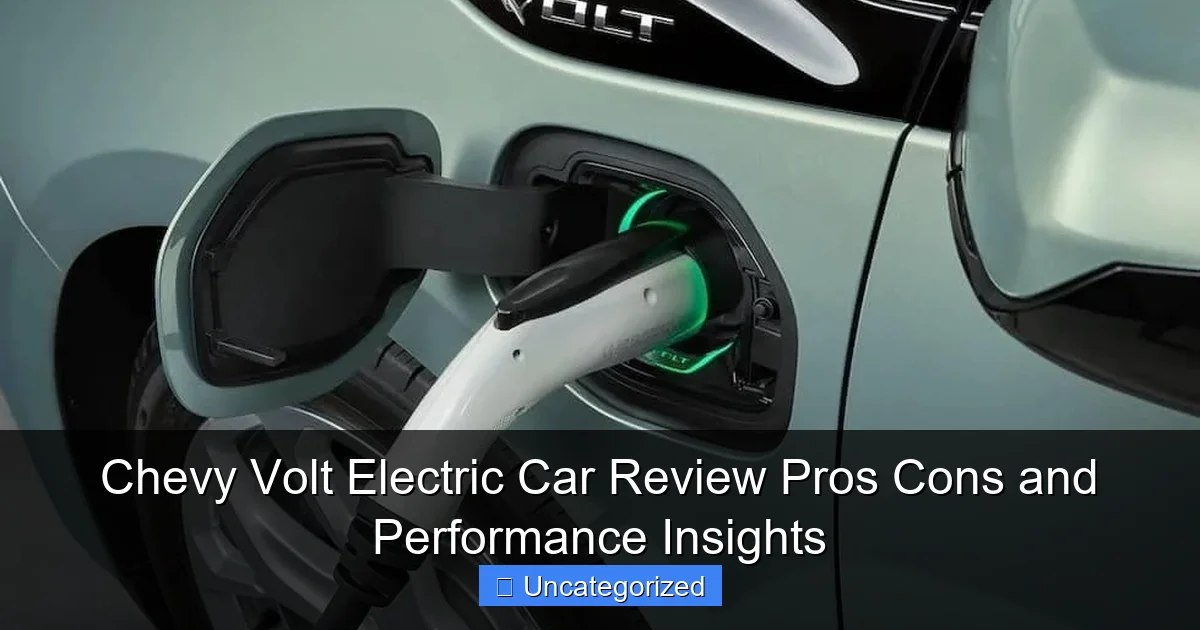
Featured image for chevy volt electric car
Image source: uber.energy
The Chevy Volt electric car delivers impressive efficiency and smooth performance as a plug-in hybrid, combining an electric motor with a gas-powered generator for extended range. With up to 53 miles of all-electric range and a total range of over 400 miles, it’s a versatile, eco-friendly choice for daily commutes and longer trips—offering strong acceleration, a comfortable ride, and advanced tech features, though some rivals now offer more EV range and lower pricing.
Key Takeaways
- Efficient hybrid range: 53 miles electric, 420 miles total with gas.
- Regen braking: Maximize battery life with one-pedal driving mode.
- Spacious interior: Roomy cabin but limited rear-seat legroom.
- Quick daily charging: Full charge in 10–16 hours with Level 1.
- Smooth acceleration: Instant torque delivers responsive, quiet performance.
- Outdated tech: Infotainment lags behind newer EV competitors.
📑 Table of Contents
- The Chevy Volt Electric Car: A Hybrid Pioneer Revisited
- How the Chevy Volt Electric Car Works: The Dual-Powertrain Explained
- Performance and Driving Experience: More Than Just Efficiency
- Interior, Tech, and Daily Usability
- Cost of Ownership, Incentives, and Resale Value
- Pros and Cons: Is the Chevy Volt Right for You?
- Final Verdict: A Legacy of Innovation and Practicality
The Chevy Volt Electric Car: A Hybrid Pioneer Revisited
The Chevy Volt electric car stands as a landmark in automotive history — not just for Chevrolet, but for the entire electric vehicle (EV) movement in North America. Introduced in 2011, the Volt was one of the first mass-market plug-in hybrid electric vehicles (PHEVs) to successfully bridge the gap between traditional gasoline engines and the emerging world of battery-powered transportation. Unlike full electric vehicles (EVs) that rely solely on batteries, the Volt offered a revolutionary range-extending powertrain: a high-capacity lithium-ion battery for daily electric driving, backed by a small gasoline generator that kicks in when the battery depletes. This dual-mode system addressed one of the biggest concerns of early EV adopters — range anxiety — and made the Volt a compelling choice for urban commuters and suburban families alike.
Over its two generations (2011–2015 and 2016–2019), the Chevy Volt evolved significantly, refining its electric range, interior quality, and overall performance. Though production officially ended in 2019 to make way for the all-electric Bolt EV and future Ultium-based models, the Volt remains a sought-after used car for eco-conscious drivers, tech enthusiasts, and those seeking a reliable, efficient hybrid. This comprehensive review dives deep into the Chevy Volt electric car, analyzing its strengths and weaknesses, real-world performance, ownership costs, and how it stacks up against today’s PHEV and EV competition. Whether you’re considering a used Volt or just curious about its legacy, this guide delivers the insights you need.
How the Chevy Volt Electric Car Works: The Dual-Powertrain Explained
The Revolutionary Voltec Powertrain
At the heart of the Chevy Volt electric car is its Voltec propulsion system, a complex but elegantly engineered dual-powertrain setup. Unlike conventional hybrids like the Toyota Prius, which use the gasoline engine and electric motor in parallel, the Volt operates primarily as an electric vehicle. The car is driven exclusively by its electric motors — a 111 kW (149 hp) main motor and a smaller 55 kW (74 hp) generator motor — powered by a 16–18.4 kWh lithium-ion battery pack (depending on model year).

Visual guide about chevy volt electric car
Image source: mcgrathautoblog.com
When the battery is charged, the Volt runs purely on electricity. Once the battery charge drops to a predetermined level (typically around 30–40% depending on driving mode), the 1.4L (first gen) or 1.5L (second gen) gasoline engine activates — not to drive the wheels, but to generate electricity for the electric motors. This is the “range extender” mode. The result? A vehicle that feels and drives like an EV in daily use but can travel hundreds of miles on a full tank of gas when needed.
Driving Modes and Energy Management
The Volt offers several driving modes to optimize performance and efficiency:
- Normal Mode: Balances electric and gas usage for optimal efficiency. Ideal for mixed driving.
- Sport Mode: Increases throttle response and motor output for quicker acceleration (especially noticeable in second-gen models).
- Mountain Mode: Pre-reserves battery charge for sustained uphill driving, ensuring power is available when needed.
- Hold Mode: Lets drivers conserve battery for later use (e.g., saving electric range for city driving after a highway trip).
Tip: Use Hold Mode strategically. For example, if you’re on a 60-mile highway commute but plan to run errands in the city afterward, activate Hold Mode early to save battery for stop-and-go traffic where electric efficiency shines.
Real-World Range and Efficiency
The first-generation Chevy Volt (2011–2015) delivered an EPA-estimated 35–38 miles of electric-only range, with a total range of about 380 miles when including the gas generator. The second-generation (2016–2019) improved significantly, offering 53 miles of electric range (EPA) and a total range of 420 miles. In real-world conditions, most owners report achieving 40–45 miles on a full charge in mixed driving, with winter conditions reducing that by 10–20% due to heating demands.
Fuel economy in gas mode is impressive: 37–42 MPG (combined), depending on model year. This makes the Volt one of the most efficient PHEVs ever produced, especially for drivers who charge regularly and drive under 50 miles daily.
Performance and Driving Experience: More Than Just Efficiency
Acceleration and Handling
Despite its eco-friendly mission, the Chevy Volt electric car delivers surprisingly spirited performance. The second-generation Volt, in particular, benefits from a more powerful electric motor and refined tuning. It accelerates from 0 to 60 mph in 7.5 seconds — faster than many compact sedans and on par with entry-level luxury compacts. The electric torque is immediate and linear, giving the Volt a responsive, almost sports car-like feel in city traffic.

Visual guide about chevy volt electric car
Image source: 2.bp.blogspot.com
The Volt uses a single-speed transmission that delivers seamless power delivery. There are no gears to shift, and the transition from electric to gas generator is nearly imperceptible. The chassis is tuned for comfort, with MacPherson struts in the front and a torsion beam in the rear (first gen) or independent rear suspension (second gen). While not a track car, the Volt handles corners with confidence, aided by a low center of gravity due to the underfloor battery placement.
Regenerative Braking and One-Pedal Driving
One of the Volt’s standout features is its regenerative braking system. When you lift off the accelerator, the electric motor acts as a generator, converting kinetic energy back into electricity to recharge the battery. The second-gen Volt includes a steering-wheel-mounted paddle that allows drivers to increase regenerative braking on demand — a feature that enables one-pedal driving in many situations.
Example: In city traffic, you can use the paddle to slow the car significantly without touching the brake pedal. This not only increases efficiency but also reduces brake wear. Over time, many Volt owners report replacing brake pads only every 70,000–100,000 miles — far longer than in conventional cars.
Noise, Vibration, and Harshness (NVH)
Electric driving is quiet — a major selling point for the Volt. At low speeds, the cabin is nearly silent, with only a faint whine from the motor. However, when the gasoline generator engages, there’s a noticeable hum or drone, especially during highway cruising. While not loud, it breaks the EV serenity. The second-gen model improved NVH with better sound insulation and a more refined engine mount system.
Tip: To minimize generator noise, keep the battery charged. Use Level 2 (240V) charging when possible — it fully charges the Volt in about 4.5 hours, ensuring you start each day with maximum electric range.
Interior, Tech, and Daily Usability
Cabin Design and Comfort
The Chevy Volt’s interior blends modern tech with practical comfort. First-gen models (2011–2015) featured a futuristic, cockpit-style dashboard with a digital instrument cluster and a central touchscreen. While innovative, the design aged quickly, and some materials felt plasticky. The second-gen Volt (2016–2019) addressed these issues with a more conventional layout, higher-quality soft-touch surfaces, and better ergonomics.
Seating is comfortable for four adults. The front seats are supportive, with good lateral bolstering. Rear seat space is adequate for average-sized passengers, though the sloping roofline and battery hump reduce headroom and foot space compared to non-hybrid sedans. The Volt is a four-seater — the center rear seat is replaced by a console, which some families may find limiting.
Infotainment and Connectivity
All Volt models come with a 7-inch or 8-inch touchscreen running Chevrolet’s MyLink system. Features include:
- Apple CarPlay and Android Auto (standard from 2017 onward)
- Built-in navigation (optional)
- 4G LTE Wi-Fi hotspot
- Chevrolet Connected Access with remote start, lock/unlock, and vehicle status via smartphone app
The interface is intuitive, though older models (pre-2016) lack touchscreen functionality and rely on a touchpad — a polarizing design choice. Voice recognition works well for basic commands, but advanced features like natural language search are limited.
Cargo Space and Practicality
The Volt’s trunk offers 10.6 cubic feet of space — less than the 15+ cubic feet in a Toyota Prius or Honda Civic. The battery pack sits under the rear seats and trunk floor, reducing vertical space. The rear seats fold 60/40, but the opening is narrow, limiting the ability to carry long items.
Tip: For road trips, pack efficiently. Use soft-sided luggage and avoid overloading the trunk. The Volt’s total range means you won’t need to stop often, but when you do, every cubic inch counts.
Cost of Ownership, Incentives, and Resale Value
Purchase Price and Federal Incentives
When new, the Chevy Volt carried a premium price tag. The 2019 model started at $33,520 (before incentives), placing it above mainstream hybrids but below luxury PHEVs. However, it qualified for the full $7,500 federal tax credit in the U.S. for most buyers, reducing the effective price to $26,020. Additional state and local incentives (e.g., $2,500 in California, HOV lane access) further improved the value proposition.
Today, used Volts (2016–2019) are excellent bargains. A well-maintained second-gen Volt can be found for $15,000–$20,000 — a 40–50% savings from new. First-gen models are even more affordable but have lower electric range and older tech.
Fuel and Maintenance Savings
The Volt’s biggest savings come from fuel. A driver who charges nightly and drives 40 miles daily will use zero gasoline for their commute. Even longer trips are efficient: at 38 MPG in gas mode, a 300-mile trip uses just 7.9 gallons. Over 15,000 miles/year, this translates to $1,200–$1,800 in annual fuel savings vs. a 25 MPG gas car (assuming $3.50/gallon).
Maintenance costs are also lower. The electric motor has far fewer moving parts than a gasoline engine, and regenerative braking reduces brake wear. Key maintenance items:
- Battery: 8-year/100,000-mile warranty (first gen), 8-year/100,000-mile (second gen). No widespread battery degradation issues reported.
- Oil changes: Every 7,500–10,000 miles (gas engine only runs occasionally).
- Tires: Standard all-season tires, replaced every 50,000–60,000 miles.
Resale Value and Depreciation
The Volt depreciated faster than average when new, but its reputation for reliability has stabilized resale values. According to Kelley Blue Book, a 2017 Volt retains ~45% of its value after 3 years — better than many PHEVs but below full EVs like the Tesla Model 3. Factors affecting resale:
- Model year (second-gen preferred)
- Remaining battery warranty
- Service history and charging habits
Tip: When buying a used Volt, verify the battery health using the OnStar app or a dealership scan tool. A battery capacity below 80% may indicate degradation.
Pros and Cons: Is the Chevy Volt Right for You?
Advantages of the Chevy Volt Electric Car
- Best-in-Class Electric Range (Second Gen): 53 miles is enough for 80% of daily commutes in the U.S.
- Zero Gasoline for Daily Driving: Charge overnight, drive all day on electricity.
- Smooth, Quiet EV Driving Experience: Feels like a luxury car in electric mode.
- Lower Fuel and Maintenance Costs: Saves $1,000+/year in fuel alone.
- Proven Reliability: 10+ years of real-world testing with minimal recalls.
- HOV Lane Access: In many states, PHEVs get single-occupant lane privileges.
Drawbacks and Limitations
- Reduced Cargo Space: Trunk is small, rear seats don’t fold flat.
- Generator Noise: Gas engine can be audible and intrusive.
- Limited Rear Seating: Only four seats; center console blocks fifth passenger.
- No All-Wheel Drive (AWD): Unlike competitors like the Toyota RAV4 Prime.
- Outdated Tech (First Gen): Pre-2016 models lack CarPlay and modern safety features.
Who Should Buy a Chevy Volt?
The Chevy Volt electric car is ideal for:
- Urban and suburban drivers with access to home or workplace charging.
- Commuters who drive under 50 miles daily.
- Tech-savvy buyers who appreciate smart energy management and app connectivity.
- Environmentally conscious families who want low emissions without range anxiety.
It’s less ideal for:
- Large families needing five seats and cargo space.
- Drivers in cold climates without garage charging (battery range drops in winter).
- Enthusiasts seeking sporty handling or AWD capability.
Data Table: Chevy Volt Generations Compared
| Feature | First Gen (2011–2015) | Second Gen (2016–2019) |
|---|---|---|
| Electric Range (EPA) | 35–38 miles | 53 miles |
| Total Range | ~380 miles | ~420 miles |
| Gas Engine | 1.4L 4-cyl | 1.5L 4-cyl |
| Horsepower | 149 hp (total system) | 149 hp (total system) |
| 0–60 mph | 9.0 seconds | 7.5 seconds |
| MPG (Gas Mode) | 37 MPG | 42 MPG |
| Infotainment | 7″ touchpad (no CarPlay) | 8″ touchscreen (CarPlay/Android Auto) |
| Rear Suspension | Torsion beam | Independent |
| Regen Paddle | No | Yes |
Final Verdict: A Legacy of Innovation and Practicality
The Chevy Volt electric car may no longer be in production, but its legacy endures. It proved that plug-in hybrids could be practical, efficient, and enjoyable — not just a compromise, but a compelling alternative to full EVs and gas cars. With its dual-powertrain design, the Volt eliminated range anxiety while delivering true electric driving for most daily needs. The second-generation model, in particular, refined the formula with better range, improved tech, and a more upscale feel.
For today’s buyers, the Volt remains a smart choice — especially in the used market. It offers the efficiency of an EV with the flexibility of a gas car, all at a fraction of the price of newer PHEVs. While it lacks the cutting-edge features of 2024 EVs (like ultra-fast charging or 300+ mile electric ranges), it excels in real-world usability, reliability, and cost savings. Whether you’re a first-time EV driver or a hybrid veteran, the Chevy Volt delivers a balanced, forward-thinking package that still feels relevant a decade after its debut.
As Chevrolet shifts focus to its all-electric future with the Bolt and upcoming Ultium-based models, the Volt stands as a testament to innovation and adaptability. It didn’t just survive the early days of electrification — it thrived, paving the way for the EV revolution. If you’re looking for a dependable, efficient, and technologically advanced hybrid, the Chevy Volt electric car deserves a top spot on your test drive list. Just remember: charge it, drive it, and enjoy the best of both worlds.
Frequently Asked Questions
What is the Chevy Volt electric car’s electric-only range?
The Chevy Volt electric car offers an EPA-estimated 53 miles of electric-only range, making it ideal for daily commutes without using gasoline. After the battery depletes, the gas-powered generator seamlessly kicks in for extended range.
How does the Chevy Volt compare to fully electric vehicles?
Unlike fully electric cars, the Chevy Volt uses a hybrid system with a gas generator, eliminating range anxiety while still offering zero-emission electric driving for short trips. This makes it a flexible option for drivers transitioning to electric mobility.
What are the main pros and cons of the Chevy Volt electric car?
Pros include strong electric efficiency, a smooth transition to gas power, and a well-equipped interior. Cons are limited rear-seat space and a slightly higher price than some hybrid competitors.
How long does it take to charge the Chevy Volt?
Using a standard 120V household outlet, the Chevy Volt takes about 13 hours to fully charge. With a 240V Level 2 charger, charging time drops to roughly 4.5 hours.
Is the Chevy Volt eligible for federal or state EV incentives?
Yes, the Chevy Volt qualifies for a federal tax credit (up to $4,000 depending on battery capacity) and may be eligible for additional state or local incentives for plug-in hybrids.
What kind of performance can I expect from the Chevy Volt?
The Chevy Volt delivers 149 horsepower and brisk acceleration thanks to instant electric torque, with a total driving range of over 400 miles when combining electric and gas power.