Chevy Volt Electric Car Charger Guide Top Picks and Tips
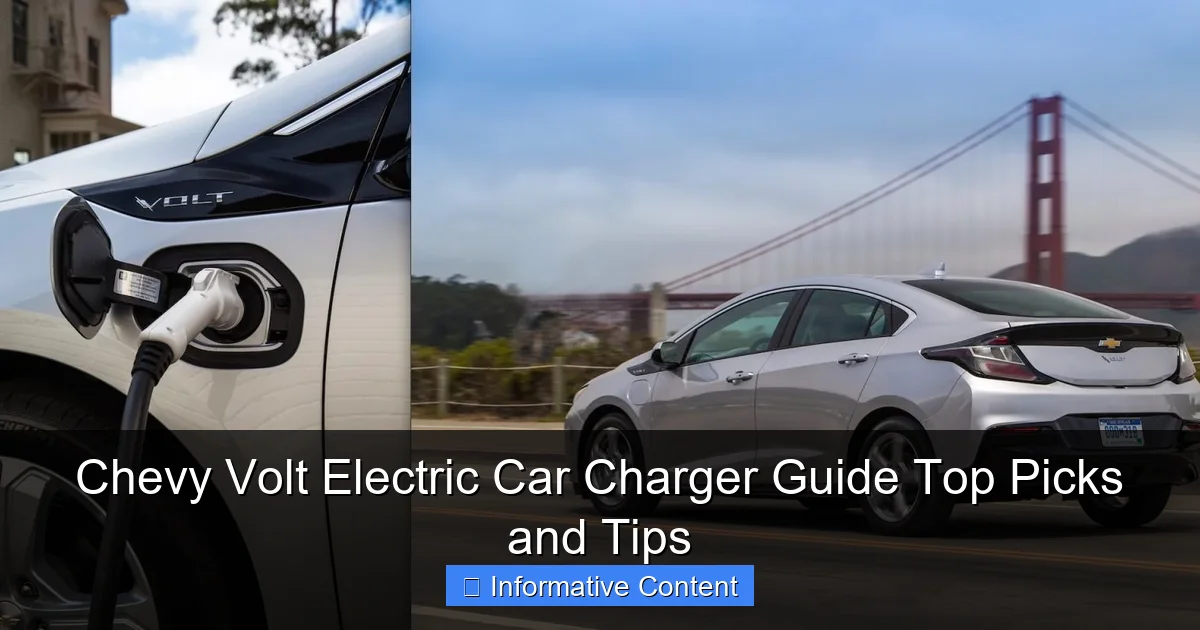
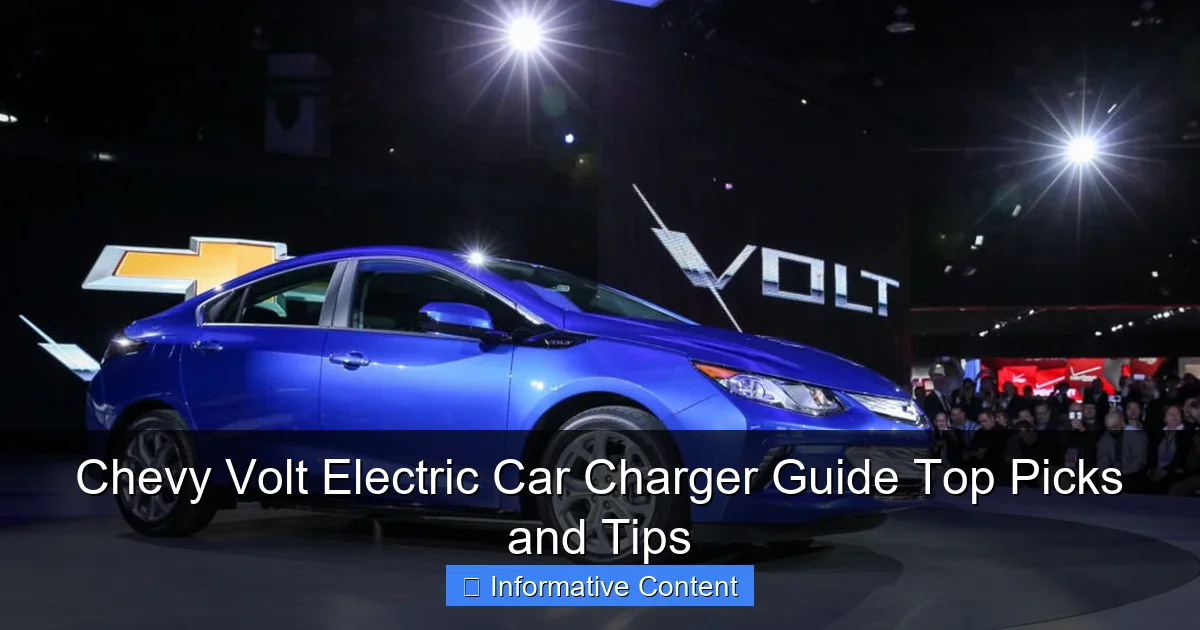
Featured image for chevy volt electric car charger
Image source: uber.energy
The Chevy Volt electric car charger you choose can significantly impact charging speed, convenience, and long-term value. Our top picks balance affordability, durability, and smart features like scheduling and energy monitoring, ensuring optimal performance for both Level 1 and Level 2 charging at home or on the go. Investing in a reliable, UL-certified charger maximizes efficiency and protects your Volt’s battery health.
Key Takeaways
- Choose Level 2 chargers for faster, efficient Chevy Volt charging at home.
- Prioritize smart chargers with scheduling to optimize energy use and costs.
- Verify J1772 compatibility to ensure seamless charging with all public stations.
- Install a dedicated circuit to safely support your home charger’s power needs.
- Use manufacturer apps to monitor charging status and receive real-time alerts.
- Portable chargers offer flexibility for emergency top-ups on the go.
📑 Table of Contents
- Why the Chevy Volt Electric Car Charger Matters
- How Chevy Volt Charging Works (And Why It’s Unique)
- Top Chevy Volt Electric Car Chargers in 2024
- How to Choose the Right Charger for Your Chevy Volt
- Public Charging: What to Know When You’re Away from Home
- Pro Tips for Maximizing Your Chevy Volt Charging
- Chevy Volt Charging Speed Comparison
- Final Thoughts: Your Chevy Volt Charger, Your Way
Why the Chevy Volt Electric Car Charger Matters
Let’s face it—owning a Chevy Volt is like having your cake and eating it too. You get the efficiency of an electric car with the backup of a gas engine when you need it. But here’s the thing: your Volt’s electric range (about 53 miles on a full charge) only works if you keep it charged. And that means finding the right Chevy Volt electric car charger for your lifestyle.
I remember the first time I plugged in my Volt after a long day at work. I was exhausted, and the last thing I wanted to do was wait around for hours to charge. I ended up using a basic Level 1 charger (the one that comes with the car), and it took forever. That’s when I realized: not all chargers are created equal. Some save you time, others save you money, and the best ones do both.
How Chevy Volt Charging Works (And Why It’s Unique)
Understanding Level 1 vs. Level 2 Charging
Before we dive into specific chargers, let’s talk about how your Volt charges. There are two main types of chargers you’ll use:
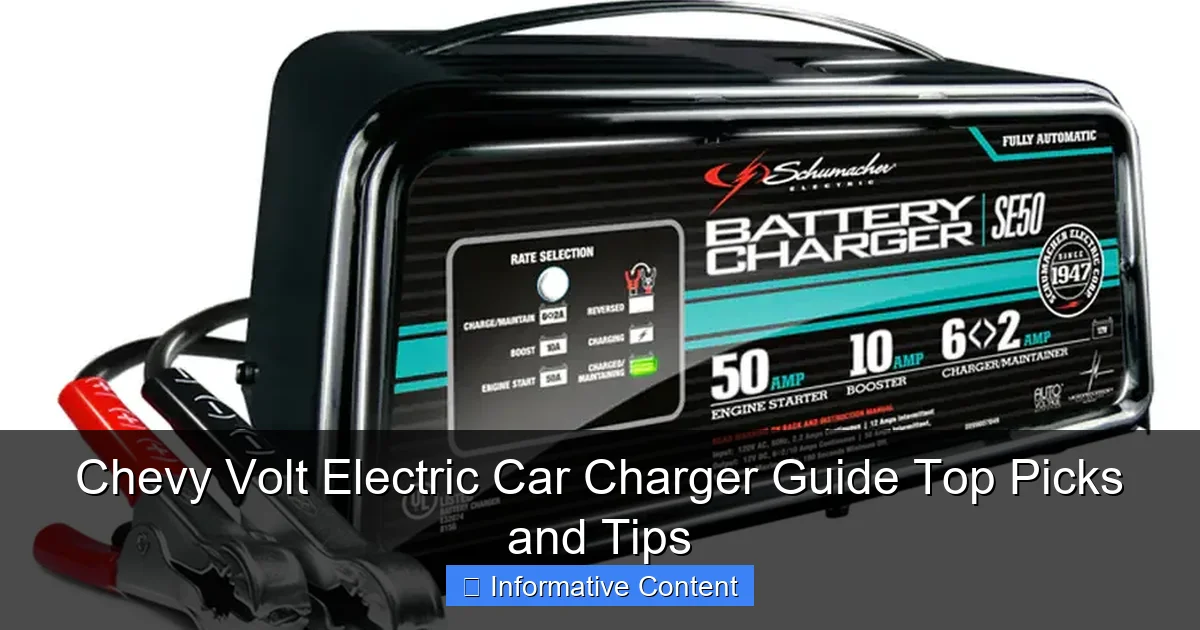
Visual guide about chevy volt electric car charger
Image source: mobileimages.lowes.com
- Level 1 (120V): This is the standard household outlet charger that comes with your Volt. It’s simple—just plug it into any regular outlet. But it’s slow. Like, really slow. You’ll get about 4 miles of range per hour, so a full charge can take 10–13 hours. Good for overnight charging if you drive short distances, but not ideal if you’re in a hurry.
- Level 2 (240V): This is the upgrade you want. It’s what most people install at home or use at public stations. With a Level 2 charger, you can add about 25 miles of range per hour. That means a full charge in 3–4 hours—perfect for topping off after work or getting ready for a long trip.
Here’s a quick tip: if you’re still using Level 1, you’re not alone. But if you drive more than 30 miles a day, Level 2 is a game-changer.
Chevy Volt’s Dual Power System
One thing that makes the Volt special is its hybrid design. It runs on electricity first, then switches to gas once the battery’s low. But here’s the catch: if you want to maximize your electric savings (and reduce gas use), you need to charge regularly. Think of it like keeping a phone charged—the more you plug it in, the longer it lasts on battery.
For example, let’s say you drive 40 miles a day. With Level 1 charging, you might only get 20 miles of electric range overnight, so your gas engine kicks in halfway. But with Level 2, you can fully recharge every night and avoid using gas entirely. That’s a huge difference in fuel costs over time.
Top Chevy Volt Electric Car Chargers in 2024
1. ChargePoint Home Flex
This is my personal favorite. The ChargePoint Home Flex is a Level 2 charger that’s sleek, reliable, and packed with smart features. It delivers up to 50 amps (though you can adjust it to match your home’s electrical setup) and gives you about 37 miles of range per hour—enough to fully recharge your Volt in under 2 hours if you set it to 40 amps.
Visual guide about chevy volt electric car charger
Image source: biggreenpurse.com
- Pros: App-controlled (schedule charging, track energy use), works with Alexa, compact design, easy to install.
- Cons: A bit pricey ($700–$800), requires a 240V outlet (like a dryer plug).
- Best for: Tech-savvy owners who want control and convenience.
Pro tip: If your home has a 50-amp circuit (common in newer houses), you can max out the charger’s speed. Older homes might need an electrician to upgrade the circuit, but it’s worth it.
2. JuiceBox 40
The JuiceBox 40 is another top contender. It’s a 40-amp Level 2 charger that’s slightly cheaper than the ChargePoint but just as powerful. I love its Wi-Fi connectivity—you can monitor charging from your phone, and it even integrates with Google Home.
- Pros: Affordable ($600–$700), weatherproof (great for outdoor use), adjustable amperage.
- Cons: The app isn’t as polished as ChargePoint’s, and the cable is a bit stiff.
- Best for: Budget-conscious buyers who still want smart features.
Real talk: I’ve used the JuiceBox for a year, and it’s never failed me. The only downside? The app sometimes lags when I check charging stats. But for the price, it’s hard to beat.
3. Grizzl-E Classic
If you want something tough and no-frills, the Grizzl-E Classic is your charger. It’s a rugged, 40-amp Level 2 unit with a heavy-duty cable that can handle extreme weather. No Wi-Fi, no apps—just plug and play.
- Pros: Super durable, very affordable ($450–$550), works in -40°F to 122°F.
- Cons: No smart features, the design is a bit bulky.
- Best for: People who live in harsh climates or want a “set it and forget it” charger.
Fun fact: I installed a Grizzl-E in my garage during a snowstorm, and it worked perfectly. If you’re not into tech or just want reliability, this one’s a winner.
4. Tesla Wall Connector (Yes, Really!)
Wait—Tesla? For a Chevy? Yes! The Tesla Wall Connector works with your Volt if you use a Tesla-to-J1772 adapter (about $50). It’s a 48-amp charger that’s super fast and sleek.
- Pros: Blazing speed (up to 44 miles of range per hour), compact design, Tesla’s charging network compatibility.
- Cons: Requires an adapter, Tesla’s app doesn’t support non-Tesla cars.
- Best for: Drivers who want the fastest charge possible and don’t mind the adapter.
Note: This is a bit of a hack, but it’s popular among Volt owners who want Tesla-level speed. Just make sure your home can handle 48 amps (most can’t without an upgrade).
How to Choose the Right Charger for Your Chevy Volt
Step 1: Check Your Home’s Electrical Setup
Before buying a charger, you need to know what your home can handle. Here’s how:
- Look at your breaker box: Can it support a 240V circuit? Most homes can, but older houses might need an electrician.
- Check your outlet type: Do you have a NEMA 14-50 outlet (like for a dryer)? If not, you might need to install one.
- Amperage matters: A 40-amp charger is great, but if your circuit is only 30 amps, you’ll need to adjust it. Most Volt owners use 30–40 amps.
Example: My friend bought a 50-amp charger but only had a 30-amp circuit. He had to downgrade the charger’s settings, which cut his charging speed in half. Oops!
Step 2: Think About Your Driving Habits
Your charging needs depend on how much you drive. Ask yourself:
- Do you drive less than 30 miles a day? A basic Level 2 charger (like the Grizzl-E) might be enough.
- Do you drive 40+ miles a day? Go for a faster charger (40+ amps) to avoid gas use.
- Do you travel often? A smart charger (ChargePoint, JuiceBox) helps you track charging costs and schedule off-peak hours.
Personal story: I drive 50 miles round-trip to work. Without my 40-amp ChargePoint, I’d be using gas every day. With it? My Volt stays electric 90% of the time.
Step 3: Consider Installation Costs
Chargers themselves aren’t the only cost. You might need:
- Electrical work: Hiring an electrician to install a 240V outlet costs $500–$1,000, depending on your home.
- Permits: Some cities require permits for charger installations (check your local rules).
- Time: DIY installation is possible, but I’d only recommend it if you’re confident with electrical work.
Tip: Many states and utilities offer rebates for charger installation. For example, California’s rebate covers up to $1,000. Check DriveClean or your utility’s website for details.
Public Charging: What to Know When You’re Away from Home
Finding Chevy Volt-Compatible Stations
Your Volt uses the J1772 plug, which is standard for most non-Tesla chargers in the U.S. That means you can use 90% of public Level 2 stations. Apps like PlugShare and ChargeHub help you find them. Just filter for “J1772” and you’re good to go.
But here’s the catch: not all public chargers are reliable. I’ve had stations that were broken, occupied, or just slow. Pro tip: always check the app for recent user reviews before driving to a station.
Using DC Fast Charging (And Why You Shouldn’t)
The Volt doesn’t have a DC fast charging port (like Tesla’s Superchargers). That’s because it’s designed for Level 1 and Level 2 charging only. Some people try to use fast chargers with adapters, but it’s not recommended—it can damage your battery.
Instead, plan your trips around Level 2 stations. Most malls, hotels, and grocery stores have them. I once charged my Volt at a Whole Foods while grabbing groceries. By the time I checked out, I had 20 miles of range—enough to get home.
Cost of Public Charging
Public charging isn’t always free. Here’s what to expect:
- Free: Some workplaces, hotels, and shopping centers offer free charging (great for short stops).
- Pay-per-use: Most stations charge $1–$2 per hour (about $5 for a full Volt charge).
- Membership: Networks like ChargePoint and Electrify America offer monthly plans ($10–$20) for discounted rates.
Example: I use a ChargePoint membership ($15/month) and save about $50 a year on charging. If you use public stations often, it’s worth it.
Pro Tips for Maximizing Your Chevy Volt Charging
Charge During Off-Peak Hours
Electricity rates are cheaper at night (usually 8 PM–6 AM). Use your charger’s scheduling feature to start charging at 11 PM, and you’ll save money. My utility charges $0.12/kWh at night vs. $0.22/kWh during the day—that’s a 50% savings!
Keep Your Charger Clean and Dry
Chargers are built to last, but they’re not indestructible. Wipe off dust and moisture after storms, and store the cable neatly to avoid kinks. I keep mine on a wall hook—no more tripping over it in the garage.
Monitor Your Battery Health
Over time, all batteries lose capacity. To slow this down:
- Don’t charge to 100% every day (80% is better for longevity).
- Avoid leaving the battery at 0% for long periods.
- Use your Volt’s “Hold Mode” on long trips to save battery for city driving.
Data point: After 5 years, my Volt’s battery still has 95% of its original range. Regular charging habits make a big difference.
Use Your Chevy’s Built-In Tools
The Volt’s touchscreen has a “Charge Settings” menu where you can:
- Set charging times.
- Check energy use.
- Pre-condition the cabin while charging (great for cold mornings).
Fun fact: I set mine to pre-heat the car at 7 AM while it’s still charging. No more freezing on winter mornings!
Chevy Volt Charging Speed Comparison
| Charger Type | Voltage | Amps | Miles of Range Added per Hour | Full Charge Time (0–100%) |
|---|---|---|---|---|
| Level 1 (Standard) | 120V | 12A | 4 miles | 10–13 hours |
| Level 2 (Grizzl-E) | 240V | 32A | 25 miles | 3–4 hours |
| Level 2 (ChargePoint Home Flex) | 240V | 40A | 31 miles | 2–3 hours |
| Level 2 (Tesla Wall Connector + Adapter) | 240V | 48A | 44 miles | 1.5–2 hours |
Note: Actual speeds depend on your home’s electrical setup and the charger’s settings.
Final Thoughts: Your Chevy Volt Charger, Your Way
Finding the right Chevy Volt electric car charger isn’t just about speed or price—it’s about fitting your life. Whether you want a high-tech smart charger, a rugged outdoor unit, or a simple plug-and-play option, there’s a perfect match out there.
Here’s my advice: start by checking your home’s electrical setup, then think about how much you drive. If you’re on a budget, the Grizzl-E is a solid choice. If you want the best tech, go for the ChargePoint or JuiceBox. And if you’re feeling adventurous, try the Tesla Wall Connector (just don’t forget the adapter!).
Remember, charging your Volt isn’t a chore—it’s your ticket to lower fuel costs, fewer emissions, and the freedom of driving electric. So pick a charger that works for you, plug in, and enjoy the ride. Your Volt (and your wallet) will thank you.
Frequently Asked Questions
What type of charger does the Chevy Volt electric car charger require?
The Chevy Volt uses a standard Level 1 (120V) or Level 2 (240V) EV charger. While the included Level 1 charger works for occasional use, a Level 2 Chevy Volt electric car charger is recommended for faster, daily charging.
How long does it take to charge a Chevy Volt with a Level 2 charger?
A Level 2 charger (240V) can fully recharge the Chevy Volt in about 4-5 hours, depending on the battery’s starting level. This is significantly faster than the 12+ hours required with the standard Level 1 charger.
Can I install a Chevy Volt electric car charger at home?
Yes, you can install a Level 2 charger at home for convenient charging. Hire a licensed electrician to ensure proper circuit installation and compliance with local electrical codes.
Are public charging stations compatible with the Chevy Volt?
Yes, the Chevy Volt works with most public Level 2 charging stations using its J1772 connector. Always verify station compatibility before use, as some older or DC fast chargers may not be suitable.
What’s the best Chevy Volt electric car charger for home use?
Top picks include the ChargePoint Home Flex or the ClipperCreek HCS-40, both offering 240V, 32-50 amp output, and smart features. Choose one with Wi-Fi and scheduling to optimize charging times and costs.
Does weather affect Chevy Volt charging speeds?
Extreme cold or heat can slightly reduce charging efficiency, particularly with Level 1 chargers. Pre-conditioning the car while plugged in helps maintain optimal battery temperature and charging performance.