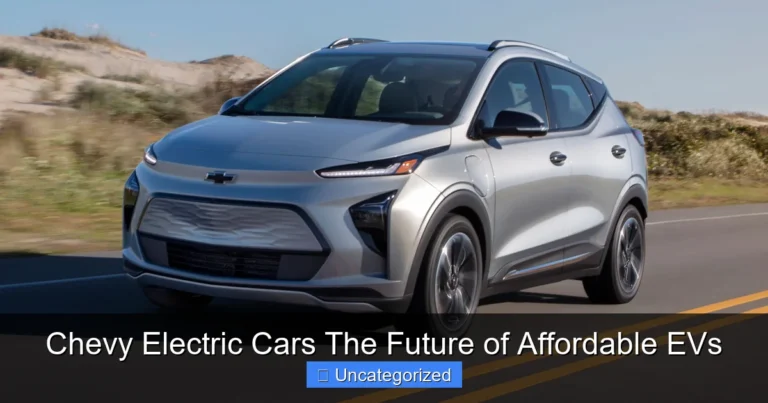
Chevy Volt Electric Car Price What You Need to Know

Featured image for chevy volt electric car price
Image source: frogcars.com
The Chevy Volt electric car price starts at an affordable $33,995, making it a competitive option in the plug-in hybrid market with impressive fuel efficiency and a 53-mile electric range. Federal and state incentives can reduce the effective cost by up to $7,500, offering significant savings for eco-conscious drivers seeking performance and value.
Key Takeaways
- Compare trims: Pricing varies significantly between LT, Premier, and used models.
- Check incentives: Federal/state tax credits can reduce cost by thousands.
- Evaluate lease deals: Monthly payments often beat financing options.
- Factor fuel savings: Lower operating costs offset higher upfront price.
- Research resale value: Strong retention boosts long-term affordability.
- Test drive first: Real-world performance justifies price differences.
📑 Table of Contents
- Understanding the Chevy Volt: A Hybrid Pioneer in the EV Market
- Historical Pricing and Generational Shifts
- New vs. Used: Where to Find the Best Chevy Volt Deals
- Total Cost of Ownership: Beyond the Sticker Price
- Incentives, Tax Credits, and Hidden Savings
- Comparing the Chevy Volt to Competitors and Alternatives
- Final Thoughts: Is the Chevy Volt Right for You?
Understanding the Chevy Volt: A Hybrid Pioneer in the EV Market
The Chevy Volt electric car price has long been a topic of interest for eco-conscious drivers, budget-savvy families, and technology enthusiasts alike. As one of the first mass-produced plug-in hybrids in the U.S., the Chevrolet Volt redefined what it meant to drive an electric vehicle (EV) without fully committing to full battery-electric power. Introduced in 2011, the Volt quickly gained attention for its innovative “range-extended electric” design—a system that uses a battery-powered electric motor for daily driving, backed by a gasoline engine that generates electricity when the battery runs low. This unique dual-power approach eliminated “range anxiety,” a major hurdle for early EV adopters, while still offering substantial fuel savings and lower emissions.
Over the years, the Chevy Volt evolved through two generations (2011–2015 and 2016–2019), each bringing improvements in battery capacity, electric range, interior technology, and overall efficiency. While production ended in 2019 as Chevrolet shifted focus to fully electric models like the Bolt EV and upcoming Ultium-based vehicles, the Volt remains a popular choice in the used car market. Its legacy continues to influence how consumers view hybrid and plug-in hybrid vehicles. For buyers today, understanding the Chevy Volt electric car price—both new and used—is essential for making an informed decision. Whether you’re considering a certified pre-owned model, a low-mileage secondhand unit, or exploring financing and incentives, this guide breaks down everything you need to know about pricing, value, and long-term ownership costs.
Historical Pricing and Generational Shifts
The Chevy Volt electric car price has changed significantly over its decade-long production run, reflecting advancements in battery technology, market demand, and competitive pressures. By examining the pricing trends across its two generations, buyers can better understand how the Volt’s value proposition evolved and where the best deals might be found today.

Visual guide about chevy volt electric car price
Image source: theusbport.com
First-Generation Volt (2011–2015): The Pioneer Years
The original Chevy Volt debuted in late 2010 with a starting MSRP of $41,000, placing it in the premium compact sedan segment. At the time, this was considered a bold move for a vehicle with limited electric range (initially 35–40 miles) and a complex powertrain. However, Chevrolet sweetened the deal with a $7,500 federal tax credit, which reduced the effective price to around $33,500—a more competitive figure. Early adopters were drawn to the Volt’s futuristic styling, quiet electric operation, and impressive fuel economy (up to 94 MPGe when using electricity and gasoline combined).
Over the next five years, Chevrolet made incremental improvements. The 2013 model saw a slight price drop to $39,995 due to manufacturing efficiencies and increased competition. By 2015, the base price had stabilized at $34,345, with optional packages pushing it to over $40,000 for fully loaded models. Despite its higher initial cost, the first-gen Volt gained a loyal following, particularly in California and other states with strong EV incentives.
Second-Generation Volt (2016–2019): Efficiency and Value
The redesigned 2016 Volt marked a major leap forward. With a larger 18.4 kWh battery pack, the electric range increased to 53 miles—enough for most commuters to drive entirely on electricity. The starting MSRP was $33,995, but with the federal tax credit, the effective price dropped to $26,495. This made the Volt more accessible and competitive with rivals like the Toyota Prius Prime and Hyundai Ioniq Plug-In.
Chevrolet also introduced a more affordable “LT” trim in 2017, priced at $33,220, while the top-tier “Premier” model reached $38,320. By 2019, the final model year, Chevrolet offered a lease deal as low as $199/month with $2,400 due at signing, making it one of the most affordable plug-in hybrids on the market. These aggressive lease offers helped clear inventory before production ended in February 2019.
Why Pricing Changed: Market Forces and Technology
Several factors influenced the Chevy Volt electric car price over time:
- Battery cost reductions: Advances in lithium-ion battery production lowered the cost per kWh, allowing Chevrolet to offer more range at a lower price.
- Increased competition: The arrival of the Nissan Leaf, BMW i3, and later the Tesla Model 3 forced GM to stay competitive on pricing.
- Consumer demand for value: Buyers wanted more features without a price hike, pushing automakers to streamline options and offer trim-level differentiation.
- Government incentives: The federal tax credit and state-level rebates (e.g., California’s $2,000 Clean Vehicle Rebate) effectively reduced out-of-pocket costs.
These shifts made the Volt a smarter long-term investment, especially for drivers who could take advantage of charging at home or work.
New vs. Used: Where to Find the Best Chevy Volt Deals
With the Chevy Volt out of production, the market has shifted entirely to used and certified pre-owned (CPO) models. However, this presents both challenges and opportunities for buyers seeking the best Chevy Volt electric car price. Understanding the nuances between new (historical), used, and CPO pricing can save thousands over the vehicle’s lifetime.

Visual guide about chevy volt electric car price
Image source: cdn.vox-cdn.com
Certified Pre-Owned (CPO) Volts: Peace of Mind at a Premium
Chevrolet’s CPO program offers significant benefits for buyers who want reliability and warranty coverage. A typical CPO 2017–2019 Volt will cost between $18,000 and $24,000, depending on mileage, condition, and trim level. The CPO warranty includes:
- 12-month/12,000-mile bumper-to-bumper coverage
- Powertrain warranty extension to 6 years/100,000 miles
- Free maintenance for 2 years
- 24/7 roadside assistance
For example, a 2018 Volt Premier with 35,000 miles might list for $22,500 at a dealership, while a private seller might offer the same car for $19,500. While the CPO price is higher, the added warranty and inspection process (which includes 172-point checks) can be worth it for buyers who plan to keep the car long-term.
Private Sales and Used Market: Bargain Hunting
Private sales often offer the best Chevy Volt electric car price for budget-conscious buyers. On platforms like CarGurus, Autotrader, and Facebook Marketplace, 2016–2019 Volts typically range from $14,000 to $20,000. A well-maintained 2017 Volt LT with 50,000 miles might sell for $16,000, while a 2019 Premier with low mileage could reach $21,000.
Pro tip: Always request a Carfax or AutoCheck report to verify accident history and service records. Test drive the car and pay special attention to the battery health—some early Volts may have experienced degradation after 6–8 years. Use a third-party mechanic for a pre-purchase inspection (cost: $100–$150), especially to check the hybrid battery and cooling system.
First-Generation Volts: The Budget Option
If you’re on a tight budget, first-gen Volts (2011–2015) can be found for $8,000 to $14,000, depending on condition. A 2013 Volt with 70,000 miles might sell for $9,500, but be aware of potential issues:
- Battery degradation: Older batteries may have lost 10–15% of their capacity, reducing electric range.
- Outdated infotainment: Early models lack Apple CarPlay, Android Auto, and modern safety features.
- Higher maintenance costs: Some components (e.g., coolant pumps, battery cooling fans) are known to fail after 8–10 years.
Despite these drawbacks, a first-gen Volt can still be a smart buy for drivers with short commutes and access to home charging.
Where to Buy: Dealerships, Online Platforms, and Auctions
- Dealerships: Best for CPO and warranty-backed vehicles. Expect higher prices but more trust.
- Online marketplaces: CarGurus, Autotrader, and Cars.com allow price comparisons and filter by location, mileage, and features.
- Auctions: Sites like Copart (for salvage titles) or Manheim (for dealer-only auctions) can yield deep discounts but come with higher risk.
Example: A 2018 Volt Premier with 40,000 miles sold for $19,200 on CarGurus (private seller), while a CPO version with similar specs listed for $23,000 at a dealership—a $3,800 difference for warranty and peace of mind.
Total Cost of Ownership: Beyond the Sticker Price
When evaluating the Chevy Volt electric car price, it’s crucial to look beyond the initial purchase and consider the total cost of ownership (TCO). This includes fuel, maintenance, insurance, depreciation, and potential repair costs over 5–10 years.
Fuel and Charging Costs: Where the Volt Shines
The Volt’s biggest advantage is its dual-power system. For drivers who can charge at home, the cost to drive on electricity is minimal:
- Electricity cost: At $0.13/kWh, driving 50 miles costs about $1.20 (using 9.2 kWh at 5.4 mi/kWh efficiency).
- Gasoline cost: After the battery depletes, the Volt gets 42 MPG, costing $0.71 per mile at $3.00/gallon.
Example: A driver with a 40-mile daily commute will use only electricity for 5 days/week, spending ~$6/week on charging. Over a year, that’s $312—less than half the $700+ spent by a 30 MPG gas car.
Maintenance and Repairs: Hybrid-Specific Considerations
The Volt’s hybrid system requires specialized maintenance, but overall costs are lower than conventional cars:
- Regenerative braking: Reduces wear on brake pads, saving $100–$200 in replacements every 3–5 years.
- Engine use: The gas engine runs less frequently, extending oil change intervals (every 15,000 miles vs. 7,500).
- Common repairs: Battery cooling pumps ($800–$1,200), hybrid battery replacement (rare; $3,000–$5,000 if out of warranty).
Tip: Use a hybrid-specialist mechanic for repairs. General shops may lack the tools or training for high-voltage systems.
Insurance and Depreciation
- Insurance: Expect to pay 10–15% more than a comparable gas car (e.g., $1,300/year vs. $1,100) due to higher repair costs for hybrid components.
- Depreciation: The Volt loses ~55% of its value in 5 years—better than luxury EVs but worse than Toyota hybrids. A $34,000 2017 Volt will be worth ~$15,000 in 2024.
Long-Term Value: Is It Worth It?
Over 5 years, a Volt can save $2,000–$4,000 in fuel and maintenance compared to a gas car. When factored into the Chevy Volt electric car price, this makes it a compelling value—especially for high-mileage drivers or those with access to workplace charging.
Incentives, Tax Credits, and Hidden Savings
One of the most overlooked aspects of the Chevy Volt electric car price is the array of financial incentives available at federal, state, and local levels. These can significantly reduce the effective cost of ownership, making the Volt even more affordable.
Federal Tax Credit: The Biggest Discount
The Volt qualified for a $7,500 federal tax credit when new. While this is no longer available for new purchases (as the credit phases out after 200,000 units per manufacturer), buyers of used Volts may qualify for a new “Clean Vehicle Credit” under the Inflation Reduction Act (IRA):
- Used EV credit: Up to $4,000 (or 30% of the sale price, whichever is lower) for vehicles under $25,000 and at least 2 years old.
- Eligibility: Buyer income must be below $150,000 (single) or $300,000 (joint). The car must be purchased from a dealer (not private seller).
Example: A $20,000 used Volt could qualify for a $4,000 credit, reducing the effective price to $16,000.
State and Local Incentives
Many states offer additional rebates and perks:
- California: $1,000–$2,000 Clean Vehicle Rebate (CVRP) for low/moderate-income buyers.
- Colorado: $2,500 state tax credit for plug-in hybrids.
- Utility discounts: Some providers (e.g., PG&E, Con Edison) offer $500–$1,000 for installing a Level 2 charger.
- HOV lane access: States like California and Washington allow Volt owners to use carpool lanes solo.
Employer and Workplace Programs
Some companies offer EV purchase assistance or free charging. Ask HR about:
- EV stipends: Up to $5,000 toward purchase.
- Workplace charging: Free or discounted Level 2 charging.
- Salary sacrifice programs: Pay for the car pre-tax, reducing taxable income.
Comparing the Chevy Volt to Competitors and Alternatives
To truly understand the Chevy Volt electric car price, it’s essential to compare it to other plug-in hybrids and EVs in its class. How does it stack up against the Toyota Prius Prime, Hyundai Ioniq Plug-In, and even newer models like the Ford Escape PHEV?
Chevy Volt vs. Toyota Prius Prime
| Feature | Chevy Volt (2019) | Toyota Prius Prime (2023) |
|---|---|---|
| Electric Range | 53 miles | 44 miles |
| MSRP (Used Avg.) | $18,000–$22,000 | $25,000–$28,000 |
| MPG (Gas Mode) | 42 MPG | 52 MPG |
| Infotainment | Apple CarPlay, Android Auto | Standard |
| Warranty (CPO) | 6 years/100,000 miles | 10 years/100,000 miles (hybrid components) |
The Prius Prime offers better gas mileage and a longer warranty but costs more and has less electric range. The Volt’s lower used price and superior electric driving experience make it a better value for drivers who charge daily.
Chevy Volt vs. Hyundai Ioniq Plug-In
The Ioniq Plug-In (2017–2022) has a 29-mile electric range and averages $16,000–$20,000 used. While cheaper, it lacks the Volt’s range and interior space. The Volt’s larger battery and more powerful electric motor provide a more “EV-like” feel.
Chevy Volt vs. Ford Escape PHEV
The Escape PHEV (2020+) offers 37 miles of electric range and starts at $32,000 new. Used models cost $24,000–$28,000. While it has a higher towing capacity and SUV utility, the Volt’s lower price, better range, and proven reliability make it a stronger choice for most buyers.
Should You Buy a Volt or Go Fully Electric?
For drivers without reliable home charging, the Volt’s range extender is a game-changer. But if you have a garage with 240V power, a used Chevy Bolt EV (2017–2023) with 238 miles of range can be found for $18,000–$22,000—offering more range at a similar price. However, the Volt’s flexibility makes it ideal for those who want EV benefits without full commitment.
Final Thoughts: Is the Chevy Volt Right for You?
The Chevy Volt electric car price tells only part of the story. While the vehicle is no longer in production, its legacy as a practical, efficient, and technologically advanced plug-in hybrid remains strong. For buyers today, the Volt offers a unique blend of electric driving, gasoline backup, and long-term value—especially when purchased used or CPO. Whether you’re a first-time EV driver, a budget-conscious commuter, or a tech enthusiast, the Volt’s dual-power system eliminates range anxiety while delivering real-world savings.
Key takeaways:
- Best value: 2016–2019 models with 30,000–60,000 miles, priced $16,000–$22,000.
- Maximize savings: Use federal/state incentives, home charging, and employer programs.
- Consider TCO: Fuel, maintenance, and incentives can save thousands over 5 years.
- Future-proof: The Volt’s tech and range still hold up well against newer hybrids.
The Chevy Volt may not be the flashiest or fastest EV, but it’s one of the most practical choices on the market. With careful research and smart buying strategies, you can own a piece of automotive history at a price that makes sense—both for your wallet and the planet.
Frequently Asked Questions
What is the starting price of the Chevy Volt electric car?
The starting price of the Chevy Volt electric car typically ranges between $33,000 and $38,000, depending on trim level and model year. This price may qualify for federal or state EV incentives, reducing the effective cost.
Does the Chevy Volt electric car price include tax credits or rebates?
The listed Chevy Volt electric car price does not automatically include tax credits, but buyers may be eligible for up to $7,500 in federal tax credits, plus additional state or local incentives. Always confirm eligibility with a tax professional or dealer.
How does the Chevy Volt’s price compare to other plug-in hybrids?
The Chevy Volt electric car price is competitive within the plug-in hybrid segment, offering a balance of electric range (up to 53 miles) and gas-powered flexibility. It often undercuts rivals like the Toyota Prius Prime and Hyundai Ioniq Plug-In Hybrid.
Are there used Chevy Volt electric cars available at lower prices?
Yes, used Chevy Volt models (2016–2019) can be found for $15,000–$25,000, offering significant savings over new models. Battery health and mileage should be carefully checked before purchasing a pre-owned Volt.
Does the Chevy Volt price vary by region or dealership?
Yes, the Chevy Volt electric car price can vary slightly by region due to local taxes, fees, or dealer markups. Shopping around and requesting quotes from multiple dealers is recommended to get the best deal.
Is the Chevy Volt worth its price for long-term ownership?
The Chevy Volt offers strong long-term value with low fuel costs, reliable performance, and high resale value for a plug-in hybrid. Its dual electric/gas system makes it a practical choice for diverse driving needs.