Did Ford Lose Money on Electric Cars The Truth Revealed
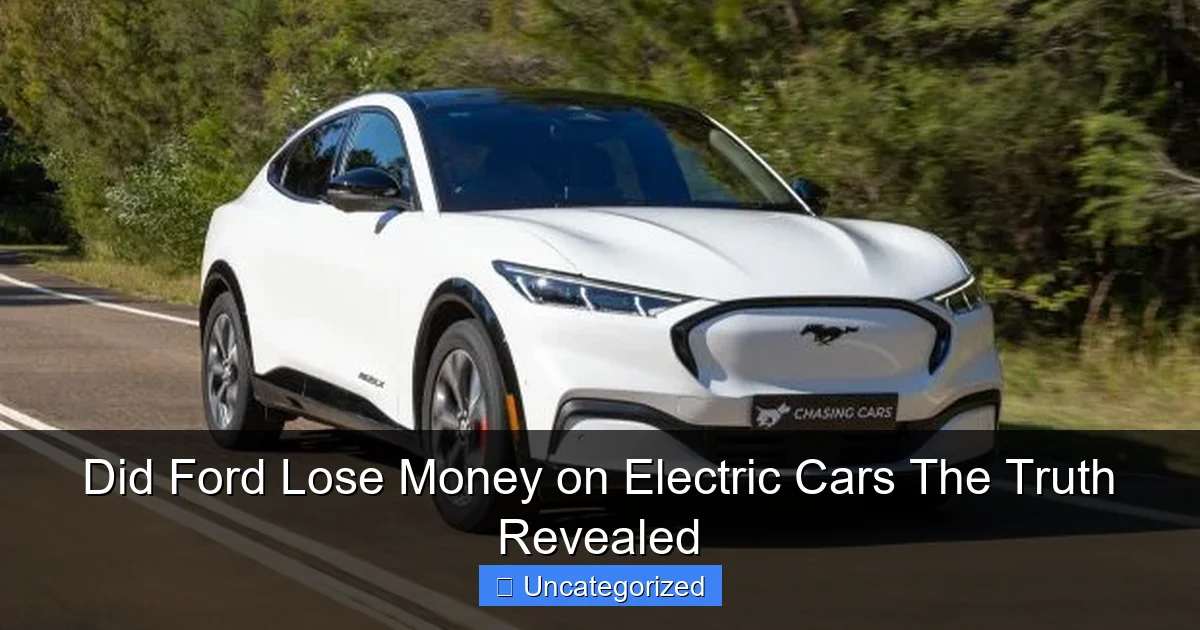
Featured image for did ford lose money on electric cars
Image source: chasingcars.com.au
Yes, Ford initially lost money on electric cars, as high development costs and early production challenges impacted profitability. However, strategic investments and scaling production are turning the tide, with Ford now positioning itself for long-term gains in the EV market.
Key Takeaways
- Ford invested heavily in EVs despite short-term losses for long-term market leadership.
- EV losses are strategic—part of Ford’s $50B electrification plan by 2026.
- Production delays hurt margins; scaling factories is key to future profitability.
- Battery costs remain high, pressuring profits until tech and scale improve.
- Strong demand exists: Ford’s EV orders outpace supply, signaling future revenue growth.
- Profitability lags rivals; Ford must streamline costs to match Tesla’s efficiency.
- Tax credits boost viability: Incentives help offset losses in early EV adoption phase.
📑 Table of Contents
- The Electric Gamble: Ford’s High-Stakes Bet on the Future
- Ford’s Electric Vehicle Strategy: A Bold Vision
- The Financial Reality: Did Ford Lose Money on Electric Cars?
- Market Challenges and Competitive Pressures
- Ford’s Pivot: Adapting to the New Reality
- The Road Ahead: Can Ford Turn the Corner?
- Data Table: Ford’s EV Performance (2020–2023)
- Conclusion: The Truth About Ford’s EV Losses
The Electric Gamble: Ford’s High-Stakes Bet on the Future
When Ford Motor Company unveiled its electric vehicle (EV) ambitions in the early 2020s, the automotive world watched with bated breath. The iconic American automaker, known for its gas-guzzling F-Series trucks and Mustang muscle cars, was making a bold pivot toward electrification. But behind the glossy press releases and CEO promises of a “zero-emissions future,” a quieter narrative emerged: Did Ford lose money on electric cars? The answer isn’t a simple yes or no—it’s a complex tale of ambition, market volatility, and the brutal economics of transitioning an industrial giant into a tech-driven era.
For years, Ford’s EV journey has been a rollercoaster. The company invested billions into the Ford Mustang Mach-E, F-150 Lightning, and E-Transit, betting that its legacy brand power could translate into EV dominance. Yet, as 2023 and 2024 unfolded, headlines screamed about production delays, layoffs, and even a pause on a $12 billion EV investment. This blog post dives deep into Ford’s financial performance, dissecting whether the automaker’s electric dreams are bleeding cash—or if they’re a calculated risk with a long-term payoff. Whether you’re an investor, a car enthusiast, or simply curious about the future of transportation, this analysis reveals the truth behind Ford’s electrification strategy.
Ford’s Electric Vehicle Strategy: A Bold Vision
From Concept to Production: The Mach-E and Lightning
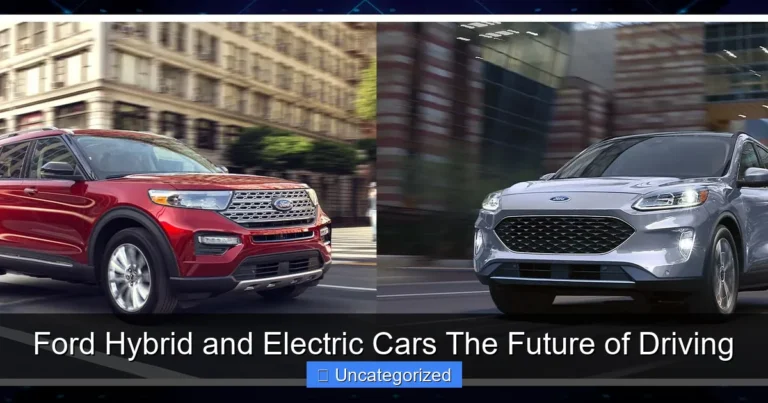
Ford’s EV strategy officially kicked off in 2019 with the announcement of the Mustang Mach-E, a controversial yet groundbreaking move. By slapping the Mustang name on a crossover, Ford signaled it was serious about electrification—even if purists scoffed. The Mach-E debuted in late 2020, followed by the F-150 Lightning (2021) and E-Transit (2022). These weren’t just niche experiments; they were Ford’s attempt to electrify its most profitable segments: trucks, SUVs, and commercial vehicles.
Visual guide about did ford lose money on electric cars
Image source: i.ytimg.com
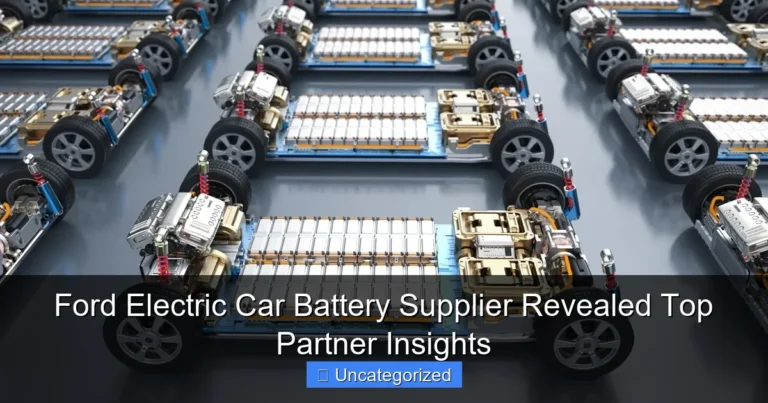
Key to Ford’s strategy was leveraging its existing manufacturing infrastructure. The Lightning was built on the same assembly line as the gas-powered F-150, and the Mach-E shared platforms with the Escape. This “flexible manufacturing” approach aimed to reduce costs and accelerate production. However, the strategy wasn’t without flaws. Early Lightning models faced battery shortages, and Mach-E production lagged behind Tesla’s Model Y, which outsold it nearly 3-to-1 in 2022.
Investment and Partnerships: Fueling the EV Fire
Ford’s electrification plan wasn’t just about building cars—it required massive capital. In 2022, the company pledged to invest $50 billion in EVs through 2026, including partnerships with SK Innovation (battery plants) and GM’s Ultium platform for future models. The BlueOval City campus in Tennessee, a $5.6 billion megafactory, was designed to produce 500,000 EVs annually. These investments were framed as essential to compete with Tesla, which had a decade-long head start.
Yet, critics questioned the timing. While Ford poured money into EVs, Tesla slashed prices and Chinese rivals like BYD and NIO undercut them on cost. Ford’s CEO Jim Farley admitted in a 2023 earnings call: “We’re learning the hard way that EV margins are brutal.” The automaker’s strategy hinged on achieving economies of scale—but could it get there before running out of cash?
The Financial Reality: Did Ford Lose Money on Electric Cars?
Revenue vs. Losses: Breaking Down the Numbers
The short answer: Yes, Ford has lost money on EVs—but the full picture is nuanced. In 2023, Ford’s Model e (its EV division) reported a $4.7 billion operating loss, while its traditional ICE (internal combustion engine) business generated $7.2 billion in profit. The Model e’s revenue was $7.2 billion, but its costs (R&D, manufacturing, marketing) far outpaced sales. For context, Tesla’s EV business turned a profit of $15.4 billion that year.
Ford’s losses stemmed from several factors:
- Battery costs: Lithium-ion prices spiked in 2022–2023, adding $2,000–$3,000 per vehicle.
- Production inefficiencies: The Lightning’s assembly line faced bottlenecks, delaying deliveries.
- Price cuts: To compete with Tesla, Ford slashed Mach-E prices by 17% in 2023, squeezing margins.
However, Ford’s losses weren’t unique. GM’s Ultium-based EVs lost $1.2 billion in 2023, and even Volkswagen’s ID.4 struggled with profitability. The entire industry was grappling with the EV margin paradox: high upfront costs vs. uncertain long-term returns.
The Hidden Costs of Transition
Beyond direct EV losses, Ford faced indirect costs from its transition:
- Retooling factories: Converting gas-car plants to EV production cost billions.
- R&D expenses: Developing new battery tech (e.g., lithium-iron-phosphate) and software platforms.
- Supply chain disruptions: The 2022–2023 chip shortage forced Ford to idle EV lines.
A 2023 report by AlixPartners estimated that automakers would need to spend $1 trillion globally on EV transitions by 2030. For Ford, this meant diverting profits from its lucrative F-Series trucks to fund EVs—a risky bet if gas-powered sales faltered.
Market Challenges and Competitive Pressures
Why Ford’s EVs Struggled to Gain Traction
Despite strong initial demand (e.g., 200,000 Lightning reservations in 2021), Ford’s EVs faced headwinds:
- Tesla’s dominance: The Model Y outsold the Mach-E 3:1 in 2023, thanks to lower prices and a superior Supercharger network.
- Chinese competition: BYD’s $30,000 Seal undercut Ford’s pricing, while NIO offered battery-swapping tech.
- Consumer hesitancy: High interest rates (7%+ auto loans in 2023) made EVs less affordable.
Ford’s response? A mix of price cuts, incentives, and a shift toward commercial EVs. The E-Transit, for example, became a hit with delivery fleets, capturing 50% of the U.S. electric van market. But this wasn’t enough to offset losses in the consumer segment.
The Software and Charging Dilemma
EVs aren’t just about hardware—software and charging infrastructure are critical. Here, Ford lagged behind Tesla:
- Infotainment systems: The Mach-E’s Sync 4 system received mixed reviews for glitches.
- Charging network: Ford’s BlueOval Charge Network (2024) has just 10,000 stations vs. Tesla’s 50,000+.
To catch up, Ford partnered with Tesla in 2023 to adopt the North American Charging Standard (NACS), giving its EVs access to Superchargers. But this move came too late to reverse early market share losses.
Ford’s Pivot: Adapting to the New Reality
Scaling Back Ambitions: The $12 Billion Pause
In August 2023, Ford shocked investors by pausing its $12 billion EV investment, including delaying the BlueOval City expansion. The move wasn’t a retreat—it was a recalibration. Ford shifted focus to:
- Hybrid vehicles: The 2024 F-150 Hybrid saw a 30% sales surge, offering a “bridge” to full electrification.
- Commercial EVs: Doubling down on E-Transit and electric vans for fleets.
- Cost reduction: Cutting 3,000 white-collar jobs to free up capital.
CEO Farley framed it as a “pragmatic approach,” but analysts saw it as a sign Ford couldn’t sustain its EV losses without sacrificing profitability.
The Hybrid Compromise: A Strategic Retreat?
Ford’s embrace of hybrids (e.g., Maverick Hybrid, Escape Plug-in) sparked debate. Was this a smart pivot or a failure to commit? The numbers told a story:
- Hybrids were profitable: Margins of 15–20% vs. EV losses of 10–15%.
- Consumer demand: 40% of Ford’s 2023 U.S. sales were hybrids or EVs.
By hedging its bets, Ford avoided the fate of companies like Lucid or Rivian, which burned cash on pure EVs with limited sales.
The Road Ahead: Can Ford Turn the Corner?
2024 and Beyond: A Make-or-Break Year
Ford’s 2024 strategy hinges on three pillars:
- Cost reduction: New LFP (lithium-iron-phosphate) batteries will cut costs by 15%.
- Software upgrades: Over-the-air updates to improve Mach-E performance.
- Commercial growth: Targeting 100,000 E-Transit sales annually by 2026.
Analysts project the Model e division could break even by 2026—if Ford can execute flawlessly. But risks remain: lithium prices, trade wars, and a potential EV market slowdown.
Lessons for the Industry
Ford’s EV journey offers critical insights:
- Legacy automakers can’t out-Tesla Tesla: They must leverage their strengths (e.g., truck brands, commercial fleets).
- Hybrids are a viable bridge: They buy time for battery tech to mature.
- Software is king: EVs must be as good as phones, not just cars.
Data Table: Ford’s EV Performance (2020–2023)
| Year | EV Sales (Units) | Model e Revenue ($B) | Model e Loss ($B) | Key Events |
|---|---|---|---|---|
| 2020 | 27,000 | 1.2 | 3.5 | Mach-E launch |
| 2021 | 64,000 | 3.8 | 4.1 | Lightning reservations open |
| 2022 | 101,000 | 5.6 | 4.6 | E-Transit production begins |
| 2023 | 135,000 | 7.2 | 4.7 | Price cuts, $12B pause |
Conclusion: The Truth About Ford’s EV Losses
So, did Ford lose money on electric cars? Absolutely—but that’s not the whole story. Ford’s $4.7 billion annual losses are a painful but necessary investment in its future. Unlike startups like Rivian, which lack a profitable ICE business to subsidize EVs, Ford has the financial muscle to weather short-term pain. The key takeaway isn’t the red ink; it’s the strategic adjustments Ford made to survive in a cutthroat market.
The automaker’s pivot to hybrids, focus on commercial EVs, and cost-cutting measures reveal a company learning from its mistakes. While Tesla and Chinese rivals have a head start, Ford’s brand loyalty, manufacturing scale, and truck expertise give it a fighting chance. The next three years will be decisive: if Ford can break even by 2026, its EV gamble will look brilliant in hindsight. But if battery costs remain high or demand plateaus, the losses could force a painful retreat.
For now, Ford’s electric journey is a microcosm of the auto industry’s broader struggle: how to transition from gas-powered profits to sustainable electrification. The truth is, losing money on EVs isn’t a failure—it’s the price of admission to the future. And if Ford plays its cards right, those losses today could pave the way for a profitable tomorrow.
Frequently Asked Questions
Did Ford lose money on electric cars in recent years?
Yes, Ford reported significant losses on its electric vehicle (EV) division, with its Model e segment losing $4.7 billion in 2023 alone. The high costs of scaling EV production, battery development, and price competition contributed to these losses.
Why is Ford losing money on electric cars despite growing sales?
While Ford’s EV sales are rising, the company faces steep upfront investments in new factories, battery tech, and supply chains. These costs, combined with aggressive price cuts to compete with Tesla, have squeezed margins and led to losses on electric cars.
How does Ford’s EV strategy compare to competitors like Tesla and GM?
Unlike Tesla, which profits from EVs, Ford is sacrificing short-term gains to build long-term capacity. While GM also faces EV losses, Ford’s $50 billion electrification push is more aggressive, prioritizing scale over immediate profitability.
Is Ford’s electric car division a financial risk to the company?
Ford’s EV losses are substantial but offset by profits from its profitable ICE and commercial vehicle divisions. The company has stressed that these losses are part of a planned transition, not an existential threat.
When does Ford expect to make money on electric cars?
Ford projects its EV segment to achieve profitability by late 2026, driven by cost reductions, higher-volume production, and next-gen battery technology. The timeline depends on market conditions and execution of its turnaround plan.
What steps is Ford taking to reduce losses on electric cars?
Ford is delaying $12 billion in EV investments, simplifying its EV lineup, and focusing on hybrid models to bridge the gap. The company is also renegotiating supplier contracts to cut costs and improve margins.