Did Ford Stop Making Electric Cars The Truth Revealed
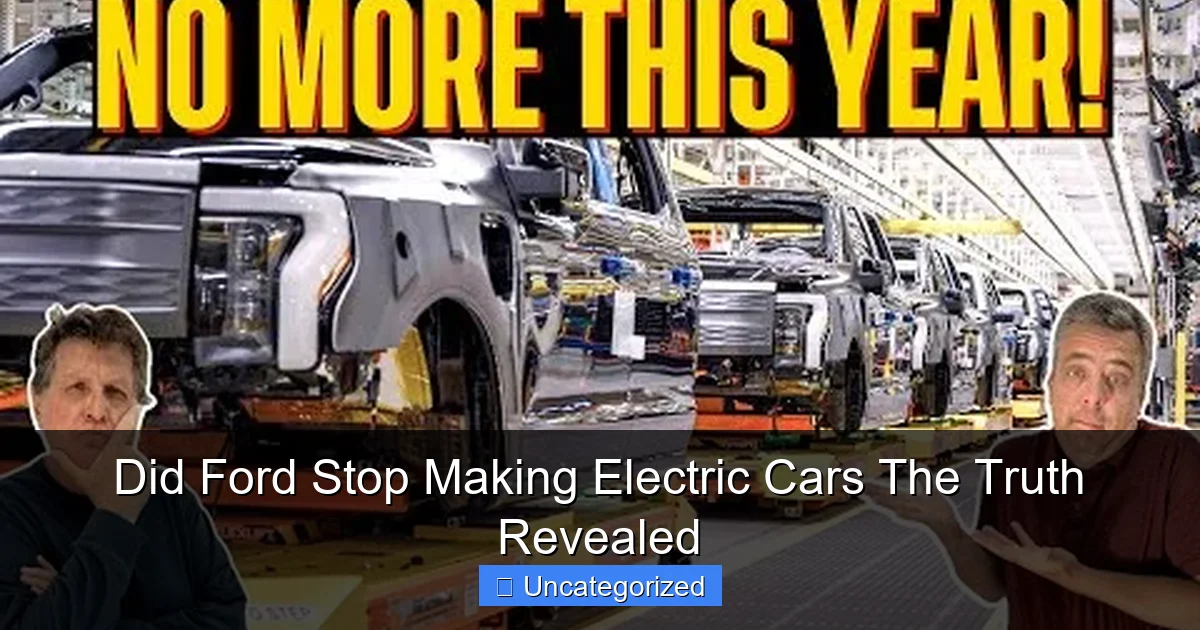
Featured image for did ford stop making electric cars
Image source: i.ytimg.com
Ford has not stopped making electric cars—in fact, the company is aggressively expanding its EV lineup with models like the Mustang Mach-E, F-150 Lightning, and E-Transit. Far from exiting the electric market, Ford is investing $50 billion through 2026 to scale production and innovate in battery technology, signaling a major commitment to an all-electric future.
Key Takeaways
- Ford hasn’t stopped: Actively expanding its electric vehicle lineup with new models.
- Focus on innovation: Investing heavily in EV technology and battery production.
- Mustang Mach-E leads: One of Ford’s top-selling electric SUVs globally.
- F-150 Lightning success: High demand for electric pickup truck signals strong market interest.
- Future plans revealed: Committed to 2+ million EV production by 2026.
- Charging network growth: Partnering to expand fast-charging infrastructure nationwide.
📑 Table of Contents
- Did Ford Stop Making Electric Cars? The Truth Revealed
- Ford’s Electric Vehicle Journey: A Historical Overview
- Current Ford Electric Vehicles: What’s Available Today?
- Why the Misconception That Ford Stopped Making EVs?
- Ford’s Future Electric Vehicle Plans: What’s Coming?
- Comparing Ford’s EV Strategy to Competitors
- Conclusion: Ford Is Not Stopping—It’s Accelerating
Did Ford Stop Making Electric Cars? The Truth Revealed
In an era defined by rapid technological advancements and growing environmental awareness, electric vehicles (EVs) have emerged as the vanguard of the automotive industry’s future. With climate change concerns escalating and governments worldwide pushing for stricter emissions regulations, automakers are under immense pressure to transition from fossil fuels to cleaner energy sources. Among these automakers, Ford—a legacy American brand with over a century of innovation—stands at a pivotal crossroads. For decades, Ford has been synonymous with powerful trucks, iconic muscle cars, and mass-market reliability. But in recent years, the question on many consumers’ minds has become increasingly urgent: Did Ford stop making electric cars?
This question isn’t just about product availability—it’s about Ford’s long-term strategy, its commitment to sustainability, and its place in a rapidly evolving market dominated by Tesla, GM, and a wave of new EV startups. While some headlines have suggested that Ford is scaling back or even halting its electric vehicle production, the reality is far more nuanced. In this comprehensive guide, we’ll dive deep into Ford’s current and future EV lineup, explore the reasons behind any production delays or strategic shifts, and reveal the truth about whether Ford has truly stopped making electric cars—or if, in fact, it’s accelerating its electrification efforts in ways that might surprise you. Whether you’re a potential buyer, an industry analyst, or simply an EV enthusiast, this article will provide the clarity and insights you need.
Ford’s Electric Vehicle Journey: A Historical Overview
Early Experiments and the Escape Hybrid Era
Ford’s journey into electrification didn’t begin with the Mustang Mach-E or the F-150 Lightning. It started decades earlier with hybrid technology. In 2004, Ford launched the Escape Hybrid, the first hybrid SUV in North America and a bold step into the world of alternative powertrains. This vehicle, powered by a 2.3-liter four-cylinder engine paired with an electric motor, offered improved fuel economy and reduced emissions—though it wasn’t a fully electric vehicle. The Escape Hybrid laid the groundwork for Ford’s future EV ambitions, demonstrating that the company was serious about innovation beyond traditional combustion engines.
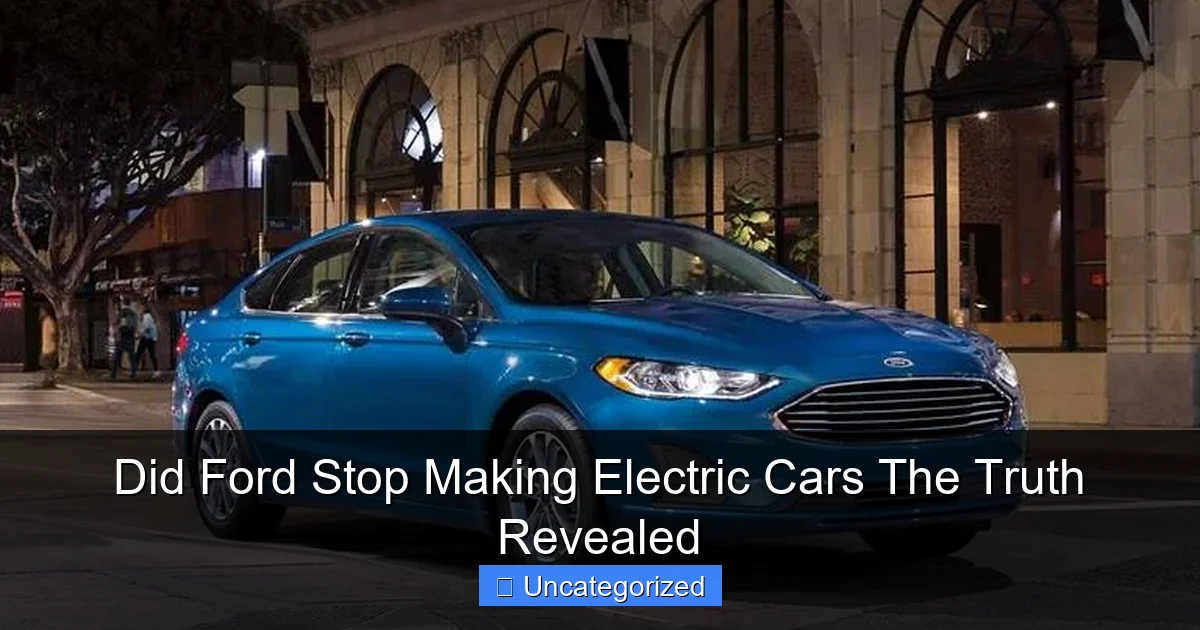
Visual guide about did ford stop making electric cars
Image source: images.jazelc.com
Over the next decade, Ford expanded its hybrid offerings with models like the Fusion Hybrid and Fusion Energi (a plug-in hybrid), as well as the Focus Electric—a fully battery-electric vehicle launched in 2011. The Focus Electric was Ford’s first mass-market EV, offering a modest 76-mile range on a single charge. While it didn’t achieve the sales success of Tesla’s early models, it proved that Ford could produce a functional, all-electric car. However, the Focus Electric was quietly discontinued in 2018, leading to speculation that Ford was stepping back from EVs.
The Strategic Pivot: From Hybrids to Full Electrification
The discontinuation of the Focus Electric wasn’t a retreat—it was a strategic pivot. By 2017, Ford announced a $11 billion investment in electrification, signaling a major shift in direction. This investment wasn’t just about building more hybrids; it was about creating a new generation of fully electric vehicles designed to compete in a market that was rapidly embracing zero-emission transportation. The company established Team Edison, an internal EV-focused division, and began developing a modular EV platform to underpin future models.
One of the most significant milestones in this new era was the 2021 launch of the Mustang Mach-E. Marketed not just as an EV but as a legitimate successor to the Mustang legacy, the Mach-E combined performance, style, and cutting-edge tech in a package that challenged Tesla’s dominance in the midsize SUV segment. Unlike the Focus Electric, which was seen as a compliance car (built primarily to meet emissions regulations), the Mach-E was developed with genuine consumer appeal in mind. This shift marked a turning point: Ford was no longer dabbling in EVs—it was going all in.
Current Ford Electric Vehicles: What’s Available Today?
The Mustang Mach-E: Performance Meets Practicality
As of 2024, the Mustang Mach-E remains Ford’s flagship electric SUV. Available in multiple trims—from the standard-range rear-wheel drive (RWD) to the high-performance Mach-E GT with dual motors and all-wheel drive (AWD)—it offers something for every type of driver. The base model delivers around 250 miles of EPA-estimated range, while the extended-range versions can achieve up to 314 miles. With fast charging capabilities (up to 150 kW DC), the Mach-E can gain about 60 miles of range in just 10 minutes under ideal conditions.
What sets the Mach-E apart is its blend of performance and practicality. It accelerates from 0 to 60 mph in as little as 3.5 seconds (in GT trim), yet it also offers a spacious interior, advanced infotainment with SYNC 4A, and Ford’s Co-Pilot360 suite of driver-assist features. It’s a vehicle that proves EVs can be both fun to drive and family-friendly.
F-150 Lightning: Electrifying America’s Best-Selling Truck
Perhaps the most anticipated Ford EV of the decade is the F-150 Lightning, the all-electric version of America’s best-selling vehicle for over 40 years. Launched in 2022, the Lightning retains the rugged utility of the F-150 while adding the benefits of electric propulsion: instant torque, lower operating costs, and zero tailpipe emissions. With a standard-range battery offering 240 miles and an extended-range version reaching 320 miles, it caters to both urban commuters and rural contractors.
The Lightning also introduces innovative features like Pro Power Onboard, which turns the truck into a mobile power station capable of running tools, appliances, or even an entire home during outages (up to 9.6 kW of output). Ford has also integrated bidirectional charging, allowing owners to power their homes using the truck’s battery—a feature that’s gaining traction in the era of climate resilience. With strong initial demand and production scaling up at the Rouge Electric Vehicle Center in Michigan, the F-150 Lightning is a clear signal that Ford is serious about electrifying its core product lines.
Transit Custom and E-Transit: Electrifying the Commercial Fleet
Beyond passenger vehicles, Ford is electrifying its commercial offerings. The E-Transit, launched in 2022, is an all-electric version of the popular Transit van, designed for delivery services, contractors, and fleet operators. With a 275-mile range (on the low-roof, long-wheelbase model), it’s ideal for urban delivery routes. Ford has also announced the upcoming Transit Custom Electric, set to launch in Europe and potentially North America, further expanding its commercial EV portfolio.
For businesses, the E-Transit offers significant cost savings over time. With fewer moving parts, lower maintenance costs, and reduced fuel expenses, it’s a smart investment. Ford’s strategy here is clear: dominate the commercial EV market by leveraging its existing relationships with fleet operators and offering vehicles that meet real-world operational needs.
Why the Misconception That Ford Stopped Making EVs?
Discontinuation of Older Models
One of the primary reasons people believe Ford stopped making electric cars is the discontinuation of early EV models like the Focus Electric and C-Max Energi. These vehicles were phased out between 2018 and 2020, creating a temporary gap in Ford’s EV lineup. During this period, the company focused on developing next-generation platforms and retooling factories, which led to a lull in EV production. This gap was misinterpreted by some as a retreat from electrification, when in reality, it was a necessary step in a larger transformation.
For example, the Focus Electric was built on an outdated platform and had limited range compared to newer EVs. Instead of continuing to produce a low-demand, underperforming model, Ford chose to reallocate resources to more competitive vehicles. This is a common practice in the auto industry—phasing out older models to make way for innovation.
Production Delays and Supply Chain Challenges
Another factor fueling the misconception is production delays for new models like the F-150 Lightning. When the Lightning was first announced, Ford received over 200,000 reservations—far exceeding initial production capacity. Due to supply chain disruptions (especially for batteries and semiconductors), Ford had to delay deliveries and temporarily halt production in 2023. These setbacks were widely reported, often with headlines suggesting Ford was “pausing” or “scaling back” EV production.
However, Ford responded by investing in new battery plants (like the BlueOval SK joint venture with SK On) and expanding manufacturing at existing facilities. By mid-2024, production was back on track, with plans to produce 150,000 Lightnings annually. The delays were a symptom of high demand and global supply issues, not a lack of commitment to EVs.
Misinterpretation of Strategic Shifts
Ford has also made strategic decisions that, while necessary, have been misinterpreted. For instance, in 2023, Ford announced it would delay the launch of a new $3.5 billion EV battery plant in Michigan and reevaluate its EV roadmap. This led to speculation that the company was pulling back from electrification. However, Ford clarified that the delay was due to a need to reassess technology choices (e.g., shifting from LFP to NMC batteries) and ensure long-term competitiveness, not a retreat from EVs.
Similarly, Ford has emphasized a “flexible manufacturing” strategy, where factories can produce both EVs and internal combustion engine (ICE) vehicles on the same line. This approach allows Ford to respond to market demand without overcommitting to EVs prematurely—especially in regions where EV adoption is slower. Critics saw this as hesitation, but Ford views it as smart, data-driven planning.
Ford’s Future Electric Vehicle Plans: What’s Coming?
Next-Generation EVs on the BlueOval Platform
Ford’s future EV lineup is built on the BlueOval Platform, a dedicated electric vehicle architecture designed for scalability and efficiency. This platform will underpin a range of upcoming models, including a new three-row electric SUV (codenamed Project T3) and a next-generation electric F-Series pickup. The BlueOval platform supports advanced battery technologies, including lithium iron phosphate (LFP) and nickel manganese cobalt (NMC) chemistries, allowing Ford to optimize range, cost, and safety.
Project T3, set to launch in 2025, is expected to offer over 350 miles of range, ultra-fast charging (15 minutes for 100 miles), and a fully digital cockpit. It’s designed to compete with vehicles like the Tesla Model X and Rivian R1S, signaling Ford’s intent to dominate the premium SUV segment.
Expansion of Battery Production and Charging Infrastructure
To support its EV ambitions, Ford is investing heavily in domestic battery production. Through its BlueOval SK joint venture, the company is building three battery plants in Kentucky and Tennessee, with a combined capacity of 120 GWh annually—enough to power 1.2 million EVs per year. These plants will produce batteries for the Lightning, Mach-E, and future models, reducing reliance on foreign suppliers and lowering costs.
Ford is also expanding its charging network. The company has partnered with ChargePoint and EVgo to provide access to over 100,000 charging stations across North America. Additionally, Ford offers the FordPass Charging Network, which integrates multiple providers into a single app, making it easier for drivers to find and use chargers. The company is also exploring wireless charging and mobile charging solutions for fleet operators.
Global Expansion and New Markets
While Ford’s EV focus is currently strongest in North America, the company is also expanding into Europe and Asia. The Explorer Electric and Capri Electric (rebadged Mach-E models) are now available in Europe, with plans for localized production to meet regional demand. Ford is also developing a small electric pickup for emerging markets, aiming to capture the growing demand for affordable, compact EVs in regions like Southeast Asia and South America.
Comparing Ford’s EV Strategy to Competitors
Ford vs. General Motors
General Motors (GM) has taken an aggressive approach to electrification, with plans to phase out ICE vehicles by 2035. GM’s Ultium platform powers a diverse lineup, including the Chevrolet Silverado EV and GMC Hummer EV. While GM has a broader portfolio, Ford’s strategy is more focused on core segments—trucks and SUVs—where it has brand strength and customer loyalty. Ford’s F-150 Lightning, for example, outsells GM’s Silverado EV in its segment, proving that brand trust matters in the EV transition.
Ford vs. Tesla
Tesla remains the EV market leader, with a vertically integrated model that includes its own batteries, software, and charging network. However, Ford leverages its strengths in manufacturing, dealer networks, and customer service. Tesla’s direct-to-consumer sales model has advantages, but Ford’s 3,000+ dealerships provide a massive advantage in test drives, maintenance, and trade-ins. Additionally, Ford’s vehicles are often priced more competitively than Tesla’s, making them accessible to a wider audience.
Data Table: Ford EV Lineup vs. Key Competitors (2024)
| Model | Range (EPA) | Starting Price | Top Trim Performance | Key Feature |
|---|---|---|---|---|
| Ford Mustang Mach-E | 250–314 miles | $42,995 | 480 hp, 0–60 in 3.5s (GT) | SYNC 4A infotainment |
| Ford F-150 Lightning | 240–320 miles | $49,995 | 580 hp, 0–60 in 4.0s | Pro Power Onboard (9.6 kW) |
| Ford E-Transit | 126–275 miles | $47,995 | 266 hp, 317 lb-ft torque | Commercial fleet integration |
| Tesla Model Y | 260–330 miles | $42,990 | 455 hp, 0–60 in 3.5s | Supercharger network |
| Chevrolet Silverado EV | 250–400 miles | $55,000 | 754 hp, 0–60 in 4.5s | Multi-Flex Tailgate |
Conclusion: Ford Is Not Stopping—It’s Accelerating
So, did Ford stop making electric cars? The unequivocal answer is no. While the company has faced challenges—production delays, supply chain issues, and strategic adjustments—these are not signs of retreat. Instead, they reflect the complexities of transitioning a century-old automaker into a leader in the electric age. Ford is not only continuing to produce EVs; it is expanding its electric lineup, investing billions in battery technology, and reimagining its most iconic vehicles for a zero-emission future.
The discontinuation of older models like the Focus Electric was not an abandonment of EVs but a necessary step toward innovation. The Mustang Mach-E and F-150 Lightning are not compliance cars—they are vehicles built to win customers, outperform competitors, and shape the future of mobility. With upcoming models like the three-row SUV and next-gen electric trucks, Ford is positioning itself as a major player in the global EV market.
For consumers, this means more choices, better performance, and lower costs as production scales. For the environment, it means a major automaker doubling down on sustainability. And for the industry, it means Ford is proving that legacy automakers can not only survive the EV revolution—they can lead it. So the next time someone asks, “Did Ford stop making electric cars?” you can confidently say: Not only did they not stop—they’re just getting started.
Frequently Asked Questions
Did Ford stop making electric cars in 2023?
No, Ford did not stop making electric cars in 2023. The automaker has expanded its EV lineup, including the Mustang Mach-E and F-150 Lightning, with plans for further growth.
Is Ford phasing out its electric vehicle production?
Ford is not phasing out electric vehicle production; instead, it’s investing $50 billion through 2026 to scale EV manufacturing and develop next-gen models like the upcoming “Project T3” truck.
Why did Ford discontinue the Focus Electric?
Ford discontinued the Focus Electric in 2018 to focus on higher-demand EVs like the Mustang Mach-E and E-Transit, aligning with shifting consumer preferences and market trends.
Are Ford’s electric cars still available to buy?
Yes, Ford’s electric cars, including the Mustang Mach-E, F-150 Lightning, and E-Transit van, are actively sold in North America and Europe, with ongoing updates and new trims.
Did Ford stop making electric cars to focus on hybrids?
No, Ford’s strategy includes both EVs and hybrids. While expanding hybrid options, the company remains committed to its electric car lineup, targeting 2 million annual EV production by 2026.
What’s next for Ford’s electric car plans?
Ford is launching affordable EVs (under $25,000) and expanding battery tech, proving its long-term commitment to electrification despite temporary production adjustments for supply chain optimization.