Do Ford Have Electric Cars Explore Their EV Lineup Now
Featured image for do ford have electric cars
Image source: media.autoexpress.co.uk
Yes, Ford has fully embraced the electric future with a growing lineup of innovative EVs, including the popular Mustang Mach-E, the F-150 Lightning pickup, and the E-Transit van. These electric vehicles combine performance, advanced tech, and sustainability, proving Ford is a serious contender in the EV market—making now the perfect time to explore their electrifying options.
Key Takeaways
- Ford offers multiple EVs: Explore the Mustang Mach-E, F-150 Lightning, and E-Transit van.
- Zero emissions: All Ford EVs provide full electric, eco-friendly driving with no tailpipe emissions.
- Impressive range: Choose models with 200–300+ miles per charge for daily or long-distance use.
- Fast charging: Recharge up to 80% in under 45 minutes with DC fast charging support.
- Tax incentives: Many Ford EVs qualify for federal and state electric vehicle rebates.
- Advanced tech: Enjoy SYNC 4A, over-the-air updates, and smart driver-assist features standard.
📑 Table of Contents
- Do Ford Have Electric Cars? A Deep Dive Into Their Expanding EV Lineup
- Ford’s Commitment to Electrification: The Road to 2030 and Beyond
- The Current Ford Electric Vehicle Lineup: Models You Can Buy Today
- Charging Infrastructure and Ownership Experience: How Ford Supports EV Drivers
- Performance, Technology, and Innovation: What Sets Ford EVs Apart
- Comparing Ford EVs to Competitors: How Do They Stack Up?
- Conclusion: Ford Is All-In on Electric Vehicles
Do Ford Have Electric Cars? A Deep Dive Into Their Expanding EV Lineup
The automotive world is undergoing a seismic shift, and at the forefront of this revolution stands Ford Motor Company, an American icon that’s no longer just about roaring V8 engines and pickup trucks. In recent years, Ford has made a bold pivot toward electrification, investing billions into a future powered by batteries rather than gasoline. But the question on many consumers’ minds remains: Do Ford have electric cars? The answer is a resounding yes—and Ford isn’t just dipping a toe into the electric vehicle (EV) market; they’re diving in headfirst with a rapidly growing lineup of fully electric models designed to meet the demands of modern drivers.
From sleek SUVs to rugged trucks, Ford’s electric vehicles are engineered to deliver performance, innovation, and practicality without compromising on the brand’s legendary durability. Whether you’re a city commuter, a weekend adventurer, or a fleet manager looking to go green, Ford’s EV offerings aim to provide compelling alternatives to traditional internal combustion engine (ICE) vehicles. In this comprehensive guide, we’ll explore Ford’s electric car lineup, their strategic investments in EV technology, charging infrastructure, and what the future holds for one of America’s most storied automakers. If you’ve been curious about whether Ford has electric cars—and if they’re worth considering—this is your definitive resource.
Ford’s Commitment to Electrification: The Road to 2030 and Beyond
Ford’s journey into the electric vehicle market is not a recent trend but a long-term strategy backed by significant financial and technological investments. The company has committed to spending over $50 billion globally on electrification between 2022 and 2026, with a clear goal: to become a leader in the North American EV market and achieve carbon neutrality across its global operations by 2050. This isn’t just a marketing ploy—it’s a transformation rooted in real infrastructure, manufacturing upgrades, and a reimagined product portfolio.
Visual guide about do ford have electric cars
Image source: yankodesign.com
BlueOval: Ford’s EV and Battery Manufacturing Initiative
At the heart of Ford’s electrification strategy is BlueOval, a multi-billion-dollar initiative focused on building EV and battery manufacturing plants across the United States. Key projects include:
- BlueOval SK Battery Park in Glendale, Kentucky: A joint venture with SK On to produce batteries for Ford and Lincoln EVs, creating over 5,000 jobs.
- BlueOval City in Stanton, Tennessee: A massive 3,600-acre campus dedicated to manufacturing the next generation of electric F-Series trucks and advanced batteries.
- Upgrades to existing plants like the Cuautitlán Assembly Plant in Mexico (now producing the Mustang Mach-E) and the Dearborn Truck Plant (transitioning to build the F-150 Lightning).
These facilities are designed to produce millions of EVs and batteries annually, ensuring Ford can meet growing consumer demand and reduce reliance on overseas supply chains.
Ford’s 2030 EV Goals: What to Expect
Ford’s roadmap includes ambitious targets:
- By 2026, Ford aims to produce 2 million EVs globally per year.
- By 2030, Ford plans for 50% of its global vehicle sales to be electric, with full electrification of its European lineup.
- Launch of 16 fully electric vehicles by 2024, including new models for commercial fleets and personal use.
This aggressive timeline underscores Ford’s confidence in its EV technology and its determination to compete with Tesla, GM, and other EV pioneers. Unlike legacy automakers that have been slow to adapt, Ford is moving fast—and its lineup reflects that momentum.
The Current Ford Electric Vehicle Lineup: Models You Can Buy Today
So, what electric cars does Ford currently offer? As of 2024, Ford’s EV lineup includes a mix of passenger vehicles, SUVs, and trucks, each targeting different segments of the market. These vehicles are built on dedicated EV platforms (like the Global Electric Vehicle Platform) or adapted from existing architectures, ensuring a balance between innovation and familiarity.
Ford Mustang Mach-E: The Electric SUV That Drives Like a Sports Car
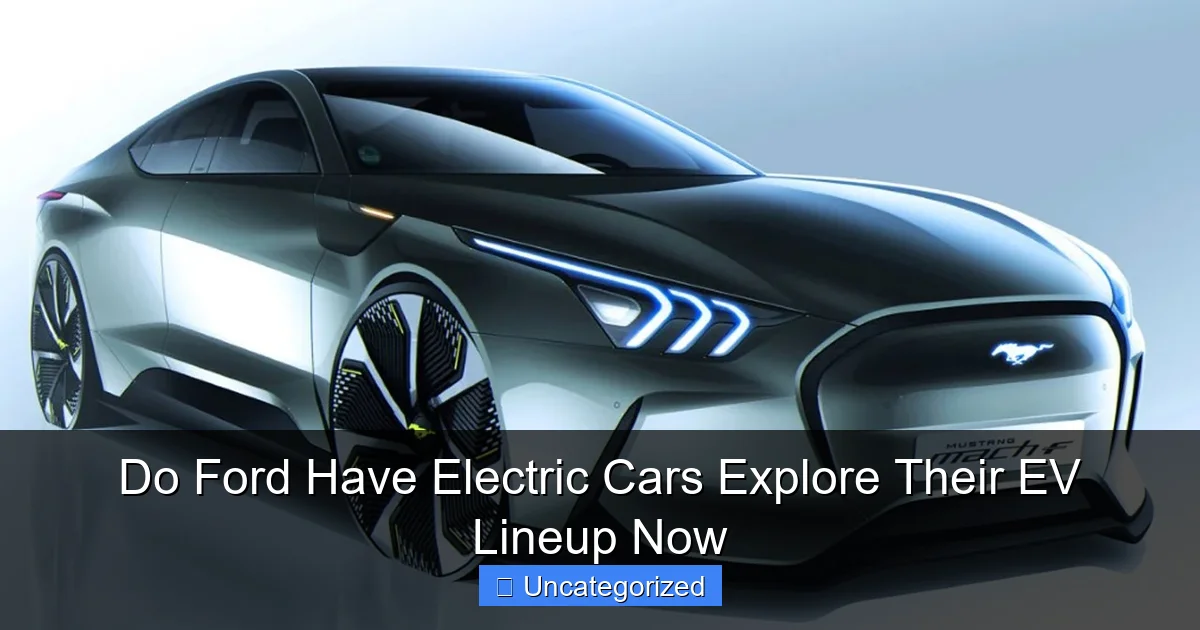
The Mustang Mach-E is Ford’s first all-electric SUV and a bold reimagining of the Mustang nameplate. Despite initial controversy among purists, the Mach-E has proven to be a hit, combining Mustang-inspired design with cutting-edge EV performance.
- Range: Up to 314 miles (Extended Range RWD)
- Power: Up to 480 horsepower (GT Performance Edition)
- 0-60 mph: As quick as 3.5 seconds (GT)
- Features: 15.5-inch touchscreen with SYNC 4A, BlueCruise hands-free driving, panoramic glass roof
The Mach-E is ideal for drivers who want the space and practicality of an SUV with the thrill of a sports car. It’s also available in rear-wheel drive (RWD) and all-wheel drive (AWD) configurations, making it versatile for various climates and driving conditions. Pro tip: Opt for the GT trim if you prioritize performance, or the Premium model for the best balance of range and features.
Ford F-150 Lightning: The Electric Pickup That’s Changing the Game
The F-150 Lightning is Ford’s electric version of America’s best-selling pickup truck. It retains the F-150’s ruggedness while adding EV-specific innovations like a massive front trunk (frunk) and Pro Power Onboard—a built-in generator that can power tools, campsites, or even your home during outages.
- Range: Up to 320 miles (Extended Range)
- Power: Up to 580 horsepower and 775 lb-ft of torque
- Towing: Up to 10,000 lbs
- Payload: Up to 2,235 lbs
What sets the Lightning apart is its dual-motor AWD system and instant torque delivery, making it faster off the line than many sports cars. It’s also packed with smart features like FordPass Power My Trip, which helps plan charging stops on long journeys. For contractors, farmers, or outdoor enthusiasts, the F-150 Lightning offers unmatched utility with zero tailpipe emissions.
Ford E-Transit: Electrifying the Commercial Fleet
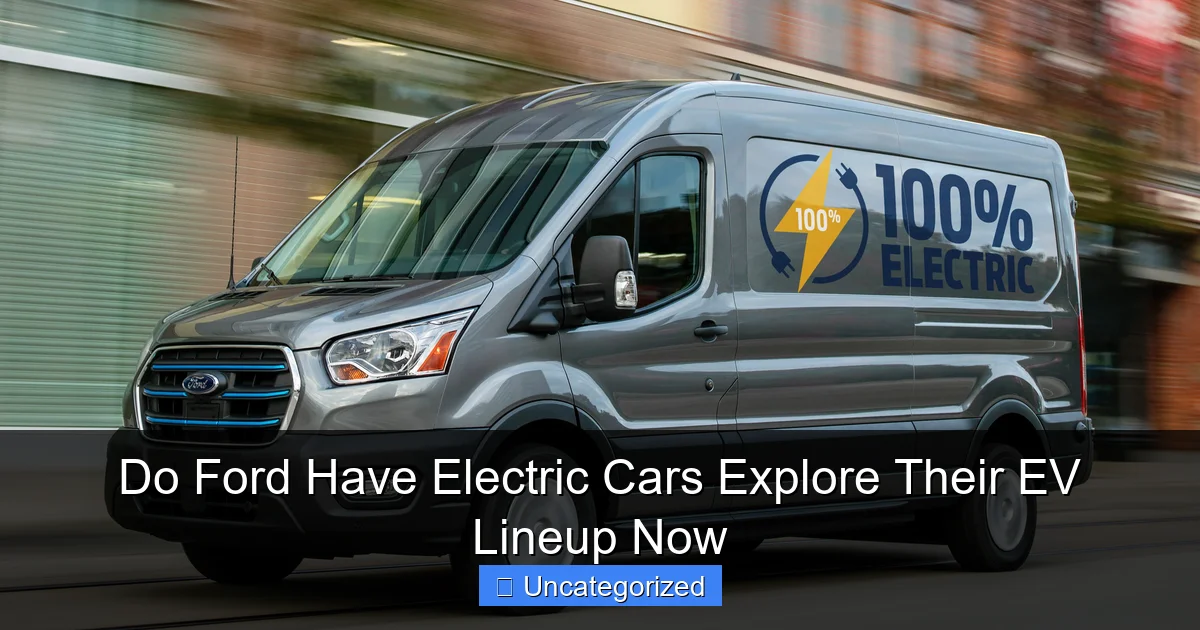
Ford isn’t just targeting individual buyers—it’s also electrifying the workhorse of businesses: the van. The E-Transit is Ford’s all-electric version of the popular Transit van, designed for delivery services, tradespeople, and fleet operators.
- Range: 126 miles (ideal for urban delivery routes)
- Cargo Capacity: Up to 487.3 cubic feet
- Charging: 150 kW DC fast charging (15-80% in 34 minutes)
- Features: SYNC 4 infotainment, Ford Pro Telematics, remote diagnostics
The E-Transit is a game-changer for last-mile delivery companies looking to reduce fuel costs and meet sustainability goals. With over 25,000 E-Transits sold by early 2024, it’s one of the most successful commercial EVs on the market.
Upcoming Models: What’s Next for Ford EVs?
Ford has teased several upcoming electric models, including:
- Electric Explorer: A European-market SUV based on the Volkswagen MEB platform.
- Electric Puma: A compact crossover for urban drivers.
- Next-Gen F-Series EV: A larger electric truck platform launching in 2025.
These models will further expand Ford’s EV footprint, targeting segments like compact crossovers and heavy-duty trucks.
Charging Infrastructure and Ownership Experience: How Ford Supports EV Drivers
Buying an electric car is only half the battle—the other half is charging it. Ford understands this and has built a robust ecosystem to support EV owners, from home charging solutions to public network access.
Ford Charge Station Pro: Home Charging Made Easy
Ford offers the Charge Station Pro, a Level 2 home charger that delivers up to 19.2 kW of power—enough to add up to 30 miles of range per hour. It’s compatible with all Ford EVs and can be installed by certified electricians. For F-150 Lightning owners, the station also enables Intelligent Backup Power, allowing the truck to power your home during outages (with a compatible transfer switch).
Tip: Take advantage of federal and state incentives—many homeowners can get up to 30% off the cost of a home charger through the Inflation Reduction Act.
FordPass Power My Trip: Smart Charging on the Go
The FordPass app includes a feature called Power My Trip, which automatically plans charging stops based on your route, vehicle range, and real-time charger availability. It integrates with over 160,000 charging points across North America, including:
- Electrify America (Ford has a partnership with 2,500+ stations)
- ChargePoint
- EVgo
F-150 Lightning and Mach-E owners get two years of complimentary charging at Electrify America stations—a huge perk for long-distance travelers.
BlueOval Charge Network: A Seamless Public Charging Experience
Ford is developing the BlueOval Charge Network, a unified platform that allows Ford EV owners to access multiple charging networks through a single account and payment method. The network includes:
- 10,000+ fast chargers
- 45,000+ Level 2 chargers
- Real-time availability and pricing
This eliminates the hassle of managing multiple apps and accounts, making public charging as seamless as refueling a gas car.
Performance, Technology, and Innovation: What Sets Ford EVs Apart
Ford’s electric vehicles aren’t just about replacing gas with electricity—they’re about redefining the driving experience with advanced technology and performance features that go beyond the competition.
BlueCruise: Ford’s Hands-Free Driving Technology
Available on the Mach-E and F-150 Lightning, BlueCruise is Ford’s answer to Tesla’s Autopilot. It allows for hands-free driving on over 130,000 miles of pre-mapped highways in the U.S. and Canada. The system uses:
- Cameras and radar to monitor traffic
- Driver-facing camera to ensure attention
- Over-the-air updates to improve functionality
While not fully autonomous, BlueCruise reduces driver fatigue on long trips and is continuously being upgraded with new features like lane change assist and traffic jam assist.
Pro Power Onboard: The Ultimate Mobile Generator
Exclusive to the F-150 Lightning, Pro Power Onboard provides up to 9.6 kW of power—enough to run power tools, a coffee maker, or even a small house. With multiple outlets (including 120V and 240V), it turns your truck into a mobile job site or emergency power source. During the 2021 Texas power crisis, Lightning owners used their trucks to power homes for days—a testament to its real-world utility.
Over-the-Air Updates: Always Improving
Like Tesla, Ford EVs receive over-the-air (OTA) updates that improve performance, add new features, and fix bugs without requiring a dealership visit. Recent updates have included:
- Extended range via battery optimization
- Improved charging speeds
- New infotainment features
This ensures your Ford EV gets better over time, not older.
Comparing Ford EVs to Competitors: How Do They Stack Up?
To help you make an informed decision, here’s a comparison of Ford’s key EV models against major competitors in their respective segments. The table below highlights range, performance, pricing, and unique features.
| Model | Range (EPA) | Horsepower | 0-60 mph | Starting Price | Key Feature |
|---|---|---|---|---|---|
| Ford Mustang Mach-E GT | 270 miles | 480 hp | 3.5 sec | $60,000 | BlueCruise hands-free driving |
| Ford F-150 Lightning (XLT) | 230 miles (Standard), 320 miles (Extended) | 452 hp (Standard), 580 hp (Extended) | 4.5 sec | $49,995 | Pro Power Onboard (9.6 kW) |
| Tesla Model Y Long Range | 330 miles | 384 hp | 4.8 sec | $47,740 | Supercharger network |
| Chevy Silverado EV RST | 400 miles | 754 hp | 4.5 sec | $94,500 | Midgate for extended cargo |
| Rivian R1S (Adventure) | 316 miles | 835 hp | 3.0 sec | $78,000 | Off-road capability |
As the table shows, Ford EVs offer competitive range and performance at more accessible price points than some rivals. The F-150 Lightning, in particular, delivers exceptional value for a full-size electric truck, especially with its Pro Power Onboard and home backup capabilities. While Tesla leads in range and charging network density, Ford counters with better integration of work-focused features and a more traditional dealership support system.
Conclusion: Ford Is All-In on Electric Vehicles
So, do Ford have electric cars? Absolutely—and they’re not just playing catch-up. Ford is aggressively building a diverse, innovative, and practical lineup of electric vehicles that cater to a wide range of drivers, from urban commuters to heavy-duty contractors. With models like the Mustang Mach-E, F-150 Lightning, and E-Transit, Ford proves that electric doesn’t mean compromising on power, utility, or style.
Beyond the vehicles themselves, Ford is investing in the entire EV ecosystem—home charging, public networks, battery production, and smart technology—to ensure a seamless ownership experience. Their BlueOval initiative, BlueCruise driving tech, and Pro Power Onboard features demonstrate a deep understanding of what modern drivers need.
Whether you’re considering your first EV or upgrading from a gas-powered vehicle, Ford’s electric lineup deserves serious consideration. With competitive pricing, strong performance, and real-world practicality, Ford is positioning itself as a major force in the electric revolution. The future is electric, and Ford is charging ahead—literally and figuratively. So why wait? Explore Ford’s EV lineup today and drive into the future with confidence.
Frequently Asked Questions
Do Ford have electric cars available in 2024?
Yes, Ford offers several fully electric vehicles in 2024, including the Mustang Mach-E, F-150 Lightning, and E-Transit van. These models showcase Ford’s commitment to expanding their EV lineup.
What are the most popular Ford electric cars?
The Mustang Mach-E and F-150 Lightning are Ford’s most popular electric vehicles, combining performance, range, and practicality. Both models have received strong market reception for their innovation and value.
Do Ford electric cars qualify for government incentives?
Many Ford EVs, including the Mustang Mach-E and F-150 Lightning, may qualify for federal and state tax credits in the U.S., depending on eligibility requirements. Check current guidelines to confirm incentive availability.
How long does it take to charge a Ford electric car?
Charging times vary by model and charger type: Level 2 (240V) charging typically takes 8–10 hours, while DC fast charging can replenish up to 80% in 30–45 minutes. The FordPass app helps locate compatible charging stations.
Do Ford have electric cars with over 300 miles of range?
Yes, certain trims of the F-150 Lightning and Mustang Mach-E offer EPA-estimated ranges exceeding 300 miles on a single charge. Battery size and driving conditions affect actual range.
Are Ford electric cars reliable compared to other brands?
Ford electric cars have proven reliable, with strong warranties (8-year/100,000-mile battery coverage) and positive reliability ratings from sources like Consumer Reports. They compete well with other major EV brands.