Do Ford Make Electric Cars Explore Their EV Lineup Today

Featured image for do ford make electric cars
Image source: thedailyautomotive.com
Yes, Ford makes electric cars, and they’re leading the charge with a growing EV lineup that combines performance, innovation, and American engineering. From the all-electric F-150 Lightning to the sporty Mustang Mach-E and the E-Transit van, Ford offers EVs for every lifestyle—proving they’re serious about an electrified future.
Key Takeaways
- Ford offers multiple EVs including the Mustang Mach-E and F-150 Lightning.
- Electric F-150 Lightning delivers power, range, and advanced tech features.
- Mustang Mach-E blends performance with practicality for daily driving needs.
- Ford invests $50B+ in electrification through 2026 to expand its EV lineup.
- BlueOval Charging Network provides seamless access to 10,000+ charging stations.
- Pro Power Onboard lets EVs power tools, homes, or appliances on demand.
📑 Table of Contents
- Do Ford Make Electric Cars? A Look at the Blue Oval’s Bold EV Journey
- Ford’s Electric Vehicle Strategy: More Than Just a Trend
- Current Ford Electric Vehicle Lineup: Models You Can Buy Today
- Performance, Range, and Charging: What to Expect
- Ownership Benefits and Incentives: Why Go Electric with Ford?
- Challenges and Future Outlook: Ford’s Road Ahead
- Conclusion: Ford Is All-In on Electric—And You Should Be Too
Do Ford Make Electric Cars? A Look at the Blue Oval’s Bold EV Journey
The automotive world is undergoing a seismic shift, and one of the most prominent players embracing this transformation is Ford. For over a century, Ford has been synonymous with American engineering, from the revolutionary Model T to the rugged F-Series trucks. But in recent years, the iconic automaker has made a decisive pivot toward sustainability and innovation—answering the question: Do Ford make electric cars? The answer is a resounding yes. Ford isn’t just dipping its toes into the electric vehicle (EV) market; it’s diving in headfirst, investing billions in battery technology, charging infrastructure, and a full lineup of zero-emission vehicles.
As governments worldwide set ambitious carbon-neutral goals and consumers demand greener alternatives, Ford has positioned itself as a leader in the EV revolution. With a strategic plan called Ford+, the company aims to deliver 2 million EVs annually by 2026. From sleek crossovers to powerful pickup trucks, Ford’s electric offerings blend the brand’s legacy of performance with cutting-edge electrification. Whether you’re a long-time Ford loyalist or a first-time EV shopper, the Blue Oval now has an electric model tailored to your lifestyle. Let’s explore the full scope of Ford’s electric vehicle lineup and what makes it one of the most compelling choices in today’s competitive EV market.
Ford’s Electric Vehicle Strategy: More Than Just a Trend
Ford’s entry into the electric vehicle space isn’t a reaction to market pressure—it’s a well-planned, long-term transformation. The company’s “Ford+” growth plan outlines a vision to become a leader in connected, electric, and autonomous vehicles. With over $50 billion invested in EVs and battery development through 2026, Ford is committing to a future where internal combustion engines are no longer the default.
Visual guide about do ford make electric cars
Image source: moto3m.pl
Investing in Battery Technology and Manufacturing
One of the cornerstones of Ford’s EV strategy is vertical integration. The company is building its own battery plants through partnerships with SK Innovation, including the BlueOval SK Battery Park in Kentucky and Tennessee. These facilities will produce lithium-ion and next-gen lithium-iron-phosphate (LFP) batteries, reducing reliance on third-party suppliers and lowering production costs. By 2026, Ford aims to produce 120 gigawatt-hours (GWh) of battery capacity annually—enough to power millions of EVs.
Additionally, Ford is developing BlueOval City, a $5.6 billion mega-campus in Stanton, Tennessee. This facility will not only manufacture the next-generation F-Series electric pickup but also include a dedicated battery plant and a recycling center. This closed-loop system ensures sustainability from production to end-of-life, aligning with global ESG (Environmental, Social, and Governance) standards.
Expanding Charging Infrastructure
Range anxiety remains a top concern for EV buyers. To address this, Ford is investing in charging solutions. Through its BlueOval Charge Network, Ford offers access to over 84,000 charging stations across North America—including partnerships with Electrify America, EVgo, and ChargePoint. New Ford EV owners receive two years of complimentary charging at these stations, making long-distance travel more accessible.
Ford is also rolling out Ford Pro Charging for commercial fleets, enabling businesses to transition to electric with turnkey solutions, including installation, energy management, and fleet monitoring tools.
Global Expansion and Market Adaptation
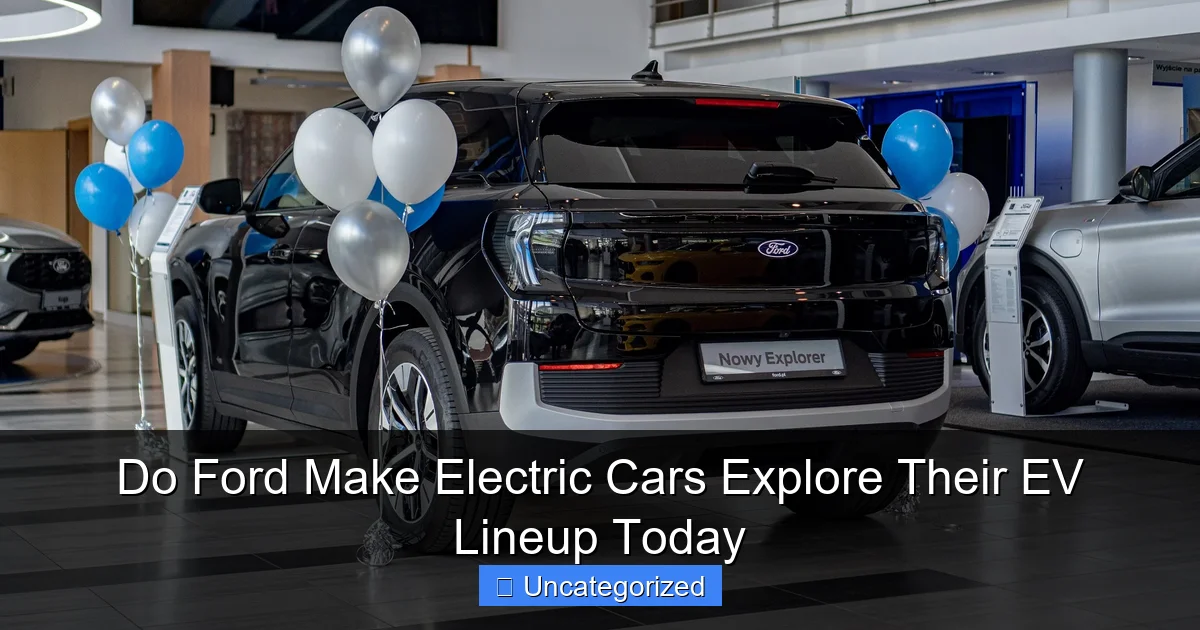
While Ford’s EV focus is strong in North America, the company is also expanding globally. In Europe, Ford plans to sell only electric passenger vehicles by 2030, starting with models like the Explorer EV and Capri EV—both built on Volkswagen’s MEB platform. This strategic collaboration allows Ford to enter the European EV market quickly while maintaining quality and affordability.
Ford’s strategy is not just about selling cars—it’s about creating an ecosystem of mobility, energy, and digital services that enhance the customer experience.
Current Ford Electric Vehicle Lineup: Models You Can Buy Today
As of 2024, Ford offers a diverse range of electric vehicles catering to different needs—from urban commuters to off-road adventurers and commercial fleet operators. Let’s dive into the current EV models available in the U.S. and select global markets.
Ford Mustang Mach-E: The Electric Pony
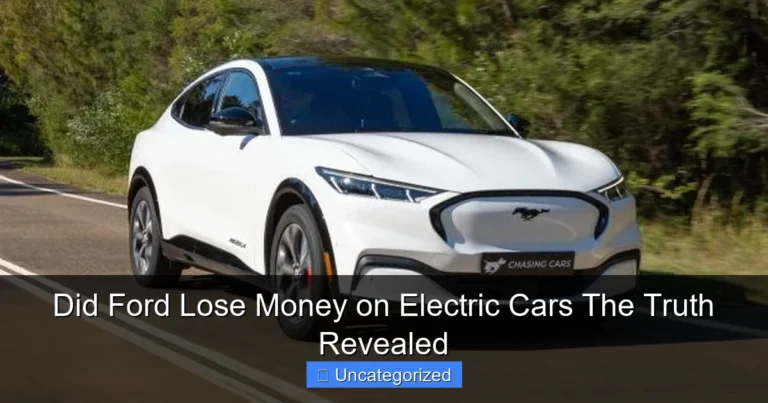
The Mustang Mach-E is Ford’s first all-electric SUV and a bold reinterpretation of the legendary Mustang. Launched in 2021, it combines sporty styling with practical utility and impressive range. Available in multiple trims—Select, Premium, California Route 1, and GT—the Mach-E offers something for every driver.
- Range: Up to 314 miles (EPA-estimated, California Route 1 RWD)
- Power: Up to 480 hp (GT Performance Edition)
- 0–60 mph: As quick as 3.5 seconds (GT Performance)
- Features: SYNC 4A infotainment, Ford Co-Pilot360, hands-free driving (BlueCruise), over-the-air updates
The Mach-E has been praised for its driver engagement—a rare trait in many EVs—thanks to responsive handling, multiple drive modes (Whisper, Engage, Unbridled), and a low center of gravity due to its battery placement.
Tip: For city drivers, the Select RWD trim offers a great balance of price and range (247 miles). For thrill-seekers, the GT delivers near-supercar performance with AWD and adaptive suspension.
Ford F-150 Lightning: Electrifying America’s Best-Selling Truck
The F-150 Lightning is more than an electric pickup—it’s a game-changer. Built on the same platform as the gas-powered F-150, it retains the ruggedness Ford trucks are known for while adding electric advantages like instant torque, lower maintenance, and onboard power.
- Range: Up to 320 miles (Extended Range battery)
- Power: 580 hp, 775 lb-ft of torque
- Payload: Up to 2,235 lbs
- Towing: Up to 10,000 lbs (with Max Trailer Tow Package)
- Unique Features: Mega Power Frunk (14.1 cu-ft cargo space), Ford Intelligent Backup Power (can power a home during outages), Pro Power Onboard (up to 9.6 kW of exportable power)
The Lightning’s Intelligent Backup Power feature is a standout. During a blackout, the truck can supply up to 10 days of power to a home (with a compatible transfer switch), making it a mobile energy source.
Tip: The XLT trim offers excellent value with standard AWD, 320-mile range, and Pro Power Onboard. For contractors, the Pro trim includes fleet management tools and enhanced durability.
Ford E-Transit: The Electric Workhorse
For businesses, Ford’s E-Transit van is a smart, cost-effective solution. With no tailpipe emissions, lower operating costs, and quiet operation, it’s ideal for urban delivery, shuttle services, and utility work.
- Range: 126 miles (EPA-estimated)
- Payload: Up to 3,800 lbs
- Cargo Volume: Up to 487.3 cu-ft (high roof, extended wheelbase)
- Features: SYNC 4, Ford Pro Telematics, over-the-air updates, mobile power outlets
While the range may seem modest, it’s designed for predictable, stop-and-go routes. With 15-minute fast charging (to 80% at 115 kW), drivers can recharge during breaks.
Tip: Pair the E-Transit with Ford Pro Charging for a complete fleet electrification package, including installation, energy usage reports, and maintenance alerts.
Upcoming Models: What’s Next from Ford?
Ford has several new EVs in the pipeline. The Ford Explorer EV (U.S. debut in 2025) is a three-row SUV based on the European version but adapted for American tastes with more power and range. The Ford Capri EV (2025) is a coupe-style crossover with retro-inspired design and up to 373 miles of range.
Additionally, Ford is developing a next-generation electric pickup (codenamed T3) with a modular platform, expected to launch in 2025 with a 400-mile range and advanced autonomous capabilities.
Performance, Range, and Charging: What to Expect
One of the most critical factors in choosing an EV is how it performs in real-world conditions—especially regarding range, charging speed, and driving dynamics. Ford’s EVs are designed to excel in all three areas.
Range Comparison Across Ford EVs
Below is a data table summarizing the EPA-estimated range for current Ford EV models (2024 model year):
| Model | Trim | Drivetrain | EPA Range (Miles) | Battery Size (kWh) |
|---|---|---|---|---|
| Mustang Mach-E | Select | RWD | 247 | 70 |
| Mustang Mach-E | Premium | AWD | 285 | 88 |
| Mustang Mach-E | California Route 1 | RWD | 314 | 88 |
| Mustang Mach-E | GT Performance | AWD | 270 | 88 |
| F-150 Lightning | Pro | AWD | 240 | 98 |
| F-150 Lightning | XLT | AWD | 320 | 131 |
| F-150 Lightning | Platinum | AWD | 300 | 131 |
| E-Transit | 350 HD (High Roof) | RWD | 126 | 68 |
Charging Options and Real-World Speed
Ford EVs support both Level 2 (AC) and DC fast charging. Here’s what you can expect:
- Level 2 (240V): Adds 20–30 miles of range per hour. Ideal for overnight home charging. The Ford Connected Charge Station (sold separately) offers smart features like scheduling and energy tracking.
- DC Fast Charging: The Mach-E and Lightning can charge from 10% to 80% in about 30–40 minutes using a 150–250 kW charger. The E-Transit supports up to 115 kW.
Tip: Use the FordPass app to locate nearby chargers, check availability, and monitor charging status remotely. For long trips, plan stops using the app’s trip planner, which factors in elevation, weather, and charging station reliability.
Driving Experience: Performance Meets Practicality
Ford has prioritized driving enjoyment in its EVs. The Mach-E’s Unbridled mode delivers aggressive throttle response and simulated engine sounds, while the Lightning’s one-pedal driving (via Regen Braking) makes city driving effortless.
All Ford EVs feature Ford Co-Pilot360, a suite of driver-assist technologies including:
- Adaptive Cruise Control with Stop-and-Go
- Lane Centering
- Automatic Emergency Braking
- Blind Spot Monitoring
- BlueCruise (hands-free highway driving on over 130,000 miles of mapped roads)
The BlueCruise 1.2 update (2024) adds lane change assist and improved driver monitoring, making long drives safer and less fatiguing.
Ownership Benefits and Incentives: Why Go Electric with Ford?
Switching to an EV isn’t just about the car—it’s about the entire ownership experience. Ford offers several advantages that make the transition easier and more rewarding.
Federal and State Incentives
Depending on your location, you may qualify for significant tax credits. The Federal Clean Vehicle Tax Credit offers up to $7,500 for eligible EVs. As of 2024, the F-150 Lightning and Mustang Mach-E (select trims) qualify, though battery sourcing and price caps apply.
Many states offer additional rebates. For example:
- California: Up to $2,000 via the Clean Vehicle Rebate Project (CVRP)
- Colorado: $5,000 state tax credit
- New York: Drive Clean Rebate of up to $2,000
Tip: Use the U.S. Department of Energy’s Alternative Fuels Data Center to find incentives in your state. Some utilities also offer EV-specific electricity rates (e.g., off-peak charging discounts).
Lower Total Cost of Ownership
EVs cost less to maintain than gas vehicles. With no oil changes, fewer moving parts, and regenerative braking, Ford EVs can save owners 50% or more on maintenance over five years (according to Consumer Reports).
Electricity is also cheaper than gasoline. At an average of $0.15/kWh, charging a Mach-E with an 88 kWh battery costs about $13.20 for a full charge—equivalent to driving 250+ miles.
FordPass and Connected Services
Every new Ford EV includes the FordPass app, which provides:
- Remote start, lock/unlock, and climate control
- Battery and charging status
- Vehicle health reports
- Roadside assistance
- Over-the-air software updates
Ford also offers Ford Power-Up—a service that delivers new features and improvements directly to your car, similar to smartphones.
Challenges and Future Outlook: Ford’s Road Ahead
While Ford’s EV journey is impressive, it’s not without challenges. Supply chain constraints, battery material costs, and increasing competition from Tesla, Hyundai, and Chinese automakers are constant hurdles. However, Ford is taking proactive steps to stay ahead.
Addressing Production and Supply Chain Issues
In 2023, Ford temporarily paused F-150 Lightning production due to battery supply issues. To prevent future disruptions, the company is diversifying battery chemistries and investing in domestic mining partnerships for lithium, cobalt, and nickel.
Ford is also building BlueOval SK Battery Park with a focus on LFP batteries, which are cheaper, longer-lasting, and less reliant on scarce materials like nickel and cobalt.
Expanding the EV Ecosystem
Ford’s vision extends beyond cars. The company is developing:
- Ford Pro Intelligence: A cloud-based platform for fleet operators to monitor vehicle performance, energy usage, and maintenance.
- Vehicle-to-Grid (V2G) technology: Future EVs could feed energy back into the grid during peak demand, turning vehicles into mobile power stations.
- Autonomous Delivery Vehicles: In partnership with Argo AI (now integrated into Ford), Ford is testing self-driving vans for last-mile delivery.
Customer-Centric Innovation
Ford listens to customer feedback. For example, the 2024 Mach-E received a larger touchscreen (15.5 inches) and improved infotainment based on user complaints. The Lightning’s frunk design was refined for easier access and better usability.
Looking ahead, Ford aims to make EVs accessible to more people through affordable models (under $30,000) and flexible leasing options.
Conclusion: Ford Is All-In on Electric—And You Should Be Too
So, do Ford make electric cars? Absolutely—and they’re doing it with the same boldness and innovation that built the company’s legacy. From the sporty Mustang Mach-E to the workhorse F-150 Lightning and the practical E-Transit, Ford’s EV lineup is diverse, capable, and forward-thinking.
With massive investments in battery technology, charging infrastructure, and digital services, Ford is not just keeping pace with the EV revolution—it’s helping to lead it. The company’s commitment to sustainability, performance, and customer satisfaction makes its electric vehicles a compelling choice for individuals, families, and businesses alike.
Whether you’re looking to reduce your carbon footprint, save on fuel and maintenance, or simply enjoy the thrill of instant electric torque, Ford has an EV that fits your needs. With federal incentives, lower operating costs, and a growing network of charging stations, there’s never been a better time to go electric.
So, if you’ve been wondering, “Do Ford make electric cars?”—the answer is clear: Yes, and they’re better than ever. Visit a Ford dealer, take a test drive, and experience the future of driving. The Blue Oval is charging ahead—will you join the ride?
Frequently Asked Questions
Do Ford make electric cars?
Yes, Ford has a growing lineup of electric vehicles (EVs), including the Mustang Mach-E, F-150 Lightning, and E-Transit. The company is heavily investing in electrification as part of its “Ford+” plan to transition toward sustainable mobility.
What electric cars does Ford currently offer?
Ford’s current EV lineup includes the Mustang Mach-E (SUV), F-150 Lightning (electric pickup truck), and E-Transit (electric van). These models combine performance, innovation, and Ford’s trusted vehicle expertise.
Are Ford electric vehicles reliable?
Ford EVs are built with the same rigorous quality standards as their gas-powered counterparts, featuring advanced battery technology and industry-leading warranties. The Mustang Mach-E and F-150 Lightning have earned strong reliability ratings from sources like Consumer Reports.
Do Ford make electric cars with long driving ranges?
Yes, Ford EVs offer competitive ranges: the F-150 Lightning provides up to 320 miles, while the Mustang Mach-E can reach 314 miles on a single charge (depending on trim). The E-Transit van delivers up to 159 miles, ideal for urban deliveries.
Can I charge a Ford electric car at home?
Absolutely. Ford EVs come with a standard mobile charger for Level 1/2 home charging, and you can install a Ford Connected Charge Station for faster Level 2 charging. Ford also provides access to the BlueOval™ Charge Network for on-the-go charging.
Do Ford electric cars qualify for tax credits?
Many Ford EVs, including the F-150 Lightning and Mustang Mach-E, may qualify for federal tax credits up to $7,500 (eligibility depends on battery sourcing and income limits). Check the IRS guidelines or consult a tax professional for current details.