Does Chevy Make an Electric Car Explore the Future of GM EVs

Featured image for does chevy make an electric car
Image source: autozonic.com
Yes, Chevrolet offers several electric vehicles, led by the popular Bolt EV and upcoming Ultium-based models. As part of General Motors’ bold shift toward an all-electric future, Chevy is expanding its EV lineup with innovative, long-range vehicles built on the advanced Ultium platform. From affordable compacts to powerful trucks like the Silverado EV, Chevy is driving the future of accessible, high-performance electric mobility.
Key Takeaways
- Chevy offers multiple EVs: Models like Bolt EV and Equinox EV are available now.
- GM invests heavily in EVs: $35B committed to electrify vehicles by 2025.
- Affordable options exist: Bolt EV starts under $30K after federal incentives.
- Ultium platform powers future EVs: Enables 400+ miles range and fast charging.
- Expanding lineup by 2025: 30+ new global EV models planned, including trucks.
- Home charging solutions: GM offers Level 2 chargers for convenient overnight charging.
📑 Table of Contents
- The Electric Revolution: Chevy’s Bold Move into the Future
- Chevy’s Electric Vehicle Lineup: What’s on the Road Today
- GM’s Ultium Platform: The Engine Behind Chevy’s EV Future
- Chevy EVs vs. the Competition: How Do They Stack Up?
- The Environmental and Economic Impact of Chevy EVs
- The Road Ahead: Chevy’s 2035 Vision and Beyond
- Conclusion: Chevy Is Electrifying the Future
The Electric Revolution: Chevy’s Bold Move into the Future
The automotive world is undergoing a seismic shift, and at the heart of this transformation lies electrification. With governments pushing for carbon neutrality, consumers demanding cleaner transportation, and technological advancements making electric vehicles (EVs) more accessible than ever, major automakers are racing to adapt. Among them, Chevrolet—long celebrated for its muscle cars, trucks, and family sedans—has stepped boldly into the EV arena. So, does Chevy make an electric car? The answer is a resounding yes. But the story doesn’t stop there.
Chevrolet, a division of General Motors (GM), isn’t just dipping its toes into the electric waters; it’s diving headfirst. With a strategic vision called “Zero Emissions, Zero Crashes, Zero Congestion,” GM is investing over $35 billion in electric and autonomous vehicle development through 2025. This commitment positions Chevy at the forefront of GM’s electrification strategy, offering a growing lineup of battery-electric vehicles (BEVs) that blend performance, practicality, and cutting-edge technology. Whether you’re a long-time Chevy fan curious about the brand’s EV future or an eco-conscious driver exploring your first electric car, this deep dive will explore how Chevy is redefining mobility for a new generation.
Chevy’s Electric Vehicle Lineup: What’s on the Road Today
The Chevrolet Bolt EV and Bolt EUV: Affordable Electrification
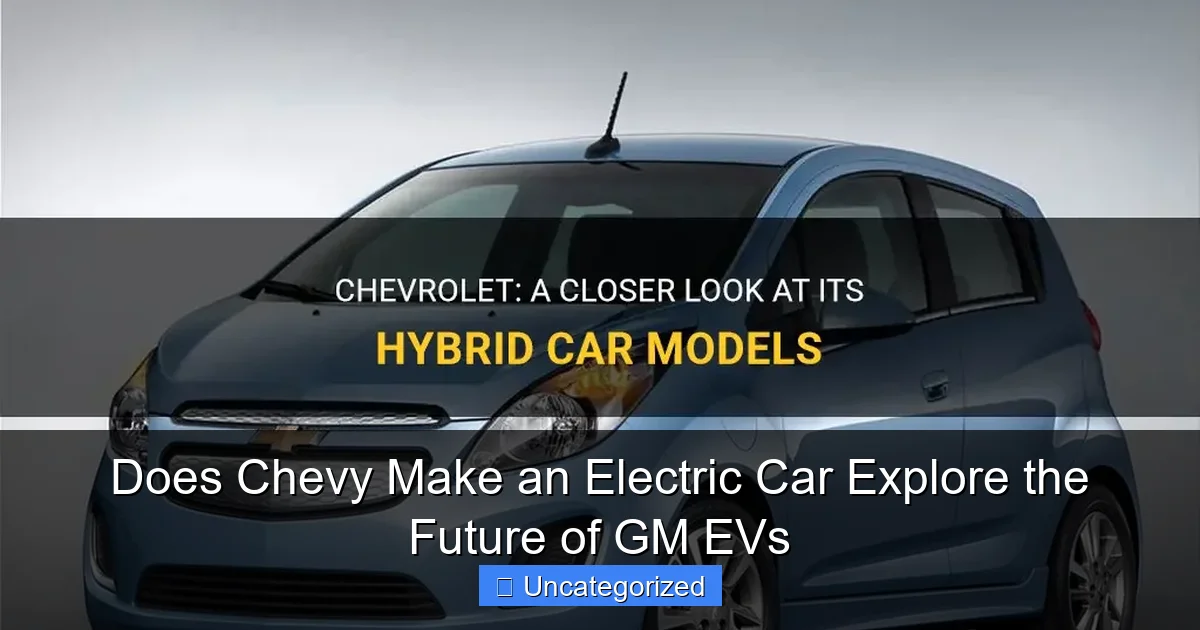
The Chevy Bolt EV and its slightly larger sibling, the Bolt EUV, are the current flagships of Chevy’s electric fleet. Launched in 2017, the Bolt EV was one of the first mass-market EVs to offer over 200 miles of range at a sub-$40,000 price point—making it a game-changer in its time. The Bolt EUV, introduced in 2022, builds on this success with added space, enhanced features, and a more SUV-like profile.
Visual guide about does chevy make an electric car
Image source: shunauto.com
- Bolt EV: 259 miles of EPA-estimated range, 200 horsepower, front-wheel drive, and a starting MSRP of $26,500 (after federal tax credit).
- Bolt EUV: 247 miles of range, slightly more rear legroom, available Super Cruise hands-free driving assist, and a starting MSRP of $28,800 (after credit).
Both models feature GM’s Ultium-based battery architecture (more on that later), though they use an earlier version of the platform. What sets them apart is their affordability. After the $7,500 federal tax credit, both models become some of the most budget-friendly EVs in the U.S. market. For example, a Bolt EUV with Super Cruise—a feature typically found in luxury brands—can be had for under $35,000, making it a compelling value proposition.
Why the Bolt Lineup Stands Out
Beyond price, the Bolt duo excels in daily usability. With a 10.2-inch touchscreen, wireless Apple CarPlay and Android Auto, over-the-air software updates, and a regenerative braking system that allows one-pedal driving, these vehicles are designed for modern drivers. The Bolt EUV, in particular, appeals to families with its rear-seat space and available panoramic sunroof.
Tip: If you’re considering a Bolt, act fast. Chevy announced in late 2023 that it will discontinue the Bolt EV and EUV by the end of 2024 to make way for next-generation Ultium-powered models. This means current models are in high demand, and inventory may be limited.
Upcoming Models: The Next Wave of Chevy EVs
While the Bolt is winding down, Chevy is gearing up for a new era. The upcoming 2025 Chevrolet Blazer EV and 2024 Chevrolet Silverado EV represent a major leap forward in range, performance, and technology. These vehicles are built on GM’s fully scalable Ultium Platform, which enables faster charging, longer range, and greater flexibility across vehicle types.
- Blazer EV: A sleek, mid-size electric SUV with up to 320 miles of range, available all-wheel drive, and 557 horsepower in the high-performance SS trim.
- Silverado EV: An all-electric full-size pickup with a staggering 400 miles of range in the WT (Work Truck) trim, a 664-horsepower RST First Edition, and a 10,000-pound towing capacity.
These models aren’t just electrified versions of existing vehicles—they’re purpose-built EVs with innovative features like a multi-flex tailgate (Silverado EV) and regen-on-demand paddles (Blazer EV). They also support DC fast charging up to 190 kW, allowing for a 100-mile charge in just 10 minutes under ideal conditions.
GM’s Ultium Platform: The Engine Behind Chevy’s EV Future
What Is the Ultium Platform?
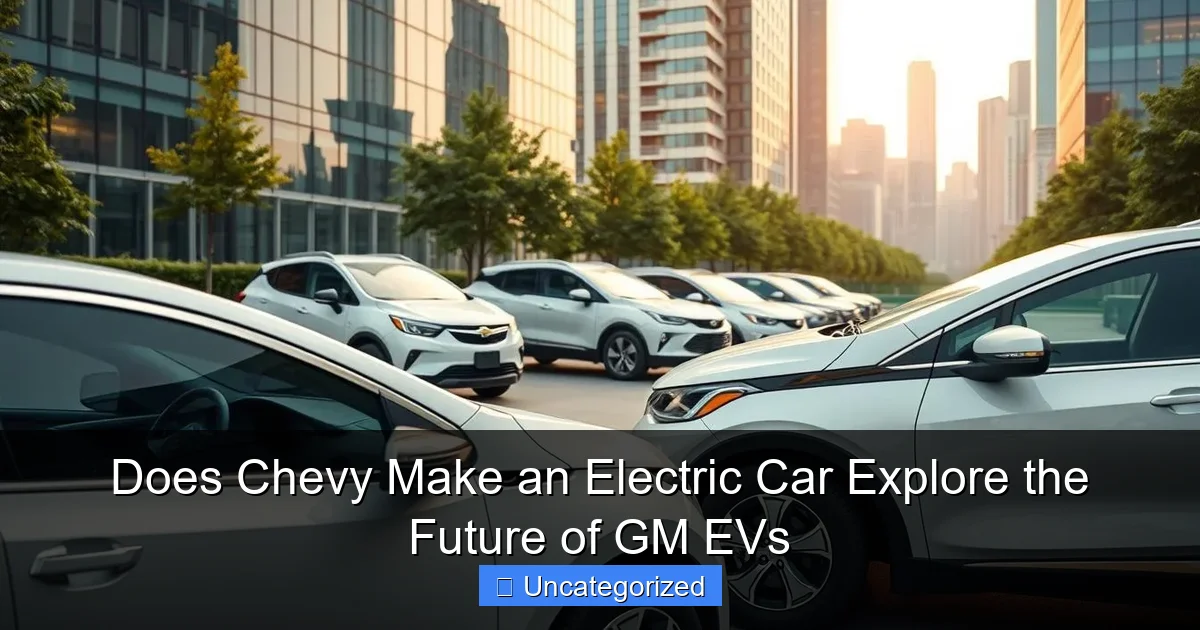
At the core of Chevy’s electric ambitions is GM’s Ultium Platform, a modular, battery-centric architecture designed to power a wide range of vehicles—from compact cars to heavy-duty trucks. Unlike traditional platforms that adapt internal combustion engine (ICE) designs for EVs, Ultium is built from the ground up for electrification. This means:
Visual guide about does chevy make an electric car
Image source: vehiclerides.com
- Flexible Battery Configurations: Ultium batteries use large-format, pouch-style cells that can be stacked vertically or horizontally, allowing for custom pack shapes and sizes. This flexibility enables Chevy to optimize space, weight, and range for each vehicle.
- Scalable Powertrain Options: Ultium supports front-wheel, rear-wheel, all-wheel, and four-wheel drive configurations, with motors ranging from 200 to over 600 horsepower.
- Faster Charging: The platform supports 400-volt and 800-volt architectures, with the latter enabling ultra-fast charging (up to 350 kW) in future models.
<
For example, the Silverado EV uses a 200+ kWh battery pack—one of the largest in the industry—while the Blazer EV offers multiple battery sizes (85 kWh and 100+ kWh) to balance cost and range.
How Ultium Enhances Range and Efficiency
Ultium’s design prioritizes energy density and thermal management. The battery cells use a nickel-cobalt-manganese-aluminum (NCMA) chemistry, which reduces reliance on cobalt—a costly and ethically contentious material. Combined with advanced software algorithms, this chemistry helps Chevy achieve industry-leading range figures.
Take the Silverado EV WT: with a 205 kWh battery and an EPA-estimated 400 miles of range, it outpaces competitors like the Ford F-150 Lightning (320 miles) and Rivian R1T (314 miles). The Blazer EV, meanwhile, achieves up to 320 miles on a single charge—enough for most cross-country road trips without frequent stops.
Sustainability and Manufacturing
GM is also investing in green manufacturing for Ultium vehicles. The company’s Factory ZERO in Detroit-Hamtramck is a carbon-neutral facility that assembles the Silverado EV and other Ultium-based models. Additionally, GM is partnering with suppliers to source battery materials responsibly, including a deal with Livent for lithium hydroxide and POSCO Chemical for cathode materials.
Tip: When shopping for a Chevy EV, ask about battery sourcing and charging infrastructure. Ultium-powered vehicles are compatible with over 134,000 public charging points in North America, including the expanding GM Energy ecosystem (home charging, vehicle-to-grid tech, and portable power stations).
Chevy EVs vs. the Competition: How Do They Stack Up?
Range and Performance Comparison
To understand Chevy’s position in the EV market, let’s compare key models to their rivals. The table below highlights range, pricing, and unique features across popular electric SUVs and trucks.
| Model | EPA Range (miles) | Starting MSRP | Key Feature |
|---|---|---|---|
| Chevy Blazer EV | 320 | $44,995 | Regen-on-demand paddles, Super Cruise available |
| Ford Mustang Mach-E | 314 (GT trim) | $54,975 | Ford BlueCruise hands-free driving |
| Hyundai Ioniq 5 | 303 | $41,650 | 800V architecture, 18-minute fast charging |
| Chevy Silverado EV WT | 400 | $74,800 | 10,000 lbs towing, 400V/800V charging |
| Ford F-150 Lightning | 320 | $67,474 | Pro Power Onboard (9.6 kW) |
| Tesla Model Y | 330 | $43,990 | Autopilot, Supercharger network |
As the data shows, Chevy’s EVs hold their own. The Blazer EV offers competitive range at a lower price than the Mach-E, while the Silverado EV leads the pickup segment in range. The Bolt EUV remains the most affordable EV with over 240 miles of range.
Technology and Driver Experience
Where Chevy truly shines is in driver-centric tech. The Blazer EV and Silverado EV come standard with GM’s Ultifi software platform, which enables over-the-air updates for everything from infotainment to battery management. The Silverado EV also features a Multi-Flex Midgate, which expands cargo space from 5’11” to 10’10”—perfect for hauling long items like kayaks or lumber.
In contrast, Tesla’s Model Y relies heavily on a single touchscreen, while Ford’s Lightning uses a traditional dashboard layout. Chevy strikes a balance, offering physical buttons for critical functions (e.g., climate control) alongside a large 17.7-inch diagonal infotainment screen.
Charging Infrastructure and Ownership Costs
Chevy EVs support both CCS (Combined Charging System) and, in the future, NACS (Tesla’s North American Charging Standard). GM has committed to adding NACS compatibility to Ultium vehicles by 2025, giving Chevy owners access to Tesla’s 17,000+ Superchargers.
Ownership costs are also favorable. The Bolt EV has the lowest 5-year cost of ownership in its class (per Edmunds), thanks to low maintenance (no oil changes, fewer moving parts) and high resale value. The Blazer EV and Silverado EV are expected to follow suit, with GM offering an 8-year/100,000-mile battery warranty.
The Environmental and Economic Impact of Chevy EVs
Reducing Carbon Footprint
Switching to a Chevy EV can significantly reduce your carbon footprint. According to the U.S. Department of Energy, the average EV produces 64% fewer greenhouse gas emissions over its lifetime than a gasoline car—even when accounting for electricity generation.
For example, a Bolt EV driven 12,000 miles annually in California (a state with a clean grid) emits just 1.2 tons of CO2 per year, compared to 5.2 tons for a gas-powered Equinox. Over a 10-year ownership period, that’s a savings of 40 tons of CO2—equivalent to planting 1,000 trees.
Economic Benefits for Drivers
Beyond environmental impact, Chevy EVs offer real savings:
- Fuel Savings: The average U.S. driver spends $1,200/year on gasoline. An EV costs about $600/year to charge (at $0.14/kWh).
- Tax Incentives: The federal tax credit of $7,500 (and additional state/local rebates) can reduce upfront costs.
- Lower Maintenance: No oil changes, spark plugs, or exhaust systems. Brakes last longer due to regenerative braking.
Tip: Use the PlugStar or EnergySage tools to estimate your potential savings and find available incentives in your state.
Job Creation and U.S. Manufacturing
Chevy’s EV expansion is also boosting the U.S. economy. GM plans to open four battery cell plants (in Ohio, Tennessee, Michigan, and Indiana) by 2025, creating over 11,000 jobs. The Silverado EV, for instance, is assembled in Michigan, supporting local supply chains and reducing reliance on overseas manufacturing.
The Road Ahead: Chevy’s 2035 Vision and Beyond
GM’s 2035 All-Electric Goal
GM has pledged to phase out all gasoline and diesel vehicles by 2035, making Chevy a fully electric brand in the U.S. This ambitious goal includes:
- 30+ new global EV launches by 2025
- 100% renewable energy for U.S. operations by 2025
- Carbon neutrality for global operations by 2040
For Chevy, this means expanding its EV lineup beyond SUVs and trucks. Rumors suggest a compact EV (to replace the Bolt) and an electric Camaro could debut by 2026. The latter would likely use a high-performance Ultium variant, targeting the Tesla Model 3 Performance and Porsche Taycan.
Innovation in Charging and Energy
GM is also pioneering vehicle-to-everything (V2X) technology. The Silverado EV will offer vehicle-to-grid (V2G) and vehicle-to-home (V2H) capabilities, allowing owners to power their homes during outages or sell energy back to the grid. This could turn your Chevy into a mobile power station—ideal for emergencies or off-grid living.
Additionally, GM Energy is rolling out Ultium Charge 360, a network of 100,000 charging stations across North America, including partnerships with EVgo, ChargePoint, and Electrify America.
Challenges and Opportunities
Despite the progress, challenges remain. Battery material shortages, charging infrastructure gaps, and consumer range anxiety could slow adoption. However, Chevy is addressing these with:
- Education campaigns (e.g., “Bolt Life” videos showing real-world usage)
- Home charging installation programs (free or discounted Level 2 chargers)
- Extended test drives (up to 3 days) to build confidence
Conclusion: Chevy Is Electrifying the Future
So, does Chevy make an electric car? Absolutely—and it’s just getting started. From the affordable, range-leading Bolt to the high-performance Blazer EV SS and the groundbreaking Silverado EV, Chevrolet is delivering electric vehicles that meet the needs of today’s drivers while paving the way for a cleaner, smarter future.
With GM’s Ultium platform, a commitment to sustainability, and a bold 2035 all-electric vision, Chevy isn’t just keeping up with the EV revolution—it’s helping to lead it. Whether you’re drawn to the cost savings of the Bolt, the versatility of the Blazer EV, or the power of the Silverado EV, there’s a Chevy electric vehicle for nearly every lifestyle and budget.
As battery technology improves, charging networks expand, and consumer awareness grows, Chevy’s role in the EV market will only strengthen. The future of transportation is electric, and Chevrolet is fully charged for the journey. The question isn’t whether Chevy makes an electric car—it’s how many more innovative, exciting models are on the horizon. Buckle up; the ride is just beginning.
Frequently Asked Questions
Does Chevy make an electric car?
Yes, Chevrolet offers several fully electric vehicles (EVs), including the Bolt EV and Bolt EUV, with plans to expand its lineup as part of General Motors’ commitment to an all-electric future. Chevy EVs combine affordability, efficiency, and cutting-edge technology.
What electric cars does Chevrolet currently offer?
Chevrolet’s current electric lineup includes the Bolt EV (a compact hatchback) and the Bolt EUV (a slightly larger SUV variant). Both models feature over 250 miles of range and advanced driver-assistance features like Super Cruise.
Is the Chevy Bolt EV still in production?
Yes, the Chevy Bolt EV and Bolt EUV remain in production after a brief 2021-2022 hiatus due to battery recalls. Production resumed in 2022 with upgraded Ultium-based batteries, ensuring improved safety and performance for the Chevy electric car lineup.
What is the range of Chevy electric cars?
The Chevy Bolt EV offers an EPA-estimated 259 miles of range, while the Bolt EUV delivers 247 miles. Both models are among the most affordable long-range EVs in the U.S., making them ideal for daily commutes and road trips.
Are there plans for new Chevy electric vehicles?
Absolutely. Chevrolet is expanding its EV portfolio under GM’s Ultium platform, with upcoming models like the Silverado EV (electric pickup) and Equinox EV (SUV). These aim to make Chevy electric cars more versatile and accessible.
How do Chevy EVs compare to other electric cars?
Chevy EVs stand out for their affordability, practical range, and tech features (like one-pedal driving). While they may lack the luxury of some competitors, the Bolt models offer exceptional value in the compact EV segment.